Can a Medicinal Plant Extraction Machine Handle Heat-Sensitive Herbs?
Sep 9, 2026
Yes, a well-designed medicinal plant extraction machine can handle heat-sensitive herbs when extraction is built around low temperature, ultrasonic cavitation, vacuum concentration, and controlled solvent flow. Bioland designs its medicinal plant extraction machine for processors who need to protect volatile oils, flavonoids, polyphenols, glycosides, pigments, and polysaccharides while improving yield, batch speed, and GMP-style repeatability. Instead of selling only a tank, Bioland supplies a process solution from trials to production.
Why Are Heat-Sensitive Herbs Challenging to Process?
Start With the Revenue Risk: Lost Actives, Slow Batches, Unstable Color
Heat-sensitive herbs challenge factories because their value is often in fragile molecules: essential oils in mint and rose, anthocyanins in plant pigments, phenolic acids in propolis, and flavonoids in medicinal leaves. If a workshop relies only on long boiling, active content can drift and downstream filtration may become heavier. A medicinal plant extraction machine changes the decision from “more heat” to “smarter mass transfer.”
This is why procurement teams searching for ultrasonic plant extraction machine, tincture extraction machine, or low-temperature herbal extract line usually care about one thing: will the equipment solve assay and color problems? Bioland’s answer is to combine ultrasonic extraction, solvent extraction, vacuum concentration, demisting, filtration, and CIP cleaning in one coordinated production route.
Understand the Raw Material Before Choosing the Process
Leaves, roots, stems, flowers, resins, and fungi behave differently. Stevia leaves release steviol glycosides differently from ginkgo leaves used for extraction of flavonoids, and mushrooms require a different path for extraction of polysaccharides. A medicinal plant extraction machine must allow recipe adjustment for polarity, molecular size, moisture, particle size, and target purity.
Bioland supports water extraction, ethanol extraction, solvent extraction, hot reflux, wet maceration, circulating percolation, alcohol precipitation, and vacuum concentration. For heat-sensitive herbs, the most useful route is often ultrasonic low-temperature extraction at 40–60°C, followed by controlled filtration and reduced-pressure concentration.
Case: Stevia Line With Sweetness Loss Concerns
A sweetener producer wanted a stevia extraction machine for leaves, stems, and roots, but their old hot process darkened liquor and created long shifts. Bioland tested a low-temperature recipe, then configured a medicinal plant extraction machinewith ultrasound and automatic discharge. Pilot batches reached target soluble solids in about 35 minutes instead of more than 90 minutes.
The customer gained a shorter cycle, lower steam pressure on operators, and more stable glycoside-rich liquid for purification. The same engineering logic later helped the plant evaluate tea polyphenols and goji active ingredients without buying unrelated systems.
Case: Natural Pigments and Tea Polyphenols
A beverage ingredient company had two products: pigment extraction from plants, including orange-peel pigment and anthocyanins, and a tea extraction machine for tea polyphenols, aromatic oils, amino acids, and flavonoids. Their pain point was color variation. Bioland recommended a medicinal plant extraction machine route with moderate temperature, shorter residence time, and vacuum solvent recovery.
After trial production, the client kept pigment color closer to the approved sample and reduced rework filtration. The benefit was not only yield; it was faster approval from beverage customers because each batch looked and tested more consistent.
How Does Temperature Control Protect Heat-Sensitive Compounds?
Set the Temperature Window Before Talking About Capacity
Temperature control protects heat-sensitive compounds by separating extraction efficiency from boiling intensity. A medicinal plant extraction machine can be set around 40–60°C for many herbs, which is a practical window for volatile, hydrolyzable, or oxidation-sensitive components. The goal is enough warmth for solvent diffusion, but not so much heat that the active profile becomes difficult to standardize.
Bioland instrument’s BL-TN series covers 50 L, 100 L, 200 L, 300 L, and 500 L volumes, so the recipe can be scaled instead of reinvented. Evaporation capacity ranges from 20 to 200 kg/h, allowing laboratory R&D, pilot plants, and medium production lines to use the same control philosophy.
Technology parameter
Model
BL-TN-C50L
BL-TN -C100L
BL-TN -C200L
BL-TN -C300L
BL-TN -C500L
Volume (L)
50
100
200
300
500
Evaporation capacity (kg/h)
20
50
70
100
200
Motor power(KW)
2.7
2.7
2.7
3.5
3.5
Steam consumption(kg/h)
25
60
90
120
250
System vacuum (MPa)
-0.085
-0.085
-0.085
-0.085
-0.085
Pressure of jacket(MPa)
0.09~0.3
0.09~0.3
0.09~0.3
0.09~0.3
0.09~0.3
Compressed air (MPa)
0.5~0.6
0.5~0.6
0.5~0.6
0.5~0.6
0.5~0.6
Evaporation temperature(°C)
60~100
60~100
60~100
60~100
60~100
Use Vacuum Concentration to Protect Extract Value
After extraction, many factories lose value during concentration, not in the tank. Bioland’s medicinal plant extraction machine transfers liquid to the concentrator and keeps vacuum commonly between -0.05 and -0.09 MPa, with standard system vacuum around -0.085 MPa. This enables concentration at a controlled evaporation temperature while reducing the need for long open boiling.
Secondary vapor passes through condenser and cooler, becomes condensate, and can return as new solvent through the herb layer. This circulation helps dissolve remaining soluble ingredients while improving solvent economy, especially for ethanol-water herbal extracts and tincture-style products.
Case: Aromatic Herbs, Plant Oils, and Cosmetics
A cosmetics client processing rose essential oil, peppermint oil, plant aromatic oil, and valerian flavor complained that prolonged heating flattened aroma notes. Bioland proposed a medicinal plant extraction machine package with low-temperature ultrasonic extraction, oil-water separation, condenser cooling, and vacuum concentration. The plant shortened extraction time and improved aroma consistency for small-batch cosmetic ingredients.
The same customer later tested plant protein and soybean protein applications, then asked for a freeze dryer and mixing tank from Bioland’s broader catalog. That is the advantage of working with a solution provider instead of a single-machine reseller.
Document Every Setpoint for GMP Buyers
For pharmaceutical chemicals, biopharmaceuticals, food ingredients, and health products, the machine must make process control visible. A medicinal plant extraction machine with PLC electrical control, online concentration monitoring, automatic discharge, and CIP cleaning helps quality teams document temperature, time, solvent ratio, vacuum, and endpoint density.
Bioland manufactures with SUS304/316L stainless steel options, triple insulation, GMP-oriented design, and CE/ISO quality assurance. Equipment can be prepared for FAT inspection, and production progress is shared weekly through photos or videos before shipment approval.
Can Ultrasonic Cavitation Improve Extraction at Lower Temperatures?
Cavitation Replaces Forceful Heating With Physical Cell Disruption
Yes. Ultrasonic cavitation creates microscopic bubbles that collapse near plant tissue, producing shear forces and micro-jets. In a medicinal plant extraction machine, this action breaks or deforms cell walls, allowing solvent to enter faster and carry active components out. For fragile herbs, that means better release at lower temperature instead of depending on stronger heating.
Bioland’s ultrasonic technology is especially useful where raw material structure resists ordinary soaking. Compared with traditional methods, ultrasonic extraction can improve extraction rate significantly, often reported in the 50–500% range depending on herb type, solvent, particle size, and operating discipline.
Short Cycles Help Protect Quality and Throughput
A medicinal plant extraction machine can often reach the best extraction window in 24–40 minutes for many herbal materials, reducing extraction time by more than two-thirds compared with conventional long extraction. Shorter exposure helps factories protect valuable components and increases daily batch capacity without simply installing larger tanks.
For plant managers, this is a direct business argument. A shorter validated recipe can reduce labor hours, steam consumption, holding-tank occupancy, and waiting time before filtration. It also gives sales teams more confidence when promising stable extract specifications.
Case: Mushrooms and Polysaccharides With Tough Cell Walls
A functional food factory wanted ultrasonic extraction mushrooms for reishi, shiitake, enoki, tremella, sweet potato, and goji polysaccharide products. Their old water extraction was slow because cell-wall resistance limited release. Bioland configured a medicinal plant extraction machine with ultrasound, warm water extraction, filtration, and vacuum concentration.
In pilot runs, the customer reduced a multi-hour extraction schedule to less than one hour for selected materials and recorded visibly cleaner transfer liquor. The same line supported extraction of polysaccharides and later helped them launch a goji polysaccharide extract for beverage powder customers.
Case: Coffee, Caffeine, and Botanical Beverages
A beverage ingredient buyer already owned a Coffee Extraction Machine for caffeine and alkaloids but needed lower-temperature herbal capability for botanical blends. Bioland helped them choose a medicinal plant extraction machine that could also process tea juice, tea polyphenols, functional food polyphenols, and flavonoids. The benefit was a flexible line instead of isolated single-product equipment.
How Should Extraction Time and Solvent Conditions Be Optimized?
Match Solvent Polarity to the Target Compound
Extraction time and solvent conditions should be optimized together. A medicinal plant extraction machine can use water, ethanol, methanol, acetone, or approved process solvents according to the formula, but heat-sensitive herbs often benefit from ethanol-water screening. Solvent polarity decides whether glycosides, flavonoids, phenolic acids, pigments, or essential oil fractions enter the liquid efficiently.
Bioland engineers usually recommend small-scale trials before fixing production conditions. The trial plan should compare solvent concentration, solid-liquid ratio, mesh size, ultrasonic duration, temperature, and filtration behavior. This prevents a beaker formula from failing when scaled to 200 L or 500 L.
Shorten Contact Time Without Leaving Actives Behind
Time control is not simply “shorter is better.” The medicinal plant extraction machine should reach the target release curve, then stop before unnecessary impurities build up. Online concentration monitoring, automatic discharge, and repeatable valve sequencing help operators end the batch at the right point for yield, color, and purification speed.
A practical workflow is clear: load herb into the extraction tank, add solvent by recipe, start ultrasonic extraction at the selected temperature, complete extraction, transfer liquid by pump to the concentrator, condense secondary vapor, and continue until the required extract density is reached.
Case: Tinctures, Propolis, Flavonoids, and Quercetin
A nutraceutical workshop wanted one line for tincture extraction machine production and propolis extraction machine projects. Their issue was ethanol selectivity: weak solvent missed actives, while over-strong solvent pulled waxy material. Bioland used a medicinal plant extraction machine trial to separate flavonoids and phenolic acids from propolis more efficiently.
The same customer tested extraction of flavonoids from ginkgo leaf, bamboo leaf, ginger, chrysanthemum, lotus leaf, sophora bud, and onion skin. They also explored ultrasound assisted extraction of quercetin from larch, celery, mulberry leaf, and rutin-rich materials.
By turning solvent screening into a written SOP, the plant reduced repeated experiments and built a reusable platform for future products. The commercial gain was faster sample delivery to supplement brands that requested different botanical actives every season.
Recover Solvent and Stabilize Operating Cost
Solvent recovery is part of solvent optimization. The medicinal plant extraction machine can direct vapor through condenser and cooler, then return condensate through the material layer for continued extraction. For ethanol-based herbs, this improves cost control, reduces fresh solvent demand, and supports safer, more organized production.
Bioland can combine extraction concentration units, ethanol extraction equipment, filtration, vacuum pumps, and storage tanks into one layout. Customers who plan multiple botanical SKUs can ask for OEM/ODM design around their room size, utility supply, solvent rules, and target output.
What Equipment Features Support Consistent Heat-Sensitive Herbal Extraction?
Choose a GMP-Ready Stainless-Steel Structure
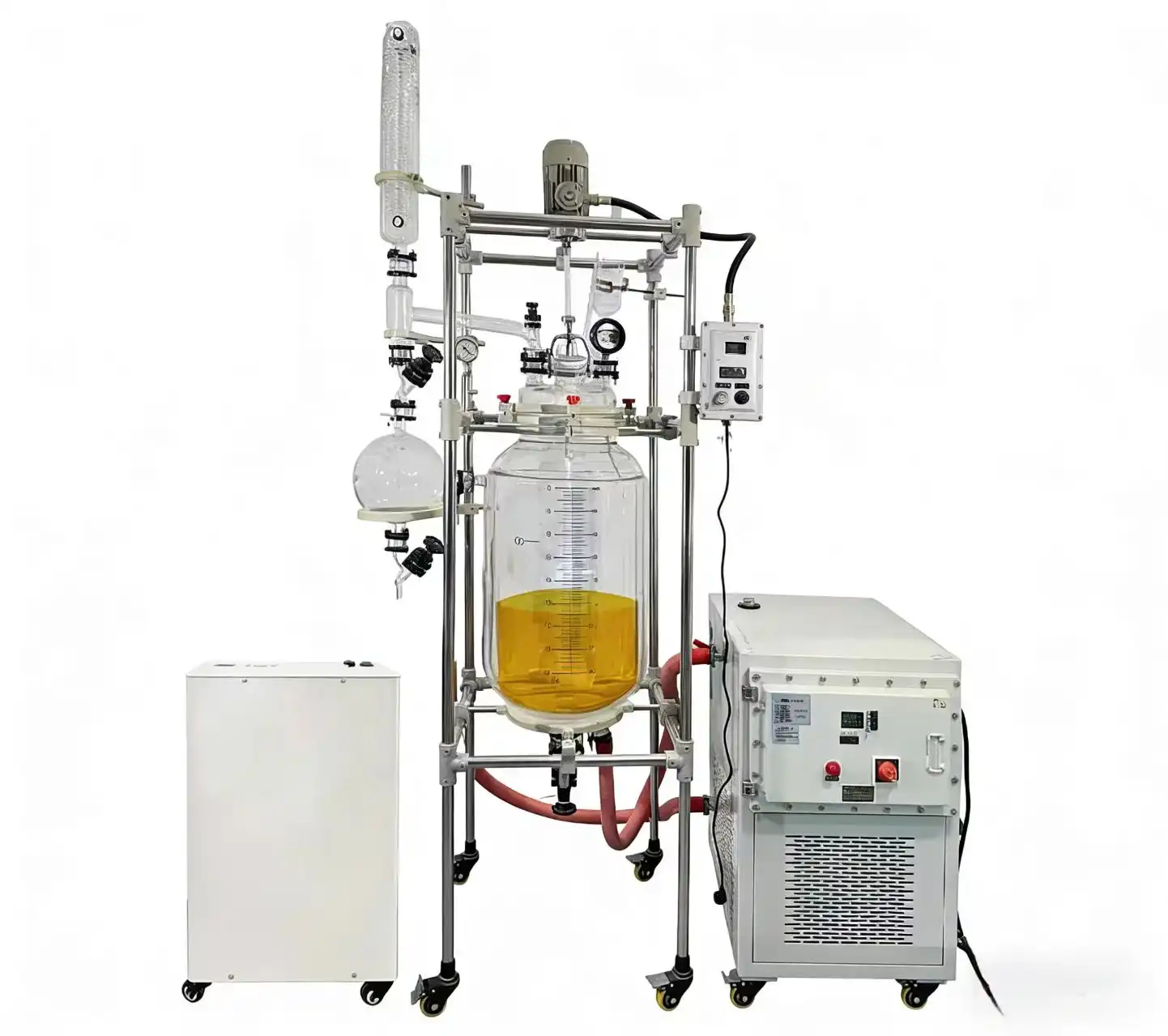
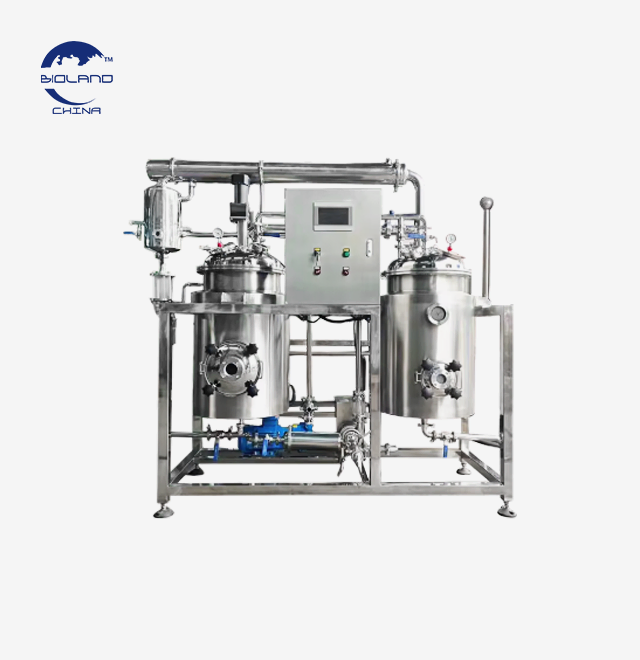
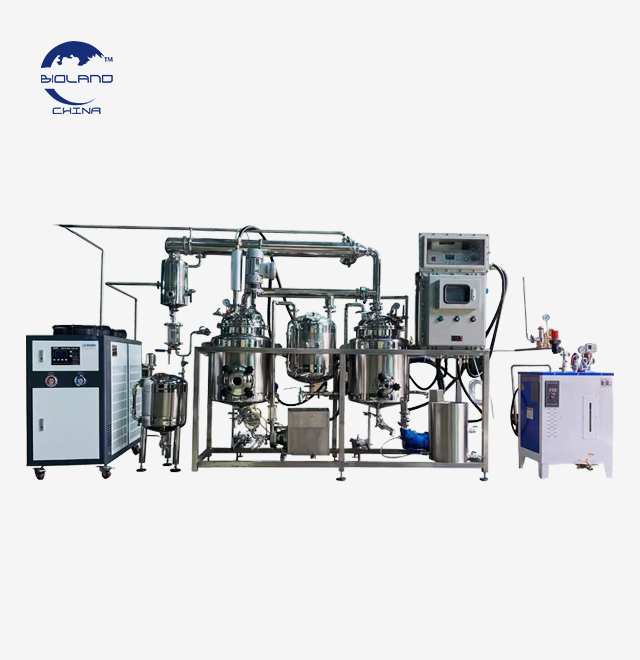
Consistent heat-sensitive herbal extraction depends on equipment that is cleanable, sealed, and repeatable. A medicinal plant extraction machinefrom Bioland is commonly configured with ultrasonic system, extraction tank, tubular heater, evaporator, condenser, oil-water separator, oil receiver, liquid pump, metering tank, storage tank, filter, vacuum pump, demister, and electrical cabinet.
The medicinal plant extraction machine uses SUS304/316L stainless steel contact parts, CIP online cleaning, triple insulation, and GMP/HACCP-oriented design. It can operate under normal pressure, negative pressure, or positive pressure, supporting water extraction, alcohol extraction, solvent extraction, conventional concentration, hot reflux, percolation, and alcohol precipitation.
Automate the Recipe, Not Just the Motor
A medicinal plant extraction machine should reduce operator variation. Bioland offers intelligent PLC control, online concentration monitoring, automatic discharge, continuous feeding and discharge options, pipeline-style concentration, and online cleaning. These functions help the same recipe run consistently across different shifts, which is critical for universities, research institutes, enterprise laboratories, and pilot production lines.
Safe operation includes checking solvent level before ultrasound starts, confirming condenser cooling, verifying vacuum seals, grounding electrical cabinets, following ethanol-handling rules, and cleaning filters on schedule. Bioland provides pre-sales and after-sales service so operators understand not only buttons, but process reasons behind each setting.
Plan Capacity, Utilities, and Expansion
The BL-TN technical range helps buyers size a medicinal plant extraction machine realistically: 50–500 L volume, 20–200 kg/h evaporation capacity, 2.7–3.5 kW motor power, 25–250 kg/h steam consumption, 0.09–0.3 MPa jacket pressure, 0.5–0.6 MPa compressed air, and 60–100°C evaporation temperature.
If steam is unavailable, a thermal-oil heating system can be added. Non-customized products are generally ready in 5–7 days, while customized systems normally need about 30 business days. Sea, rail, and air freight are supported after photo, video, or FAT approval.
Case: Chilli Oleoresin Plant and Multi-SKU Expansion
A spice processor asked whether a Chilli Oleoresin Extraction Plant for capsaicin and chilli oleoresin could share engineering principles with heat-sensitive herbs. Bioland reviewed solvent handling, residue discharge, filtration, and concentration. The proposed medicinal plant extraction machine platform helped the customer plan turmeric, chilli, and plant pigment SKUs under one utility concept.
The value was flexibility. When market demand shifted, the client could test capsanthin, plant carotenoids, wheat germ oil, marine fish protein, peony seed oil, and herbal flavonoids without redesigning every pipeline. This is how equipment becomes a production strategy, not a fixed asset waiting for one raw material.
Conclusion
Heat-sensitive herbs can be processed successfully when extraction is designed around gentle mass transfer, not aggressive boiling. Temperature control, ultrasonic cavitation, solvent screening, vacuum concentration, cleanable stainless-steel construction, and automation work together to protect volatile oils, polyphenols, glycosides, flavonoids, pigments, and polysaccharides. The medicinal plant extraction machine becomes a practical solution for factories that need shorter cycles, higher recovery, solvent economy, and GMP-style consistency. Bioland adds process testing, OEM/ODM engineering, CE/ISO assurance, weekly production tracking, FAT support, warranty, and lifetime maintenance. If your current process struggles with color drift, low assay, or long extraction time, a customized low-temperature ultrasonic route can turn those difficulties into stable, scalable production with clearer cost planning and faster market response.
FAQ
Q1: Can a medicinal plant extraction machine process heat-sensitive herbs?
A1: Yes. Low-temperature ultrasound and vacuum concentration help protect active compounds.
Q2: What temperature is commonly used?
A2: Many herbal processes use 40–60°C for ultrasonic extraction.
Q3: Can one medicinal plant extraction machine process different botanicals?
A3: Yes. Recipes can be adjusted for stevia, tea, mushrooms, propolis, pigments, and more.
Q4: Does Bioland support custom lines?
A4: Yes. OEM/ODM layouts, capacities, and process routes are available.
Talk to Bioland Instrument About Your Heat-Sensitive Herbal Process
If your project needs a medicinal plant extraction machine that protects actives while improving yield, Bioland Instrument can help you move from uncertain trials to a stable production line. Share your herb type, solvent, target compound, batch size, and quality standard, and our engineers will recommend extraction temperature, ultrasonic time, concentration method, cleaning design, and utility configuration.
Bioland Instrument offers cost-effective pricing, CE/ISO certified manufacturing, GMP/FDA-oriented production, OEM/ODM customization, FAT inspection, weekly photo or video progress updates, one-year warranty, and lifetime maintenance. Whether you need laboratory R&D equipment or a custom medicinal plant extraction machine production line, contact us for a practical solution: info@biolandequip.com.
References
1. Chemat, F., Rombaut, N., Sicaire, A. G., Meullemiestre, A., Fabiano-Tixier, A. S., & Abert-Vian, M. Ultrasound assisted extraction of food and natural products. Ultrasonics Sonochemistry, 2017.
2. Vinatoru, M. An overview of the ultrasonically assisted extraction of bioactive principles from herbs. Ultrasonics Sonochemistry, 2001.
3. Azwanida, N. N. A review on the extraction methods use in medicinal plants, principle, strength and limitation. Medicinal & Aromatic Plants, 2015.
4. Shirsath, S. R., Sonawane, S. H., & Gogate, P. R. Intensification of extraction of natural products using ultrasonic irradiations. Chemical Engineering and Processing: Process Intensification, 2012.
5. Dai, J., & Mumper, R. J. Plant phenolics: extraction, analysis and their antioxidant and anticancer properties. Molecules, 2010.
6. Wang, L., & Weller, C. L. Recent advances in extraction of nutraceuticals from plants. Trends in Food Science & Technology, 2006.
The reactor is beautifully mirror-polished and fully complies with GMP requirements for the pharmaceutical industry. The performance is excellent! Overall, we are very satisfied! We also provided with some feedback on our process improvements, which we hope will be helpful.
2024-04-09
Laboratory
Excellent and professional service. Always reply our questions very fast. All reactors and chiller we received are good too.
2024-02-15
Research Institute
Quality is beyond our expectation actually. After we got the extraction equipment and started using it, the performance was beyond our expectation. Very easy to use and very efficient to run. Service always respond us very quickly. Was also very helpful to help us. Thanks Bioland team. Very happy to work with you.
2023-11-20
Biotech Company
We are happy about the new purchase as always. Equipment and services are both good.
2023-08-05
Instrument Lab
This is the second order with Bioland instrument and everything is good as the first dateText.
2023-05-12
Global Trading Partner
Bioland instrument team is very helpful and professional. The sales helped us select the right equipment for our application, and their logistics people handled the transportation and customs declaration for our shipment. All that saved us a lot of work.