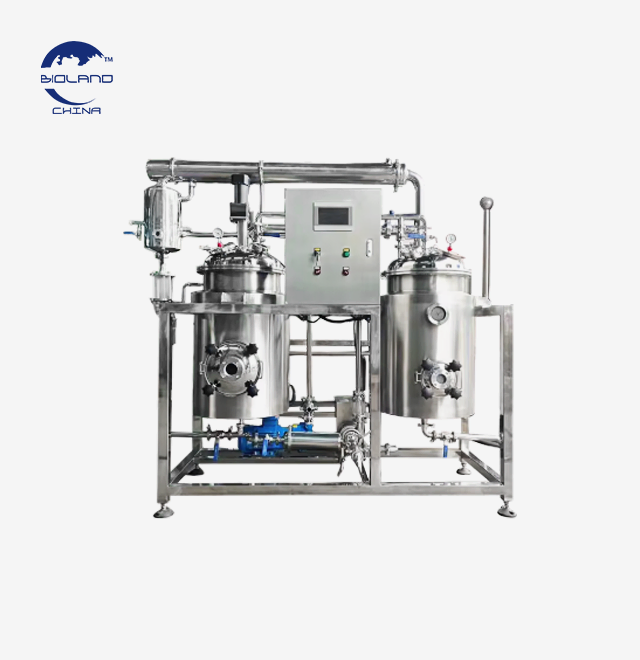
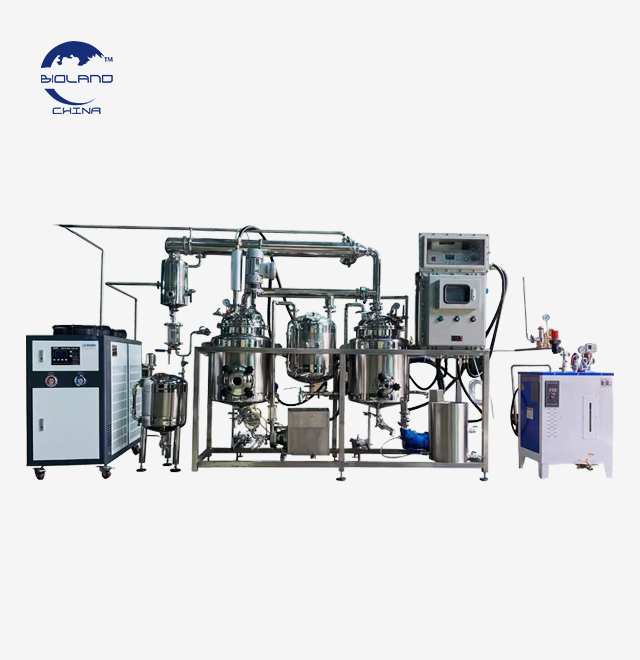
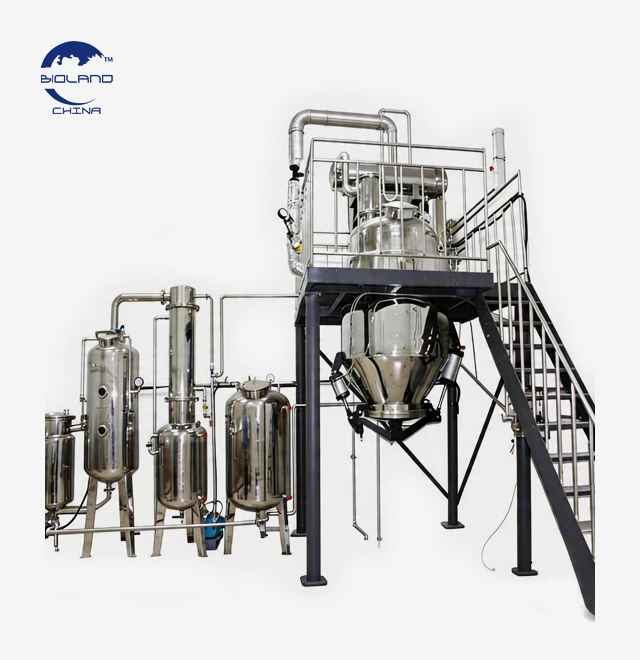
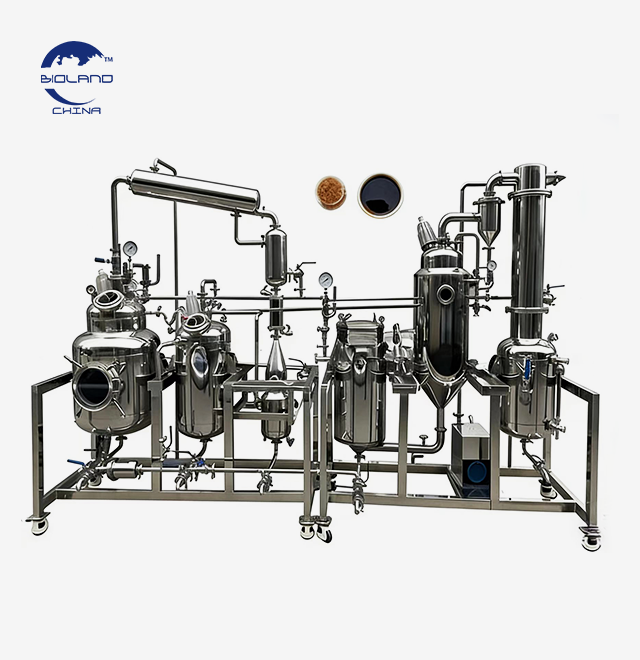
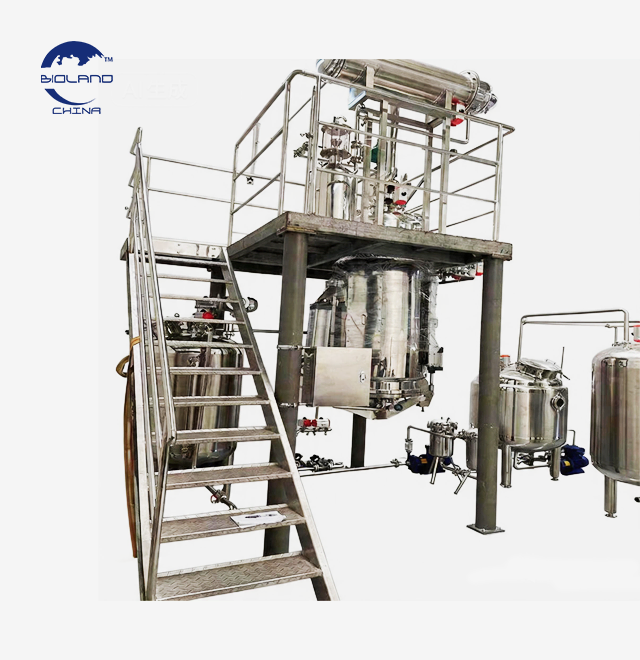
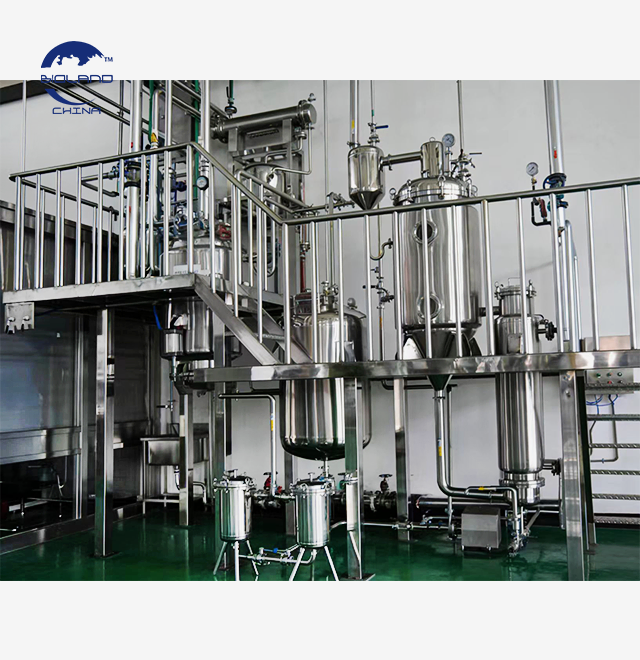
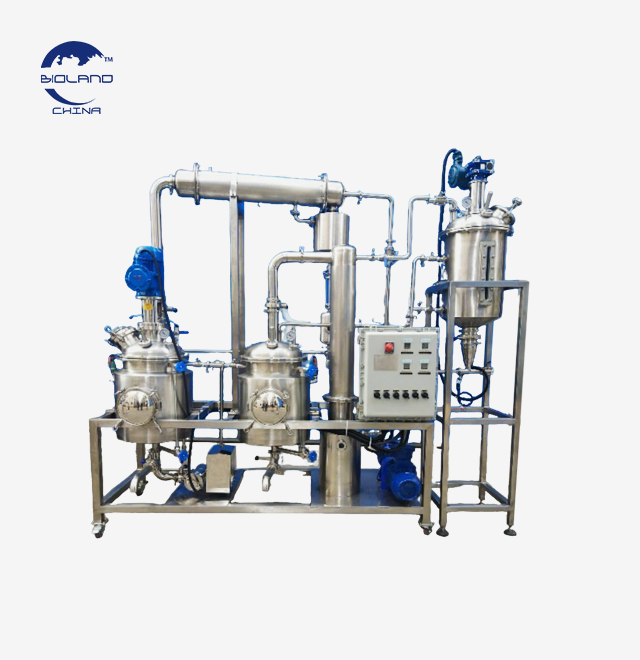
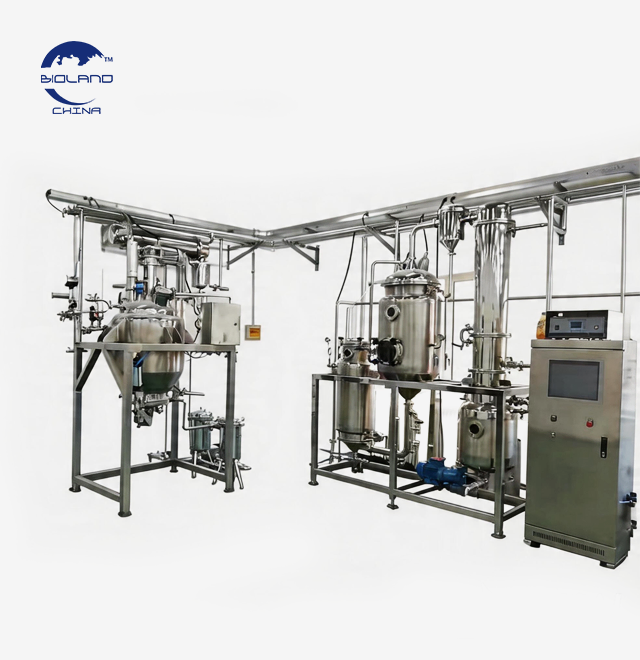
It's not just about the size of the extractor when choosing the right capacity for an aromatic oil distillation unit. The equipment also needs to be matched to the material, the cooking method, the efficiency of condensation, and the cost of production. A unit that is too small leads to delays, while one that is too big wastes money and time.
The aromatic oil distillation units from Xi'an Bioland Instrument Co., Ltd. come in sizes ranging from 50 L to 2,000 L and are made for steam distillation, hydro-distillation, and ultrasonic-assisted extraction. Each system has smart temperature control, glass condensers for separating oil visually, and technology that can be changed to fit your needs. This guide uses real client cases and process engineering data to show you how to correctly size your equipment.
Determining Raw Material Capacity and Batch Requirements
Assess Your Daily Feedstock and Output Target
First, figure out how many kilograms of plant matter you need to process every day. Plants can hold up to 50 to 70 kg of dry herbs or 100 to 150 kg of fresh leaves and flowers in a 500 L aromatic oil distillation unit, based on their bulk density. If you want to grow 300 kg of fresh lavender every day, you will need at least two batches or a bigger plant.
The first client we helped was a small company that made essential oils and wanted to process 200 kg of fresh peppermint every day. For a 300-liter aromatic oil distillation unit that can hold 60 kg, it would have taken four batches, which is too many hours of work. We suggested a 500 L unit, which would cut the number of batches to two per day and the time it takes to process them in half.
Calculate Oil Yield and Extraction Efficiency
Peppermint leaves give 0.8% to 1.5% oil by weight, lemon grass gives 0.3% to 0.6% oil by weight, and lavender flowers give 0.5% to 1.0% oil by weight. The number of runs and unit size are based on your output goal. If you want to make 3 kg of lavender oil every day and the oil yield is 0.8%, you will need to process 375 kg of plant matter every day.
With a Bioland Instrument 1,000 L aromatic oil distillation unit, you can process about 100-250kg kg of dry lavender per batch. That means you can reach your goal by doing three batches per day. The internal perforated basket of the unit makes it easy to load and unload, which cuts the time it takes to turn over a batch to less than 15 minutes.
Plan Batch Cycle and Shift Structure
It usually takes two to four hours to steam distilll a batch, which includes heating up, distilling, and cooling down. The step to separate the oil takes an extra 30 minutes. To see if your shift schedule can work, multiply the batch cycle time by the number of batches that need to be made each day.
One Bulgarian company that made rose oil had to distilll 500 kg of rose petals over the course of eight-hour shifts. Our 500 L aromatic oil distillation unit had to do 10 batches of 50-70 kg each, which was too many. By switching to a 2,000 L unit with a bigger basket, they were able to finish the same amount of work in 2.5 shifts, which is one shift.
Real-World Example: Lavender Flower Processing
A lavender farm in China had a low yield because their old equipment heated the flowers too much, which destroyed the linalool. They moved to a 500-liter aromatic oil distillation unit with control for two temperature zones. The unit kept the water at 98°C, which stopped the breakdown of flammable compounds. The amount of oil produced went up from 0.5% to 0.9%, and the linalool content went up by 12%. In less than eight months, the farm paid for the tools back.
Calculating Distillation Vessel Volume and Working Capacity
Fill Ratio and Material Density Considerations
The plant matter and the water or steam needed for distillation must both fit inside the vessel's space. Most of the time, the basket takes up 60% to 70% of the height of the vessel, and the water level has to stay below the basket. In a 500-liter extraction tank, about 350-liters can be used for plant matter, plus room for water and steam.
When it comes to dense materials, like cinnamon bark, a smaller unit can hold more weight. The same amount of water holds a lot less of fluffy flowers like chamomile. A Bioland engineer will always ask a client what the bulk density of their raw material is before suggesting a size.
Scaling from Laboratory to Production Volume
A lot of study centers start with a 50 L machine to test extraction methods and then move on to bigger ones. It is important to keep the same condenser surface area per litre and the same amount of plant mass to steam flow. Our 50 L and 100 L aromatic oil distillation units are made with the same ratio of height to diameter as our 1,000 L production units. This makes scaling up easy to plan.
A university lab used a 50-liter unit to test the extraction of cinnamon oil and got a 2.1% yield. After that, they bought a 1,000-liter manufacturing machine with the same steam receiver built in. The output stayed above 2.0%, which proved that the technical transfer worked.
Custom Vessel Designs and Material Options
There are sizes ranging from 50 L to 2,000 L available, and larger vessels can be made to order if needed. The container is made of SUS304 or SUS316L stainless steel and has a special distillation basket with many layers that lets steam flow through it evenly. The split top hole makes it easy to load and clean, and it also keeps the discharge ports from getting jammed.
A spice business asked for a 300-liter aromatic oil distillation unit with a bigger basket so that whole clove buds could be used without being broken. Bioland changed the height of the basket and added a ring for the steam sparger. The changed machine let more steam through and cut the evaporation time from three hours to two, which made the quality and output better.
Case Study: Lemon Grass Oil Producer
In Vietnam, someone who made lemon grass oil was using a 200 L pot that didn't have a good filter. 30% of the oil was lost. A 1,000-liter aromatic oil distillation unit with a large surface area condenser and a 50-liter oil filter was put in its place. Six hours of distillation were cut down to three and a half hours per batch, and 0.3% of the oil was recovered, while 0.55% of the oil was recovered. Because they could make more oil, they were able to sign a deal with a flavour business that needed 5 tonnes of oil every year.
Matching Heating Capacity to Production Requirements
Choose the Correct Heating Method
Electric heating works well for pilot projects and small batches (50–500 L). Steam heating is more cost-effective for larger units because it moves energy more quickly and lets you control the temperature more precisely. A 2,000 L aromatic oil distillation unit with a steam jacket can bring 1,000 kg of water from 20°C to boiling in 45 minutes. It would take twice as long and cost twice as much to use electricity.
Direct gas heating, electric heating through a thermal oil jacket and steam heating are the three ways that Bioland can heat your home. The choice you make will depend on the energy and fuel costs in your business. Before choosing a configuration, we help our clients figure out both the capital cost and the operating cost.
Estimate Heat Load and Energy Demand
The power required to bring the vessel to boiling is roughly calculated by the mass of water and plant material plus heat losses. For a 500 L unit with 150 kg dry plant material and 300 L water, you need about 120,000 kcal per batch. A 100 kW electric heater can provide that in about 1.4 hours. A steam boiler with 150 kg/h capacity works similarly.
A cosmetics ingredient manufacturer in Guangdong processed 200 kg of rosemary per day. They chose a 500 L aromatic oil distillation unit with a 90 kW electric heater. The heating time was 55 minutes per batch. By adding a preheat tank, they reduced total energy consumption by 18% and cut batch time to 40 minutes.
Temperature Control for Heat-Sensitive Compounds
Compounds such as eucalyptol and linalool degrade above certain temperatures. The aromatic oil distillation unituses a digital PID controller that maintains the temperature within ±0.5°C. It also features low-water level protection and independent temperature zones in the upper and lower vessel, preventing overheating near the wall.
A pharmaceutical extraction company needed to distill bitter orange peel to obtain limonene without forming terpene oxides. Using a Bioland unit with slow temperature ramping, they kept the internal temperature at 96°C. The oxidation level dropped below 0.1%, meeting cosmetic purity standards. The system also logged temperature curves for batch documentation.
Example: Peppermint Oil Distillation
A peppermint farm in Xinjiang found that their distillate was cloudy and the oil content was low. The problem was uneven steam distribution. Bioland replaced their unit with a 1,000 L aromatic oil distillation unit with a bottom steam sparger and a top condenser coil. The steam flow became uniform, improving oil separation. The farm's oil yield increased from 0.8% to 1.2%, and the clear oil color passed the national standard.
Selecting the Right Condenser and Cooling Capacity
Condenser Types and Cooling Surface Area
The condenser is the most important part for achieving high oil recovery. Shell-and-tube condensers work best for large capacities; spiral or coil condensers are used for smaller units. Cooling surface area must match the steam generation rate. For a 500 L unit, at least 4 m² of cooling surface is needed. For a 2,000 L unit, the requirement jumps to 15 m².
Bioland's aromatic oil distillation unit uses a water-cooled condenser made of borosilicate glass or high-grade stainless steel. The glass condenser allows operators to watch the condensation process in real time, which is especially useful for research and small-batch production. The multiple-tube design ensures even cooling and prevents vapor breakthrough.
Water Flow and Cooling Tower Requirements
Condenser performance depends on cooling water flow and temperature. Water entering at 25°C and leaving at 40°C is typical. A 500 L unit needs about 2 m³/h of cooling water. If the water supply is limited, a cooling tower or a chilled-water recirculation loop is necessary.
A client in a desert region had high ambient temperatures and could not supply enough cool water. We designed a 1,000 L system with an oversized condenser and a recirculating chiller. The aromatic oil distillation unit ran continuously without flooding, and oil recovery improved by 15% compared to their previous water-scarce setup.
Visual Separation and Oil Collection Efficiency
The oil-water separator must have enough volume to allow the essential oil to layer completely. A small separator causes the oil to be carried away with the water, especially for light oils like citrus. The standard separator volume for a 500 L unit is 35 L; for 1,000 L, it is 50 L.
Bioland's separator is made of high-borrosilicate glass with multiple tube outlets at different heights, allowing collection of oils with different densities. The operator can see the oil layer clearly and adjust the valve with precision. This eliminates the guesswork that often causes oil loss.
Case: Rose Oil Production with High Condensation Demand
Rose petals contain high-moisture and low oil content, so a large condenser capacity is critical. Anaromatic oil distillation unit used for rose processing must condense large volumes of steam without losing trace amounts of oil. A Bulgarian rose grower upgraded to a 1,000 L unit with 8 m² of cooling area and a 50 L separator.
The result was a 20% increase in oil capture compared to their previous condenser. The rose otto quality passed international standards, and the grower was able to produce 1.5 kg of oil per season from the same quantity of petals. The visual separation window also let them collect the precious "first fraction" separately.
Balancing Equipment Size, Output, and Energy Efficiency
Modular Configurations and Integration
An aromatic oil distillation unit does not work alone. It can be connected to a solvent recovery tank, a liquid-liquid extractor, or a vacuum system to improve yield. For example, adding a vacuum pump allows distillation at lower temperatures, protecting heat-sensitive molecules.
Bioland offers modular systems that combine distillation, concentration, and extraction in one skid. This reduces floor space and eliminates transfer losses. A TCM manufacturer used a 300 L modular unit for both essential oil distillation and water extract concentration, achieving 95% solvent recovery and lowering operating costs by 40%.
Energy Saving Features and Operational Cost
Modern units are equipped with double-layer insulation jackets to reduce heat loss. The heating system can be controlled by variable-frequency drives to match energy input with the distillation curve. This decreases electricity consumption by up to 15% compared to fixed-speed heating.
Also, the design of the condenser allows the cooling water to be reused for the next batch by storing it in a buffer tank. In a 2,000 L system, this can save 30 m³ of water per day. Energy and water savings typically pay for the automation upgrade within one year.
GMP Compliance and Easy Cleaning
Sizing is not only about volume; it also considers cleaning validation and regulatory requirements. The internal surface of the aromatic oil distillation unit is mirror-polished to Ra ≤ 0.4 µm, and all contact parts are made of food-grade materials. This enables compliance with GMP and FDA requirements for pharmaceutical and dietary supplement production.
Opening the top cover gives full access to the basket and vessel interior. There are no dead-angle pipes, so CIP (clean-in-place) systems can reach every surface. A dietary supplement company passed a GMP audit after installing a 500 L unit, noting that the cleanability of the equipment reduced the audit preparation time by three days.
Example: Multi-Purpose Plant in Cosmetic Industry
A cosmetics factory needed one system to distill lavender, rosemary, and chamomile oils for different product lines. They purchased a 1,000 L aromatic oil distillation unit with a quick-change basket and separate collection tanks for each oil type. Because the unit was mobile, they could move it between extraction and formulation rooms.
The factory reduced equipment footprint by 30% and increased product variety, adding three new oil-based cosmetics to their catalog. The unit's PLC program stored recipes for each plant, reducing the manual effort of adjusting temperature and steam flow. This flexibility allowed them to respond to market trends quickly. With Bioland's 15 years of manufacturing experience, they also received complete process documentation and after-sales training, making them feel confident to expand their production capacity further.
Conclusion
Correctly sizing an aromatic oil distillation unitrequires a careful study of feedstock, processing timeframe, heating resources, condenser capacity, and long-term production goals. Real-world cases demonstrate that investing in a properly sized unit from Bioland Instrument reduces energy costs, raises oil yield, and simplifies regulatory compliance. Whether you need a 50 L laboratory unit or a 2,000 L industrial line, a customized solution ensures better performance and return on investment. Let your production data guide the choice, and let our engineering team support the rest.
FAQ
Q1: What is the working capacity of a 500 L distillation unit?
A: A 500 L unit typically processes 50–70 kg of dry herbal material or 100–150 kg of fresh plants per batch.
Q2: Which heating method is best for essential oil distillation?
A: Electric heating suits small units (50–500 L). For larger capacities, steam heating is faster and more energy-efficient.
Q3: How much cooling water does the condenser require?
A: A 500 L unit needs about 2 m³/h of cooling water at temperatures below 25°C for optimal condensation.
Q4: Can the distillation unit handle multiple plant types?
A: Yes. The basket is replaceable, and the PLC stores different recipes for each raw material, so you can switch easily.
Q5: Does Bioland provide GMP-compliant equipment?
A: Yes. All contact surfaces are mirror-polished stainless steel, and documentation supports FDA/GMP audits.
Get the Right-Sized Solution For Your Distillation Project
Xi'an Bioland Instrument Co., Ltd. is a professional manufacturer and solution provider with more than 15 years of experience in distillation, extraction, concentration, and reaction equipment. We offer a wide range of aromatic oil distillation units from 50 L to 2,000 L, plus ultrasound extraction machines, supercritical CO₂ extraction systems, jacketed glass reactors, and complete distillation lines.
Our team is ready to help you calculate capacity, choose the heating and cooling configuration, and design a custom module that fits your floor space. We are CE and ISO certified, and all products comply with GMP/FDA standards. OEM/ODM support is available, with a 30-day lead time for customized units and 5–7 days for standard models.
We also provide a one-year warranty, lifetime maintenance, and weekly progress photos or videos while your unit is in production. You may also schedule a factory acceptance test before shipment. To get started with a process consultation, email us at info@biolandequip.com and let Bioland Instrument help you improve yield, quality, and profitability.
References
1. Tisserand, R., & Young, R. Essential Oil Safety: A Guide for Health Care Professionals, 2nd Edition, Churchill Livingstone.
2. Food and Agriculture Organization of the United Nations. Herbs and spices processing: a practical guide, FAO.
3. International Organization for Standardization. ISO 9001:2015 Quality Management Systems – Requirements.
4. British Pharmacopoeia Commission. British Pharmacopoeia – Essential Oils Monographs, TSO.
5. Naves, Y. R. Technologie de l'extraction des huiles essentielles, Éditions Techniques.
6. World Health Organization. Quality control methods for herbal materials, WHO Press.
The reactor is beautifully mirror-polished and fully complies with GMP requirements for the pharmaceutical industry. The performance is excellent! Overall, we are very satisfied! We also provided with some feedback on our process improvements, which we hope will be helpful.
2024-04-09
Laboratory
Excellent and professional service. Always reply our questions very fast. All reactors and chiller we received are good too.
2024-02-15
Research Institute
Quality is beyond our expectation actually. After we got the extraction equipment and started using it, the performance was beyond our expectation. Very easy to use and very efficient to run. Service always respond us very quickly. Was also very helpful to help us. Thanks Bioland team. Very happy to work with you.
2023-11-20
Biotech Company
We are happy about the new purchase as always. Equipment and services are both good.
2023-08-05
Instrument Lab
This is the second order with Bioland instrument and everything is good as the first dateText.
2023-05-12
Global Trading Partner
Bioland instrument team is very helpful and professional. The sales helped us select the right equipment for our application, and their logistics people handled the transportation and customs declaration for our shipment. All that saved us a lot of work.