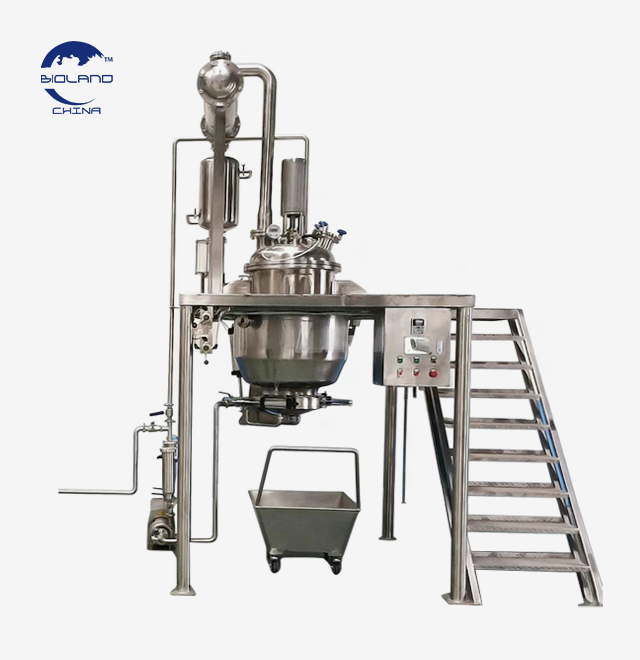
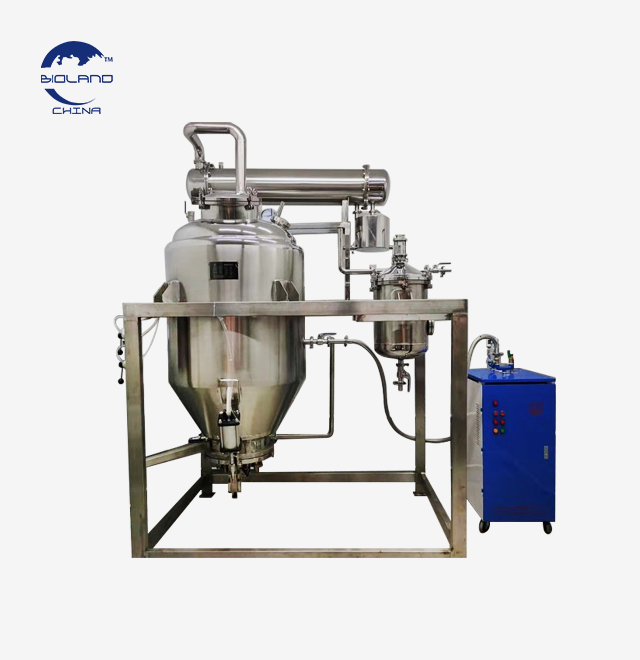
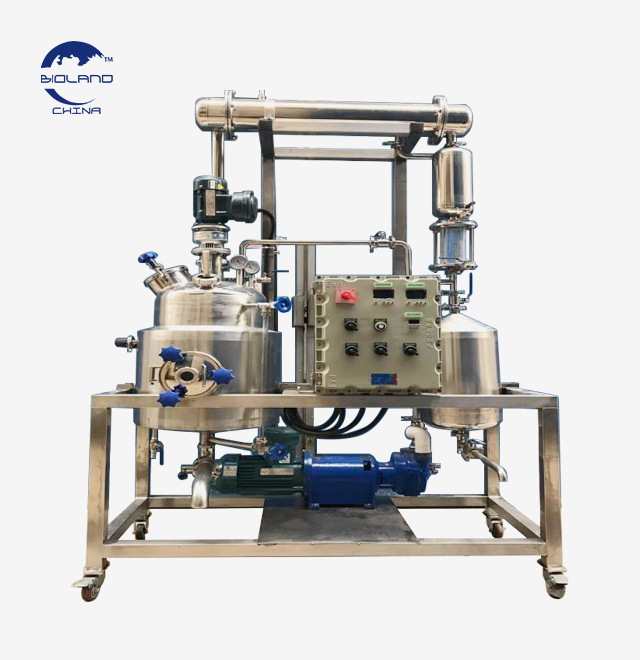
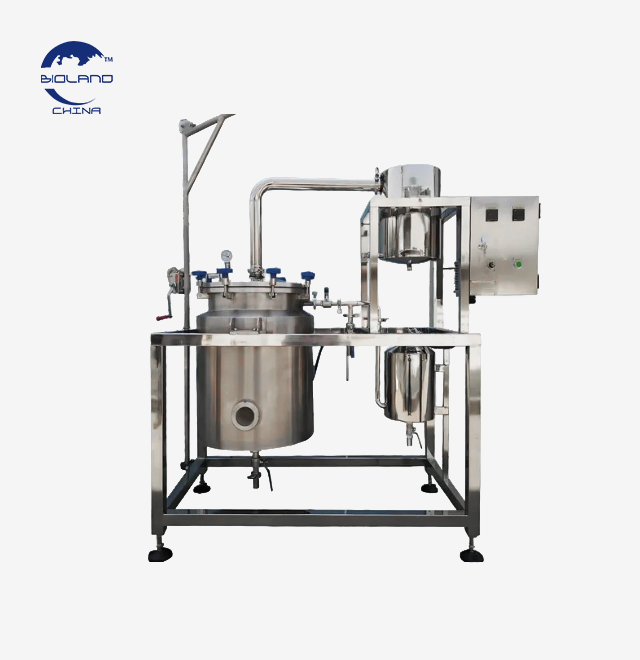
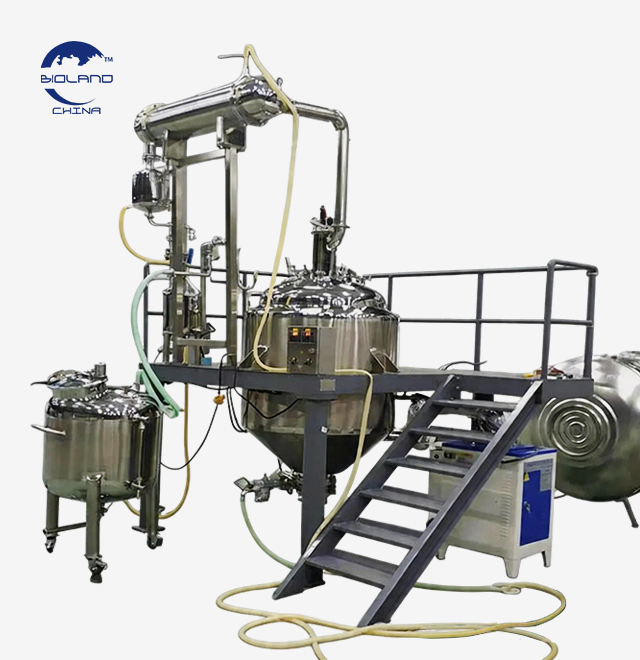
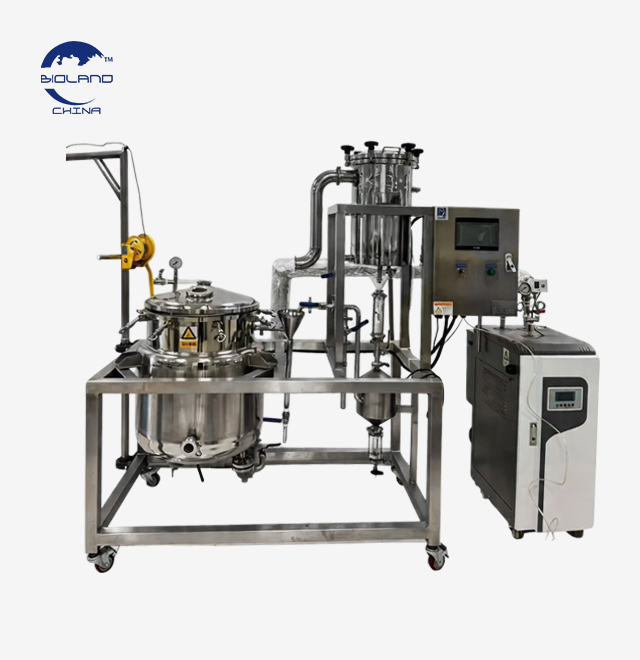
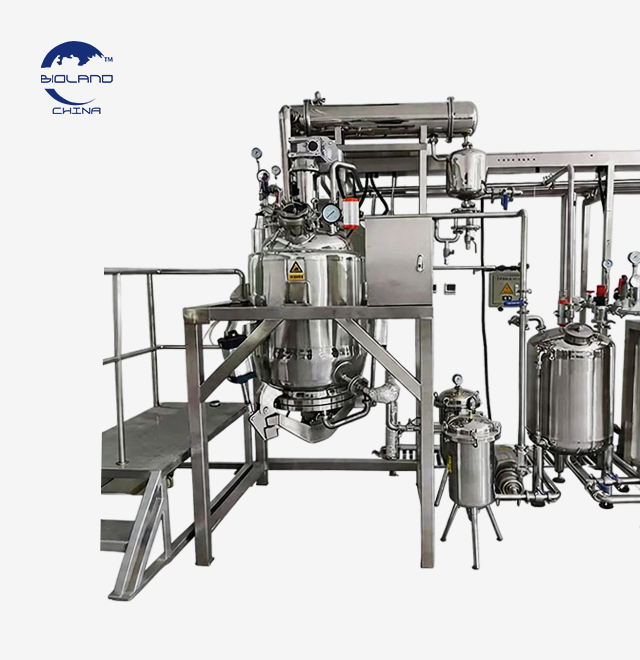
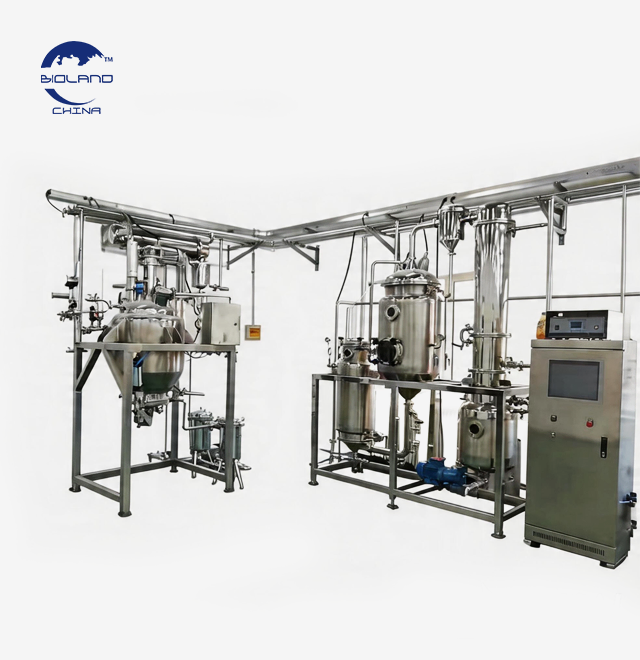
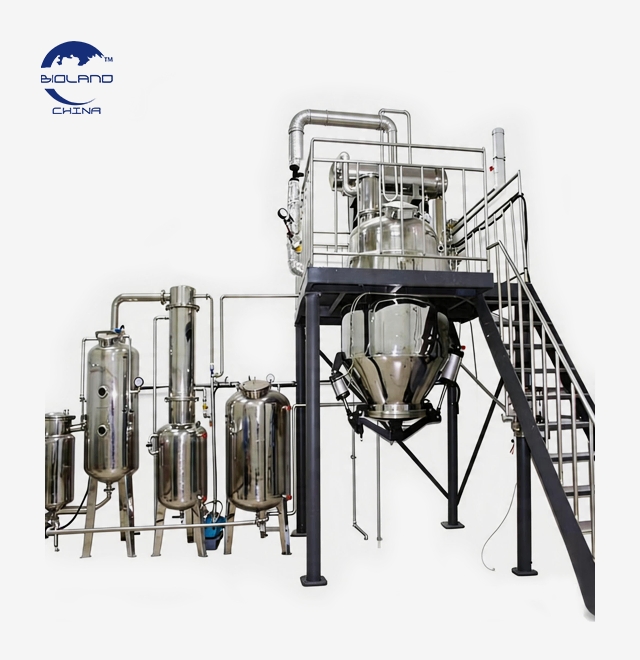
Aromatic Oil Distillation Unit - Professional Essential Oil Extraction Equipment
Precision engineering makes XI'AN BIOLAND INSTRUMENT's aromatic oil distillation unit function well. Our systems use SS304/SS316L stainless steel with a Ra < 0.4µm sanitary finish for GMP compliance and minimal cross-contamination. The sophisticated PID temperature control ensures ±1°C precision from room to 100°C. Our devices support SD, UAE, and SFE-CO₂ extraction procedures, maximizing yields while retaining sensitive aromatic chemicals. We provide professional-grade extraction technology with capacities from lab to industrial 1000L systems, optional PLC automation, and integrated oil-water separators for 0.8-1.2 g/cm³ specific gravity variations, supported by 15+ years of manufacturing knowledge.
Why Choose Us?
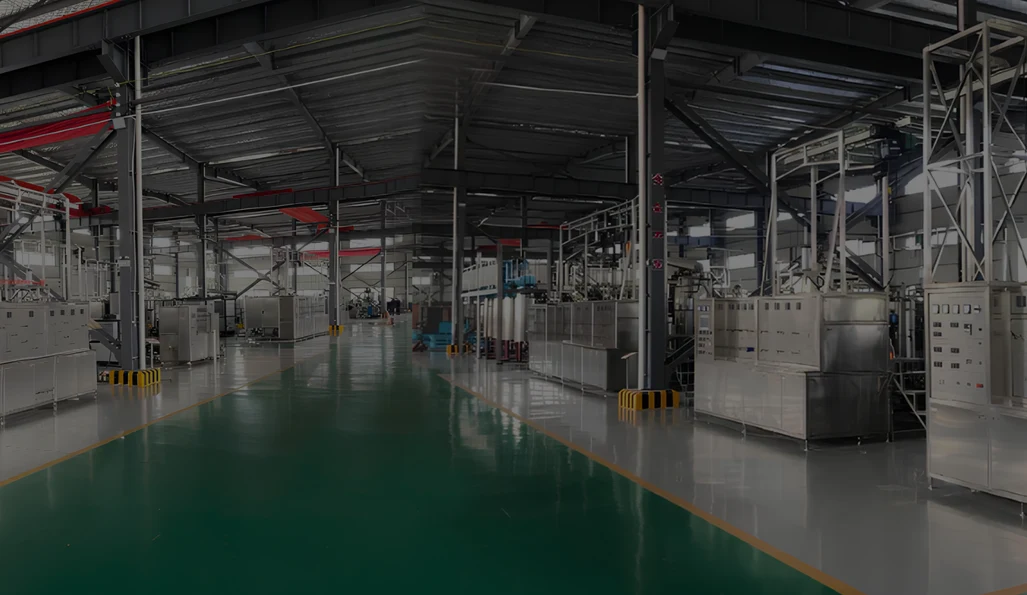
Certified Manufacturing Excellence
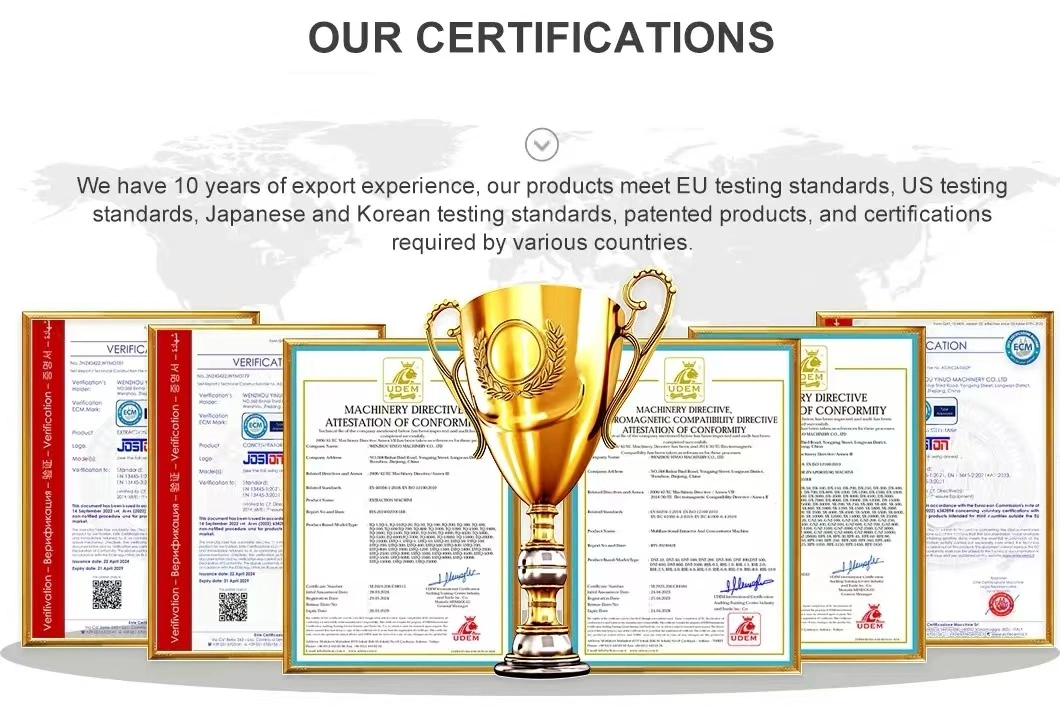
You should use reliable gear for your output. We are certified by CE, ISO, UL, and SGS, which means that every product we make meets the highest safety and quality standards around the world. For pharmaceutical-grade uses, all of the devices meet GMP and FDA standards.
Customization & Fast Delivery
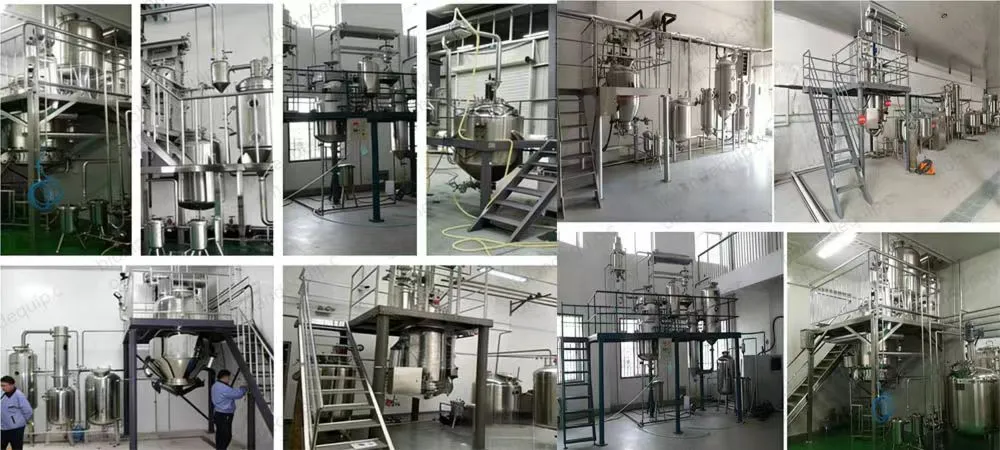
We know that your needs are special. Our in-house research and development team comes up with custom solutions that are made to fit your production goals and plant materials. OEM and ODM services are included. Need tools right away? Free-of-charge units are sent out in 5 to 7 days. Changes to the settings? In 30 working days, it will be ready.
Transparent Production Tracking
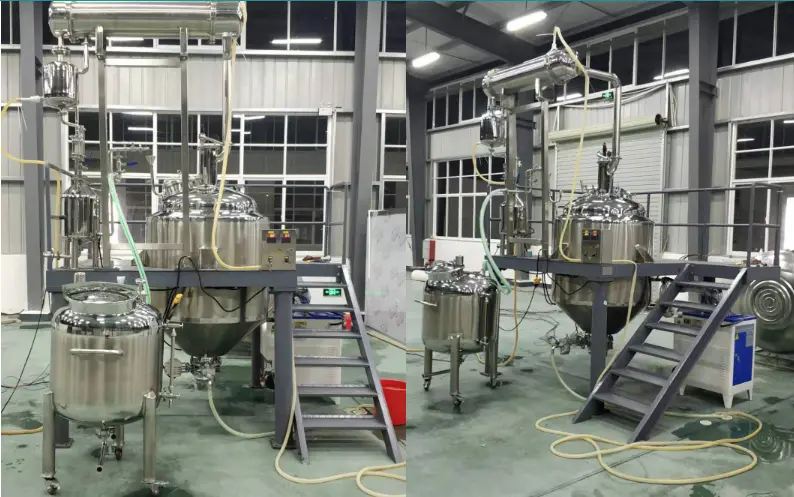
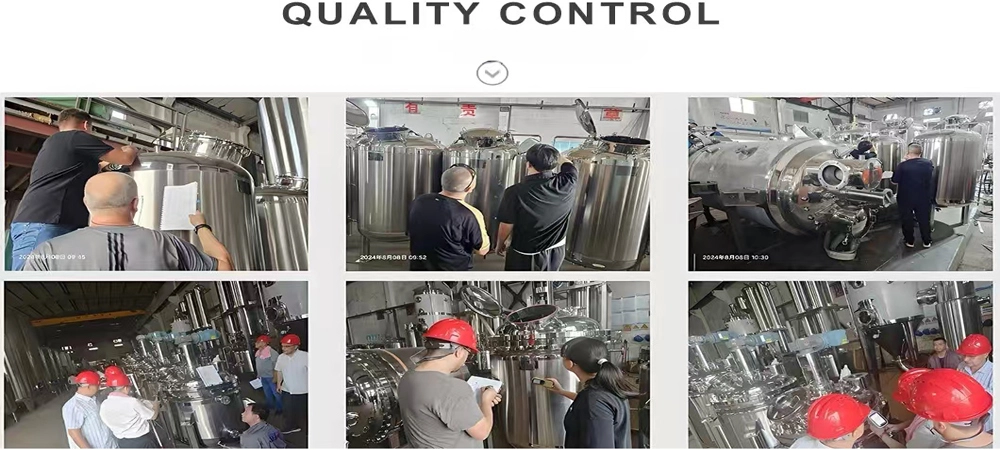
Stay updated while the product is being made. Every week, your personal expert sends you progress reports with photos and videos. You can get full paperwork for remote approval before shipping, or you can set up a Factory Acceptance Test (FAT) at our Xi'an plant.
Comprehensive Support System
It's not enough to just offer quality. You get a warranty that lasts for one year and forever help for upkeep. Our senior experts help with fixing in real time. Our trained staff is ready to help you whether you're harvesting lavender in France or lemongrass in Southeast Asia.
Factory-Direct Pricing
Get rid of the costs of middlemen. Direct maker pricing lets you get business-grade tools at prices that are competitive, which increases your production ROI.
Technical Parameters
|
Parameter
|
|
Type
|
Voltage
|
Volumn (L)
|
Heating Method
|
Cooling Area(m2)
|
Power (kw)
|
|
BL-JT-50
|
Three-phase 380/220V
|
50
|
Electric heating
|
1
|
10
|
|
BL-JT-100
|
|
100
|
|
1.5
|
12
|
|
BL-JT-200
|
|
200
|
|
2
|
18
|
|
BL-JT-300
|
|
300
|
|
3
|
25
|
|
BL-JT-500
|
|
500
|
Steam heating
|
4
|
2.2
|
|
BL-JT-1000
|
|
1000
|
|
8
|
3
|
|
BL-JT-2000
|
|
2000
|
|
15
|
4
|
Working Principle
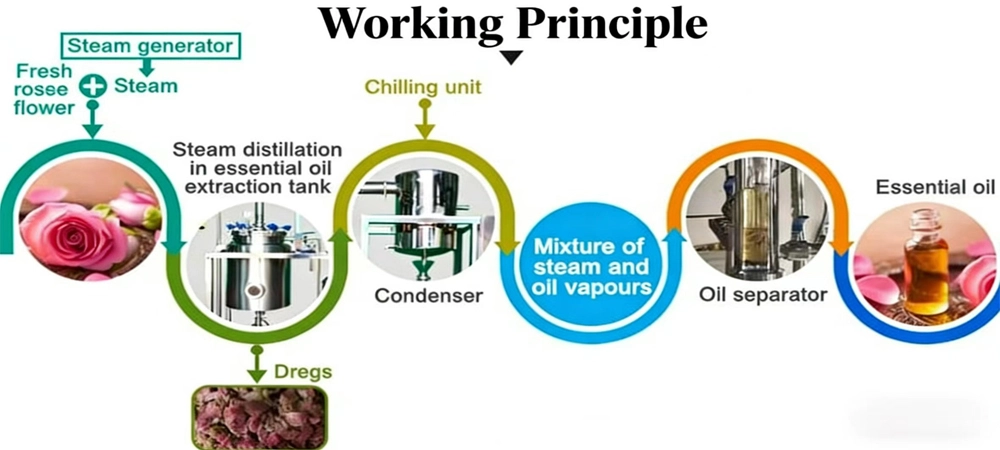
The method works by separating heat in a controlled way. This is how your plants become pure essential oils:
Steam Generation Phase: Heating with electricity or steam creates pressure vapour that seeps into the plant material in the modular extraction basket.
Mass Transfer: When hot steam breaks down plant cell walls, volatile odour chemicals are released. The design of the fake bottom makes sure that the steam is spread out evenly, which stops burning in one area that can lead to "burnt notes."
As the scented vapour and steam mix, it rises to the condenser system. Here, fast cooling turns vapours back into liquids while protecting the delicate esters and terpenes.
Separation of Phases: The mixture that has been cooled goes into the oil-water separation in the Florentine flask. Essential oil naturally rises above the hydrosol layer because of changes in specific gravity. This makes it easy to collect.
Optional Vacuum Enhancement: The vacuum system lowers working pressure for plants that don't like being hot, like rose or neroli. This brings down the boiling points to 60–80°C, which keeps thermolabile chemicals from breaking down.
Intelligent temperature control keeps the best conditions for extraction going all the way through the cycle, so the quality of each batch stays the same.
Process Flow
Step 1: Material Preparation
Load botanical materials into the extraction basket. Fresh or dried flowers, leaves, roots, or peels work effectively.
Step 2: System Setup
Seal the vessel and configure extraction parameters. Select water-separate distillation for flowers or co-water method for robust materials.
Step 3: Heating Initiation
Activate the heating system. The PID controller maintains precise temperature while monitoring system pressure.
Step 4: Extraction Cycle
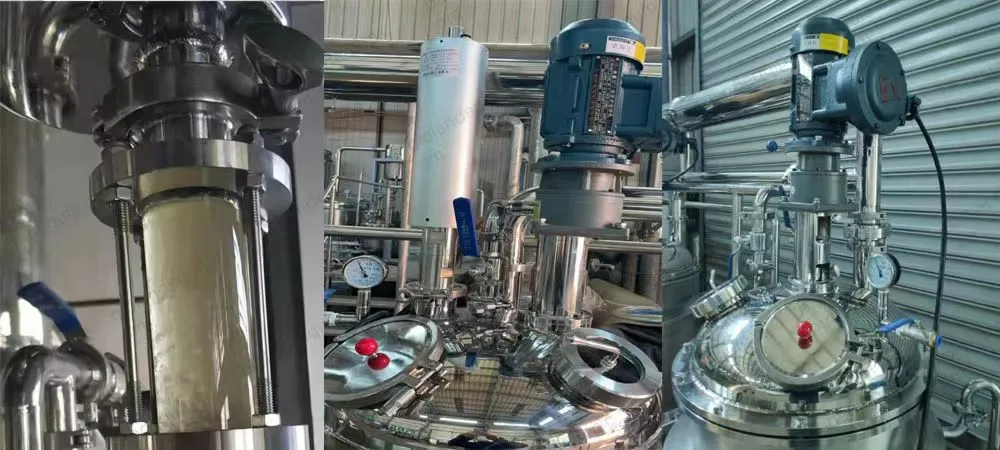
Steam circulates through biomass for the programmed duration. The visualized design lets you monitor the process in real-time.
Step 5: Condensation & Collection
Aromatic vapors condense and separate continuously. The oil layer accumulates in the collection vessel while hydrosol drains separately.
Step 6: Discharge & Cleaning
Use the electric lift platform for easy material removal. The CIP (Clean-in-Place) spray ball system thoroughly cleans internal surfaces with validated protocols, preventing cross-contamination between batches.
Application Fields
Pharmaceutical & Medicinal Extraction
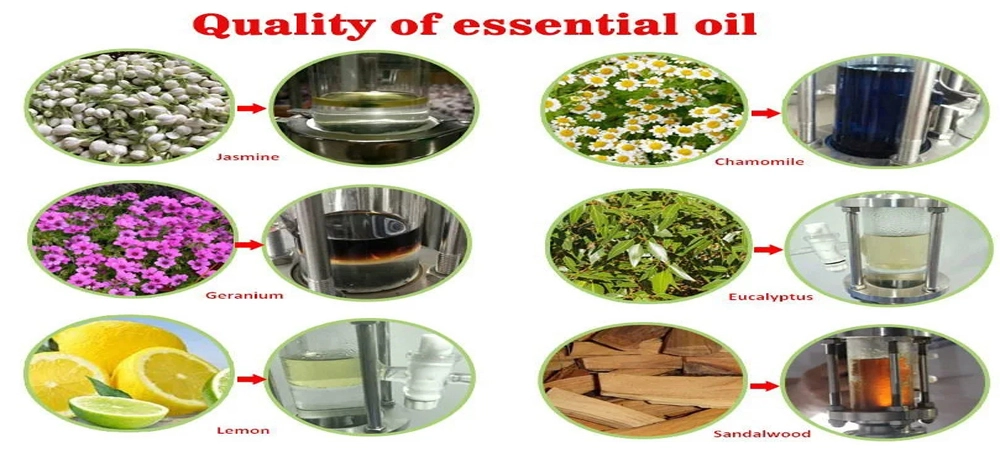
Medicinal plants like Artemisia annua and Eucalyptus globulus can be used to get bioactive chemicals. The aromatic oil distillation unit follows strict GMP rules and logs data for regulatory audit trails. You meet the pharmacopoeial standards for the quantity and purity of chemical markers that are needed in drug manufacturing and pharmaceutical intermediates.
Fine Fragrance & Perfumery
Use vacuum mode to process valuable plants like Damask Rose and Neroli. The method keeps the whole range of smells by working below 100°C, which stops hydrolysis and heat breakdown. The fine top notes that are needed in high-end fragrance are kept up by your absolutes and essential oils.
Cosmetics Manufacturing
Make natural materials for beauty and skin care goods. The clean design makes sure that the purity is high enough for cosmetic use, and the soft extraction keeps the helpful phytocompounds.
Food & Beverage Industry
Citrus peels, mint, vanilla, and cooking herbs can all be used to get natural flavouring ingredients. For making edible oil, the GMP-compliant design meets the rules for food safety.
Agro-Industrial Processing
Turn waste products from farming into useful goods. When working with citrus leaves, cedarwood, or pine materials, set up the product for continuous high-throughput operation. The energy-saving qualities of steam recycling make it possible to handle rough waste on an industrial scale.
Laboratory R&D
Ideal for colleges and study centres that are creating new extraction methods. With smaller sizes, trial batches can be made with the same level of accuracy as professional batches.
Quality Certification
You should be sure of the quality of your investment:
When something has CE certification, it means that it meets European safety, health, and environmental protection guidelines.
ISO Certification: This shows that we are dedicated to using consistent quality control systems in all of our production processes.
GMP Compliance: All production follows the standards for Good Manufacturing Practice that are needed for medicinal and food-grade uses.
Verification by UL and SGS: Safety and performance claims are backed up by testing done by a third party.
Positive Material Identification (PMI), Dye Penetrant Inspection (DPI) on welds, surface roughness testing, and hydrostatic/vacuum leak testing at 1.3 to 1.5x design pressure are just a few of the strict checks that every ship goes through before it leaves port.
FAQ
Q1: Can the unit handle both steam and hydro-distillation?
Yes, our versatile systems feature a false bottom with dual steam inlets. You can use direct steam injection for robust leaves and roots, or water immersion for delicate petals to prevent agglomeration.
Q2: How do you prevent thermal degradation of sensitive oils?
The optional vacuum system lowers operating pressure, allowing water and oils to boil at 60-80°C instead of 100°C. This preserves heat-sensitive terpenes in your valuable botanicals.
Q3: What's the expected condenser lifespan?
With proper maintenance and demineralized cooling water to prevent scaling, the SS316L condenser delivers 15-20 years of service. We recommend regular descaling and pressure testing.
Q4: Do I need a specific steam generator?
The unit requires a steam source matched to the calculated consumption rate (kg/hr). Low-pressure, dry saturated steam works best, preventing excessive biomass wetting that reduces extraction efficiency.
Q5: How do you manage cross-contamination between batches?
Sanitary tri-clamp fittings and spray balls enable CIP (Clean-in-Place) functionality. Our validated cleaning protocol using alkaline detergents followed by acid neutralization ensures zero residue carryover.
Q6: What shipping options do you offer?
We support sea freight, rail, and air shipping to accommodate your timeline and budget requirements worldwide.
Contact Us
Ready to elevate your essential oil production with an aromatic oil distillation unit? Our team is here to help. Reach us at info@biolandequip.com for customized solutions and technical consultation.