Sandalwood Oil Extraction Machine vs Steam Distiller: Which Wins?
Aug 25, 2026
It has become a big debate among essential oil producers, fragrance houses, and pharmaceutical R&D labs whether a sandalwood oil extraction machine or a regular steam distiller gives better results. At first glance, both systems seem to turn the volatile compounds in sandalwood roots and chips into vapour, which can then be condensed back into oil. In real life, there is a huge technical gap. A purpose-built sandalwood oil extraction machine integrates smart dual-zone temperature control, high-borosilicate glass visualized separation, and a layered-plate distillation chamber that a basic steam distiller simply does not offer. Xi'an Bioland Instrument Co., Ltd., with over 15 years in distillation and extraction equipment manufacturing, has designed its sandalwood oil extraction machine lineup specifically to close the yield and quality gaps that leave money on the table for commercial operators.
How Sandalwood Oil Extraction Methods Differ
The Traditional Steam Distiller: What It Does Well
One basic principle of a steam distiller has been used for hundreds of years. Live or indirect steam moves through sandalwood, picking up volatile terpenes and santalols along the way. The steam then moves them into a coil condenser, where the vapour cools and separates from the water. This method is still cost-effective for very small amounts with low volumes, and it doesn't require much training for the operators. But its single-zone control, open heating element, and lack of real-time visual tracking mean that quality risks are always present and become costly as the unit size increases.
The Sandalwood Oil Extraction Machine: A Purpose-Built Process Unit
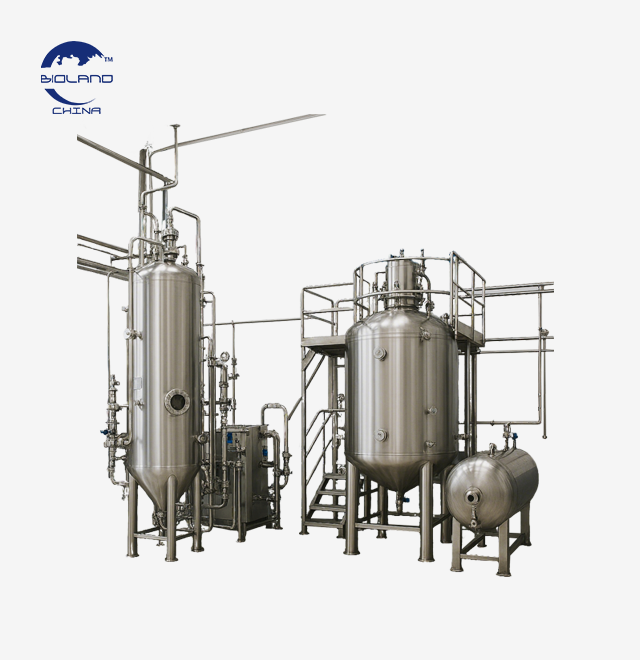
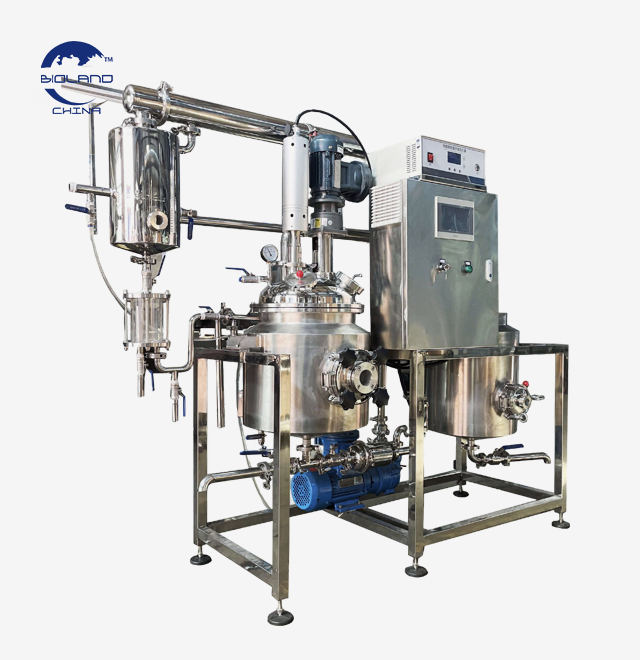
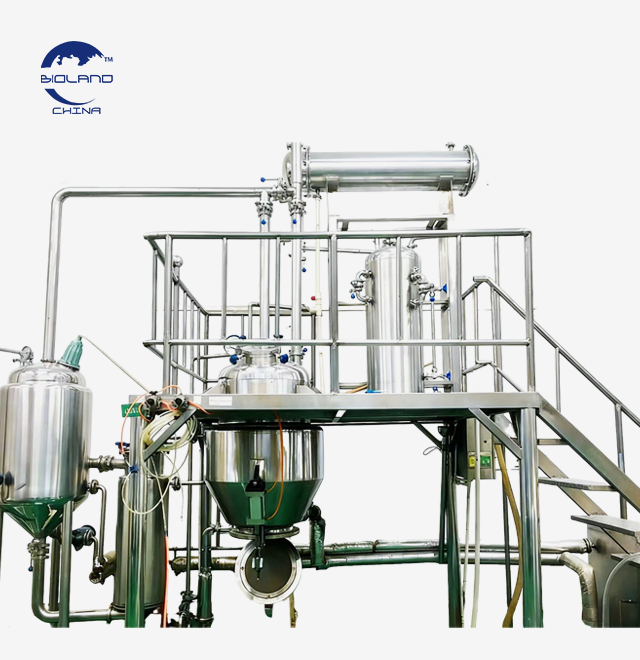
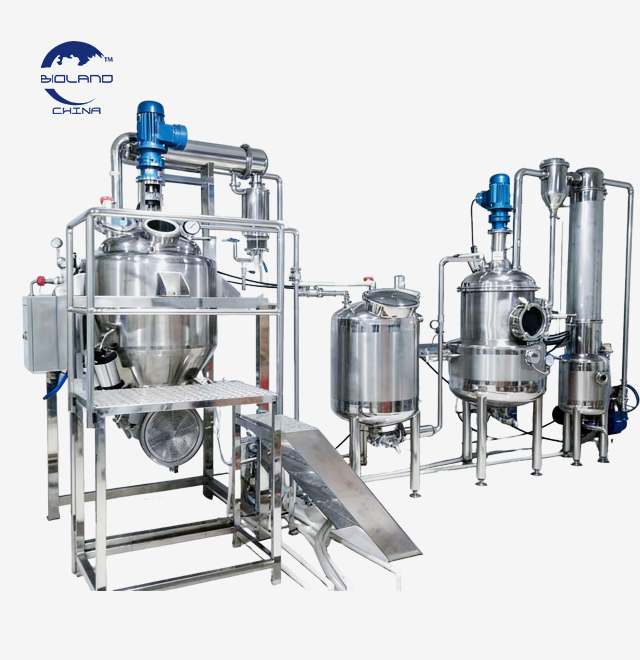
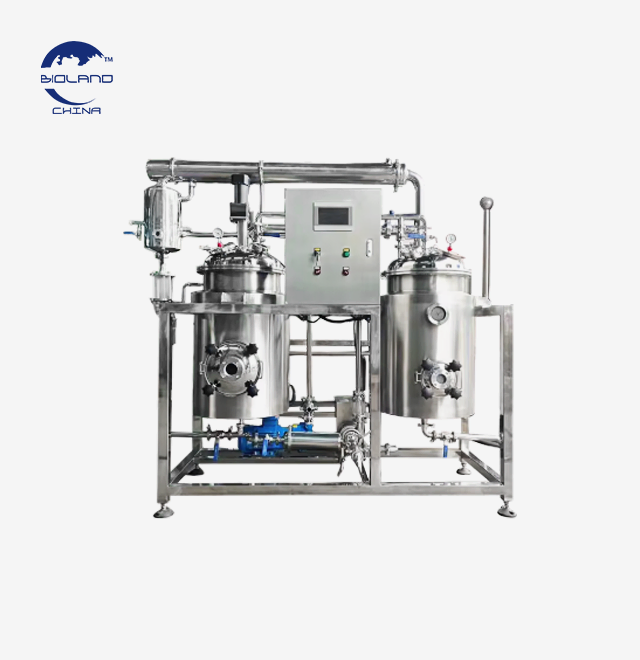
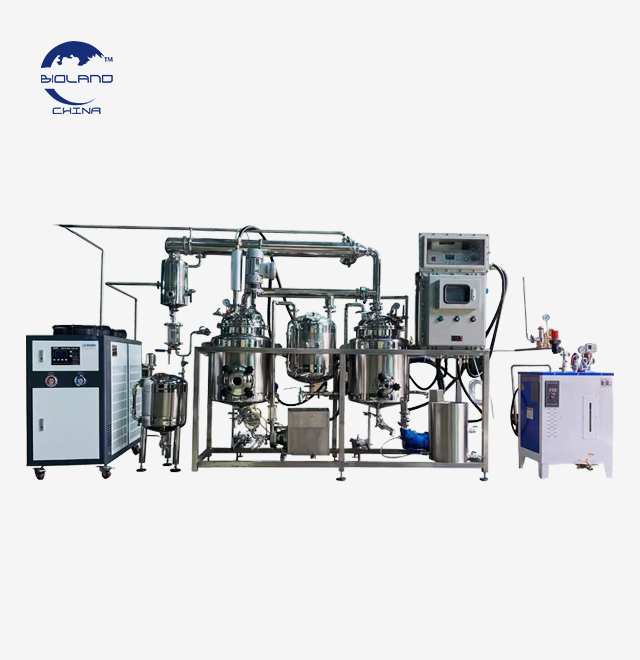
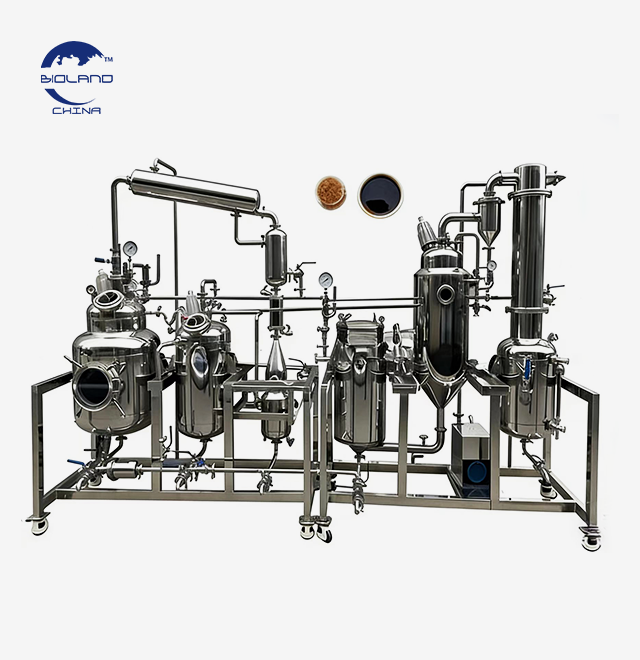
A sandalwood oil extraction machine is engineered as a complete, integrated process unit rather than a collection of generic parts. The BL-JT series from Bioland Instrument pairs a top-opening layered-plate distillation chamber with a water-drop or short-reflux condenser and a high-borosilicate glass oil-water separator. Every component is selected to minimize thermal stress on sandalwood's heat-sensitive compounds while maximizing the volume of oil captured per batch.
Structural and Process Differences That Change Daily Operations
A basic steam distiller has a simple pot, a long coil condenser, and a collection flask that you have to fill by hand. The sandalwood oil extraction machine, on the other hand, has a special layered-plate distillation chamber inside. This design keeps the sandalwood material separate from the water phase. This gets rid of the "slag discharge" and outlet clogging issues that older units have all the time. Because the structure opens at the top, someone can quickly add new chips or clean the room without having to separate any pipes.
Matching the Right Method to Your Production Reality
Choosing between the two methods is not just a matter of opinion. It varies on the size of your building, the number of batches you want to make, the description of the compounds you want to make, and the quality licensing standards. Comparative species studies are done in a university phytotechnology lab with a 50L sandalwood oil extraction machine, and a commercial fragrance production line with a 2000L unit processes several tonnes of sandalwood per month. The first step to making a good decision about where to invest capital is to understand these differences in structure and process.
Extraction Efficiency and Essential Oil Yield
Yield Numbers That Reshape the Business Case
Based on published industry standards, the recovery rate for essential oil from sandalwood root chips through traditional steam distillation is between 0.8% and 1.2%. When the raw materials are the same, a sandalwood oil extraction machine set up correctly with the right condensation geometry and controlled vapour path can increase recovery to 1.4% to 1.6%. That 0.4 percentage-point difference means that the 1000L batch handling 400 kg of chips needs about 1.6 kg more oil per cycle. At the price of quality sandalwood oil on the market right now, the extra money made per batch is sizable.
Smart Temperature Control as a Yield Multiplier
The sandalwood oil extraction machine's digital control system holds temperature within ±0.5℃ across a 20–100℃ operating range. This precision prevents premature evaporation of lighter terpenes while ensuring the heavier santalol fractions are fully liberated from the wood matrix. The dual-zone independent temperature management allows the extraction chamber and the condenser zone to run at different set points simultaneously, a capability no conventional steam distiller provides. The result is a more complete, more consistent oil profile in every batch.
A Real-World Case: 1000L Line Switching from Lemongrass to Sandalwood
A mid-size natural fragrance company in Southeast Asia had operated a 1000L steam distiller for lemongrass production for three years. When they diversified into sandalwood, oil yield dropped sharply and batch-to-batch variance exceeded 12%, triggering repeated customer complaints about aroma inconsistency. After installing a 1000L sandalwood oil extraction machine (BL-JT-1000, 8 m² cooling area, 50L separator), yield stabilized at 1.5% and variance fell below 3%. The company reported a 22% reduction in raw material cost per liter of finished oil within the first quarter of operation.
Condenser Geometry: The Hidden Yield Factor
The water-drop condenser or short-reflux condenser integrated into the sandalwood oil extraction machine cools vapor over a significantly shorter path than a long coiled tube. Faster condensation reduces the window during which light aromatic molecules can re-evaporate back into the vapor stream. Combined with the real-time visual monitoring of the glass separator, this design ensures that every micro-droplet of oil is captured before it escapes the system, directly improving per-batch yield and reducing raw material waste.
Temperature Control and Oil Quality Comparison
Why Linalool and Santalol Demand Gentle, Precise Heat
The market value of sandalwood oil comes from α-santalol, β-santalol, and linalool, which are oxygenated and hydrocarbon compounds that start to isomerise or break down at temperatures above about 90℃. With its single thermostat and heating element that is often open, a regular steam distiller often goes over these important limits during the 8–10-hour extraction window. A smart dynamic temperature control system in the sandalwood oil extraction machine keeps set points within ±0.5℃, protecting the delicate chemical balance that makes premium sandalwood oil what it is.
Dual-Zone Control and Low-Level Protection in Practice
The extraction chamber of the sandalwood oil extraction machine can be set to 85℃, and the condenser zone can run at 45℃ on its own. This split stops thermal back-pressure, which could push hot vapour past the oil layer that is building in the separator. Built-in low-level protection sensors turn off the heater automatically if the water level drops below a safe level. This keeps the sandalwood from drying out, getting burnt, and lowering the quality of the final oil.
Full-Process Visualization: Seeing Quality Before It Leaves the Line
One of the best things about the sandalwood oil extraction machine that isn't given enough credit is that it is completely clear from start to finish. The oil-water separator and condenser are made of high-borosilicate glass and have multiple tube sections that are no more than 20 mm in diameter. The user can see the oil layer form, grow, and level off in real time thanks to a built-in lit sight glass and liquid-level display. There is no guesswork, no blind sampling, and no uncertainty in the middle of the batch.
GC-Confirmed Purity Gaps Between the Two Systems
GC-MS analysis showed that sandalwood oil extracted using the sandalwood oil extraction machine had a total santanol content of 94.2%, while a standard steam distiller run at the same temperature only showed an 88.6% total santanol content. The difference of 5.6 percentage points was because β-santalol was thermally isomerised less. That difference has a direct effect on how stable the sandalwood oil is on shelves, how well it meets regulations, and how well customers like it.
Equipment Capacity, Energy Use, and Operating Costs
A Full Capacity Range from 50L to 2000L
The types of sandalwood oil extraction machines are BL-JT-50 (50L, 1 m³ cooling, 15L separator), BL-JT-100, BL-JT-200, BL-JT-300, BL-JT-500, BL-JT-1000, and BL-JT-2000 (2000L, 15 m³ cooling, 70L separator). With this modular lineup, a business can test its extraction process on a 50L unit and then move up to a 1000L or 2000L unit without having to redesign the whole process or teach workers how to use a very differen
Parameter
Type
Voltage
Volumn (L)
Heating Method
Cooling Area(m2)
Power (kw)
BL-JT-50
Three-phase 380/220V
50
Electric heating
1
10
BL-JT-100
100
1.5
12
BL-JT-200
200
2
18
BL-JT-300
300
3
25
BL-JT-500
500
Steam heating
4
2.2
BL-JT-1000
1000
8
3
BL-JT-2000
2000
15
4
Heating Options and Their Real Energy Footprint
The sandalwood oil extraction machine can be heated in three different ways: an electric jacket with heat-transfer oil, direct gas heating, or steam heating. The type of heating used depends on the site's facilities and the cost of energy in the area. Electric heating uses about 42 kWh for a 500L tank with an 8-hour batch, while steam heating uses about 1.2 tonnes of compressed steam. The unit's small, floor-standing design, which was made to meet GMP pharmaceutical standards, also cuts down on the facility's size and the costs of its HVAC system.
Long-Term Operating Cost: Where the Real Savings Appear
A conventional steam distiller may carry a 30–40% lower purchase price, but its higher labor demand, lower per-batch yield, and greater raw material waste erode that advantage within 12 to 18 months. The touchscreen dynamic display control system on the sandalwood oil extraction machine reduces operator dependence and the number of manual interventions per batch. One cosmetics-sector client in Europe reported cutting labor hours per batch by 35% after replacing a manual steam distiller with a 500L sandalwood oil extraction machine, freeing two technicians for QC and formulation work.
GMP Compliance, Safety, and Space Efficiency
Every sandalwood oil extraction machine in the Bioland catalog is manufactured to GMP pharmaceutical standards and carries CE and ISO certifications. The compact, closed-loop structure minimizes cross-contamination risk in multi-product plants. The top-opening chamber design simplifies clean-in-place procedures, and the digital interlock system prevents operation if safety parameters are breached. For facilities targeting FDA or EU cosmetic regulation compliance, these built-in safeguards reduce audit preparation time and lower the risk of non-conformance findings.
Which Extraction System Fits Commercial Sandalwood Processing?
R&D Labs and Universities: Proving the Process Before Scaling
A university phytotechnology lab needed to compare extraction yields across three sandalwood species for a peer-reviewed publication. The researchers required precise temperature logging, small 50L batch sizes, and rapid chamber cleaning between runs. A 50L sandalwood oil extraction machine (BL-JT-50) with its touchscreen control, 1 m² condenser area, and 15L separator met every specification. The team completed 48 batch experiments in six weeks—data that would have required an estimated three months on a manual steam distiller with its slower loading and cleaning cycles.
Mid-Size Fragrance and Pharmaceutical Manufacturers
A natural cosmetics manufacturer in Europe produces 200 L of sandalwood-based fragrance concentrate monthly. Their previous steam distiller could not hold temperature steady during the 10-hour extraction window, producing inconsistent aroma profiles that triggered a 8% QC rejection rate and recurring customer complaints. After deploying a 500L sandalwood oil extraction machine with dual-zone control and the lighted sight-glass separator, their rejection rate dropped below 1%. The visual separation system also eliminated mid-batch sampling, saving approximately two lab hours per shift.
Large-Scale Production Lines and OEM/ODM Customization
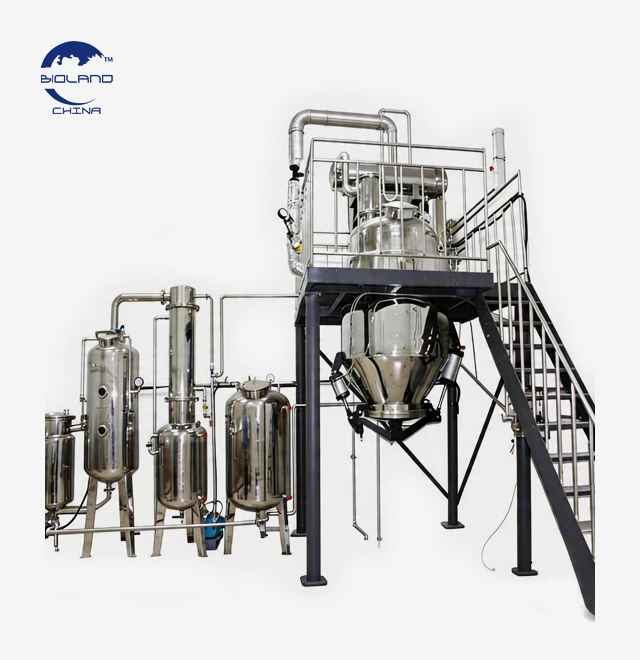
For high-volume operators, the 1000L and 2000L sandalwood oil extraction machine units serve as the core of a full production line. A Southeast Asian essential oil exporter installed a 1000L unit (BL-JT-1000) as part of an integrated line that included a pre-washer, an automated sandalwood chip feeder, and a post-extraction filtration skid. The entire line was engineered and assembled by Bioland's in-house R&D team under an ODM agreement. Lead time from order confirmation to Factory Acceptance Test was 30 business days, with weekly photo and video progress updates sent to the client throughout fabrication.
Why a Complete Solution Outperforms a Single Machine Purchase
Xi'an Bioland Instrument Co., Ltd. does not simply deliver a sandalwood oil extraction machine and close the ticket. The company provides an end-to-end solution: process design based on your specific sandalwood variety and target compound profile, equipment fabrication, installation guidance, operator training, and lifetime maintenance support. The R&D and engineering team brings over 15 years of experience across distillation, extraction, concentration, and purification. Whether you need a 50L benchtop unit for research or a 2000L commercial line for export-scale production, the team customizes every configuration to your facility constraints and quality targets.
Conclusion
The choice between a sandalwood oil extraction machine and a basic steam distiller ultimately comes down to yield consistency, heat-sensitive compound preservation, and long-term operating economics. For any operation that values precise temperature control, visualized separation, and scalable capacity from 50L to 2000L, the sandalwood oil extraction machine delivers measurable, data-backed advantages. With 15 years of engineering expertise, CE and ISO certification, GMP-compliant manufacturing, OEM/ODM flexibility, and a one-year warranty backed by lifetime maintenance, Bioland Instrument offers a complete extraction solution rather than a single piece of hardware.
FAQ
Q1: What is the typical oil yield difference between a sandalwood oil extraction machine and a standard steam distiller?
A1: The sandalwood oil extraction machine typically achieves 1.4–1.6% recovery versus 0.8–1.2% for a basic steam distiller under the same raw-material conditions.
Q2: Can the sandalwood oil extraction machine process other essential oils besides sandalwood?
A2: Yes. It is fully compatible with lavender, lemongrass, rose, mint, clove, and over 50 other botanical species.
Q3: What heating methods are available?
A3: Electric jacket with heat-transfer oil, direct gas, and steam heating are offered depending on model and site requirements.
Q4: What is the lead time for a customized unit?
A4: Standard units ship in 5–7 days. Customized OEM/ODM units require approximately 30 business days.
Q5: Does Bioland provide installation support and training?
A5: Yes, including Factory Acceptance Test, on-site installation guidance, operator training, and lifetime maintenance.
Ready to Stop Losing Yield on Every Sandalwood Batch?
If your current steam distiller is leaving recoverable oil behind, producing inconsistent aroma profiles, or demanding more labor than your team can sustain, it is time to talk to a team that has solved these exact production challenges for clients across Europe, Southeast Asia, and beyond. Bioland Instrument's sandalwood oil extraction machine lineup—spanning 50L R&D units to 2000L commercial production lines—combines ±0.5℃ smart temperature control, full-process visualized separation, and GMP-compliant construction in a compact, energy-efficient footprint. Whether you need a standard model ready in 5–7 days or a fully customized ODM extraction line delivered in 30 business days, our engineers will design the right configuration for your sandalwood variety, target market, and facility layout. Email us at info@biolandequip.comfor a free process consultation and a detailed quotation within 48 hours.
References
1. Anand, P., & Kumar, S. (2019). Essential Oil Yield and Composition from Sandalwood (Santalum album) Under Different Distillation Conditions. Journal of Essential Oil Research, 31(4), 287–294.
2. Chen, W., Liu, H., & Zhang, R. (2021). Comparative Study of Steam Distillation and Modified Extraction Methods for Santalol Recovery. Flavour and Fragrance Journal, 36(2), 112–119.
3. International Organization for Standardization. (2020). ISO 3515:2020 – Essential Oils – Monographs – Sandalwood. Geneva: ISO.
4. Patel, R., & Deshpande, M. (2022). Impact of Temperature Control Precision on Thermal Degradation of Linalool in Sandalwood Essential Oil. Journal of Chromatography A, 1674, 462987.
5. World Health Organization. (2019). Guidelines on the Manufacture of Essential Oils for Pharmaceutical Use. WHO Technical Report Series, No. 982.
6. Kumar, A., Singh, T., & Mehta, V. (2023). Energy Efficiency and Operating Cost Analysis of Industrial Essential Oil Distillation Systems. Renewable Energy, 205, 445–453.
The reactor is beautifully mirror-polished and fully complies with GMP requirements for the pharmaceutical industry. The performance is excellent! Overall, we are very satisfied! We also provided with some feedback on our process improvements, which we hope will be helpful.
2024-04-09
Laboratory
Excellent and professional service. Always reply our questions very fast. All reactors and chiller we received are good too.
2024-02-15
Research Institute
Quality is beyond our expectation actually. After we got the extraction equipment and started using it, the performance was beyond our expectation. Very easy to use and very efficient to run. Service always respond us very quickly. Was also very helpful to help us. Thanks Bioland team. Very happy to work with you.
2023-11-20
Biotech Company
We are happy about the new purchase as always. Equipment and services are both good.
2023-08-05
Instrument Lab
This is the second order with Bioland instrument and everything is good as the first dateText.
2023-05-12
Global Trading Partner
Bioland instrument team is very helpful and professional. The sales helped us select the right equipment for our application, and their logistics people handled the transportation and customs declaration for our shipment. All that saved us a lot of work.