How Does a Chemical Engineering Reactor Improve Production?
Aug 25, 2026
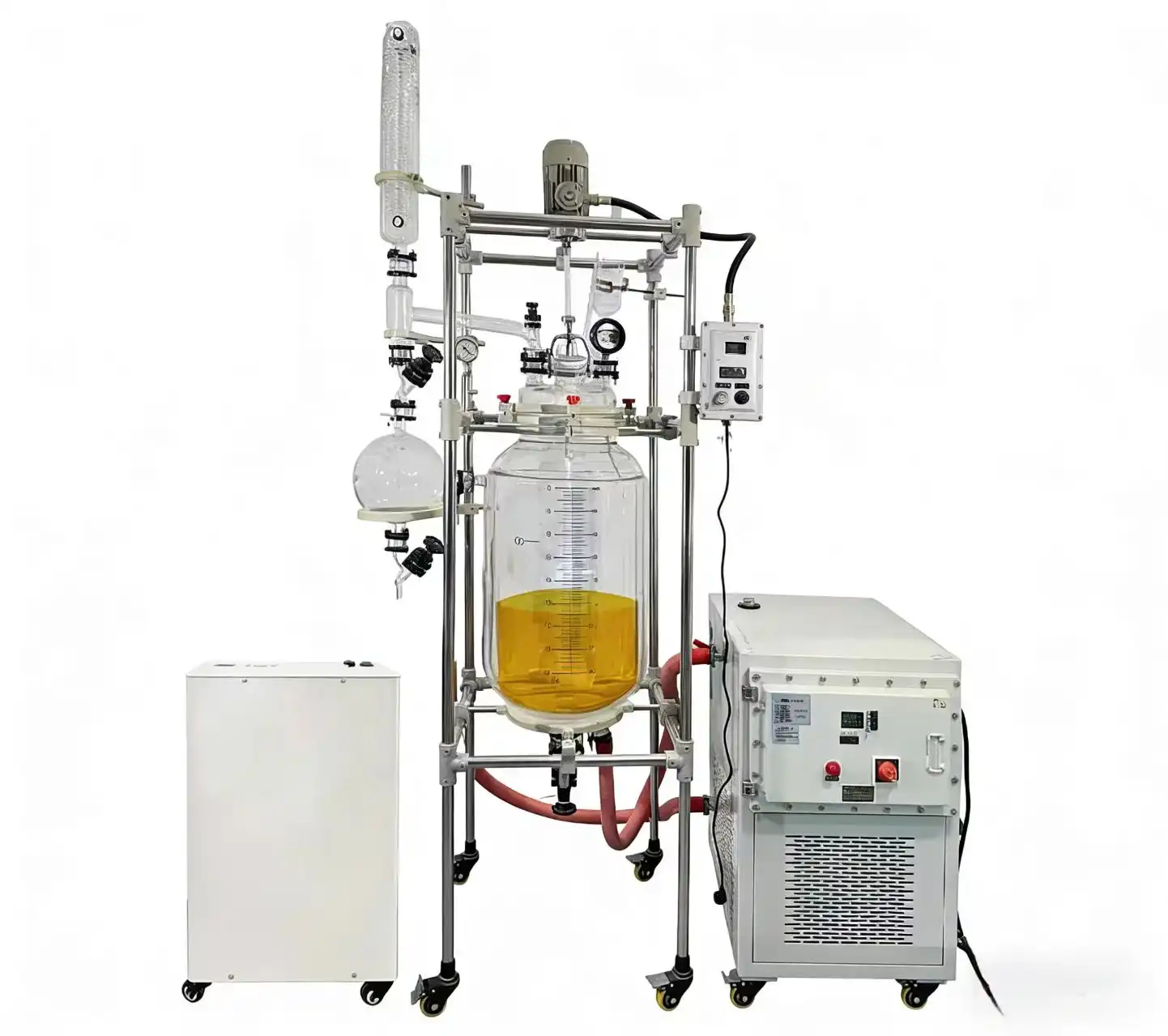
In chemical manufacturing, profit is decided inside the vessel. A well-specified chemical engineering reactor raises yield, shortens cycle times, protects product purity, and scales smoothly from bench research to pilot production—while the wrong one quietly drains all four. For more than 15 years, Xi'an Bioland Instrument Co., Ltd. has engineered the right one. Our chemical engineering reactor platform pairs a transparent GG17 high-borosilicate glass body with a double-jacketed thermal envelope covering −80 °C to 300 °C, vacuum performance down to −0.095 MPa, and a modular five-neck flange lid that turns one unit into a complete reaction, distillation, extraction, condensation, and crystallization station. CE- and ISO-certified, GMP/FDA-compliant, and supported by an in-house R&D team at factory-direct prices, every Bioland chemical engineering reactor arrives as a solution rather than a container—for laboratories, pilot plants, and production sites across Europe, Southeast Asia, and beyond.
The Role of Reactor Design in Enhancing Chemical Production Efficiency
Transparent Borosilicate Glass Removes the "Black Box" from Batch Decisions
Productivity begins with sight. Because the GG17 glass body of a Bioland chemical engineering reactor is fully transparent, operators watch color shifts, precipitate formation, and phase separation as they happen—adjusting temperature or feed rate mid-batch instead of discovering a failed run hours later. This visibility shortens troubleshooting from days to minutes, strengthens mechanistic judgment, and makes every batch easier to repeat. It is precisely why experienced process-development teams treat a glass chemical engineering reactor as an analytical instrument, not merely a container, and why regulatory-friendly documentation becomes simpler when the process was observed, not guessed.
A Double Jacket Keeps Kinetics Predictable from −80 °C to 300 °C
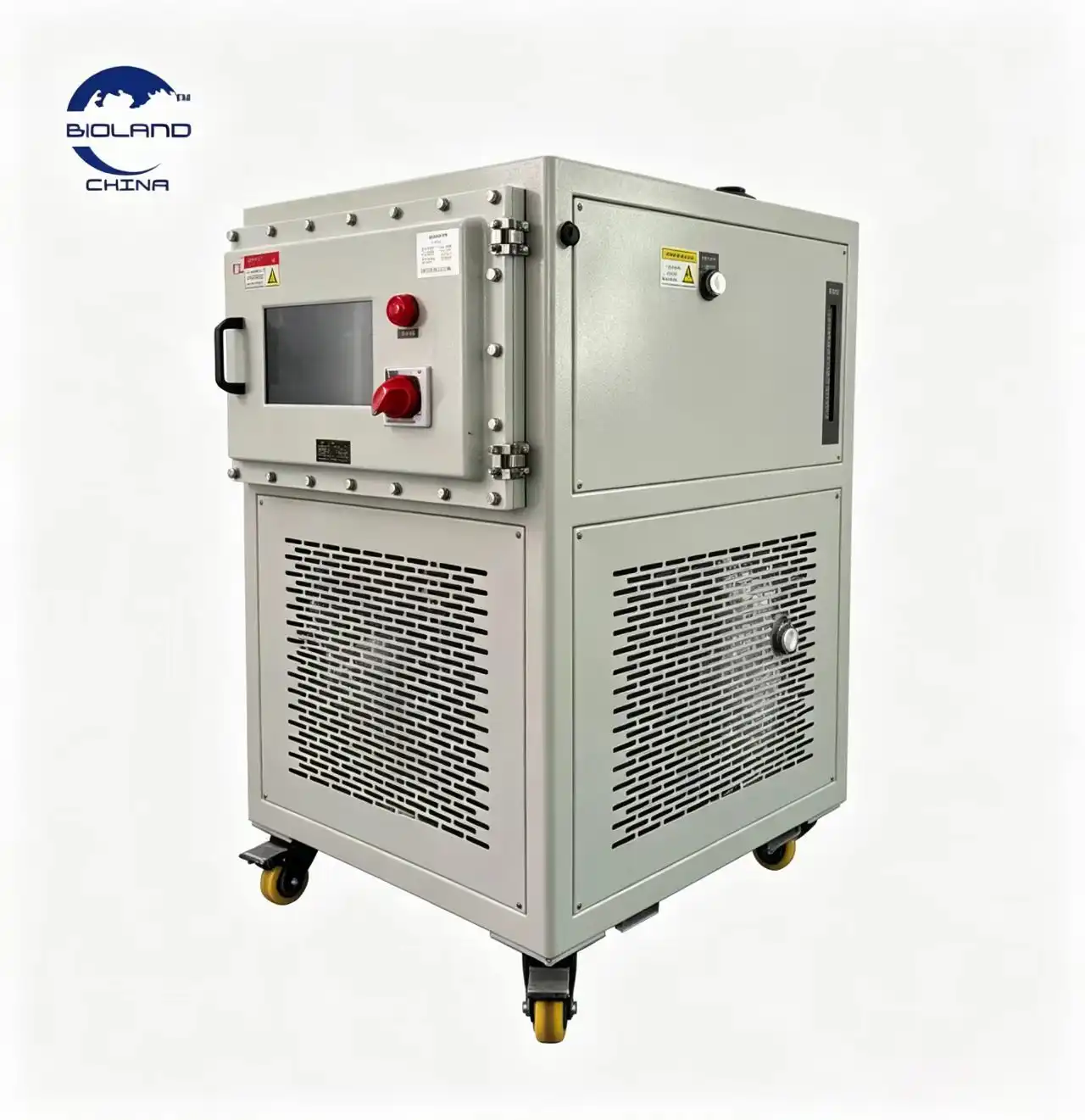
The second design pillar is thermal discipline. Double-jacket construction circulates heating and cooling fluid across the entire wetted surface, so exothermic and cryogenic steps stay within tight limits throughout the batch. Whether a recipe calls for low-temperature condensation or high-temperature reflux, achemical engineering reactor with this thermal envelope keeps reaction kinetics predictable, protects heat-sensitive intermediates, and suppresses the hot spots and thermal runaway episodes that ruin batches and schedules. Tight, uniform temperature control also widens the operating window for delicate catalysis and controlled crystallization, where a single degree can decide product quality.
One Vessel, Five Unit Operations: The Modular Advantage
The third pillar is configurability. A standard five-port flange lid lets a single chemical engineering reactor accept condensers, fractional distillation columns, dropping funnels, temperature probes, and vacuum pumps—reconfiguring in minutes for distillation, extraction, catalysis, or crystallization duty. R&D groups validate several processes on one platform instead of purchasing dedicated equipment for each step, an economy that compounds as projects approach scale-up. Combined with the low maintenance of a lifting-rotating frame that simplifies charging, discharging, and cleaning, few laboratory investments return value as reliably as a well-configured chemical engineering reactor from Bioland Instrument.
How Reaction Control Systems Improve Process Stability and Output Quality
Variable-Frequency Agitation Tunes Mass Transfer, Not Just Motion
Stability is built on control loops that never blink. The spark-free, low-noise variable-frequency drive on each chemical engineering reactor adjusts stirring from gentle suspension to vigorous dispersion—an important safety margin in solvent-rich rooms. Agitation intensity governs mass and heat transfer; tuning it properly improves selectivity, prevents localized overheating, and lifts conversion batch after batch. For aerated or fermentation-type chemistry, impeller geometry becomes the deciding performance variable, a lesson one biopharmaceutical client learned with striking results, described just below.
Dual Sealing and an All-Glass Path Protect Sensitive Chemistry
Sealing comes next. A PTFE seal backed by a mechanical seal allows the chemical engineering reactor to hold an inert-gas blanket for oxygen-averse synthesis such as chiral intermediates, while the all-glass wetted path contributes zero metal-ion contamination. Strong acids, strong alkalis, and aggressive organic solvents run without corroding the vessel or tinting the product—essential for pharmaceutical intermediates and biologically active compounds where trace metals trigger regulatory questions. That combination is why high-purity synthesis programs increasingly standardize on glass.
Vacuum and PLC Automation Convert Control into Records
Connected to a vacuum system reaching −0.095 MPa, the same chemical engineering reactor lowers boiling points, accelerates evaporation, and sharpens fractionation during distillation and reflux steps. Optional PLC control choreographs temperature, stirring, and pressure profiles while logging every parameter—ideal for GMP batch documentation—and removes operator-to-operator variability, the hidden enemy of consistent quality. The result is a process that repeats on Friday night exactly as it ran on Monday morning.
The challenge: A South American biopharmaceutical company approached Bioland with painful symptoms: insufficient dissolved-oxygen efficiency, fermentation cycles running long, drifting parameter control, unstable purity, and no suitable environment for oxidation-sensitive materials.
The solution: We engineered a custom 50 L jacketed glass chemical engineering reactor with a redesigned impeller system. Dissolved-oxygen efficiency climbed 30%, fermentation cycles shortened, and sterile, precisely controlled conditions held throughout intermediate synthesis.
The result: Visibility (real-time observation of color and precipitate changes), corrosion resistance suited to strong acid and base systems, and inert-gas protection for oxygen-sensitive drug chemistry translated directly into higher purity and fewer lost batches.
Key Factors That Influence Reactor Performance in Industrial Production
Material Compatibility Sets the Ceiling on Service Life and Purity
When a chemical engineering reactor underperforms in industrial service, three factors explain most of the variance. First is compatibility: GG17 glass shrugs off virtually all strong acids, alkalis, and organic solvents, so the vessel neither corrodes nor contaminates the product. Clients run our custom glass reactors on nitric acid service and acidified-glycerin production lines today—duty where a metallic chemical engineering reactor would pit, shed ions into the batch, and force premature replacement.
Scale-Up Discipline: Geometry That Grows with Your Process
Second is scale-up logic. Mixing time, heat-transfer area per liter, and vapor headspace must scale together, which is why the Bioland chemical engineering reactor line spans bench volumes through 50 L pilot and 200 L production units with consistent geometry. A process validated at 5 L transfers upward with confidence, supported by engineering reviews from our senior technicians. When selecting a chemical engineering reactor, experienced engineers also budget 20–30% headspace for foaming and boiling, and match seal and gasket materials to the solvent inventory before anything else.
Safety Engineering and the Maintenance Habits That Preserve It
Third is operational discipline. Explosion-proof configurations to Exd IIB T4, spark-free variable-frequency motors, dual seals, and a lifting-rotating frame that simplifies charging, discharging, and cleaning all cut risk and downtime simultaneously. Simple routines—weekly seal inspection, periodic flange-bolt torque checks, careful gasket handling—keep a chemical engineering reactor in service for years, and our manuals and support engineers make those routines easy to institutionalize. In this business, prevention is always cheaper than cure.
How Advanced Reactor Technologies Support Scalable Chemical Manufacturing
Automation and Explosion-Proof Engineering for Around-the-Clock Output
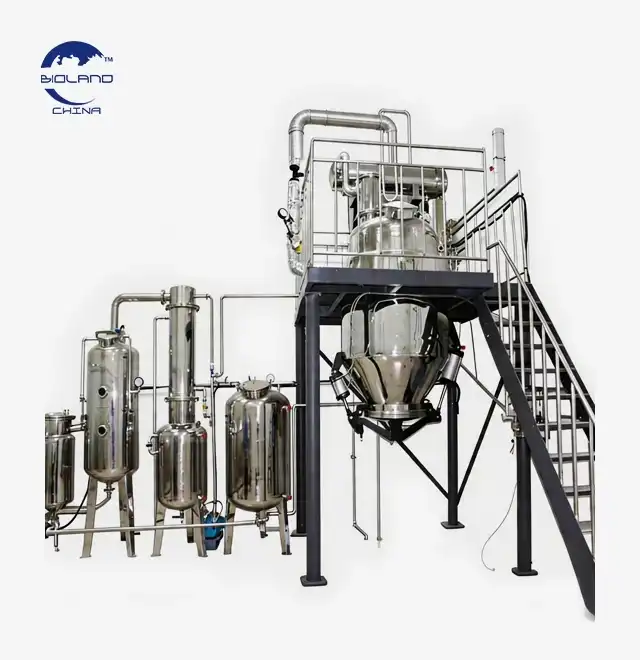
Scalability is where advanced engineering earns its keep. A modern chemical engineering reactor can be specified with PLC-based full automation, integrated temperature control, lifting-rotation mechanics, filtration and crystallization modules, ultrasonic crystallization, tail-gas absorption, rectification columns, and purification–concentration stages—each engineered to order. Full explosion-proof builds to Exd IIB T4 extend the same glass chemical engineering reactor platform to high-hazard chemistry that would otherwise demand far costlier metallic alternatives with none of the visibility.
OEM/ODM Customization for Processes That Refuse to Be Standard
No two processes are identical, so customization sits at the center of our offer. Bioland Instrument routinely builds non-standard chemical engineering reactor systems—different sizes, shapes, materials, and structures—matched precisely to each customer's experimental or production requirements. With more than 15 years of engineering experience behind every drawing, custom units ship in roughly 30 business days and standard products in 5–7 days, by sea, rail, or air, anywhere in the world. Our highly trained team is always available to discuss sourcing requirements before a single component is cut.
Transparent Delivery: Tracking, FAT, Warranty, and Lifetime Support
Visibility continues after the purchase order. A dedicated specialist sends weekly photos or videos of every chemical engineering reactor on our production line; finished goods are photographed or filmed for your approval before shipment; and a Factory Acceptance Test (FAT) can be scheduled at our facility the moment goods are ready. A one-year warranty, lifetime maintenance, and GMP/FDA-aligned documentation complete a procurement package designed to remove every unknown from the buying process.
The challenge: A European precious-metals refiner needed to scale solvent extraction and refining. Existing equipment offered small throughput, low separation efficiency, and little customization headroom for a newly built production line.
The solution: Bioland Instrument engineered four 200 L explosion-proof jacketed glass chemical engineering reactors and nine 50 L explosion-proof rotary evaporators for strongly corrosive, high-hazard service, certified to Exd IIB T4.
The result: Modular manufacturing compressed delivery time by 40%, commissioning started 15 days early, annual capacity rose 30%, and the line has logged more than 1,000 fault-free hours—while transparent vessels let operators monitor aggressive media directly, with zero corrosion-related contamination.
Applications of Chemical Engineering Reactors in Modern Industrial Processes
Pharmaceuticals and Biopharmaceuticals, from Synthesis to Pilot Validation
Application breadth is the final proof of value. In pharmaceuticals, a chemical engineering reactor carries the synthesis of intermediates and active ingredients, inert-atmosphere steps for oxygen-averse compounds, and pilot validation under GMP expectations. Foreign pharmaceutical companies and chemical-intermediate producers run Bioland reactors in live production today, leaning on transparency for endpoint judgment and glass purity for regulatory cleanliness. Crystallization and filter-reactor variants extend the same validated platform through isolation and purification, so one design covers the workflow end to end.
Catalysis, Petrochemicals, Metallurgy, and New Materials
In catalytic and polymer work, the reactor doubles as an observation cell for catalyst activity and selectivity, accelerating development cycles measurably. Petroleum and metallurgical laboratories deploy the same chemical engineering reactor for high-temperature studies, ore leaching, and chemical analysis of petroleum products; precious-metals plants trust it for solvent extraction and refining; and new-materials teams exploit the clean, observable environment for specialty synthesis. One well-chosen chemical engineering reactor quietly serves an entire R&D portfolio.
Food, Cosmetics, and Emerging Industries
Food developers run fermentation control, concentration, and flavor-mixing trials; cosmetics manufacturers rely on gentle, controllable agitation for emulsification; pesticide, fuel, and bio-extraction producers complete a customer base spanning Europe, Southeast Asia, and beyond. Because the chemical engineering reactor integrates reaction, distillation, extraction, filtration, crystallization, mixing, and drying support in one frame, these industries standardize on a single platform—supported by Bioland's wider portfolio of extraction, concentration, separation, filtration, and drying equipment for laboratories and production floors alike.
Conclusion
A chemical engineering reactor improves production at every level of the operation. Transparent design accelerates development decisions; jacketed thermal control stabilizes kinetics; modular ports multiply the value of one vessel across five unit operations; and automation with explosion-proof engineering makes continuous manufacturing safe and repeatable. From a 50 L pilot unit that lifted dissolved-oxygen efficiency 30% for a South American biopharmaceutical client to a four-reactor installation that raised a European refiner's annual capacity 30%, the pattern holds: a custom-built, CE/ISO-certified Bioland chemical engineering reactor—backed by 15 years of engineering, GMP/FDA compliance, and lifetime support—converts stubborn process problems into durable competitive advantage.
FAQs
Q1: What temperature and vacuum range does a Bioland chemical engineering reactor cover?
A: −80 °C to 300 °C through the double jacket, with vacuum down to −0.095 MPa.
Q2: Can I order a customized or explosion-proof chemical engineering reactor?
A: About 30 business days for customized products; 5–7 days for standard items.
Q4: Do the reactors meet regulatory standards?
A: All products comply with GMP/FDA standards, with CE and ISO certification.
Q5: How will I stay informed during production?
A: Weekly photos or videos, inspection media before shipping, and optional FAT at our factory.
Ready to Put a Bioland Chemical Engineering Reactor to Work in Your Process?
Stop shopping for equipment and start solving your process. Whether you are fighting scale-up puzzles, chasing purity, or building an entirely new line—as our clients in pharmaceuticals, precious metals, fine chemicals, and food already have—Bioland Instrument brings more than 15 years of engineering, an in-house R&D team, CE and ISO certification, GMP/FDA compliance, and true factory-direct pricing to every conversation. Choose a proven chemical engineering reactor from our catalog, or challenge our engineers with a fully non-standard design: explosion-proof construction, PLC automation, integrated temperature control, lifting-rotation frames, filtration, crystallization, tail-gas absorption, and rectification columns, all engineered around your chemistry.
Weekly production updates with photos and videos, Factory Acceptance Testing, a one-year warranty, lifetime maintenance, and sea, rail, and air freight keep you informed and protected at every step—because our mission is first-class equipment at the lowest price, with real-time support that expands your production capability. Every Bioland chemical engineering reactor is a partnership, not a transaction. Tell us about your process today at info@biolandequip.com—OEM and ODM inquiries are warmly welcomed, and your next breakthrough batch may be one email away.
References
1. Levenspiel, O. Chemical Reaction Engineering, 3rd Edition. John Wiley & Sons, 1998.
2. Fogler, H. S. Elements of Chemical Reaction Engineering, 5th Edition. Prentice Hall, 2016.
3. Sinnott, R. K., and Towler, G. P. Chemical Engineering Design, 6th Edition, Coulson & Richardson's Chemical Engineering Series, Vol. 6. Butterworth-Heinemann, 2019.
4. McCabe, W. L., Smith, J. C., and Harriott, P. Unit Operations of Chemical Engineering, 7th Edition. McGraw-Hill, 2005.
5. Green, D. W., and Perry, R. H. Perry's Chemical Engineers' Handbook, 9th Edition. McGraw-Hill Education, 2018.
6. Treybal, R. E. Mass-Transfer Operations, 3rd Edition. McGraw-Hill, 1980.
The reactor is beautifully mirror-polished and fully complies with GMP requirements for the pharmaceutical industry. The performance is excellent! Overall, we are very satisfied! We also provided with some feedback on our process improvements, which we hope will be helpful.
2024-04-09
Laboratory
Excellent and professional service. Always reply our questions very fast. All reactors and chiller we received are good too.
2024-02-15
Research Institute
Quality is beyond our expectation actually. After we got the extraction equipment and started using it, the performance was beyond our expectation. Very easy to use and very efficient to run. Service always respond us very quickly. Was also very helpful to help us. Thanks Bioland team. Very happy to work with you.
2023-11-20
Biotech Company
We are happy about the new purchase as always. Equipment and services are both good.
2023-08-05
Instrument Lab
This is the second order with Bioland instrument and everything is good as the first dateText.
2023-05-12
Global Trading Partner
Bioland instrument team is very helpful and professional. The sales helped us select the right equipment for our application, and their logistics people handled the transportation and customs declaration for our shipment. All that saved us a lot of work.