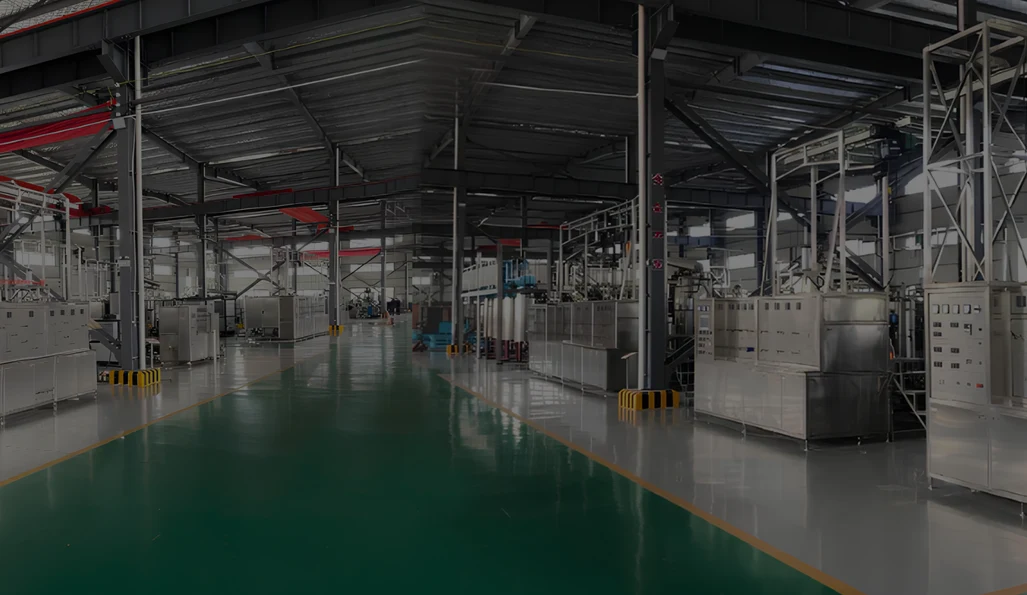
CBD Crystallization Reactor for Industrial Scale Production
Aug 19, 2026
Industrial CBD isolate production is a numbers business. Margin lives in the last two percent of recovered yield, in the hours shaved off a 24-hour cycle, and in the ability to hand a buyer a certificate of analysis that reads the same in March as it did in January. A laboratory setup cannot deliver that. An industrial CBD crystallization reactor can. Xi'an Bioland Instrument Co., Ltd. engineers its CBD crystallization reactor as a sealed, one-vessel production platform — high-borosilicate glass for continuous visual control, a large-diameter PTFE sintered filter plate for fast solid-liquid separation, jacketed precision cooling, programmable low-shear agitation, vacuum drying in place, and optional full explosion-proof construction with PLC automation. Available in 20 L, 30 L, 50 L and 100 L, plus fully non-standard builds under OEM/ODM terms, with CE and ISO certification, GMP/FDA-compliant materials, factory-direct pricing and a one-year warranty with lifetime maintenance. This article looks at what actually changes when you take that platform to production scale.
Scaling CBD Production with Advanced Crystallization Systems
The Bottleneck Is Never the Chemistry
Ask a processor why their throughput plateaued and they will usually describe a mechanical problem, not a chemical one. Slurry that takes six hours to filter. Cake that cannot be washed evenly. Product scraped from a funnel by hand at two in the morning. CBD crystallizes readily from ethanol, pentane or heptane — the difficulty is recovering it cleanly at volume. An industrial CBD crystallization reactor attacks precisely that bottleneck by integrating the filter into the base of the vessel, so mother liquor drains under vacuum while the crystal bed stays put. No transfer, no funnel, no scraping.
From Pilot Batches to Repeatable Campaigns
Scale-up fails when the pilot recipe cannot be reproduced. Bioland keeps geometric proportions consistent across its CBD crystallization reactor range, so jacket area per litre, bed depth relative to plate diameter and wash volume per kilogram of crystals all behave predictably from 20 L up to 100 L. A processor who validates a cooling ramp and wash sequence at 30 L can transfer those parameters to 100 L with adjustment rather than reinvention. That predictability is worth more at commercial scale than any single performance specification.
Parallel Trains Instead of One Giant Vessel
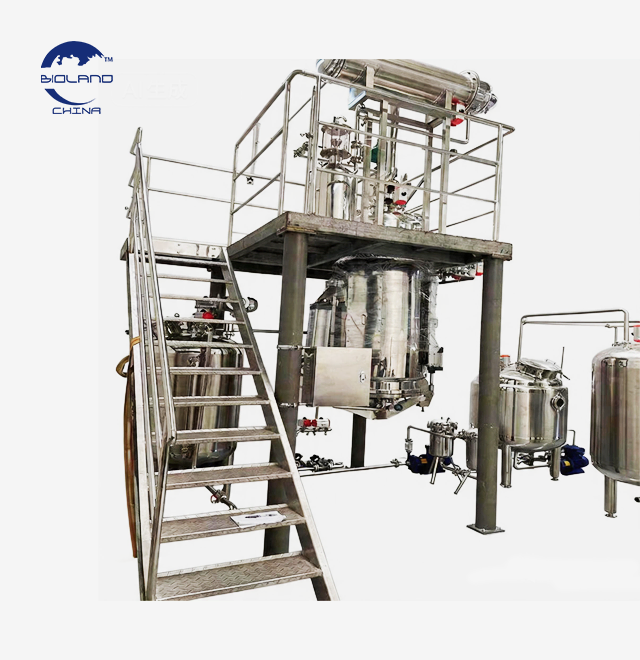
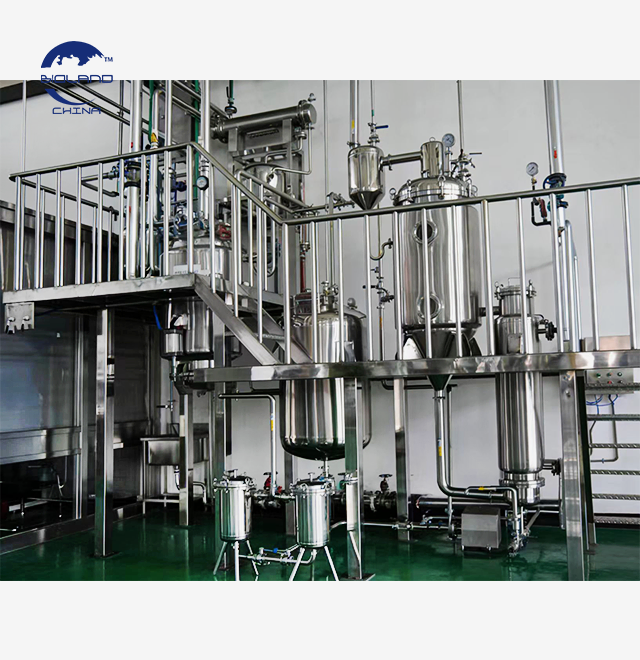
There is a strategic argument for multiple mid-size units. Running three 100 LCBD crystallization reactor units in a staggered sequence gives continuous daily output, protects against total shutdown if one vessel needs maintenance, and lets a producer run different product grades simultaneously. Bioland regularly supplies multi-unit installations with shared temperature control and vacuum infrastructure, which lowers utility cost per litre while preserving operational flexibility. Xi'an Bioland Instrument Co., Ltd. has more than 15 years of experience configuring exactly this kind of production line.
Solvent Recovery as Part of the Loop
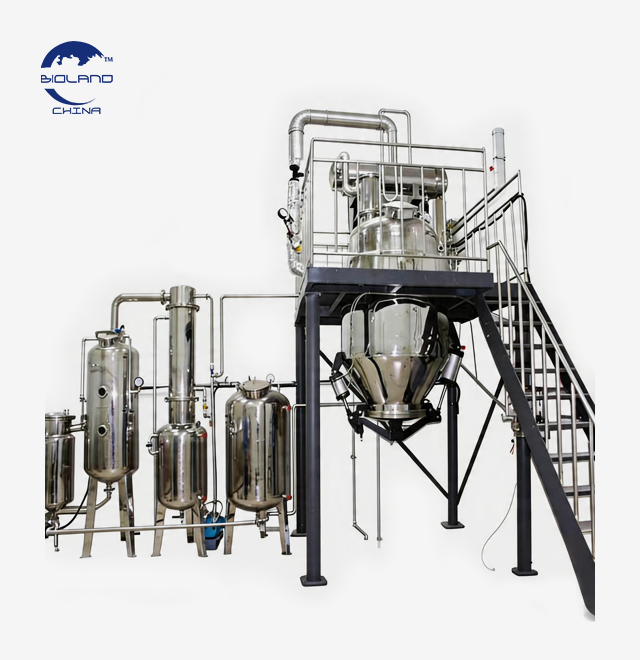
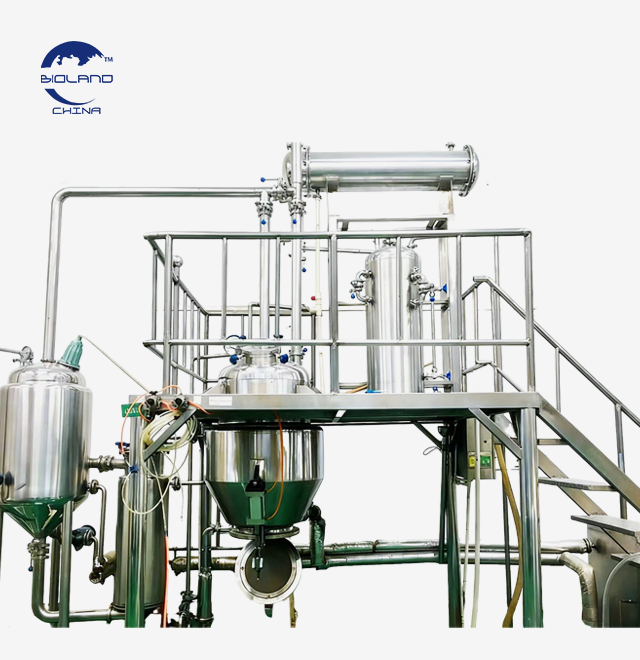
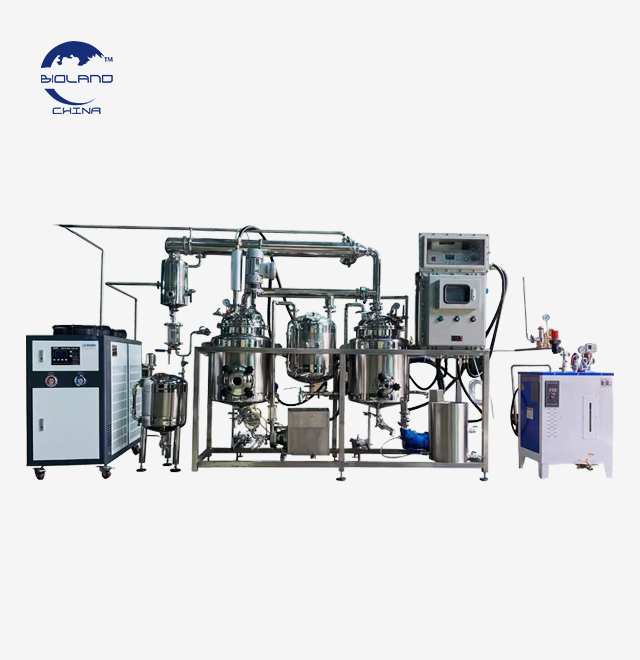
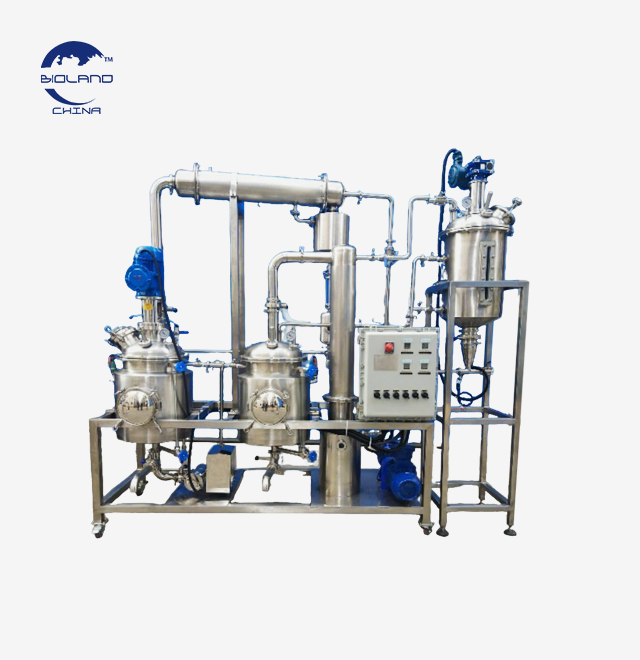
At industrial volume, solvent is a major operating cost. A CBD crystallization reactor can be integrated with condensers, receivers and fractional distillation columns so that mother liquor and wash solvent are recovered and returned to the process rather than discarded. Bioland builds these modules onto the reactor frame or as a linked skid, turning what was waste handling into a closed, cost-recovering loop.
Improving Process Efficiency in Large-Scale Operations
Counting the Steps You Delete
Efficiency at scale is measured in operations eliminated. A conventional route runs reactor, transfer, crystallizer, transfer, external filter, transfer, tray dryer — four handling steps, each costing product, time and solvent exposure. Consolidating all of it into one CBD crystallization reactor typically removes 20–40% of total batch cycle time and closes the mass balance properly. For a facility producing hundreds of kilograms monthly, that difference alone often justifies the capital within a single quarter.
Drainage Rate Sets the Clock
The large-diameter filter design is not a marketing line; it is the throughput lever. If deliquoring takes four hours instead of ninety minutes, every downstream schedule slips. The high-performance PTFE filter assembly in a Bioland CBD crystallization reactor is specified for high-speed filtration, and correct vacuum staging protects that speed. Best practice is gentle suction first — around -0.02 MPa — to build a supporting bed, stepping up gradually toward maximum only once free liquor has passed. Pulling full vacuum immediately compacts fines and blinds the plate within minutes.
Automation and Shift-Independent Consistency
Manual operation across three shifts produces three different products. A PLC-controlled CBD crystallization reactor executes stored recipes: jacket temperature ramps, agitator speed and position, timed vacuum stages, sequential wash charges and drying dwell, all logged and exportable. Operators supervise rather than improvise. Bioland also offers electric lifting, integrated temperature control systems, ultrasonic crystallization and combined rectification vessels, so the automation extends across the whole unit train rather than a single valve.
A European Chiral API Case That Scales the Same Way
The identical architecture serves regulated pharmaceutical production. A European biopharmaceutical developer faced incomplete reactions, low crystal purity and yield, corrosive acid-base media attacking metal equipment, and cross-contamination risk from repeated transfers.
Bioland supplied a customized 100 L glass filter-crystallization reactor running reaction, crystallization and filtration in one vessel. The catalytic step ran at 0–5°C under nitrogen; the transparent body confirmed completion by colour change.
Crystallization followed with -20°C jacket coolant on a controlled 1–2°C per hour ramp, producing uniform crystals without occluded impurities. Filtration switched directly to the PTFE assembly. Mother liquor was recycled, purity exceeded 99.5%, and yield rose 15% with zero intermediate transfers.
Key Reactor Features for Industrial CBD Manufacturing
Explosion-Proof Construction for Solvent-Rich Rooms
Ethanol and hydrocarbon solvents at hundreds of litres change the safety calculation entirely. Bioland's explosion-proof CBD crystallization reactor is built on industrial-grade safety standards with authenticated explosion-proof performance, a high-strength pressure-bearing structure and a precise explosion-proof control system, covering 20 L, 30 L, 50 L and 100 L capacities. Flameproof motors, junction boxes and control cabinets eliminate ignition sources at the root, so batch operations run continuously without the safety compromises common in improvised production areas.
Filter Media Selection and Quick-Release Maintenance
Standard configuration is a PTFE sintered core; stainless steel, titanium, and a wide range of filter cloths and membranes are available to match your crystal size distribution. Coarse, well-grown CBD crystals filter freely on a moderate pore rating; needle-like or fines-heavy material may need a cloth overlay. Because the filter assembly on every CBD crystallization reactor uses a quick-release design, changing or backflushing media between grades takes minutes, preventing residue carryover from affecting subsequent batches — a genuine requirement for multi-product facilities.
Wide Temperature Envelope and Programmable Agitation
Paired with a stainless-steel high-low temperature all-in-one circulator, the jacketed CBD crystallization reactor delivers precise control across a broad operating span, with double-jacket configurations reaching from deep sub-zero crystallization temperatures up to 200°C for dissolution and drying duties. Programmable stirring works alongside it: gentle during nucleation to avoid secondary nucleation by attrition, adjusted during growth to keep suspension uniform, lowered to smooth the cake before washing, and reversed to sweep product to discharge.
A Polish Precious-Metal Recovery Case
A Polish fine-chemicals producer developing palladium and platinum catalysts struggled with low metal recovery, corrosive attack on equipment, catalyst deactivation during high-temperature reaction, slow separation and costly cleaning.
Bioland delivered a customized 50 L glass filter-crystallization reactor forming a closed reaction-and-recovery loop. Precursors reacted with organic ligands at 150°C; borosilicate glass tolerated the short high-temperature exposure without deactivating catalyst.
The PTFE filter assembly then separated solid catalyst in place, recovering over 90% of residual precious metal from the mother liquor. Double-jacket control spanned -80°C to 200°C, and quick-release filtration eliminated batch-to-batch residue.
Maintaining Product Quality During Scale-Up Production
Crystal Habit Control at Volume
Quality degrades at scale mainly because cooling becomes uneven. Larger volumes have less jacket area per litre, so thermal gradients form and localized supersaturation spikes produce fines. Bioland addresses this through high-velocity jacket circulation and disciplined ramp control — roughly 1–2°C per hour through the metastable zone — which grows large, filterable crystals with white colour and low occluded impurity. Operators watching through the glass wall of the CBD crystallization reactor can spot premature nucleation clouds and correct the ramp before a batch is lost.
Washing Strategy for Colour and Terpene Removal
Two options exist, and both are available in-vessel. Displacement washing pushes cold solvent through an intact cake, economical on solvent and suited to crack-free beds. Reslurry washing lowers the blade, remixes the cake with fresh solvent and re-filters, which is the dependable answer to occluded mother liquor and residual colour bodies. Switching between them inside the same CBD crystallization reactor requires no containment break, and nitrogen blanketing throughout limits oxidation and degradation.
In-Situ Vacuum Drying and Contamination Control
Wet cake transferred to a tray dryer picks up moisture, loses material and exposes operators. Drying inside the CBD crystallization reactor under vacuum with mild jacket heat and slow blade rotation avoids all three, breaking clumps and exposing fresh surface until the bed is uniformly dry. Glass surfaces carry no weld seams or crevices, so CIP with appropriate solvent and rinse cycles restores a validated clean state quickly — important where the same line handles multiple cannabinoid grades.
Safe Operation, Documentation and Aftercare
Glass rewards discipline. Ramp jacket temperature no faster than about 3–5°C per minute, pre-condition solvents before charging, respect rated pressure, verify clamp torque and frame level before each campaign, and check seal integrity daily by holding vacuum on the empty vessel for ten minutes. Bioland supplies material certificates, pressure and vacuum test reports and calibration data with every CBD crystallization reactor, shortening IQ/OQ work. Customized units ship in about 30 business days, catalogue units in 5–7 days, by sea, rail or air. A dedicated specialist sends weekly photo or video progress updates, final inspection footage precedes shipment, and clients may attend a Factory Acceptance Test in Xi'an.
Conclusion
Industrial CBD isolate production succeeds or fails on recovery, cycle time and repeatability — and all three are decided by equipment architecture rather than chemistry. A Bioland CBD crystallization reactor consolidates dissolution, controlled cooling, crystallization, filtration, washing and vacuum drying into one sealed glass vessel with a fast large-diameter PTFE plate, programmable agitation and optional explosion-proof PLC automation. Field results speak plainly: 99.5% purity, 15% yield improvement, over 90% recovery. With CE and ISO certification, GMP/FDA-compliant construction, 20–100 L standard sizes, full OEM/ODM customization and 15+ years of engineering experience, Bioland Instrument delivers production solutions, not just vessels.
FAQ
1. What capacities suit industrial output?
20 L, 30 L, 50 L and 100 L standard; multi-unit staggered trains or custom volumes for higher throughput.
2. Is explosion-proof construction available?
Yes — certified explosion-proof systems with high-strength pressure-bearing structure across all standard capacities.
3. How is filtration speed maintained?
Large-diameter PTFE sintered plate plus staged vacuum, starting gentle and increasing only after cake formation.
4. Can solvent be recovered?
Yes — condensers, receivers and fractional distillation columns can be integrated for a closed solvent loop.
5. What is the delivery time?
About 30 business days for customized units, 5–7 days for standard, with one-year warranty and lifetime maintenance.
Scale Your Isolate Line with Bioland Instrument
Ready to move from batch improvisation to a production-grade platform? Xi'an Bioland Instrument Co., Ltd. engineers every CBD crystallization reactor around your solvent system, cooling profile, crystal specification and monthly output target — including certified explosion-proof construction, PLC full automation, electric lifting, ultrasonic crystallization, integrated solvent recovery and multi-unit line layouts. You gain CE and ISO certified quality, GMP/FDA-compliant materials, factory-direct pricing, weekly photo and video production updates, optional Factory Acceptance Testing, a one-year warranty and lifetime maintenance. Catalogue units ship in 5–7 days; fully customized systems in 30 business days, by sea, rail or air. Send your throughput and process details to info@biolandequip.com and our engineers will return a complete line proposal and quotation.
References
1. Myerson, A. S., Erdemir, D., Lee, A. Y. Handbook of Industrial Crystallization, 3rd Edition. Cambridge University Press.
2. Mullin, J. W. Crystallization, 4th Edition. Butterworth-Heinemann.
3. Tarleton, E. S., Wakeman, R. J. Solid/Liquid Separation: Equipment Selection and Process Design. Butterworth-Heinemann.
4. Perry, R. H., Green, D. W. Perry's Chemical Engineers' Handbook, Section 18: Liquid-Solid Operations and Equipment. McGraw-Hill.
5. am Ende, D. J. Chemical Engineering in the Pharmaceutical Industry: R&D to Manufacturing. Wiley.
6. ElSohly, M. A., Gul, W. "Constituents of Cannabis sativa," in Handbook of Cannabis. Oxford University Press.
The reactor is beautifully mirror-polished and fully complies with GMP requirements for the pharmaceutical industry. The performance is excellent! Overall, we are very satisfied! We also provided with some feedback on our process improvements, which we hope will be helpful.
2024-04-09
Laboratory
Excellent and professional service. Always reply our questions very fast. All reactors and chiller we received are good too.
2024-02-15
Research Institute
Quality is beyond our expectation actually. After we got the extraction equipment and started using it, the performance was beyond our expectation. Very easy to use and very efficient to run. Service always respond us very quickly. Was also very helpful to help us. Thanks Bioland team. Very happy to work with you.
2023-11-20
Biotech Company
We are happy about the new purchase as always. Equipment and services are both good.
2023-08-05
Instrument Lab
This is the second order with Bioland instrument and everything is good as the first dateText.
2023-05-12
Global Trading Partner
Bioland instrument team is very helpful and professional. The sales helped us select the right equipment for our application, and their logistics people handled the transportation and customs declaration for our shipment. All that saved us a lot of work.