100L Crystallization Reactor vs Small Scale Reactor Comparison
Aug 20, 2026
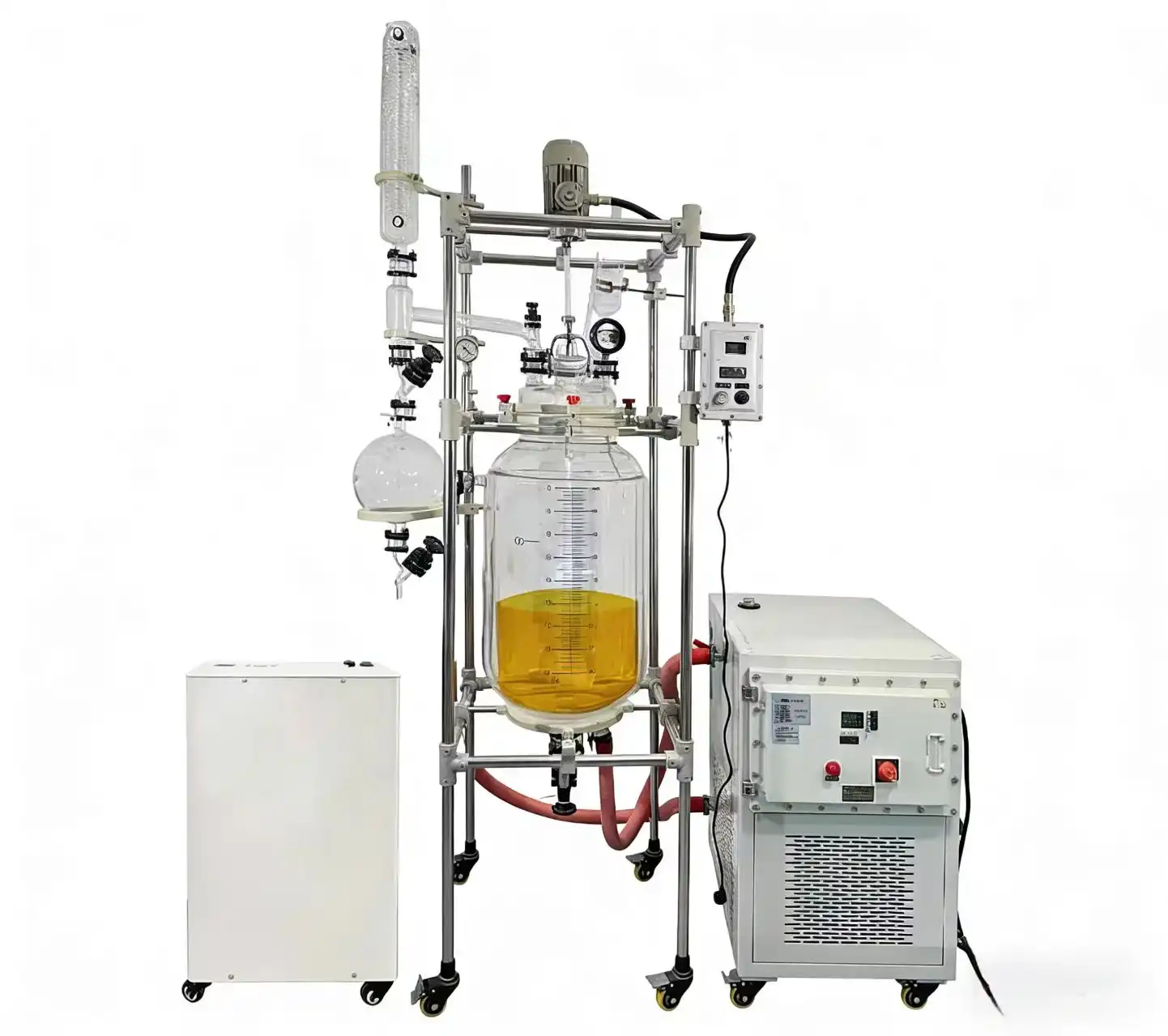
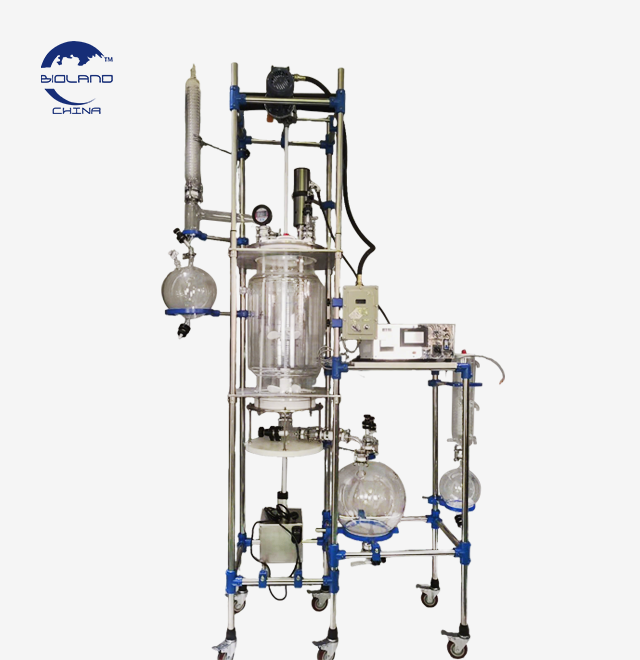
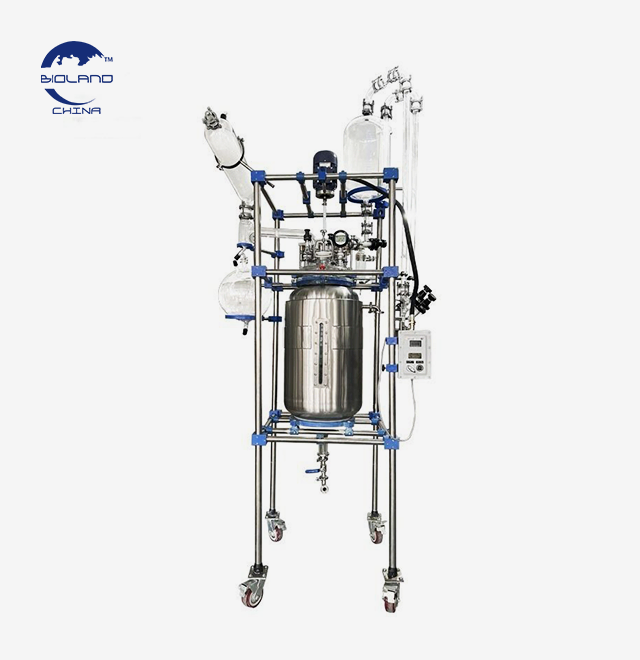
Crystallization is the quiet moment when a process either wins its purity or loses it—and vessel size decides how much control you have over that moment. Bench reactors teach the chemistry; production trains deliver the tonnes; between them sits the decisive middle ground. This comparison examines what changes when a laboratory crystallizer grows into a 100L Crystallization Reactor, and why that particular volume has become the workhorse of pilot validation worldwide. Xi'an Bioland Instrument Co., Ltd. has spent more than 15 years building exactly this class of equipment. Our 100L Crystallization Reactor unites reaction, crystallization, and filtration in a single transparent GG17 borosilicate vessel, with a standard sintered-PTFE filter plate, programmable stirring and temperature control from −20 °C to 200 °C, electric lifting-rotation, explosion-proof options, and PLC automation—CE- and ISO-certified, GMP/FDA-compliant, and delivered at factory-direct prices with full OEM/ODM support to customers across Europe and Southeast Asia.
Key Differences in Capacity, Design, and Processing Performance
Volume Changes Everything—Except the Chemistry
A five-litre vessel forgives; a hundred-litre vessel remembers. The chemistry is identical at both scales, but the physics is not: heat-transfer area per litre shrinks, mixing time lengthens, supersaturation gradients widen, and every failed batch now carries real material value. A small reactor is an instrument for questions; a 100L Crystallization Reactor is an instrument for answers, sized to supply validation-grade material in campaign quantities while remaining observable and controllable. Teams that respect this difference scale smoothly; teams that don't rediscover their process at twenty times the volume, the hard way.
The Integrated Filter Bottom That Redefines the Vessel
The defining feature separating a crystallization reactor from an ordinary jacketed kettle is the filter bottom. Our 100L Crystallization Reactor carries a large-diameter PTFE sintered-core plate as standard—chosen for chemical inertness and fast filtration throughput—with stainless steel or titanium plates optional, plus filter cloths and membranes in various specifications for different crystal sizes and solvent systems. Because solid–liquid separation happens in the same vessel where crystals grew, product never transfers through open air. One frame, three unit operations: dissolve and react, crystallize by programmed cooling, then filter and wash without moving a gram of product.
Materials, Sealing, and the Electric Lifting Frame
Structurally, the two scales share a philosophy at Bioland: full transparency for real-time observation of color change, nucleation, and crystal growth; GG17 glass that shrugs off strong acids, strong alkalis, and organic solvents while contributing zero metal-ion contamination; and dual sealing with PTFE plus mechanical backup for vacuum or inert-gas duty. What grows with volume is serviceability. The electric lifting-rotation frame on the 100L Crystallization Reactor lowers the vessel for charging, tilts it for discharge, and opens every surface for cleaning—turning the least-loved hour of batch work into minutes. Certified explosion-proof builds extend the same platform to high-hazard synthesis.
Comparing Crystallization Efficiency and Scale-Up Capabilities of Both Reactor Sizes
Supersaturation: The Invisible Variable That Scales Badly
Crystallization efficiency lives in the metastable zone—supersaturated enough to grow crystals, not so supersaturated that impurities crash out with them. In a small reactor, agitation keeps that zone nearly uniform; in a 100-litre batch, gradients form within minutes unless stirring and cooling are engineered together. This is why programmed, variable-speed agitation matters more with every litre added: the 100L Crystallization Reactor treats impeller geometry and the temperature program as one control system, preserving the nucleation–growth balance that small-scale screening established.
Cooling-Rate Discipline from Lab Curve to Plant Curve
The single most transferable crystallization parameter is the cooling profile. Controlled descent—often as gentle as 1–2 °C per hour—lets crystals grow slowly and reject impurity, while a rushed quench traps solvent and traps impurities inside the lattice. Jacketed circulation on the 100L Crystallization Reactor reproduces a laboratory cooling curve faithfully across the full −20 °C to 200 °C envelope (with extended configurations reaching lower), so the recipe validated in a 5 L vessel arrives at 100 litres as the same recipe, not a distorted echo of it.
Case Study: Chiral Intermediate at 99.5% Purity in One Vessel
A European biopharmaceutical developer of a chiral API intermediate was losing the purity battle: no way to confirm reaction completeness mid-batch, purity and yield stuck in mutual decline, corrosive acid/base systems eating equipment, and every transfer between vessels inviting cross-contamination.
Bioland engineered a custom 100L Crystallization Reactor to run the entire sequence closed. Under nitrogen at 0–5 °C, the catalytic step proceeded while operators watched color change through the glass wall—reaction completeness, confirmed visually.
Crystallization followed in the same vessel: jacket coolant at −20 °C drove a measured 1–2 °C/h descent, growing uniform crystals without impurity inclusion. The PTFE filter plate then separated solids directly, and the mother liquor returned to the next batch.
The measured outcome: product purity above 99.5%, yield lifted 15%, and material transfers eliminated—along with the contamination risk they carried. One vessel, three operations, one defensible batch record.
How Reactor Volume Affects Production Requirements and Process Control
Throughput Arithmetic Every Plant Manager Should Run
The honest comparison is never "which reactor is better" but "what does each batch cost?" Ten 10-litre batches demand ten cleanings, ten solvent charges, ten sets of documentation; one 100L Crystallization Reactor batch replaces them with a single campaign run. Factor in labor, solvent recovery, quality control sampling, and floor space, and the per-kilogram economics of the larger vessel win decisively once a process is stable. Before that point, of course, the small reactor remains the cheaper teacher—capacity should follow process maturity, never precede it.
PLC Control and the Traceability That Volume Demands
At gram scale, a notebook suffices; at campaign scale, regulators and customers expect records no human could write fast enough. PLC control with a touchscreen interface manages temperature ramps, stirring profiles, and filtration sequences automatically, logging every parameter into GMP/FDA-aligned batch documentation. The practical gain is repeatability: a Friday-night batch on the 100L Crystallization Reactor behaves identically to Monday's, because the program—not the operator's mood—carries the process. For peptide solid-phase synthesis programs, where thymosin preparation and antibacterial peptide screening run dozens of programmed cycles, this traceability is the product.
Mother-Liquor Economics and Closed-Loop Recovery
Every filtrate carries dissolved value—product, solvent, or both—and volume decides whether recovering it is an option or an obligation. Integrated filtration on the 100L Crystallization Reactor collects mother liquor cleanly for recycle, while the pumping and piping network supports in-place transfer, washing, and maintenance without breaking containment. In high-value chemistry, the mother-liquor loop frequently pays for the vessel: recovery of 90% of dissolved precious content turns what small plants pour away into next quarter's margin.
Case Study: Polish Catalyst Recovery Above 90%
A Polish chemical company developing palladium and platinum catalysts faced a brutal ledger: low precious-metal recovery, corrosive media destroying equipment, high-temperature solid-phase reactions deactivating catalyst, sluggish solid–liquid separation, and cleaning costs climbing with every batch.
Bioland delivered a custom 50 L glass filter crystallization reactor—the 100L Crystallization Reactor's direct sibling in the same 20 L/30 L/50 L/100 L family. Solid-phase reaction ran at 150 °C, where borosilicate construction tolerates short excursions and glass transparency let engineers confirm ligand reaction visually.
Filtration followed through the quick-release PTFE plate: catalyst separated dry and intact, while mother liquor routed to recovery. Precious-metal reuse from the mother liquor exceeded 90%.
The quick-release filter design cut cleaning between batches to minutes, protecting both the next batch's purity and the plant's throughput. Corrosion-related equipment loss, the client's original complaint, simply stopped appearing in the maintenance log.
Cost, Maintenance, and Operational Factors When Choosing Reactor Capacity
Capital Cost Versus Cost per Kilogram of Crystal
Sticker prices mislead. A 100L Crystallization Reactor costs more than a bench unit and less than ten of them—yet delivers roughly ten times the output per batch with one cleaning, one operator, and one utility connection. Purchased at Bioland's factory-direct pricing, the capacity premium typically repays itself within the first stable campaign. The full ownership picture adds a one-year quality warranty and lifetime maintenance, sea, rail, and air freight, and the documented service life of borosilicate construction in corrosive duty that consumes lesser vessels.
Filter Media, Quick-Release Design, and Daily Upkeep
Filter selection is where crystallization expertise shows. Match the medium to crystal size and solvent: the sintered-PTFE core handles aggressive chemistry as standard; stainless steel or titanium plates serve when demanded; cloths and membranes fine-tune retention. Daily discipline is equally concrete—choose solvent and concentration so solids dissolve fully and crystallize willingly, monitor filtration speed and pressure, and clean the plate on schedule. The quick-release design of the 100L Crystallization Reactor makes that schedule realistic: media swap and inspection are tool-light tasks, not shutdown events.
Cleaning, Validation, and the Hidden Cost of Transfers
Every transfer between vessels is a tax—yield lost to holdup, purity lost to exposure, hours lost to cleaning two vessels instead of one. Integrated reaction-crystallization-filtration architecture eliminates most transfers outright, and transparency simplifies what validation remains: inspectors see clean glass, not inferred cleanliness. For GMP pilot validation, the 100L Crystallization Reactor therefore shortens the hardest part of the campaign—the paperwork trail—almost as much as it shortens the process itself.
Selecting the Right Crystallization Reactor for Laboratory and Industrial Applications
Match the Vessel to the Stage—and to the Molecule
Selection starts with honesty about the program. Peptide work—thymosin preparation, antibacterial peptide screening, peptide carrier material synthesis—often peaks at 20–50 L where cycle count matters more than batch size; antibiotic intermediate campaigns and sucrose or fine-chemical production favor the 100L Crystallization Reactor where documentation and throughput dominate. Bioland builds the family across 20 L, 30 L, 50 L, and 100 L with consistent geometry, so the vessel grows with the program instead of the program restarting with each new vessel.
Five Questions That Settle the Size Debate
Before issuing any purchase order, run this checklist with your team. What batch size does the campaign actually require? Which cooling profile must the jacket reproduce, and can it? Is filtration area sufficient for the crystal slurry volume? Do floor space, utilities, and explosion-proof classification match the vessel? Finally—what will the validation file demand six months from now? A 100L Crystallization Reactor answers "yes" to all five far more often than intuition expects, which is precisely why it anchors so many pilot suites.
Customization, Lead Time, and a Supplier Who Stays With You
The right size is only half the answer; the right partner is the other half. Bioland engineers each reactor to order—explosion-proof systems, electric lifting, PLC full automation, integrated temperature control, ultrasonic crystallization, and rectification combinations on request—under CE and ISO certification with an in-house R&D team of senior engineers. Customized units ship in about 30 business days, standard products in 5–7. A dedicated specialist sends weekly photos or videos of your 100L Crystallization Reactor under construction, finished goods are documented for your approval, and a Factory Acceptance Test can be scheduled at our facility before anything leaves it.
Conclusion
The small reactor and the 100L Crystallization Reactor are not rivals but consecutive instruments: one interrogates the chemistry, the other industrializes it. Capacity changes the physics—heat transfer, supersaturation, filtration loading—so efficiency at scale must be engineered, never assumed. Integrated filter-bottom architecture, programmable thermal discipline, and PLC traceability close the gap, as two client results proved: 99.5% purity with 15% higher yield for a European chiral program, and 90%+ precious-metal recovery in Poland. With 15 years of engineering, CE/ISO certification, and lifetime support behind every vessel, Bioland makes the size decision feel small.
FAQ
Q1: What filtration options does the 100L Crystallization Reactor offer?
A: Sintered PTFE plate as standard, stainless steel or titanium optional, plus various filter cloths and membranes.
Q2: What is the temperature range?
A: −20 °C to 200 °C via the jacket, with extended configurations available.
Q3: Can it run reaction, crystallization, and filtration in one vessel?
A: Yes—that integrated sequence is its core design purpose.
Q4: Is explosion-proof construction available?
A: Yes, along with PLC automation and electric lifting as customization options.
Q5: What are lead times and warranty?
A: ~30 business days customized, 5–7 days standard; one-year warranty with lifetime maintenance.
Your Next Campaign Deserves the Right Vessel — Contact Bioland Instrument
Stop debating reactor size in the abstract and settle it with engineers who have answered the question hundreds of times. Bioland Instrument brings 15+ years of crystallization expertise, an in-house R&D team, CE and ISO certification, GMP/FDA compliance, and factory-direct pricing to every inquiry—from a 20 L peptide workstation to a fully customized 100L Crystallization Reactor with explosion-proof protection, PLC automation, and ultrasonic crystallization. Weekly photo-and-video production updates, Factory Acceptance Testing, a one-year warranty, and lifetime maintenance keep you informed and protected at every step. Our mission: first-class equipment at the lowest price, real-time support, and solutions that expand your production capability. Send your process details to info@biolandequip.com—OEM and ODM orders warmly welcomed.
References
1. Mullin, J. W. Crystallization, 4th Edition. Butterworth-Heinemann, 2001.
2. Myerson, A. S., ed. Handbook of Industrial Crystallization, 2nd Edition. Butterworth-Heinemann, 2002.
3. Tung, H.-H., Paul, E. L., Midler, M., and McCauley, J. A. Crystallization of Organic Compounds: An Industrial Perspective. John Wiley & Sons, 2009.
4. Davey, R. J., and Garside, J. From Molecules to Crystallizers: An Introduction to Crystallization. Oxford University Press, 2000.
5. Randolph, A. D., and Larson, M. A. Theory of Particulate Processes: Analysis and Techniques of Continuous Crystallization, 2nd Edition. Academic Press, 1988.
6. Beckmann, W., ed. Crystallization: Basic Concepts and Industrial Applications. Wiley-VCH, 2013.
The reactor is beautifully mirror-polished and fully complies with GMP requirements for the pharmaceutical industry. The performance is excellent! Overall, we are very satisfied! We also provided with some feedback on our process improvements, which we hope will be helpful.
2024-04-09
Laboratory
Excellent and professional service. Always reply our questions very fast. All reactors and chiller we received are good too.
2024-02-15
Research Institute
Quality is beyond our expectation actually. After we got the extraction equipment and started using it, the performance was beyond our expectation. Very easy to use and very efficient to run. Service always respond us very quickly. Was also very helpful to help us. Thanks Bioland team. Very happy to work with you.
2023-11-20
Biotech Company
We are happy about the new purchase as always. Equipment and services are both good.
2023-08-05
Instrument Lab
This is the second order with Bioland instrument and everything is good as the first dateText.
2023-05-12
Global Trading Partner
Bioland instrument team is very helpful and professional. The sales helped us select the right equipment for our application, and their logistics people handled the transportation and customs declaration for our shipment. All that saved us a lot of work.