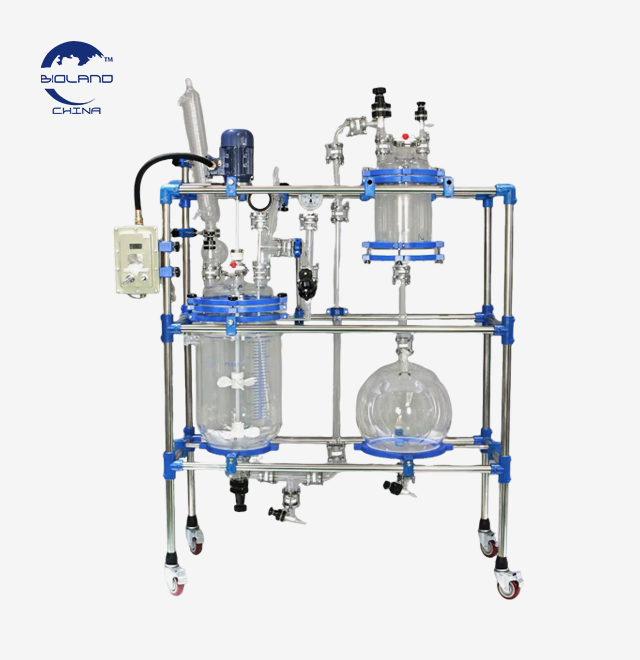
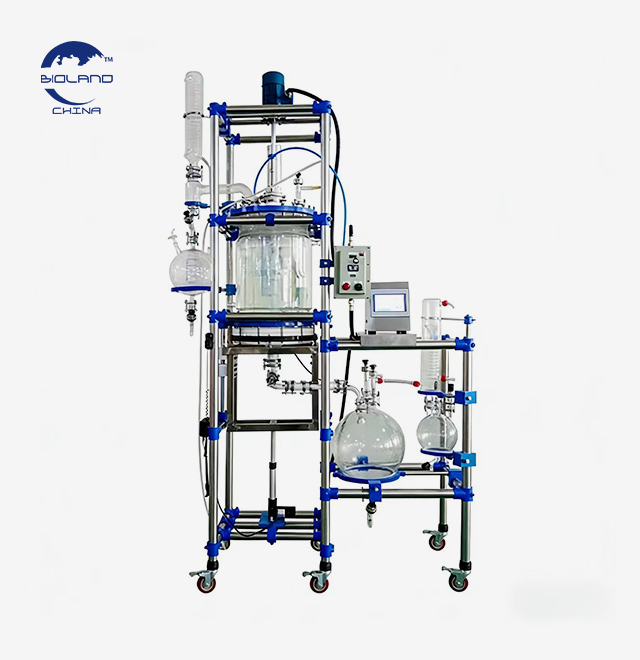
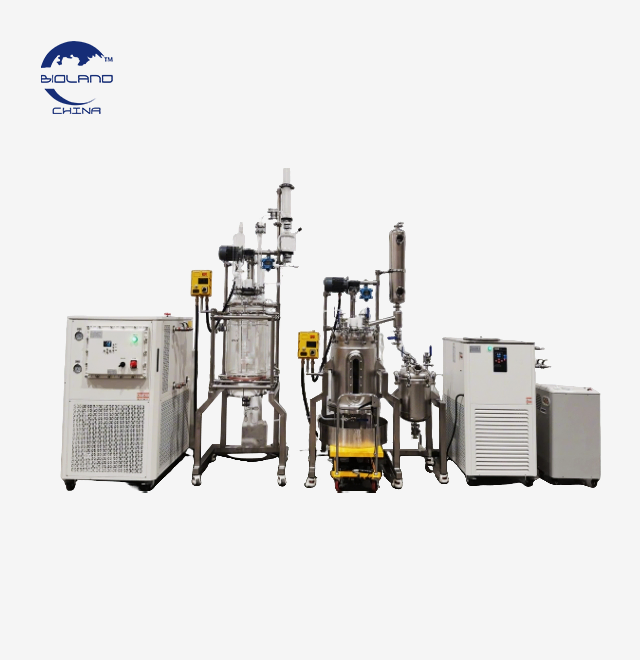
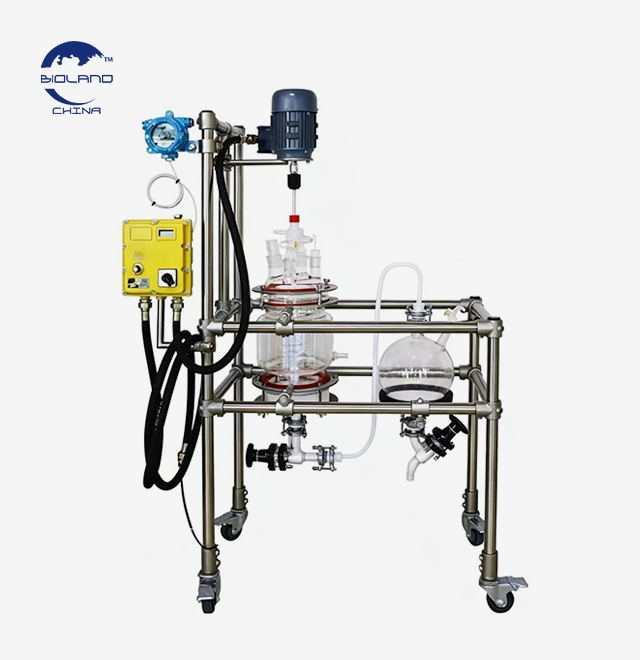
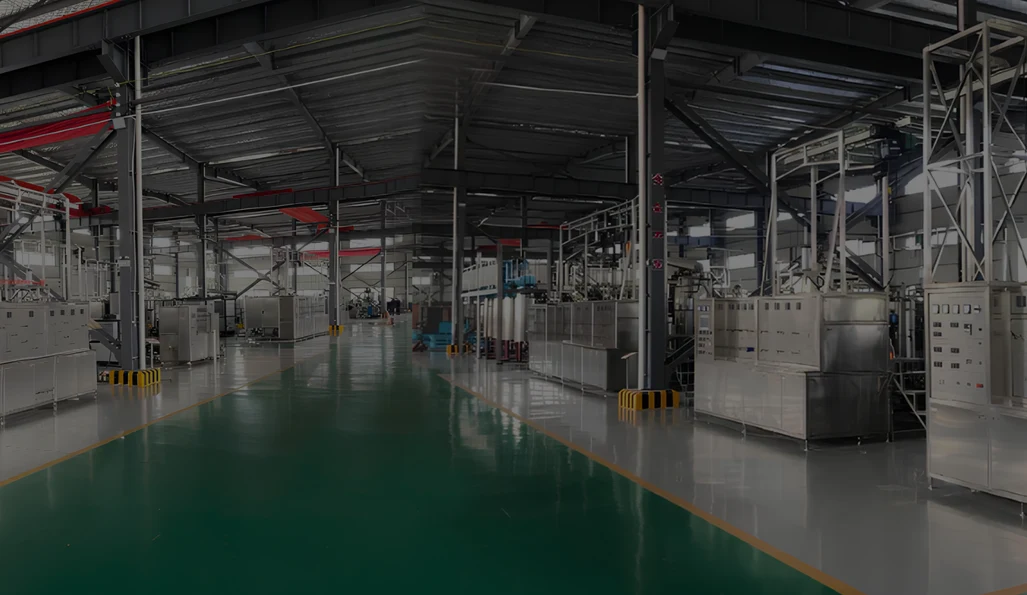
Chemistry Crystallization Reactor for Pharmaceutical & Fine Chemical Purification — Precision-Controlled, GMP-Ready Solutions
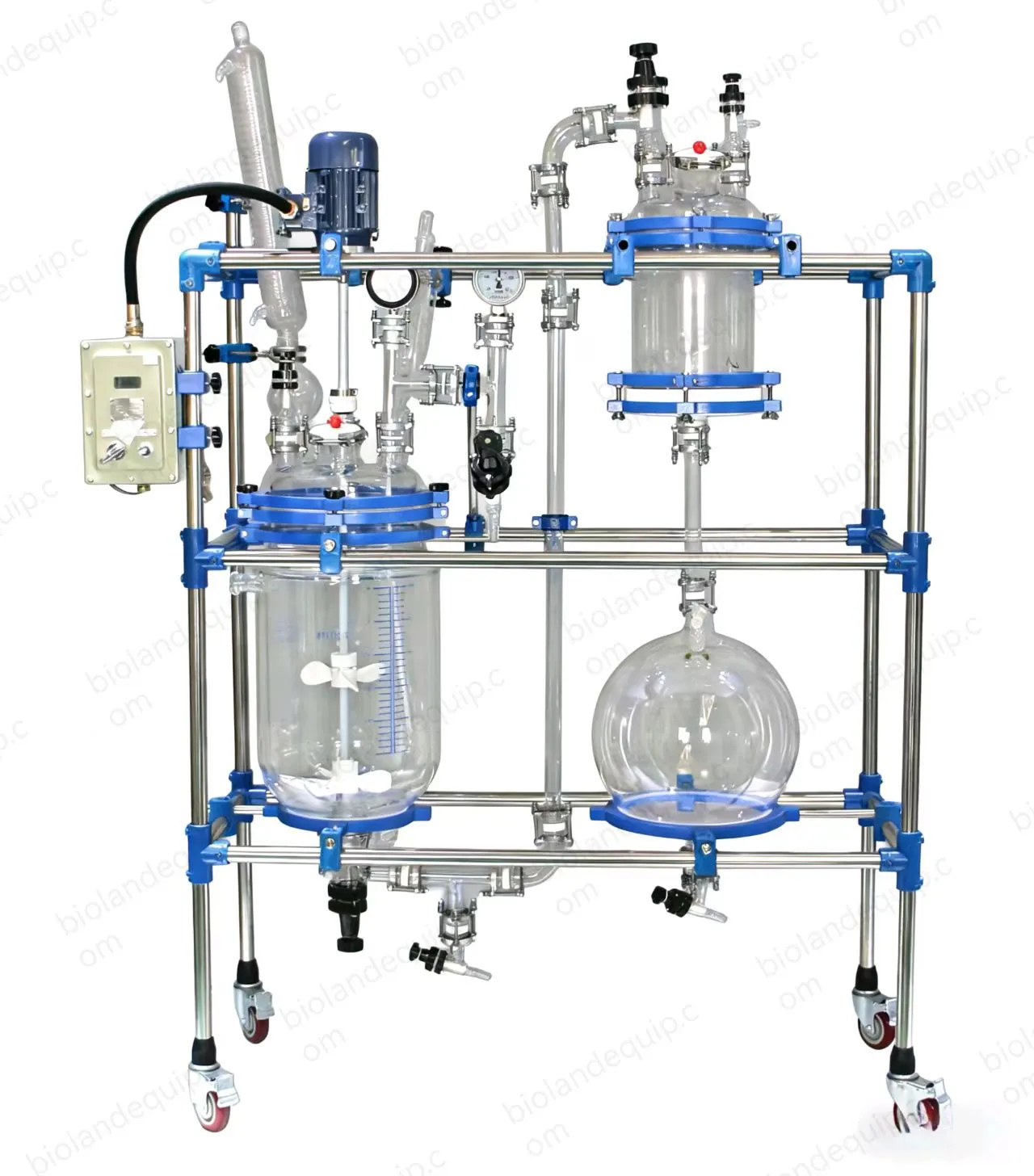
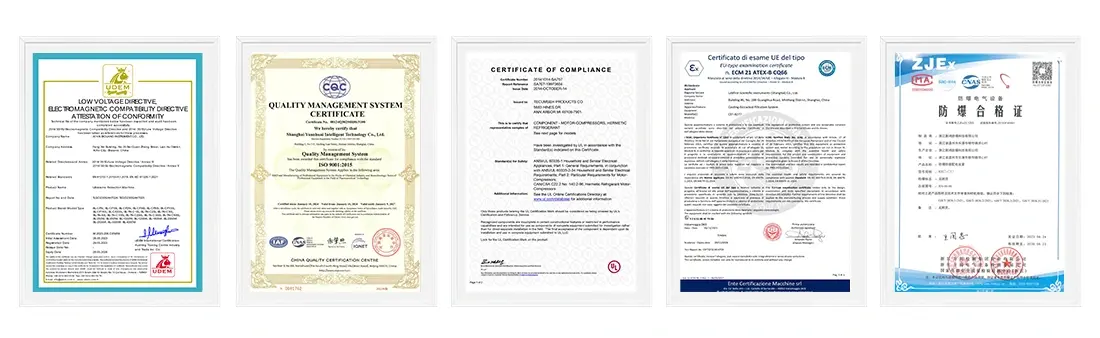
Xi'an Bioland Instrument specializes in chemistry crystallization reactors engineered for pharmaceutical API synthesis, fine chemicals, and electronic materials production. With over 15 years of process equipment experience and 500+ units delivered globally, our reactors operate from -80°C to 250°C, combining reaction, crystallization, filtration, and distillation in a single GMP-compliant unit. CE, ISO, UL, and SGS certified. Factory-direct with OEM/ODM support.
Key Features & Benefits
Precise Supersaturation Control
The double or triple jacket system delivers uniform heat transfer across the full operating range, eliminating local sub-cooling zones that trigger uncontrolled nucleation — a root cause of polymorph inconsistency in standard stirred tanks.
Low-Shear Agitation for Crystal Integrity
Hydrofoil and retreat-curve impellers protect fragile crystal structures during growth phases. Variable frequency drives (VFD) allow tip speed adjustment between 1–3 m/s, maintaining solid suspension without crystal breakage or excessive fines generation.
Polymorph Consistency — Batch After Batch
Strict temperature ramping combined with seed crystal protocols keeps your process within the stability window of the target crystal form. This is critical when bioavailability depends on a specific polymorph, as defined under ICH Q11 guidelines.
Integrated Process Capability
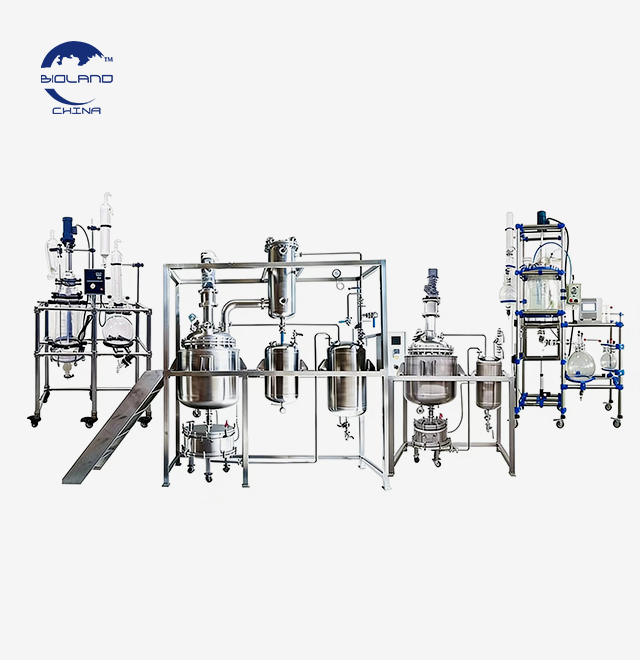
Reaction, crystallization, filtration, and distillation run within one unit. This eliminates intermediate transfer steps, reduces contamination risk, and can cut total processing time by up to 30% versus multi-vessel setups.
Predictable Scale-Up from Lab to Production
Geometric similarity across 1L, 50L, and 1000L+ units enables scale-up using constant power-per-volume (P/V) ratios. Mixing time and heat transfer area-to-volume ratios are matched at each scale, so lab results translate reliably to pilot and full production.
How It Works?
Crystallization is driven by supersaturation — the condition where a solution contains more dissolved solute than it can stably hold. Our chemistry crystallization reactor achieves supersaturation through controlled cooling, solvent evaporation, or anti-solvent addition, depending on your system.
Once supersaturation enters the metastable zone (the region where nucleation is possible but not spontaneous), seed crystals are introduced to trigger controlled nucleation at a defined point. The low-shear agitator then maintains crystal suspension while the jacketed thermal system governs growth rate.
Optional Process Analytical Technology (PAT) integration — including Focused Beam Reflectance Measurement (FBRM) — allows real-time detection of nucleation events and particle size distribution (PSD) trends, enabling immediate cooling profile adjustments before off-spec crystal forms develop.
Outcome: Narrow PSD, minimal fines, reduced impurity inclusion in the crystal lattice, and consistent polymorph across batches.
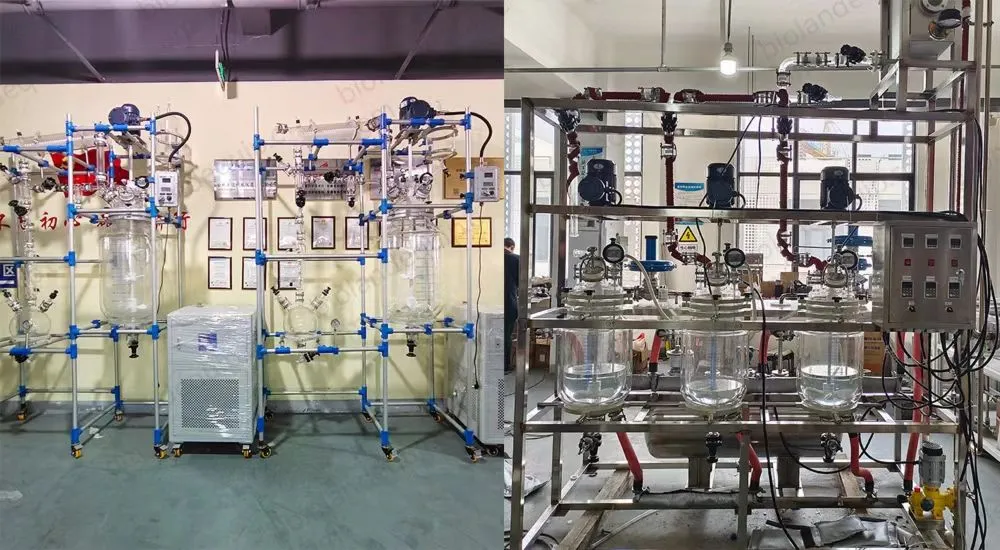
Construction & Materials
Wetted Part Options:
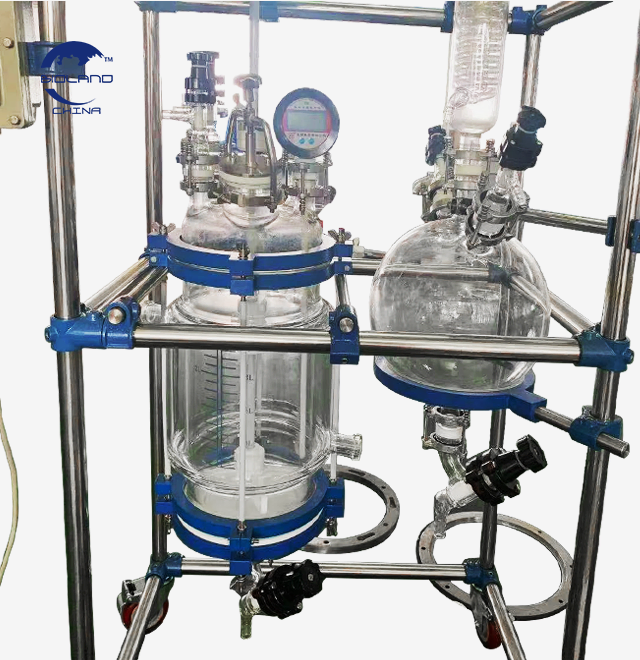
· Borosilicate Glass 3.3 — chemical inertness, full process visibility, ideal for R&D and pilot scale
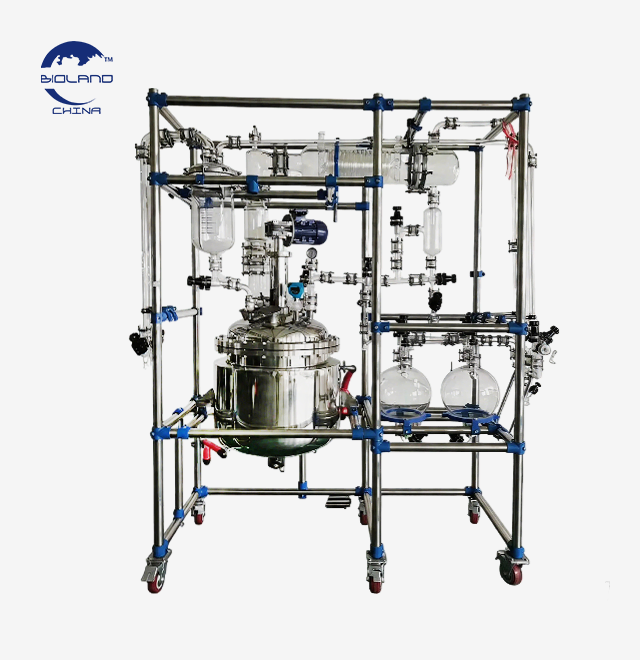
· SS316L — standard pharmaceutical and fine chemical production environments
· Hastelloy C-22 — high-pressure or severely corrosive environments (e.g., HCl, HF, oxidizing acids)
Surface & Seal Standards:
All metal surfaces are electropolished to Ra < 0.4µm, minimizing crystal encrustation and enabling effective CIP (clean-in-place) cycles. Mechanical seals are vacuum-tested at < 1 mbar leakage over 24 hours. Agitator dynamic balancing holds run-out below 0.05mm, protecting both the seal and glass body during continuous operation.
Thermal Shock Resistance (Glass Units):
Validated to withstand ΔT up to 60–110°C, preventing glass failure during rapid cooling phases common in anti-solvent crystallization.
Positive Material Identification (PMI):
Available for all alloy components. Full material traceability documentation ships with every unit.
.
Technical Parameters
|
MODEL
|
BL-FR10L
|
BL-FR20L
|
BL-FR30L
|
BL-FR50L
|
BL-FR100L
|
|
Material capacity
|
10L
|
20L
|
30L
|
50L
|
100L
|
|
Jacket capacity
|
≈2L
|
≈5L
|
≈8L
|
≈15L
|
≈20L
|
|
Receiving flask
|
5L
|
10L
|
10L
|
20L
|
20L
|
|
Reactor body and cover
|
Apply vacuum grease to the connection surface between the upper part of the kettle body and the kettle cover.
|
|
Variable-frequency governor
|
Digital temperature and rotate speed
|
|
Rotate speed
|
0-300r/min
|
|
Seal
|
Self-lubricating mechanical seal
|
|
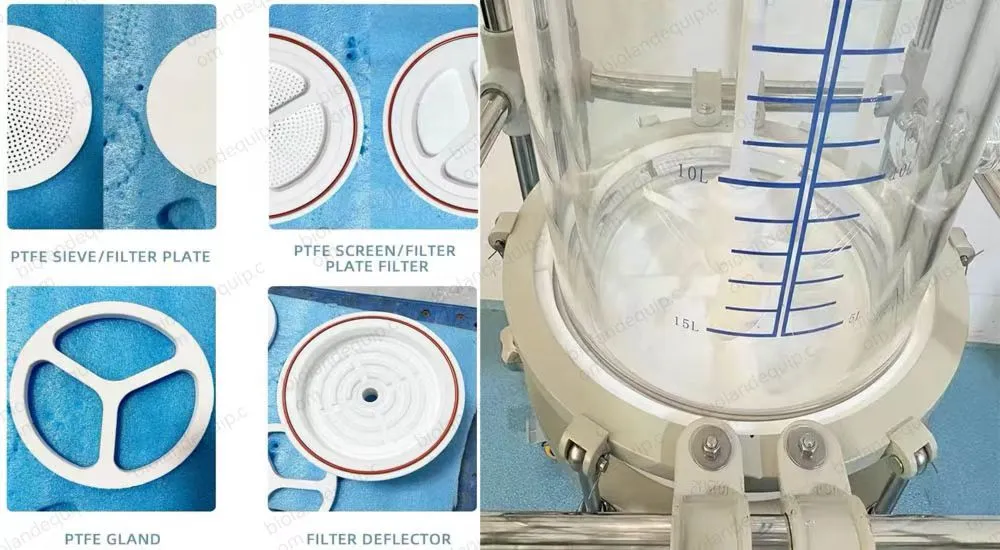
Filter base plate
|
PTFE filter sand core
|
|
Bore diameter of sand core
|
1-200μm (Optional)
|
|
Motor power
|
120W/1:3
|
200W/1:3
|
|
Power of explosion-proof motor
|
180W
|
370W
|
370W/1:3
|
|
Voltage
|
220V/50Hz which can be customized according to customer requirements
|
Why Choose Xi'an Bioland?
15+ Years | 500+ Units Delivered | 40+ Countries Served
· Built to your process: Standard units ready in 5–7 business days; customized configurations delivered within 30 business days
· Full production transparency: Dedicated project specialist provides weekly progress updates with photos or videos throughout manufacturing
· Nothing ships without your sign-off: Final inspection photos and videos sent for your approval before dispatch
· Factory Acceptance Testing (FAT): Available at our Xi'an facility for clients requiring on-site verification
· OEM/ODM support: From standard catalog units to fully engineered process solutions — our engineering team works through your specifications directly
Services & After-Sales Support
|
Service
|
Details
|
|
Warranty
|
1-year parts and workmanship warranty
|
|
Maintenance
|
Lifetime technical support and spare parts availability
|
|
Shipping
|
Sea, rail, and air freight — global delivery
|
|
Documentation
|
Material certs, test reports, calibration records, FAT protocol
|
|
Commissioning
|
Senior engineer remote or on-site guidance available
|
|
Customization
|
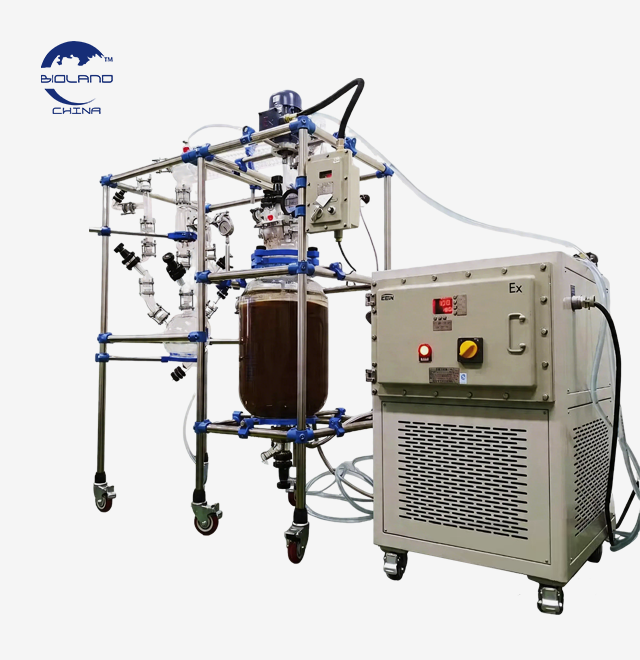
Explosion-proof builds, custom volumes, integrated PLC automation
|
Application Fields
Pharmaceutical API Synthesis
Supports seeding protocols for producing defined crystal habits — needles, plates, or specific polymorphs — that directly determine tablet compression behavior, dissolution rate, and bioavailability. Compliant with GMP and FDA 21 CFR Part 11 documentation requirements.
Fine Chemicals & Agrochemicals
Handles slurries up to 40–50% by weight in fertilizer and pesticide intermediate production. Uniform agitation prevents settling and blockage, delivering consistent bulk density in the final product.
Electronic Materials — Battery Precursors
Used in co-precipitation of NMC (nickel-manganese-cobalt) cathode precursors under corrosive high-pH or strongly acidic conditions. Tight morphology control over spherical particle shape directly impacts lithium-ion battery energy density and cycle stability.
Peptide & Specialty Drug R&D
Designed for small-batch, high-value synthesis where purity, yield, and polymorph consistency are non-negotiable. The 1L–50L scale range covers early-stage R&D through IND-enabling studies.
Quality Certifications & Compliance
|
Certification / Standard
|
Scope
|
|
CE (EU)
|
Pressure equipment and electrical safety
|
|
ISO 9001
|
Quality management system
|
|
UL (North America)
|
Electrical component safety
|
|
SGS
|
Third-party material and performance verification
|
|
GMP / FDA 21 CFR Part 11
|
Material, design, and documentation standards
|
|
ASME / PED
|
Pressure vessel design and testing
|
Every unit is hydrostatically tested at 1.5x design pressure. Full documentation packages — including material certificates, surface finish records, pressure test reports, and calibration records — are provided with each shipment.
FAQ
Q: How does the reactor prevent unwanted polymorphs from forming?
A: The Temperature Control Unit holds the process within the stability window of the target polymorph. Optional FBRM integration detects nucleation events in real time, allowing immediate cooling profile adjustment before an off-spec crystal form can propagate.
Q: How do you prevent crystal encrustation on vessel walls?
A: Electropolished surfaces (Ra < 0.4µm) or smooth glass linings reduce adhesion sites. Retreat-curve agitators generate sufficient wall turbulence to keep crystals in suspension without introducing excessive shear that would fracture crystals.
Q: Can the reactor safely handle explosive solvents?
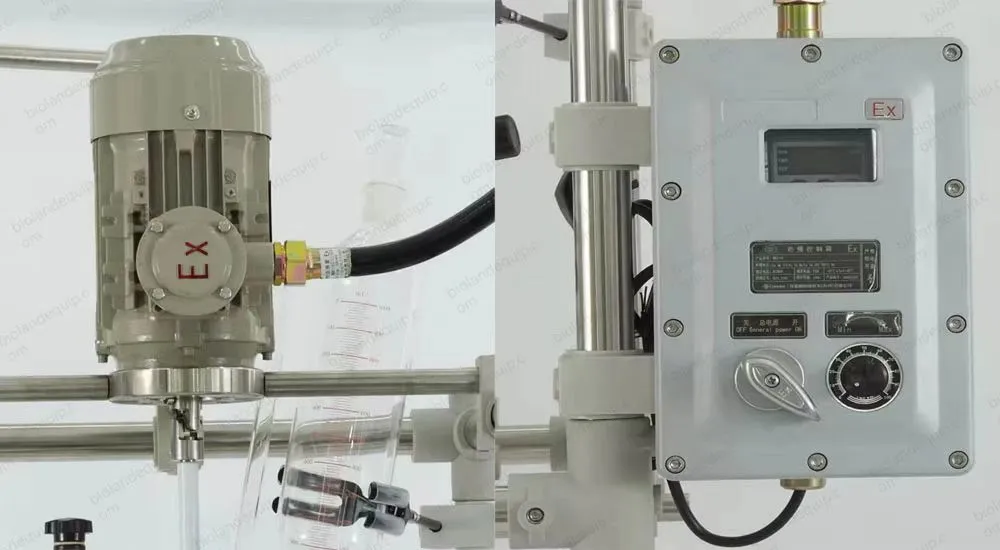
A: Yes. Explosion-proof configurations include ATEX or UL Class 1 Div 1/2 certified motors and gearboxes, with full grounding and bonding systems to prevent static discharge — essential when processing non-conductive organic solvents such as ethanol, acetone, or MEK.
Q: What is involved in scaling up from lab to production?
A: Scale-up is based on maintaining constant power input per unit volume (P/V) while matching mixing time and heat transfer area-to-volume ratios. Geometric similarity across our 1L, 50L, and 1000L+ units makes this process systematic and predictable rather than empirical.
Q: What maintenance does the mechanical seal require?
A: Monitor barrier fluid level and pressure daily during operation. Schedule a full inspection every 2,000–4,000 operating hours, checking seal face wear and thermal damage — particularly if your process involves abrasive crystal slurries or sustained high-temperature cycling.
Q: Is GMP compliance documentation available?
A: Yes. All units are designed and manufactured to GMP and FDA 21 CFR Part 11 standards. Documentation packages include material traceability records, electropolish verification, pressure test certificates, and calibration records suitable for regulatory submission.
Request a Quote
If you want to get information about the chemistry crystallization reactor, please contact us at info@biolandequip.com.