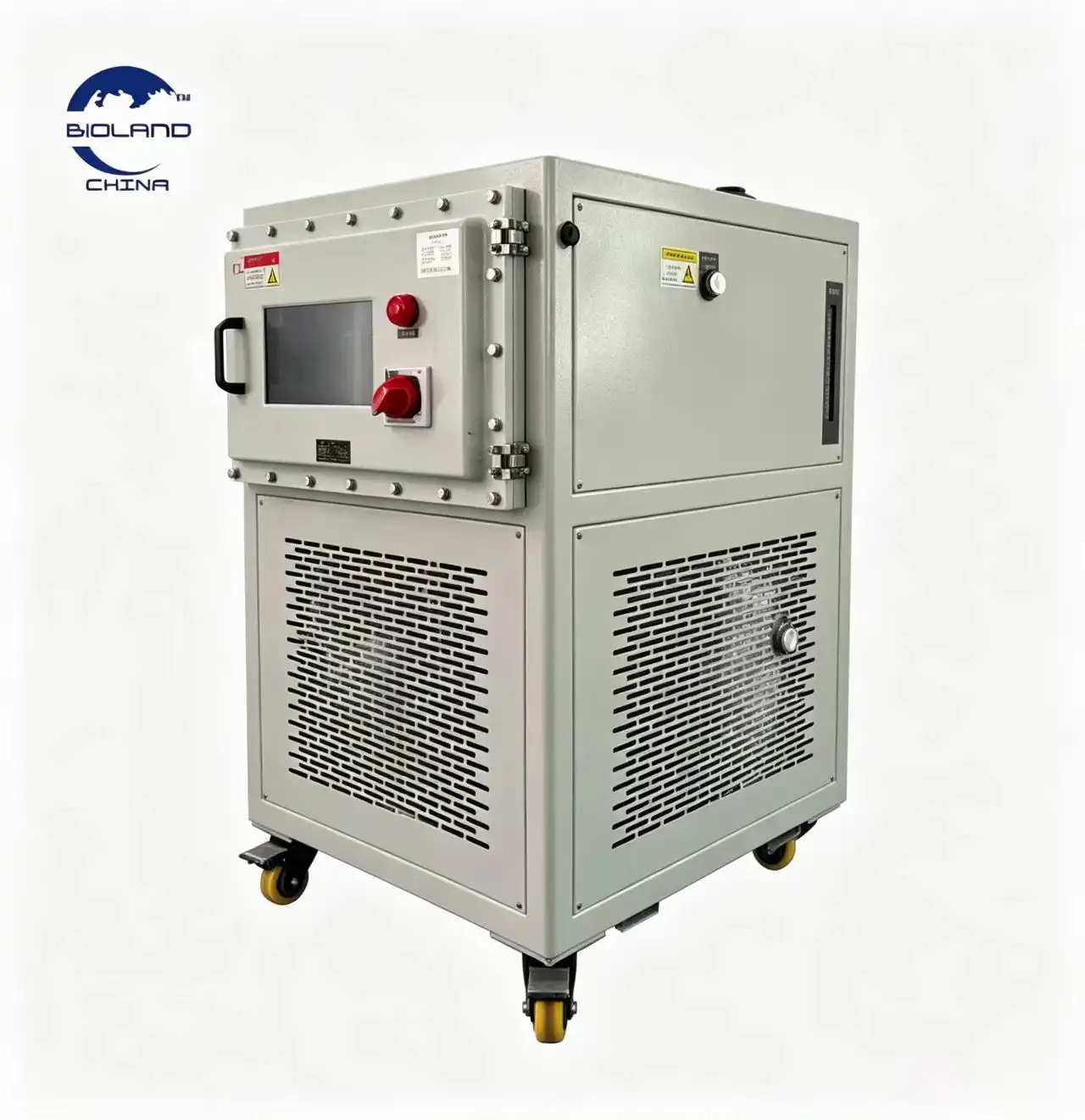
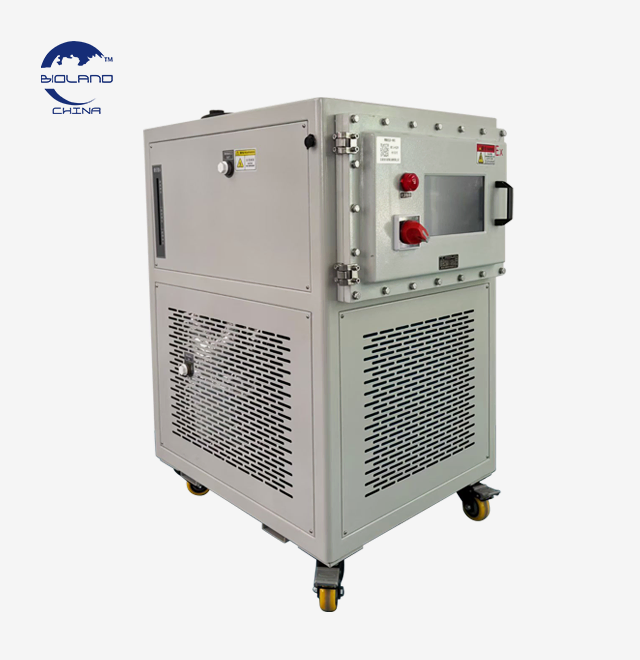
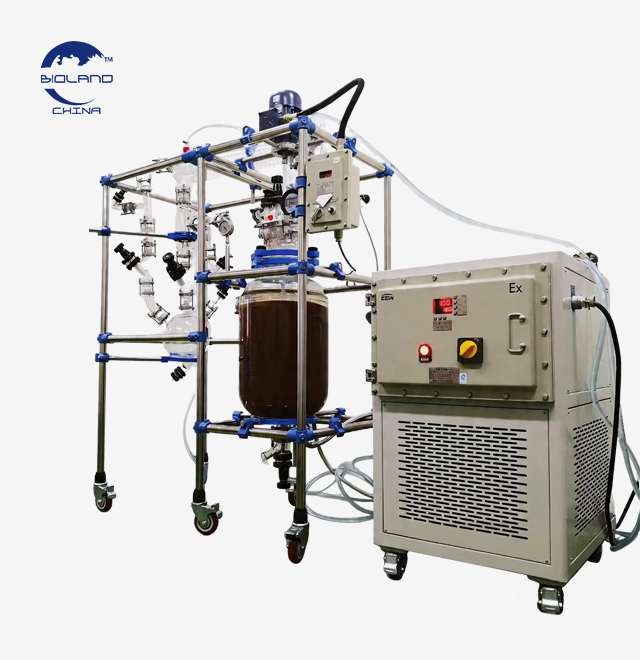
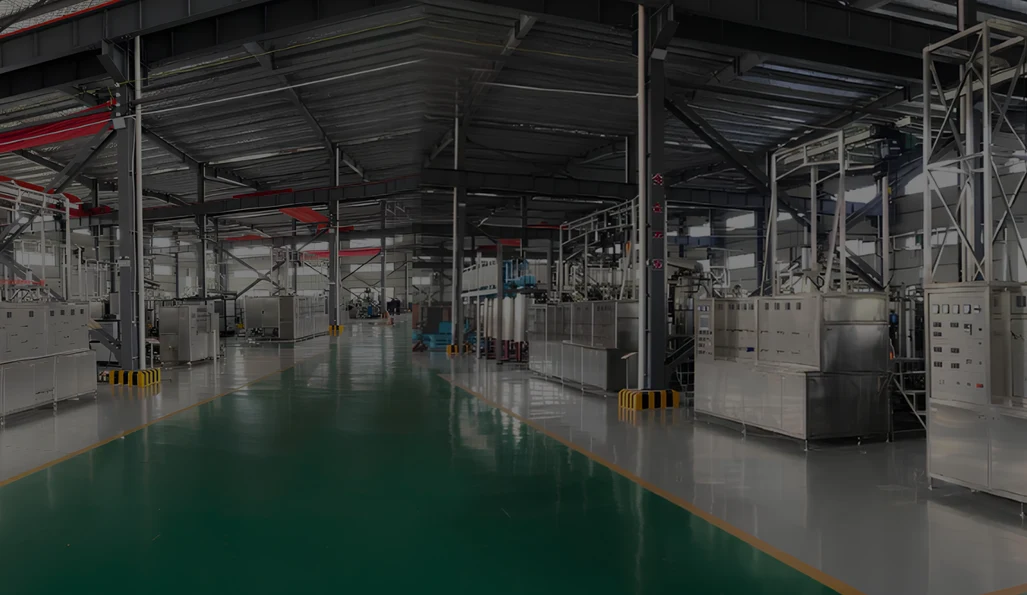
Heating Cooling Controller — ±0.1°C Accuracy, -80°C to +200°C
Xi'an Bioland Instrument Co., Ltd. specializes in precision temperature control equipment with 15+ years of manufacturing experience. Our heating cooling controller delivers ±0.1°C accuracy across -80°C to +200°C using PID auto-tuning. It cuts energy use by 25% and reduces panel space by 40%+, with CE, ISO, GMP, and FDA compliance built in—ready for pharma, chemical, semiconductor, and R&D environments.

Key Features & Benefits
Dual Independent Heating & Cooling Outputs
Run PID on the heating loop and On/Off control on the cooling loop simultaneously. This protects compressors from short-cycling damage while keeping your heating element under tight PID control—no compromises between precision and equipment longevity.
Auto-Tuning PID — No Manual Guesswork
The auto-tuning function measures your system's actual thermal lag and calculates separate PID constants for heating and cooling slopes. Setup time drops from hours to minutes, and overshoot is corrected from the first run—not after days of manual tweaking.
Anti-Windup Protection
When the controller output transitions between heating and cooling, integral accumulation can cause dangerous overcorrection. Anti-Windup clamps the integral term during saturation, keeping the process stable during fast ramp changes.
Programmable Deadband — Stop Output Fighting
A configurable neutral zone between heating and cooling setpoints ensures neither output activates when the process is within tolerance. This eliminates simultaneous heating and cooling, which would waste energy and stress mechanical components.
>2300V AC Galvanic Isolation
Signal paths between sensor input, power supply, and control outputs are fully isolated above 2300V AC. In environments with Variable Frequency Drives (VFDs) or shared ground buses, this blocks noise that would otherwise cause sensor drift or erratic output switching.
How It Works?
The controller reads process temperature every 50ms–250ms through a thermocouple or RTD sensor. The PID algorithm compares this reading against your setpoint and drives either the heating output (reverse action) or cooling output (direct action) accordingly.
Cold Junction Compensation (CJC): Thermocouples generate a voltage relative to the terminal block temperature. CJC automatically corrects for ambient shifts at the connection point, keeping readings accurate even when panel temperature fluctuates.
Sensor Break Protection: If a sensor wire breaks or shorts, the controller immediately forces both outputs to a pre-configured safe value (typically 0%), preventing thermal runaway before an operator can respond.
Automation Integration: RS-485 Modbus RTU allows direct two-way communication with PLCs and SCADA systems—transmitting live process values and accepting remote setpoint changes without additional signal converters.
Specifications at a Glance
|
Parameter
|
Value
|
|
Temperature Range
|
-80°C to +200°C
|
|
Temperature Accuracy
|
±0.1°C
|
|
Control Algorithm
|
PID (Auto-Tuning + Anti-Windup)
|
|
Sampling Rate
|
50ms – 250ms
|
|
Output Types
|
Relay / SSR / 4–20mA Linear
|
|
Cooling Response
|
Millisecond-level
|
|
Energy Savings
|
25% vs. conventional units
|
|
Space Savings
|
40%+ vs. traditional configurations
|
|
Front Panel Rating
|
NEMA 4X / IP65
|
|
Communication Protocol
|
RS-485 Modbus RTU
|
|
EMC Standard
|
EN 61326
|
|
Electrical Safety
|
UL 61010-1
|
|
Input/Output Isolation
|
>2300V AC galvanic isolation
|
|
Relay Life Cycle
|
>100,000 operations at full load
|
|
Operating Temp (Ambient)
|
Up to 55°C (burn-in tested 48hrs)
|
|
Warranty
|
1 Year + Lifetime Maintenance
|
Construction & Durability
- NEMA 4X / IP65 front panel — resists dust ingress and direct liquid washdown in production environments
- 48-hour burn-in test at 55°C — every unit is stress-tested at elevated ambient temperature before shipment to screen out infant failures
- Relay rated >100,000 full-load operations — verified for continuous switching in 24/7 production cycles
Application Fields
Bio-Pharmaceutical Fermentation
Microbial cultures produce exothermic heat during growth phases. Uncontrolled temperature shifts by even ±0.5°C can reduce enzyme yield or introduce batch-to-batch inconsistency. This controller modulates steam injection and glycol jacket flow to hold fermentation temperature within ±0.1°C throughout the entire culture cycle.
Chemical Reactors
Exothermic reactions release heat non-linearly. The dual-loop design switches between heat addition and heat removal in real time—without output overlap or oscillation—keeping reaction temperature on profile and protecting batch integrity.
Semiconductor & Electronics Testing
Environmental test chambers demand precise temperature cycling from -70°C to +150°C to simulate accelerated field aging. Ramp-and-Soak profiles execute reliably with this heating cooling controller, meeting JEDEC and MIL-STD test requirements for thermal stress screening.
Plastic Injection Molding
Barrel zone temperatures shift with screw speed, material viscosity, and shot size. The controller balances resistive heating at startup with fluid cooling during production, maintaining target melt temperatures regardless of process variation.
Laboratory R&D
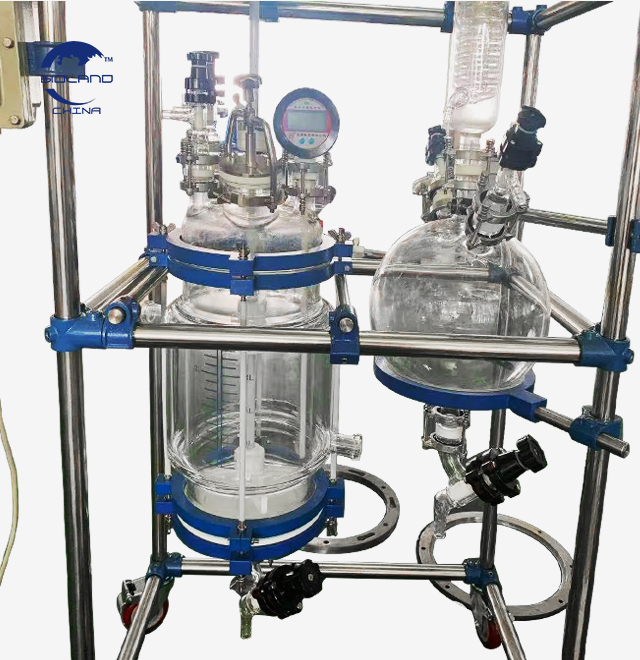
Distillation, crystallization, solvent extraction, and reaction calorimetry all require stable temperature holds with minimal drift. Researchers using circulating baths or jacketed reactors report tighter data reproducibility with ±0.1°C control versus conventional ±0.5°C units.
Quality Certifications & Compliance
|
Certification
|
Scope
|
|
CE
|
EU market electrical safety & EMC
|
|
ISO
|
Quality management system
|
|
UL 61010-1
|
Electrical safety for lab & industrial instruments
|
|
EN 61326
|
EMC immunity in industrial environments
|
|
GMP / FDA
|
Pharmaceutical process equipment guidelines
|
|
FAT Available
|
Factory Acceptance Test on request
|
Why Choose Bioland?
15+ years, one focus: Bioland designs and manufactures temperature control and chemical process equipment exclusively—not a general electronics supplier adding temperature controllers to a catalog.
Production transparency: A dedicated project specialist monitors your order from build to shipment. You receive photo or video updates at key production milestones. Your unit ships only after your documented approval.
Delivery you can plan around: Standard configurations ship within 5–7 business days. Custom OEM/ODM units are ready within 30 business days. Sea, rail, and air freight are all supported with full documentation for customs clearance.
Built for real conditions: Internal components are burn-in tested, relay life is verified, and every unit passes functional inspection before leaving the factory—not just a visual check.
Services & After-Sales Support
Warranty & Maintenance
Every unit carries a 1-year quality warranty. Lifetime maintenance support covers spare parts sourcing, firmware updates, and remote technical guidance—even after the warranty period ends.
Dedicated Project Specialist
One engineer manages your order from quotation through commissioning. Direct contact, no ticket queues.
Factory Acceptance Test (FAT)
Available at our Xi'an facility. We run your controller against your actual setpoints and process parameters before shipping. Test reports provided.
OEM / ODM Customization
Panel branding, input type, output configuration, communication protocol, and temperature range can be customized. Most modifications do not extend lead time beyond the standard 30-day OEM window.
Installation & Commissioning Support
Senior engineers provide remote guidance during wiring, parameter setup, and first-run auto-tuning. On-site commissioning available for large-volume orders.
FAQ
Q: What does the Deadband setting actually do?
A: It defines a programmable temperature window around your setpoint where neither heating nor cooling activates. If your setpoint is 37°C and Deadband is set to 0.5°C, the heater activates below 36.75°C and the cooler activates above 37.25°C. This prevents both outputs from running simultaneously.
Q: Can I use PID for heating and On/Off for cooling on the same unit?
A: Yes—this is the recommended configuration for systems using compressor-based cooling. PID handles heating for precision; On/Off manages the compressor to prevent short-cycling damage. Both loops operate independently.
Q: What happens if the temperature sensor fails mid-process?
A: Sensor Break Protection triggers within one sampling interval (50ms–250ms). Both outputs are forced to a pre-configured safe level—typically 0%—and a fault alarm activates. The process is protected until the sensor is replaced and reset.
Q: How does this controller connect to a PLC or SCADA system?
A: RS-485 Modbus RTU is the native communication interface. The controller maps process value, setpoint, output percentage, and alarm status to standard Modbus registers readable by any compliant PLC or SCADA platform. No gateway hardware required.
Q: Why is there temperature overshoot before it stabilizes?
A: Overshoot means the PID parameters—particularly integral and derivative gain—are not matched to your system's thermal mass and lag time. Running the built-in Auto-Tune function while the process is at operating temperature will recalibrate all three PID constants automatically.
Q: What accuracy can I expect across the full temperature range?
A: ±0.1°C is maintained across the full -80°C to +200°C range under standard operating conditions. Accuracy depends on sensor quality, calibration interval, and process stability—our engineering team can advise on sensor selection for your specific range.
Request a Quote
Tell us your heating cooling controller temperature range, output type, and communication requirements—we'll respond within 24 hours with a configuration recommendation and price.📧 info@biolandequip.com