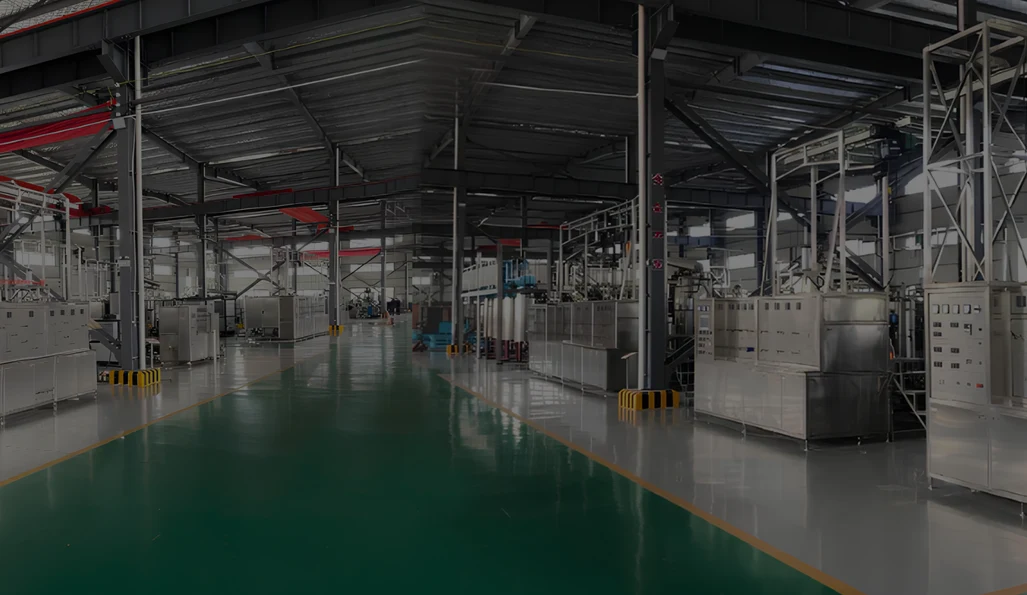
Why ultrasonic extraction equipment is so popular with users?
Jun 6, 2026
Very soon, ultrasonic herbal extraction equipment will be the best choice for companies in biotechnology, pharmaceuticals, and food processing. This is because it changes how we get chemicals from plants that are useful. High-frequency sound waves (20–28 kHz) are used in ultrasonic technology to create cavitation bubbles in the liquid. Most other methods, like soaking or heat-driven ways, take hours or days. This is faster. When these tiny bubbles pop, they create high pressure and tiny jets that break down cell walls right away.
This makes it possible for helpful chemicals like flavonoids, alkaloids, and essential oils to come out much faster, usually in just 24 to 40 minutes. R&D leaders, purchasing managers, and factory workers always choose ultrasonic extraction for projects that need to improve processes, increase capacity, or go from the lab to production. This is because it works well, doesn't require high temperatures, and uses less liquid.
Ultrasonic herbal extraction equipment is based on a process called acoustic cavitation, which quickly and efficiently moves large amounts of solid plant matter into watery media. Being able to move ultrasound waves through a liquid makes pressure changes from high to low. During the low-pressure phase, tiny bubbles of air form. During the high-pressure phase, they burst quickly, sending shockwaves and microstreams through the air. The structures of cells are broken up by these physical forces. This makes the release of compounds inside cells much faster, without the need for hard chemical treatments or long-term burning.
Core Advantages Over Traditional Methods
To use traditional extraction methods like Soxhlet extraction or reflux cooking, you have to work for a long time. This could be anywhere from a few hours to a few days. Some chemicals that break down when they get too hot may do so now. In the percolation and maceration methods, a lot of trash is made and a lot of organic fluids are used. Ultrasonic herbal extraction equipment takes care of all of these problems. With this method, temperatures can be kept between 40°C and 60°C so that extraction can happen.
This keeps parts that break down at high temperatures whole, like vitamins, flavonoids, and volatile oils. Up to 50% less liquid is used than in older ways. This lowers the cost of raw materials and the damage to the environment. The rate of extraction can go up by as much as 500%, depending on the plant material and chemicals that are being sought. This means that more foods are grown and more fuel is used.
Equipment Configuration and Customization Options
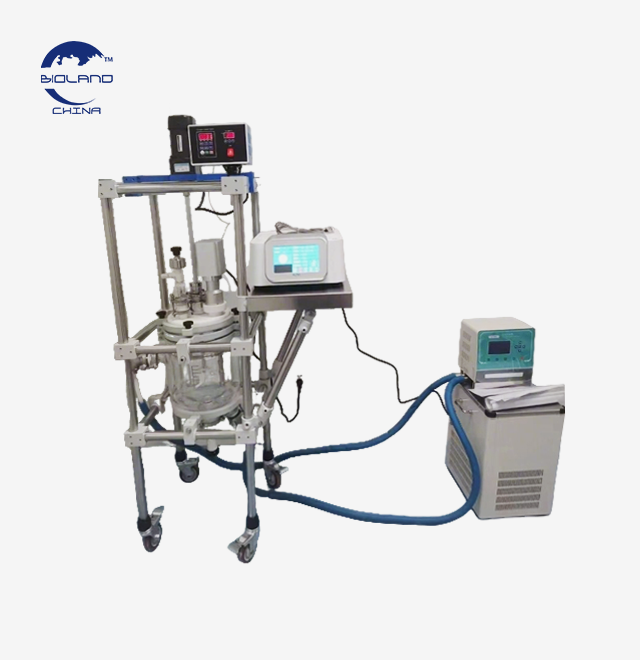
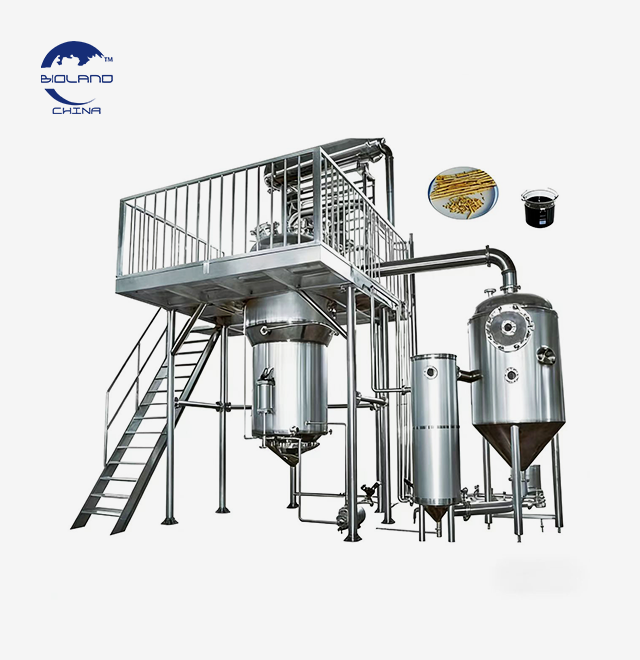
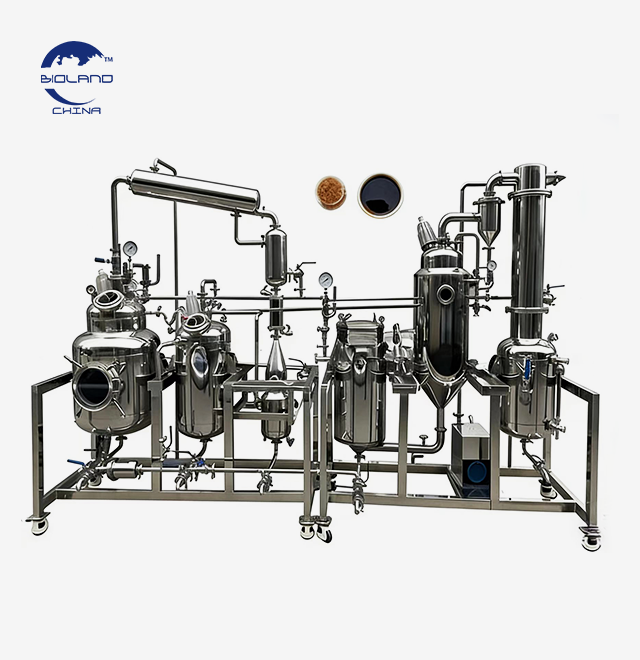
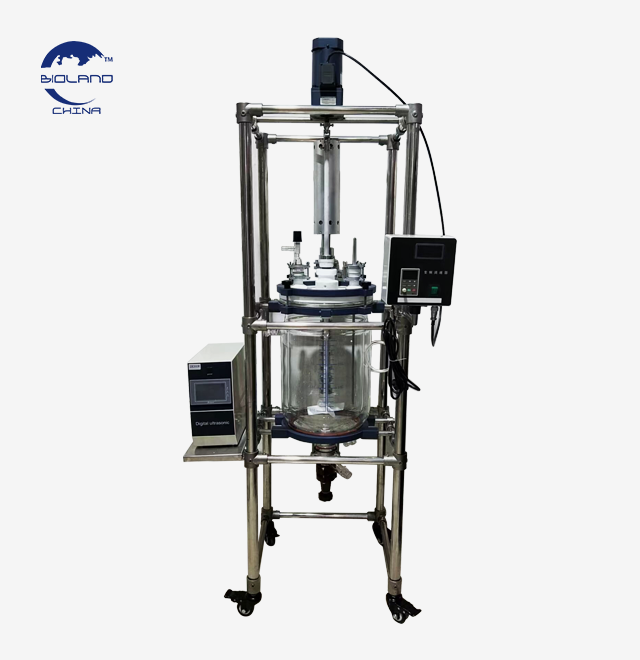
Different output levels and process needs can be met by ultrasonic herbal extraction equipment that comes in different shapes and sizes. Research schools use lab-scale units that are 1 to 5 liters in size to do feasibility studies and work on improving parameters. Technology can be moved from the lab to the production floor with the help of pilot-scale tools that can handle 10 to 50 liters. This lets businesses test how well it can grow before committing to a full business system. It is possible for industrial systems to make a lot of things at once or in batches bigger than 500 liters.
One important way to meet the needs of each client is to make things unique. As an OEM and ODM service provider, BIOLAND can make equipment that works with any process flow, raw material, or end goal. People can pick from different kinds of materials for parts that will get wet. In places with a lot of chlorine or acidic liquids, for example, they can switch to 316 stainless steel to protect against rust better. Two sets of ultrasonic waves work together to improve the amount of cavitation and its precision. This speeds up the dissolution process and makes more products. Optional PLC automation systems offer full process control, data logging, and online tracking. These systems make operations easier and make sure that each batch is the same.
Why Ultrasonic Extraction Equipment Stands Out for Herbal Applications
Herbal and medical plant extraction is hard because botanical materials are very complicated. They contain a lot of useful chemicals that are held in hard cellulosic frameworks. Ultrasonic herbal extraction equipment is great for this because it can target mechanical damage while keeping the processing conditions soft enough to keep delicate phytochemicals safe.
Enhanced Active Compound Recovery
Extreme sound waves create peaks with temperatures over 5,000 Kelvin and pressures over 1,000 atmospheres for very short periods of time. The mass solution temperature, on the other hand, stays at a good level. This paradox means that strong cell wall rupture can happen without broad heat breakdown. Compounds like polysaccharides, saponins, and phenolic glycosides are easy to get rid of with cold percolation, but they mix into the solvent very easily when you use ultrasonic herbal extraction equipment. Case studies from production lines that use standard reflux ways to get stevia, curcumin, and propolis out of plants show that they get 20–35% better yields. There are also better purity profiles because fewer unwanted colors and oils are betaken out at the same time.
Streamlined Process Workflow
The raw materials need to be ready before the ultrasonic herbal extraction equipment process can begin. To get the most surface area contact, this includes drying, grinding, and making sure that grain sizes are all the same. The ready material is put into the extraction tank along with the right solvent. Depending on the chemicals that are being sought, the solvent could be ethanol, water, glycerin, or an organic solvent.
The ultrasonic treatment starts at levels of power and frequency that have already been planned. It is kept at the right temperature by a jacketed tank design that is tied to chillers outside. When the extraction cycle is over, the mixture is separated to get rid of the spent solids and leave only the better extract. Then, if needed, there are steps for cleaning, concentrating, and getting the liquid back.
Some of the things that affect the process are the ultrasonic power density (in watts per liter), the treatment time, the solvent-to-material ratio, and the temperature setpoints. On controlled systems with tablet HMI screens, these things are simple to change. So, workers can make the conditions just right for different herbs without having to learn a lot of new things all over again. PLC-controlled systems have built-in documentation tools that help with GMP compliance by making audit trails and batch records that are needed for making medicines and supplements.
Real-World Performance Data
Manufacturers implementing ultrasonic herbal extraction equipment say that their processes run much more smoothly. It used to take eight hours for a company in the US to make mushroom extract with hot water boiling. Now, they use ultrasonic-assisted extraction, which only takes 35 minutes. This made each batch 70% more energy efficient. Heat broke down impurities in chili peppers, so they didn't need to be cleaned again in a second step. A production line for capsaicin got 28% more capsaicin out of them. It's clear that the technology can give a clear return on investment by making goods better, increasing throughput, and cutting running costs.
Comparing Ultrasonic Extraction Equipment: Making the Right Choice
To pick the best ultrasonic herbal extraction equipment, you should carefully look at the ways the tools work and how they will help you reach your long-term goals. Procurement experts should think about more than just the price they paid for the item in the first place.
Key Performance Indicators
The most important factor is extraction effectiveness, which is found by counting how many target chemicals can be taken out of a given amount of raw material. When ultrasonic herbal extraction equipment improves output, the cost of feedstock goes down, too, which makes earnings go up. Your processing ability tells you how much stuff you can handle in a shift or day. This makes it harder for you to meet your business goals and make sure customers get what they want. Running prices are affected by how much energy is used.
Automatic frequency tracking and impedance matching units send power more efficiently, so they waste less electricity. How long something lasts and how often it needs to be fixed depend on how well it was built and what materials were used. Such as, systems made of 316 stainless steel and instruments made of titanium alloy can handle harsh solvent conditions and last longer than lower-grade choices.
Manual Versus Automated Systems
Hand-held ultrasonic herbal extraction equipment is useful in labs and for making small amounts of specialized goods where freedom and control are valued. A person in charge adds liquids by hand, starts the extraction process, and checks the progress to see how things are going. These systems are good for businesses that are just starting to grow or that make high-value goods in small quantities. They are cheap to buy and easy to keep up.
PLCs, automatic valves, pumps, and sensors are used in fully automated systems to do full extraction processes with little help from people. As soon as the raw material is put into the system, it adds the liquid in set amounts, starts ultrasonic treatment for set amounts of time, filters the material, controls the temperature with heat exchanges outside the system, and moves the extract to storage bins. It saves money on labor, makes things more uniform, speeds up processes, and makes it less likely that workers will make mistakes. A lot can be gained by companies that are going from testing to production or that work with more than one shift.
Decision Framework for Procurement
Put these things in order of how important they are when you're looking at different sources and types of ultrasonic herbal extraction equipment. Make sure the technical specs fit the characteristics of your raw material (like the size of the particles, the amount of water, and the amount of oil) and the extraction profiles you want to achieve. Check to see how long the seller has been in business. People who sell to you and have had success with pharmaceutical, nutritional, or cosmetic uses can teach you a lot about how to do things. Check out the customization choices, especially if your process uses chemicals that can catch fire and needs designs that are safe from explosions and meet ATEX or IECEx standards.
Ask for detailed quotes that include the prices of the equipment, installation services, help with setup, operator training, and the guarantee terms. Keep in mind that custom-engineered systems take 30–45 days to build, while common setups only take five to seven days. This will help you compare wait times to your project timeline. How much does it cost to own? Add up how much energy it uses, how often it needs to be serviced, how much replacement parts cost (like ultrasonic tools that can wear out from cavitation erosion), and how easy it is to get help from a service source nearby.
Maintenance, Safety, and Operational Best Practices
The best way to keep ultrasonic herbal extraction equipment working after years of nonstop use is to keep it in good shape and follow safety rules to keep people and property safe.
Routine Maintenance Procedures
Visual checks are done on ultrasonic herbal extraction equipmentprobes every day to see if they have any signs of cavitation damage or surface wear. If there is too much corrosion, the resonant frequency changes. This makes it harder to move and take power. If you find leaks or growth in fluid seals and gaskets, it could be because of chemicals that don't work well together. Temperature and pressure gauges need to be adjusted once a week to make sure the process is being run properly. The electrical connections are checked for rust and looseness every month as part of a maintenance plan.
The sides of the heat exchanger are also cleaned to keep the best thermal transfer rates. Every 500 hours of use, ultrasonic sensors need to be checked for resistance that is out of range to make sure they stay in good shape. When the numbers are not in the right range, the detector needs to be changed before it breaks totally. Replacing parts on a regular basis keeps extraction going easily and cuts down on downtime that wasn't planned.
Safety and Regulatory Compliance
It is very important to follow strict safety rules when using ultrasonic herbal extraction equipment with chemicals that can catch fire, such as acetone, hexane, or ethanol. Electrical covers that can't catch fire keep sources of burning out of dangerous secret areas. Proper venting systems get rid of solvent fumes and keep the amounts below the lower explosion limits. Having many e-stop buttons and switch circuits on emergency shutdown devices stops everything right away if something goes wrong.
Safety masks, gloves, and lab coats that are resistant to chemicals keep people who work with solvents from getting hurt. Employee training makes sure that workers know how to do their jobs normally, how to spot signs of danger, and what to do in an emergency. GMP-compliant equipment has features that keep it clean, such as smooth welding joints, lines that drain themselves, and the ability to be used with CIP (clean-in-place). These features make it easy to clean and keep the machine from getting dirty between runs.
Sustainability and Cost Optimization
Keeping an eye on how much power you use can help you find better ways to use ultrasonic herbal extraction equipment. Running extraction rounds when the cost of energy is lower can help you save cash on your bills. Some organic solvents can be recovered and used again, up to 95% of the time. In the end, this saves money on both raw materials and getting rid of dangerous trash. Because ultrasonic processing extracts at a low temperature, less cooling is needed than after lowering the temperature by reflux. This saves even more energy. Trial design can help you find the best amounts of solvents to materials, so you can stop using solvents that aren't needed without lowering output. All of these things are good for both the economy and the environment.
Procuring Ultrasonic Herbal Extraction Equipment: What You Need to Know
To make the buying process for ultrasonic herbal extraction equipment go more smoothly, you should know about all the suppliers, review offers in a structured way, and set up clear channels of contact from the time you make the request until you need help after installation.
Supplier Selection Criteria
International standards, like the CE mark for European markets, the ISO 9001 quality management systems, the UL grades for North American power safety, and the SGS third-party testing reports, make it clear that you can trust a business providing ultrasonic herbal extraction equipment. Most of the time, companies that work with pharmaceutical clients are GMP certified and make equipment that meets FDA standards. Very important is the track record of the supplier.
When a company has been mining for at least 15 years, they know a lot about the process and have proven that their tools work well. You can see how well the product works in real life and read customer reviews to get an idea of the after-sales service. How close two service centers are to each other affects how quickly technical help is sent and how easy it is to get extra parts. Both of these things are necessary to keep production running smoothly.
Commercial Terms and Logistics
There are different pricing plans based on how complicated the ultrasonic herbal extraction equipment is, what materials were used to make it, how automated it is, and how much it can be customized. Standard shop items have set prices, but engineered-to-order systems need complicated quote methods that involve looking over technical specs and making suggestions. Most of the time, payment terms include a deposit when the order is approved, payments in stages as the product is made, and full payment when the factory takes the product.
Most warranties cover tools and work for one year, but you can pay extra for longer warranties. Make sure you know what kinds of help are available for upkeep. For instance, does the service provider offer online repair, service calls, yearly preventative maintenance contracts, and training sessions to help you remember what you learned? It is important to know these things so that property lifecycle management goes easily and that nothing goes wrong.
Big things need a lot of care when it comes to logistics for delivery. Ocean freight is a cheap way to move goods across international borders. Rail service is available in the United States, and air freight is available for urgent orders. A trip by sea might take five weeks, but a trip by air might be over in just one week. Customs clearance, paying import taxes, and moving freight within the same country are all extra steps that need to be organized by freight forwarders with a lot of experience.
All of these things are taken care of by suppliers who offer "turnkey" choices. The tools are brought to your building already set up. Factory workers do the installation, which makes sure that everything is set up properly, utilities are hooked up, the system is adjusted, and it works as it should. For full completion, you need to use real raw materials in test runs, fine-tune the process settings, and show your employees how to fix problems and do basic maintenance.
Conclusion
Ultrasonic herbal extraction equipment technology is now used in the cosmetics, nutritional, pharmaceutical, and specialty chemical businesses. This is because it removes more than five times as much material as the old way, and it does so at low temperatures that protect delicate bioactive chemicals. The tools can be used for many different jobs, from developing new ideas in the lab to making a lot of things at once in workshops. Also, it can be changed in many ways, like by adding new materials, automating processes, or making the machinery safe from explosions.
There are big economic gains when working times are cut, solvent use goes down, results go up, and the purity of the product gets better. The system will work well for a long time thanks to safety rules and regular maintenance. Companies can make their products with ultrasonic extraction and meet their production goals if they work with skilled manufacturers who offer full technical support, designs that follow good manufacturing practice (GMP), and full project services.
FAQ
How does ultrasonic extraction compare in efficiency to traditional methods?
Ultrasonic herbal extraction equipment is 50–500% better than other ways, such as Soxhlet extraction or washing. Acoustic cavitation literally breaks down cell walls in minutes instead of hours. This makes it much faster for bioactive chemicals to move into solvents. Processing time is cut by more than two-thirds, but results stay the same or go up. Extraction times go from several hours to 24 to 40 minutes.
Can ultrasonic equipment handle different types of herbs and plant materials?
Of course. Ultrasonic herbal extraction equipment can work well with leaves, roots, seeds, flowers, bark, and other parts of plants. It is safe to get compounds from both soft things, like rose flowers, and tough things, like ginger rhizomes. Different ultrasound power, temperature, liquid type, and treatment time can be used to get the most out of different herbs and chemicals, such as polysaccharides, alkaloids, phenolic compounds, or essential oils.
What maintenance does ultrasonic extraction equipment require?
Every day, ultrasonic herbal extraction equipment tools are checked for damage from cavitation. Once a week, sensors are adjusted, and once a month, heat exchangers are cleaned. Every 500 hours, transducers need to be checked for resistance to make sure they are still working right. Probes wear out over time and need to be changed when the resonant frequency changes due to erosion. This can happen after the probe has been used for thousands of hours in certain situations. By fixing things before they break, you can keep your tools working well and keep the extraction rate high.
Ready to Upgrade Your Extraction Capabilities?
Ultrasonic herbal extraction equipment has been produced by BIOLAND INSTRUMENT for more than 15 years. With customers all over the world, they have worked with people in the cosmetics, biotechnology, pharmaceutical, and food processing businesses. Our machines have been shown to boost extraction performance by up to 500% using cutting-edge cavitation technology that works at controlled low temperatures between 40°C and 60°C to protect chemicals that are sensitive to heat.
Our systems are safe and up to the best quality standards around the world thanks to the many certificates we have, including CE, ISO, UL, SGS, ATEX, and IEC. Your company can get the stability and freedom it needs with GMP-compliant designs that can be built from 316 stainless steel, PLC automation, explosion-proof setups, and two ultrasonic systems. Our engineering team offers full OEM/ODM services, which include creating custom equipment, planning the workshop, installing it, getting it up and running, showing the user how to use it, and giving them lifelong technical support.
To talk to one of our application specialists about your extraction needs, email us at info@biolandequip.com. You can also get detailed technical specifications and quotes as a qualified supplier, or you can set up a factory acceptance test at our facility to see how the equipment works with your materials before it is shipped.
References
1. Chemat, F., Rombaut, N., Sicaire, A., Meullemiestre, A., Fabiano-Tixier, A., & Abert-Vian, M. (2017). Ultrasound assisted extraction of food and natural products: Mechanisms, techniques, combinations, protocols and applications. Ultrasonics Sonochemistry, 34, 540-560.
2. Vilkhu, K., Mawson, R., Simons, L., & Bates, D. (2008). Applications and opportunities for ultrasound assisted extraction in the food industry: A review. Innovative Food Science & Emerging Technologies, 9(2), 161-169.
3. Tiwari, B. K. (2015). Ultrasound: A clean, green extraction technology. TrAC Trends in Analytical Chemistry, 71, 100-109.
4. Mason, T. J., Paniwnyk, L., & Lorimer, J. P. (1996). The uses of ultrasound in food technology. Ultrasonics Sonochemistry, 3(3), S253-S260.
5. Riera, E., Golás, Y., Blanco, A., Gallego, J. A., Blasco, M., & Mulet, A. (2004). Mass transfer enhancement in supercritical fluids extraction by means of power ultrasound. Ultrasonics Sonochemistry, 11(3-4), 241-244.
6. Wang, L., & Weller, C. L. (2006). Recent advances in extraction of nutraceuticals from plants. Trends in Food Science & Technology, 17(6), 300-312.
The reactor is beautifully mirror-polished and fully complies with GMP requirements for the pharmaceutical industry. The performance is excellent! Overall, we are very satisfied! We also provided with some feedback on our process improvements, which we hope will be helpful.
2024-04-09
Laboratory
Excellent and professional service. Always reply our questions very fast. All reactors and chiller we received are good too.
2024-02-15
Research Institute
Quality is beyond our expectation actually. After we got the extraction equipment and started using it, the performance was beyond our expectation. Very easy to use and very efficient to run. Service always respond us very quickly. Was also very helpful to help us. Thanks Bioland team. Very happy to work with you.
2023-11-20
Biotech Company
We are happy about the new purchase as always. Equipment and services are both good.
2023-08-05
Instrument Lab
This is the second order with Bioland instrument and everything is good as the first dateText.
2023-05-12
Global Trading Partner
Bioland instrument team is very helpful and professional. The sales helped us select the right equipment for our application, and their logistics people handled the transportation and customs declaration for our shipment. All that saved us a lot of work.