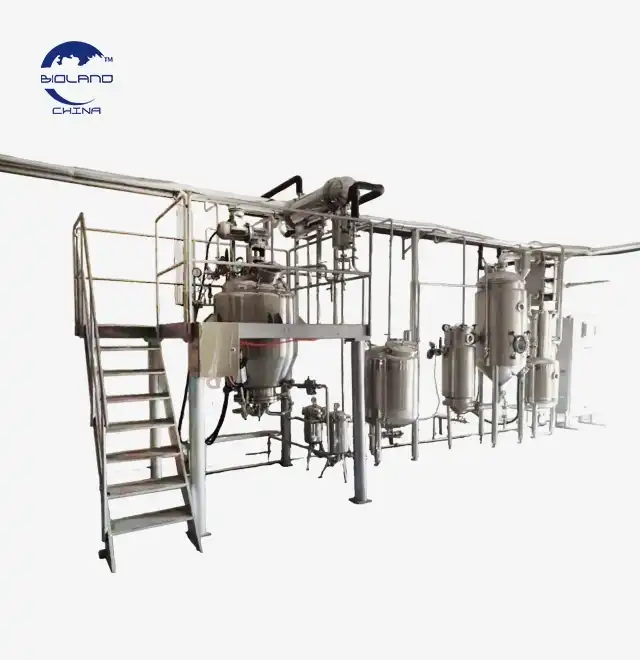
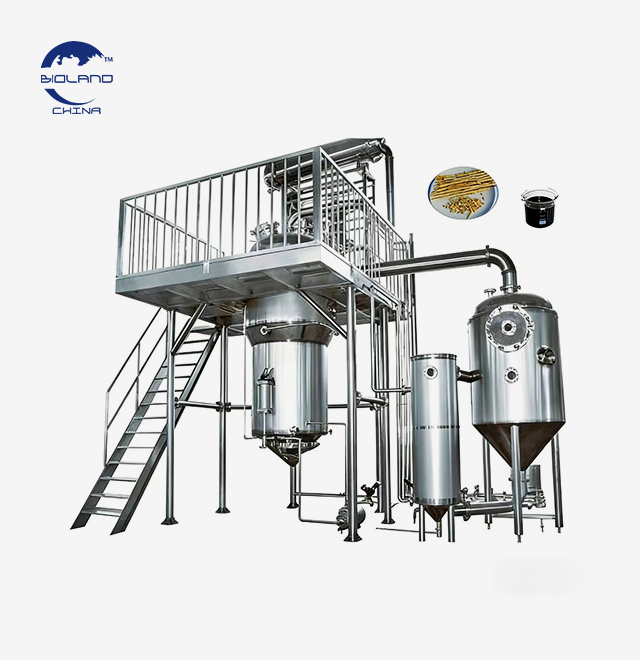
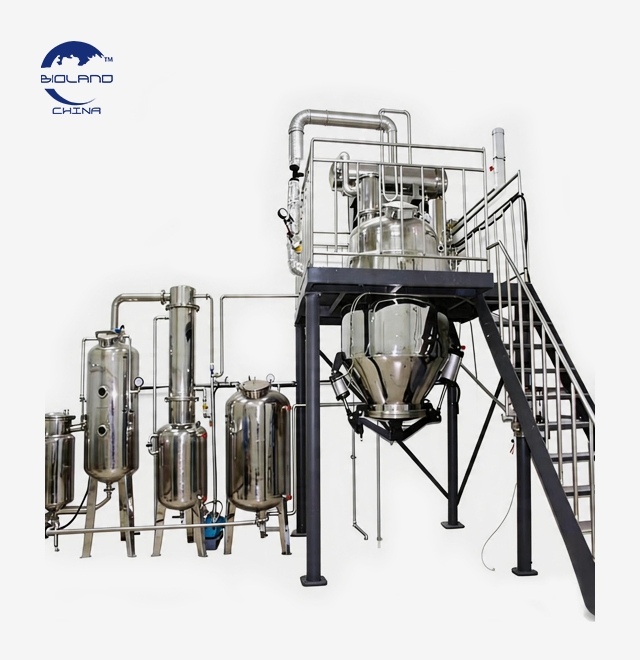
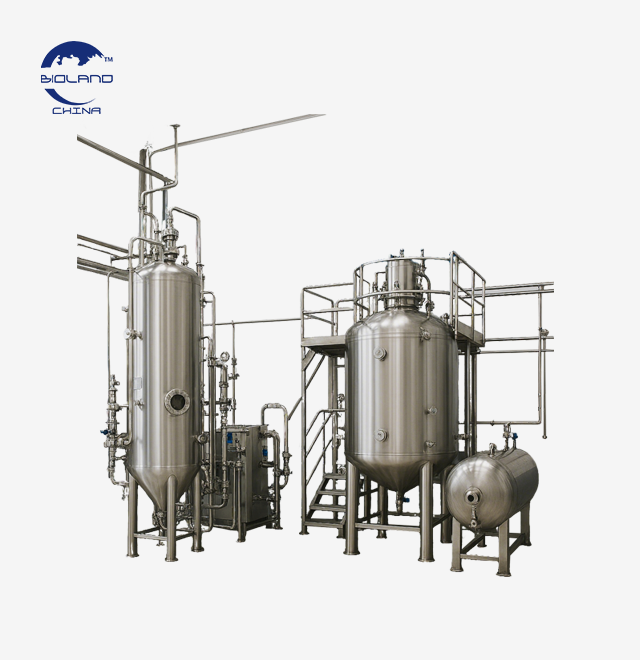
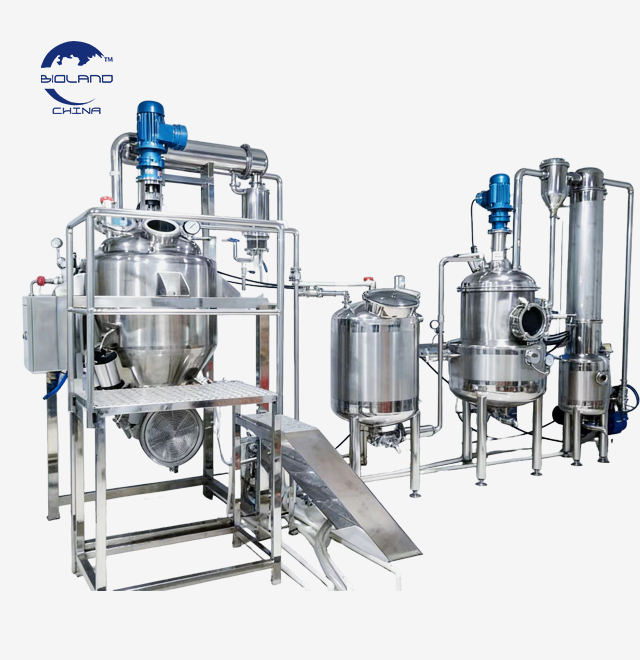
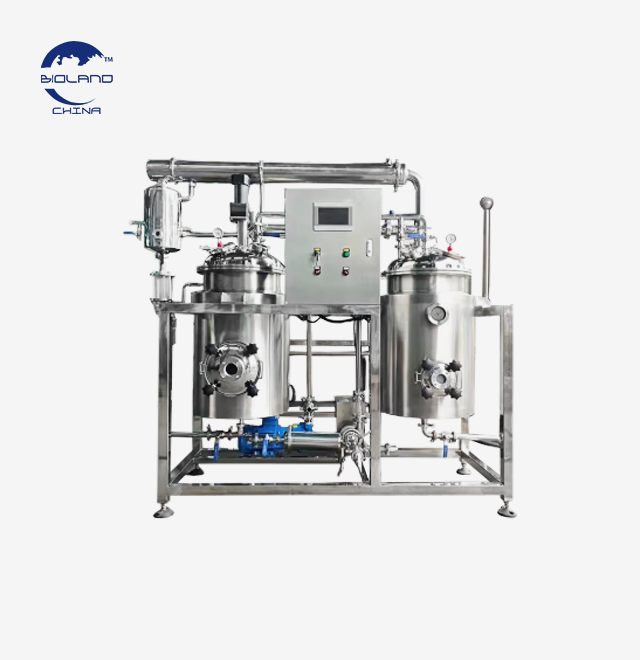
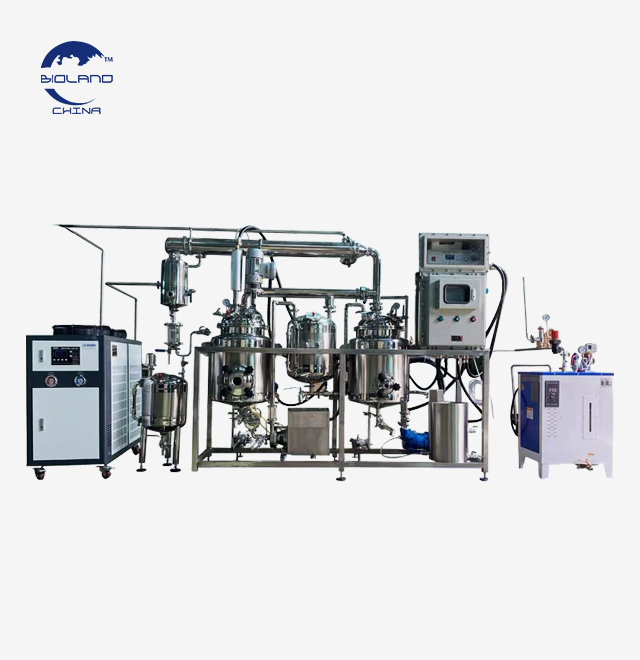
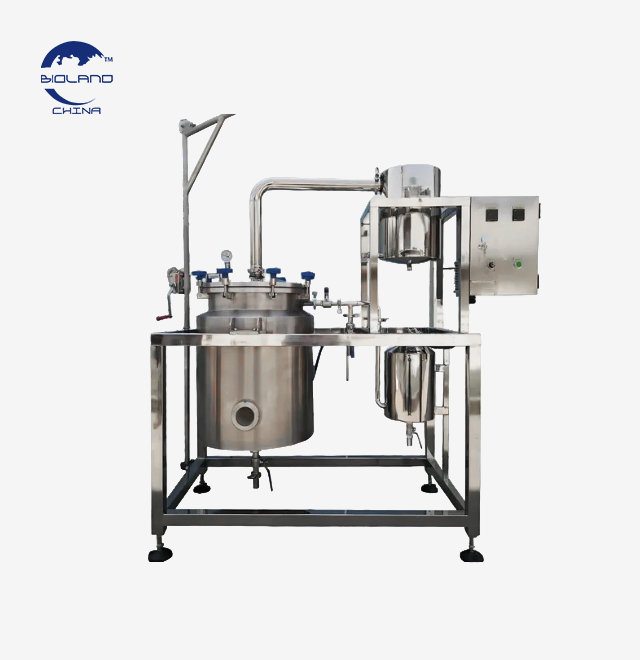
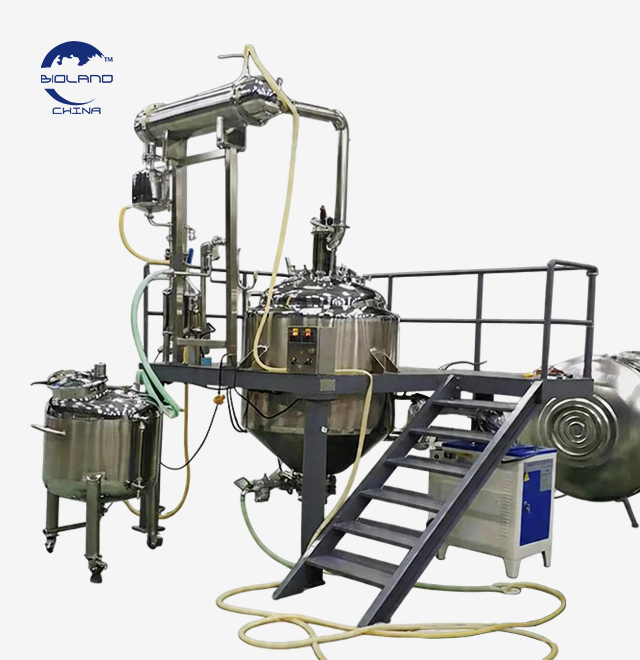
Ultrasonic Mushroom Extraction Equipment — Industrial-Grade Fungal Bioactive Extraction System for Scalable Production
Struggling with low polysaccharide yields, inconsistent batches, or excessive solvent costs from traditional mushroom extraction? Xi'an Bioland Instrument's Ultrasonic Mushroom Extraction Equipment uses 20–24 kHz acoustic cavitation to physically rupture chitin cell walls — delivering 20–40% higher yields of beta-glucans, triterpenes, and ganoderic acids. Operating between 0–60°C with full PLC automation, it protects heat-sensitive compounds while scaling seamlessly from 20L lab units to 1000L industrial systems. CE, ISO certified and GMP/FDA compliant.

Why Ultrasonic Extraction Outperforms Conventional Methods?
Traditional hot-water maceration and solvent soaking share three chronic problems: long processing cycles (4–12 hours), heat degradation of volatile terpenes above 60°C, and batch-to-batch yield variation that complicates quality control documentation.
Acoustic cavitation solves all three at the physical level — not through additives or process tweaks.
|
Metric
|
Traditional Maceration
|
Ultrasonic Extraction
|
|
Extraction Time
|
4 – 12 hours
|
20 – 60 minutes
|
|
Polysaccharide Yield
|
Baseline
|
+20 – 40%
|
|
Operating Temperature
|
80 – 100°C
|
0 – 60°C
|
|
Solvent Consumption
|
High
|
Reduced 30–50%
|
|
Batch Reproducibility
|
Manual-dependent
|
PLC-automated
|
Why Manufacturers Choose Xi'an Bioland Instrument
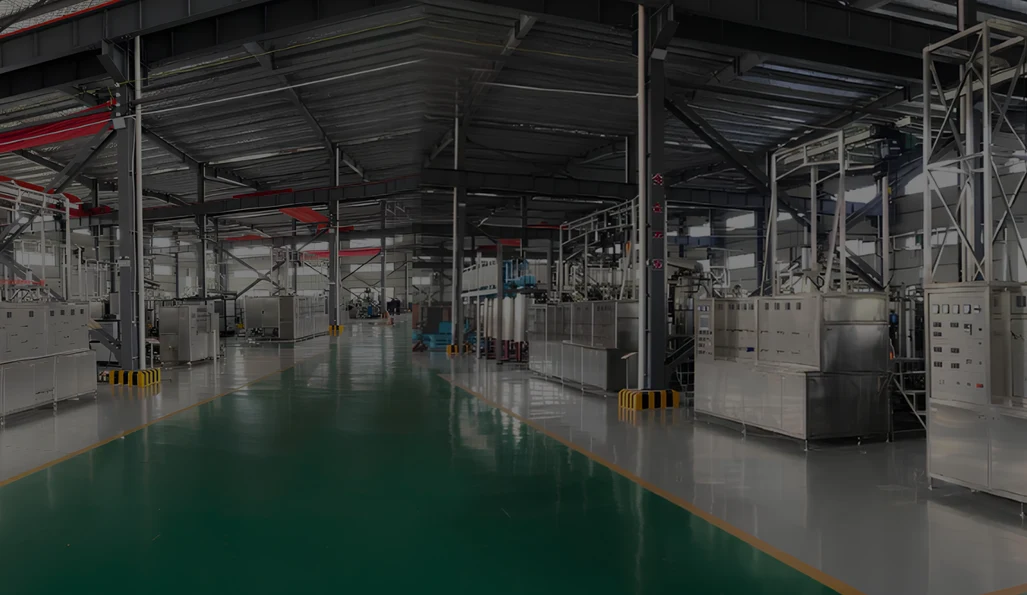
Xi'an Bioland Instrument has manufactured industrial extraction and ultrasonic processing equipment for over 15 years, with systems operating in nutraceutical, pharmaceutical, and cosmetic facilities across Europe, North America, Southeast Asia, and the Middle East.
What sets our process apart:
- OEM/ODM capability — custom probe geometry, flow cell volume, and control interface to match your existing production line
- Transparent production tracking — a dedicated project engineer provides weekly photo and video updates; you approve the unit before it leaves the factory
- Factory Acceptance Testing (FAT) — available at our Xi'an facility for clients who require witnessed testing before shipment
- Fast delivery — standard configurations ship in 5–7 business days; custom systems complete in 30 business days
- 1-year quality warranty + lifetime maintenance — spare sonotrodes, replacement transducers, and generator components held in stock

Key Features & Benefits
PLC-Automated Process Control
Every extraction run logs temperature, pressure, ultrasonic amplitude, and time in real time. Deviations trigger automatic correction — not manual re-intervention. For pharmaceutical-grade production, this means your batch records are complete and audit-ready without additional documentation overhead.
Low-Temperature Extraction (0–60°C)
Beta-glucans, volatile terpenes, and heat-labile enzymes begin degrading above 60°C. A jacketed flow cell actively circulates chiller fluid around the cavitation zone, holding bulk temperature below your set threshold throughout the entire run — not just at startup.
Linear Scale-Up: Lab to Industrial, No Re-Optimization
Process parameters validated on a 500W / 20L lab unit translate directly to 4kW and 16kW inline systems because ultrasound intensity is expressed in W/cm² — a surface-area-based metric that remains constant across scales. What works in your R&D lab works on your production floor.
Ti-6Al-4V Sonotrode — Built for Acidic Slurries
The sonotrode is the highest-stress component in any ultrasonic system. Medical-grade Ti-6Al-4V resists cavitation pitting corrosion in low-pH mushroom slurries (Chaga pH typically 3.5–4.5) and meets FDA/GMP heavy metal safety thresholds — verified through Mill Test Report traceability supplied with every unit.
ATEX-Compatible Configuration for Ethanol Dual Extraction
Sequential water + ethanol extraction is the industry standard for full-spectrum mushroom products using Ultrasonic Mushroom Extraction Equipment. The ATEX-rated configuration places the generator outside the hazardous zone and certifies the transducer/flow cell assembly for use with flammable solvents — keeping your team compliant and safe.
Equipment Specifications & Features
|
Technology parameter
|
|
Model
|
BL-TN-C50L
|
BL-TN -C100L
|
BL-TN -C200L
|
BL-TN -C300L
|
BL-TN -C500L
|
|
Volume (L)
|
50
|
100
|
200
|
300
|
500
|
|
Evaporation capacity (kg/h)
|
20
|
50
|
70
|
100
|
200
|
|
Motor power(KW)
|
2.7
|
2.7
|
2.7
|
3.5
|
3.5
|
|
Steam consumption(kg/h)
|
25
|
60
|
90
|
120
|
250
|
|
System vacuum (MPa)
|
-0.085
|
-0.085
|
-0.085
|
-0.085
|
-0.085
|
|
Pressure of jacket(MPa)
|
0.09~0.3
|
0.09~0.3
|
0.09~0.3
|
0.09~0.3
|
0.09~0.3
|
|
Compressed air (MPa)
|
0.5~0.6
|
0.5~0.6
|
0.5~0.6
|
0.5~0.6
|
0.5~0.6
|
|
Evaporation temperature(°C)
|
60~100
|
60~100
|
60~100
|
60~100
|
60~100
|
How Acoustic Cavitation Extracts Bioactives?
The sonotrode transmits 20–24 kHz acoustic energy directly into the mushroom slurry, nucleating microscopic vacuum bubbles throughout the solvent. When these bubbles implode near the biomass surface, they produce localized micro-jets exceeding 100 m/s and shear pressures in the hundreds of bar range.
These forces fracture the chitin cell wall matrix — the primary physical barrier preventing bioactive release in fungi — and drive beta-glucans, triterpenes, and ganoderic acids into the surrounding solvent in minutes rather than hours.
Active cooling via the jacketed flow cell removes the heat generated during cavitation, while the PLC maintains set-point temperature regardless of changes in slurry viscosity or ambient conditions during the run.

Construction & Materials
Product-Contact Surfaces
All wetted components are manufactured from Ti-6Al-4V titanium alloy. This grade is selected specifically for resistance to pitting corrosion in acidic fungal slurries and compliance with FDA 21 CFR and GMP sanitary surface requirements. Mill Test Reports confirming alloy grade and heavy metal absence are provided with every sonotrode.
Digital Ultrasonic Generator
Automatic frequency tracking (AFT) continuously adjusts generator output frequency to match sonotrode resonance as slurry temperature and viscosity change during processing. This eliminates dead zones in the extraction chamber and maintains uniform cavitation density throughout the run.
High-Viscosity Configuration
For Tremella and other mucilaginous mushroom slurries exceeding 4,000 cP, a booster horn and progressive cavity pump feeding system are recommended. This configuration maintains effective acoustic energy transmission at the sonotrode face regardless of flow resistance upstream.
Application Fields
Nutraceutical & Supplement Manufacturing
Sequential dual extraction of Reishi (Ganoderma lucidum), Chaga (Inonotus obliquus), Lion's Mane (Hericium erinaceus), and Cordyceps — water phase targets beta-glucans; ethanol phase isolates triterpenes and ganoderic acids. Combined full-spectrum yields run 20–40% above conventional maceration at equal dry-weight input.
Functional Beverage Formulation
Ultrasonic shear forces reduce hydrophobic mushroom extract particle size to the nano-emulsion range (100–500 nm), achieving optical clarity and improved bioavailability in water-based beverage matrices — without high-pressure homogenizers or synthetic emulsifiers.
Cosmetic & Dermocosmetic Ingredient Production
Tremella fuciformis polysaccharides and Chaga melanin fractions are isolated at low temperature without harsh organic solvents. The resulting raw materials carry a clean-label ingredient profile compatible with EU cosmetics regulation and suitable for premium serum and anti-aging formulations.
Pharmaceutical & Biotech R&D
20L lab units generate GMP-compliant process development data. Because scale-up is linear, extraction parameters documented at lab scale are directly transferable to manufacturing batch records — reducing re-validation scope during scale-up submissions.
Quality Assurance & Certifications
Pre-Shipment Testing Protocol
Every unit completes a mandatory 72-hour continuous full-load run test before shipment. During this test, frequency stability, power output consistency, and thermal performance are logged continuously. Units that show frequency drift, overheating, or amplitude instability do not ship.
Cavitation Verification
Cavitation uniformity is confirmed through hydrophone mapping or the standardized aluminum foil erosion test, verifying that cavitation density is consistent across the entire flow cell cross-section — no localized hot spots, no dead zones.
Pressure Integrity Testing
All flow cells are hydraulically pressure-tested to 5–10 bar prior to dispatch, confirming mechanical seal integrity under operating and surge conditions for both aqueous and solvent applications.
Material Traceability
Ti-6Al-4V Mill Test Reports are included with every sonotrode shipment, providing batch-level traceability for GMP documentation packages and FDA facility audits.
Certifications Held
- CE (Machinery Directive 2006/42/EC)
- ISO 9001:2015 Quality Management System
- GMP/FDA compliant construction standards
After-Sales Support
- Pre-sales extraction process consultation and parameter recommendations based on your target mushroom species and bioactive profile
- Weekly production progress reporting with photographic/video documentation
- FAT (Factory Acceptance Test) at Xi'an facility upon request
- Sea, rail, and air freight coordination to your destination port
- 1-year warranty covering parts and workmanship defects
- Lifetime maintenance service with guaranteed spare parts availability
- Remote commissioning support via video call for installation and initial process setup

FAQ
Q: Can this equipment handle high-viscosity mushroom slurries like Tremella?
A: Yes. Probe-type ultrasonic systems transmit energy directly into the slurry regardless of viscosity. For slurries exceeding 4,000 cP, we recommend pairing the extractor with a progressive cavity pump for consistent feed flow and a booster horn to maintain amplitude at the sonotrode face. We can specify the correct configuration based on your target viscosity and throughput.
Q: How is bulk temperature controlled during cavitation?
A: The jacketed flow cell continuously circulates chiller fluid around the extraction zone. Combined with rapid slurry recirculation, this active cooling system maintains bulk temperature below your set threshold — typically below 45°C for heat-sensitive terpene profiles — throughout the entire extraction run, not just during initial startup.
Q: What is the expected sonotrode service life, and how do I know when to replace it?
A: A Ti-6Al-4V sonotrode typically delivers 1,000–3,000 operational hours depending on amplitude setting and the abrasiveness of your mushroom particle load. Sonotrodes are consumable components. We recommend quarterly visual inspection for surface pitting at the tip. Replacement sonotrodes are stocked and can be shipped within 5 business days.
Q: Is the equipment safe for ethanol-based dual extraction?
A: Yes, with ATEX-rated configuration. The generator is installed in a safe zone or explosion-proof enclosure. The transducer and flow cell assembly carries hazardous location certification for use with ethanol concentrations above LEL thresholds. Full wiring and installation documentation for ATEX compliance is provided.
Q: How does ultrasonic extraction compare to supercritical CO₂ for mushroom applications?
A: Supercritical CO₂ is highly selective for non-polar lipid fractions but does not efficiently extract water-soluble polysaccharides — the primary bioactive class in most functional mushroom products. Ultrasonic extraction handles both water-soluble (beta-glucans) and alcohol-soluble (triterpenes) fractions sequentially in a single equipment platform, at a fraction of the capital cost of CO₂ systems. For full-spectrum mushroom extract production, ultrasonic systems typically deliver faster ROI at medium-to-large scale.
Q: Can lab-scale results be replicated at industrial scale without re-optimization?
A: Yes. Because ultrasonic process intensity is expressed in W/cm² (acoustic power per unit sonotrode area), and this value is maintained constant across our 500W, 4kW, and 16kW systems through geometric scaling, extraction parameters validated at lab scale transfer directly to production. This linear scalability is a documented advantage over other extraction technologies where empirical re-optimization at each scale is typically required.
Request a Quote
Tell us your target mushroom species, required throughput, and solvent preference for Ultrasonic Mushroom Extraction Equipment.
Contact Us: info@biolandequip.com