Ultrasonic vs Conventional Extraction: Which Is More Efficient?
Sep 8, 2026
The argument between ultrasonic and traditional extraction methods for plants is no longer just an academic one; it has real-world consequences for production costs, product quality, and the ability to compete in the market. Traditional methods like hot water reflux, Soxhlet extraction, and maceration have been used in the herbal industry for decades, but they always have problems, like taking too long to process, damaging bioactive compounds that are sensitive to heat, and using too many solvents. Ultrasonic herbal extraction equipment is a game-changing technology that uses sound cavitation to break down plant cell walls at the microscopic level, greatly speeding mass transfer and increasing output. According to tests done by the industry and outside researchers, ultrasonic-assisted extraction can improve extraction efficiency by 50–500% compared to traditional methods. It can also cut working time by more than two-thirds and work at a gentle 40–60°C.
This article looks at the hard numbers behind both technologies, looks at case studies that show how they were used, and gives you a clear plan for choosing the best extraction platform. If you are a production manager, buying head, or lab worker looking at investments in tools, knowing these efficiency measures will change how you process herbs.
How Ultrasonic Cavitation Changes the Extraction Process
The Physical Mechanism of Acoustic Cavitation in Plant Cell Disruption
Ultrasound waves with frequencies between 20 kHz and 100 kHz move through a liquid and alternate between high-pressure and low-pressure waves. During the rarefaction cycle, tiny gas bubbles form and grow. During the compression cycle, when these bubbles burst violently, temperatures in the area reach 5,000 K and pressures reach 500 atm. The plant cell walls are quickly broken by these micro-jet streams and shockwaves, letting internal parts like flavonoids, polysaccharides, saponins, and alkaloids go straight into the solvent. This way of shaking things up physically is the main reason why ultrasonic herbal extraction equipment works 50–500% better than traditional cooking methods. In contrast to heat breakdown, cavitation does not break down temperature-sensitive substances like chlorogenic acid or anthocyanins, which are very valuable in medicinal and nutritional uses.
Temperature Control and Preservation of Thermolabile Bioactive Compounds
In traditional heat-reflux extraction, temperatures above 80°C are needed for long periods of time, which breaks down valuable phytochemicals by hydrolysis, epimerization, or oxidation. Ultrasonic systems use a jacketed tank with extra cooling ability to keep the temperature in the ideal range of 40–60°C. In plants like rose petals (which contain flammable scented oils) and sea buckthorn (which contain fragile unsaturated fatty acids), the low temperature climate protects the structure of these parts. For example, the BL-TN line of ultrasonic herbal extraction equipment keeps the extraction temperatures just right while constantly moving the liquid through the material bed to make sure that everything is the same. This method works especially well for getting steviosides out of Stevia rebaudiana leaves, since heat breaks down the sweet glycosides and changes the color of the powder.
Synergy Between Ultrasonic Waves and Solvent Dynamics
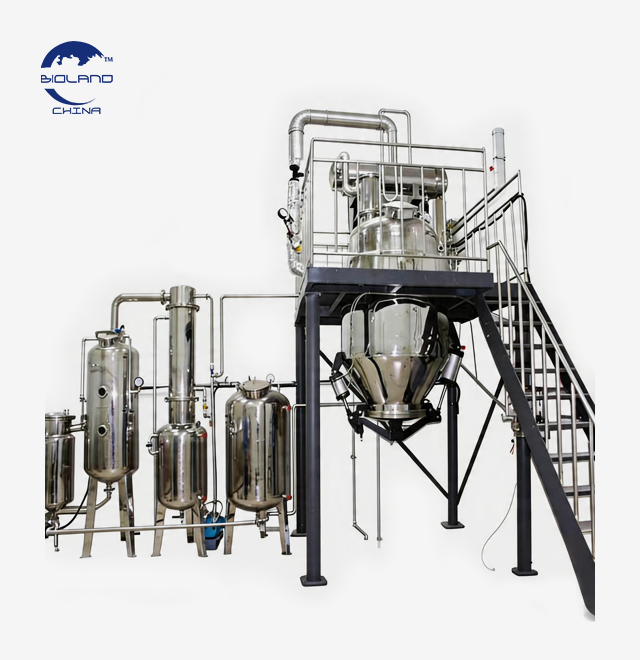
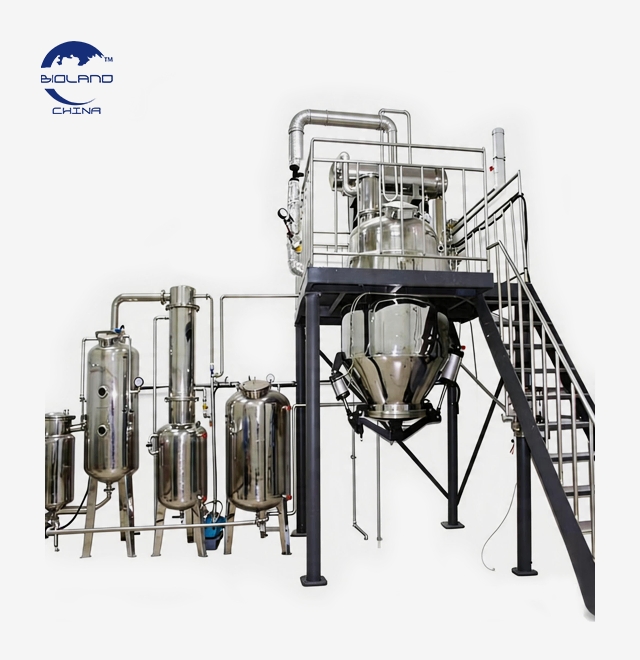
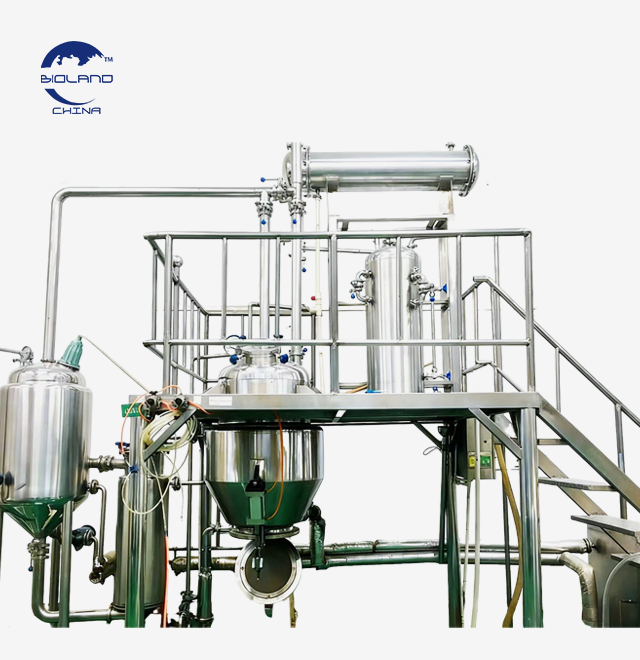
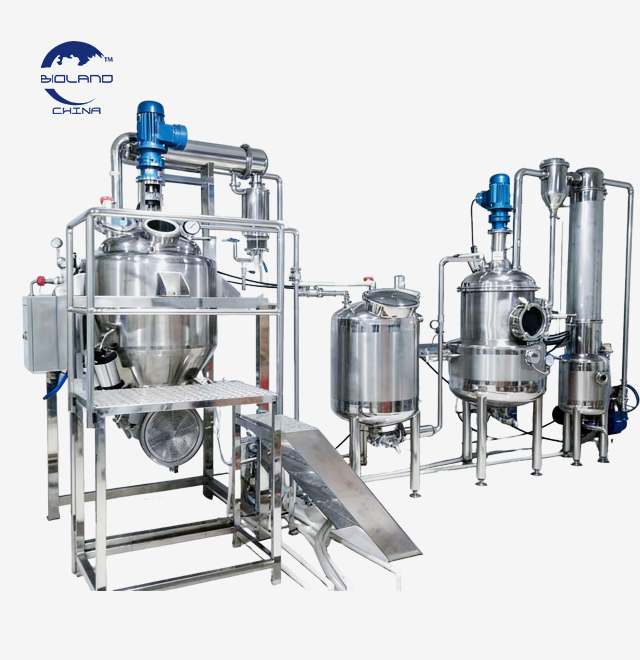
Acoustic streaming is a steady flow of fluid that improves micro-mixing at the interface of a solid and a liquid. It is caused by sound waves traveling through space. This effect thins the outer layer, letting fresh liquid keep in contact with the plant matrix. This makes the mass transfer coefficients much better. Most methods use simple diffusion or mechanical stirring, which are slower and less even by nature. When working with thick plant materials like ginger or licorice root, the old way of extracting can leave up to 30% of the beneficial content stuck in cells that haven't been broken. With ultrasonic herbal extraction equipment, these barriers don't matter because the waves go deep into the tissue, exposing all intracellular parts to the solvent in as little as 24 to 40 minutes. Usually, the system is made up of an extraction tank, a heater, a condenser, an oil–water separator, and a vacuum pump. This setup lets the extraction and concentration processes happen at the same time.
Comparing Extraction Time and Bioactive Compound Recovery
Quantitative Yield Improvements Across Botanical Categories
A study using ultrasonic herbal extraction equipment showed higher yields for almost every type of plant: for Ganoderma lucidum polysaccharides, ultrasonic methods achieved 15.2 g/100g compared to 9.8 g/100g using hot water extraction, which is a 55.1% increase; for ginkgo biloba flavonoids, ethanol-based ultrasonic extraction recovered 84% of available compounds whereas traditional stirring recovered 62%; and for turmeric curcuminoids, ultrasonic extraction achieved 93% purity in 20 minutes compared to maceration which needed 6 hours to reach only 78% purity. This big difference in recovery efficiency has direct economic benefits: the same starting material gives a lot more extractable active ingredients, which lowers the cost of the starting material per kilogram of active product.
Reduction of Processing Time and Its Economic Implications
Time is money, especially in commercial extraction operations. The ultrasonic herbal extraction equipment completes most protocols in 24–40 minutes, whereas hot reflux typically takes 2–3 hours and maceration can take days. For a medium-sized manufacturer processing 500 kg of herbs daily, this difference determines whether the facility can handle two batches per shift or six. Shortening the extraction phase also reduces equipment footprint and labor hours; the automated PLC control system of Bioland systems further minimizes manual intervention, allowing an operator to manage multiple vessels simultaneously. In tea polyphenol extraction from green tea leaves, ultrasonic processing reduced the required time from 180 minutes to 35 minutes, while improving the catechin yield by 18.6%, demonstrating that speed and quality can improve concurrently.
Quality Metrics of Recovered Extracts
Bioactivity is not solely about yield—purity of the target component matters equally. Recovery is measured not only by the weight of dry extract but also by the percentage of active compounds within it. Since ultrasonic herbal extraction equipment operates at reduced temperatures, fewer impurities are co-extracted, especially waxy substances and heat-labile proteins. The resulting extracts demonstrate higher antioxidant capacity, better clarity, and fewer particulates, which reduces downstream purification steps. For example, when extracting quercetin from Sophora japonica buds (using ethanol as solvent), the ultrasonic process produced quercetin with a purity rating of 94%, while conventional heat extraction yielded a brownish product needing extensive decolorization. Cleaner, purer extracts naturally command higher market prices, improving profitability and enabling premium product positioning.
Evaluating Energy Consumption and Processing Efficiency
Energy Benchmark for Hot Water Reflux vs. Ultrasonic Systems
With rising industrial electricity costs, energy consumption is a strategic selection criterion. Conventional extraction systems must heat the entire liquid mass to the boiling point and maintain that temperature for hours, consuming 8–12 kW per 1000 liters. In a production line processing 2 tons of botanical material daily, this energy burden is substantial and directly increases operating expenses. In contrast, ultrasonic herbal extraction equipmentoperates at temperatures around 40–60°C and relies on non-thermal physical mechanical energy for cell disruption. The ultrasound generator itself consumes only about 2.7–3.5 kW depending on the model—saving between 30% and 70% on energy costs per batch when comparing complete process cycles. For operations in geographical regions with high electricity tariffs, this is a compelling factor for upgrading to ultrasonic extraction.
Integration of Vacuum Concentration to Reduce Process Energy
Bioland extraction machines combine extraction and concentration capabilities into a single unit, enabling the integration of a vacuum-assisted evaporation step. Since concentration under vacuum reduces the boiling point of the solvent, the evaporation temperature drops from 100°C to approximately 60°C. This configuration, known as a single-stage extraction–concentration unit, reduces the total thermal energy required compared to running separate pieces of equipment. The ultrasonic herbal extraction equipment includes a motor-driven condenser, oil separator, and vacuum pump fully automated for continuous operation, maximizing plant throughput. A large-scale chili oleoresin production facility, which needed to handle 300 kg of dried chilies per batch, was able to reduce processing time from 5 hours to 90 minutes, reporting a 45% reduction in total electricity consumption per batch.
Continuous Operating Capacity and Automation Enhancements
Extraction efficiency is similarly defined as throughput per unit of time per unit of energy. The automation of the solvent recirculation and extract discharge cycles of the ultrasonic herbal extraction equipment enables continuous feeding of herbs and simultaneous removal of concentrated extract. Unlike manual batch systems, where energy is consumed during loading, heating, and cooling, the automated design minimizes standby energy and labor time. The PLC controller maintains stable pressure, temperature, and ultrasonic power, allowing 24-hour continuous production without quality variations. A mid-sized manufacturer in Southeast Asia, processing echinacea roots, ran the machine for 12 hours continuously and achieved consistent yield within ±2% variation, which secured them a supply contract for a major dietary supplement brand that demanded batch-to-batch consistency.
How Solvent Ratio and Temperature Affect Extraction Performance
Optimizing Solvent-to-Feed Ratio with Ultrasonic Assistance
The solvent-to-solid ratio is a critical parameter determining extraction concentration gradients and diffusion rates. Typical ratios of 8:1 to 12:1 are standard in conventional practice, primarily because higher volumes of solvent are needed to compensate for poor penetration. However, with ultrasonic herbal extraction equipment, the cavitation forces are so effective that solvent ratios can often be reduced to 6:1 or even 4:1—without compromising recovery. This reduction lowers solvent consumption, reduces the heating cost required for solvent recovery, and allows higher concentrations of the final extract, which simplifies downstream evaporation. In a propolis extraction operation, for example, the use of a 6:1 ethanol ratio with ultrasonic processing recovered 82% of total phenolic compounds, compared to 70% with an 8:1 ratio using traditional agitation.
The Impact of Temperature on Yield and Bioactivity Retention
Temperature selection is a trade-off between enhancing solubility of compounds and preserving their chemical stability. Most conventional processes operate near the boiling point of the solvent—for water, this is 100°C, which destroys a substantial portion of flavonoids. In contrast, ultrasonic extraction allows the use of lower temperatures while accelerating mass transfer through physical energy. The ideal temperature windows for most herbals fall between 50–60°C, enabling maximal enzymatic inhibition while protecting volatile constituents. For mushroom polysaccharide extraction, the ultrasonic herbal extraction equipment performed efficiently at 55°C with a polysaccharide yield of 2.85%, while a water-bath extraction at 100°C yielded only 1.90%—the polysaccharide structural configuration was also better preserved. This is particularly critical for antioxidants, which are prone to degradation when subjected to prolonged heat.
Adjusting Solvent Composition to Target Specific Compound Classes
Different phytochemicals require different solvent polarities. Ethanol is polar and ideal for polyphenols; hexane is non-polar and extracts terpenes and lipids; water extracts polysaccharides and saponins. Standard extraction equipment can handle solvent switches, but cleaning between runs is time-consuming. The ultrasonic herbal extraction equipment supports dynamic solvent exchange through built-in CIP wash cycles, allowing a facility to process a broad range of botanicals in a single machine without cross-contamination. This flexibility is a crucial operational benefit; an essential oil producer, for instance, may extract rose oil with hexane and then switch to ethanol for resin extraction, both within the same hour. The effectiveness of ultrasonic extraction under multiple solvent systems makes it a versatile single-equipment option for contract manufacturing organizations (CMOs) that require rapid changeovers.
Choosing the Right Technology for Scalable Herbal Processing
From Bench-Scale to Production-Scale: Capacity Options
Laboratory validation and commercial production demand entirely different equipment scales. Bioland provides a spectrum of ultrasonic herbal extraction equipment capacities—from lab 50-liter units to industrial 500-liter systems—enabling smooth scale-up without redeveloping the process. The BL-TN series models (BL-TN-C50L, BL-TN-C100L, BL-TN-C200L, BL-TN-C300L, and BL-TN-C500L) feature equivalent power densities, ensuring that results are reproducible when transitioning from one unit to another. For example, a Chinese bio-tech firm starting with a 100-liter unit to develop a mushroom polysaccharide extract was able to scale up to a 500-liter unit based on identical parameter profiles, halving the time from R&D to market compared to test work required on a conventional line.
Technology parameter
Model
BL-TN-C50L
BL-TN -C100L
BL-TN -C200L
BL-TN -C300L
BL-TN -C500L
Volume (L)
50
100
200
300
500
Evaporation capacity (kg/h)
20
50
70
100
200
Motor power(KW)
2.7
2.7
2.7
3.5
3.5
Steam consumption(kg/h)
25
60
90
120
250
System vacuum (MPa)
-0.085
-0.085
-0.085
-0.085
-0.085
Pressure of jacket(MPa)
0.09~0.3
0.09~0.3
0.09~0.3
0.09~0.3
0.09~0.3
Compressed air (MPa)
0.5~0.6
0.5~0.6
0.5~0.6
0.5~0.6
0.5~0.6
Evaporation temperature(°C)
60~100
60~100
60~100
60~100
60~100
Addressing Real-World Production Challenges in Case Studies
Every extraction project comes with challenges: stubborn cell walls, thermally unstable actives, or low yields caused by high matrix viscosity. One specific customer in the tobacco industry faced the task of extracting solanesol from tobacco leaves, a compound that hydrolyzes easily in hot water. The solution was an ultrasonic extraction system using ethanol at low temperatures, which obtained a yield of 35 g/kg—a 55% improvement over the previous heat-based process, demonstrating how the ultrasonic herbal extraction equipment works as a problem-solver for difficult botanicals. Another case involved the extraction of anthocyanins from purple sweet potatoes, where low pH conditions are required to stabilize the pigments; ultrasonic processing at 40°C under mild acidic ethanol achieved a recovery of 91% of anthocyanins, while the conventional method recovered 74% and required chromatographic purification to remove impurities.
Considerations in Installation, Maintenance, and Compliance
Before making a purchase decision, factor in the entire lifecycle costs, including installation, staff training, spare parts, and validation support. Reputable manufacturers like Bioland provide GMP-compliant equipment built with SUS304/SUS316L stainless steel, including dual-layer insulation, CIP cleaning nozzles, and full documentation packages to comply with local food or pharmaceutical regulations. Systems integrate online concentration monitoring, automatic discharge, and PLC-controlled cleaning cycles, reducing the chances for operator error. Moreover, the company’s commitment to responsive after-sales service—assigning a dedicated engineer to track production progress and sending photos/videos weekly—ensures a trouble-free experience. For the purchase of a 200-liter unit, Bioland can prepare equipment for Factory Acceptance Testing (FAT) before shipping, guaranteeing compliance with your operating requirements and eliminating on-site start-up surprises.
Conclusion
Ultrasonic extraction has decisively outperformed conventional extraction in efficiency, yield, energy consumption, and preservation of bioactivity. The review of current research and industrial case studies confirms that ultrasonic herbal extraction equipment enables producers to reduce processing times by two-thirds, achieve 50–500% yield improvements, and cut energy usage by up to 70%—making it the preferred choice for forward-looking botanical processors. When selecting a solution, consider not only the hardware but also after-sale technical support, regulatory compliance, and scalability options. Upgrading to an ultrasonic system is more than an equipment purchase; it is a strategic investment in processing capability that directly translates to better products, lower cost per kilogram, and enhanced competitiveness in the global botanical extract market.
FAQ
Q1: What is the optimal processing temperature for ultrasonic herbal extraction?
A1: The optimal processing temperature is typically between 40–60°C, which preserves heat-sensitive components while accelerating extraction speed. This is much gentler than conventional boiling methods, preventing loss of volatile and bioactive compounds.
Q2: Can ultrasonic herbal extraction equipment process both water-based and ethanol-based solvents?
A2: Yes. A single unit can switch between water, ethanol, methanol, and acetone. Because the system operates under vacuum/atmospheric pressure, it can adapt to different polarities and effectively process most herbal materials, from polysaccharides to flavonoids.
Q3: How long does one extraction cycle take with an ultrasonic system?
A3: Depending on the material and solvent, full extraction usually completes in 24–40 minutes, compared to 2–3 hours with hot reflux or days with maceration. Additional time savings come from the integrated concentration step.
Q4: What maintenance is required for these machines?
A4: Routine cleaning via CIP (Clean-in-Place) after each batch keeps the extraction chamber free of residues. Ultrasonic power supplies require periodic calibration checks. Bioland provides a one-year warranty and lifetime maintenance consultation.
Q5: Does the ultrasonic method work for small-scale lab and R&D use?
A5: Absolutely. Bioland offers models from 50 L to 500 L. R&D labs typically use the 50 L or 100 L models to develop extraction protocols, which scale up linearly due to the consistent power density across the entire BL-TN series.
Let Bioland Instrument Supercharge Your Extraction Line
Xi'an Bioland Instrument Co.,Ltd. is a professional manufacturer and solution provider for R&D production and sales of distillation, concentration, reaction, extraction, separation, filtration, purification, crystallization, emulsification, mixing, drying, and ancillary equipment for supporting those chemical processes like heating, cooling, and vacuum devices. It's been more than 15 years in such field. Our main products include the ultrasonic herbal extraction equipment, ethanol extraction machines, supercritical CO2 extraction machines, essential oil distillation equipment, jacketed glass reactors, crystallization chemical reactors, high shear homogenizer mixers, vacuum spray dryers, freeze dryers, and ultrasonic homogenizers. They are widely used in biopharmaceuticals, drug synthesis, food and beverage, cosmetics, and pharmaceutical industries.
With ISO safety guarantee and CE certification, we deliver excellent quality promise. We support OEM/ODM orders, customized solutions, and provide a one-year quality warranty with lifetime maintenance. Our products comply with GMP standards, and our professional team monitors production every week with photo/video updates. We welcome you to schedule a Factory Acceptance Test. Contact us today at info@biolandequip.com to discuss your extraction challenges—let us boost your yields with cost-effective, automated technology that sets you apart.
References
1. Vinatoru, M. (2001). An overview of the ultrasonically assisted extraction of bioactive principles from herbs. Ultrasonics Sonochemistry, 8(3), 303–313.
2. Chemat, F., Rombaut, N., Sicaire, A. G., Meullemiestre, A., Fabiano-Tixier, A. S., & Abert-Vian, M. (2017). Ultrasound assisted extraction of food and natural products: Mechanisms, techniques, combinations, protocols and applications. Ultrasonics Sonochemistry, 34, 540–560.
3. Tiwari, B. K. (2015). Ultrasound: A clean, green extraction technology. TrAC Trends in Analytical Chemistry, 71, 100–109.
4. Shirsath, S. R., Sonawane, S. H., & Gogate, P. R. (2012). Intensification of extraction of natural products using ultrasonic irradiations—A review of current status. Chemical Engineering and Processing: Process Intensification, 53, 10–23.
5. Tao, Y., Zhang, Z., & Sun, D. W. (2014). Kinetic modeling of ultrasound-assisted extraction of phenolic compounds from grape marc: Influence of acoustic energy and temperature. Ultrasonics Sonochemistry, 21(4), 1461–1469.
6. Dong, Z., & Wang, H. (2020). Extraction of polysaccharides from mushrooms using ultrasound-assisted technology: A comparative study with conventional methods. Food Science & Nutrition, 8(9), 4786–4794.
The reactor is beautifully mirror-polished and fully complies with GMP requirements for the pharmaceutical industry. The performance is excellent! Overall, we are very satisfied! We also provided with some feedback on our process improvements, which we hope will be helpful.
2024-04-09
Laboratory
Excellent and professional service. Always reply our questions very fast. All reactors and chiller we received are good too.
2024-02-15
Research Institute
Quality is beyond our expectation actually. After we got the extraction equipment and started using it, the performance was beyond our expectation. Very easy to use and very efficient to run. Service always respond us very quickly. Was also very helpful to help us. Thanks Bioland team. Very happy to work with you.
2023-11-20
Biotech Company
We are happy about the new purchase as always. Equipment and services are both good.
2023-08-05
Instrument Lab
This is the second order with Bioland instrument and everything is good as the first dateText.
2023-05-12
Global Trading Partner
Bioland instrument team is very helpful and professional. The sales helped us select the right equipment for our application, and their logistics people handled the transportation and customs declaration for our shipment. All that saved us a lot of work.