How Does Nutsche Filter Reactor Combine Filtration and Drying Process
Jul 17, 2026
Many API and fine-chemical makers lose the purity of their products when they move things three or four times between vessels. There is still a chance of cross-contamination before a batch even gets to the dryer. Each extra transfer adds time to handling, cleaning, validating, and documenting, which slows down a production schedule that was already tight. This problem can be solved with a nutsche filter reactor, which combines reaction, filtration, and drying all in one sealed vessel. This gets rid of the need for transfer steps that can be dirty and lead to lost yield. For more than 15 years, Xi'an Bioland Instrument Co., Ltd. has been designing and building explosion-proof nutsche filter reactor systems for solid-phase synthesis, peptide production, and valuable metal recovery. These systems are made with clear GG17 borosilicate glass, PTFE sintered-disc filtration, and solid-phase synthesis. You can read this piece to learn how a nutsche filter reactor works, what design features make separation work best, why it's beneficial to combine reaction and filtering, and which process factors determine the quality of the end product.
Working principle of integrated filtration operations
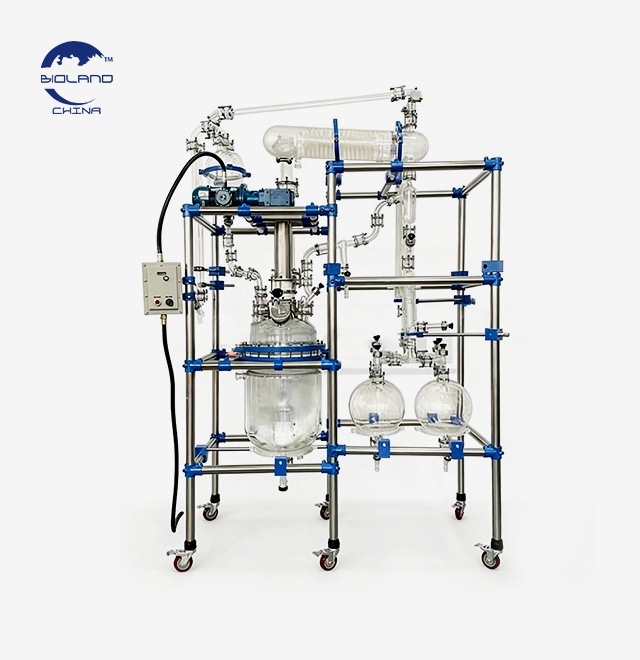
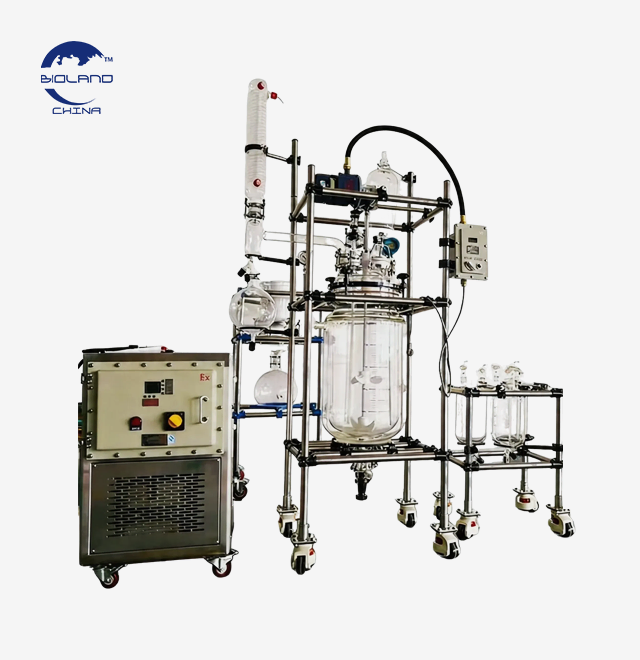
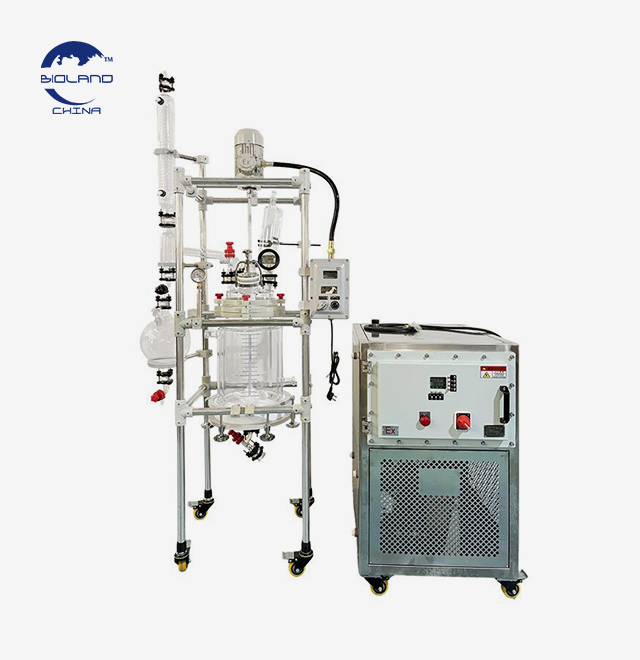
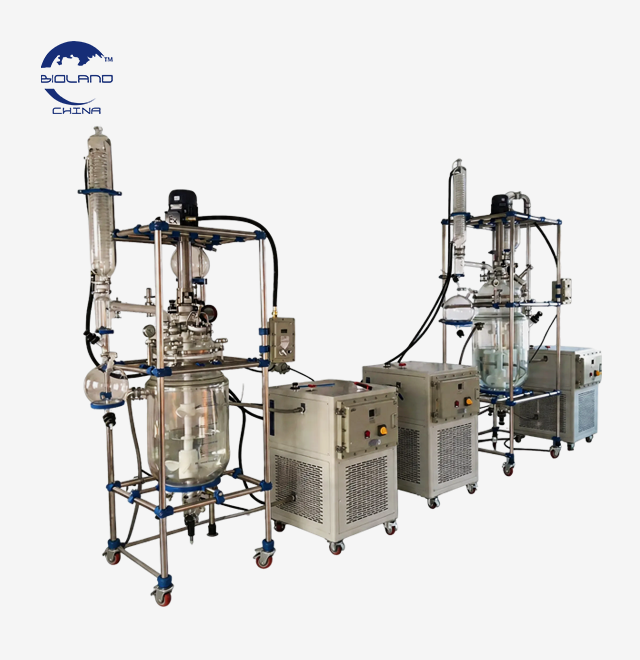
If you take a slurry from a reaction vessel to a separate filter , it is exposed to air, handling loss, and possible contamination each time. This is what a nutsche filter reactor is meant to fix. In a nutsche filter reactor, the whole process happens inside a single jacketed tank. This means that the solid-liquid separation and final drying happen in the same glass or lined room that hosts the reaction.
Reaction stage under controlled atmosphere
The process usually happens inside a Bioland nutsche filter reactor, which is protected by nitrogen. The dual-jacket shell keeps the temperature tight, usually between 0°C and 5°C for sensitive intermediates. Instead of guessing based on time, the clear tank lets workers see the color change in real time, making sure the reaction is complete before going on to the next step.
Filtration through the PTFE sintered-disc plate
The nutsche filter reactor changes to filtering mode when the reaction is over, using a standard PTFE sintered-disc plate. Depending on the chemistry, stainless steel, titanium, or special filter cloth and membranes can also be used. A vacuum or difference in pressure pulls the liquid through the disc while the solids stay on the plate. This creates a large-diameter, high-speed filtering surface without having to move the batch to a different filter unit. One of the main reasons plant engineers choose a nutsche filter reactor when rebuilding a multi-vessel process line is so that the reaction can happen in a single vessel and the filtrate can be passed through.
A European biopharmaceutical company working on a chiral API intermediate had a lot of problems, including reactions that didn't finish, low crystallization purity and yield, and the risk of cross-contamination from moving materials around a lot in a corrosive synthesis system. Bioland provided a custom 100-liter glass nutsche filter reactorthat could do reaction, crystallization, and filtration all at the same time. This made the crystals more pure than 99.5% and increased yield by about 15%.
Key design features enabling efficient solid-liquid separation
How well a nutsche filter reactor separates things relies on the design of the filter plates, the shape of the tank, and how well the control system handles the cooling rate during crystallization. The nutsche filter reactors that Bioland makes are built around a large-diameter PTFE filter disc and a dual-jacket shell. This way, cooling, filtering, and handling the cake can all happen in exact, repeatable ways.
Large-diameter, high-speed filtration surface
The Bioland nutsche filter reactor's filtration plate is made to have the most surface area for its volume. This cuts down on the time it takes to filter and lowers the chance of cake cracking or channeling, which can trap mother liquor inside the solids. Because the nutsche filter reactor has a bigger filtration area, it can handle more solids without having to do a second filtering pass.
Controlled cooling rate for crystal uniformity
Because the rate at which the temperature drops affects both crystal size and purity, Bioland's nutsche filter reactor uses jacket-circulated coolant to lower the temperature at a controlled rate, usually around 1-2°C per hour for sensitive APIs. This way, the target compound crystallizes evenly instead of encasing impurities in crystals that are too big or too small. This directly protects the pure numbers that clients need to send to regulators.
Quick-release filter assembly for cleaning and changeover
A nutsche filter reactor made for facilities that make more than one product needs to be cleaned quickly between batches. That's why Bioland's filter assembly has a quick-release design that lets workers remove, check, and change the PTFE disc or filter cloth without taking the whole tank apart. This cuts down on the time needed to switch between batches and the chance that leftover material from the last batch will affect the next run.
Mother liquor recovery and solvent efficiency
Because the reaction and filtration happen in the same nutsche filter reactor, mother liquor can often be recovered and reused directly from the vessel, instead of being lost while being moved to a different filter station. This saves money on solvents across a production campaign. This recycling route cuts the cost of raw materials by a large amount for high-value catalysts or solvents.
Case snippet: precious metal catalyst recovery in Poland
A Polish chemistry company that was making palladium and platinum catalysts had to deal with low recovery rates, acidic materials that damaged normal equipment, and solid-phase reactions that heated the catalyst and made it inactive. Bioland provided a custom 50-liter glass nutsche filter reactorfor a solid-phase reaction to be run at 150°C followed by direct in-vessel filtration. This recovered more than 90% of the precious metal that was still in the mother liquor and lowered the overall cost of production.
Benefits of combining reaction, filtration processes
When these steps are done together in one nutsche filter reactor, there are fewer transfers, better control of contamination, and a faster overall cycle time than when the reactor, filter, and dryer are run separately. When clients switch from a multi-vessel workflow to a single nutsche filter reactor, they usually report higher yields and less work per batch.
Reduced cross-contamination from fewer material transfers
Every time a product is moved from one vessel to another, it has a chance of being tainted by airborne particles, moisture, or leftover material from previous batches. Most of these transfer points are eliminated by a nutsche filter reactor, which keeps reaction, crystals, filtration, and drying all inside a single sealed cylinder. This is especially important for powerful APIs, peptides, and other high-value chemicals, where even a small amount of contamination can ruin a batch.
Faster overall cycle time across the production sequence
A nutsche filter reactor cuts down on batch time compared to a standard three-vessel process because workers don't have to separate and reconnect one vessel between steps. Bioland clients who do solid-phase peptide synthesis and antimicrobial peptide screening have sped up their schedules by using this combined workflow, but they have kept all the records needed for pharmaceutical validation.
Better chemical compatibility across the whole process
The GG17 borosilicate glass structure can withstand strong acids, bases, and organic solvents without releasing metal ions. This is important during reaction, filter, and cooling, not just during the reaction stage. The nutsche filter reactor uses the same chemically resistant glass and PTFE-lined filtration hardware. This means that clients don't have to deal with the compatibility issues that happen when reaction and filtration equipment from different suppliers are made of different materials.
Application range across peptide, pharmaceutical, and precious-metal industries
Bioland's nutsche filter reactor is used in many industries, including those that work with chemicals, pharmaceuticals, oil, metals, biology, fuel, precious metals, and new materials. It is especially good at making solid-phase peptides, thymosin peptides, antimicrobial peptide screening, and peptide carrier materials. This range shows that the same combined tank design can help any process that needs to separate solids from liquids right after a reaction step.
Process factors affecting performance and product quality control
To get consistent results from a nutsche filter reactor, you need to choose the right solvent, control the temperature and concentration, pick the right filter media, and set filtration parameters like speed and pressure. Instead of sending out a setup that works for everyone, Bioland's tech team works with clients to choose equipment that fits their unique chemistry.
Solvent selection and dissolution control
How well the target solid melts before crystallization and how cleanly it recrystallizes afterward in the nutsche filter reactor depend on the solvent you choose and how well you control its temperature and concentration. No matter how well the equipment works, one of the most common reasons for low output and caught impurities is choosing the wrong solution.
Filter media selection for the specific chemistry
Most of the time, standard PTFE sintered-disc filtration is enough. However, a nutsche filter reactor can be set up with stainless steel, titanium, or specialty filter cloth and membrane options based on the particle size, how corrosive the material is, and the speed of filtration that is needed. It is safer for both the filtration speed and the final crystal purity if the filter media are matched to the properties of the slurry.
Filtration speed, pressure, and routine maintenance
It is important to keep an eye on the filtration speed and pressure because too much force in a nutsche filter reactor can break the filter cake and let fines through, while too little force slows down the whole batch for no reason. The performance of the filter plate stays the same over dozens of production cycles when it is inspected and cleaned regularly. Also, the drive motor, seals, and gaskets are serviced on a regular basis to avoid unplanned downtime during long production campaigns.
Company strength behind consistent equipment performance
Xi'an Bioland Instrument Co., Ltd. is a professional manufacturer and solution provider for R&D, production, and sales of distillation, concentration, reaction, extraction, separation, filtration, purification, crystallization, emulsification, mixing, and drying equipment, alongside supporting heating, cooling, and vacuum devices, with more than 15 years of experience in the field. Every nutsche filter reactor is manufactured under ISO safety standards, carries CE certification, and is built to GMP/FDA-aligned standards, with full OEM/ODM customization support including explosion-proof systems, electric lift mechanisms, and PLC-based automation.
Conclusion
A nutsche filter reactor solves the transfer, contamination, and yield problems that come from running reaction, filtration, and drying as separate steps. By combining GG17 glass construction, PTFE sintered-disc filtration, and dual-jacket temperature control in one sealed vessel, Bioland's nutsche filter reactor gives pharmaceutical, chemical, and precious-metal clients a documented, repeatable path from reaction to finished solid, backed by 15-plus years of engineering experience and full customization support.
FAQ
Q1: What filter media does a nutsche filter reactor use?
A: Standard PTFE sintered discs, with stainless steel, titanium, or custom cloth/membrane options available.
Q2: Can a nutsche filter reactor dry the product without transferring it?
A: Yes, drying happens on the same filter plate using vacuum and jacket heating.
Q3: What temperature range does a Bioland nutsche filter reactor support?
A: Typically -20°C to 200°C depending on the jacket and reaction requirements.
Q4: Is a nutsche filter reactor suitable for peptide synthesis?
A: Yes, it is widely used for solid-phase peptide synthesis and related purification steps.
Q5: Can the nutsche filter reactor be built explosion-proof?
A: Yes, explosion-proof and PLC-automated configurations are available on request.
Solve Your Filtration-to-Drying Bottleneck With Bioland
If material transfers, contamination risk, or inconsistent crystal purity are slowing your production line, a nutsche filter reactor from Xi'an Bioland Instrument Co., Ltd. can combine reaction, filtration, and drying into one dependable, documented process. Backed by 15-plus years of engineering experience, CE and ISO certification, GMP/FDA-aligned manufacturing, and full OEM/ODM customization, our team tracks every nutsche filter reactor build weekly and offers Factory Acceptance Testing before shipment. Contact us at info@biolandequip.com to discuss your process and request a quote on your next nutsche filter reactor.
References
1. Perry, R. H., and Green, D. W. (Eds.). Perry's Chemical Engineers' Handbook. McGraw-Hill.
2. Wakeman, R. J., and Tarleton, E. S. Solid/Liquid Separation: Principles of Industrial Filtration. Elsevier.
3. Svarovsky, L. Solid-Liquid Separation. Butterworth-Heinemann.
4. Mersmann, A. Crystallization Technology Handbook. CRC Press.
5. Mullin, J. W. Crystallization. Butterworth-Heinemann.
6. Nauman, E. B. Chemical Reactor Design, Optimization, and Scaleup. John Wiley & Sons.
The reactor is beautifully mirror-polished and fully complies with GMP requirements for the pharmaceutical industry. The performance is excellent! Overall, we are very satisfied! We also provided with some feedback on our process improvements, which we hope will be helpful.
2024-04-09
Laboratory
Excellent and professional service. Always reply our questions very fast. All reactors and chiller we received are good too.
2024-02-15
Research Institute
Quality is beyond our expectation actually. After we got the extraction equipment and started using it, the performance was beyond our expectation. Very easy to use and very efficient to run. Service always respond us very quickly. Was also very helpful to help us. Thanks Bioland team. Very happy to work with you.
2023-11-20
Biotech Company
We are happy about the new purchase as always. Equipment and services are both good.
2023-08-05
Instrument Lab
This is the second order with Bioland instrument and everything is good as the first dateText.
2023-05-12
Global Trading Partner
Bioland instrument team is very helpful and professional. The sales helped us select the right equipment for our application, and their logistics people handled the transportation and customs declaration for our shipment. All that saved us a lot of work.