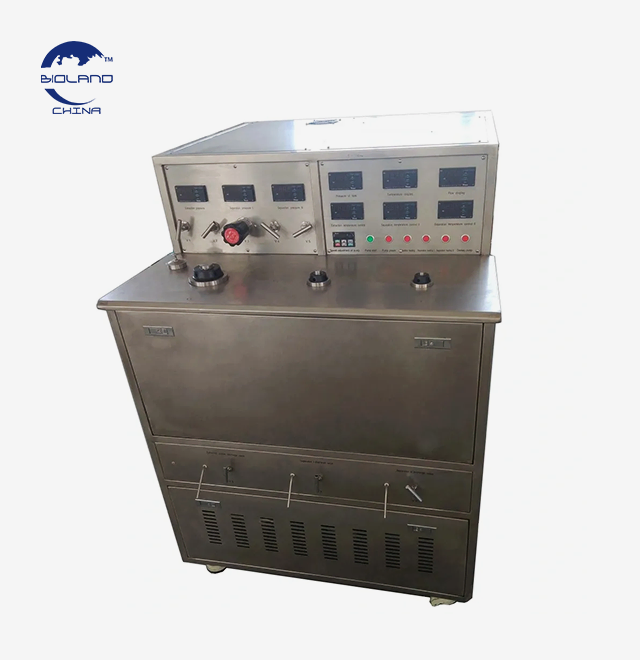
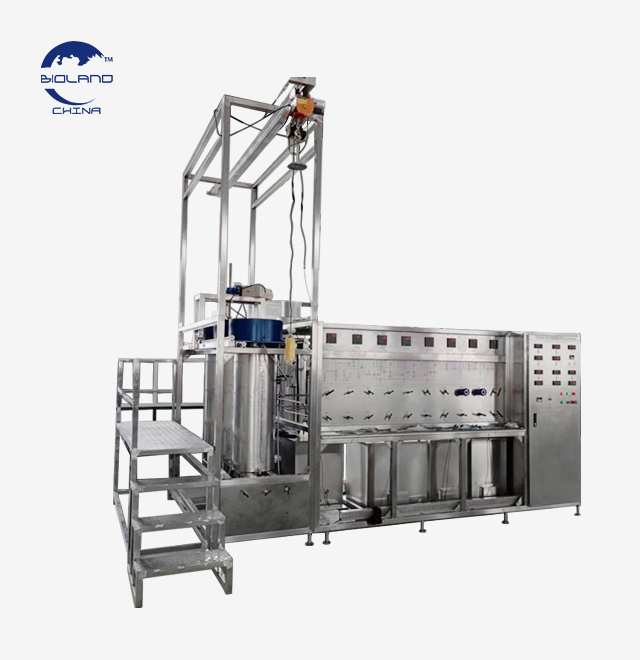
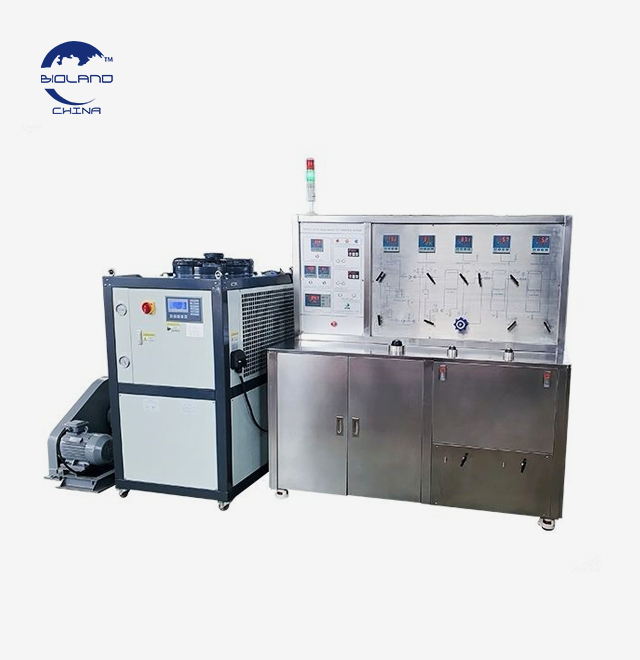
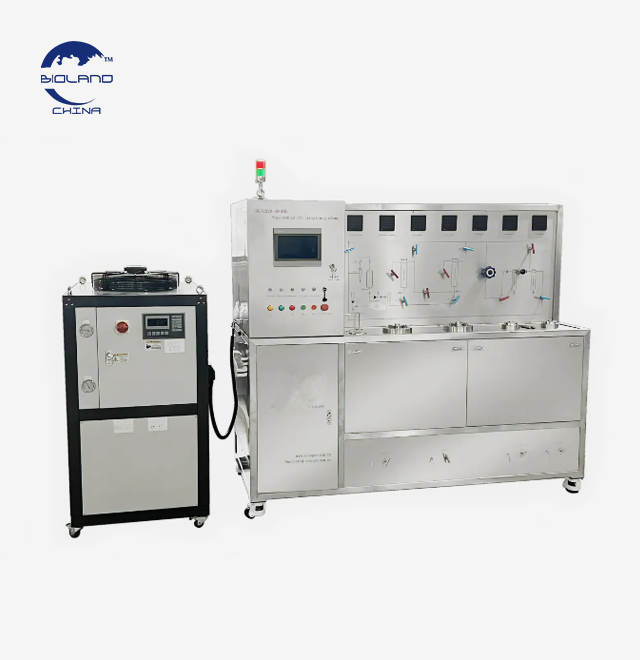
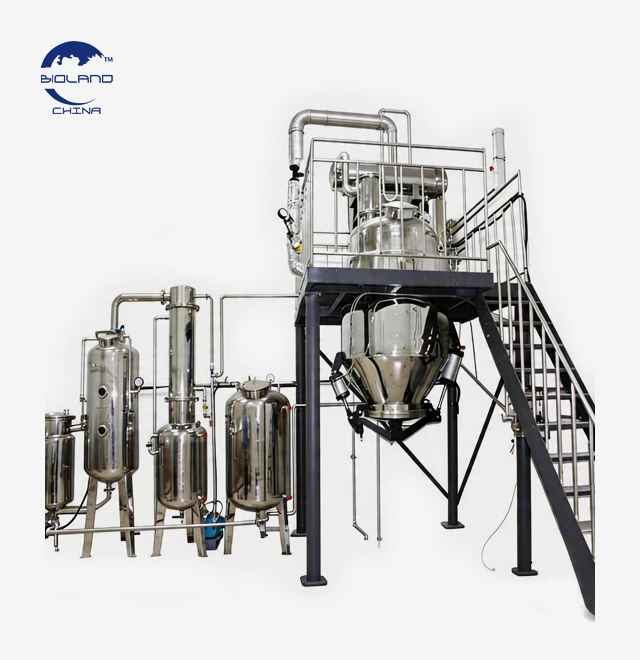
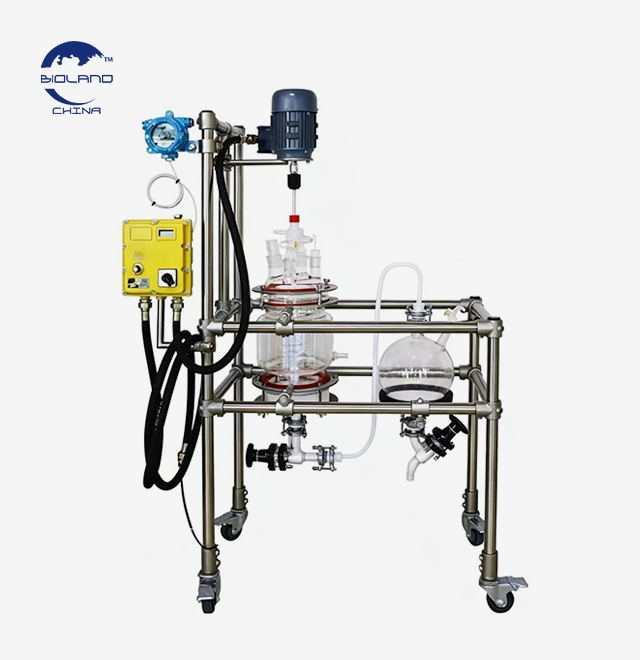
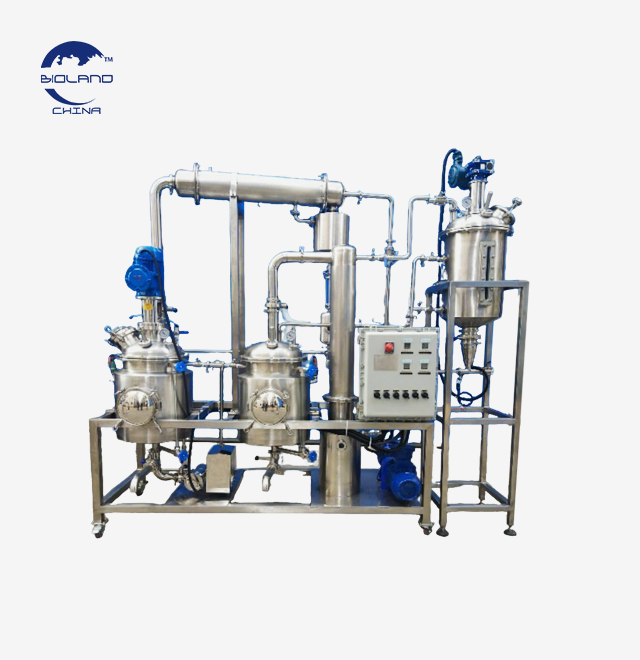
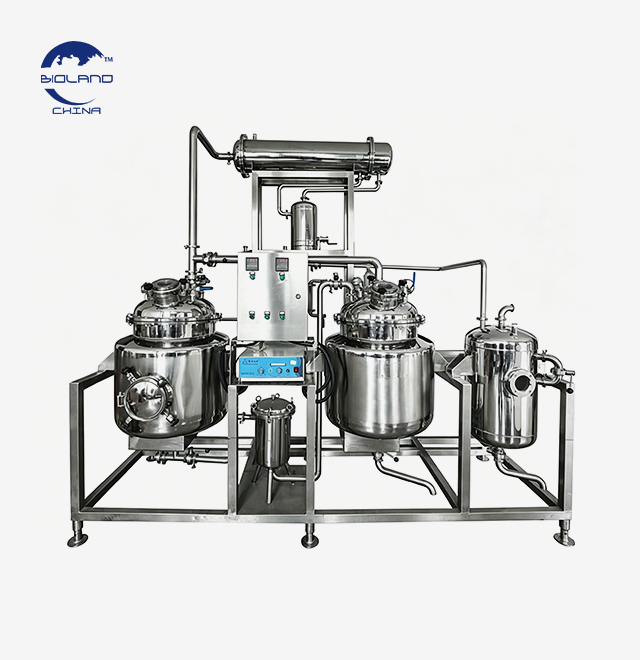
Mini CO2 Extractor for Lab & Small-Batch Production — Precision Supercritical Fluid Extraction System
Xi'an Bioland Instrument's mini co2 extractor system is purpose-designed for laboratory R&D and small-batch production. It uses supercritical fluid extraction (SFE) technology, with working pressure up to 50 MPa and fully automatic PLC control. The extract has zero solvent residue (0 ppm) while effectively protecting heat-sensitive active ingredients. Suitable for pharmaceuticals, flavors, cannabinoids, and food nutrition applications, it is your reliable choice from R&D to pilot scale.

Why Bioland Mini CO₂ Extractor?
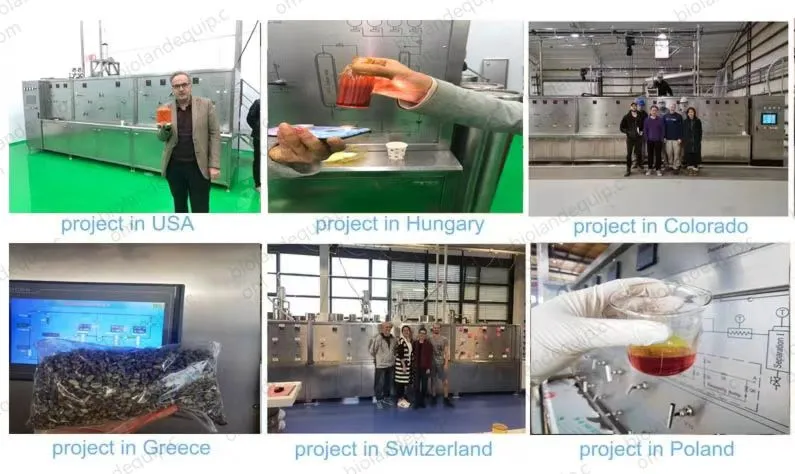
15+ years of extraction equipment manufacturing experience · Delivered to 30+ countries · 5–7 day standard shipping
Compared to similar laboratory equipment, the Bioland Mini system offers three core advantages:
- Higher safety redundancy: Triple overpressure protection + quick-clamp closure structure — industry-leading fault tolerance for operator error
- More flexible fractional separation: Single/double/triple separator options — terpenes, cannabinoids, and waxes can be fractionally collected on a single unit
- Lower operating cost: ≥95% CO₂ recovery rate — per-batch gas loss cost significantly lower than solvent extraction processes
Key Features & Benefits
50 MPa High-Pressure Safe Operation
The system supports operation from 350 bar (subcritical) to 1,000 bar ultra-high pressure, equipped with safety interlocks, quick-clamp closures, and multiple protective mechanisms. All pressure vessels undergo hydrostatic testing at 1.3–1.5× MAWP. Helium leak detection standard < 1×10⁻⁶ mbar·l/s, with 100% inspection before dispatch.
PLC Fully Automatic Control — Batch-to-Batch Reproducibility ≥99%
Manual or full PLC automatic mode available. The PID controller maintains temperature and pressure accuracy at ±1°C / ±1 bar respectively, ensuring reproducible data for every batch and directly supporting GMP validation record requirements.
Adjustable CO₂ Density for Selective Extraction of Target Compounds
By adjusting pressure and temperature to change CO₂ density, terpenes, cannabinoids, waxes, or APIs can be separated stepwise without changing equipment — significantly shortening method development cycles.
CO₂ Recovery Rate ≥95% — Lower Operating Costs
The cyclone separator and cold-trap condenser work together to recover CO₂, with recovery rate exceeding 95% per cycle. Compared to solvent extraction processes, annual consumable costs can be reduced by over 60% (estimated at laboratory-level usage frequency).
Independent Cosolvent Pump — Triple Overpressure Protection
Supports adding 2–5% ethanol as a cosolvent, extending the extraction range to polar compounds that pure CO₂ cannot dissolve. Built-in triple overpressure protection circuit ensures safe and stable pump operation during long-term continuous running.
How It Works?
Once CO₂ exceeds its critical point (31.1°C, 73.8 bar), it possesses both the diffusivity of a gas and the solvency of a liquid, efficiently penetrating plant matrices and selectively dissolving target compounds.
Three-Step Extraction Process:
- Pressurized Extraction: Supercritical CO₂ passes through the extraction vessel containing biomass sample, dissolving target compounds
- Fractional Separation: CO₂ carrying extract enters separators at different pressure-temperature zones sequentially, achieving stepwise collection of components
- CO₂ Recovery: After pressure reduction, CO₂ gasifies, leaving zero-solvent-residue extract; CO₂ is recycled back into the system for reuse
The entire process is completed in a closed loop with no solvent emissions, complying with laboratory safety standards.
Technical Parameters
|
No
|
MAIN CONFIGURATION
|
REMARK
|
|
1
|
Extraction Tank
|
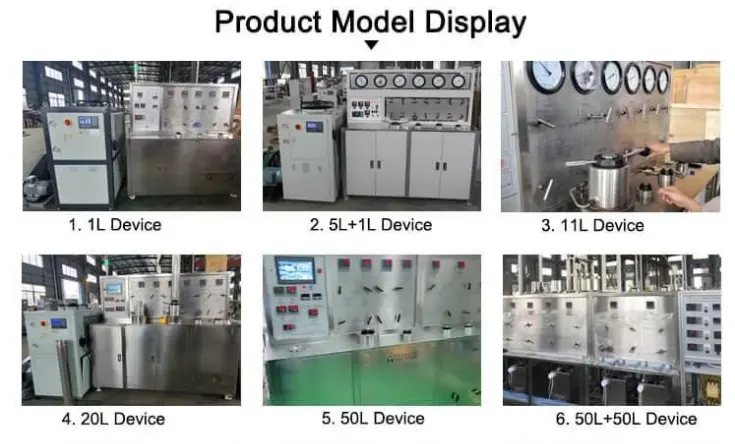
Volume:5L+1L (2 tanks),Max working Pressure:50MPa
|
|
2
|
Separation Tank
|
Volume:1X2L and 1X1L,Max working Pressure:30MPa
|
|
3
|
Pump
|
CO2 high-pressure pump,Co-solvent pump
|
|
4
|
Cooling System
|
Temperature range:-5℃~+5℃
|
|
5
|
Heating Exchange System
|
Max working Pressure:50MPa
|
|
6
|
Purification System
|
Max working Pressure:50MPa
|
|
7
|
CO2 Storage Tank
|
Max working Pressure:16MPa
|
|
8
|
Flowrate Meter
|
Model:Metal tube float (6.3-63L/H)
|
|
9
|
Temperature Control System
|
Temperature Range: Room temperature~75℃
|
|
10
|
Safety Devices
|
Pressure gauge at high pressure pump outlet,overpressureprotection The extractor, separator, evaporator, dry purifier and mixer have safety valve to keep safe of system.
|
|
11
|
User-supplied
|
Power:3 phase,
CO2: Food grade≥99.5%, single bottle net weight ≥22Kg
Installation dimension: 2700×2500×1500mm
|
Construction & Materials
All wetted parts are manufactured from SS316L stainless steel or Hastelloy C276, effectively resisting carbonic acid corrosion from high-pressure CO₂ contact. Internal surface roughness Ra < 0.8 µm, supporting pharmaceutical and food-grade CIP validation.
Material compliance documentation (available by serial number):
- SS316L alloy composition Mill Test Reports (MTR)
- Hydrostatic test certificates (1.3–1.5× MAWP)
- Helium leak detection reports (< 1×10⁻⁶ mbar·l/s)
- ASME BPVC Section VIII Div.1 / EU PED 2014/68/EU pressure vessel compliance declarations
Electrical components are classified according to hazardous area classification, with UL/CSA or ATEX certification options available.
Application Fields
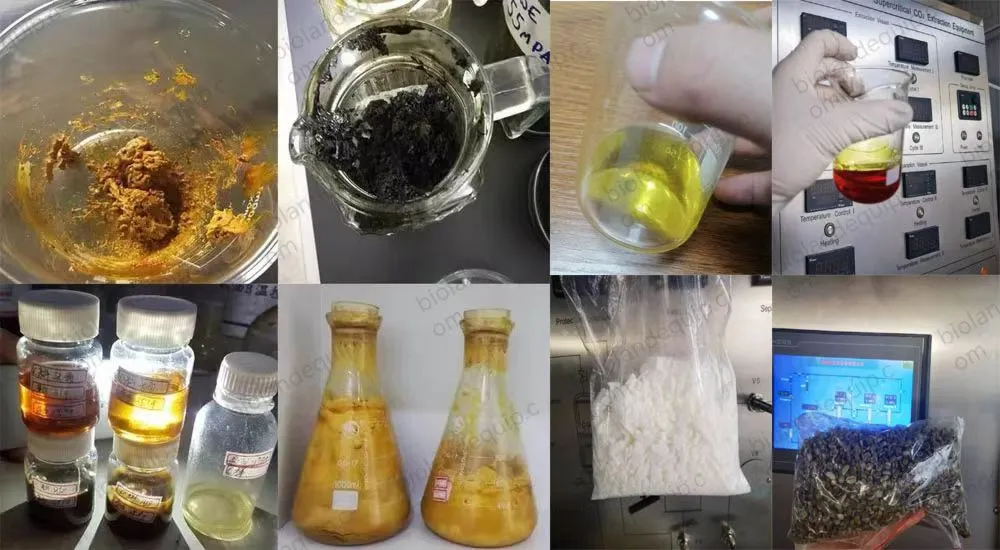
Pharmaceutical API Separation & Micronization
Used for removing residual solvents from drug polymers with a mini co2 extractor, and achieving micronization through SAS/RESS processes to improve drug bioavailability. GMP-grade surface treatment supports cleaning validation protocols, compliant with FDA-compliant design specifications.
Typical case: A domestic pharmaceutical company used this system to complete β-carotene API purification process development, shortening the cycle from laboratory data to pilot-scale scale-up by 40%.
High-End Flavors & Essential Oil Extraction
Extracting heat-sensitive aromatic compounds such as oud, jasmine, and rose at near-ambient temperatures, fully preserving volatile aroma components that steam distillation would destroy — providing "true natural" raw materials for high-end perfumery.
Cannabinoid & Terpene Fractionation Research
Before scaling up to industrial production, researchers use precise temperature zoning of multi-stage separators to collect high-terpene fractions ("sauce") separately from crude oil, avoiding paraffin contamination of the final product.
Food, Nutraceutical & Cosmetic Ingredients
Suitable for extraction of flavonoids, carotenoids, and lipids from 100 g to 5 L low-mass biomass samples. Products meet food safety and cosmetic ingredient standards.
Services & After-Sales Support
- One-year quality warranty, lifetime maintenance support
- Dedicated engineer weekly production tracking (photo/video updates)
- Factory Acceptance Test (FAT) available on-site or remotely
- Sea, rail, and air logistics options
- OEM/ODM custom engineering support
- Pre-sales application consultation (free)
Quality Certifications & Compliance
| Certification / Standard |
Scope of Application |
| CE (2014/68/EU PED) |
Pressure equipment EU market access |
| ISO 9001:2015 |
Quality management system |
| UL / CSA |
North American electrical safety |
| SGS |
Third-party material and performance verification |
| ASME BPVC Sec.VIII Div.1 |
US pressure vessel standard |
Why Choose Bioland?
- 15+ years of industry experience, providing extraction solutions to customers in 30+ countries worldwide
- Dedicated engineer follow-up: Weekly production progress photos/videos sent; shipment only after your confirmation
- Factory Acceptance Test (FAT): Customer on-site or video witnessing of factory testing supported
- 5–7 day standard shipping (non-custom orders); OEM/ODM custom orders completed in 30 business days
- One-year warranty + lifetime maintenance support

FAQ
Q: Does the system support adding ethanol or other cosolvents?
A: Yes. The integrated cosolvent pump can add 2–5% ethanol, extending the extraction range to polar compounds that pure CO₂ cannot dissolve, significantly broadening the target molecule range.
Q: How often do seals need replacement?
A: Dynamic pump seals typically require maintenance every 500–1,000 operating hours; static vessel O-rings are recommended to be inspected once per batch to prevent explosive decompression damage.
Q: What laboratory infrastructure is required?
A: Standard 220V or 110V single-phase power, a chiller (for CO₂ condensation), compressed air lines for pneumatic components, and CO₂ concentration monitoring sensors required for laboratory ventilation safety.
Q: Can the extract be used directly?
A: Usually yes — CO₂ gasifies upon pressure reduction, leaving no solvent residue. Depending on extraction pressure, minor post-processing (such as winterization or decarboxylation) may be required.
Q: How does the laboratory system's throughput compare to industrial-scale equipment?
A: Laboratory systems process approximately 0.5 lbs/hour, while industrial equipment can reach 100+ lbs/hour. The core value of the laboratory system lies in generating precise pressure-temperature parameters that directly guide industrial scale-up decisions, avoiding blind scale-up risks.
Q: Can vessels of different batch sizes be quickly changed?
A: Yes. Quick-clamp closures allow tool-free rapid vessel changeover, reducing inter-batch downtime and supporting multi-sample parallel workflows.
Contact Us
To inquire about mini co2 extractor custom solutions or obtain a quotation, please email info@biolandequip.com. We will respond within 24 hours.