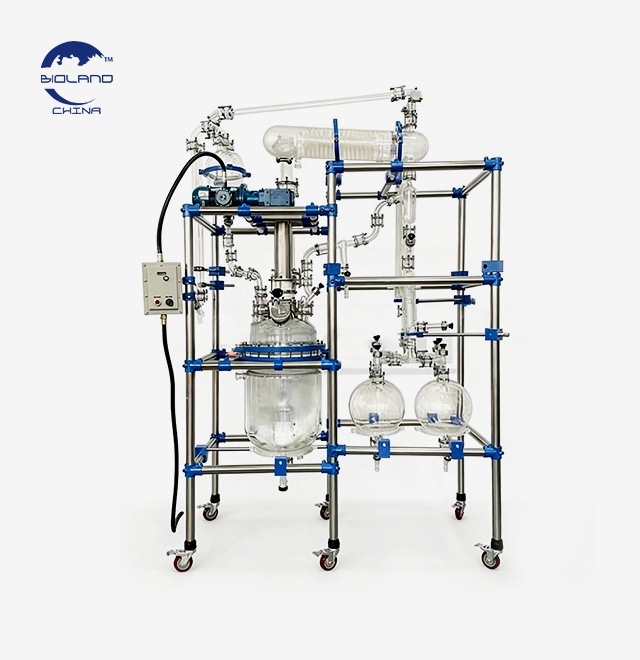
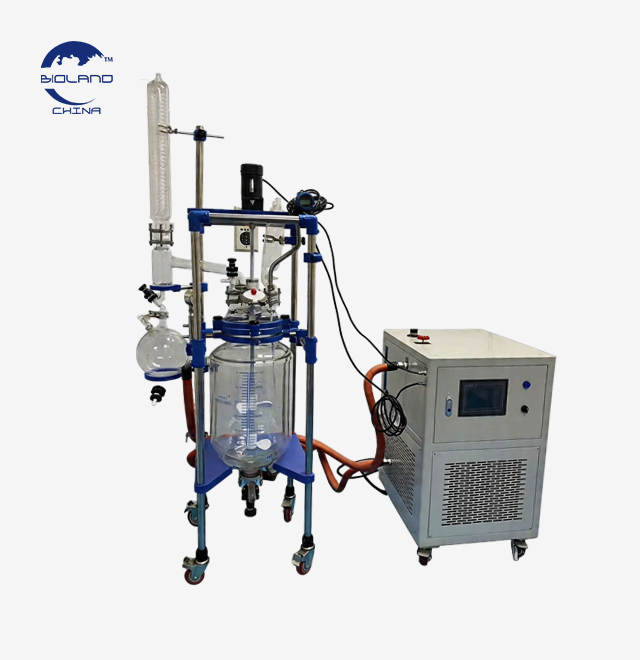
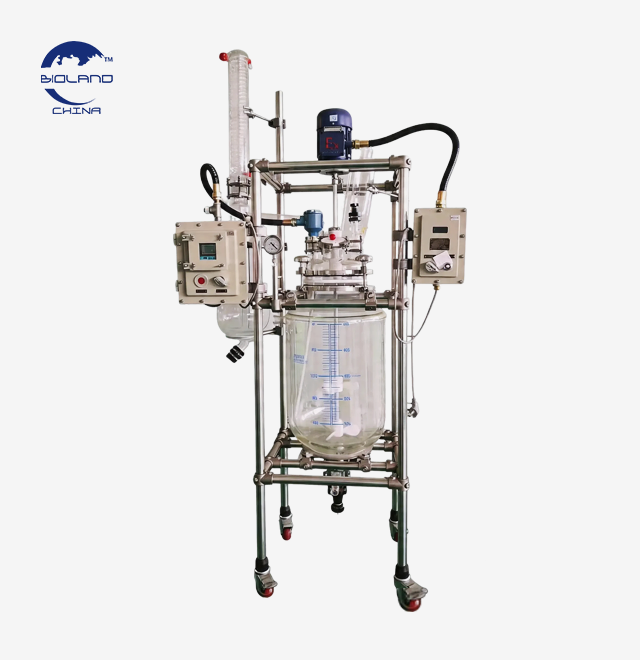
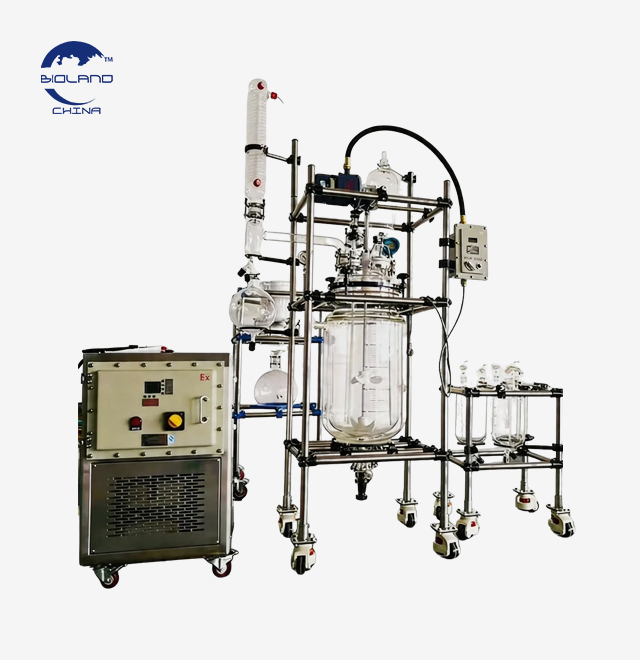
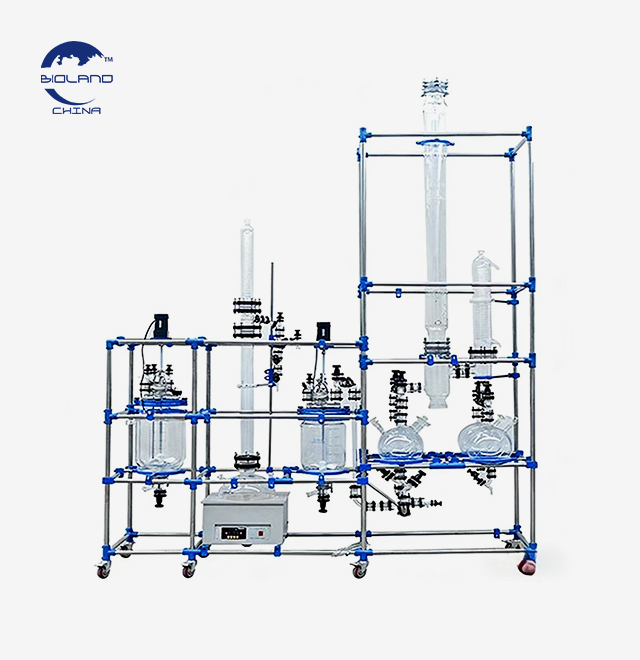
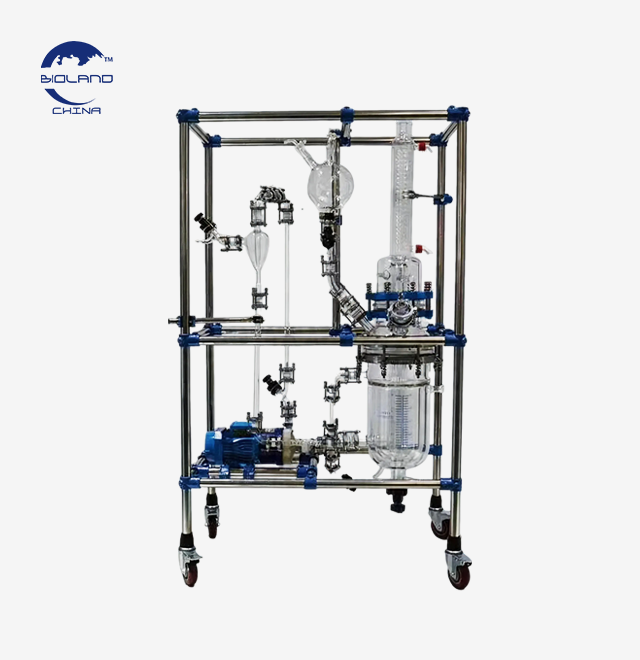
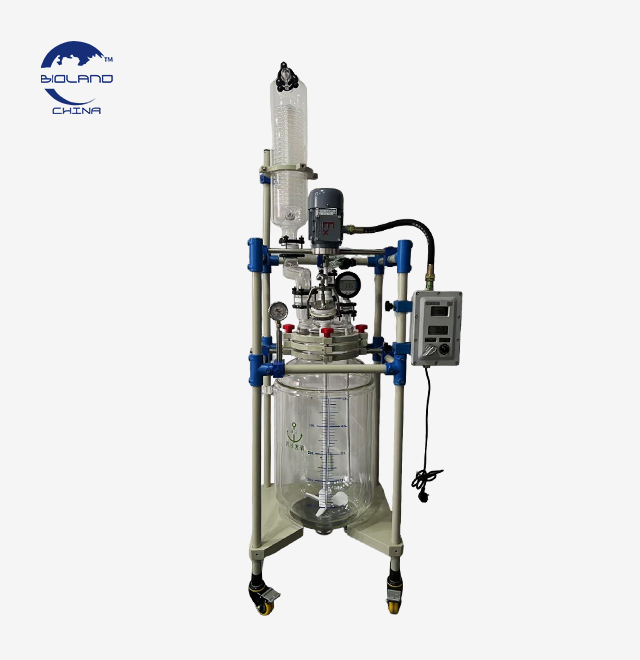
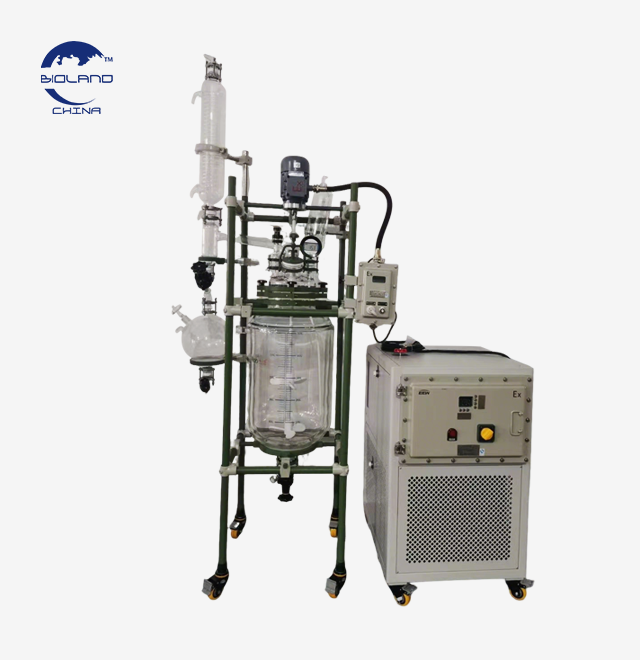
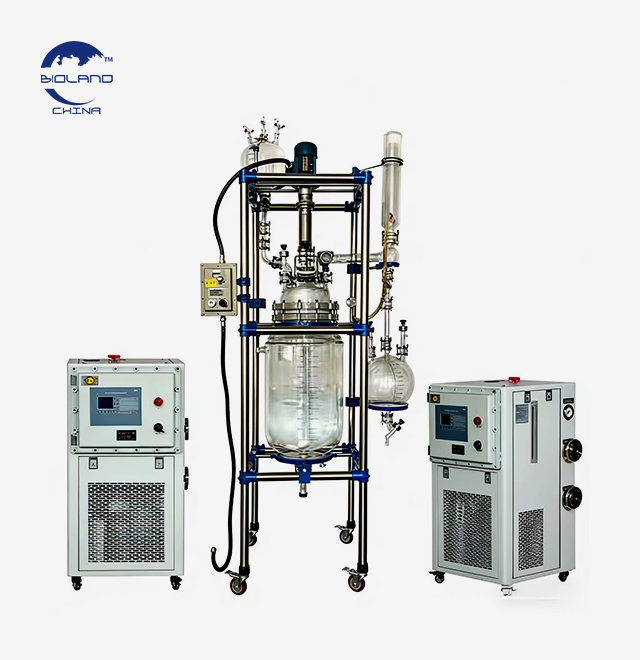
Chemical Batch Reactor for Pharma & Fine Chemical Synthesis — Custom-Built, GMP-Ready, 30-Day Delivery
Xi'an Bioland Instrument Co., Ltd. specializes in chemical batch reactor systems for pharmaceutical synthesis, fine chemicals, and biotechnology research. Operating temperatures range from −80°C to 250°C, design pressures from vacuum (−0.1 MPa) to over 10.0 MPa. Vessel bodies are available in GG17 corrosion-resistant glass, SS 316L, or Hastelloy C-276. Certified to CE, ISO, UL, and SGS standards, and designed to meet GMP/FDA requirements. With over 15 years of manufacturing experience, we have completed custom deliveries for more than 200 pharmaceutical and chemical companies across Europe and Southeast Asia.
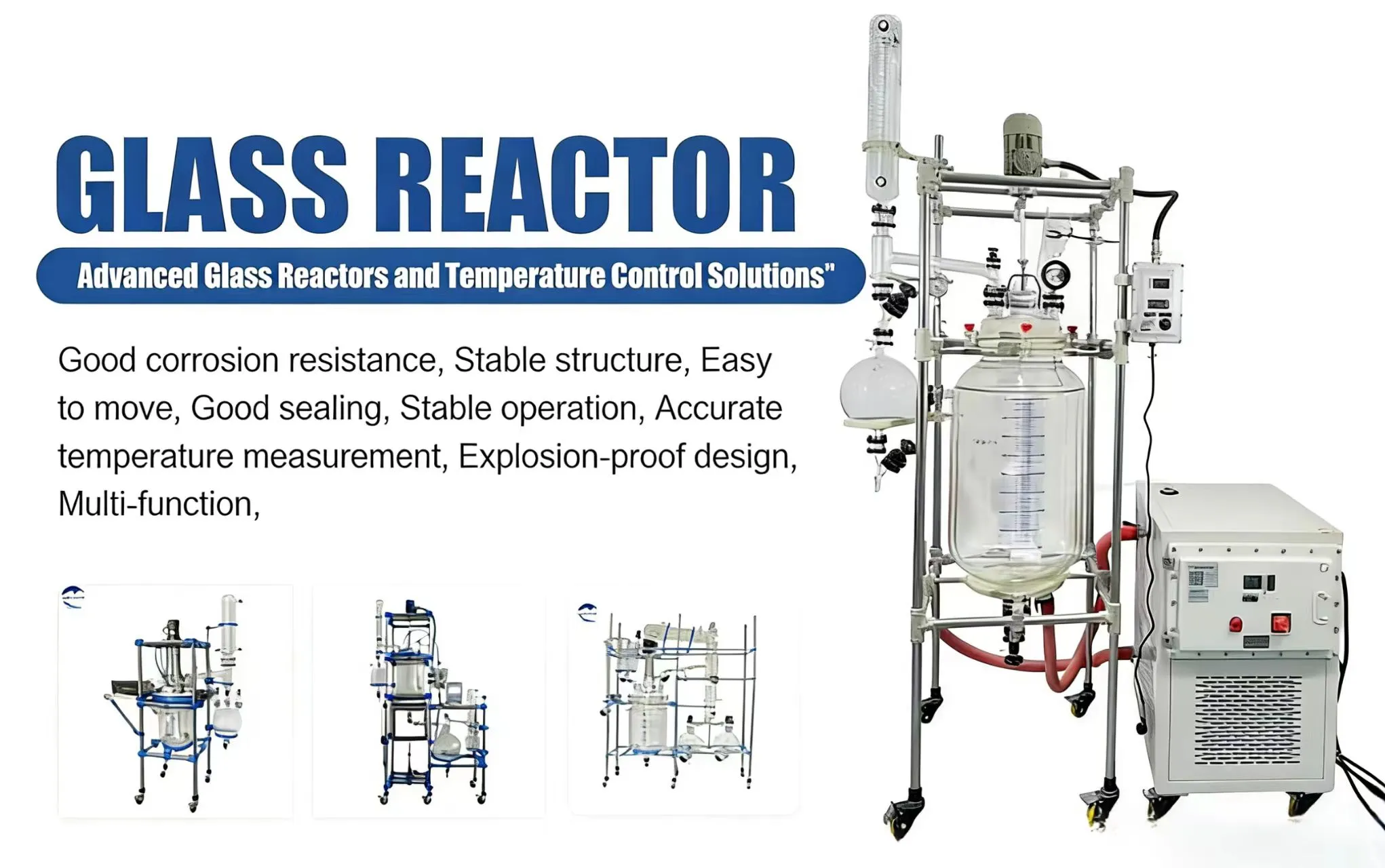
Key Features & Benefits
Corrosion Resistant Materials for Extreme Conditions
The vessel body materials are selected individually with the process medium in mind: GG17 glass is suitable for strong acid / weak base systems; SS 316L is suitable for general pharmaceutical process requirements; Hastelloy C-276 is designed for chloride-containing or strongly acidic environments, the service life is 15–20 years under specified maintenance conditions (based on ASTM G-48 corrosion test data).
Full Viscosity Range Multi-Configuration Agitation Systems
The agitators include anchor, turbine and helical ribbon and cover a viscosity range of 1 to 500,000 cPs. The helical ribbon agitator is very helpful when dealing with the late stage viscosity surge in polymerisation reactions, keeping heat transmission uniform at high viscosity and avoiding local hot patches that might induce polymer chain scission.
GMP Validated Cleaning Electro-Polished Interior
Internal surface roughness Ra ≤ 0.4 µm (mirror-like, approximately 1/200 the diameter of a human hair), successfully preventing biofilm adhesion and allowing verified CIP (Clean-in-Place) methods to meet GMP regulatory production criteria.
Batch Traceability via PLC Automated Control
The optional PLC system is capable of programd temperature gradient settings, real-time parameter monitoring and data archiving, directly conforming to FDA 21 CFR Part 11 electronic records compliance standards, giving a complete audit trail for API synthesis batches.
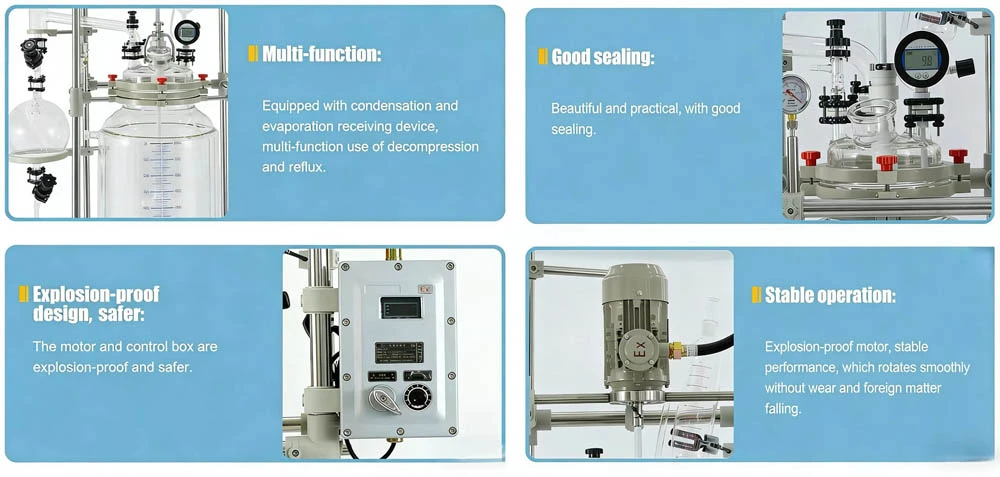
How It Works?
Batch Processing Workflow
Before the reaction begins, all raw materials are charged into the vessel at once. Temperature, pressure, and agitation speed are set according to the process recipe and maintained until the reaction is complete, after which the product is fully discharged through a flush-bottom valve — the valve bore is matched to the vessel bottom curvature to eliminate dead-zone residue.
Heat Transfer & Temperature Safety Control
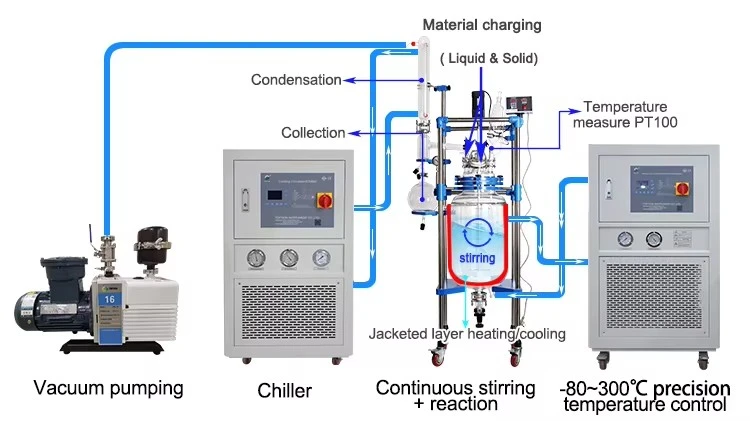
The jacket (half-pipe coil or honeycomb structure) circulates a heat transfer medium to uniformly heat or cool the vessel wall. For strongly exothermic reactions, an internal cooling coil works with a cascade temperature control system to monitor the temperature differential (ΔT) between the jacket and vessel contents in real time. Once the set threshold is exceeded, cooling is automatically engaged to prevent thermal runaway.
Batch Isolation Advantage
Compared to continuous flow reaction systems, chemical batch reactors achieve complete material isolation between batches. Each batch has an independent process record, making it the preferred equipment configuration for API synthesis under FDA and GMP regulation.
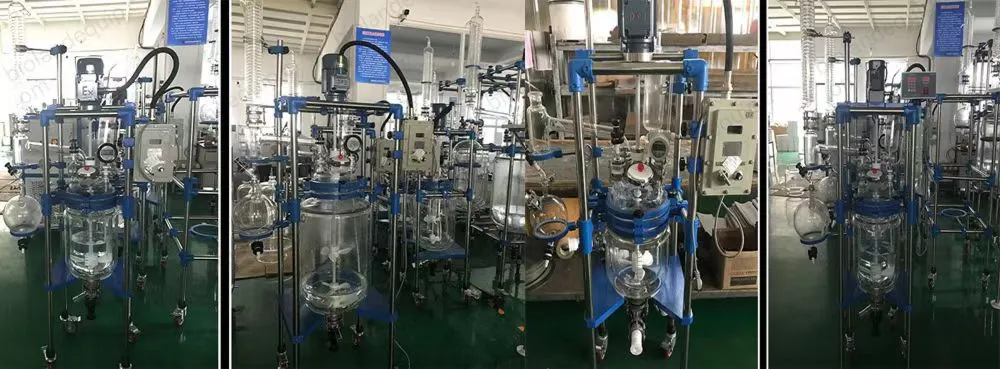
Construction & Materials
Pressure Boundary & Weld Inspection
The pressure boundary complies with ASME Section VIII Div 1 (North American market) or PED 2014/68/EU (European market). All butt welds are 100% verified by radiographic testing (RT) or ultrasonic testing (UT) to ensure weld joint efficiency.
Material Verification & Hydrostatic Testing
XRF positive material identification (PMI) is used to verify alloy composition batch by batch, confirming that key elements such as molybdenum content in SS 316L meet specifications. Hydrostatic testing at 1.3× design pressure is performed before dispatch, with test reports supplied with the equipment.
Sealing Solutions for Hazardous Media
For handling toxic or volatile organic compounds (VOCs), optional double mechanical seals (Plan 53A/54, with pressurized barrier fluid) or magnetic seals (Mag-Drive fully sealed structure) are available. Both solutions achieve zero leakage, meeting stringent occupational health and environmental emission requirements.
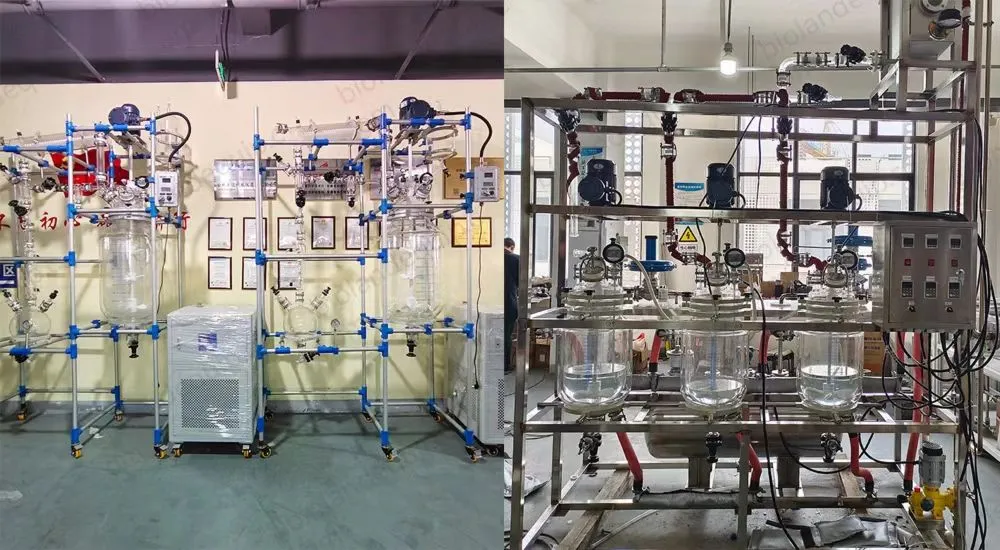
Technical Parameters
|
type
|
volume
(L)
|
Motor power
(W)
|
Speed
(r/min)
|
Stirring torque(1300r/min)
|
Inside/outside tube diameter
(mm)
|
Reactor vessel cover relevant opening size
|
|
|
|
|
|
|
|
center
|
left
|
right
|
later
|
before
|
|
BL-150
|
150
|
370
|
10-680
|
28000g.cm
|
600*550
|
50#
|
40#
|
34#
|
34#
|
29#
|
|
BL-100
|
100
|
250
|
|
22000g.cm
|
460*500
|
50#
|
40#
|
34#
|
34#
|
29#
|
|
BL-80
|
80
|
250
|
|
22000g.cm
|
460*500
|
50#
|
40#
|
34#
|
34#
|
29#
|
|
BL-50
|
50
|
180
|
|
15000g.cm
|
360*405
|
50#
|
40#
|
34#
|
34#
|
29#
|
|
BL-30
|
30
|
180
|
|
15000g.cm
|
315*360
|
50#
|
40#
|
34#
|
34#
|
29#
|
|
BL-20
|
20
|
120
|
|
12000g.cm
|
315*360
|
50#
|
40#
|
34#
|
34#
|
29#
|
|
BL-10
|
10
|
120
|
|
12000.g.cm
|
245*260
|
50#
|
40#
|
34#
|
34#
|
29#
|
|
BL-5
|
5
|
90
|
|
9000.g.cm
|
200*230
|
50#
|
29#
|
24#
|
24#
|
19#
|
Why Choose Us?
More Than an Equipment Supplier — A Process Integration Partner
- 15+ years of manufacturing experience: Cumulative service to 200+ pharmaceutical and chemical companies across Europe and Southeast Asia, with full project delivery capability from laboratory pilot scale to industrial scale-up.
- Dedicated production tracking service: A dedicated engineer is assigned after order confirmation, providing weekly manufacturing progress photos/videos. Shipment requires customer review and confirmation, with factory acceptance testing (FAT) supported.
- Fast delivery commitment: Standard models in 5–7 business days; custom orders in 30 business days (including design confirmation cycle).
- Global logistics support: Sea, rail, and air freight supported; import compliance completed for multiple countries in Europe and Southeast Asia.
- OEM/ODM open: Brand customization and design commissioned development accepted, with NDA confidentiality agreements protecting customer intellectual property.
Application Fields
Pharmaceutical API Synthesis
Multi-step reactions such as alkylation and hydrogenation require precise stoichiometric control and reproducible thermal history curves. Bioland reactors operate under aseptic, traceable conditions, meeting FDA review requirements for API purity and process consistency. Typical applications: small-molecule drug intermediate synthesis, batch scale 50L–5000L.
High-Viscosity Resin Polymerization
Alkyd resin and emulsion polymerization systems can undergo drastic viscosity changes from several hundred to several hundred thousand cPs during the reaction. Helical ribbon agitation combined with honeycomb jacket design maintains uniform heat transfer during the high-viscosity phase, preventing hot spots that cause molecular weight distribution shifts.
Agrochemical Formulation
Herbicide and insecticide formulations involve exothermic mixing and toxic precursor materials. The jacket cooling system responds rapidly to exothermic peaks, stabilizing vessel temperature within the safe operating window, while the sealing system prevents toxic vapor escape.
Biotechnology & Fine Chemicals
Extraction, crystallization, and solvent recovery processes can fully utilize the wide temperature range (−80°C to 250°C) and vacuum capability (down to −0.1 MPa), integrating multiple process steps within a single piece of equipment.
Services & After-Sales Support
| Service Type |
Description |
| Warranty |
One-year full machine quality warranty (parts and workmanship) |
| Lifetime Technical Support |
Spare parts supply and technical consultation throughout the equipment lifecycle |
| Pre-Sales Engineering Consultation |
Process evaluation, CFD agitation selection, material recommendation report |
| Installation & Commissioning Support |
Remote or on-site startup guidance (subject to project requirements) |
| Documentation Package |
Inspection reports, PMI certificates, pressure test records, full set of compliance declarations |
Quality Certifications & Compliance
Each unit is manufactured under the CE and ISO quality systems, compliant with GMP and FDA design specifications, suitable for regulated pharmaceutical and food-grade production environments. UL and SGS certifications support customs clearance requirements for export markets.
In-service monitoring recommendation: Under chloride or strong acid media conditions, ultrasonic thickness gauging (UTG) is recommended every 6–12 months to track corrosion allowance and ensure the equipment operates within the design wall thickness safety margin.
FAQ
Q: How do you safely handle strongly exothermic reactions?
A: Half-pipe coil or honeycomb jackets combined with internal cooling coils form a dual cooling path. The cascade temperature control system monitors the temperature differential (ΔT) between the jacket fluid and vessel contents in real time. When the limit is exceeded, cooling intervention is automatically triggered, eliminating thermal runaway risk at the engineering design level.
Q: Which seal type should be selected for toxic or hazardous media?
A: Double mechanical seals (Plan 53A/54 standard, with pressurized barrier fluid) are recommended for toxic media; magnetic seals (Mag-Drive) are suitable for VOC scenarios requiring absolute zero leakage. Both solutions are certified to relevant standards.
Q: How do you confirm that materials meet specification requirements?
A: Every batch of alloy material undergoes XRF positive material identification (PMI) testing to verify key components such as molybdenum content in SS 316L and the nickel-chromium-molybdenum ratio in Hastelloy C-276. Test reports are provided to customers as an essential part of the delivery documentation package.
Q: How do you prevent material residue dead zones during discharge?
A: Agitator geometry is optimized through CFD simulation, and the flush-bottom valve bore is precisely matched to the vessel bottom curvature, eliminating retention areas where material can deposit by design, ensuring no cross-contamination between batches.
Q: How do you handle chipping or damage to the glass-lined interior?
A: Minor chips can be repaired with tantalum patches or PTFE sleeve local repair; when damage extends to the steel substrate, the entire unit requires re-glazing. Regular maintenance using a spark tester is recommended for early detection and timely treatment.
Q: What volume and pressure customization ranges are available?
A: Volumes range from laboratory scale (starting at 1L) to industrial scale (10,000L+). Design pressures can be configured from vacuum service (−0.1 MPa) to high-pressure synthesis (10.0 MPa+). Materials and jacket types are matched and selected according to specific process media and operating conditions.
Contact Us
To inquire about custom chemical batch reactor solutions, please send your process requirements to info@biolandequip.com. Quotations within 24 hours.