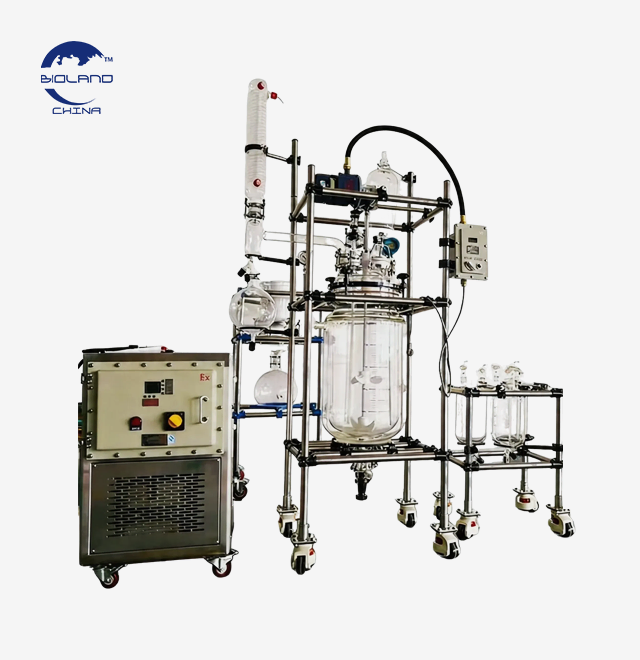
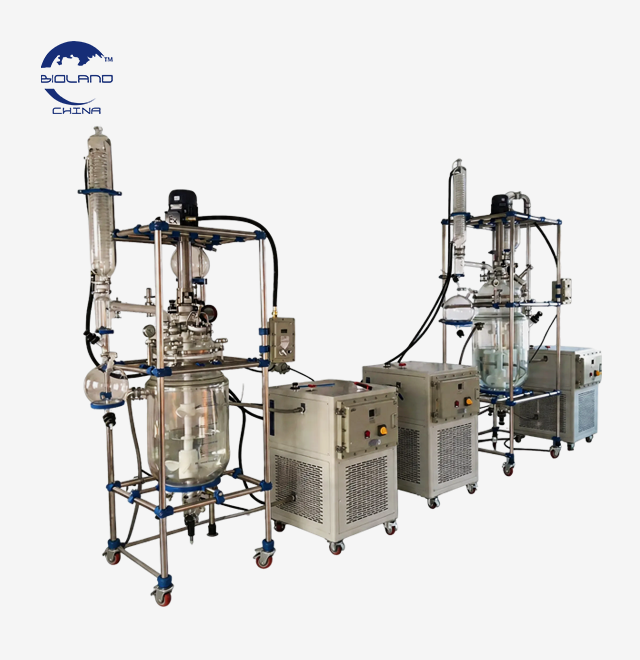
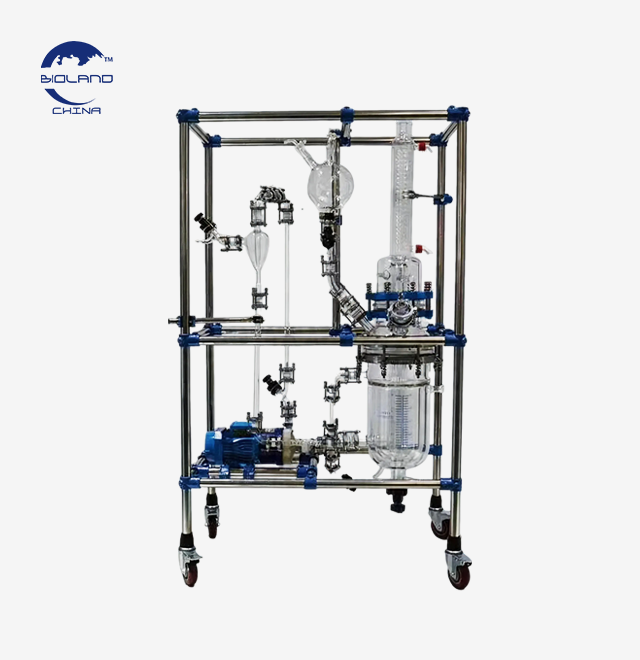
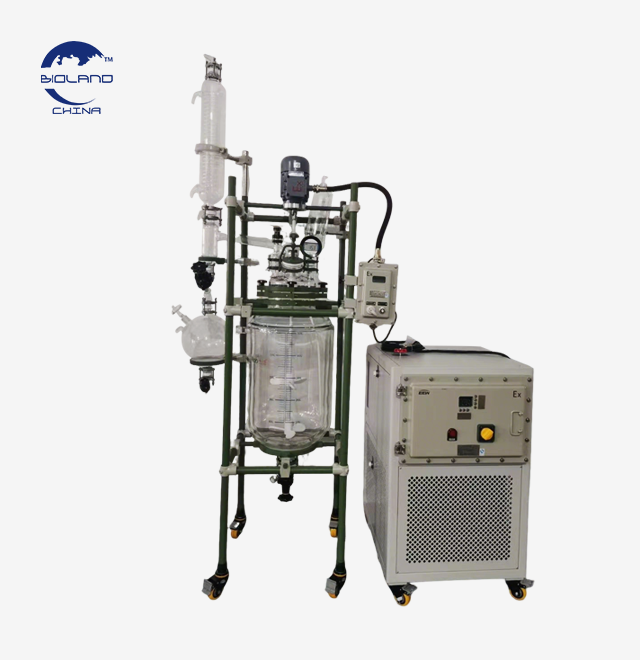
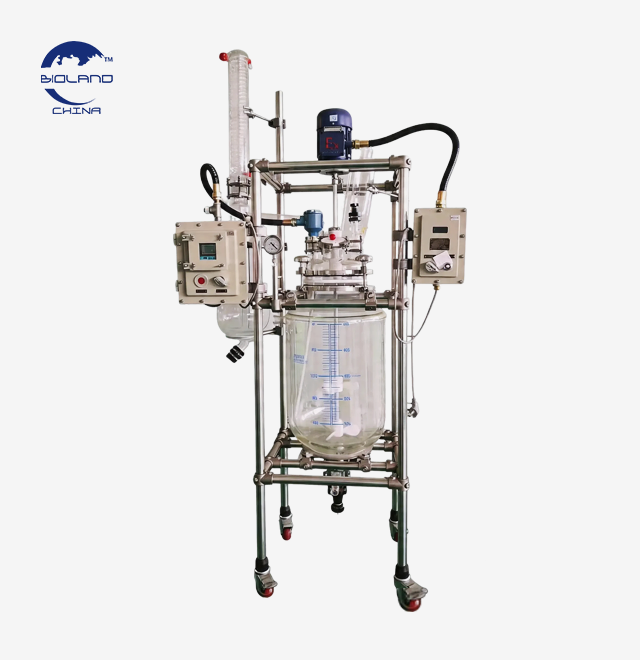
Borosilicate Glass Reactor for Chemical Synthesis & Pilot Scale Processing — High-Purity, Corrosion-Resistant Design
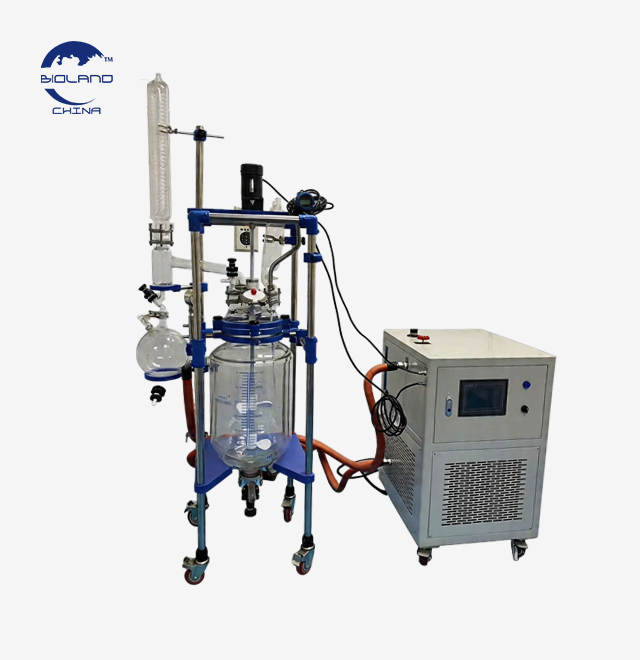
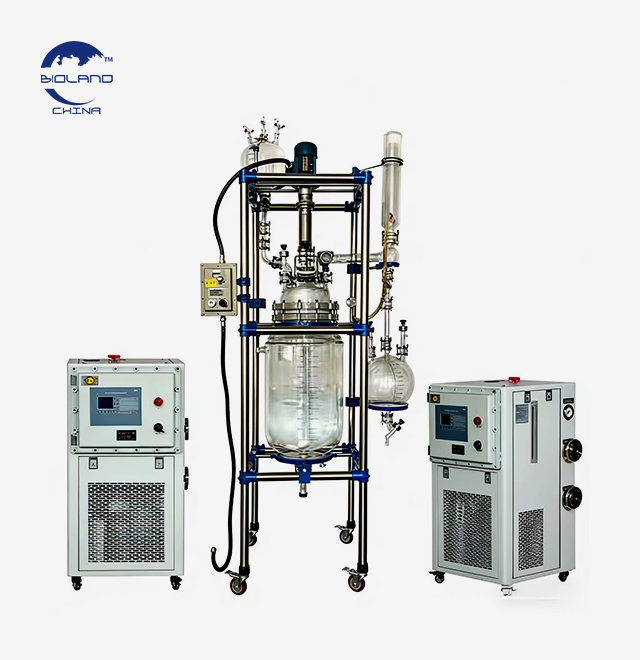
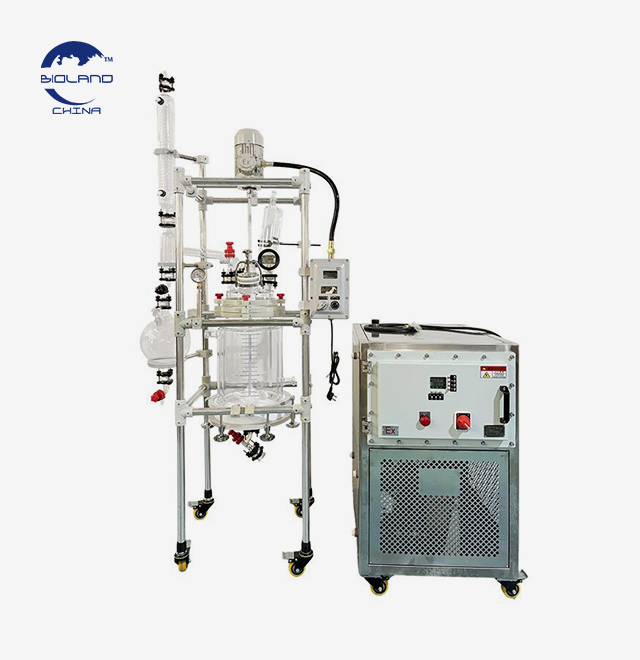
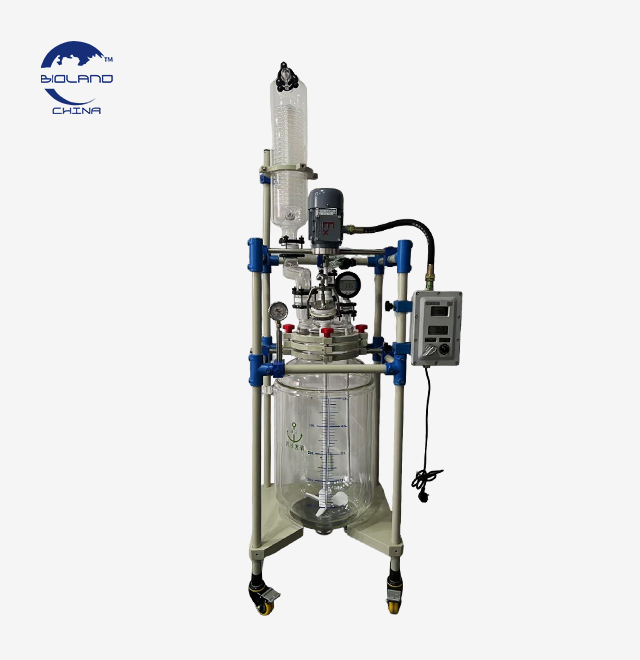
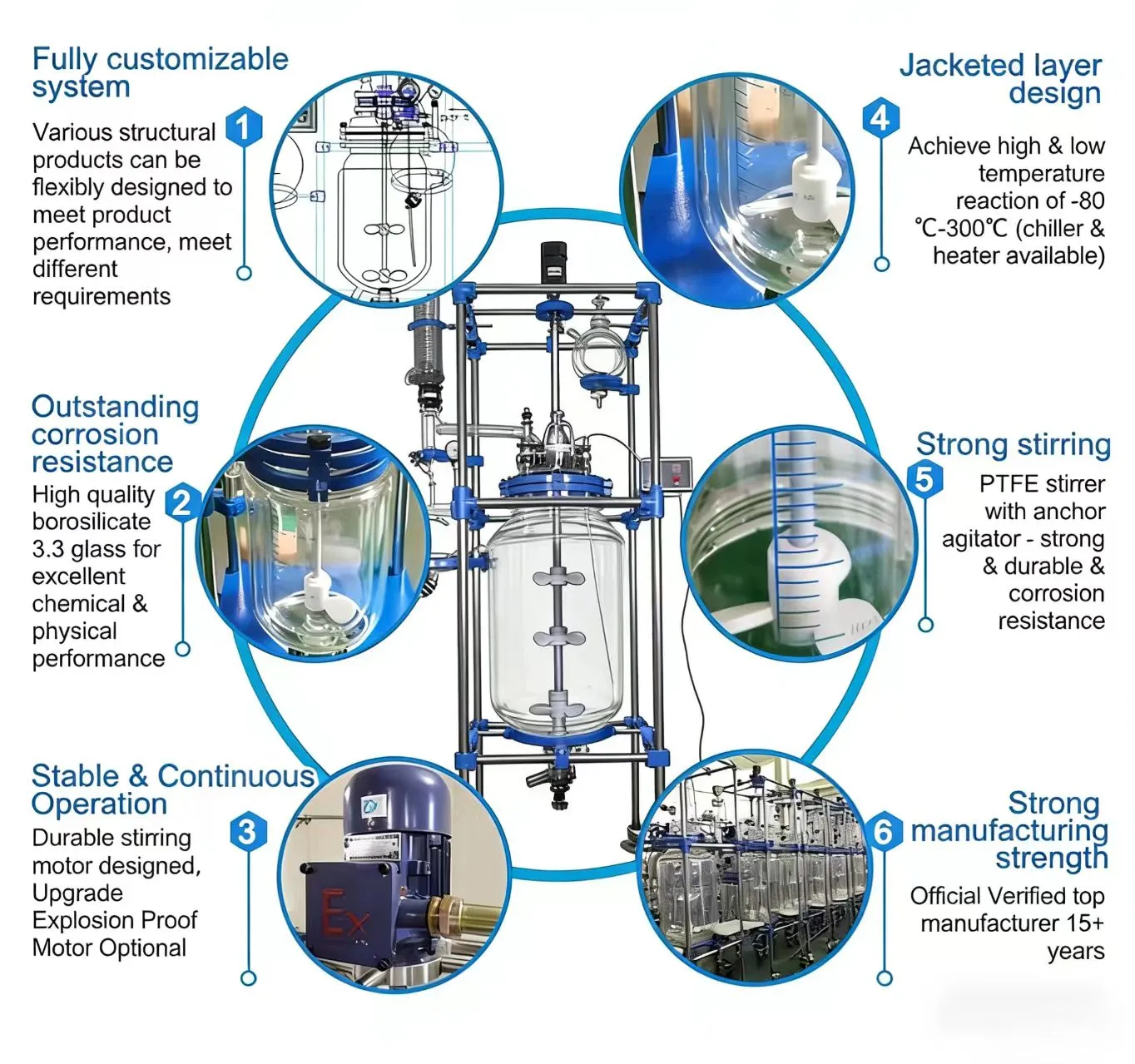
Xi'an Bioland Instrument's borosilicate glass reactor is engineered from GG17 / Borosilicate 3.3 glass (DIN ISO 3585), covering volumes from 1L to 200L and temperatures from −80°C to 200°C. The fully transparent vessel delivers real-time process visibility with zero metal contamination — making it the preferred choice for API synthesis, fine chemical distillation, and pilot-scale R&D where purity and precision are critical. CE and ISO certified.
Key Features & Benefits
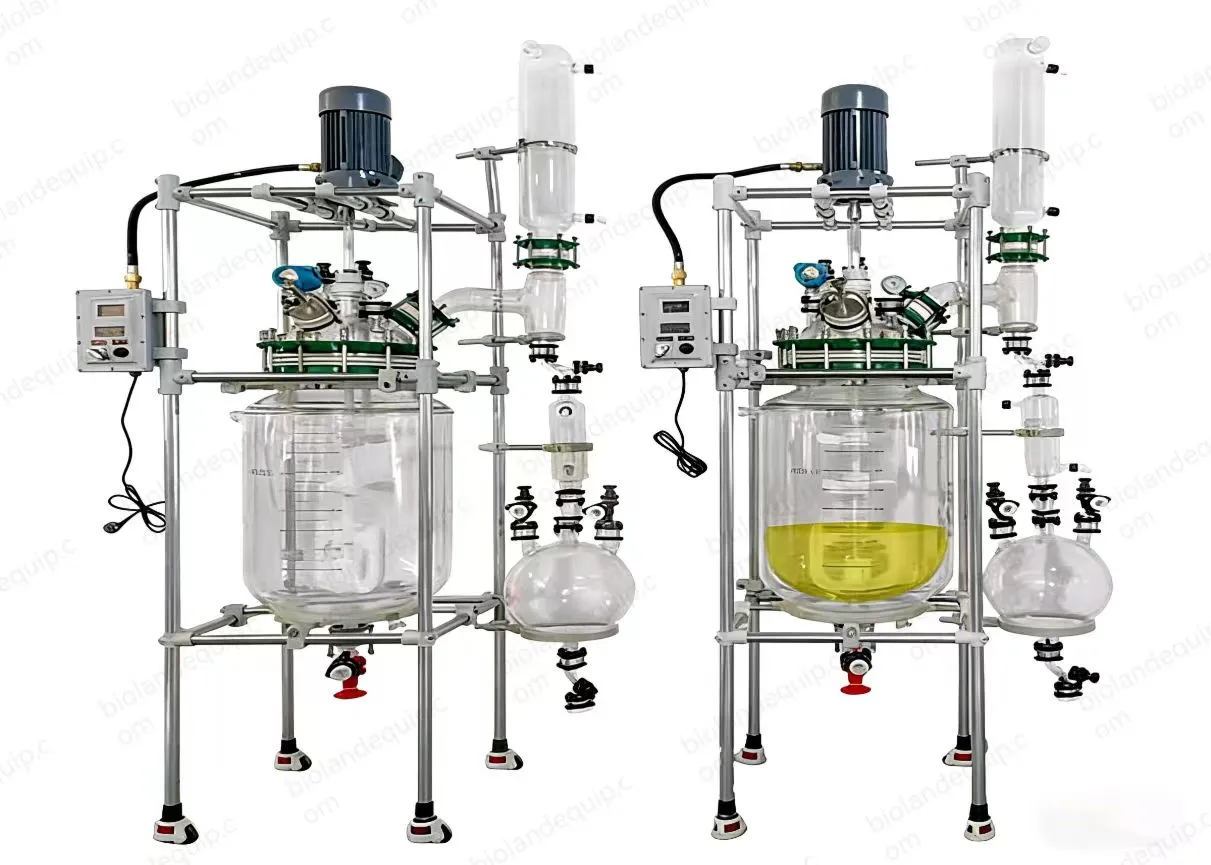
Real-Time Visual Monitoring
The clear borosilicate vessel gives you a direct view of every reaction stage — color shifts, phase separation, and precipitation are visible without opening the system. No blind spots, no sampling interruptions.
Zero Metal Contamination
Unlike stainless steel reactors, the all-glass contact surface eliminates heavy metal leaching. This is essential for API synthesis, peptide production, and any process governed by strict purity specifications.
Broad Chemical Resistance
Borosilicate 3.3 glass achieves Acid Resistance Class 1, withstanding sulfuric acid, hydrochloric acid, and most organic solvents. Avoid: hydrofluoric acid and hot concentrated alkalis (Class 2 alkali resistance).
Robust Sealing Under Aggressive Conditions
PTFE and FFKM O-ring seals resist swelling from harsh solvents that degrade standard rubber gaskets. The double-seal structure provides a secondary containment layer — critical for vacuum and solvent-intensive processes.
Scalable from Lab to Pilot Plant
Run your R&D protocol at 5L, then transfer directly to 50L or 200L pilot scale without revalidating process parameters. This reduces risk and accelerates technology transfer timelines.
How It Works?
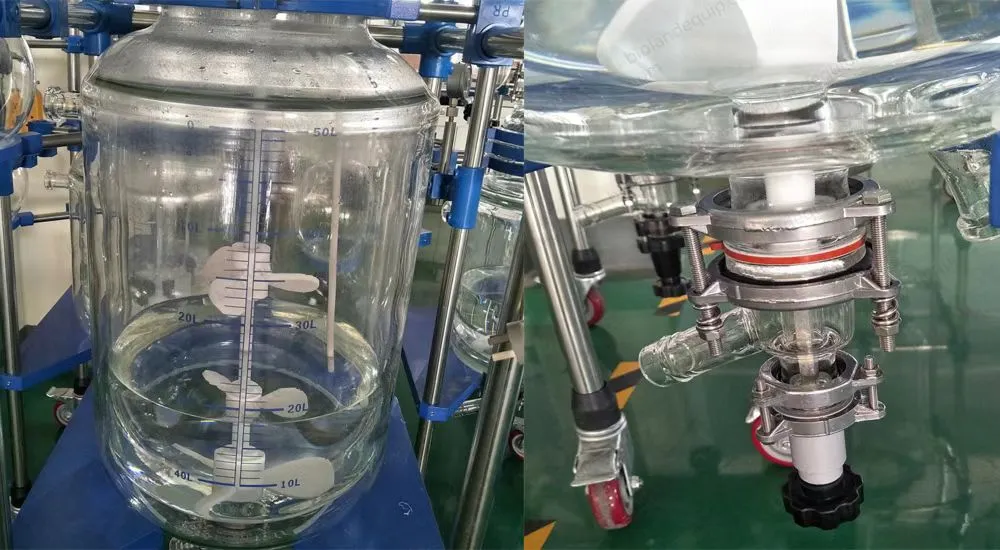
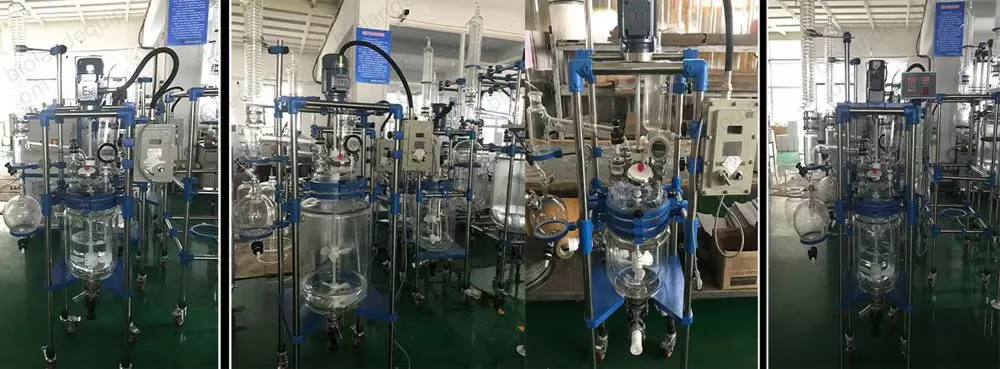
Step 1 — Temperature Control
Connect your chiller or heating circulator to the glass jacket. The circulation fluid maintains process temperatures between −80°C and 200°C with ±0.5°C stability.
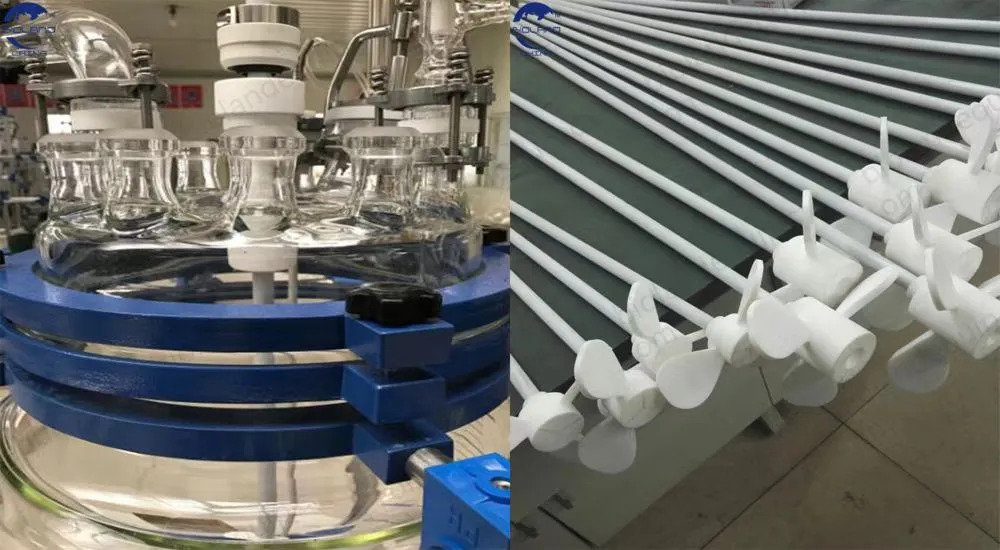
Step 2 — Mixing
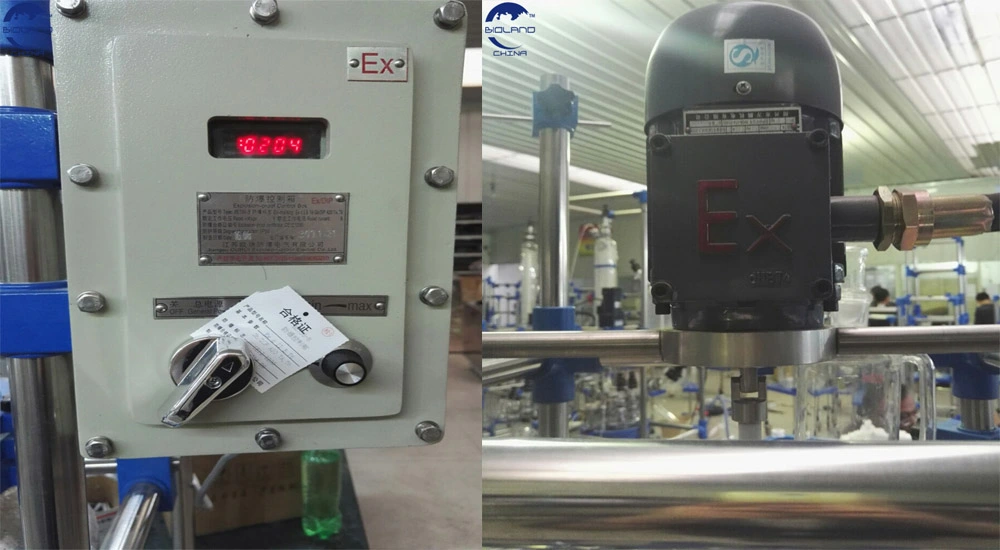
The PTFE-sealed mechanical stirrer drives controlled agitation. Speed is adjustable via manual dial or PLC interface, depending on your configuration.
Step 3 — Vapor Management
Vapor travels up through the overhead glass column to a condenser. Select reflux or distillate collection mode using the adjustable divider valve.
Step 4 — Vacuum Application
Connect your vacuum pump to the dedicated port. The system pulls down to −0.1 MPa — suitable for vacuum distillation, solvent stripping, and oxygen-free synthesis. Throughout every step, the transparent vessel lets you observe what is happening inside in real time.
Construction & Materials
The vessel wall is manufactured from GG17 Borosilicate 3.3 glass and fire-polished to a non-porous surface finish. This prevents biofilm adhesion and supports Clean-in-Place (CIP) cleaning protocols between batches.
Glass flanges are precision-ground to ISO flatness tolerances — critical for maintaining vacuum integrity across repeated thermal cycles.
Our quality control process includes:
· Polariscope inspection for residual thermal stress (stress retardation must be < 4 nm/mm to pass)
· Hydrostatic and helium leak tests at 1.5× operating pressure
· 100% rejection of glass showing bubbles, airlines, stones, or inner-wall scratches
Application Fields
Biopharmaceutical API Synthesis and Pilot Scale-Up
Application in GMP environment for the peptide synthesis and crystallisation of active medicinal ingredients. The passive surface of the glass avoids ion exchange and preserves the integrity of delicate biomolecules.
Fine Chemical Distillation & Essential Oil Refining
The borosilicate glass reactor is the perfect choice for complex azeotropic distillations with corrosive acids and high-value solvents — including those that would harm stainless steel equipment — when used with overhead glass condenser and reflux divider systems.
Material Science & Nano Technology
Metal-free conditions are needed for nanoparticle synthesis and for the manufacturing of high-purity semiconductor precursors. The vessel is transparent , so you can really see nucleation events , variations in dispersion , and colour changes , as you heat and cool .
General Processing & Industrial Laboratory
Application: Food & Beverage R&D, Cosmetics Formulation & New Material Development requiring simultaneous visibility, chemical purity and accurate temperature control.
Technical Parameters
|
type
|
volume
(L)
|
Motor power
(W)
|
Speed
(r/min)
|
Stirring torque(1300r/min)
|
Inside/outside tube diameter
(mm)
|
Reactor vessel cover relevant opening size
|
|
|
|
|
|
|
|
center
|
left
|
right
|
later
|
before
|
|
BL-150
|
150
|
370
|
10-680
|
28000g.cm
|
600*550
|
50#
|
40#
|
34#
|
34#
|
29#
|
|
BL-100
|
100
|
250
|
|
22000g.cm
|
460*500
|
50#
|
40#
|
34#
|
34#
|
29#
|
|
BL-80
|
80
|
250
|
|
22000g.cm
|
460*500
|
50#
|
40#
|
34#
|
34#
|
29#
|
|
BL-50
|
50
|
180
|
|
15000g.cm
|
360*405
|
50#
|
40#
|
34#
|
34#
|
29#
|
|
BL-30
|
30
|
180
|
|
15000g.cm
|
315*360
|
50#
|
40#
|
34#
|
34#
|
29#
|
|
BL-20
|
20
|
120
|
|
12000g.cm
|
315*360
|
50#
|
40#
|
34#
|
34#
|
29#
|
|
BL-10
|
10
|
120
|
|
12000.g.cm
|
245*260
|
50#
|
40#
|
34#
|
34#
|
29#
|
|
BL-5
|
5
|
90
|
|
9000.g.cm
|
200*230
|
50#
|
29#
|
24#
|
24#
|
19#
|
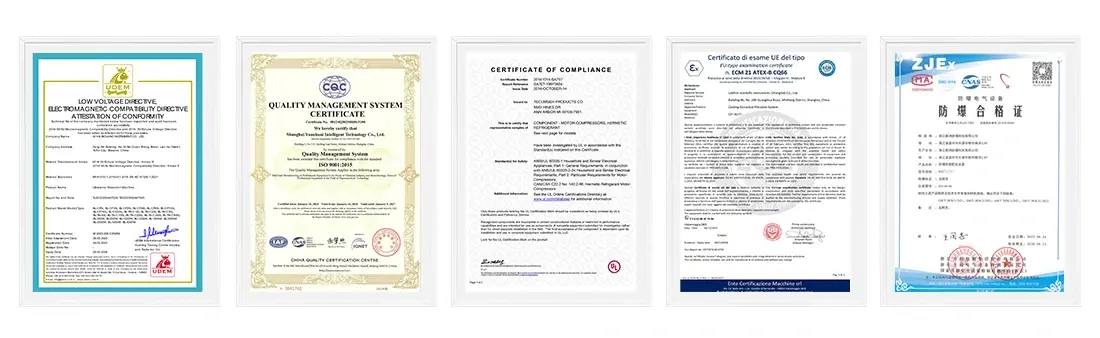
Quality Certifications & Compliance
|
Certification
|
Scope
|
|
CE
|
EU machinery and pressure equipment directives
|
|
ISO
|
Manufacturing quality management system
|
|
UL
|
North American electrical safety (applicable models)
|
|
ATEX / IEC
|
Explosion-proof configurations for hazardous area use
|
|
GMP / FDA
|
Design and material compliance for pharmaceutical production
|
All certifications are available as documentation upon request.
Why Choose Bioland?
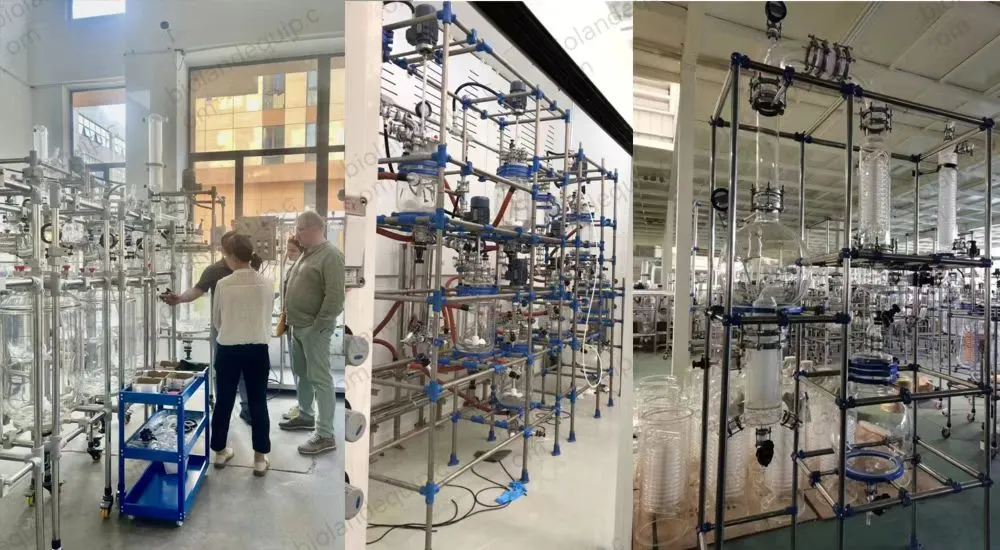
· 15+ years of chemical process equipment manufacturing experience, with installations across pharmaceutical, petrochemical, and university research sectors
· DIN ISO 3585 / ASTM E438 Type I, Class A glass — not a catalog spec, but a verified material standard with traceability documentation
· Weekly production updates with photos or video during manufacturing, so you always know your order status
· Factory Acceptance Test (FAT) available at our Xi'an facility before shipment
· OEM / ODM accepted — custom volumes, port configurations, and control systems available with 30-day lead time
Services & After-Sales Support
|
Service
|
Details
|
|
Warranty
|
12 months from shipment date
|
|
Post-warranty support
|
Technical assistance available via dedicated engineer
|
|
Shipping
|
Sea, rail, and air freight — global coverage
|
|
Customization
|
Non-standard volumes, port layouts, and ancillary connections
|
|
Remote troubleshooting
|
Senior process engineers available for remote diagnostics
|
Request a Quote
Get a detailed proposal within 48 hours — including process suitability assessment, pricing, and lead time confirmation.
Tell us your target volume, temperature range, and key process chemistry, and our engineers will recommend the right configuration.
FAQ
Q: Can this reactor handle cryogenic reactions down to −80°C?
A: Yes — the system is rated to −80°C. For sustained operation below −40°C, we recommend the spring-loaded flange option, which compensates for seal material contraction at low temperatures. Contact us to confirm the appropriate configuration for your target temperature.
Q: What are the pressure limits?
A: The operating range is −0.1 MPa (full vacuum) to +0.05 MPa positive pressure. Glass reactors are not designed as pressure vessels. If your process requires higher positive pressure, we can discuss hybrid metal/glass designs with glass viewports.
Q: How do I clean the reactor between batches?
A: The fire-polished, non-porous inner surface is compatible with CIP protocols. Flush with a compatible solvent or detergent solution appropriate for your process chemistry. Do not use hydrofluoric acid or hot concentrated alkali solutions.
Q: What should I do if the glass is damaged?
A: Minor surface marks may be polished under evaluation by a qualified technician. For structural cracks or breakage, the affected glass component should be replaced — field fusion repair is not acceptable, as it voids the original annealing certification and creates unpredictable stress points. Replacement glass components are available from Bioland with full material traceability.
Q: Do the seals hold up against aggressive organic solvents?
A: PTFE and FFKM O-rings are selected specifically for resistance to harsh organic solvents including ketones, esters, chlorinated solvents, and aromatic compounds. Standard rubber gaskets swell and fail under these conditions — our dual-seal design does not.
Q: Can the reactor be configured to my process requirements?
A: Yes. Bioland accepts full OEM and ODM orders. Volume, nozzle configuration, stirrer type, control system, jacket design, and ancillary connections can all be specified. Standard lead time for custom units is 30 business days from drawing approval.
Contact Us
If you want to get information about the borosilicate glass reactor, please contact us at info@biolandequip.com.