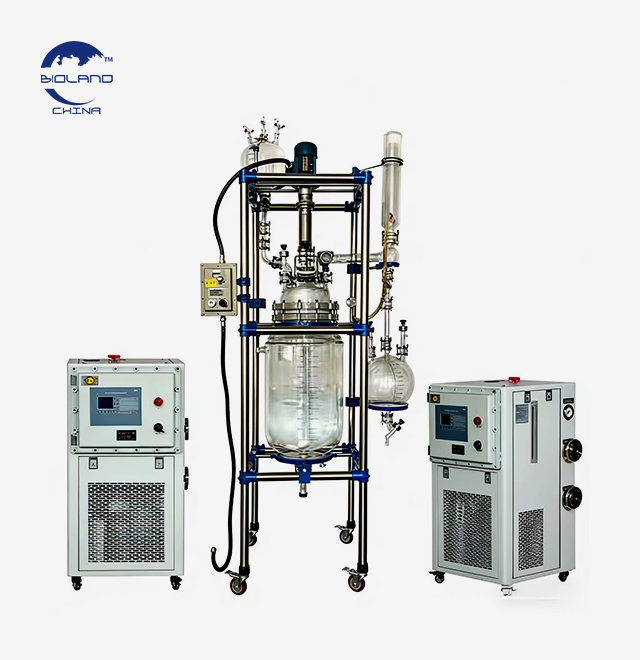
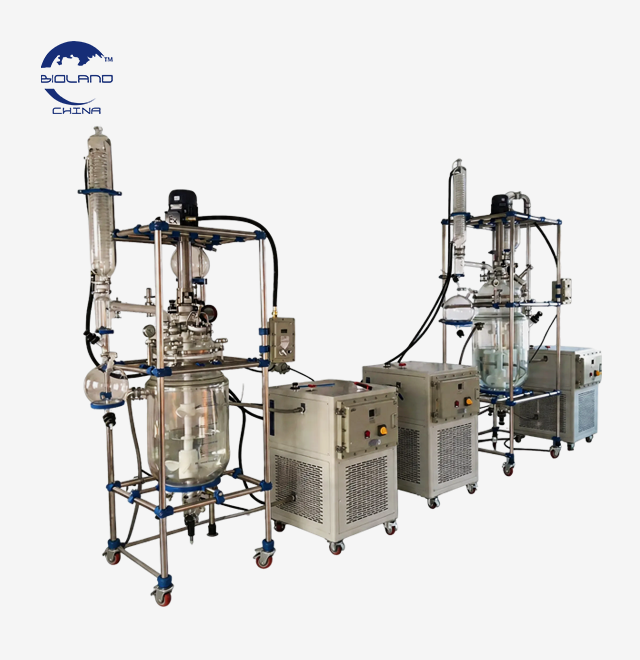
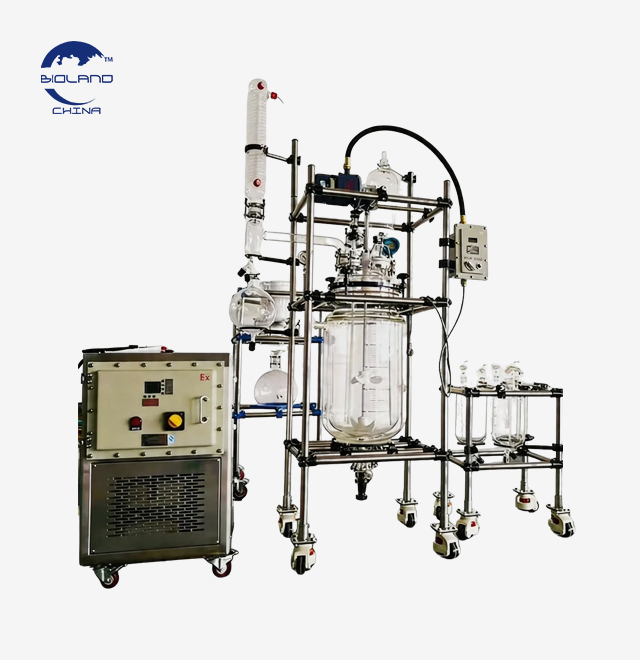
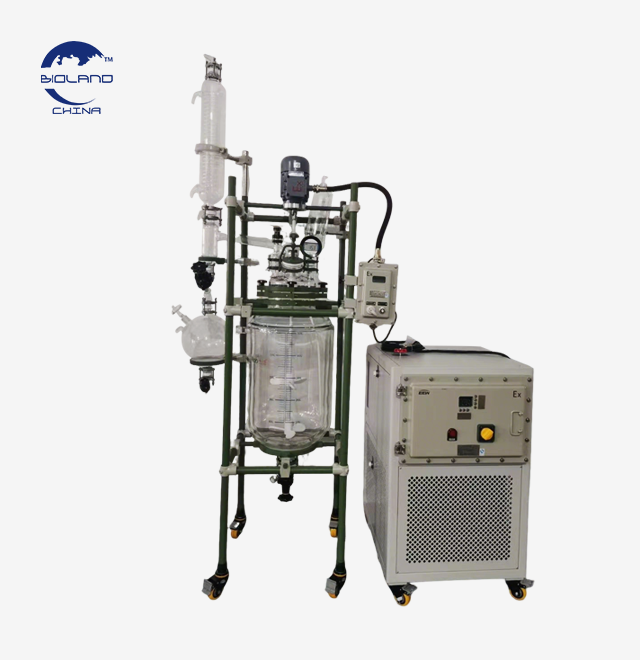
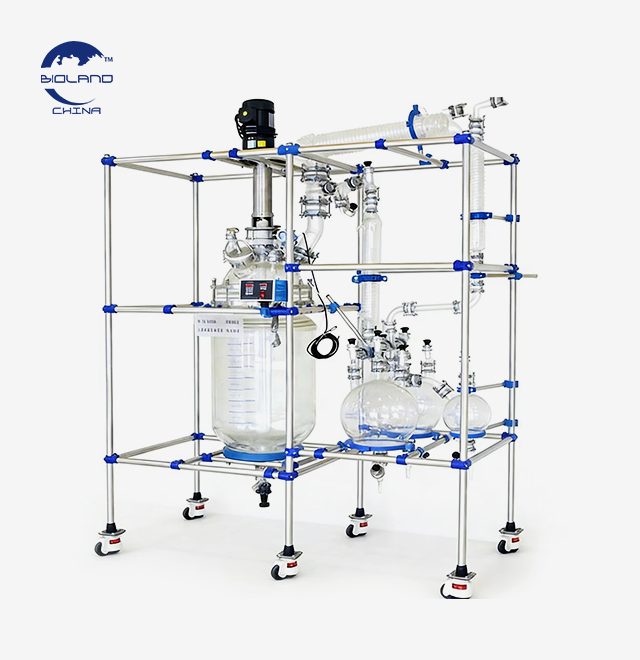
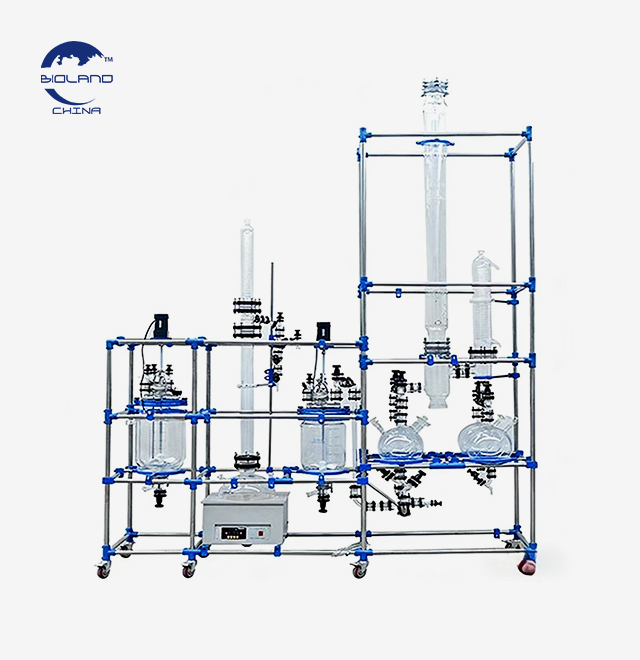
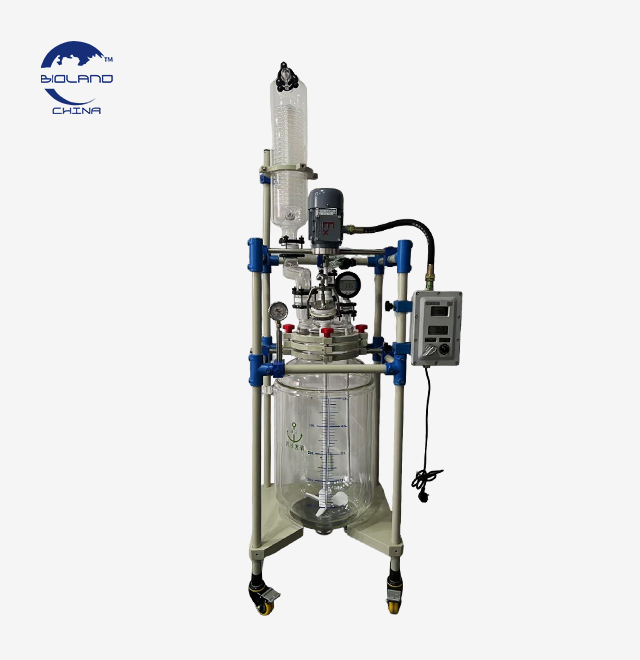
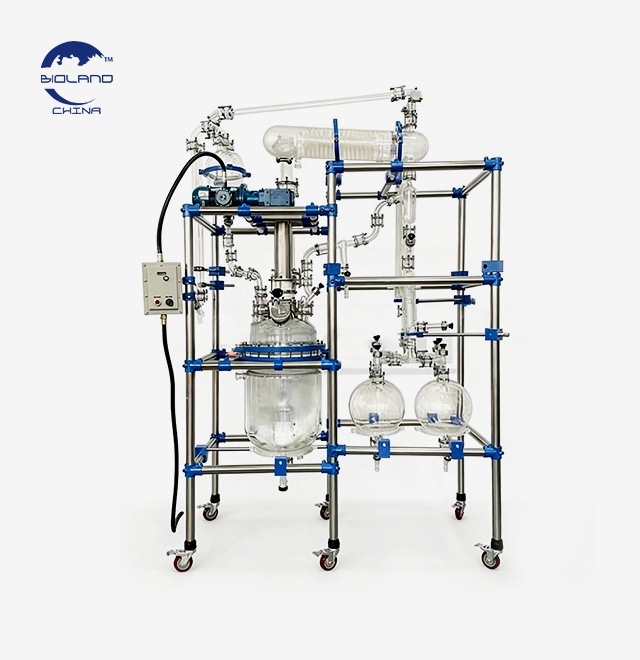
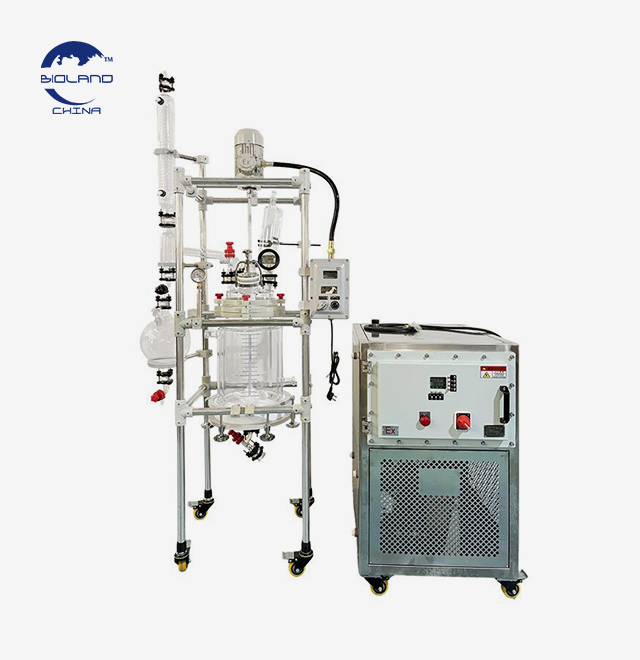
Jacketed Agitated Reactor for Pharma & Chemical Processing — Precision Temperature Control & Mixing Solutions
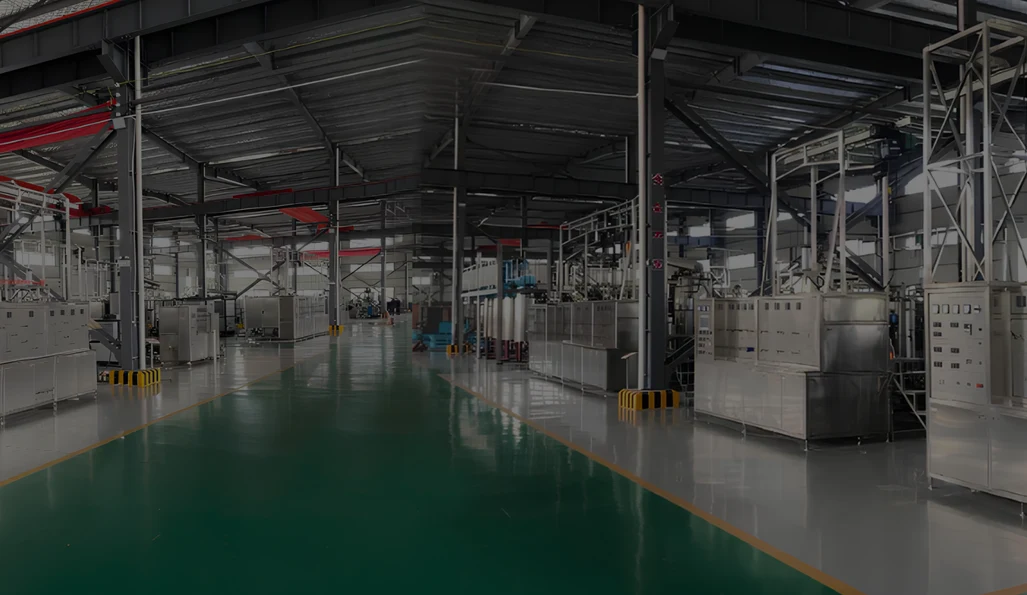
Xi'an Bioland Instrument Co., Ltd. has focused on the R&D and manufacturing of jacketed agitated reactors for over 15 years, serving the pharmaceutical, biotechnology, and fine chemical industries. Our reactors support a wide operating temperature range from −80°C to +250°C, with pressure ratings covering full vacuum to 100 bar. Vessel materials include SS316L, Hastelloy C-22, and GG17 borosilicate glass. Certified to both CE and ISO, they offer customizable PLC automation control and OEM/ODM solutions. We have provided stable, reliable process solutions to more than 200 customers worldwide.
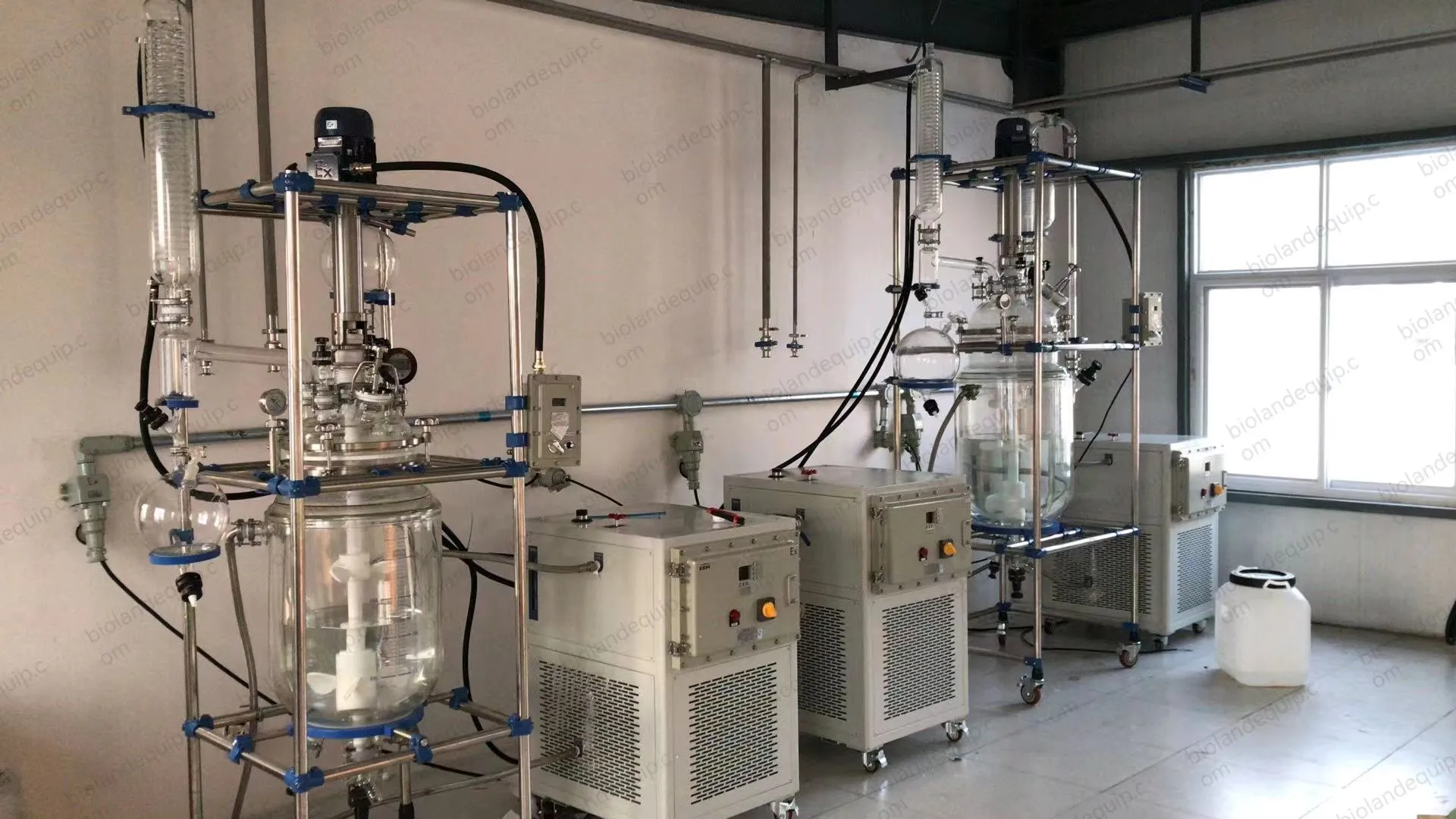
Key Features & Benefits
1. Precise Thermal Management
The jacket uniformly circulates heat transfer medium, eliminating hot spots and controlling temperature fluctuation within ±0.5°C. For strongly exothermic reactions (e.g., nitration, hydrogenation), an optional rapid cooling valve assembly provides a response time of <30 seconds, effectively preventing thermal runaway.
2. Three Jacket Designs — Matched to Your Process
| Jacket Type |
Best For |
Max Pressure |
| Half-Pipe Coil |
High-pressure steam, large vessels >5,000 L |
3.0 MPa |
| Dimple |
Cost-effective cooling, small-to-mid batches |
1.0 MPa |
| Conventional |
General heating/cooling duty |
0.6 MPa |
3. Application-Specific Agitation
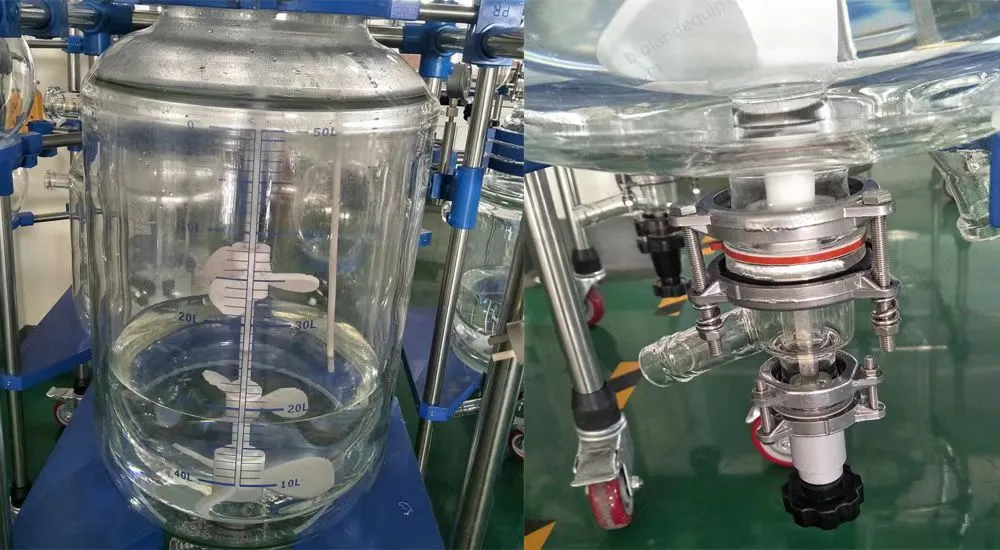
- Anchor impeller: Suitable for paste-like materials with viscosity >10,000 cP
- Helical ribbon impeller: Suitable for high-viscosity systems exceeding 50,000 cP during polymerization, with wall scrapers to prevent wall buildup
- Gas-induction impeller: Dedicated to hydrogenation reactions, circulating gas-phase hydrogen from the headspace into the liquid phase, improving mass transfer efficiency by over 30% (based on internal CFD simulation data)
4. Zero-Leakage Sealing for Hazardous Media
Double mechanical seal (API Plan 53A, barrier fluid pressure 0.2 MPa above process pressure) or magnetic drive coupling, suitable for toxic, flammable, and highly corrosive materials, with leakage rates meeting EPA/VOC emission standards.
5. Pharma-Grade Surface Finish
Internal wall electropolished to Ra ≤ 0.4 µm, meeting FDA 21 CFR Part 211 cGMP cleanliness requirements, supporting CIP/SIP clean-in-place and sterilization, preventing biofilm formation.
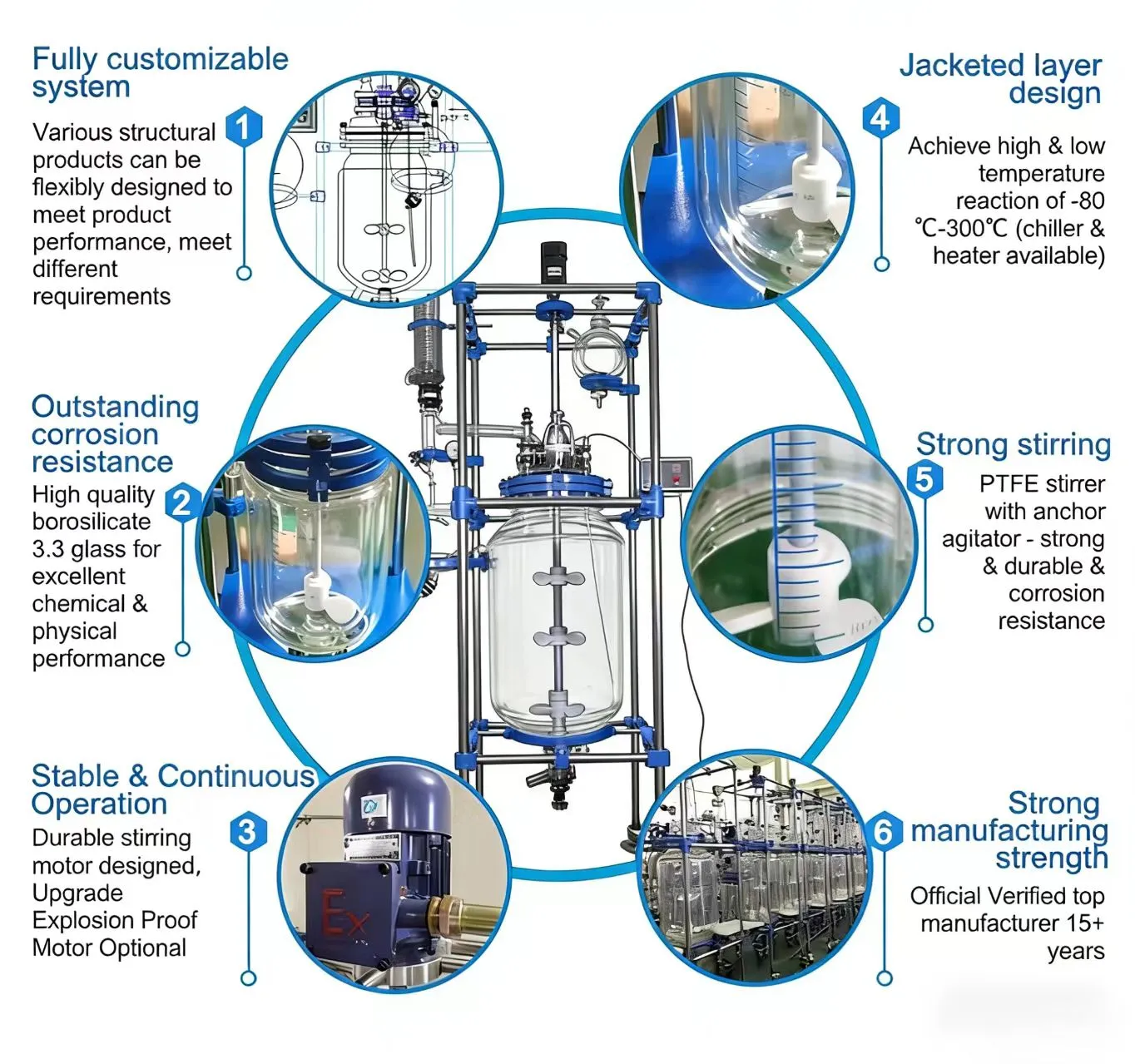
How It Works?
For high-viscosity systems, the PTFE wall scraper attached to the anchor agitator continuously cleans the inner wall, preventing product coking and maintaining a stable heat transfer coefficient (typical value: U = 300–800 W/m²·K, depending on material viscosity and flow rate).
Construction & Materials
Material Selection Guide
| Material |
Chemical Compatibility |
Recommended Application |
| SS316L (Mo 2.1–2.8%) |
Weak acids, bases, organic solvents |
General pharmaceutical & chemical |
| Hastelloy C-22 |
Hydrochloric acid, sulfuric acid, oxidizing strong acids, chloride-containing media |
Fine chemicals, pesticide intermediates |
| Glass-Lined Steel |
Strongly corrosive organics |
Dyes, resins |
| GG17 Borosilicate Glass |
All chemical categories, visual observation |
Laboratory & pilot scale |
Weld Quality Assurance
- Radiographic testing (RT) + penetrant testing (PT), 100% coverage of pressure boundary welds
- Hydrostatic test pressure: design pressure × 1.5, hold time ≥30 minutes
- Positive Material Identification (PMI): verifies 316L molybdenum content, provides full material traceability records
Why Choose Us?
| Comparison Dimension |
Bioland |
Typical Trading Company |
| Manufacturing Experience |
15 years, own factory |
No in-house production |
| Design Capability |
CFD-assisted selection, direct engineer communication |
Relies on fixed product catalog |
| Customization Capability |
Nozzle layout / special alloys / skid integration |
Limited or non-customizable |
| Delivery Transparency |
Weekly production progress photo/video updates |
Usually no intermediate feedback |
| After-Sales Support |
1-year warranty + lifetime maintenance service agreement |
Usually no after-sales |
Our commitments:
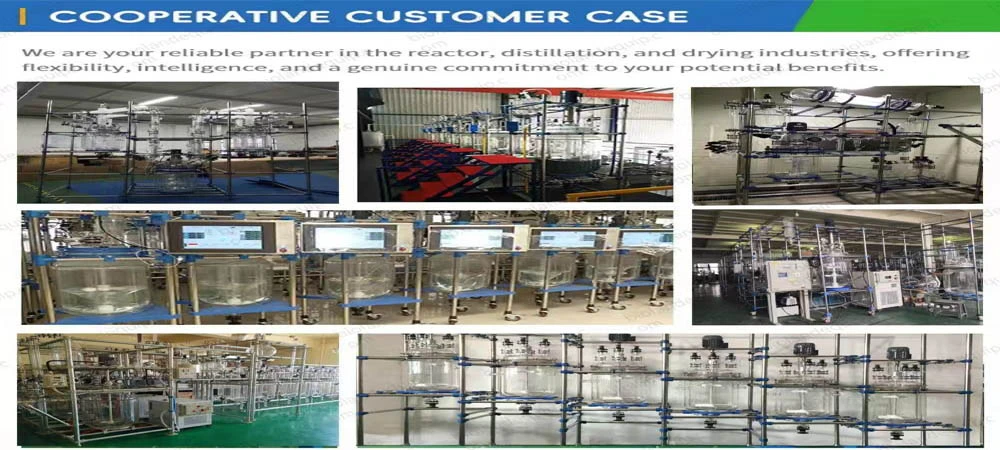
- Each order is assigned a dedicated production follow-up specialist who proactively sends weekly photo/video progress updates
- Shipment requires written customer confirmation
- OEM/ODM accepted: including custom nozzle positions, special alloy materials, and skid integration with heating/cooling circulators
Services & After-Sales Support
- Pre-Sales: Free process evaluation + CFD-assisted agitator selection
- Custom Engineering: Mechanical design drawing confirmation + material selection recommendations
- Logistics: Sea/rail/air freight, covering Europe, Southeast Asia, the Middle East, and major global ports; wooden crates or dedicated steel frame packaging
- Warranty: 1 year, including parts and labor
- Maintenance: Lifetime maintenance service (spare parts supply + remote technical support)
- On-Site Support: Engineer on-site commissioning service available for key projects (subject to prior confirmation)
Technical Parameters
|
type
|
volume
(L)
|
Motor power
(W)
|
Speed
(r/min)
|
Stirring torque(1300r/min)
|
Inside/outside tube diameter
(mm)
|
Reactor vessel cover relevant opening size
|
|
|
|
|
|
|
|
center
|
left
|
right
|
later
|
before
|
|
BL-150
|
150
|
370
|
10-680
|
28000g.cm
|
600*550
|
50#
|
40#
|
34#
|
34#
|
29#
|
|
BL-100
|
100
|
250
|
|
22000g.cm
|
460*500
|
50#
|
40#
|
34#
|
34#
|
29#
|
|
BL-80
|
80
|
250
|
|
22000g.cm
|
460*500
|
50#
|
40#
|
34#
|
34#
|
29#
|
|
BL-50
|
50
|
180
|
|
15000g.cm
|
360*405
|
50#
|
40#
|
34#
|
34#
|
29#
|
|
BL-30
|
30
|
180
|
|
15000g.cm
|
315*360
|
50#
|
40#
|
34#
|
34#
|
29#
|
|
BL-20
|
20
|
120
|
|
12000g.cm
|
315*360
|
50#
|
40#
|
34#
|
34#
|
29#
|
|
BL-10
|
10
|
120
|
|
12000.g.cm
|
245*260
|
50#
|
40#
|
34#
|
34#
|
29#
|
|
BL-5
|
5
|
90
|
|
9000.g.cm
|
200*230
|
50#
|
29#
|
24#
|
24#
|
19#
|
Application Fields
Pharmaceutical API Synthesis
Precise cooling curve control through the jacket (typical rate: 0.5–2°C/min) regulates crystal habit and particle size distribution (D90 target value can be set). Electropolished interior meets CIP/SIP requirements, avoiding batch-to-batch cross-contamination.
Customer case: A domestic API manufacturer adopted our 500 L SS316L jacketed agitated reactor in a sulfate compound crystallization process, reducing product particle size D90 variation from ±15 µm to ±4 µm, with batch qualification rate increased to 99.2%.
Polymer Resin Production
Helical ribbon agitator combined with internal wall scraper maintains stable inner wall heat transfer coefficient throughout the entire polymerization process as viscosity climbs from an initial 200 cP to 50,000+ cP, preventing yellowing and degradation caused by localized overheating.
Fine Chemical Hydrogenation
Gas-induction impeller recycles headspace hydrogen, achieving gas-liquid mass transfer coefficient (kLa) of 0.08–0.15 s⁻¹ at 5.0 MPa operating pressure. The jacket simultaneously removes reaction heat (typical value: −80 kJ/mol), maintaining isothermal operation.
Biotech & Fermentation
Low-shear anchor or frame agitators (tip speed <1.5 m/s) protect cell viability. Jacket temperature control accuracy ±0.5°C, supporting 72–120 hour long-cycle batch fermentation. DO control and pH interlocking can be integrated into the PLC system.
Quality Certifications & Compliance
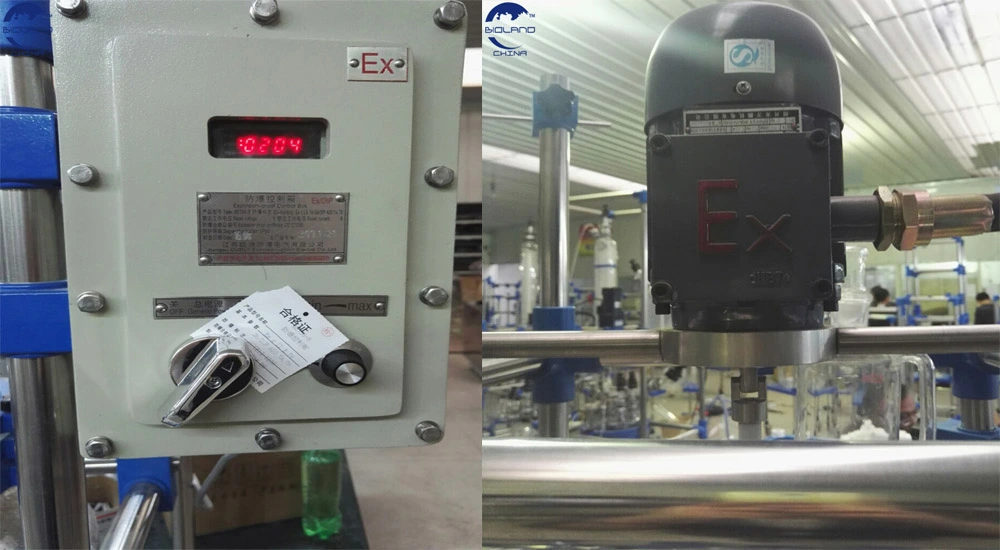
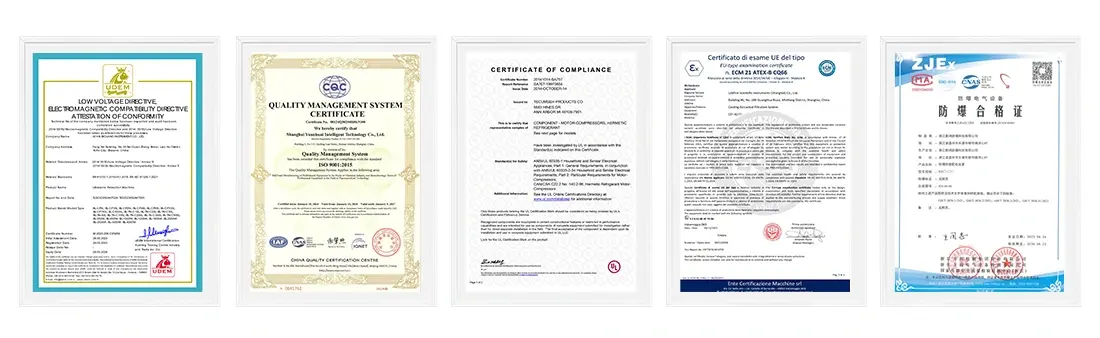
- CE Marking (PED 2014/68/EU Pressure Equipment Directive compliant)
- ISO 9001:2015 Quality Management System certification (certificate number: contact us for details)
- SGS third-party material and performance testing
- FDA cGMP-compatible design (meets 21 CFR Part 211 production equipment requirements; not an FDA-directly-certified device)
- ATEX-ready option (explosion-proof configuration optional, suitable for Zone 1/Zone 2 hazardous areas)
Standard delivery documentation package:
Weld inspection reports | Hydrostatic test records | Surface roughness (Ra) measurement reports | Material certificates (Mill Certificate) | CE Declaration of Conformity | Operation & maintenance manual
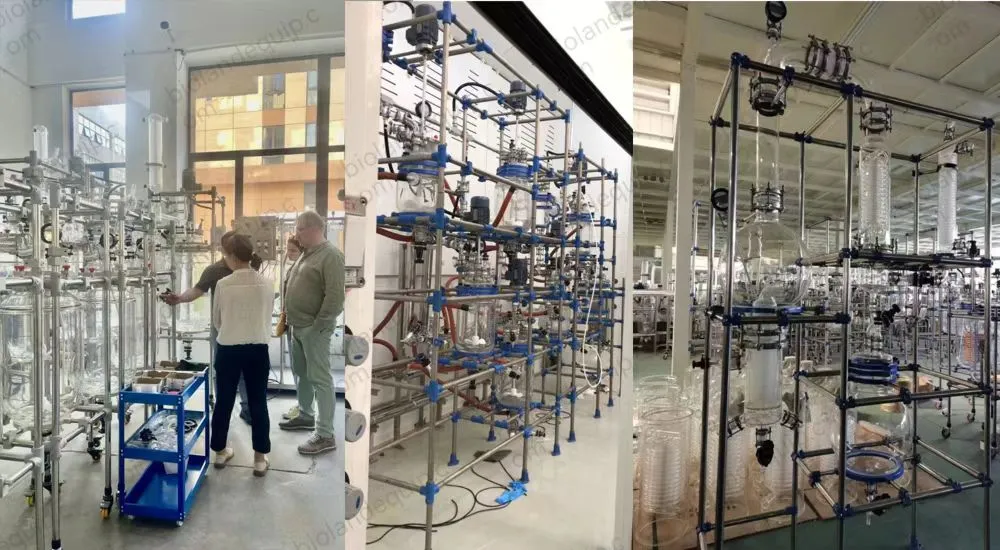
Factory Acceptance Test (FAT): Customers may arrange on-site acceptance at our Xi'an factory before shipment, or a complete video acceptance service is available.
Get a Custom Solution Now
Three steps to start your project:
-
Fill in the process parameter table (temperature, pressure, material, volume) → send to info@biolandequip.com
-
Engineer responds within 48 hours with preliminary selection recommendations and quotation
-
Confirm the solution and place your order; a dedicated follow-up specialist tracks the entire process through to delivery
📧 Get selection advice or a quotation: info@biolandequip.com
Tell us your process conditions, and we will recommend the most suitable jacket and agitator combination for you.
FAQ
Q: What are the main design differences between laboratory pilot reactors and industrial production reactors?
Pilot reactors (5–50 L) typically use GG17 glass material for visual observation, with a wider agitation speed range (10–1500 rpm). Industrial reactors prioritize the scale-up effect of heat transfer area-to-volume ratio (A/V value) — this is key to successful process scale-up, and we use CFD models to predict it in advance during the design stage.
Q: Which jacket type should be selected for high-pressure steam heating?
The Half-Pipe Coil Jacket is recommended, suitable for large reactors >5,000 L and steam pressures >1.0 MPa. Its structural rigidity is significantly superior to dimple jackets.
Q: How do you address the decline in heat transfer efficiency for high-viscosity materials?
Anchor agitators equipped with PTFE or metal wall scrapers continuously remove the inner wall boundary layer, maintaining the heat transfer coefficient of viscous systems above 85% of the design value.
Q: Which sealing solution should be selected for toxic or highly corrosive materials?
Both double mechanical seals (API Plan 53A) and magnetic drive couplings achieve zero leakage. Magnetic drive has no dynamic sealing elements, offering longer maintenance intervals and suitability for continuous production; Plan 53A is suitable for working conditions requiring rapid disassembly and maintenance.
Q: How is mixing time predicted during the design stage?
Mixing time depends on the agitator discharge coefficient (Nq), vessel-to-impeller diameter ratio (D/T), and fluid viscosity. We use ANSYS Fluent for CFD simulation and can provide a mixing time prediction report during the design stage for process engineer confirmation.
Q: What technical documents are provided with each reactor?
Weld RT/PT inspection reports, hydrostatic test records, surface roughness (Ra) inspection reports, Positive Material Identification (PMI) certificates, CE Declaration of Conformity, material certificates (Heat Certificate), and a complete operation and maintenance manual.
Contact Us
Need technical consultation or a custom quotation for a jacketed agitated reactor? Feel free to contact us anytime: 📧 info@biolandequip.com — we will respond within 48 hours.