Chemical Glass Reactor | GG17 Borosilicate, −80°C to 200°C | Lab & Industrial Scale
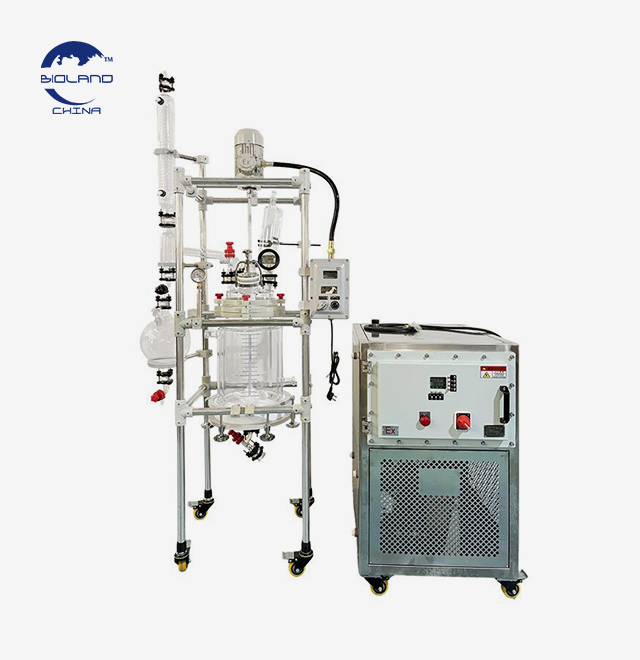
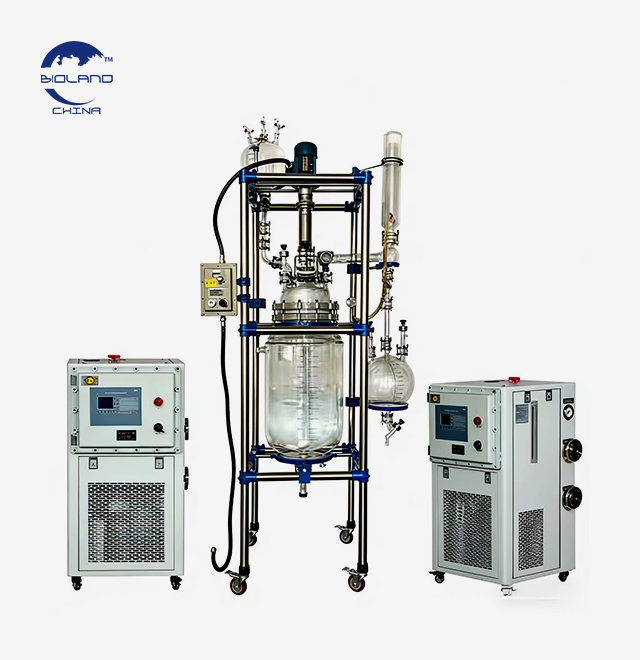
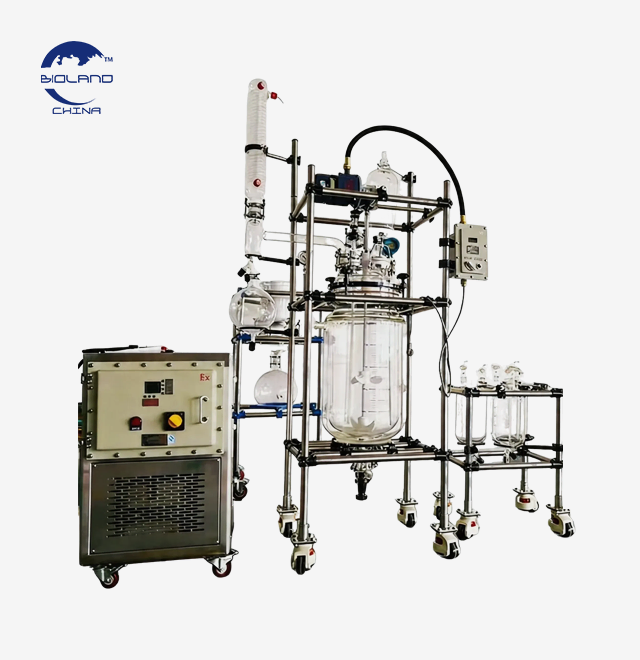
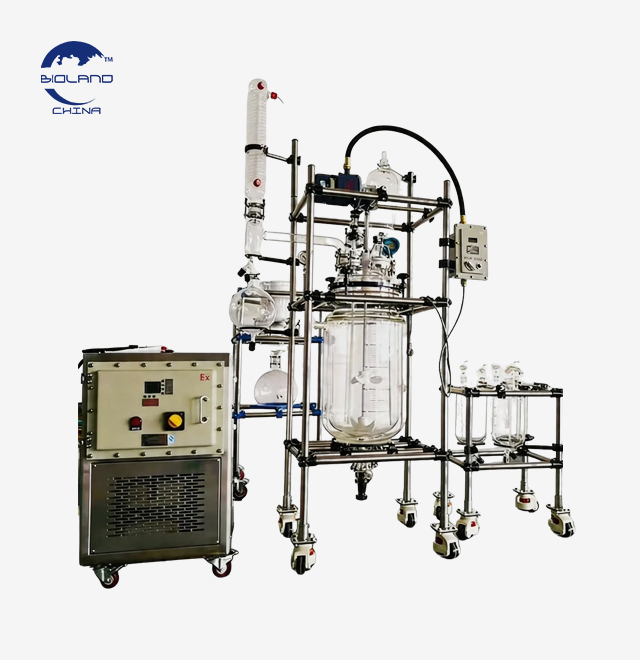
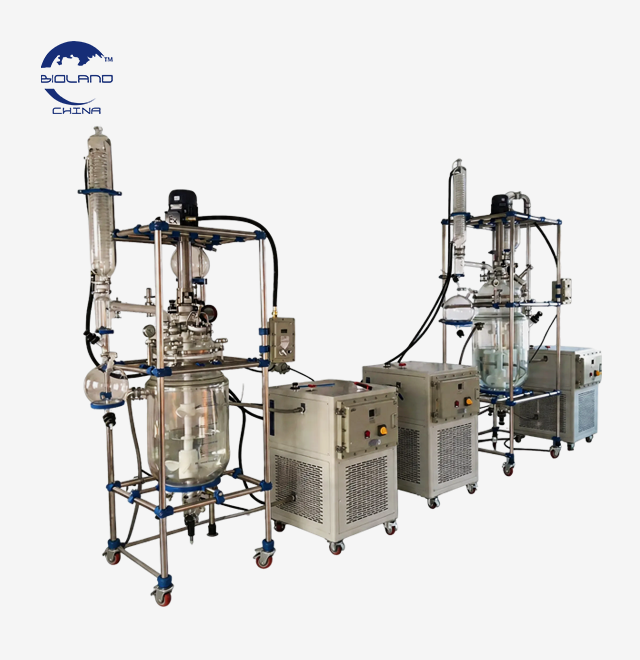
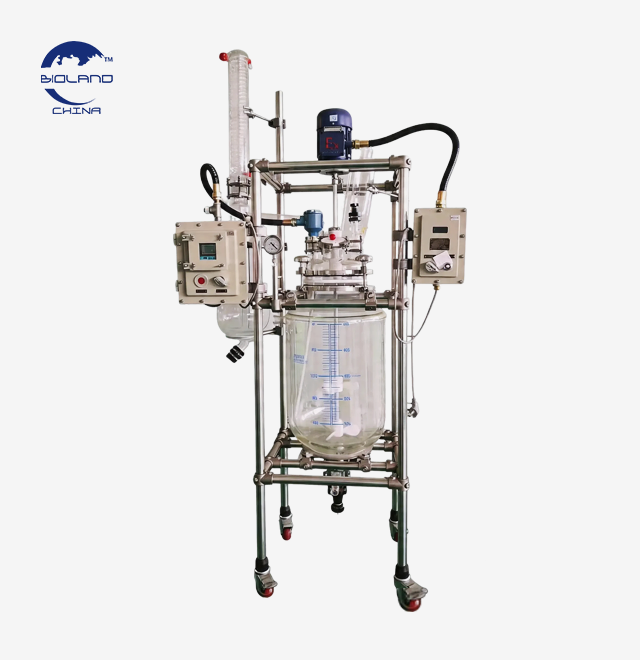
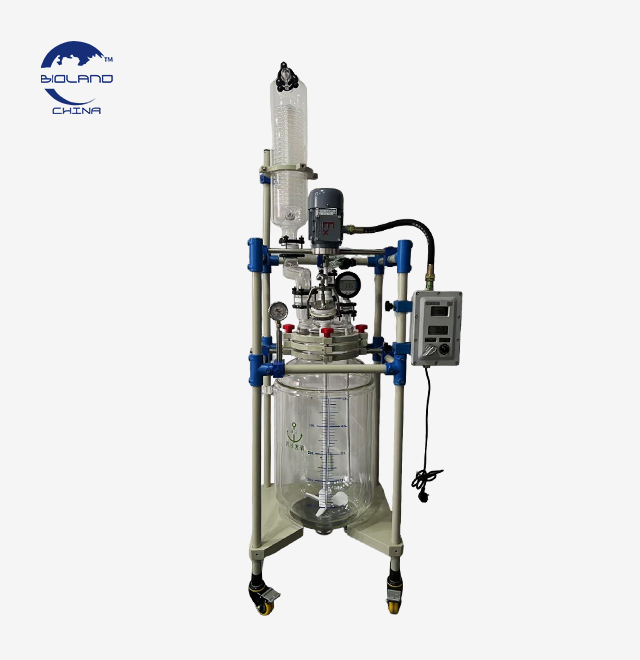
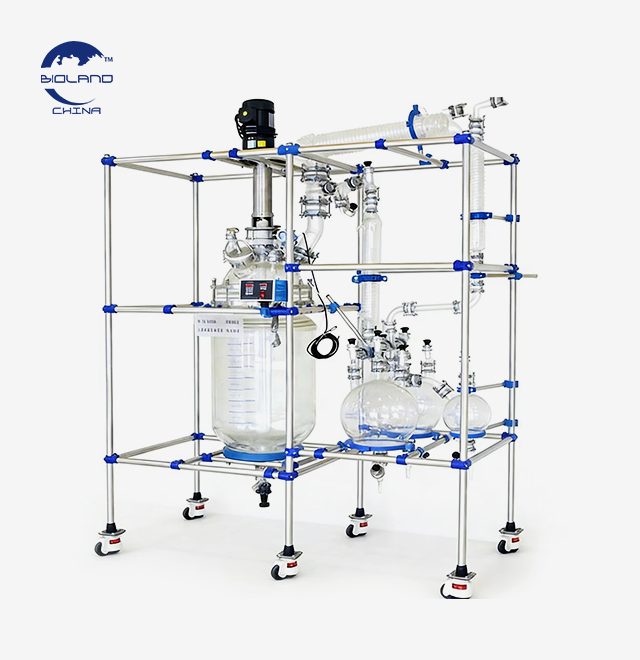
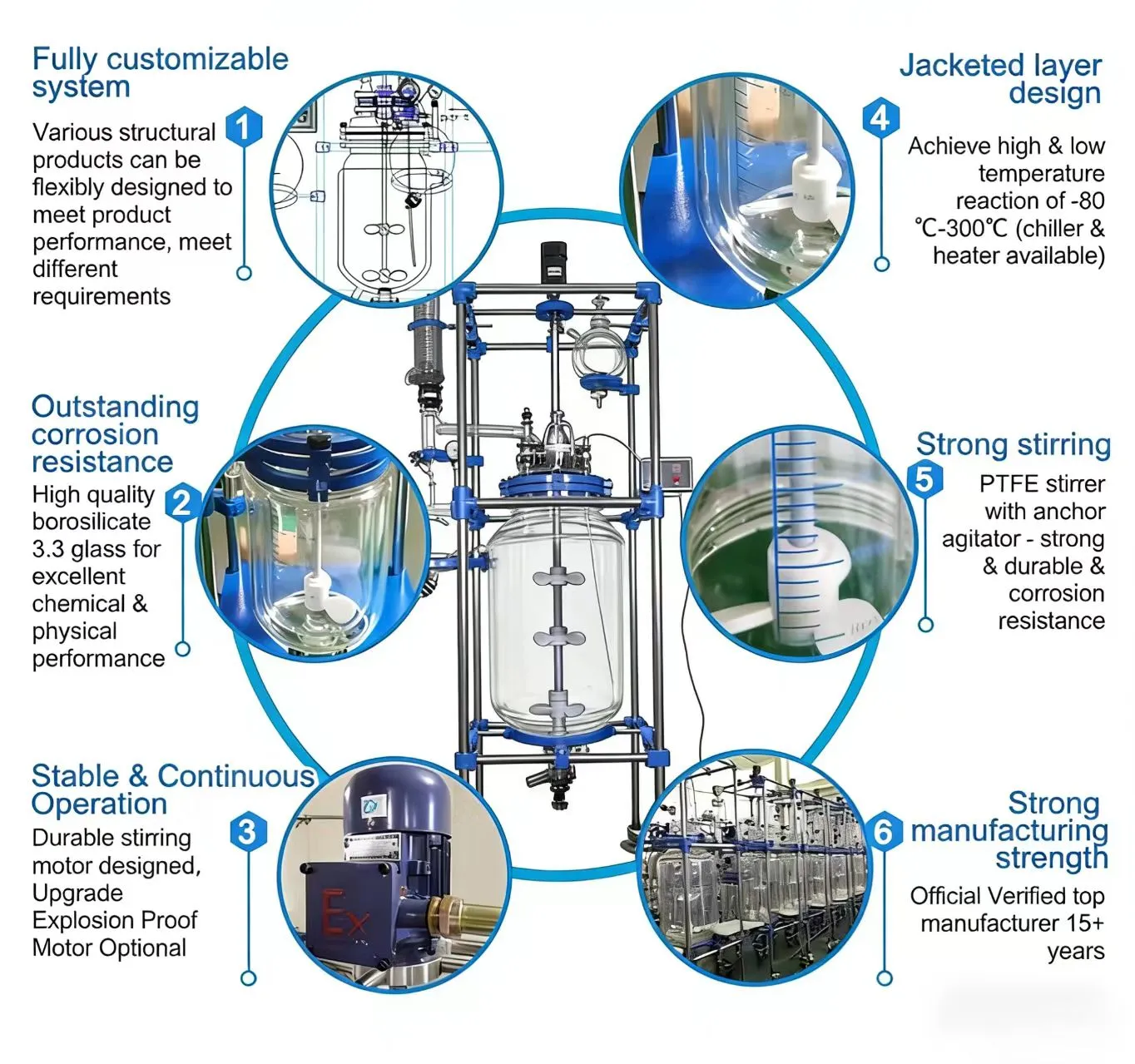
Bioland's chemical glass reactors are built from GG17 borosilicate glass 3.3 (ISO 3585), covering −80°C to +200°C with vacuum down to < 0.098 MPa. Whether you're scaling a pharmaceutical API process or optimizing a catalyst study, the double-jacketed design, PTFE mechanical sealing, and > 90% optical transparency give you precise control and clear process visibility — from bench to pilot line. CE, ISO, and GMP certified. Custom units ship in 30 days.
Key Features & Benefits
Stable Temperature -80°C to +200°C
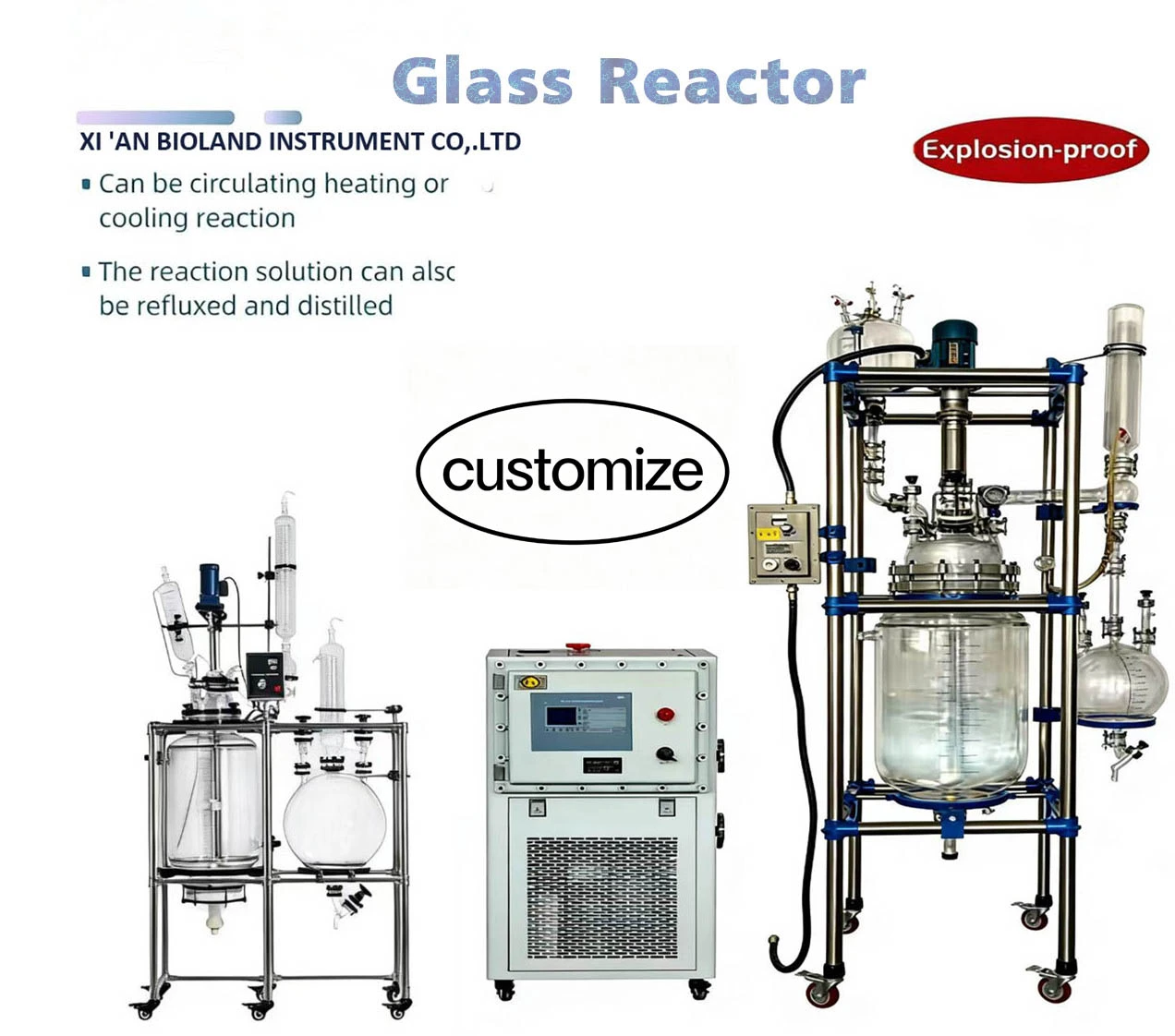
In the double-jacketed structure, a vacuum insulation zone prevents frost buildup at cryogenic conditions while circulating heating or cooling fluid through the outer layer. You have constant temperature control without having to stop the process to thaw the vessel.
Airtight Sealing at High Agitation Speeds
PTFE dynamic O-rings and mechanical stirrer seals provide vacuum integrity for the complete speed range. Run out remains within 2 mm, preventing glass-to-glass contact that reduces reactor life.
Drop-in, Modular Integration
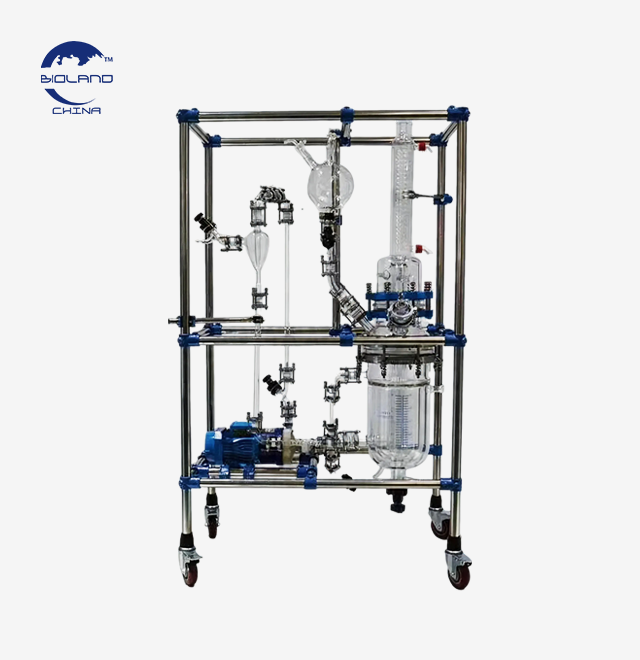
Standard ground joints fit reflux condensers, addition funnels and rectification columns without adapter modifications. Changing between process steps takes minutes, not hours.
Operator Safety in Solvent Environments
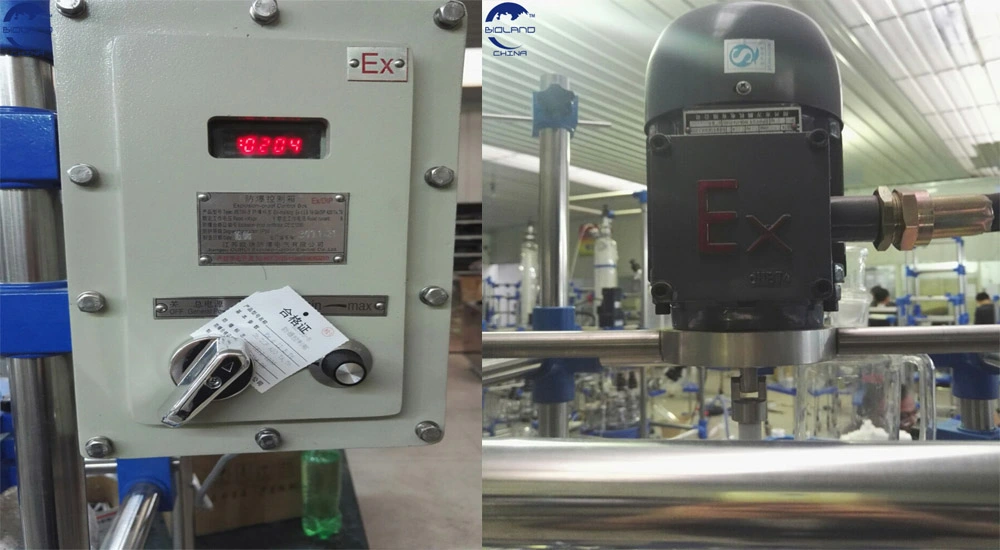
Spark-free motor and double-layer sealing provide ignition protection in flammable solvent atmospheres. Support for PLC interfaces and modular automation inputs for facilities requiring logged process data.
How It Works?
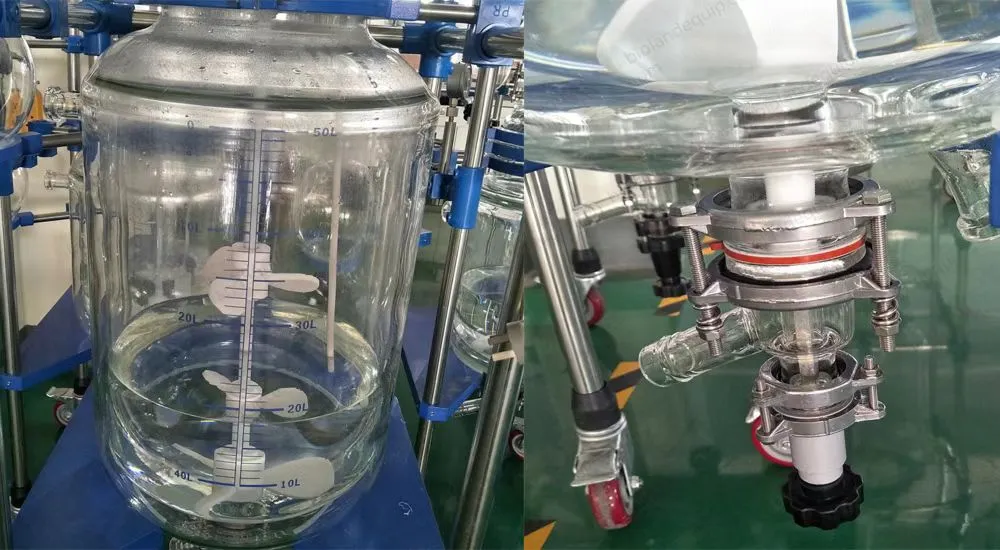
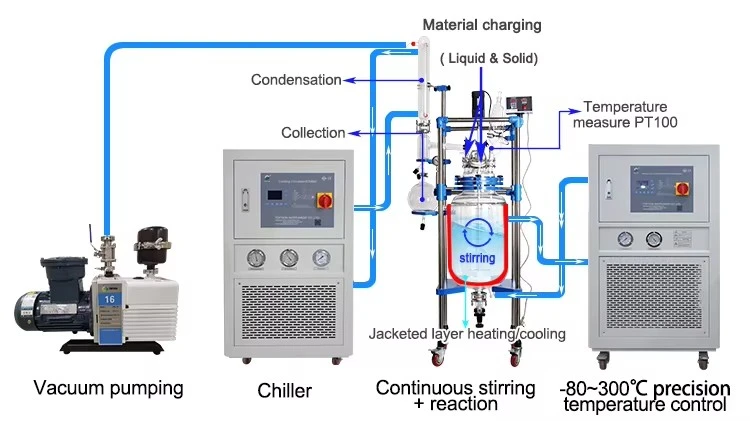
The heating or cooling fluid passes through the outer jacket. This provides a uniform transmission of the thermal energy to the reaction medium inside. The borosilicate glass wall is transparent (> 90% of the visible spectrum) so you can watch phase separation, colour change, and mixing behaviour without sampling.
The PTFE agitator shaft is connected to a variable-speed drive above the vessel.Changing speed affects shear rate and mixing intensity in real time without breaking vacuum or opening the system. A dedicated vacuum port lowers solvent boiling points for low temperature recovery, crystallisation or stripping runs.
Standard ground joints take condensers, probes and dosing funnels. A complete reaction train can be built without custom fixtures.
Construction & Materials
Borosilicate Glass 3.3 Vessel
The thermal expansion coefficient of 3.3 × 10⁻⁶ K⁻¹ gives this glass roughly 3× better thermal shock resistance than soda-lime glass, tolerating step changes up to ΔT ≈ 120 K.
Wall thickness is 5–8 mm depending on vessel volume, validated by ultrasonic measurement for vacuum implosion resistance. Every vessel is annealed to relieve internal stress before shipment; annealing quality is confirmed by polariscope inspection.
Zero Metallic Contact with Process Media
All wetted surfaces are PTFE or inert borosilicate glass. There is no metal-to-process contact, eliminating heavy metal leaching. This satisfies GMP requirements for biopharmaceutical API production and semiconductor-grade chemical synthesis.
Technical Parameters
|
type
|
volume
(L)
|
Motor power
(W)
|
Speed
(r/min)
|
Stirring torque(1300r/min)
|
Inside/outside tube diameter
(mm)
|
Reactor vessel cover relevant opening size
|
|
|
|
|
|
|
|
center
|
left
|
right
|
later
|
before
|
|
BL-150
|
150
|
370
|
10-680
|
28000g.cm
|
600*550
|
50#
|
40#
|
34#
|
34#
|
29#
|
|
BL-100
|
100
|
250
|
|
22000g.cm
|
460*500
|
50#
|
40#
|
34#
|
34#
|
29#
|
|
BL-80
|
80
|
250
|
|
22000g.cm
|
460*500
|
50#
|
40#
|
34#
|
34#
|
29#
|
|
BL-50
|
50
|
180
|
|
15000g.cm
|
360*405
|
50#
|
40#
|
34#
|
34#
|
29#
|
|
BL-30
|
30
|
180
|
|
15000g.cm
|
315*360
|
50#
|
40#
|
34#
|
34#
|
29#
|
|
BL-20
|
20
|
120
|
|
12000g.cm
|
315*360
|
50#
|
40#
|
34#
|
34#
|
29#
|
|
BL-10
|
10
|
120
|
|
12000.g.cm
|
245*260
|
50#
|
40#
|
34#
|
34#
|
29#
|
|
BL-5
|
5
|
90
|
|
9000.g.cm
|
200*230
|
50#
|
29#
|
24#
|
24#
|
19#
|
Application Fields
Biopharmaceutical API Synthesis
The inert glass surface prevents metal-ion interference during peptide coupling and low-temperature API synthesis. Jacket temperature control keeps exotherms within ±1°C, protecting stereochemical integrity of chiral intermediates.
Catalyst R&D and Petrochemical Pilot Testing
The transparent vessel lets engineers observe solid catalyst dispersion and particle settling in real time. The glass withstands aggressive organic solvents at reflux, supporting fractional distillation and continuous-feed pilot runs.
Battery Electrolyte and Advanced Material Synthesis
For lithium-ion electrolyte formulation and carbon-based precursor production, vacuum operation removes volatile impurities below the thermal degradation threshold of high-value electronic chemicals.
Food, Cosmetics, and Pharmaceutical Intermediates
GMP-compliant surfaces and zero metallic contact support clean production where trace contamination would trigger batch rejection or regulatory non-compliance.
Quality Certifications & Testing
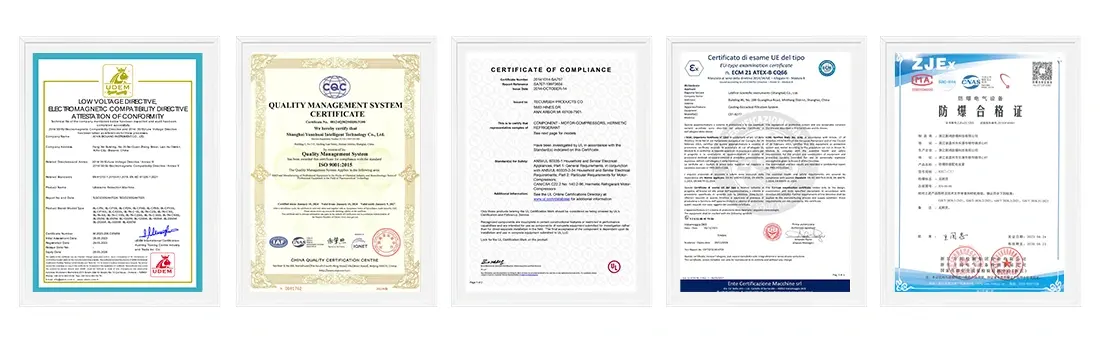
Every chemical glass reactor holds CE, ISO, UL, SGS, ATEX, IEC, GMP, and FDA approvals. Before shipment, each unit passes three mandatory tests:
1. Vacuum Holding Test — evacuated to < 0.098 MPa, held for 12–24 hours with no measurable pressure rise
2. Hydrostatic Jacket Pressure Test — jacket pressurized to 0.05–0.1 MPa, checked for leaks at all joints
3. Agitator Run-out Check — confirmed ≤ 2 mm at maximum operating speed Polariscope inspection on every vessel confirms full annealing and absence of residual internal stress. Test reports ship with every order.
Services & After-Sales Support
|
Service
|
Detail
|
|
Warranty
|
1-year full coverage; lifetime spare-parts availability
|
|
Shipping
|
Sea, rail, and air freight; export crating included
|
|
Customization
|
OEM/ODM: vessels, columns, funnels, full production lines
|
|
FAT
|
Factory Acceptance Testing at Xi'an facility
|
|
Documentation
|
GMP/FDA compliance pack, test reports, inspection certificates
|
|
Ongoing Support
|
Remote diagnostics + on-site service available in major regions
|
Why Choose Bioland?
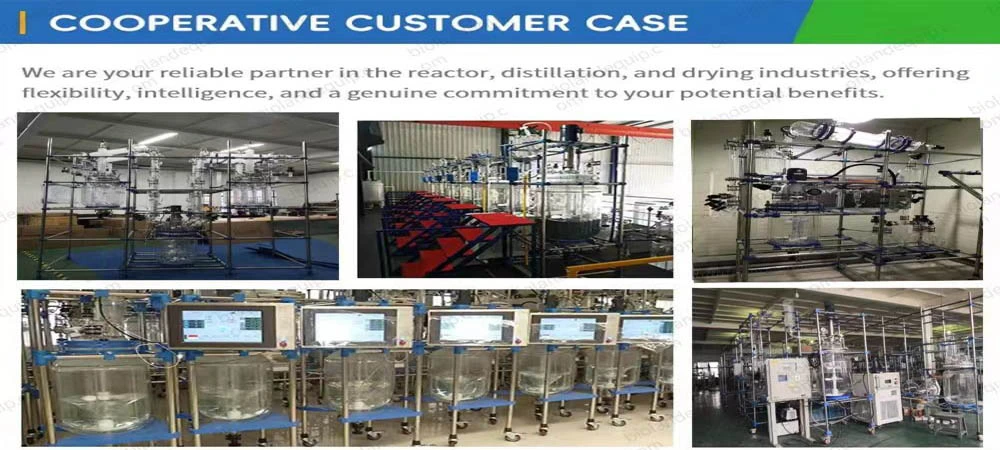
· 15+ years, 3,000+ reactors delivered across pharmaceutical, petrochemical, and university research facilities in over 40 countries
· In-house R&D and glass fabrication — no third-party subcontracting for vessel bodies, so tolerances and lead times are under our direct control
· Dedicated order engineer sends photo/video progress updates weekly; Factory Acceptance Testing available at our Xi'an facility
OEM/ODM capability — custom vessel geometry, nozzle layouts, full production-line glass trains, and white-label documentation all supported
FAQ
Q: What sizes do you have? What is your minimum order quantity?
A: Typical volumes are 1 L (laboratory) to 200 L (pilot scale). Standard setups are fine for single units. OEM runs usually begin at 5 units. Custom quantities and nozzle arrangements are available on specific quotations.
Q: What is the ramp rate for safe jacket temperature?
A: Ramp rate ≤ 5°C/min. Borosilicate 3.3 is resistant to ΔT up to ~120 K. Rapid insertion of hot oil into a cold jacket results in concentration of stress at ground-joint welds and risk of fracture.
Q: Can I do steam heating through jacket?
A: No. The jacket is specified for fluid circulation at 0.5 bar only. The jacket will burst because the steam pressure is higher than its pressure rating. Instead, use a hot-oil circulator.
Q: Is the reactor compatible with HF or concentrated NaOH?
A: Neither is compatible. HF attacks the silica network immediately. Concentrated NaOH above 100°C causes progressive glass etching, thinning the wall over extended use.
Q: How do I resolve vacuum leakage after extended operation?
A: Inspect the PTFE dynamic O-rings at the stirrer bearing; replace if worn. Re-apply high-vacuum grease to all static ground joints and tighten clamps uniformly in a cross-pattern to avoid joint distortion.
Q: How should I clean solidified material from the vessel interior?
A: Never use mechanical scrapers — surface scratches reduce pressure resistance. Use a compatible solvent for clean-in-place (CIP) dissolution. For stubborn deposits, an ultrasonic probe inserted into a solvent-filled vessel is effective without contacting the glass wall directly.
Contact Us
If you want to get information about the chemical glass reactor, please contact us at info@biolandequip.com.