How to Improve Yield Using Borosilicate Glass Reactor
Jul 14, 2026
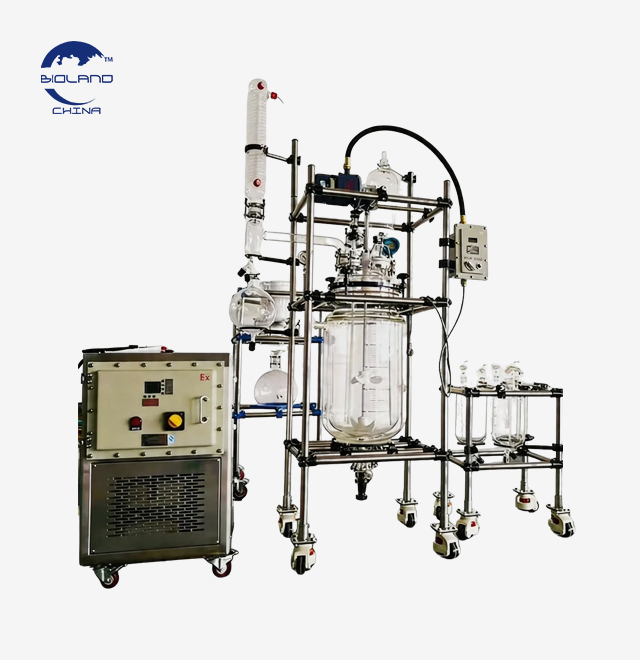
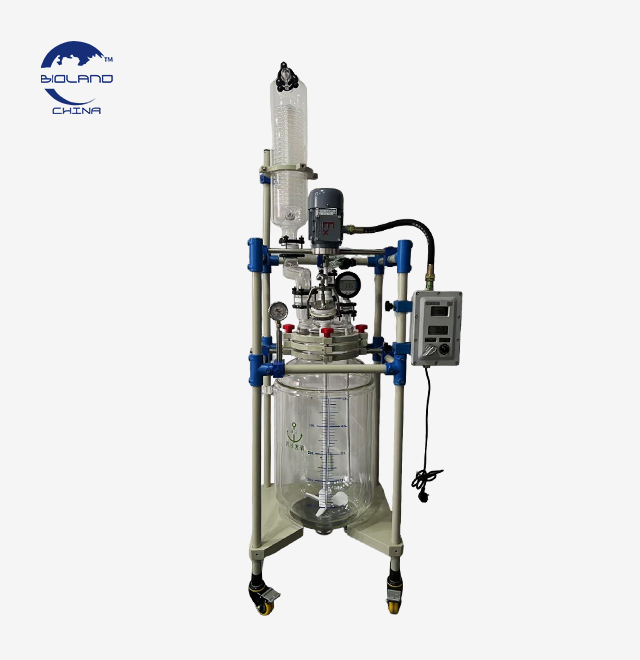
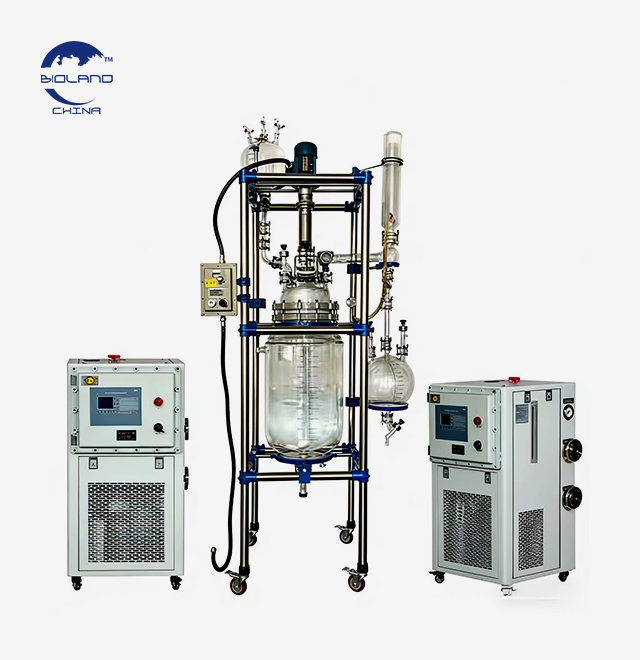
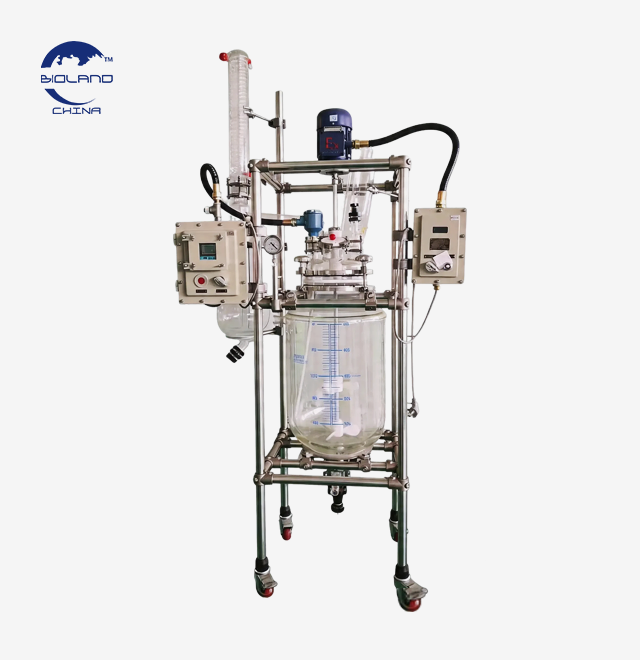
Reaction yield rarely goes down because of one clear mistake. Instead, it usually goes down slowly over time due to changes in temperature, uneven mixing, or contamination that isn't seen until a lot fails quality control. These hidden yield losses can be fixed directly by a borosilicate glass reactor. Its clear body, chemically inert surface, and accurate dual-jacket temperature control let operators see and fix problems as they happen, rather than finding them after the fact. Bioland Instrument's borosilicate glass reactor systems are made with GG17 glass, have wide temperature and pressure ranges, and can be fully customized. This gives process engineers a tool that is designed to protect yield over multiple production runs. This piece talks about what causes output loss, how a borosilicate glass reactor can fix each problem, and how to keep the performance stable over time.
Key Factors That Affect Reaction Yield in Chemical Processing
Before you try to increase yield, it's helpful to know where it goes missing. This is because most losses are caused by a few recurring process variables, not by random chance. A borosilicate glass reactor is often used because it lets these variables be seen directly instead of being hidden inside a metal vessel that is hard to see through. This lets operators step in before a batch goes off track.
Temperature Fluctuations and Their Impact on Conversion Rates
Even small changes from the target temperature can change the reaction selectivity, making side products more likely than the desired output and quietly lowering the yield that can be used. Vessels that don't have tight jacket control tend to overshoot or lag when they are heated and cooled. This instability gets worse in multi-step syntheses where each step depends on the last one running within a small window. When there is a delay in cooling, the local temperature can rise above the point where a competing side reaction becomes thermodynamically favored. By the time a bulk sample confirms the problem, the part of the batch that was affected has already been lost.
Inconsistent Mixing and Incomplete Reactant Contact
If you don't mix the materials well, you might end up with spots of unreacted material or concentration gradients in certain areas. This is especially likely to happen in fluid or multi-phase systems, and this lack of touch directly limits the possible yield a batch can reach. Most of the time, this problem is caused by a stirrer's geometry not being right for the process, not by broken equipment. Reactions with immiscible liquids or suspended solids are especially sensitive because reactants can get separated at the vessel walls or bottom if the shear or blade positioning isn't right. This problem is often not found until conversion data across several batches shows a persistent shortfall.
Material Contamination From Reactor Walls
Metal reactors can add small amounts of ions to sensitive syntheses, which can speed up unwanted side reactions or break down active intermediates. This is especially a problem when strict purity standards are needed to make pharmaceutical and biologically active compounds. One main reason a borosilicate glass reactor is chosen over stainless steel ones for high-purity synthesis is this risk of contamination. Repeatedly using chelating or acidic reagents can also etch metal surfaces, releasing more trace ions over the equipment's useful life. This means that yield loss due to contamination often gets worse with vessel age instead of staying the same.
Poor Process Visibility and Delayed Corrective Action
When workers can't see changes in color, the formation of precipitates, or the separation of phases as they happen, they can't make the necessary changes in time to keep yields from dropping. With opaque vessels, it's hard to know what will happen with each batch. But with clear systems, technicians can spot deviations as soon as they happen, instead of waiting until lab tests confirm a problem.
How Borosilicate Glass Reactors Enhance Process Stability
Once you understand the main reasons for yield loss, it's easier to see why a borosilicate glass reactor always works better than opaque alternatives in biotechnology, chemicals, and pharmaceuticals. Full clarity, chemical inertness, and temperature consistency all work together to keep each step of a process stable, rather than fixing problems after the fact.
Real-Time Visual Monitoring for Faster Process Adjustments
A borosilicate glass reactor is completely clear, so techs can see color changes, the formation of precipitates, and the separation of phases as they happen. This lets them make instant changes to the temperature, the rate of addition, or the speed of stirring. This real-time feedback loop makes it easier to repeat between batches and helps machines fix problems more quickly when they happen. Operators don't have to rely on only frequent sampling and offline analysis. They can also connect a visual cue to a process parameter in real time, which shortens the time it takes to find a problem and fix it.
Chemical Inertness That Protects Product Purity
Strong acids, bases, and harsh organic solvents can't break down GG17 borosilicate glass. It also doesn't release any metal ions into the reaction mass, which directly protects yield in high-purity synthesis, like making pharmaceutical intermediates and biologically active chemicals. Because it is inert, it gets rid of a type of contamination-related yield loss that metal vessels can't fully get rid of.
Consistent Thermal Behavior Across Repeated Batches
Batch-to-batch yield stays more stable in a borosilicate glass reactor than in vessels that are more likely to break down due to heat over hundreds of heating and cooling cycles. This stability is especially important for companies that have to keep making things all year long, because even small changes in performance add up to big losses over the course of a year. Because GG17 glass has a low rate of thermal expansion, the tank returns to the same size range after each cycle. This keeps the seal from becoming misaligned over time, which can happen in equipment that is subjected to repeated thermal stress.
A biopharmaceutical company in South America was losing yield because the levels of dissolved oxygen were not stable and the fermentation cycles were too long. Their old equipment made it easy for oxidation-sensitive intermediates to get contaminated.
Bioland Instrument designed a 50L double-layer borosilicate glass reactor with a new agitator that increased the efficiency of dissolved oxygen by about 30%, shortened the fermentation cycle time, and kept the sterile, oxygen-free environment that their chiral intermediate synthesis needed safe.
Technicians could see changes in color and residue throughout fermentation because the tank was clear. They were able to spot problems early on and make changes to the conditions before they affected the quality of the end product or the regularity of the batch.
Optimizing Temperature, Mixing, and Process Parameters for Higher Yield
Stability by itself doesn't mean you'll get the highest output; you still need to actively optimize the process parameters. A borosilicate glass reactor gives engineers the control range and process view they need to fine-tune temperature, pressure, and stirring without having to switch equipment between steps.
Dual-Jacket Temperature Control for Reaction Selectivity
A borosilicate glass reactor with two jackets can usually handle temperatures ranging from -80°C for low-temperature condensation to 300°C for high-temperature synthesis. This lets the selectivity of each reaction stage be precisely controlled. Fine-tuning the temperature within this range can often move the product distribution in a way that leads to the intended output, especially in processes that give off heat or have more than one step. To get the best output, operators often use controlled temperature changes to find the small window where conversion is highest without causing unwanted breakdown. This can only be done when the jacket reaction is quick and reliable.
Vacuum-Assisted Distillation to Improve Recovery Rates
When used with the right vacuum pump, a borosilicate glass reactor can reach a pressure of about -0.095 MPa. This makes evaporation and reflux more efficient during the distillation or solvent recovery stages. Better recovery at this step directly raises the overall process yield, especially in syntheses that need to remove the solvent or concentrate the product before isolating it. A deeper vacuum also lets distillation happen at lower bulk temperatures. This keeps heat-sensitive intermediates from breaking down during the step that is supposed to focus and clean them.
Agitator Design and Its Effect on Mass Transfer
When you combine spark-free motors with agitators that are the right shape for the job, you can improve mass transfer and lower localized concentration gradients. This is often the single biggest thing that can be done to increase theoretical yield in reactions where mixing is limited without changing the chemistry at all. With an adjustable stirring speed, operators can also change the shear intensity to match the material's sensitivity. For example, they can use vigorous mixing during the bulk reaction stages and gentler agitation during crystallization or product isolation, where too much shear can damage the crystal structure.
The European company that works with valuable metals needed to increase the amount of solvent extraction and processing it did. However, the equipment they already had was too small and not flexible enough to meet their needs, which made it harder to build a new production line with better flow and separation efficiency.
Bioland Instrument delivered four customized 200L explosion-proof double-jacketed borosilicate glass reactors along with nine 50L explosion-proof rotary evaporators, engineered for highly corrosive, high-risk processing conditions and built to ExdⅡBT4 explosion-proof standards.
Because modular production cut delivery time by about 40%, the client could start doing business 15 days early. The annual capacity went up by about 30%, and the equipment ran for more than 1,000 hours without breaking down. This directly helped the sustained recovery yield.
Best Practices for Maintaining Consistent Reactor Performance
If you don't take care of your equipment regularly, the yield gains you get from choosing the right equipment can disappear over time. For example, a borosilicate glass reactor needs specific maintenance routines to keep its seals, temperature systems, and glass surfaces working as well as they did on the day it was installed.
Routine Cleaning and Seal Inspection Protocols
Residue buildup on glass surfaces or wear in PTFE and mechanical seals can slowly lower reaction efficiency and increase the risk of leaks. To protect both yield consistency and long-term equipment lifespan, cleaning and inspecting seals after every batch cycle is recommended. This check can be done much faster than with fixed-body designs because the reactor frames can be lifted and rotated. Even small amounts of residue left on the glass wall between batches can act as starting points for unwanted precipitation in later runs. To make this step consistent across shifts and operators, it's better to write down a cleaning checklist instead of relying only on visual judgment.
Calibration of Temperature and Vacuum Systems
Over months of use, jacket temperature monitors and pressure gauges can move a little, and instruments that aren't adjusted can quietly move a borosilicate glass reactor out of its best working window without showing any signs. Every production run has accurate yield-critical parameters because they are calibrated against known reference standards on a regular basis. Facilities with more than one reactor should also compare readings from time to time. This is because a single instrument that isn't calibrated correctly can cause batch-to-batch differences that are easy to mistake for a problem with the chemistry rather than the equipment.
Choosing a Supplier With Reliable After-Sales Support
The people who work for Bioland Instrument are in charge of keeping an eye on production every week through photos or videos. They also provide detailed inspection footage before shipments and offer Factory Acceptance Testing on-site once the equipment is ready. This makes sure that buyers get a borosilicate glass reactor that is built and checked to the specifications that protects their process yield from day one.
Certifications and Documentation That Support Long-Term Reliability
Buyers of pharmaceutical and food-grade equipment that is ISO and CE certified and meets GMP and FDA standards can get the paperwork they need for regulatory audits. This also shows that the manufacturing process is disciplined enough to give every unit produced the same yield-critical performance.
Conclusion
Controlling temperature stability, mixing efficiency, contamination risk, and process visibility are the most important things that can be done to increase yield. A borosilicate glass reactor is designed to do all of these things. With more than 15 years of manufacturing experience, CE/ISO/GMP/FDA compliance, and proven results in pharmaceutical and chemical applications, Bioland Instrument's equipment is more of a long-term investment that protects yields than a one-time purchase. It is backed by regular maintenance and reliable service after the sale.
FAQ
Q1: How does a borosilicate glass reactor make the yield better?
It lets you see what's going on in real time, keep the temperature just right, and process without contamination, all of which lower common reasons for yield loss.
Q2: In what temperature range can better yield synthesis happen?
Most double-jacketed units can work in temperatures ranging from -80°C to 300°C, which lets you fine-tune the reaction selectivity.
Q3: Does the glass stand up to chemicals that break it down?
Yes, GG17 borosilicate glass can stand up to strong acids, bases, and liquids without letting metal ions pass through.
Q4: How often should you check the seals and the calibration?
After each batch run, seals should be checked, and temperature and pressure devices should be calibrated on a regular basis.
Q5: Can the reactor be changed so that it can't explode?
Yes, Bioland Instrument offers ExdⅡBT4-rated explosion-proof configurations with PLC automation.
Protect Your Yield With a Custom Borosilicate Glass Reactor From Bioland Instrument
If your production line is losing yield, Bioland Instrument has been designing reaction, distillation, extraction, and filtration equipment for pharmaceutical, chemical, and food-grade manufacturers in Europe and Southeast Asia for over 15 years. Their work is backed by CE, ISO, GMP, and FDA compliance. Our research and development team can make a standard or fully personalized borosilicate glass reactor that is explosion-proof and PLC-controlled based on the needs of your process. We can handle OEM/ODM orders, track production weekly with photo and video updates, and do Factory Acceptance Testing right here in the factory. Send us an email at info@biolandequip.com to talk about your process and get a quote right away.
References
1. Levenspiel, O. (1999). Chemical Reaction Engineering (3rd ed.). John Wiley & Sons.
2. Perry, R. H., & Green, D. W. (2019). Perry's Chemical Engineers' Handbook (9th ed.). McGraw-Hill Education.
3. Paul, E. L., Atiemo-Obeng, V. A., & Kresta, S. M. (2004). Handbook of Industrial Mixing: Science and Practice. Wiley-Interscience.
4. Nauman, E. B. (2008). Chemical Reactor Design, Optimization, and Scaleup (2nd ed.). John Wiley & Sons.
5. Sinnott, R. K., & Towler, G. (2019). Chemical Engineering Design (6th ed.). Butterworth-Heinemann.
6. Fogler, H. S. (2016). Elements of Chemical Reaction Engineering (5th ed.). Prentice Hall.
The reactor is beautifully mirror-polished and fully complies with GMP requirements for the pharmaceutical industry. The performance is excellent! Overall, we are very satisfied! We also provided with some feedback on our process improvements, which we hope will be helpful.
2024-04-09
Laboratory
Excellent and professional service. Always reply our questions very fast. All reactors and chiller we received are good too.
2024-02-15
Research Institute
Quality is beyond our expectation actually. After we got the extraction equipment and started using it, the performance was beyond our expectation. Very easy to use and very efficient to run. Service always respond us very quickly. Was also very helpful to help us. Thanks Bioland team. Very happy to work with you.
2023-11-20
Biotech Company
We are happy about the new purchase as always. Equipment and services are both good.
2023-08-05
Instrument Lab
This is the second order with Bioland instrument and everything is good as the first dateText.
2023-05-12
Global Trading Partner
Bioland instrument team is very helpful and professional. The sales helped us select the right equipment for our application, and their logistics people handled the transportation and customs declaration for our shipment. All that saved us a lot of work.