Glass Reactor System vs Stainless Steel: Which Is Better?
Jul 6, 2026
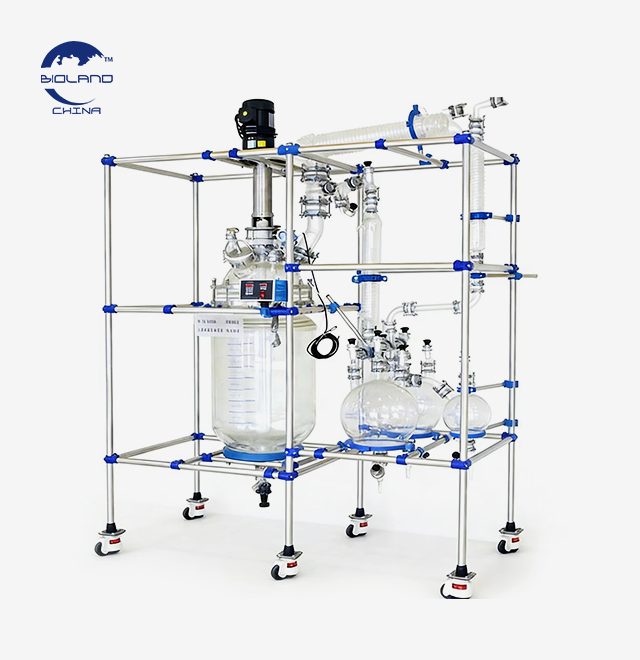
One of the most important decisions a process engineer will have to make is between a glass reactor system and a stainless steel tank. This is because the choice affects how visible the process is, how well it works with chemicals, and how much it costs to make in the long run. Bioland Instrument has been working on glass reactor systems for more than 15 years. These systems combine the sturdiness of borosilicate with full-process viewing, making them a clear option to metal tanks for pharmaceutical, chemical, and food makers. This piece compares the two materials in terms of how well they fight rust, how well they control temperature, how safe they are, and how they can be used in industry. It uses real customer operations to show why so many production teams are switching to glass.
Material Properties and Chemical Resistance: Glass vs Stainless Steel Reactors
GG17 Borosilicate Composition and Corrosion Resistance in Glass Reactor Systems
Strong acids, strong alkalis, and harsh organic solvents don't damage GG17 (3.3) high borosilicate glass reactor systems as much as standard 316L stainless steel does. Every tank made by Bioland Instrument is made from this grade of glass. This gives customers a corrosion-resistant reaction environment that keeps its chemical integrity even after years of being exposed to harsh acids used in fine chemical and pharmaceutical intermediate synthesis. Because the glass surface doesn't respond with the process chemistry, stability from batch to batch gets better, and internal rust doesn't cause as much unexpected downtime.
Metal Ion Contamination Risks in Stainless Steel Reactors for Sensitive Synthesis
Even though stainless steel is very strong physically, it can release small amounts of metal ions into reaction media over time. This is especially true when it comes into contact with chloride-containing or strongly acidic solutions. This risk of contamination is too high for biologically active compounds, chiral intermediates, and high-purity synthesis. With a glass reactor system, that variable is taken away completely because the inert glass surface doesn't interact with the process fluid. This keeps the purity of the product high from batch to batch. This is especially important for companies that have to show impurity profiles for regulatory purposes, since even small amounts of metal contamination can lead to expensive rework.
Chemical Compatibility for Pharmaceutical Intermediate and Biopharmaceutical Applications
For making pharmaceutical intermediates, biologically active compounds, and drug substances, you need tools that won't change the chemistry inside them. It is designed so that Bioland Instrument's glass reactor system can work with these reagents. It can support oxidation-sensitive reactions while being protected by inert gas and keeping a chemically neutral internal surface, which stainless steel can't do for the same range of reagents. This makes it a good choice for chiral intermediate synthesis, since even small surface interactions can ruin the purity of the stereochemistry and lower the yield further down the line.
Long-Term Material Stability and Equipment Lifespan Comparison
When exposed to chemicals and changing temperatures over and over, borosilicate glass doesn't pit, rust, or wear down like metal surfaces can. With PTFE and mechanical double sealing, a well-kept glass reactor system keeps its shape and surface inertness for many years of production use. This means that manufacturers will have to replace it less often and know what their long-term capital costs will be. Over a production period of several years, this steadiness often makes up for the higher initial cost that some teams associate with glass equipment.
Heat Transfer Efficiency and Temperature Control Performance Comparison
Double-Jacketed Design for Wide Temperature Range Control
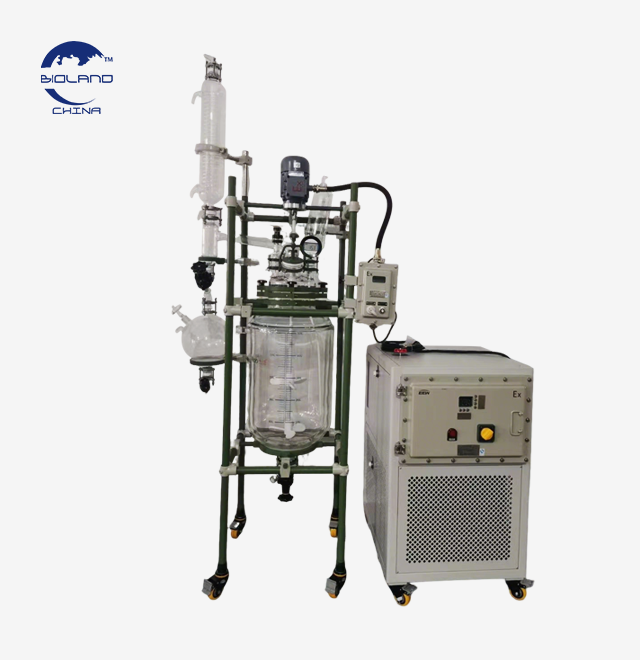
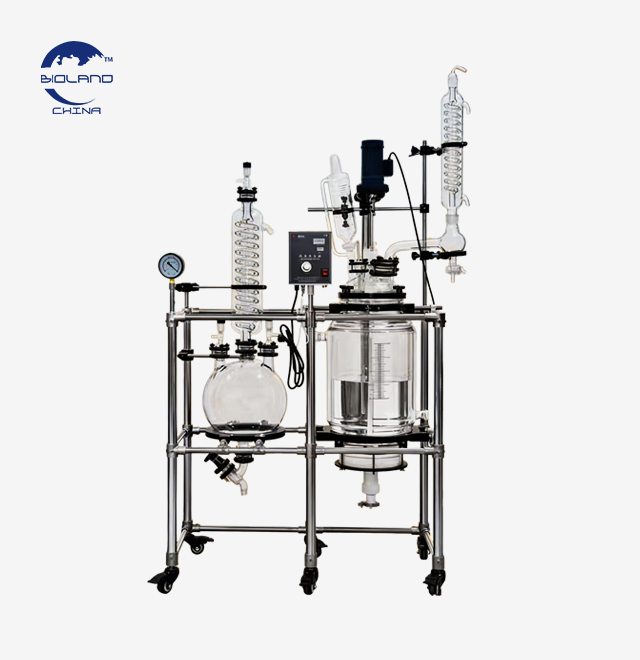
The double-layer jacketed glass reactor system from Bioland Instrument moves cooling or heating media through an outer interlayer. The reaction mass is held in the inner vessel, which allows for controlled operation from -80°C (freezing point) to 300°C (high temperature). This broad temperature range lets a single piece of equipment do everything from low-temperature crystallization to reflux-driven synthesis, so there's no need for multiple separate reactors. The jacket design also saves energy because it focuses heat transfer around the vessel wall instead of depending only on heating sources outside the vessel.
Vacuum Distillation and Reflux Efficiency in Glass Reactor Systems
A vacuum system that can reach up to -0.095 MPa works much better with a glass reactor system to improve evaporation and reflux performance during the distillation and concentration steps. The clear container lets workers see the vaporization and condensate return happen in real time, which isn't possible with stainless steel columns without adding extra sensor equipment. This lets them make precise changes to the heating rate and vacuum level.
PT100 Sensor Precision and PLC Automation for Repeatable Process Control
The glass reactor system has high-precision PT100 temperature probes that measure temperatures quickly and with little mistake. For consistent group results, extra PLC-controlled automation can control the speed of stirring, the temperature ramp, and the vacuum level. This level of computerized control helps production teams switch from manual processes that depend on the user to standardized workflows that can be used for GMP pilot-scale validation. This eliminates the variation that can happen when settings are changed by hand from shift to shift.
Case Study: South American Biopharmaceutical Fermentation Optimization
A South American biopharmaceutical company had trouble with not enough dissolved oxygen efficiency, long fermentation cycles, and process parameters that weren't always consistent, all of which made the product less pure. Bioland Instrument made a custom 50L double-layer glass reactor system with an improved stirring paddle design. This increased the efficiency of dissolved oxygen by 30%, shortened the fermentation cycle, and provided the clean, precisely controlled temperature environment needed for making pharmaceutical intermediates.
Operational Safety, Visibility, and Contamination Risk Analysis
Real-Time Visual Monitoring of Reaction Dynamics Without Black-Box Operation
One of the defining advantages of a glass reactor system is full visual access to color change, precipitate formation, and phase separation as they happen. This visibility removes the "black box" uncertainty inherent to stainless steel tanks, letting engineers verify reaction mechanism, catch abnormal behavior early, and improve experimental repeatability across scale-up stages from laboratory to pilot production. Operators can also confirm mixing homogeneity visually, reducing the need for additional inline sensors during process development.
Explosion-Proof Configurations and Inert Gas Protection for Hazardous Processes
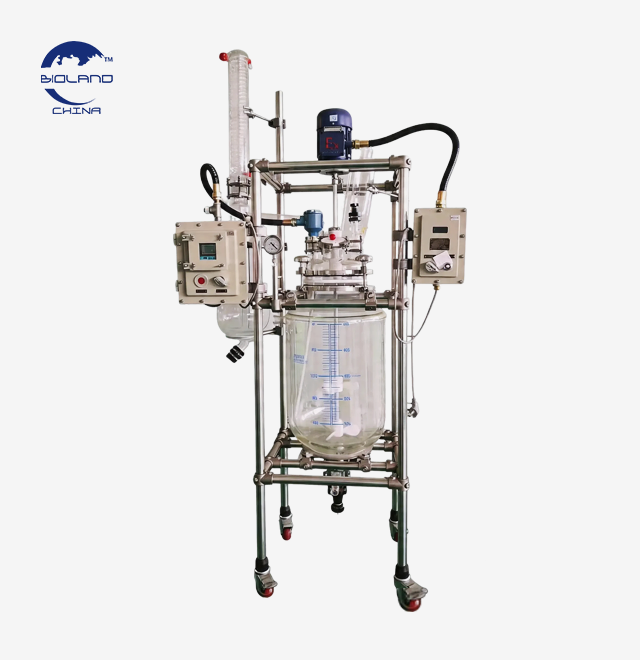
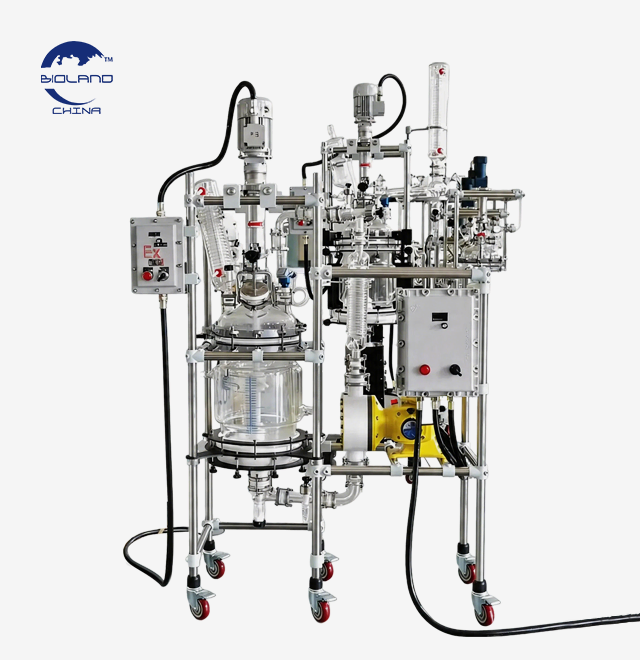
For flammable solvents and oxidation-sensitive chemistries, Bioland Instrument offers fully explosion-proof glass reactor system configurations meeting ExdIIBT4 standards, along with sealed inert gas protection for oxygen-free synthesis. Variable-frequency drive motors operate without sparking and with minimal noise, adding another safety layer for continuous operation in hazardous production environments where stainless steel alternatives often require more extensive auxiliary safety infrastructure.
Sealing Systems and Low-Maintenance Operation for Continuous Production
A PTFE seal combined with a mechanical seal gives the glass reactor system dual-layer sealing integrity, maintaining high vacuum degree and preventing solvent leakage during extended runs. The lifting and rotating vessel structure simplifies feeding, discharging, and cleaning between batches, supporting a lower-maintenance operational rhythm that keeps hazardous or high-purity production lines running with minimal downtime.
Case Study: European Precious Metal Solvent Extraction and Refining
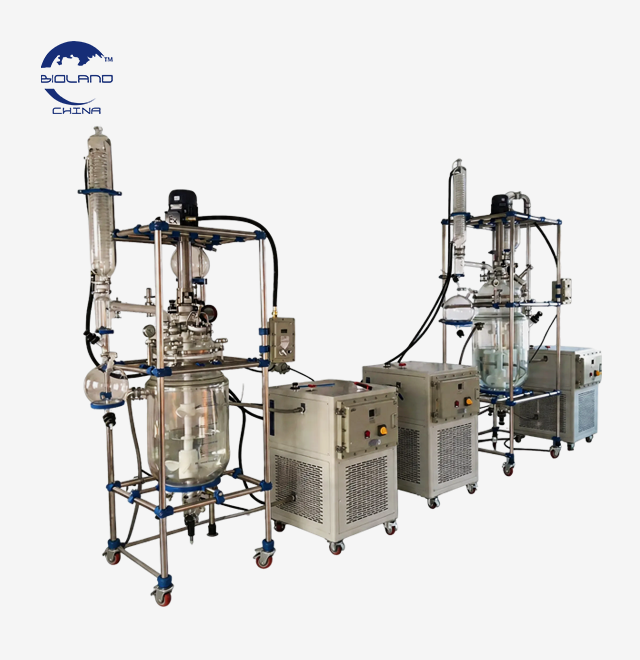
A European precious metal processor needed to scale up solvent extraction and refining but faced limited processing volume, low separation efficiency, and insufficient customization from prior suppliers. Bioland Instrument delivered four customized 200L explosion-proof double-layer glass reactor system units alongside nine 50L explosion-proof rotary evaporators, shortening delivery through modular production by 40 percent, helping the client start production 15 days early, and achieving over 1,000 hours of fault-free operation with a 30 percent capacity increase.
Industrial Applications and Selection Criteria for Different Process Requirements
Pharmaceutical and Biopharmaceutical Process Scale-Up from Lab to Pilot Plant
Drug intermediate synthesis, peptide synthesis, and active pharmaceutical ingredient development all benefit from a glass reactor system that carries identical chemical behavior from small laboratory trials through pilot-scale validation. Because the borosilicate surface and sealing configuration remain consistent across vessel sizes, process parameters established at bench scale transfer predictably to larger production runs, shortening GMP pilot trial timelines for pharmaceutical manufacturers. This predictability reduces the number of re-optimization cycles typically required when moving between vessel materials.
Chemical Intermediate, New Material, and Food Industry Applications
Beyond pharmaceuticals, a glass reactor system serves fine chemical synthesis, new material development, essential oil processing, and food-grade concentration or fermentation work. Industries handling corrosive intermediates, temperature-sensitive formulations, or ingredients requiring visual quality checks all gain from the same chemical inertness and process transparency that make glass the preferred choice for regulated pharmaceutical manufacturing.
Standard flange openings, such as a five-neck reactor lid, let a glass reactor system connect directly to condensers, dropping funnels, temperature probes, and vacuum pumps. This modularity means a single vessel can be reconfigured for distillation, extraction, catalytic reaction, or crystallization, giving manufacturers a flexible platform instead of committing capital to several single-purpose stainless steel units.
OEM/ODM Customization and Full-Solution Manufacturing Support
Bioland Instrument supports OEM and ODM orders, adjusting vessel size, shape, structural configuration, and integrated systems such as automated PLC control, ultrasonic-assisted crystallization, or tail gas absorption to match specific process requirements. A dedicated specialist tracks production weekly with photos or video updates, and clients may arrange a Factory Acceptance Test before shipment, reinforcing a full-solution manufacturing relationship rather than a one-time equipment sale.
Conclusion
A glass reactor system outperforms stainless steel wherever chemical purity, visual process control, and flexible configuration matter most. Bioland Instrument's borosilicate vessels deliver corrosion resistance, wide-range temperature control, and explosion-proof safety options validated across pharmaceutical, chemical, and precious metal production lines. For manufacturers scaling from laboratory synthesis to GMP pilot production, glass offers a transparent, contamination-free, and highly customizable alternative that stainless steel cannot fully match.
FAQs
1. Is a glass reactor system suitable for corrosive chemical processes?
Yes. GG17 borosilicate glass resists strong acids, alkalis, and organic solvents, making it ideal for corrosive and high-purity synthesis work.
2. What temperature range can a Bioland Instrument glass reactor system handle?
The double-jacketed design supports temperatures from -80°C to 300°C, covering cryogenic crystallization through high-temperature reflux reactions.
3. Can the glass reactor system be customized for hazardous production environments?
Yes. Explosion-proof configurations meeting ExdIIBT4 standards and inert gas protection are available for flammable or oxidation-sensitive processes.
4. Does glass contaminate sensitive pharmaceutical formulations the way stainless steel can?
No. Glass surfaces are chemically inert and do not leach metal ions, protecting purity in pharmaceutical and biopharmaceutical synthesis.
5. What industries commonly use Bioland Instrument's glass reactor systems?
Pharmaceuticals, fine chemicals, precious metal processing, food production, and new material development all rely on these systems for visible, controlled reactions.
Partner With Bioland Instrument for Your Next Process Solution
Ready to move beyond the limitations of stainless steel? Bioland Instrument is a professional manufacturer and solution provider with more than 15 years of experience designing distillation, reaction, extraction, filtration, and crystallization equipment for global pharmaceutical, chemical, and food producers. Our CE- and ISO-certified glass reactor systems are fully customizable through OEM/ODM services, backed by an experienced engineering team, weekly production tracking, and a one-year quality warranty with lifetime maintenance support.
Whether you are scaling a pilot batch or building a full production line, our team can design a solution around your exact process requirements. Contact us today at info@biolandequip.com to discuss your glass reactor system project and discover how Bioland Instrument can become your trusted process-solution partner.
References
1. Perry, R. H., & Green, D. W. Perry's Chemical Engineers' Handbook.
2. Doraiswamy, L. K. Organic Synthesis Engineering.
3. Levenspiel, O. Chemical Reaction Engineering.
4. McCabe, W. L., Smith, J. C., & Harriott, P. Unit Operations of Chemical Engineering.
5. Sinnott, R. K. Chemical Engineering Design.
6. Nauman, E. B. Chemical Reactor Design, Optimization, and Scaleup.
The reactor is beautifully mirror-polished and fully complies with GMP requirements for the pharmaceutical industry. The performance is excellent! Overall, we are very satisfied! We also provided with some feedback on our process improvements, which we hope will be helpful.
2024-04-09
Laboratory
Excellent and professional service. Always reply our questions very fast. All reactors and chiller we received are good too.
2024-02-15
Research Institute
Quality is beyond our expectation actually. After we got the extraction equipment and started using it, the performance was beyond our expectation. Very easy to use and very efficient to run. Service always respond us very quickly. Was also very helpful to help us. Thanks Bioland team. Very happy to work with you.
2023-11-20
Biotech Company
We are happy about the new purchase as always. Equipment and services are both good.
2023-08-05
Instrument Lab
This is the second order with Bioland instrument and everything is good as the first dateText.
2023-05-12
Global Trading Partner
Bioland instrument team is very helpful and professional. The sales helped us select the right equipment for our application, and their logistics people handled the transportation and customs declaration for our shipment. All that saved us a lot of work.