Which Filter Reactor Should You Choose? A Practical Comparison
Jul 6, 2026
If you don't choose the right filter reactor, a solid-phase synthesis, crystallization, or purification process will either slow down or work smoothly. When looking at aglass filter reactor, this guide discusses the most important structure and performance differences. It uses real-life production examples to show how the right design can solve problems with filtering efficiency, contamination, and scaling up. Bioland Instrument makes these systems so that the reaction, crystallization, and filter steps can all happen in a single closed tank. This gives pharmaceutical and fine chemistry companies an easy, clean option to using multiple pieces of equipment. The following comparison lists different types of vessels, their performance, structural differences, and how to make a choice so that you can find the best configuration for your needs.
Overview of Different Types of Glass Filter Reactors and Their Functions
What Is a Glass Filter Reactor and Why Manufacturers Choose It
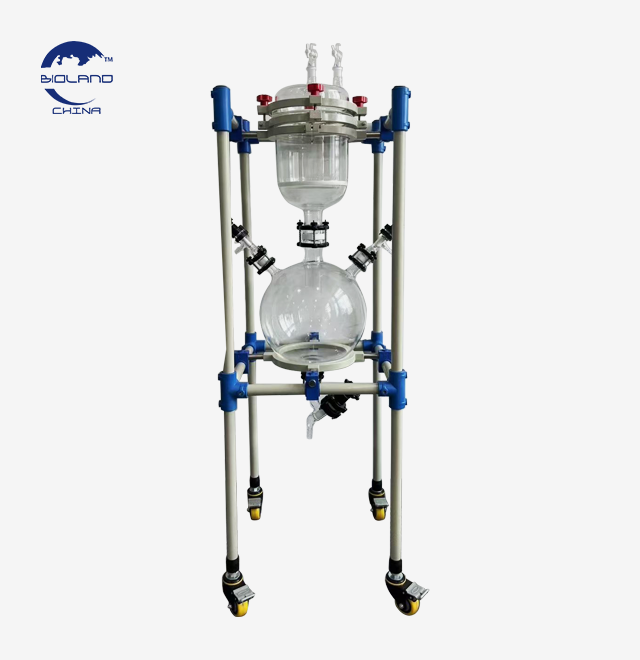
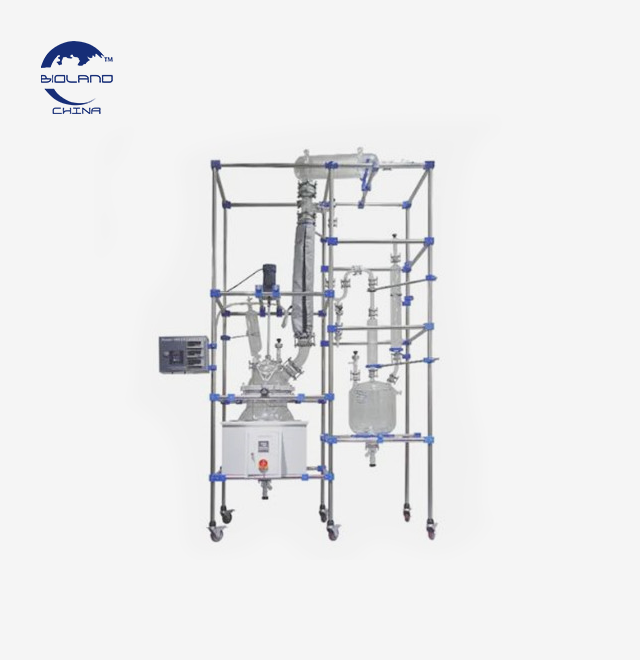
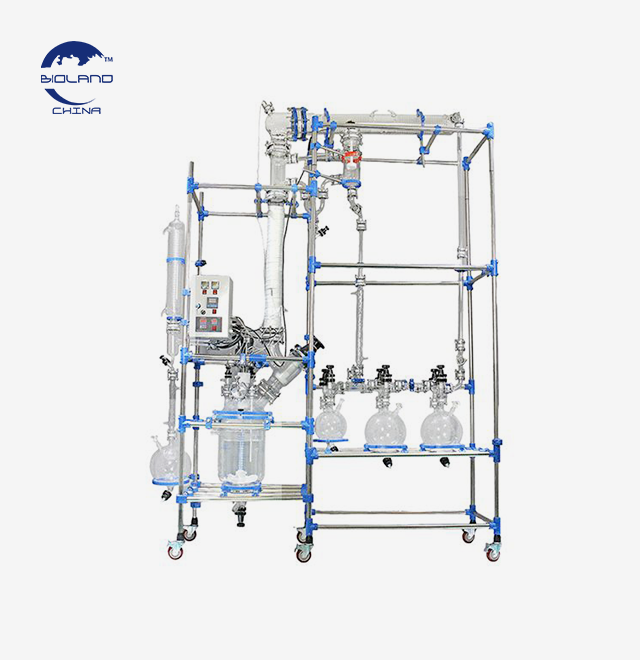
A glass filter reactor is made up of a high borosilicate glass tank and a combined PTFE filtration device. This creates a closed system where reaction, crystallization, and solid-liquid separation can all happen. Manufacturers choose this setup because it gets rid of the need to move materials between separate reaction and filtration equipment. This cuts down on product loss, the risk of cross-contamination, and processing time in lines that make medicines, fine chemicals, and new materials. The working principle depends on physical barriers, like filter cloth or sintered membranes, that stop solid particles but let liquid pass. This makes it possible for operators to reliably separate clean crystals from used fluid in the same vessel.
Reaction, Crystallization, and Filtration Integrated in a Single Vessel
In a glass filter reactor, lowering the temperature through the jacket interlayer makes the target compound less soluble. This lets it crystallize directly in the vessel, and then the built-in filter separates the crystals from the mother liquor without having to move the batch to a different tank. This unified sequence is the main functional benefit that is driving its use in solid-phase synthesis, purification, and fine chemical separation around the world.
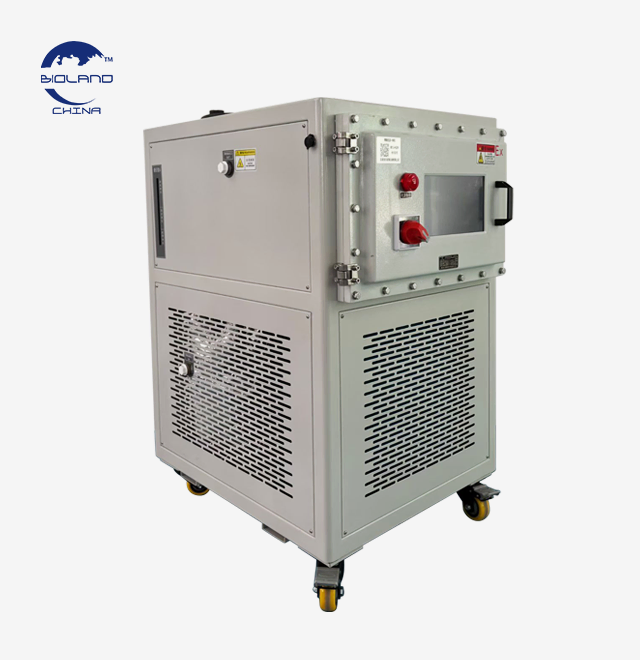
Bioland Instrument makes explosion-proofglass filter reactor units for high-pressure solid-phase synthesis. These units come in 20L, 30L, 50L, and 100L sizes and are built on a high-strength structure that can handle pressure. They also have a precise explosion-proof control system. This setup has been approved to safely handle difficult synthesis conditions. It can be used for research in the lab, pilot tests, making medicines, and organic synthesis where high-pressure reactions have strict safety requirements.
Peptide Synthesis and Antimicrobial Peptide Screening Configurations
Because glass offers strong chemical stability and mechanical strength along with fast reaction speed, a glass filter reactor is widely applied in large-scale solid-phase peptide synthesis, thymus peptide preparation, antimicrobial peptide screening, and peptide carrier material synthesis. These applications demand equipment that can maintain purity across repeated cycles, and the inert glass surface supports exactly that level of process reliability. The core components working together in this system include the filter element, a stirring and mixing unit for controlling crystal growth form, a heating and cooling system for solubility management, piping for material flow, and a PLC-based control system with touchscreen interface for simplified automated operation.
Key Performance Factors: Filtration Efficiency, Mixing, and Reaction Control
PTFE Filter Core Design and Large-Diameter High-Speed Filtration
Every Bioland Instrument glass filter reactor has a standard PTFE sintered filter core. Stainless steel or titanium filter media are available as options, and there are different filter cloth and membrane specifications. The large-diameter filtration design separates things quickly, which is most important when a production schedule needs to go from crystallization to a dry, clean solid product as soon as possible without sacrificing accuracy. During operation, filtration speed and pressure are closely watched, and the filter part can be maintained and cleaned on a regular basis to keep the separation performance consistent from batch to batch.
Programmable Stirring and Temperature Control for Reproducible Crystallization
Aglass filter reactorcan precisely control the shape and distribution of crystal growth thanks to its programmable stirring and wide temperature range of -20°C to 200°C. This level of customizable control allows for high repeatability between batches, which is important for manufacturers who need to keep particle size, cleanliness, and yield the same for every production run instead of having to make adjustments by hand.
Case Study: European Chiral API Intermediate Crystallization and Purification
A European biopharmaceutical company was working on a chiral API intermediate. They had to deal with problems like incomplete reaction conversion, low crystallization purity and yield, harsh acid and alkaline synthesis conditions, and the risk of cross-contamination from moving materials between different reaction and filtration equipment all the time.
Bioland Instrument made a special 100L glass filter reactor so that the reaction, crystals, and filtration could all happen in one tank. During the reaction stage, the catalytic step was protected by nitrogen and ran at 0–5°C. The clear tank allowed real-time color tracking to make sure the full conversion was happening.
During the crystallization stage, a coolant at -20°C moved through the jacket at a steady rate of 1-2°C per hour. This made crystals that were all the same size and shape, and it kept impurities from getting trapped. The system then went straight to the PTFE filter to separate the solids from the liquid, and the mother liquor was recovered so it could be used again.
In the end, the crystals were more than 99.5% pure, and the yield went up by 15%. This was done without adding any extra steps between the reaction and the filtering.
Case Study: Polish Precious Metal Catalyst Solid-Phase Synthesis and Recovery
A chemical manufacturer in Poland developing palladium and platinum catalysts struggled with low precious metal recovery rates, corrosive material attack on standard equipment, catalyst deactivation from high-temperature solid-phase reactions, and inefficient solid-liquid separation that raised cleaning and maintenance costs.
Bioland Instrument delivered a customized 50L glass filter reactor to create a closed loop between solid-phase reaction and filtration-based recovery. The reaction proceeded at 150°C, with the glass structure withstanding short-term high temperature without contributing to catalyst deactivation.
Once the reaction completed, the PTFE filter device separated solid catalyst directly, and the recovery rate of residual precious metal in the mother liquor reached above 90 percent, meaningfully reducing production cost per batch for the client.
Design Differences: Structure, Capacity, and Operational Compatibility
Vessel Capacity Options From 20L to 100L for Lab and Pilot Scale
A glass filter reactor is available across 20L, 30L, 50L, and 100L capacities, giving manufacturers a direct path from laboratory-scale trials to pilot-level validation without switching equipment platforms. Selecting the right capacity depends on batch size targets, filtration surface area requirements, and how closely a process needs to mirror eventual full-scale production conditions during development. Larger capacities also reduce the number of batches required to reach a given production volume, which can meaningfully shorten overall project timelines during pilot-to-commercial transitions.
Modular Compatibility With Stainless Steel and Titanium Filter Media
Beyond the standard PTFE sintered filter core, a glass filter reactor can be configured with stainless steel or titanium filter elements and different filter cloth or membrane specifications, allowing the same vessel to be adapted across a wide range of particle sizes and chemical compatibility requirements. This modular approach means one reactor platform can support several different product lines rather than requiring separate dedicated equipment.
Integration With High-and-Low Temperature Circulation Units
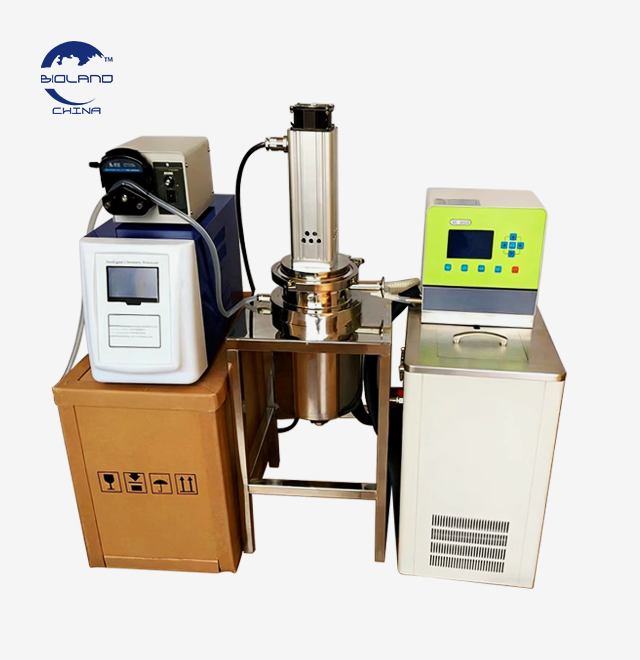
Pairing a glass filter reactor with a stainless steel high-and-low temperature circulation unit extends precise heating and cooling control across a wide operating range, supporting demanding chemical reaction solutions used in pharmaceutical research, organic synthesis, and pilot trial work. This combination gives engineers fine control over solubility-driven crystallization without needing separate chilling or heating equipment on the production floor, and it simplifies utility planning since a single circulation unit can service multiple reactor bodies across different production runs.
Quick-Release Filter Components for Simplified Cleaning Between Batches
A quick-release PTFE filtration device design allows the filter component of a glass filter reactor to be removed, cleaned, and reinstalled rapidly between batches, minimizing cross-contamination risk and reducing changeover downtime. This is particularly valuable in multi-product facilities where the same vessel may process different chemistries across consecutive production runs.
Application-Based Selection Criteria for Laboratory and Industrial Processes
Matching Reactor Configuration to Pharmaceutical Synthesis Requirements
For making pharmaceutical intermediates, cleaning antibiotics, and crystallizing chiral compounds, the most important things to look for in a glass filter reactor are its ability to protect against nitrogen, its ability to control low temperatures precisely, and its ability to filter accurately enough to produce high-purity crystals. For this kind of process, a fully jacketed design with customizable stirring and a PTFE filter core rated for pharmaceutical-grade separation is usually the best choice. Manufacturers should also make sure that the ability to recycle and recover mother liquor is in line with the overall production line's solvent recovery goals.
Selecting for Fine Chemical and Precious Metal Recovery Processes
For making fine chemicals, like dyes and fragrances, where crystal shape and size affect product quality, as well as recovering precious metal catalysts in harsh or high-temperature environments, you need a glass filter reactor that can handle strong chemicals and keep solids and liquids separating quickly and reliably. Depending on the type of corrosion, titanium or stainless steel filter media may be better than standard PTFE. The same crystallization-filtration combination works well in food-grade separation processes like sugar cleaning.
Capacity and Automation Considerations for GMP Pilot Scale-Up
When a project is moving toward GMP pilot-scale validation, it's important to look at the different capacity options, the PLC-based automation for reaction and filtration control, and the explosion-proof certification if the process uses flammable solvents or high pressure. If you scale the glass filter reactor properly at this stage, you won't have to pay a lot of money for re-validation when you move to full output volume.
OEM/ODM Customization and Full-Solution Support From Bioland Instrument
If you need reaction, filtration, crystallization, extraction, or separation equipment, Xi'an Bioland Instrument Co., Ltd. is the company for you. They have been in business for more than 15 years and are CE and ISO certified. The company accepts OEM and ODM orders and can customize the size, structure, and integrated systems like electric lifting, PLC automation, and configurations that combine distillation and crystallization. Production is tracked by a dedicated specialist every week, and a Factory Acceptance Test is available before shipment.
Conclusion
Choosing the rightglass filter reactor comes down to matching filtration efficiency, temperature range, capacity, and automation level to the specific chemistry involved. Whether purifying a chiral pharmaceutical intermediate or recovering precious metal catalysts, an integrated reaction-crystallization-filtration vessel reduces contamination risk and processing steps compared to separate equipment. Bioland Instrument's customizable platforms, validated through real production cases, give manufacturers a practical path from laboratory development through GMP pilot-scale production.
FAQs
1. What makes a glass filter reactor different from a standard glass reactor?
It integrates a PTFE filtration device directly into the vessel, allowing reaction, crystallization, and solid-liquid separation to happen without transferring material between separate equipment.
2. What temperature range does a Bioland Instrument glass filter reactor support?
The standard configuration operates from -20°C to 200°C, and pairing with a high-and-low temperature circulation unit extends precise control further.
3. Can the filter media be changed for different chemistries?
Yes. Beyond standard PTFE sintered cores, stainless steel or titanium filter elements and various filter cloth or membrane specifications are available.
4. Is a glass filter reactor suitable for high-pressure solid-phase synthesis?
Yes. Explosion-proof configurations across 20L to 100L capacities are built for high-pressure conditions common in solid-phase peptide synthesis and organic synthesis.
5. What industries commonly rely on this equipment?
Pharmaceuticals, fine chemicals, precious metal recovery, and new material development all use glass filter reactors for solid-phase synthesis and purification.
Talk to Bioland Instrument About Your Filter Reactor Project
If filtration efficiency, crystallization purity, or cross-contamination is slowing down your production line, Bioland Instrument can help. With over 15 years of experience designing reaction, filtration, and crystallization equipment for pharmaceutical, chemical, and food manufacturers worldwide, our CE- and ISO-certified glass filter reactors are fully customizable through OEM/ODM services, supported by weekly production tracking and a one-year warranty with lifetime maintenance. From chiral API purification to precious metal recovery, our engineering team can configure a solution around your exact process. Reach out today at info@biolandequip.com and let Bioland Instrument help you solve your next filtration or crystallization challenge.
References
1. Mullin, J. W. Crystallization.
2. Tavare, N. S. Industrial Crystallization: Process Simulation Analysis and Design.
3. Sinnott, R. K. Chemical Engineering Design.
4. Doraiswamy, L. K. Organic Synthesis Engineering.
5. Mersmann, A. Crystallization Technology Handbook.
6. Chan, W. C., & White, P. D. Fmoc Solid Phase Peptide Synthesis: A Practical Approach.
The reactor is beautifully mirror-polished and fully complies with GMP requirements for the pharmaceutical industry. The performance is excellent! Overall, we are very satisfied! We also provided with some feedback on our process improvements, which we hope will be helpful.
2024-04-09
Laboratory
Excellent and professional service. Always reply our questions very fast. All reactors and chiller we received are good too.
2024-02-15
Research Institute
Quality is beyond our expectation actually. After we got the extraction equipment and started using it, the performance was beyond our expectation. Very easy to use and very efficient to run. Service always respond us very quickly. Was also very helpful to help us. Thanks Bioland team. Very happy to work with you.
2023-11-20
Biotech Company
We are happy about the new purchase as always. Equipment and services are both good.
2023-08-05
Instrument Lab
This is the second order with Bioland instrument and everything is good as the first dateText.
2023-05-12
Global Trading Partner
Bioland instrument team is very helpful and professional. The sales helped us select the right equipment for our application, and their logistics people handled the transportation and customs declaration for our shipment. All that saved us a lot of work.