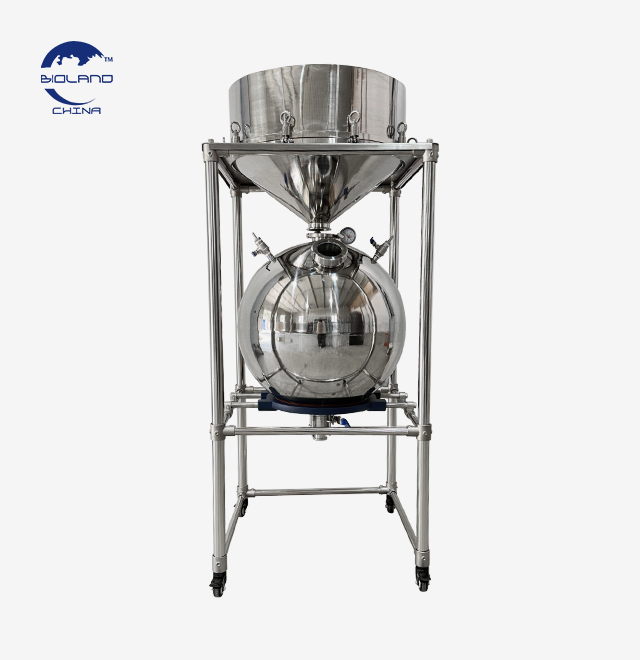
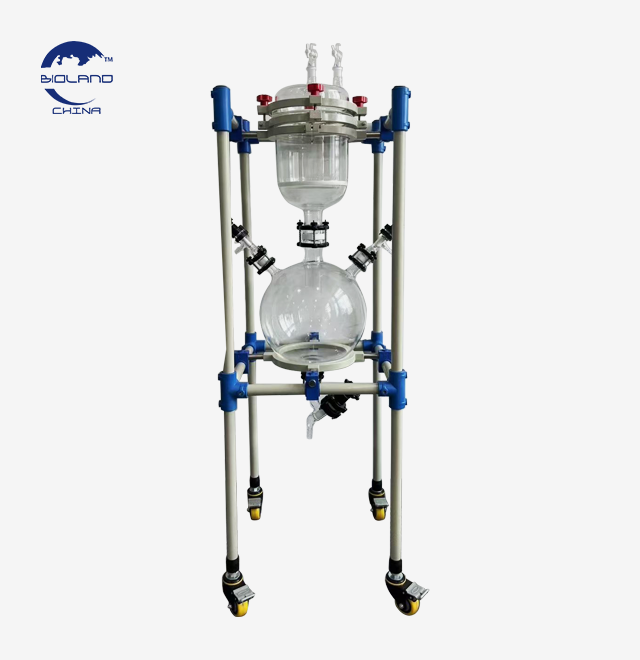
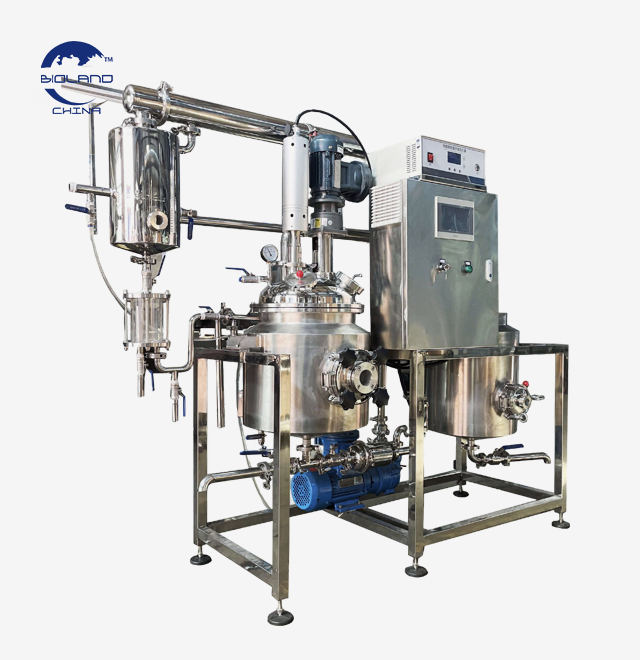
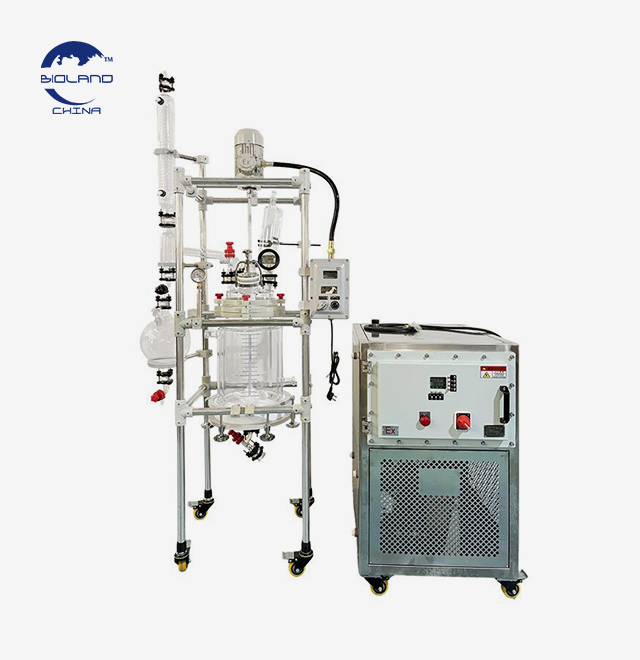
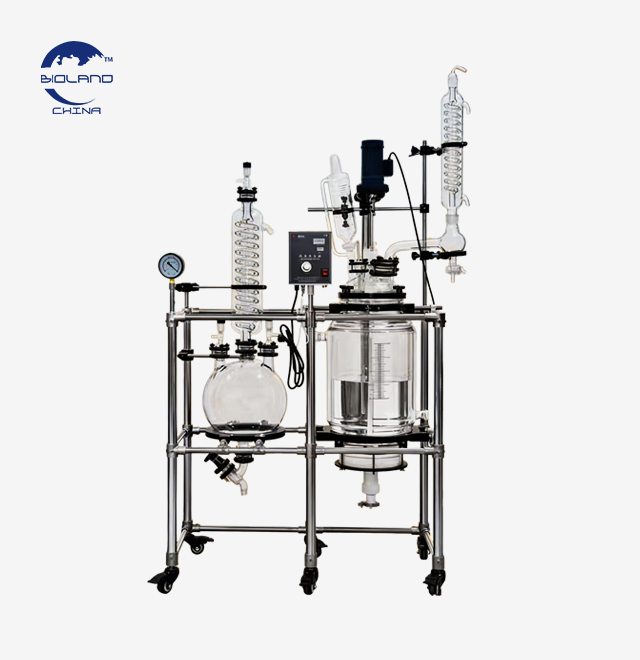
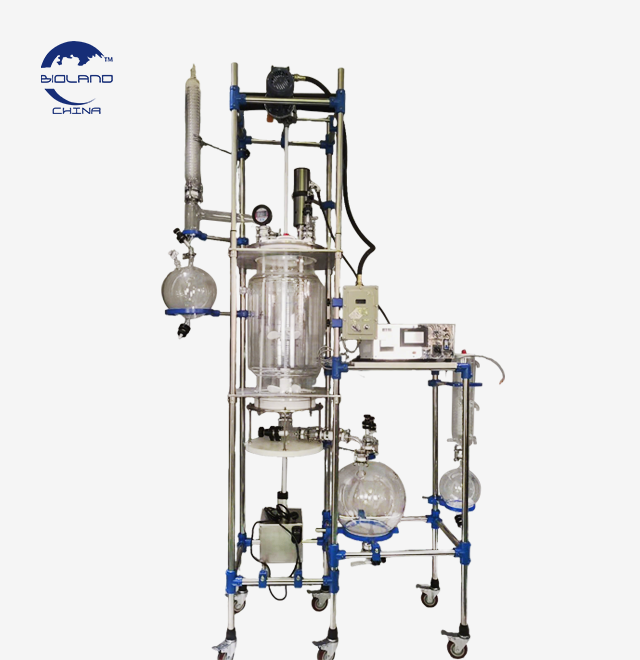
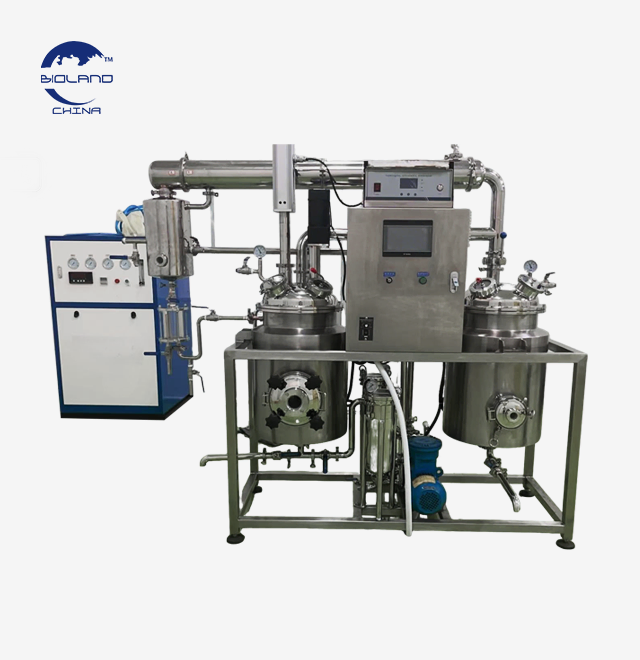
Vacuum Filtration Machine for Lab & Industrial Use — Fast Separation, GMP-Ready Design
Vacuum filtration uses negative pressure (≤ −0.095 MPa) to pull liquid through a filter membrane, separating solids up to 10× faster than gravity methods with a vacuum filtration machine. Xi'an Bioland Instrument Co., Ltd. has manufactured filtration equipment for over 15 years, supplying pharmaceutical, botanical, and chemical clients across 40+ countries. Each machine is built from borosilicate glass, SS316/304, ceramic, or titanium, certified to CE and ISO standards, and ships in 5–7 business days for standard models.
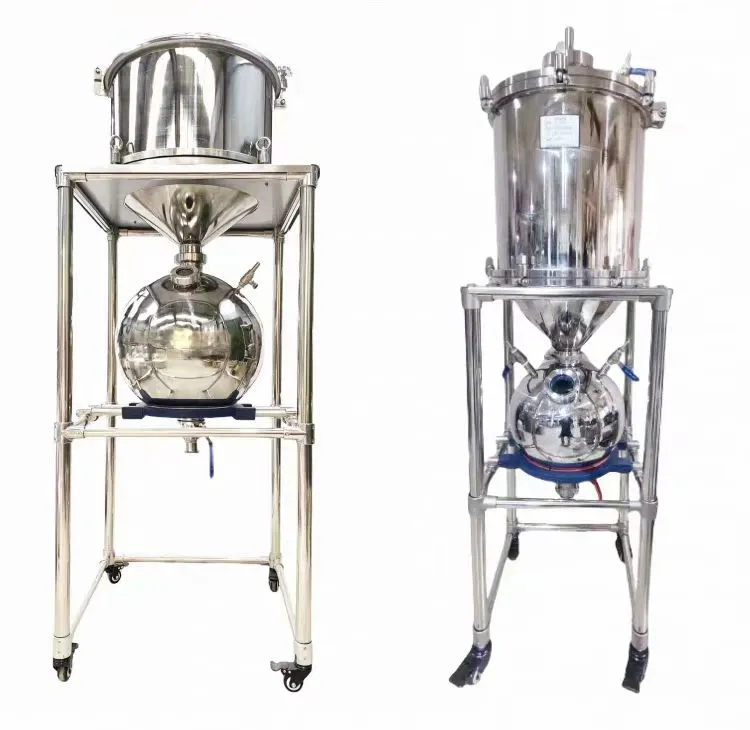
Key Features & Benefits
Closed-System Design — Operator Safety and Solvent Recovery in One
The fully enclosed operating environment blocks hazardous vapor exposure at the source. Solvent recovery rates exceed 95%, cutting both disposal costs and regulatory burden for facilities handling acetone, ethanol, or dichloromethane.
Material-Matched Construction for Every Chemistry
Borosilicate glass (GG-17 grade) resists acidic environments and gives clear process visibility. SS316L handles alkaline conditions and meets GMP surface finish requirements. PTFE seals are standard across all wetted connections — no swelling, no leaching.
Real-Time Process Visibility Without Breaking Containment
Glass-body models let operators monitor filtration progress, cake formation, and filtrate clarity directly. No sampling, no opening — fewer contamination risks and faster troubleshooting during development runs.
Fast Disassembly, CIP-Ready Surfaces
Modular tri-clamp interfaces allow full disassembly in under 10 minutes. Stainless steel contact surfaces are finished to Ra ≤ 0.4 μm, eliminating bacterial harborage points and making clean-in-place (CIP) validation straightforward.
Controlled Vacuum = Protected Product
Stepless vacuum regulation prevents pressure spikes that can damage fragile crystals or heat-sensitive APIs. Energy draw from the pump stays proportional to actual process demand — no overconsumption.
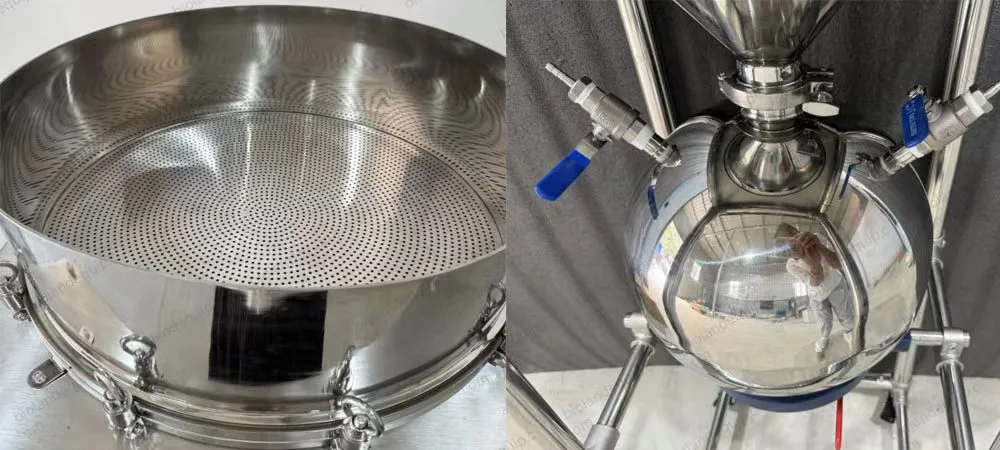
How It Works?
A vacuum pump lowers pressure inside a sealed collection vessel. The resulting differential draws liquid through the chosen filter medium — paper, membrane, sintered glass, or ceramic plate — at speeds several times faster than gravity alone.
Solid material (the filter cake) accumulates on the filter surface. In Nutsche-type designs (agitated filter-dryers), the cake can be washed in place with fresh solvent and then partially dried — all within the same closed vessel, without manual transfer. This matters for APIs and precious intermediates where any open-handling step introduces yield loss or contamination risk.
Vacuum level is controlled throughout the run to match product requirements, not just pump capacity.
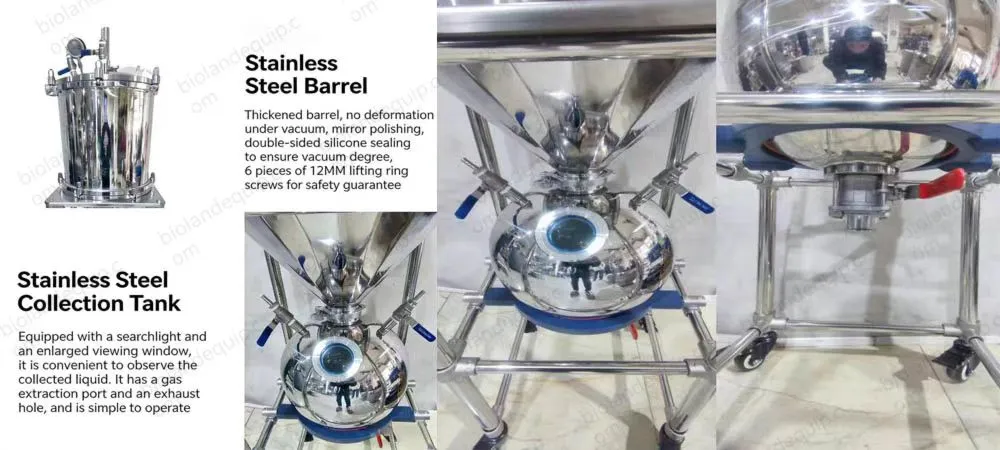
Construction & Materials
Borosilicate Glass (GG-17)
Low thermal expansion coefficient (3.3 × 10⁻⁶/K), high chemical resistance to acids and most organic solvents, full process transparency. Autoclavable when disassembled. Best suited for lab-scale and development-phase work.
Stainless Steel SS316L / SS304
Sanitary electropolished finish. Every batch verified by handheld XRF analysis before fabrication. Ra ≤ 0.4 μm on all product-contact surfaces. Scaled from 10 L pilot units to 2,000 L+ production vessels.
Ceramic & Titanium
Specified for strong oxidizer service, HF-adjacent chemistries, or processes where metal ion contamination from steel is unacceptable. Available on request with lead time confirmation.
Seals & Gaskets
PTFE standard. Silicone, EPDM, or Viton available for specific temperature or chemical profiles. All seal compounds supplied with solvent immersion test data.

Services & After-Sales Support
- Pre-sales process consultation — membrane selection, material compatibility, scale-up guidance
- Weekly production updates with photographic documentation
- Pre-shipment inspection report (available for third-party review)
- Factory Acceptance Test (FAT) — on-site or remote video option
- One-year warranty: parts and labor included
- Lifetime technical support via dedicated engineer contact
- Spare parts inventory maintained for all active models
- Remote diagnostic support with screen-share capability

Why Choose Bioland?
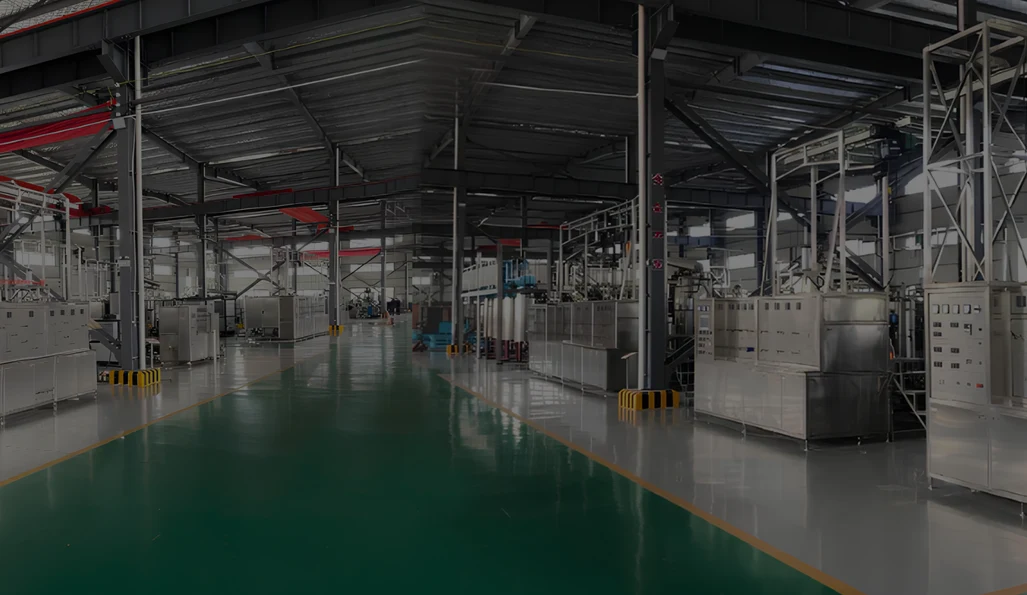
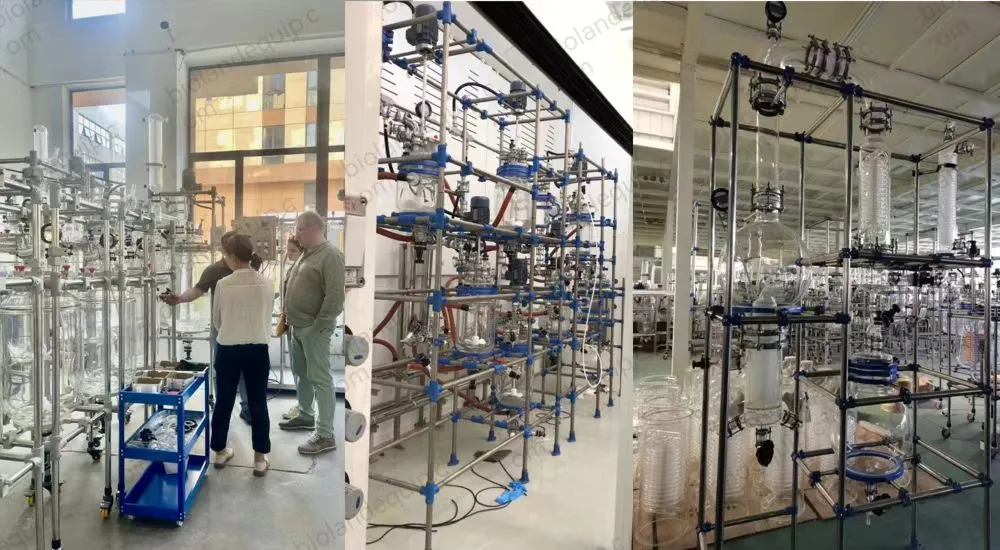
15 years, one focus: Xi'an Bioland has manufactured vacuum filtration machine and process filtration equipment since 2009 — no pivot to adjacent product lines, no outsourced fabrication. The same engineering team that designs the equipment oversees production and handles post-sale technical support.
Transparent production tracking: Your order is assigned a dedicated production specialist. Weekly updates include timestamped photos or video of actual build progress — not stock images. Shipment is only released after your written approval or a completed Factory Acceptance Test (FAT).
Delivery that fits your timeline:
- Standard models: 5–7 business days
- Custom configurations: 25–30 business days
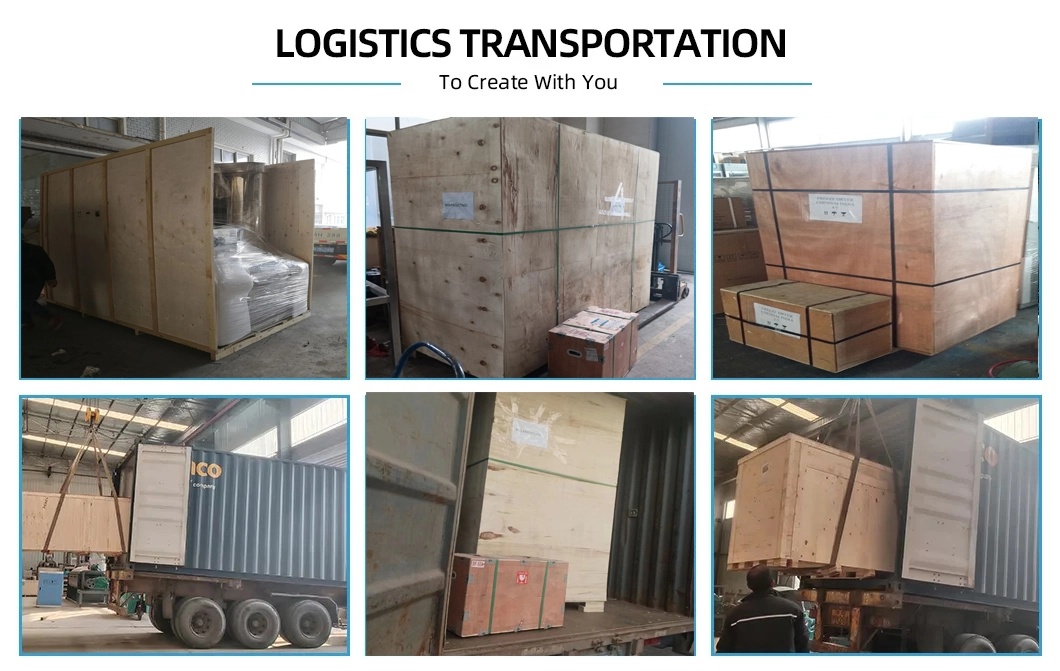
- Shipping: sea, rail, air, and express courier all supported
Post-sale support with teeth: One-year warranty covers parts and labor. Lifetime technical support means your senior engineer contact remains reachable — not redirected to a generic support queue.
Technical Parameters
|
Glass Material
|
high borosilicate glass or 304/316SS
|
high borosilicate glass or 304/316SS
|
high borosilicate glass or 304/316SS
|
high borosilicate glass or or 304/316SS
|
|
Filter Funnel Size
|
φ180*280mm
|
φ240*280mm
|
DN300x310mm
|
DN300x450mm
|
|
Material and Size of Seive Plate
|
PTFE/φ165
|
PTFE/φ230
|
PTFE/φ300
|
PTFE/φ300
|
|
Spherical Collecting Bottle
|
10L
|
20L
|
30L
|
50L
|
|
Suction Port
|
DN50
|
DN50
|
DN50
|
DN50
|
|
Exhaust Port
|
φ35
|
φ35
|
DN25
|
DN25
|
|
Discharge Value
|
DN25
|
DN25
|
DN25
|
DN25
|
|
Discharge Value Distance from Ground
|
250mm
|
300mm
|
300mm
|
300mm
|
|
Vacuum Degree
|
-0.098Mpa
|
-0.098Mpa
|
-0.098Mpa
|
-0.098Mpa
|
|
Frame Material
|
SUS304 movable framework
|
SUS304 movable framework
|
SUS304 movable framework
|
SUS304 movable framework
|
|
The speed of material filtration is related to the following factors:
|
|
1.Material characteristics (such as: the size of the material and the fluidity of solid-liquid mixing)
|
|
2.The pore size of the filter paper or filter cloth (the pore size is too small to block the flow rate of the filtrate)
|
|
3.The size of the filter sieve plate.
|
|
4.The vacuum degree of the system.
|
Application Fields
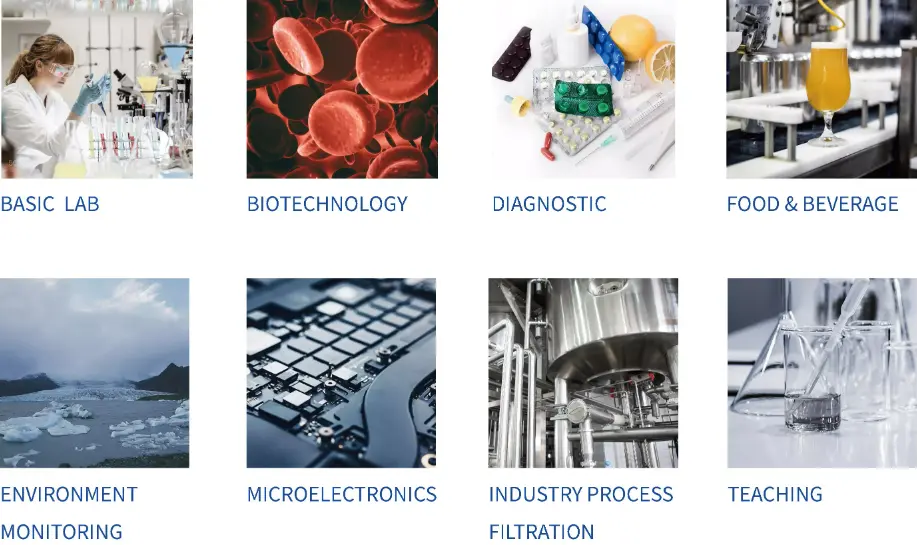
Pharmaceutical API Crystallization & Isolation
Sterile, closed-loop filtration of API crystals from mother liquor. Eliminates open-handling steps that risk contamination or yield loss during GMP batch manufacture.
Botanical Extraction — Winterization & Dewaxing
Sub-zero ethanol slurries containing wax and lipid solids filter cleanly under vacuum where gravity systems blind within minutes. Used widely in cannabis, hemp, and essential oil processing.
HPLC Mobile Phase Preparation
0.22 μm and 0.45 μm membrane filtration removes particulates and degasses solvents simultaneously, extending column life and stabilizing baseline signal.
Fine Chemicals & Precious Metal Recovery
Isolating solid intermediates from reaction mixtures, recovering palladium or platinum catalyst fines, and separating precious metal salts from process streams.
Food, Beverage & Cosmetics
Clarifying botanical extracts, removing particulates from edible oils, and filtering cosmetic emulsions to food-grade and EU cosmetics regulation standards.
Quality Certifications & Compliance
Before any unit leaves the facility, it passes a vacuum integrity hold test at −0.098 MPa with pressure monitored continuously for 12–24 hours. Acceptable drop is defined by our internal SOP and provided in the shipment documentation.
Additional pre-shipment checks include:
- XRF elemental analysis confirming SS316L / SS304 grade
- Surface profilometry confirming Ra ≤ 0.4 μm on all contact surfaces
- Seal immersion test in the customer's target solvent (on request)
- Dimensional inspection against approved drawings
All equipment carries CE marking and is manufactured under an ISO 9001:2015 quality management system. GMP and FDA compliance documentation is available for customer audits.
FAQ
Q: Can it handle high-viscosity liquids?
A: Yes, with the right configuration. Start with a larger pore membrane (5–10 μm range) and consider a pre-filtration stage to remove coarse solids. For viscosities above ~500 cP, a jacketed heating option lowers viscosity at the filter surface and maintains acceptable flow rates.
Q: Glass or stainless steel — how do I decide?
A: Use borosilicate glass for lab-scale work, process visibility, or acidic chemistries (pH < 4). Use SS316L for industrial scale, alkaline environments, or any process where GMP validation documentation is required. If you send us your solvent list and scale, we'll recommend the right build in writing.
Q: What maintenance does the vacuum pump need?
A: Oil-sealed rotary vane pumps require weekly oil level checks and monthly mist filter inspection. For corrosive vapor service — HCl, acetic acid, solvent vapors — specify a PTFE diaphragm pump or install a cold trap (−20°C minimum) between the filtration unit and pump inlet.
Q: Is the glassware autoclavable?
A: Borosilicate glass bodies tolerate standard autoclave cycles (121°C, 15 psi). Disassemble the unit before autoclaving and verify that all PTFE and gasket components meet your autoclave temperature rating — standard PTFE is rated to 260°C and is not the limiting factor.
Q: Why is my filtration rate dropping mid-run?
A: Filter cake blinding is the most common cause. In Nutsche-type units, actuating the agitator to scrape the cake surface typically restores flux within minutes. If blinding recurs rapidly, adding a filter aid (diatomaceous earth or perlite at 0.5–2% w/v) to the feed slurry maintains membrane porosity across longer runs.
Q: What documentation comes with each shipment?
A: Standard package includes: vacuum integrity test report, XRF material certificate, surface roughness measurement record, CE declaration of conformity, and operation/maintenance manual. GMP batch records and FAT protocol available on request.
Contact Us
Get a quote or technical recommendation for the vacuum filtration machine within 24 hours.
📧 info@biolandequip.com