Fractionating Column in Fractional Distillation - Professional Separation Solutions
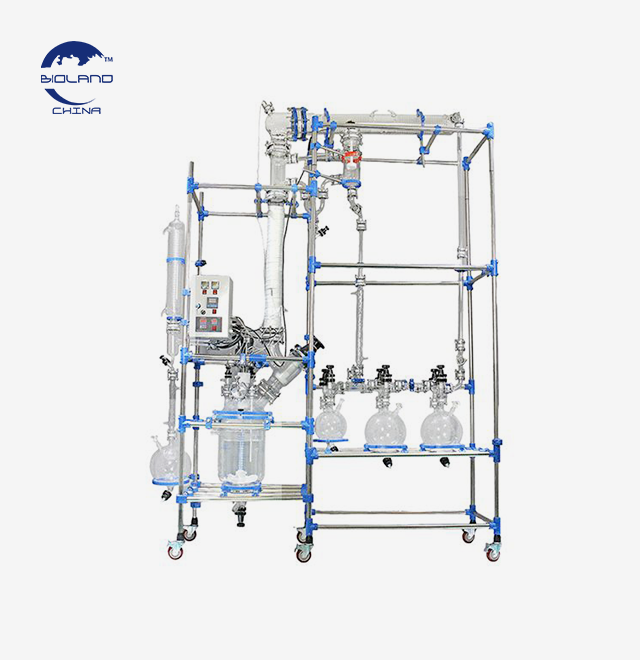
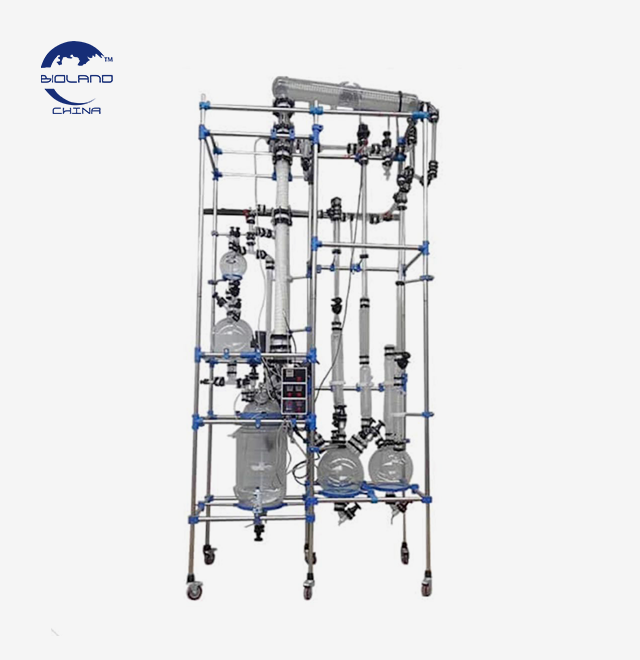
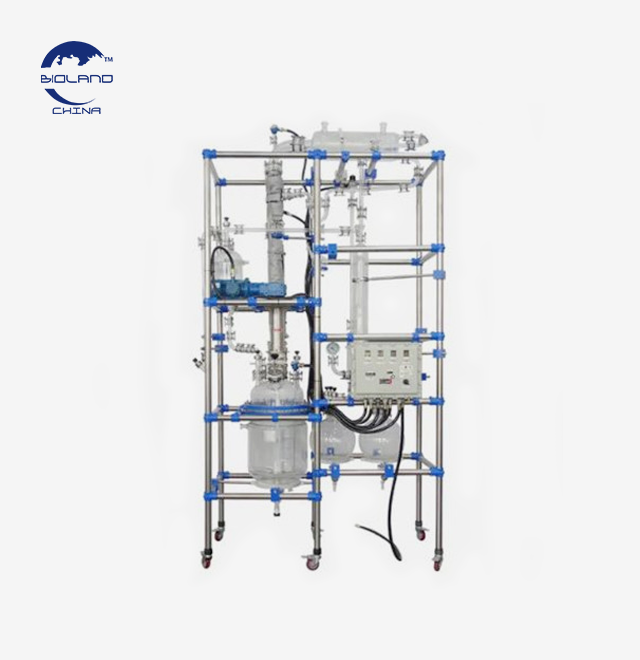
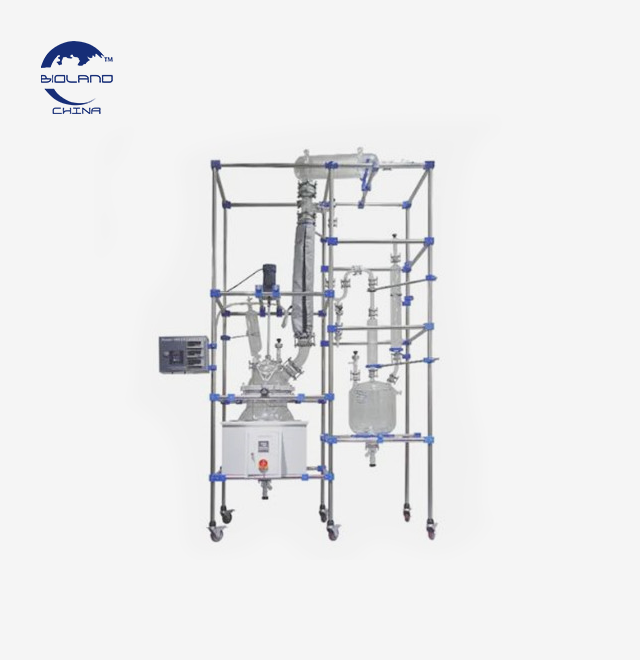
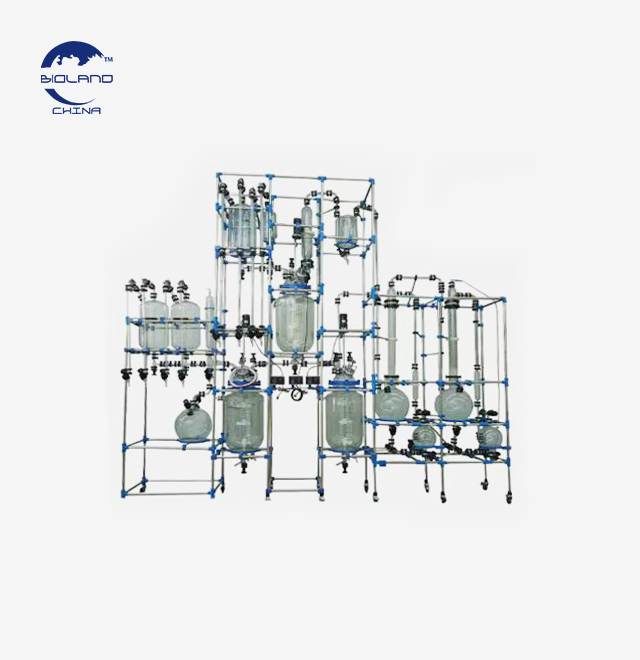
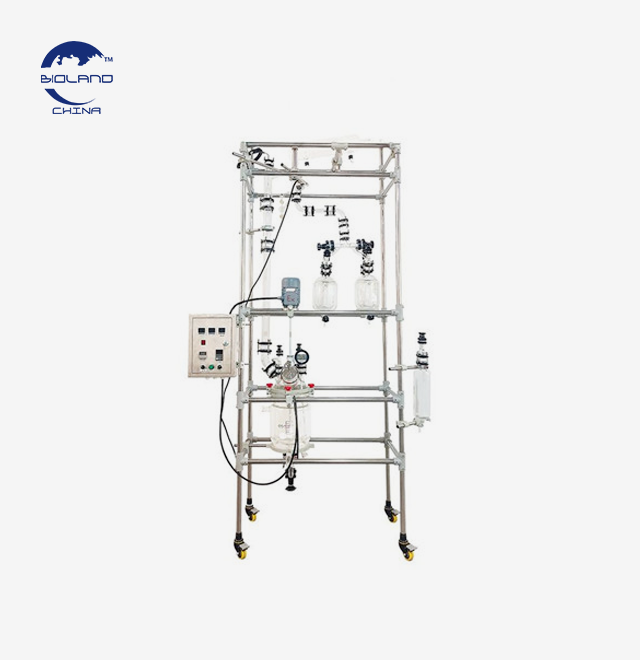
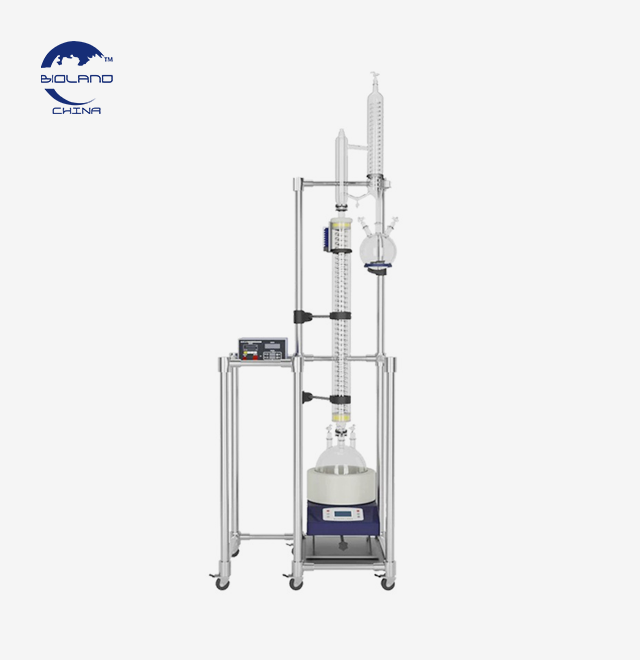
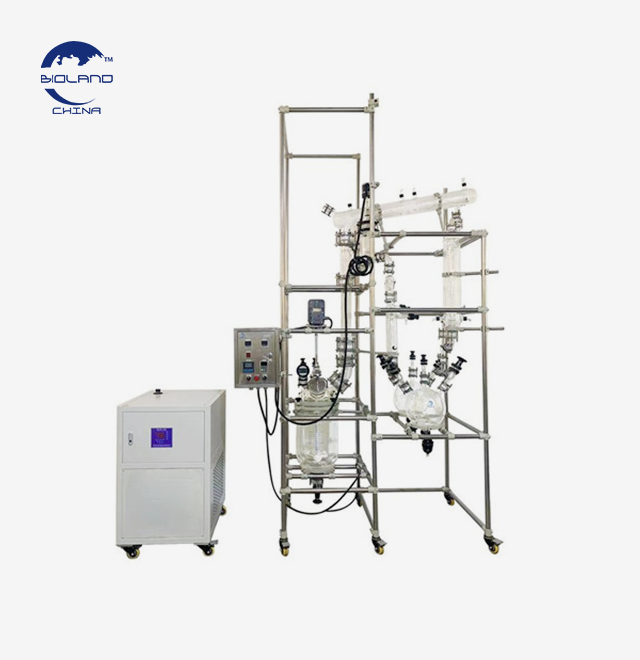
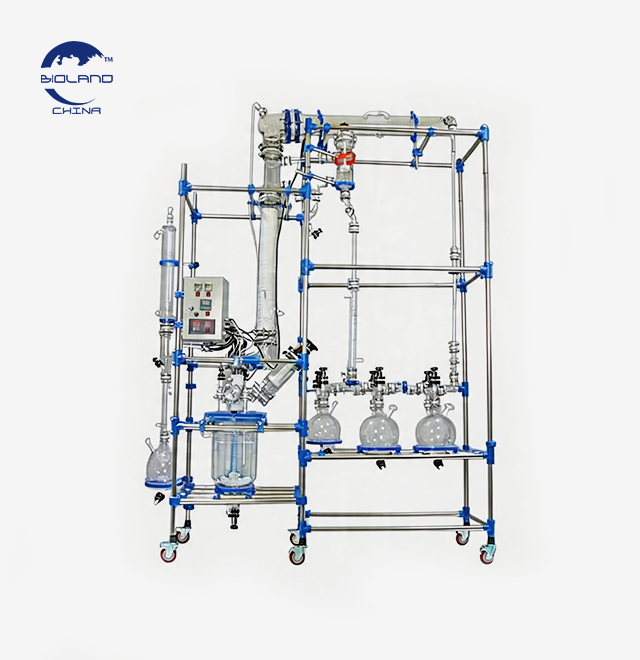
The fractionating column in fractional distillation from Xi'an Bioland is a high-quality vertical separation tank designed for the precise separation of difficult liquid mixes. Using smart PID temperature control and high-efficiency organized packing, our systems can reach 15 or more possible plates with HETP values as low as 150 to 200 mm. Our columns can work at temperatures ranging from -80°C to 250°C and can create vacuums below 0.1mbar. They provide 99.9%+ purity in petroleum processing, pharmaceutical API recovery, and electronic-grade chemical production. High borosilicate glass 3.3 and SUS304/316L stainless steel are used to make each unit, which is certified by CE, ISO, UL, and SGS and fully follows GMP guidelines. We have been making distilling equipment for more than 15 years and can customize sizes from 5L to 100L+. We can also fully integrate automation.
Feature
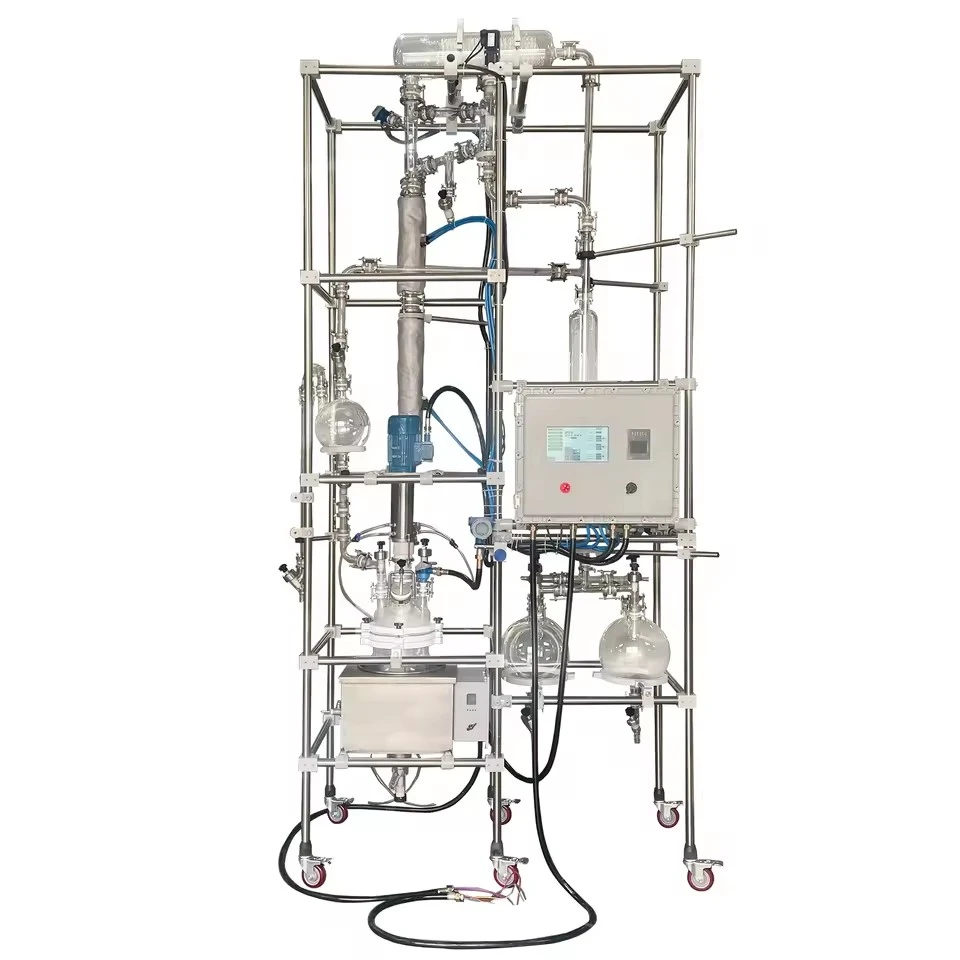
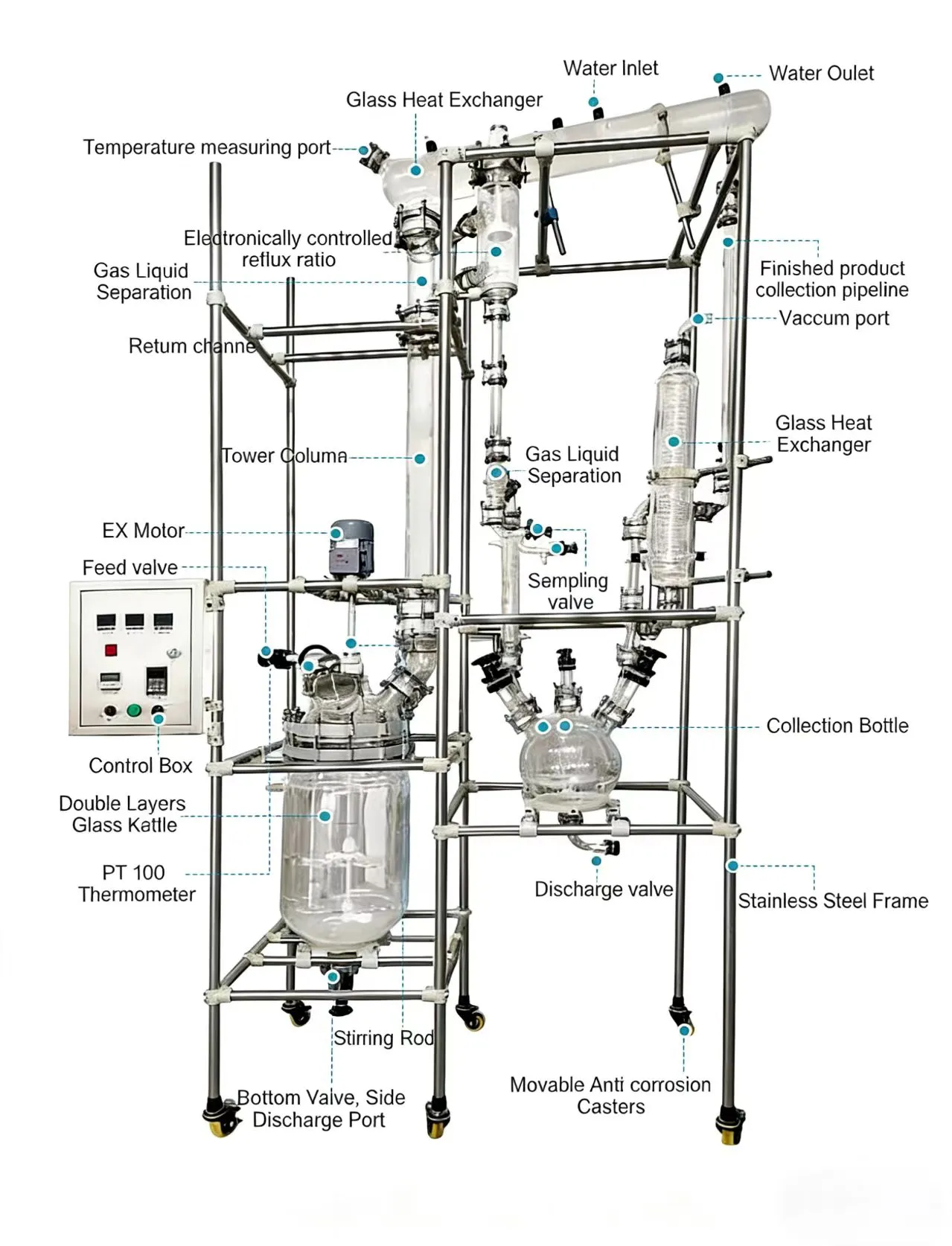
- The whole stainless steel supporting frame, 4-6 necks on the reactor lid, such as distillation & reflux , liquid feeding , temp sensor , stirring & mixing , etc .
- Glass reactor is made of G3.3 high borosilicate glass , with good chemical and physical properties .
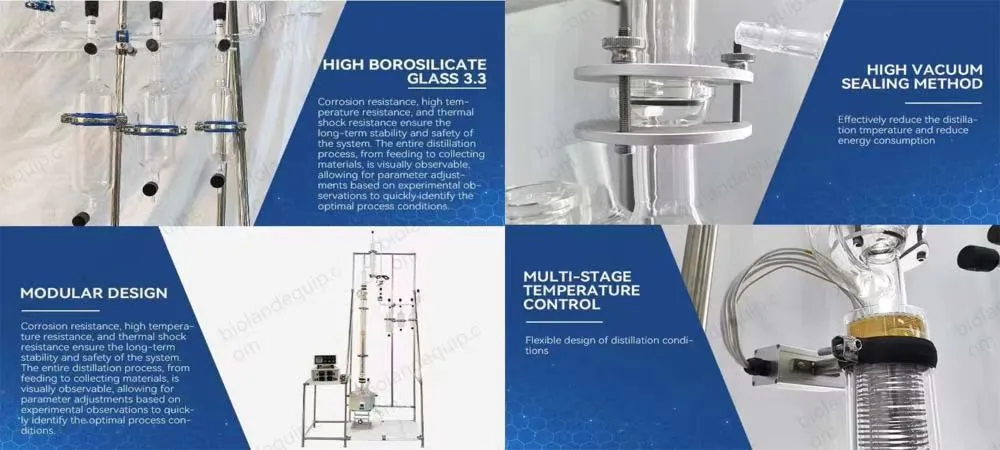
- Alloy steel mechanical seal,magnetic fluid seal, PTFE connector , to maintain a high precision seal in the working condition.
- With PT100 sensor probe, high precision temperature measurement , small errors and high efficiency .
- AC reducer motor, strong torsion , no noise , etc.
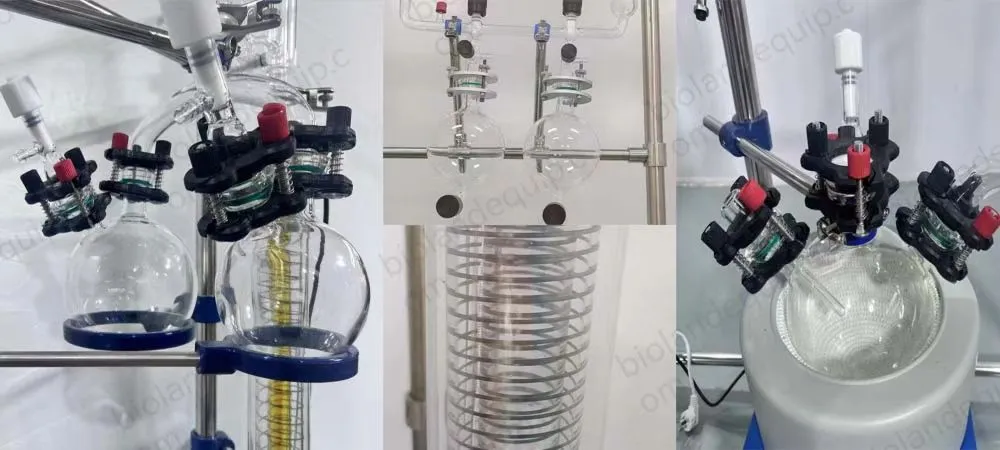
- PTFE stirring paddle, suitable for low or high viscosity liquid stirring and mixing.
- PTFE discharge valve, movable interface , discharging and flushing completely and quickly.
- Can be according to customer requirements, such sand core filter , PH meter , Ex motor , Ex control box and Ex temp
- fractionating column in fractional distillation is a technique used to purify solvents, chemicals, natural products, petroleum, biodiesel, crude oil and other materials.
Why Choose Us?
Picking the right distillation partner means picking one that you can depend on and that works well.
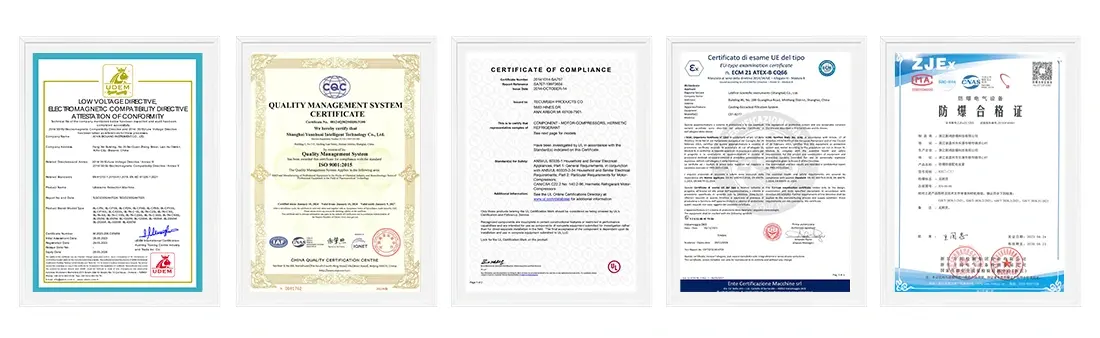
With CE, ISO, UL, and SGS approvals, you can be sure of the quality of the product. For use in food and medicine, our equipment has to meet strict GMP and FDA standards.
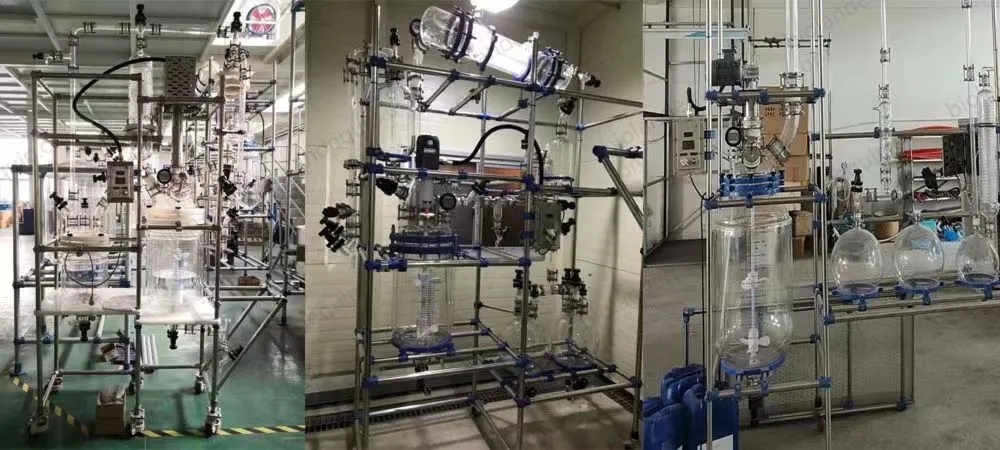
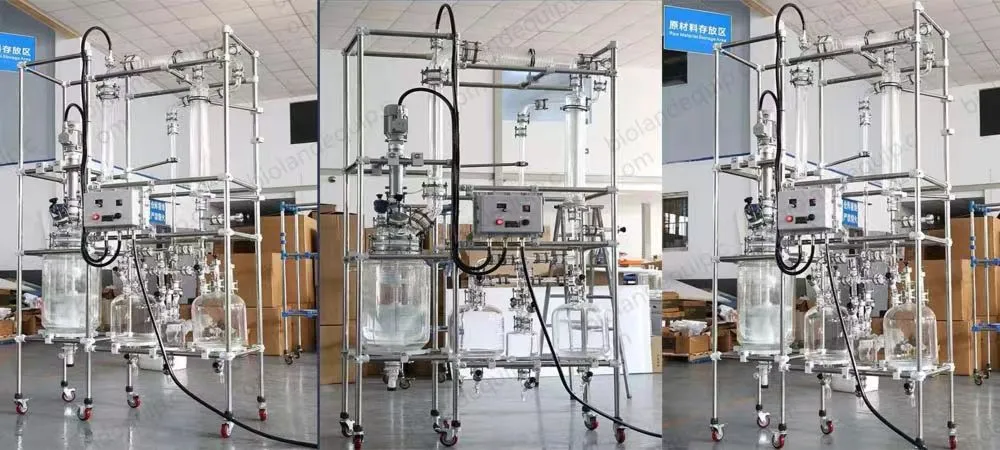
Customization is what we do best. We change everything about the tower to fit your process needs, including the height, width, heating method, pressure grade, and type of packing. We can provide you with glass for clear vision in the lab or titanium metal for places where corrosion is a problem.
The engineers on our R&D team have decades of experience. You get progress reports every week with photos and movies while the project is being made. Before it is sent out, each unit goes through strict Factory Acceptance Testing.
Fast shipping is important. Products that are standard ship in 5 to 7 days. It takes 30 business days to get custom options ready. We help with freight by sea, train, and air all over the world.
After you buy something, you're never alone. Our guarantee lasts for one year and covers upkeep for life. First-class extra parts are always on hand. Our expert team does installation, commissioning, teaching on how to use the equipment, and quick troubleshooting.
Clear prices with no extra charges. Reasonable prices without lowering the quality. You can get OEM and ODM services.
Technical Parameters
|
Model
|
JLF-5S
|
JLF-10S
|
JLF-20S
|
JLF-50S
|
JLF-100S
|
JLF-150S
|
JLF-200S
|
|
Distillation Tank Volume
|
5L
|
10L
|
20L
|
50L
|
100L
|
150L
|
200L
|
|
Collection Tank Volume
|
1L
|
2L
|
5L
|
10L
|
30L
|
50L
|
50L
|
|
Number of Collection Tanks
|
1-4 sets (Customizable based on the number of fractions to be collected)
|
|
Stainless Steel Material
|
304 Stainless Steel (Optional: 316 Stainless Steel)
|
|
Heating Tank
|
Oil bath heater or jacket with heating liquid circulation
|
|
Distillation Tower Height
|
Height can be customized according to the required number of theoretical plates
|
|
Distillation Tower Diameter
|
40mm, 50mm, 80mm, 100mm or other customizable sizes
|
|
Distillation Tower Heating (Optional)
|
Heating jacket or heating belt
|
|
Stirring Mode
|
Magnetic stirrer, magnetic rotating stirrer or top/head stirrer (magnetic seal or mechanical seal)
|
|
Operating Temperature Range
|
Room temperature to 300°C
|
|
Control System
|
Digital display stirring speed controller, timer for reflux receiver/distributor, heating jacket or heating temperature controller. For oil bath heating, an additional heating temperature controller is required.
|
|
Accessories (Optional)
|
Cooling circulator for condenser; Heater for jacketed distillation tank; Vacuum pump
|
|
Power Supply
|
220V or 380V, 50/60HZ
|
Working Principle
The fractionating column in fractional distillation works by keeping the vapour and liquid in a state of balance all the time.
Step 1: Vaporization
The feed mixture goes into the reboiler. Heat turns substances into vapour that contains parts that don't boil as quickly.
Step 2: Ascending Vapor
As the vapour rises, it moves through the column's inner parts, which are made up of trays or packing materials that form many touch stages.
Step 3: Liquid Reflux
From the condenser, the liquid that has condensed moves downward. This backflow is necessary to make touch with the rising vapour.
Step 4: Mass Transfer
At each stage, lighter parts move to the vapour phase. Parts that are heavier tend to gather in the liquid phase. This regular trade makes the separation work very well.
Step 5: Fraction Collection
At the top of the condenser, clean upper product comes out. At the reboiler, the bottom part gathers. At intermediate places, side streams can be made to separate more than one component.
Temperature Control
PID controllers keep temperature differences very accurate. At the boiling point of its main part, each piece stops moving.
Vacuum Enhancement
For heat-sensitive materials, vacuum operation reduces boiling points. This prevents thermal degradation while maintaining separation efficiency.
Process Flow
Feed Preparation → Column Entry → Separation Zone → Product Collection → Quality Control
- Pre-heating Stage: Heat exchangers warm up your raw material to the best temperature for feeding. This makes better use of energy.
- Feed Introduction: The liquid goes into the column at the determined feed tray location, which is usually in the middle of the column where the composition fits the feed properties.
- Section of Rectification: Enrichment takes place above the feed point. Structured boxes or cases let vapour rise. Each touch makes things more pure.
- In the stripping section, flammable substances move from the falling liquid to the rising vapour below the feed point.
- How the condenser works: Condensation can happen all the way to the top of the column. The reflux ratio can be changed by hand or automatically depending on the cleanliness needs.
- For boiler heating, exact heat input can come from electric heaters, thermal oil systems, or steam coils. Insulation and control tools make energy economy better.
- Withdrawing the Product: Overhead petroleum gathers in receivers. The bottom product drains constantly or in groups. Cuts in the middle get rid of waste through side draws.
- Monitoring Systems: Flow rates, temperature patterns, and pressure differences are shown on digital screens. Real-time changes are made to settings by automated controls.
Application Fields
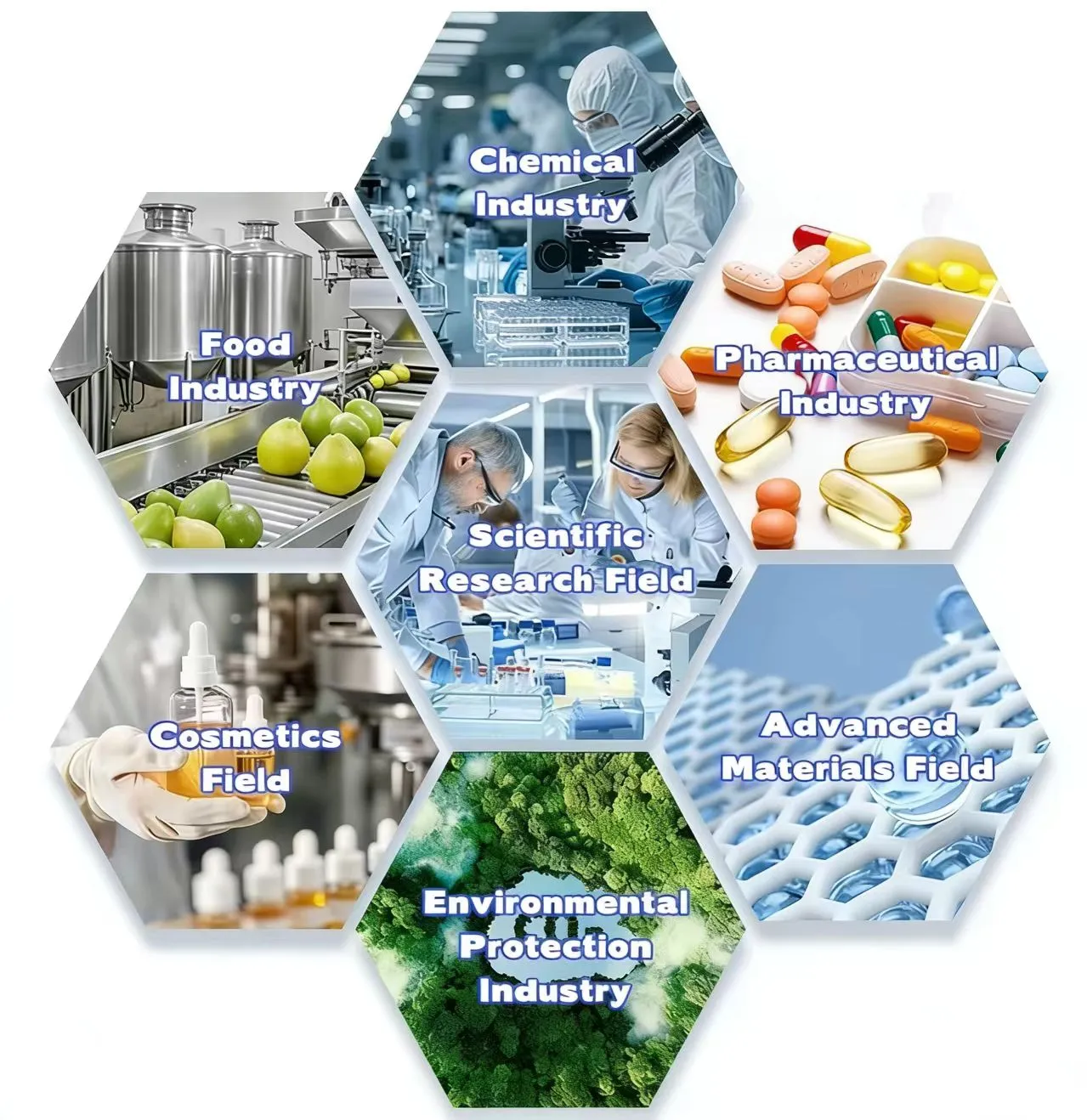
Your industry demands precision. Our fractionating columns deliver.
Petrochemical Refining
Separate crude oil into naphtha, kerosene, diesel, and gas oil fractions. Handle high throughput with valve trays designed for fouling resistance.
Pharmaceutical Manufacturing
Recover solvents like ethyl acetate and DCM with 99.9%+ purity. Purify Active Pharmaceutical Ingredients under vacuum to prevent thermal degradation. Full GMP compliance ensures regulatory approval.
Fine Chemical Production
Achieve ultra-high purity for electronic-grade solvents and acids. Remove trace impurities to ppb levels. Fluoropolymer linings prevent contamination.
Food & Beverage Industry
Distill essential oils, flavor compounds, and alcohol with food-grade stainless steel construction. Maintain organoleptic properties through gentle processing.
Solvent Recovery Systems
Reclaim valuable solvents from waste streams. Reduce disposal costs and environmental impact. Continuous operation maximizes ROI.
Laboratory R&D
Glass construction provides visual monitoring for process development. Scale-up data translates directly to production systems.
Polysilicon Production
Purify trichlorosilane (TCS) and dichlorosilane (DCS) for semiconductor manufacturing. Corrosion-resistant materials handle aggressive chlorosilanes.
Quality Certification
Quality is not negotiable. Every unit meets international standards.
CE Certification confirms European safety and health requirements. ISO 9001 validates our quality management systems. UL Listing ensures electrical safety compliance. SGS Inspection provides independent third-party verification.
Our manufacturing follows GMP guidelines for pharmaceutical applications. FDA standards compliance makes our equipment suitable for regulated industries.
Material traceability includes Positive Material Identification (PMI) testing. We verify alloy composition meets corrosion resistance specifications.
Pressure vessel certification follows ASME Section VIII Division 1 standards. Hydrostatic testing at 1.3-1.5x design pressure ensures structural integrity. Helium leak testing detects micro-leaks below acceptable thresholds.
Weld quality undergoes Non-Destructive Testing including X-ray and ultrasonic inspection. This prevents stress corrosion cracking under thermal cycling.
Performance validation through Factory Acceptance Testing demonstrates actual theoretical plates match design simulations.
FAQ
Q: How do I choose between packed and tray columns for my application?
A: Packed columns offer lower pressure drop and higher efficiency per meter—ideal for vacuum distillation of heat-sensitive materials. Tray columns handle fouling better and suit high-pressure applications or liquids containing solids. We analyze your specific requirements to recommend the optimal design.
Q: What causes flooding and how do you prevent it?
A: Flooding happens when excessive vapor velocity blocks liquid drainage. We design columns at 70-80% of flood capacity with differential pressure monitoring. Proper reflux ratio control and correct sizing prevent operational issues.
Q: Can your columns separate azeotropes?
A: Standard columns cannot separate azeotropes where vapor-liquid compositions become identical. We offer specialized azeotropic distillation or extractive distillation configurations using entrainer solvents or pressure-swing techniques.
Q: How does reflux ratio affect separation performance?
A: Higher reflux ratios improve purity by increasing vapor-liquid contact cycles but consume more energy. We help you optimize the balance between product purity requirements and operating costs through simulation and testing.
Q: What maintenance does structured packing require?
A: Monitor pressure drop and separation efficiency regularly. Chemical Cleaning in Place (CIP) handles fouling. Severe coking requires packing replacement. We provide detailed maintenance protocols and stock original spare parts.
Q: Can you customize column dimensions for my specific space constraints?
A: Absolutely. We customize tower height, diameter, and configuration to fit your facility layout while maintaining required theoretical plates and separation efficiency.
Contact Us
Ready for fractionating column in fractional distillation to improve separation? Our engineers are ready to discuss your needs. Get technical advice and quotes at info@biolandequip.com today.