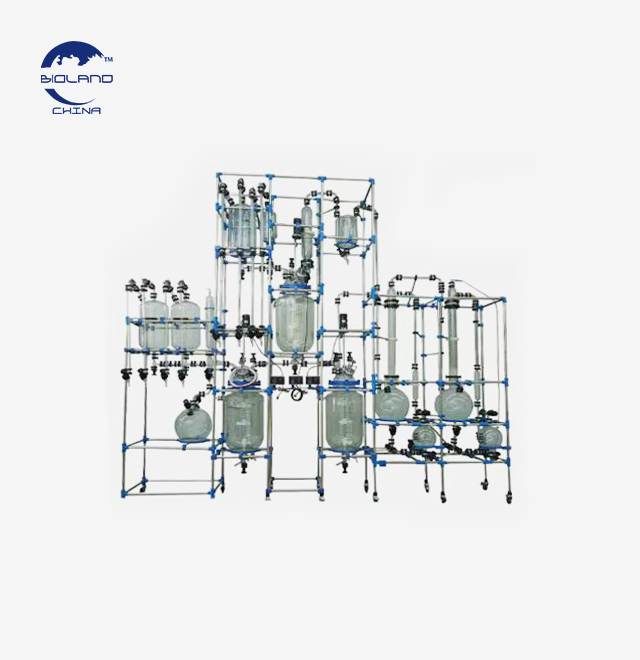
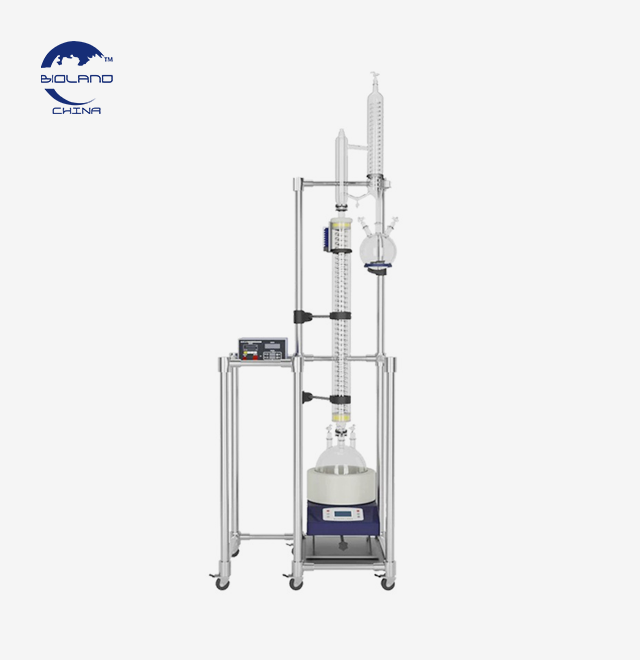
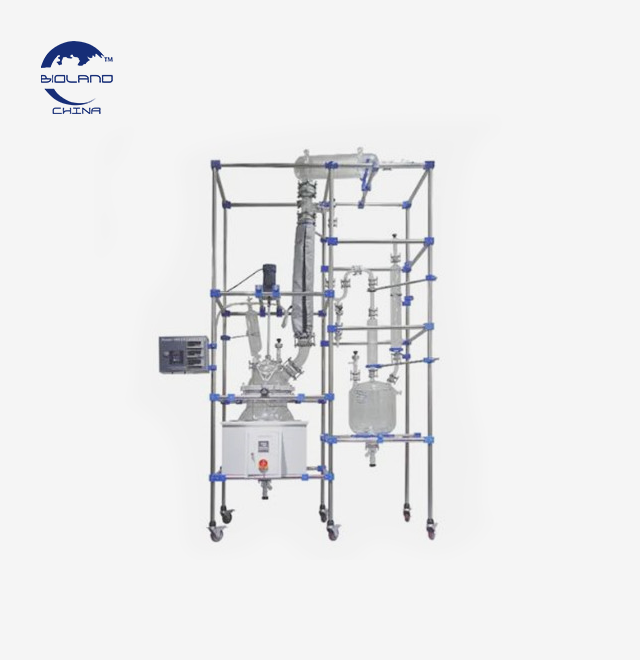
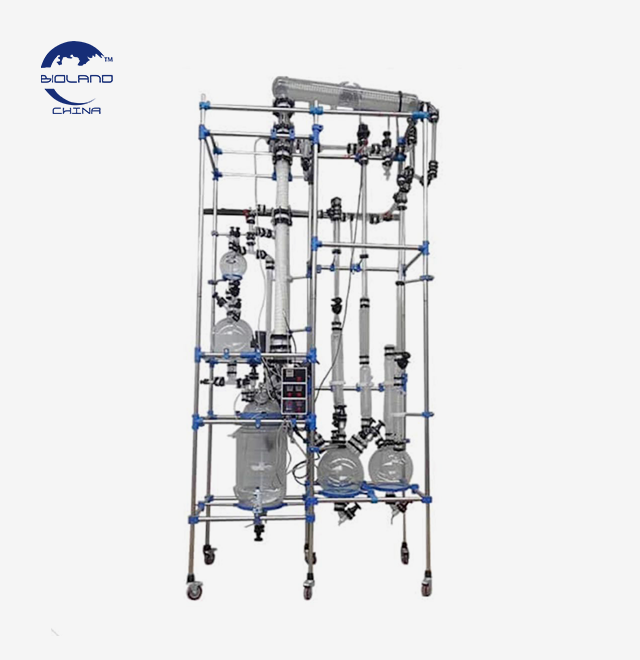
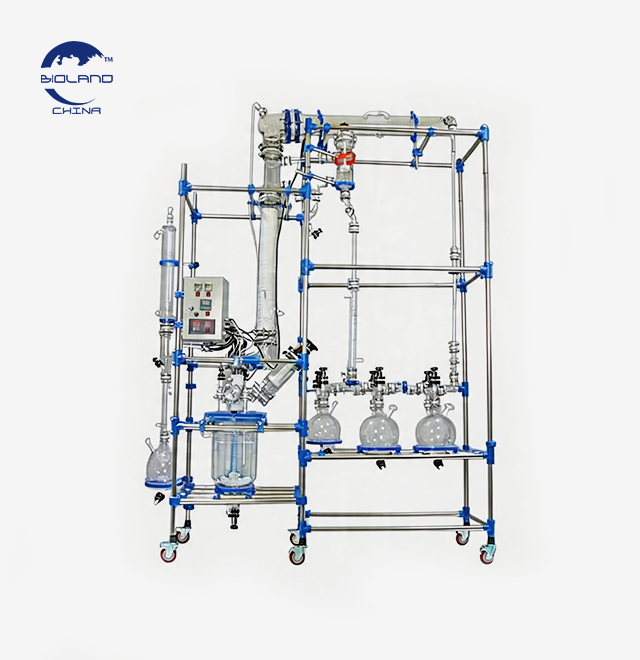
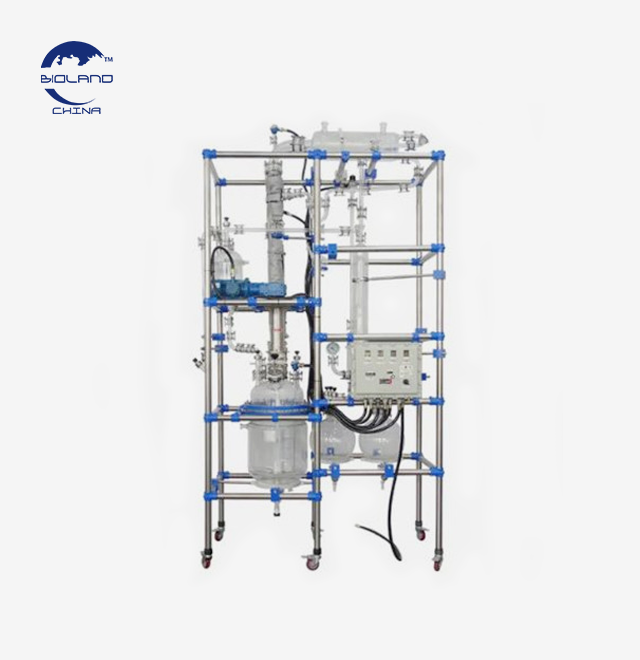
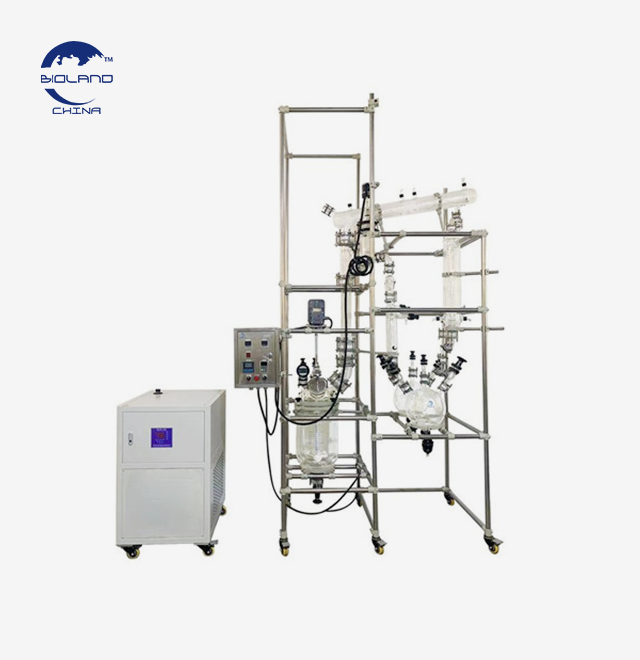
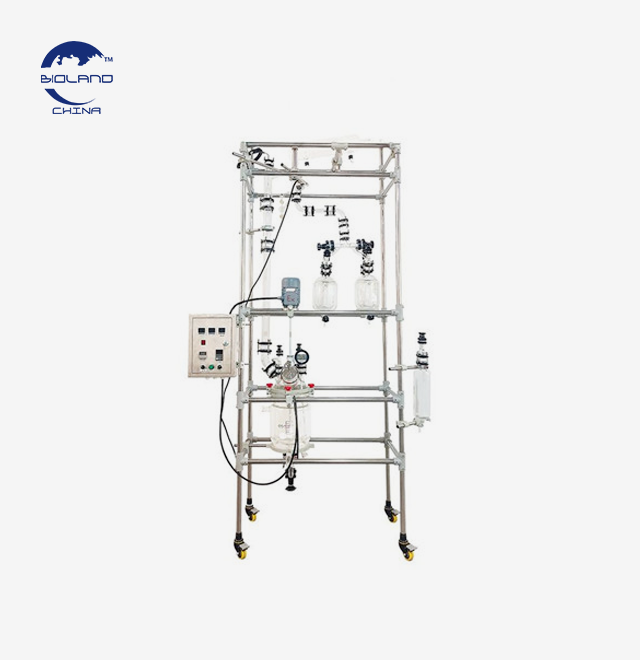
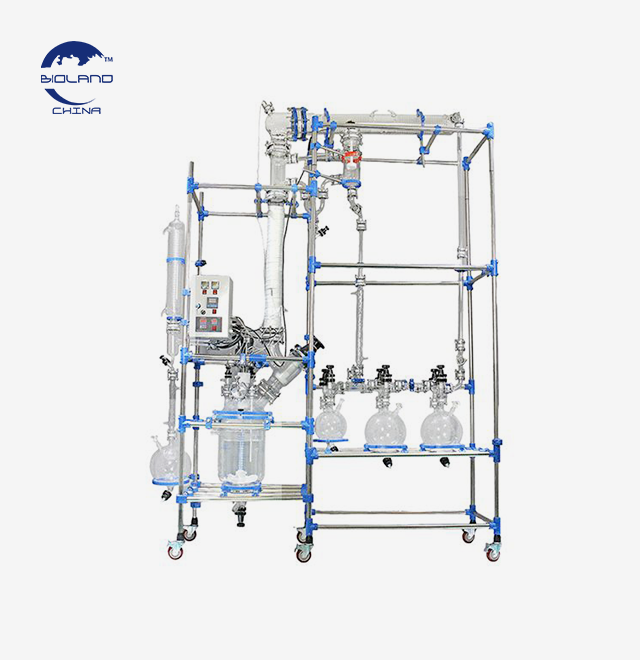
Industrial Distillation Column — Precision-Built for Chemical & Pharmaceutical Separation
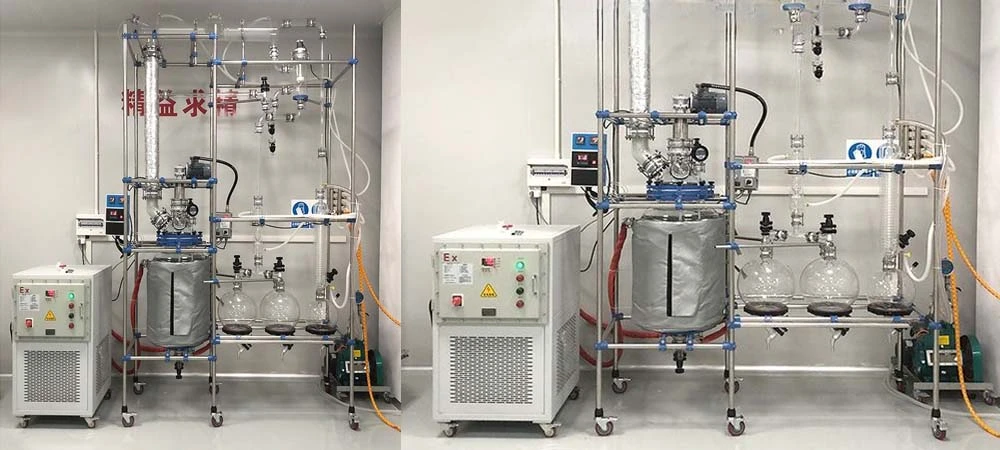
Xi'an Bioland Instrument Co., Ltd. specializes in industrial distillation and separation equipment. With 15+ years of manufacturing experience, our industrial distillation columns serve petrochemical, pharmaceutical, biofuel, and food-grade applications worldwide. Operating from −80°C to 250°C across deep vacuum to 60+ bar, built from SUS304/316L or titanium alloy, CE and ISO certified — every unit is engineered and configured to your exact process requirements.
Key Features & Benefits
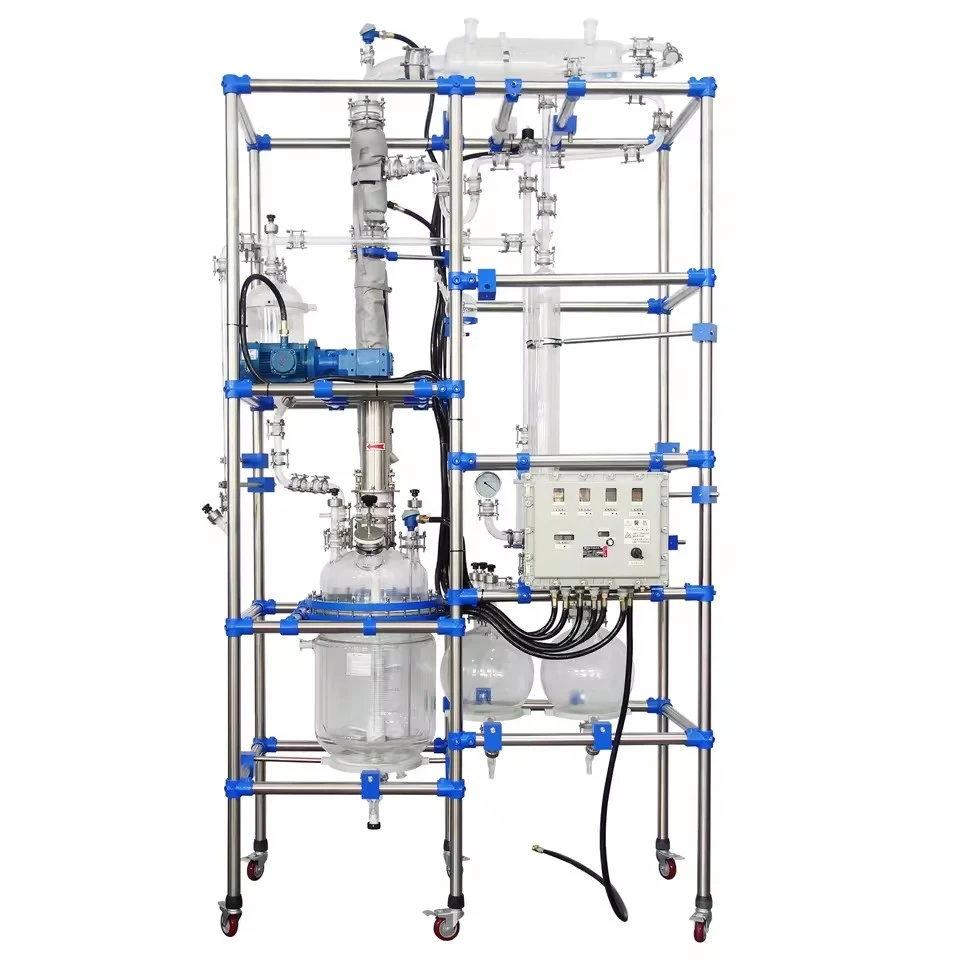
99.9%+ purity — even for difficult separations.
Column geometry is optimized to maximize vapor-liquid contact area, minimizing HETP (Height Equivalent to a Theoretical Plate). This delivers consistent high-purity output for azeotropic mixtures and close-boiling components that standard equipment cannot reliably handle.
Material options matched to your chemistry.
SUS304/316L covers general-purpose chemical service. Titanium alloy handles acidic and corrosive media. Glass-lined construction suits pharmaceutical-grade applications. Every material batch is verified through Positive Material Identification (PMI) before assembly — no substitutions.
Vacuum-ready low-pressure-drop design.
For heat-sensitive materials like pharmaceutical APIs or fine chemical intermediates, the column maintains minimal pressure drop across packing sections — reducing thermal degradation risk and protecting product integrity throughout the separation process.
Modular construction for easy maintenance.
Flanged section joints allow internal inspection, cleaning, and packing replacement without specialized tooling or full disassembly — reducing planned downtime and keeping your operation running.
How It Works?
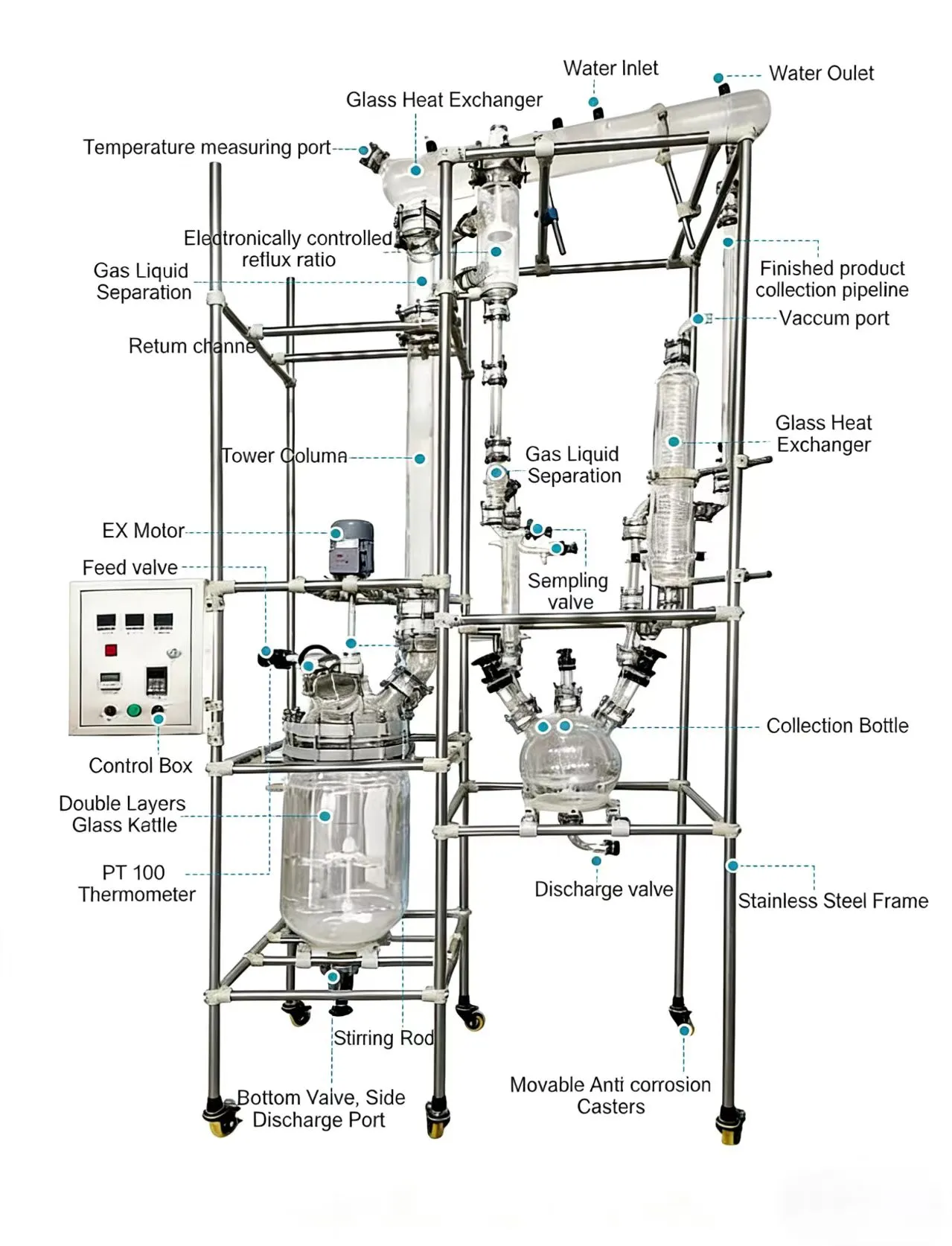
The industrial distillation column separates liquid mixtures by exploiting differences in component boiling points. Feed enters mid-column; vapor rises while liquid descends through structured packing or trays, creating continuous heat and mass transfer between phases.
Lighter volatile components exit from the top as overhead product. Heavier fractions collect at the bottom. Reflux ratio controls separation sharpness, and PLC automation enables real-time adjustment of temperature, pressure, and flow rates.
For vacuum operation, reduced pressure lowers effective boiling points — a critical advantage when processing temperature-sensitive compounds in pharmaceutical and specialty chemical production.
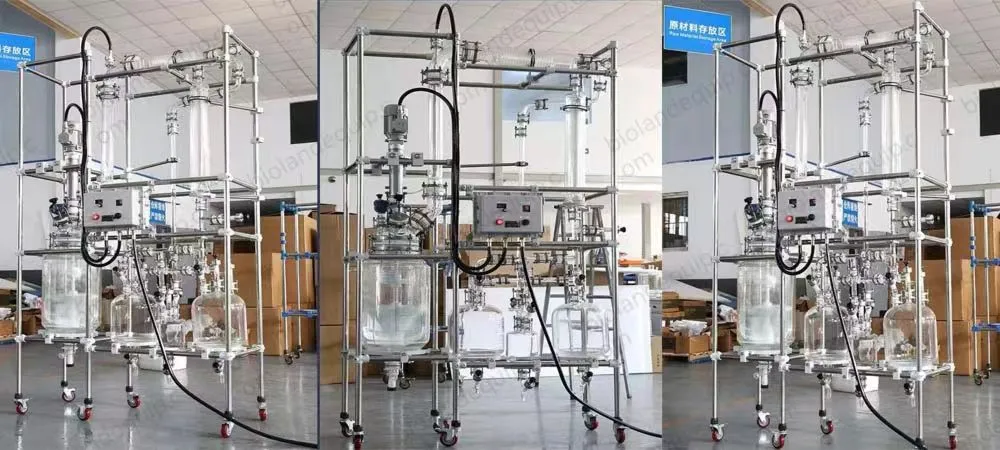
Why Choose Bioland?
15+ years. 3 continents. One point of contact.
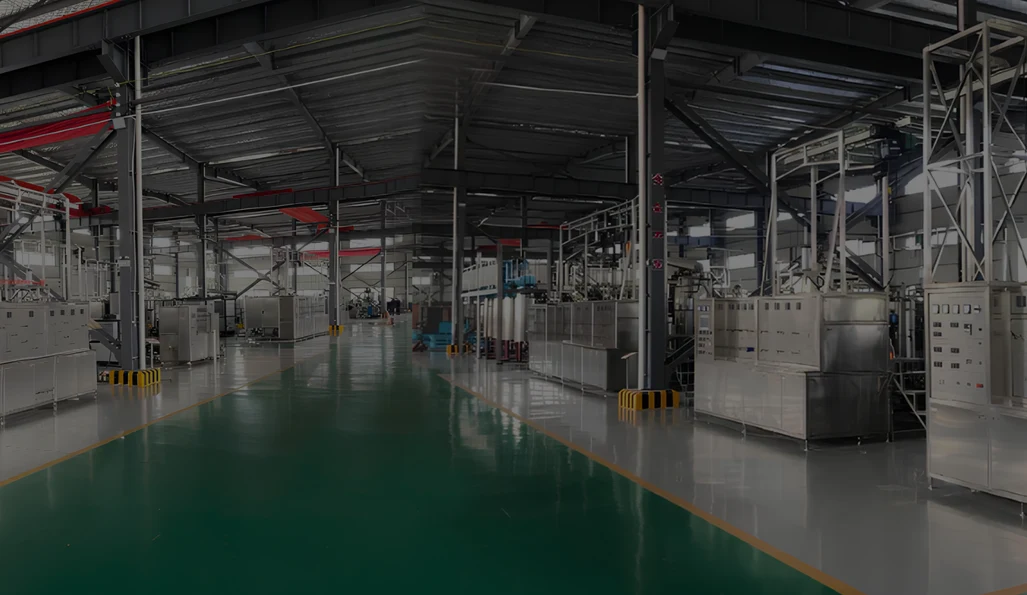
When you place an order, a dedicated production specialist is assigned to your project. You receive progress photos and videos at each manufacturing stage — so you always know what's been done, what's next, and when to expect shipment.
- Standard units ship in 5–7 business days
- Custom columns completed within 30 business days
- Pre-shipment inspection photos/videos sent for your approval before dispatch
- Factory Acceptance Testing (FAT) available at our facility for in-person inspection
- OEM/ODM orders welcomed — column height, diameter, material grade, packing type, and control system are all configurable to your specs
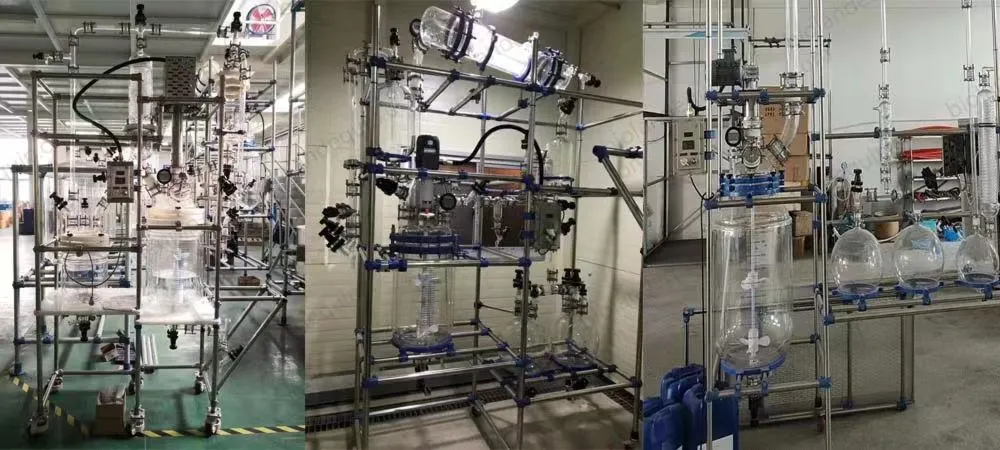
Technical Parameters
|
Model
|
JLF-5S
|
JLF-10S
|
JLF-20S
|
JLF-50S
|
JLF-100S
|
JLF-150S
|
JLF-200S
|
|
Distillation Tank Volume
|
5L
|
10L
|
20L
|
50L
|
100L
|
150L
|
200L
|
|
Collection Tank Volume
|
1L
|
2L
|
5L
|
10L
|
30L
|
50L
|
50L
|
|
Number of Collection Tanks
|
1-4 sets (Customizable based on the number of fractions to be collected)
|
|
Stainless Steel Material
|
304 Stainless Steel (Optional: 316 Stainless Steel)
|
|
Heating Tank
|
Oil bath heater or jacket with heating liquid circulation
|
|
Distillation Tower Height
|
Height can be customized according to the required number of theoretical plates
|
|
Distillation Tower Diameter
|
40mm, 50mm, 80mm, 100mm or other customizable sizes
|
|
Distillation Tower Heating (Optional)
|
Heating jacket or heating belt
|
|
Stirring Mode
|
Magnetic stirrer, magnetic rotating stirrer or top/head stirrer (magnetic seal or mechanical seal)
|
|
Operating Temperature Range
|
Room temperature to 300°C
|
|
Control System
|
Digital display stirring speed controller, timer for reflux receiver/distributor, heating jacket or heating temperature controller. For oil bath heating, an additional heating temperature controller is required.
|
|
Accessories (Optional)
|
Cooling circulator for condenser; Heater for jacketed distillation tank; Vacuum pump
|
|
Power Supply
|
220V or 380V, 50/60HZ
|
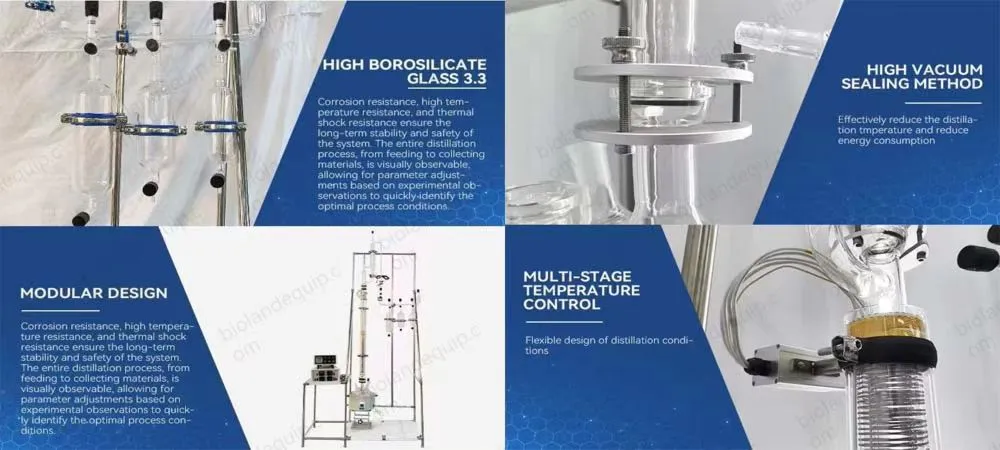
Services & After-Sales Support
|
Service
|
Details
|
|
Warranty
|
1-year quality warranty, lifetime maintenance support
|
|
Spare Parts
|
Pre-stocked for immediate dispatch
|
|
Shipping
|
Sea freight / Rail / Air freight — all regions
|
|
Pre-Sales Consultation
|
Free process-matching engineering review
|
|
Remote Commissioning
|
Video-guided startup support available
|
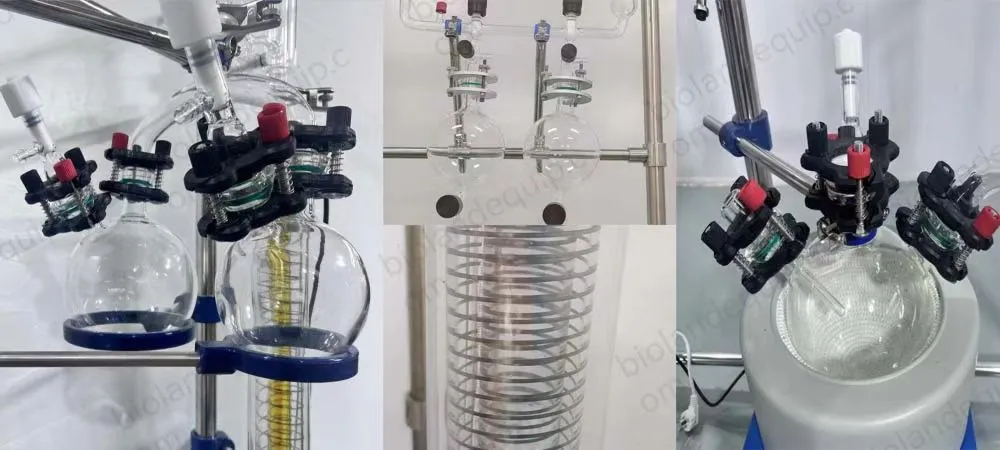
Application Fields
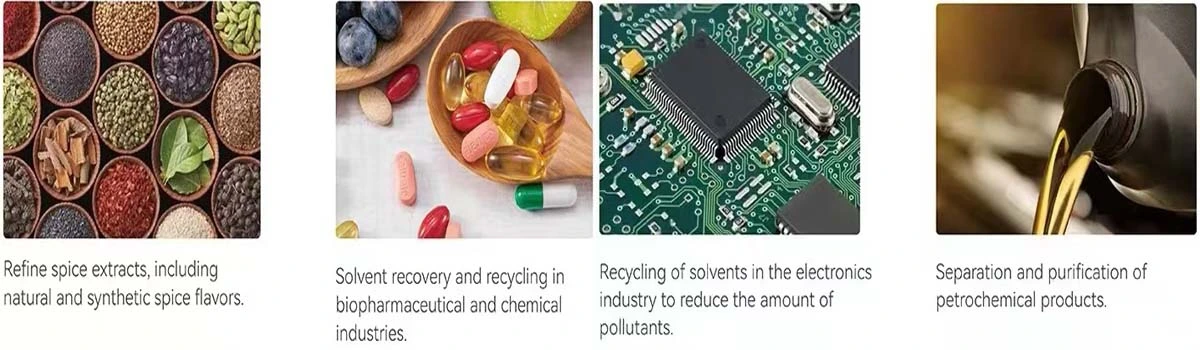
Petrochemical & Oil Refining
Fractional distillation of crude oil into naphtha, kerosene, diesel, and residuum fractions. High-throughput design with built-in corrosion resistance for sulfur-bearing feedstocks.
Pharmaceutical & Fine Chemicals
Solvent recovery and purification in cGMP environments — ethanol, methanol, and acetone recovery with azeotrope-breaking capability. Sanitary construction meets API manufacturing requirements.
Biofuels & Renewable Energy
Bioethanol dehydration to fuel-grade purity, working alongside molecular sieves to reduce water content to ppm levels per ASTM combustion specifications.
Food, Beverage & Cosmetics
Essential oil distillation, flavor concentration, and fragrance purification — where GMP compliance and contact-material safety determine whether a column qualifies or is rejected outright.
Construction & Quality Control
All longitudinal and circumferential weld seams undergo 100% Radiographic Testing (RT) or Ultrasonic Testing (UT). Nozzle-to-shell welds receive Dye Penetrant (PT) inspection for surface defect detection.
Before shipment, every unit passes hydrostatic pressure testing at 1.3–1.5× design pressure. Laser alignment confirms verticality and roundness tolerances — plumbness deviation as small as a few millimeters causes uneven liquid distribution across packing, which directly reduces separation efficiency.
Tray support ring levelness is held within ±2mm. Electropolished interior surfaces (Ra < 0.4µm) are standard for pharmaceutical applications requiring sanitary, dead-leg-free design.
What ships with your column:
- CE & ISO certificates + optional UL/SGS documentation
- Full material traceability records
- Weld inspection reports (RT/UT/PT)
- Hydrostatic pressure test data
- Dimensional inspection report
FAQ
Q: What packing type works best for vacuum distillation?
A: For vacuum service, structured packing or random packing (θ ring or spring packing) is preferred — both deliver low pressure drop, which protects heat-sensitive materials during separation. Trays are better suited for high-pressure or fouling-prone services where periodic mechanical cleaning is required.
Q: What causes flooding, and how is it prevented?
A: Flooding occurs when vapor velocity exceeds the column's hydraulic capacity — liquid can no longer flow downward against rising vapor, causing efficiency to collapse. Think of it like trying to walk down an escalator moving upward too fast. It's corrected by reducing feed rate or reflux ratio; severe cases may require internal redesign or packing upgrade.
Q: Can the column handle corrosive acids?
A: Yes. Titanium alloy or glass-lined construction is recommended for sulfuric or hydrochloric acid service. PTFE-lined columns are available for moderate-temperature corrosive applications. Material selection is confirmed based on your specific process chemistry before manufacturing begins.
Q: Can I increase throughput on an existing column?
A: Yes — replacing conventional trays with high-capacity internals, or upgrading from random to structured packing, can significantly increase throughput without replacing the column shell. Send us your current column dimensions and we'll assess upgrade options.
Q: How do I know when to clean a fouling-prone column?
A: Columns handling polymerizing or scaling fluids include manway access ports at each tray section. Differential pressure (dP) monitoring across packing sections provides early warning — when dP begins rising above baseline, it signals accumulated fouling before separation efficiency visibly degrades.
Contact Us
Get a free quote or technical consultation for an industrial distillation column within 24 hours. Email us at info@biolandequip.com — tell us your process and we'll handle the rest.