Glass Fractionating Column for Precision Distillation | Bioland Industrial & Lab Solutions
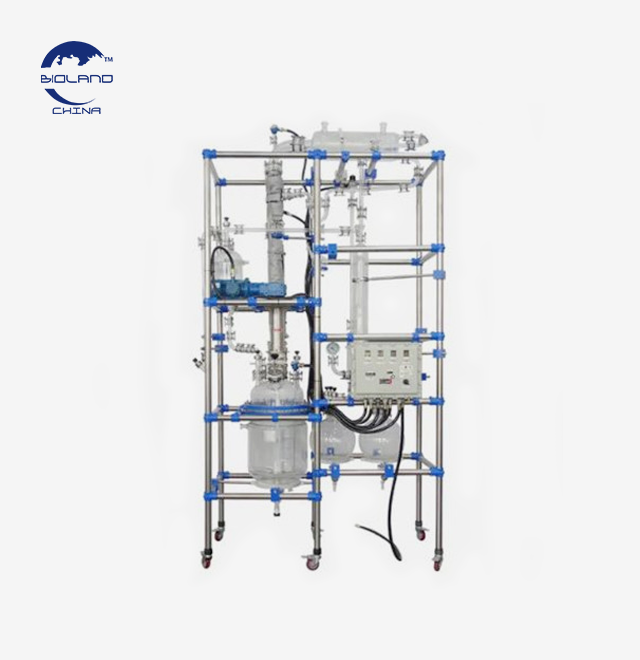
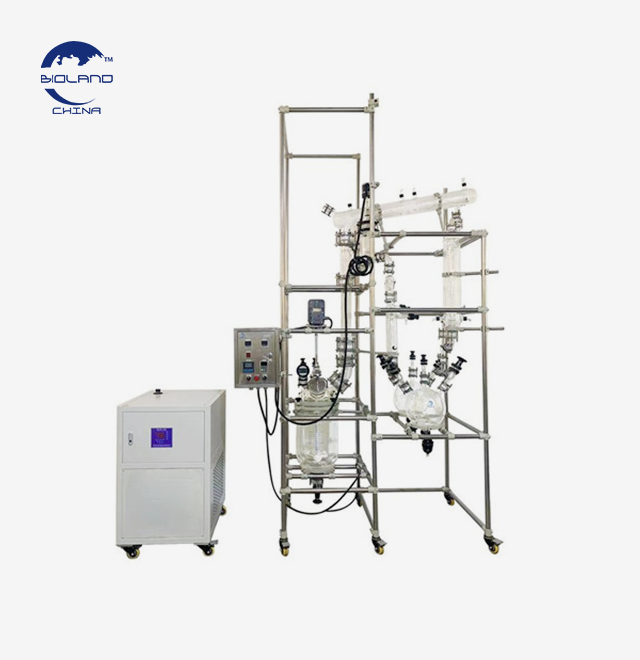
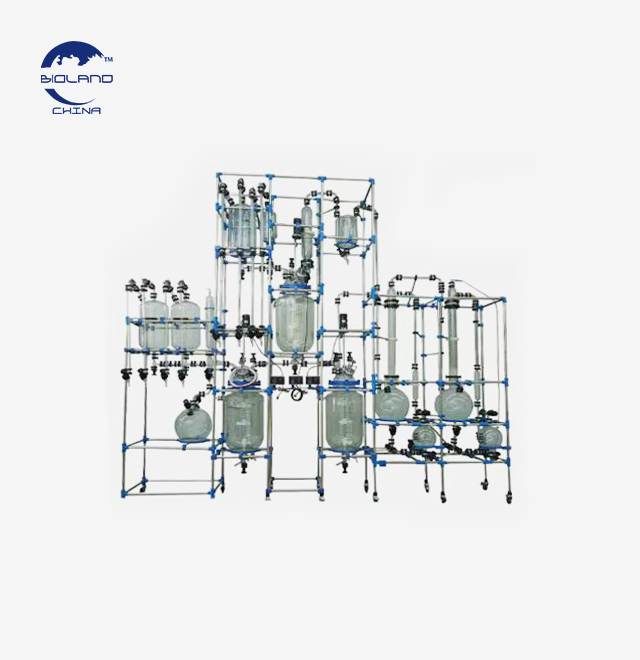
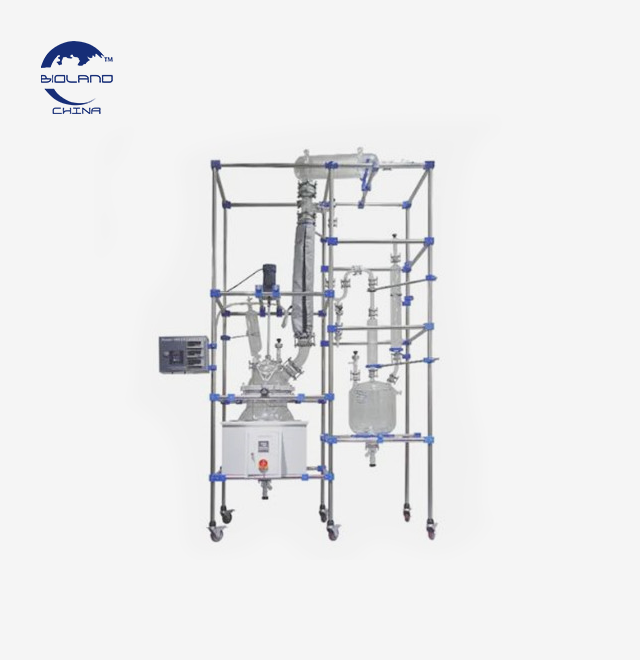
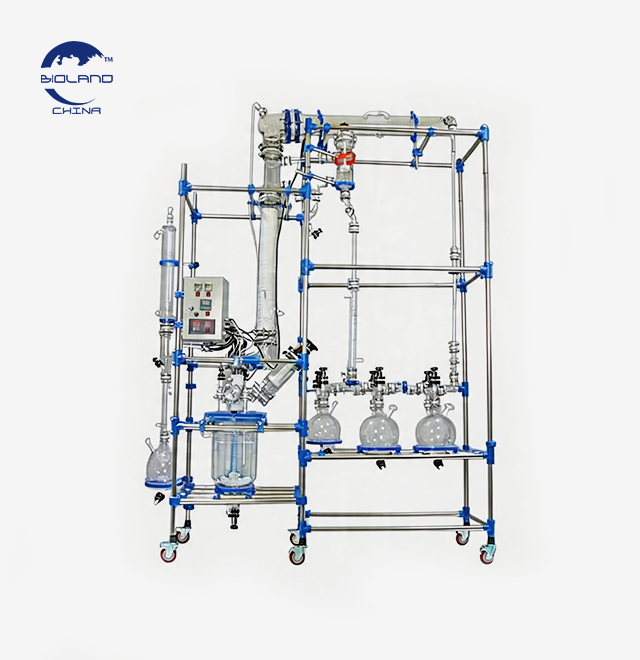
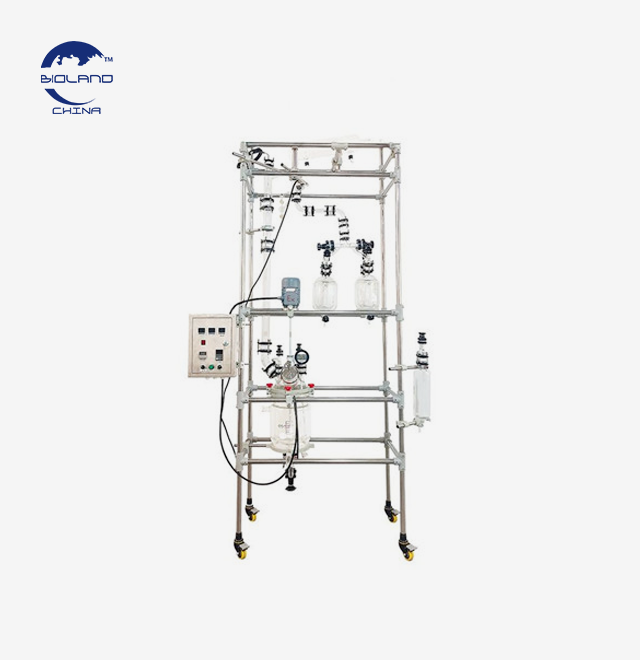
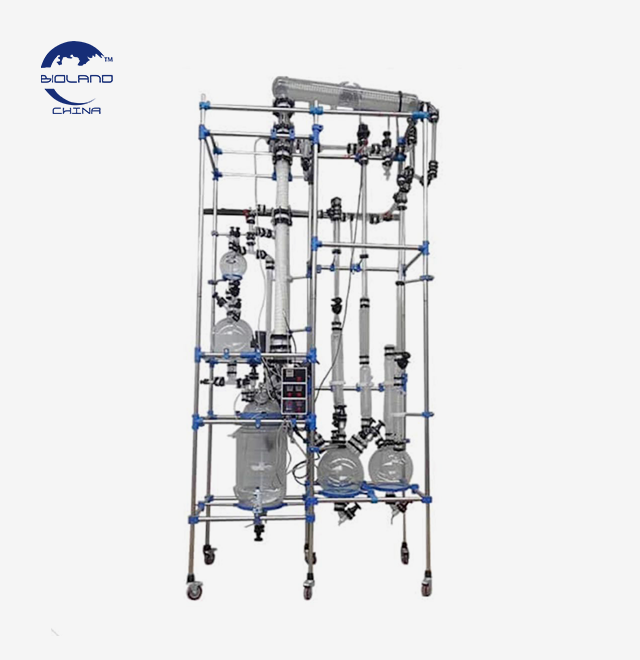
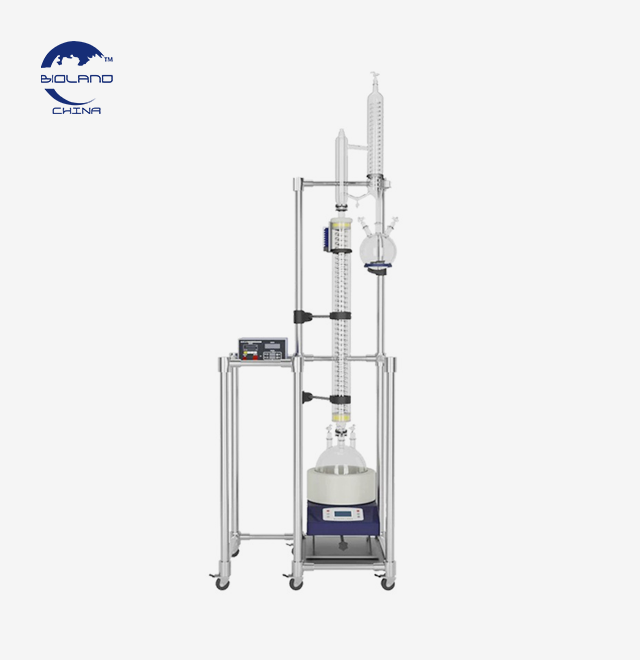
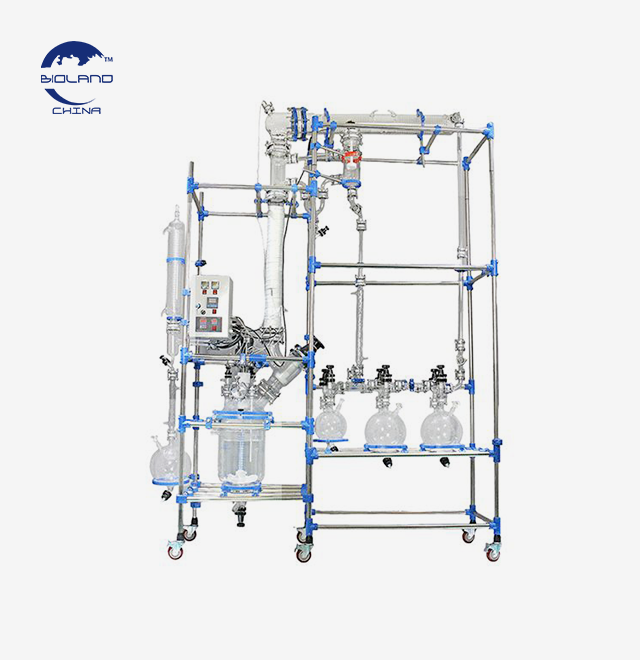
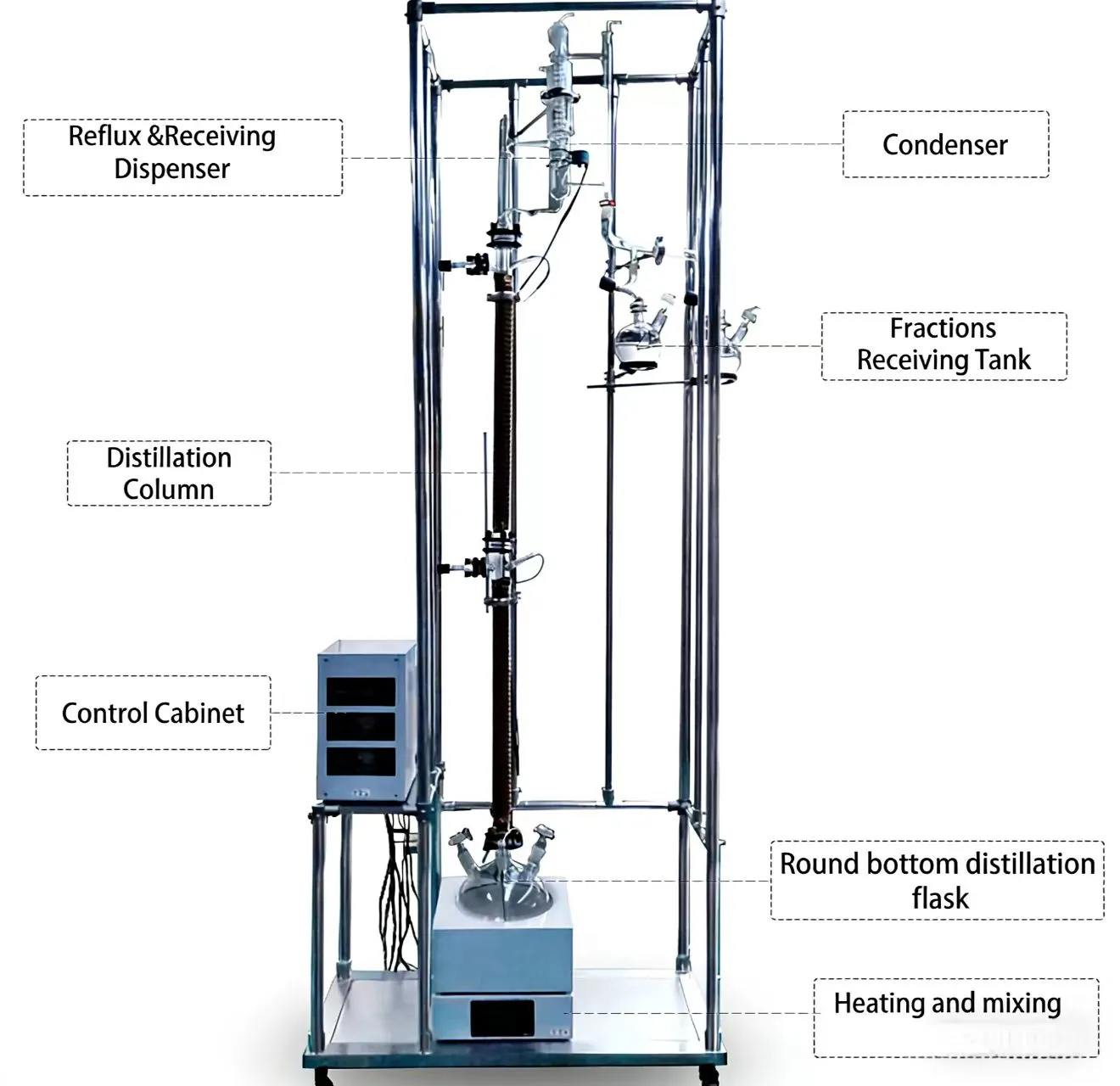
Bioland's glass fractionating columns separate liquid mixtures with close boiling points through controlled vaporization and condensation cycles. Built from Borosilicate 3.3 glass and available in 5–100L volumes, they support vacuum operation down to 1 mbar. With 15+ years of manufacturing experience and CE/ISO/GMP certifications, our columns serve pharmaceutical, chemical, and essential oil industries worldwide. PLC digital control, adjustable reflux ratios, and OEM/ODM customization are standard options. Stock units ship in 5–7 days.
Key Features & Benefits
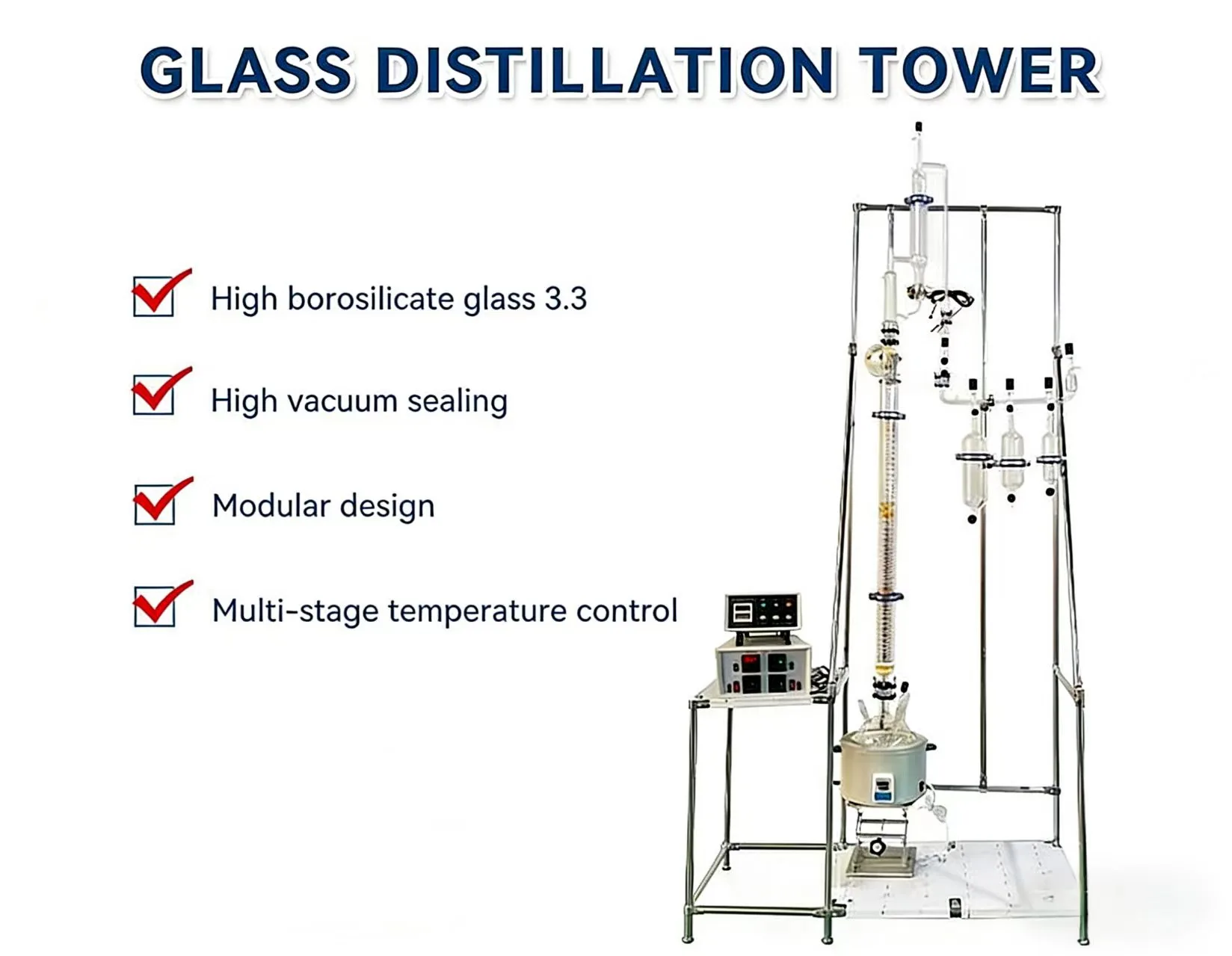
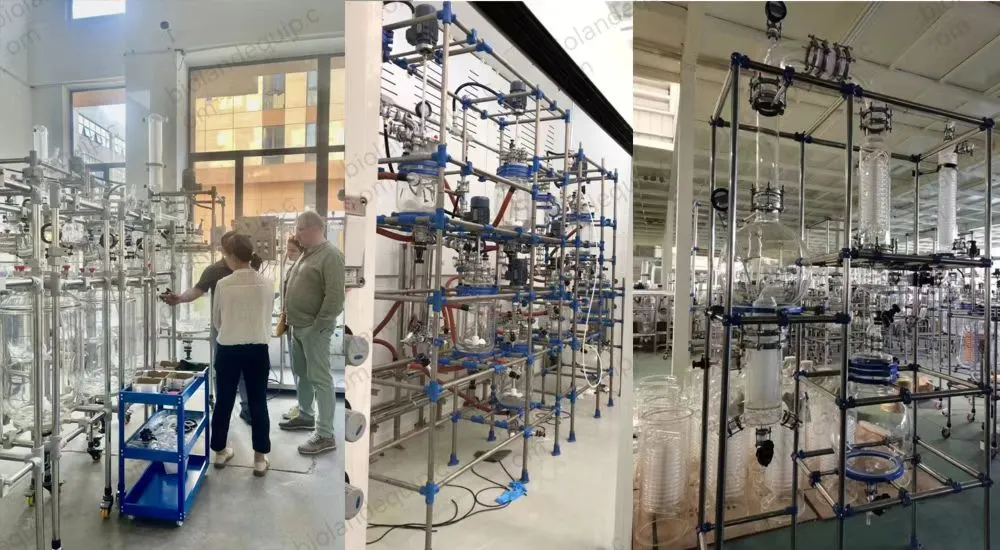
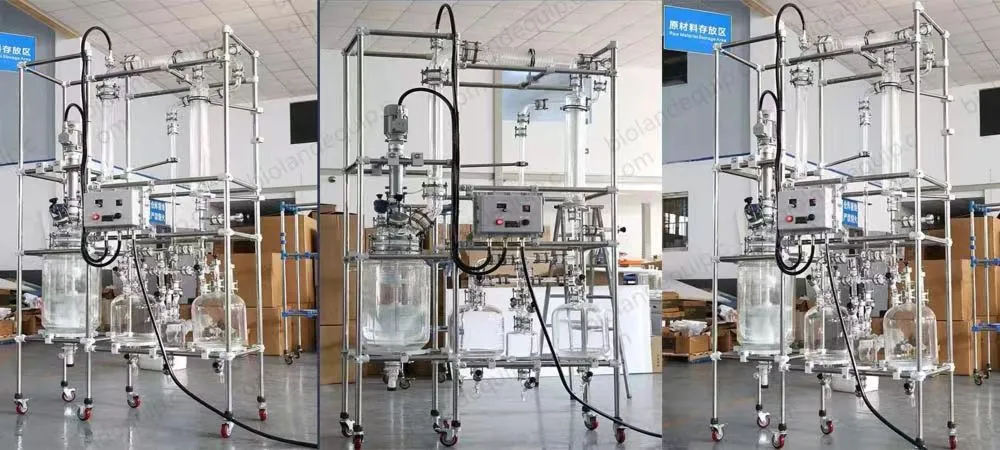
Full visual transparency gives operators a direct view of the reflux line and phase transitions during live runs. When flooding starts, you see it immediately — before yield is affected — and adjust heat input without shutting down. In practice, this cuts process intervention time by allowing real-time correction rather than post-run analysis.
Three column configurations let you match hardware to your actual separation challenge:
- Vigreux columns — low liquid hold-up, best for small volumes and boiling point differences above 25°C. Simple to clean, minimal dead volume.
- Oldershaw tray columns — structured sieve-plate design for moderate-to-high separation efficiency. Good balance between throughput and resolution.
- Packed columns — highest theoretical plate count per unit height. The right choice when boiling point differences fall below 10°C, though liquid hold-up is higher.
PLC/PID digital control lets you lock in exact reflux ratios and heat profiles before a run starts. The system self-adjusts during operation, which matters most during overnight or multi-hour distillations where manual monitoring isn't practical.
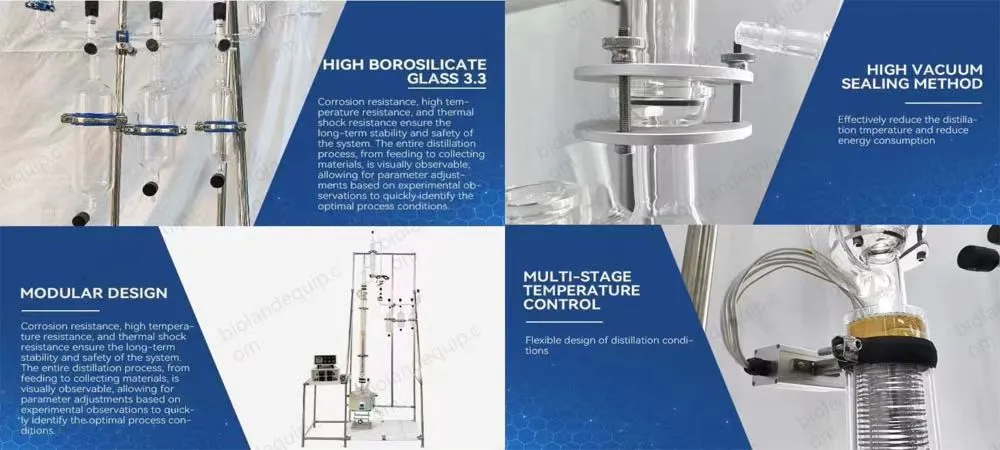
Hydrolytic Class 1 glass construction means zero heavy metal leaching into your product. For pharmaceutical API purification or food-grade processing, this isn't a marketing claim — it's a documented material standard verified by third-party testing.
How It Works?
Vapor rising from the heated flask travels up the column and contacts cooler descending liquid. Each contact point transfers volatile components upward — this is what chemists call a theoretical plate. More plates mean sharper separation between components.
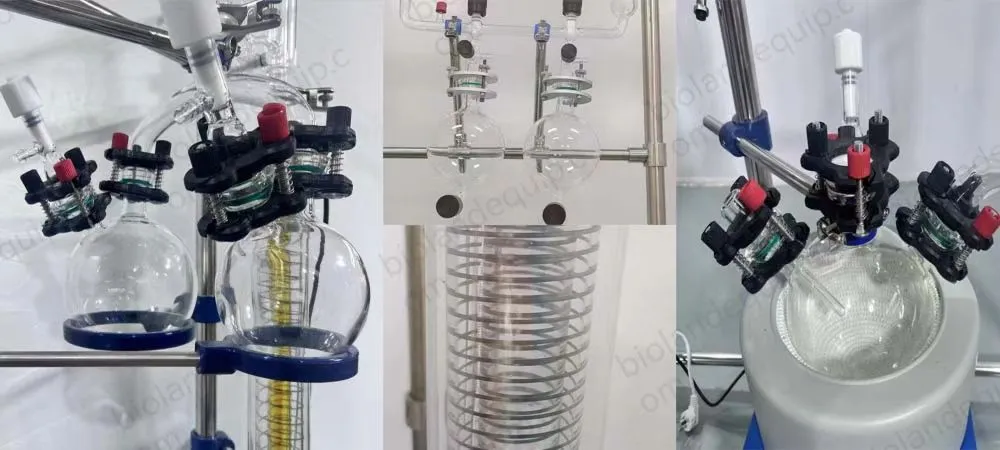
- In a Vigreux column, angled internal glass fingers (indentations) increase vapor-liquid contact area without significantly raising pressure drop.
- In a packed column, glass rings or structured packing create a dense contact matrix, reducing HETP (Height Equivalent to a Theoretical Plate — the shorter, the better) and enabling separation of mixtures with very similar boiling points.
The reflux ratio — how much condensed vapor returns to the column versus exits as product — is the primary dial you control. Higher ratio = cleaner product, slower output. Lower ratio = faster throughput, less sharp separation. The transparent column body lets you observe the reflux boundary directly and tune accordingly.
Technical Parameters
|
Model
|
JLF-5S
|
JLF-10S
|
JLF-20S
|
JLF-50S
|
JLF-100S
|
JLF-150S
|
JLF-200S
|
|
Distillation Tank Volume
|
5L
|
10L
|
20L
|
50L
|
100L
|
150L
|
200L
|
|
Collection Tank Volume
|
1L
|
2L
|
5L
|
10L
|
30L
|
50L
|
50L
|
|
Number of Collection Tanks
|
1-4 sets (Customizable based on the number of fractions to be collected)
|
|
Stainless Steel Material
|
304 Stainless Steel (Optional: 316 Stainless Steel)
|
|
Heating Tank
|
Oil bath heater or jacket with heating liquid circulation
|
|
Distillation Tower Height
|
Height can be customized according to the required number of theoretical plates
|
|
Distillation Tower Diameter
|
40mm, 50mm, 80mm, 100mm or other customizable sizes
|
|
Distillation Tower Heating (Optional)
|
Heating jacket or heating belt
|
|
Stirring Mode
|
Magnetic stirrer, magnetic rotating stirrer or top/head stirrer (magnetic seal or mechanical seal)
|
|
Operating Temperature Range
|
Room temperature to 300°C
|
|
Control System
|
Digital display stirring speed controller, timer for reflux receiver/distributor, heating jacket or heating temperature controller. For oil bath heating, an additional heating temperature controller is required.
|
|
Accessories (Optional)
|
Cooling circulator for condenser; Heater for jacketed distillation tank; Vacuum pump
|
|
Power Supply
|
220V or 380V, 50/60HZ
|
Construction & Materials
Every glass fractionating column body is made from Borosilicate 3.3 glass conforming to ASTM E438 Type I, Class A and ISO 3585. Before dispatch, each unit undergoes polariscopic stress analysis (a light-polarization inspection method that reveals internal stress patterns invisible to the naked eye). Residual stress is the most common cause of column failure under thermal cycling or vacuum — we eliminate it at the manufacturing stage, not after a field failure.
Ground glass joints in 24/40 or 29/32 standard taper are dimensionally verified and vacuum-tested. For systems running below 1 mbar, PTFE sleeving is available and recommended. Metal support frames use SUS304, SUS316L, or titanium — selected based on your process chemistry, not as a default.
Internal geometry is confirmed for each configuration type: indentation depth and angle for Vigreux designs, support plate flatness for Oldershaw columns, and packing void fraction for packed units. Final visual inspection follows DIN/ISO criteria for freedom from stones, heavy cords, and air lines.
Application Fields
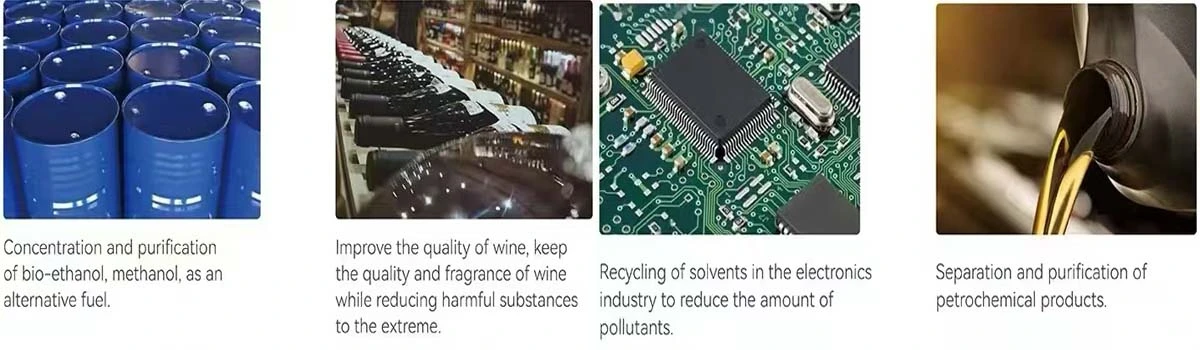
Pharmaceutical Intermediate Purification
Separating structural isomers during API synthesis demands material inertness above all else. Glass columns eliminate metal contamination risk at the source, keeping products within GMP purity thresholds. Several of our pharma clients run continuous campaigns exceeding 200 hours without column changeover.
Essential Oil Deterpenation
Citrus and botanical oil processors use vacuum-jacketed configurations to remove thermally unstable terpenes at low temperatures, concentrating oxygenated aromatic compounds without degradation. The result is a higher-value, longer-stable extract.
Petrochemical R&D and Pilot Scale
These columns replicate refinery tower behavior at bench scale, handling complex hydrocarbon mixtures under high vacuum. Researchers can directly observe reflux transition zones during fuel cut separation — a capability that bench-scale metal columns don't provide.
Biopharmaceutical Solvent Recovery
Recovering high-purity solvents (ketones, halogenated solvents, aggressive organics) from drug synthesis streams is economically and environmentally necessary. Borosilicate 3.3's chemical resistance handles these streams without contamination or column degradation.
Quality Certifications & Compliance
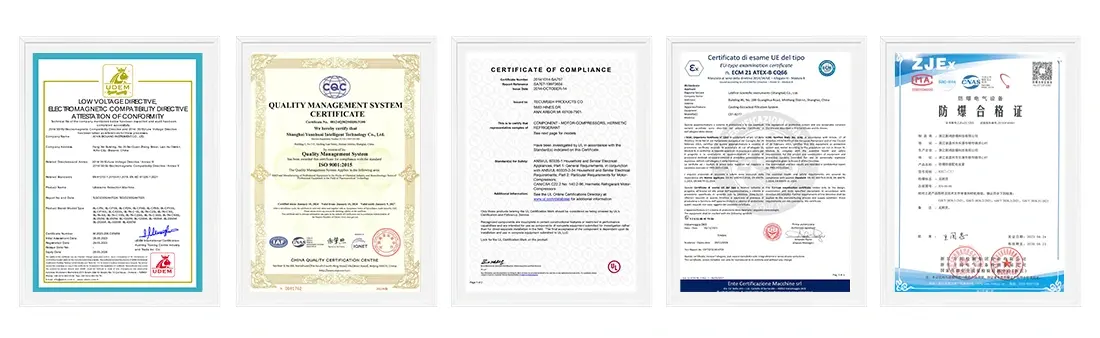
All equipment ships with CE and ISO documentation included in the delivery package. GMP and FDA readiness is built into material selection and manufacturing records, not applied as a label after production. ATEX-rated configurations are available for flammable solvent environments. SGS and UL documentation are available upon request for specific export markets.
Certificate numbers and third-party test reports are available on request.
Services & After-Sales Support
| Stage |
What We Provide |
| Pre-Sales |
Process consultation, column selection guide, custom design review |
| Installation |
Remote commissioning guidance or on-site support (by arrangement) |
| Training |
Operation manuals, video tutorials, application notes |
| Warranty |
12 months on all components from delivery date |
| Long-Term |
Lifetime technical support, spare parts supply, upgrade options |
| Logistics |
Sea, air, and rail freight arranged globally; DDP terms available |
Why Choose Bioland?
Xi'an Bioland has manufactured distillation and separation equipment for over 15 years, supplying customers across 40+ countries in pharmaceutical, chemical, and research sectors. What makes the difference in practice:
- Dedicated production tracking: A named specialist sends you weekly photos or video updates throughout manufacturing. You know the status of your order without chasing.
- Shipment only after your approval: Final product inspection photos or on-site Factory Acceptance Testing (FAT) at our Xi'an facility before anything is packed.
- OEM/ODM engineering support: Custom column geometry, modified joint standards, integrated heating mantles, and branded documentation — all handled in-house.
- One-year warranty + lifetime maintenance: Parts supply and technical support don't stop after the warranty period.
FAQ
Q: What is the practical difference between a Vigreux and a packed column?
A: Vigreux columns suit small volumes with boiling point differences above 25°C. They hold less liquid, clean more easily, and work well for straightforward separations. Packed columns are engineered for difficult separations where ΔT falls below 10°C — they achieve more theoretical plates per unit height (lower HETP) but retain more liquid and require more careful flooding management. If you're unsure which applies to your mixture, send us your component data and we'll advise.
Q: How do I prevent flooding during operation?
A: Flooding occurs when liquid accumulates faster than vapor can push through. The two controls are heat input rate and reflux ratio — reduce either when you see liquid accumulating at the base of the column. The transparent glass body gives you direct visual feedback from the moment flooding begins, well before yield is affected.
Q: Can the column operate under high vacuum?
A: Yes. Borosilicate 3.3 handles vacuum distillation reliably. For operation below 1 mbar, use PTFE-sleeved joints rather than grease alone, and perform a pre-run leak check. Inspect for stress cracks — particularly around joints — before applying deep vacuum to a new unit.
Q: How do I select the correct column type for my mixture?
A: Base the decision on boiling point difference (ΔT) and volume:
- ΔT > 25°C, small volume → Vigreux
- ΔT 10–25°C, medium volume → Oldershaw tray column
- ΔT < 10°C → packed column with low HETP packing; consider silvered vacuum jacketing if thermal loss is an issue
Q: What is the recommended cleaning procedure for a fouled column?
A: Start with solvent washing matched to the residue type. For stubborn organic deposits, soak in an oxidizing acid solution or piranha solution (H₂SO₄/H₂O₂) with appropriate safety precautions, then rinse thoroughly with deionized water and oven-dry at 120°C. Do not use mechanical scrapers inside packed columns.
Q: Do you support custom column sizes and configurations?
A: Yes. Standard range is 5L to 100L. Custom lengths, non-standard joint sizes, modified packing types, and integrated instrumentation are all accepted. Lead time for custom orders is 30 business days from drawing approval. We provide dimensioned drawings for your confirmation before production starts.
Contact Us
Email: info@biolandequip.com — describe your glass fractionating column application and we'll respond within 24 hours.