Solid Phase Reactor Selection Guide: Batch vs Continuous Use
Jul 7, 2026
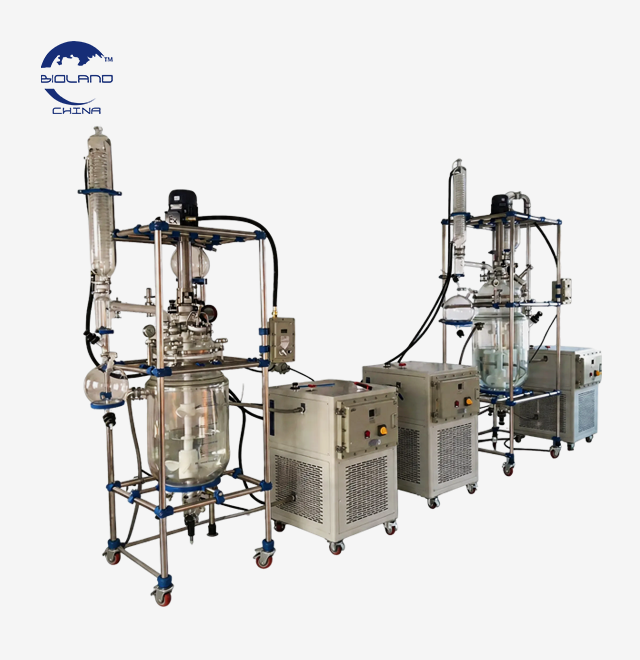
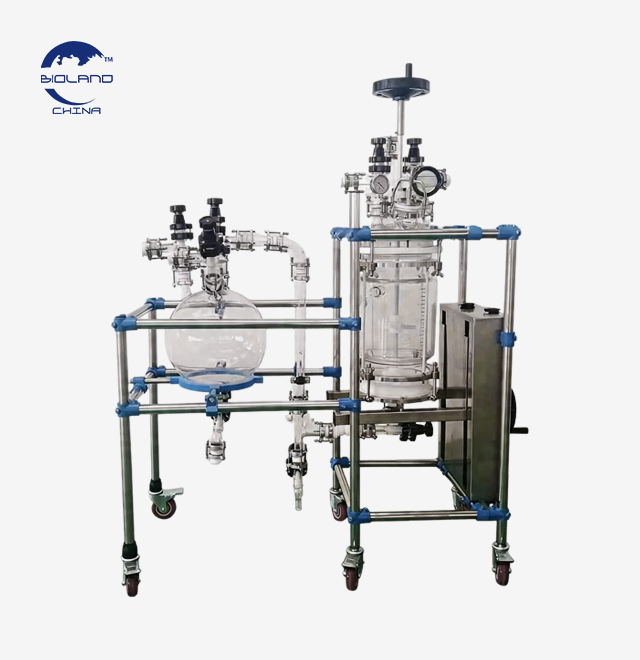
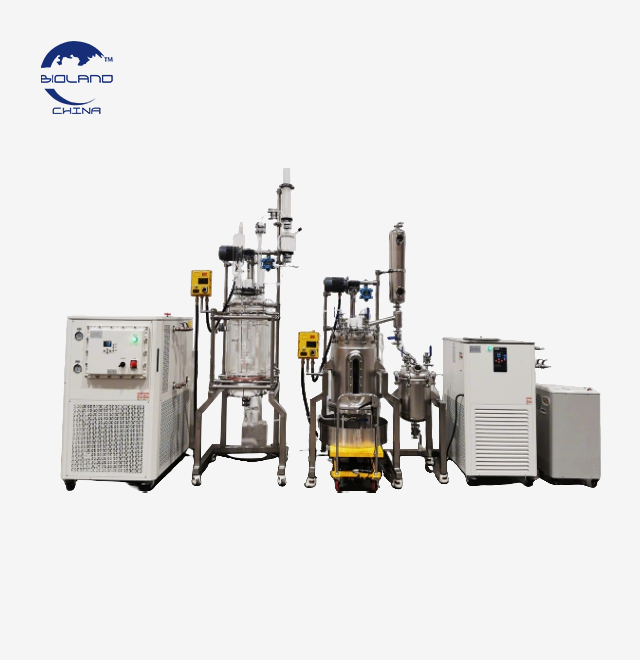
Before buying a solid phase reactor, the first thing a pharmaceutical, fine chemical, or new material manufacturer needs to do is figure out if they need a batch or continuous configuration. If they get this wrong, they will end up paying for extra capacity or flexibility that they never use. Bioland Instrument's solid phase reactor line is designed to give production teams a real choice instead of a compromise. It has explosion-proof construction for 20L, 30L, 50L, and 100L volumes, high borosilicate glass that can work at temperatures ranging from -20°C to 200°C, and PTFE filtration that is made for both single-batch synthesis and higher-throughput repeat cycles. As you read this guide, you'll learn how batch and continuous solid phase reactor systems really work. It also compares their real performance and cost profiles and explains how makers all over the world are using our products to match reactor design to production reality instead of guessing.
Understanding Batch and Continuous Solid Phase Reactor Systems
What Defines a Batch Solid Phase Reactor Cycle
It takes one full charge of material to go through loading, reaction, cleaning, and release in a batch solid phase reactor. Then the tank is cleaned and refilled. Because each cycle can work on its own, batch operation is the best way to do multi-step peptide synthesis, make small molecules as intermediates, or change reaction settings between steps in any process. A batch solid phase reactor lets operators see every step of the cycle, from the beginning of coupling to the end of filtration, because the whole charge stays in one glass vessel.
How Continuous or Repeat-Cycle Operation Changes the Workflow
On the other hand, continuous or semi-continuous operation keeps things moving through the system in cycles that overlap, so there isn't much downtime between charges. In real life, most solid phase chemistry is not run as a true continuous flow process like liquid-phase reactions can be. To get continuous-style output, makers run a solid phase reactor in short, uniform repeat groups with little time between cycles. This method works well for established, high-volume processes where the chemistry has already been tested and speed and consistency become more important than flexibility.
Core Structural Features Shared Across Both Configurations
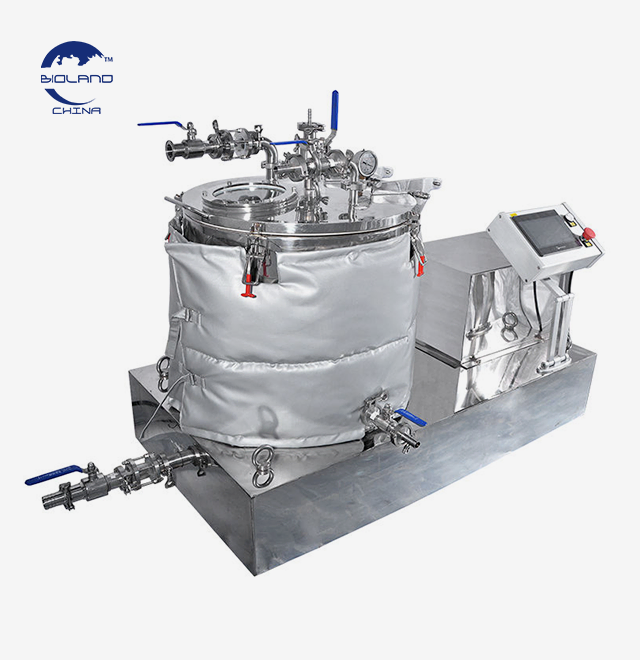
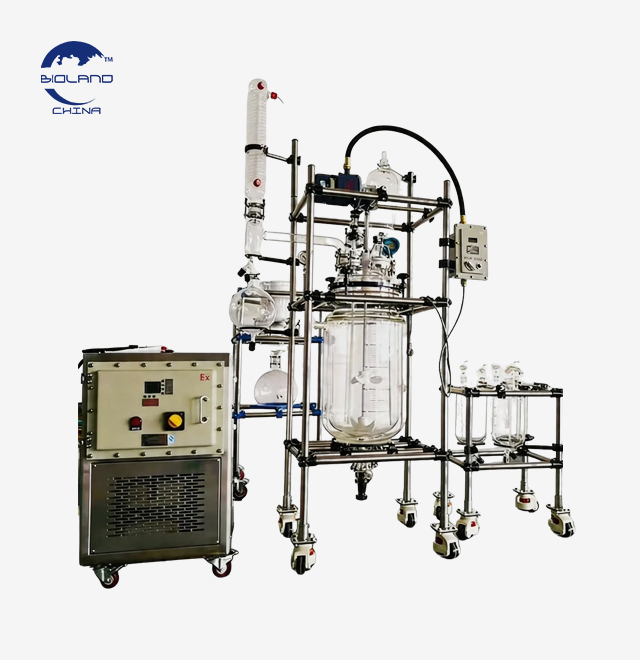
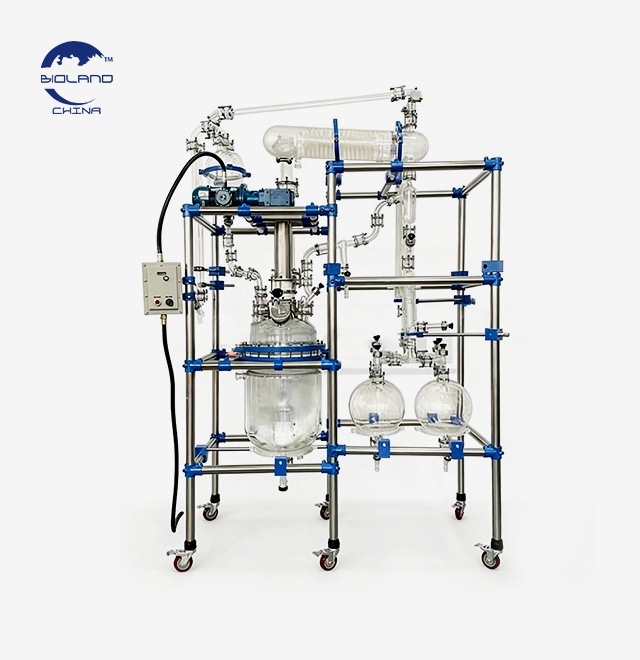
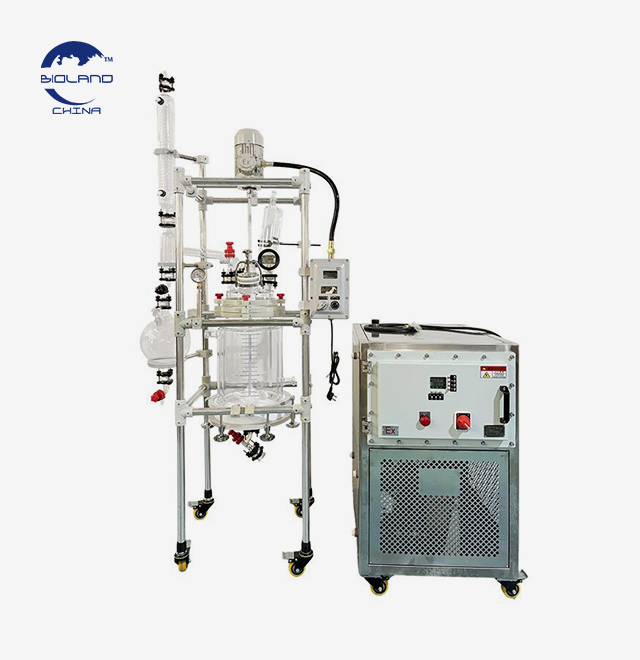
Whichever mode you choose, the underlying vessel matters just as much as the cycle strategy. Bioland's solid phase reactor is built from high borosilicate glass for chemical stability and mechanical strength, with a large-diameter PTFE filtration core as standard and optional stainless steel or titanium filter elements for more demanding chemistries. Programmable stirring and jacket-based temperature control support both single, carefully monitored batches and rapid repeat cycles, so the same core platform can serve either operating philosophy depending on how it is configured and scheduled.
Explosion-Proof Design and Safety Architecture
Because solid phase synthesis frequently involves flammable solvents and high-pressure conditions, our solid phase reactor is built on industrial-grade explosion-proof standards from the ground up, with a high-strength pressure-bearing structure and precision explosion-proof control system rated for 20L, 30L, 50L, and 100L volumes. This safety architecture is identical whether the reactor is scheduled for single-batch R&D work or high-frequency repeat production, which means manufacturers do not have to trade safety for throughput as they scale.
Comparing Performance, Efficiency, and Operating Costs
Reaction Consistency and Repeatability Across Cycles
Performance starts with repeatability, and this is where a well-engineered solid phase reactor earns its keep. Programmable stirring and precise jacket temperature control mean each cycle, batch or repeat, follows the same heating, mixing, and washing profile, which keeps coupling efficiency and impurity levels consistent from one run to the next. For multi-step peptide or resin-based synthesis, this consistency is what ultimately determines whether a scale-up succeeds, since even small process drift compounds across dozens of synthesis cycles.
Filtration Speed and Downstream Processing Time
The large-diameter PTFE filtration design built into every solid phase reactor accelerates solid-liquid separation at the end of each cycle, directly shortening downstream processing time. Faster filtration matters more in repeat-cycle operation, where every minute saved in the wash-and-discharge phase multiplies across dozens of cycles per week, while in single-batch R&D work the priority shifts toward filtration precision and clean recovery of high-value intermediates rather than raw speed.
Operating Cost Differences Between Batch and Repeat-Cycle Use
Operating costs change depending on how the equipment is used. A batch solid phase reactor that is only used sometimes for research and development or small-scale production uses less liquid and electricity per unit of calendar time, but it costs more per kilogram of product because the time it takes to clean and set up is spread out over one charge. Repeat-cycle operation lowers cost per kilogram by spreading out the time needed for setup and cleaning over more cycles. However, because the same PTFE core is doing more work, it needs stricter process control and more filter upkeep.
Case Study: Peptide API Scale-Up for a German Contract Manufacturer
A German contract manufacturer working on a therapeutic peptide API ran into a problem when they tried to scale up. Their bench-scale synthesis worked well, but when they moved it to pilot scale, they got inconsistent yields and had to wait longer than expected between steps of synthesis. As production output went up, the chance of cross-contamination between batches of resin was also growing.
To make sure that every wash and coupling step was the same, the client used a Bioland-customized 50L solid phase reactor with programmable stirring and PLC-controlled temperature cycling. The built-in PTFE filter made it easy to separate solids and liquids quickly between stages of synthesis, so resin didn't have to be moved to a different vessel. This cut cycle time by about 20% while keeping coupling efficiency the same as the scale-up happened. Because it wasn't built to explode, the client could safely do solvent-heavy steps on a pilot scale without having to add a separate containment system.
Key Factors to Consider When Selecting the Right Reactor Configuration
Matching Reactor Volume to Your Batch Size and Growth Plans
Volume selection should reflect both current batch size and expected growth, since moving between volumes later often means requalifying a new vessel. A solid phase reactor purchased at 20L or 30L suits early-stage R&D and process development, while 50L and 100L configurations support pilot-scale and early commercial production; many Bioland clients specifically choose a volume with headroom for the next scale-up phase rather than sizing exactly to today's batch.
Solvent Compatibility and Filter Media Selection
Filter media selection depends entirely on the chemistry involved. The standard PTFE sintered filter core handles a wide range of organic solvents, but stainless steel or titanium elements are available for more aggressive reagent systems, alongside various filter cloths and membranes matched to specific particle sizes. Choosing the right filter configuration for yoursolid phase reactor up front avoids costly mid-project retrofits once a process moves from bench scale to pilot production.
Automation Level: Manual Control Versus PLC-Driven Cycles
Automation level should match your production frequency. Occasional R&D batches may not justify full PLC automation, while manufacturers running frequent repeat cycles benefit substantially from PLC-controlled temperature ramps, stirring profiles, and filtration sequencing, since automation reduces operator variability and frees technical staff for higher-value process development work. Bioland offers both manually operated and fully PLC-automated solid phase reactor configurations depending on this operating rhythm.
Case Study: Fine Chemical Dye Intermediate Production in Poland
An Poland specialty chemical producer manufacturing a dye intermediate needed to run frequent, back-to-back solid phase synthesis cycles but was losing production hours to slow filtration and inconsistent crystal morphology between batches, which affected downstream color consistency. Their existing stainless equipment also showed early corrosion signs from repeated exposure to the reaction solvent system.
Switching to a Bioland 30L solid phase reactor with a PTFE filtration core and programmable cooling profile let the client standardize crystal formation across repeat cycles, improving batch-to-batch color consistency. The faster PTFE filtration also reduced total cycle time, allowing the client to run more production cycles per week on the same footprint, while the borosilicate glass construction eliminated the corrosion issues they had faced with their previous stainless setup.
Choosing the Best Solution for Your Production Process
When Batch Operation Is the Right Choice
Batch operation remains the right choice whenever process parameters are still evolving, product volumes are modest, or different products share the same equipment on a rotating schedule. A single-charge solid phase reactor gives R&D and small-batch producers maximum flexibility to adjust temperature, stirring, and filtration parameters between runs without disrupting an established production rhythm, which is exactly why most peptide and small-molecule development programs start here.
When Repeat-Cycle or Higher-Throughput Operation Makes Sense
Once a process is validated and volume demand is consistent, shifting toward faster, standardized repeat cycles on the same solid phase reactor platform typically lowers cost per unit and increases weekly output. This shift works best when automation, filter media, and cleaning protocols have already been optimized during the batch phase, since repeat-cycle operation amplifies the impact of any inconsistency that was tolerable at lower volumes.
Practical Checklist Before You Order
Before finalizing your solid phase reactor order, confirm your target batch volume against near-term growth plans, verify filter media compatibility with your solvent system, decide whether PLC automation matches your production frequency, and ask whether your supplier can provide weekly progress photos or video updates and a Factory Acceptance Test once the unit is ready, since these practices reveal how seriously a manufacturer stands behind its equipment after the purchase order is signed.
Conclusion
Batch and continuous-style operation each solve a different production problem, and the rightsolid phase reactor should be able to support either path as your process matures. Bioland Instrument's explosion-proof, fully customizable solid phase reactors, validated across pharmaceutical peptide scale-up and fine chemical repeat-cycle production, give manufacturers a platform that grows with their process rather than one they outgrow after a single scale-up phase.
FAQ
Q1: What is the difference between batch and continuous solid phase reactor operation?
Batch processes one complete charge per cycle; continuous-style operation runs rapid, standardized repeat cycles for higher throughput.
Q2: What volumes does Bioland's solid phase reactor come in?
Explosion-proof configurations are available in 20L, 30L, 50L, and 100L working volumes.
Q3: Can the filter media be changed for different chemistries?
Yes, PTFE is standard, with optional stainless steel or titanium elements and various filter cloths available.
Q4: Is PLC automation necessary for every application?
No, automation benefits high-frequency repeat cycles most, while occasional R&D batches can run manually.
Q5: What is the typical lead time for a customized unit?
Customized solid phase reactors typically ship within 30 business days; standard units ship in 5–7 days.
Ready to Match Your Process to the Right Reactor?
If your production line is stuck choosing between flexibility and throughput, Bioland Instrument can help you configure a solid phase reactorthat fits your actual batch size, solvent system, and growth trajectory, not a generic catalog spec. With 15+ years of manufacturing experience, CE and ISO certification, full GMP/FDA compliance, and complete OEM/ODM customization down to explosion-proof rating and automation level, we turn a difficult scale-up decision into a documented, supported production solution. Reach our engineering team at info@biolandequip.com to discuss your batch or repeat-cycle requirements and receive a tailored recommendation.
References
1. Amarnath, P., and Sadana, A. Bioseparations: Downstream Processing for Biotechnology. CRC Press.
2. U.S. Food and Drug Administration. Guidance for Industry: Process Validation — General Principles and Practices.
3. Mullin, J. W. Crystallization. Butterworth-Heinemann.
4. Chin, J., and Augustine, M. Solid Phase Peptide Synthesis: A Practical Approach. Oxford University Press.
5. American Society of Mechanical Engineers. ASME Boiler and Pressure Vessel Code, Section VIII: Pressure Vessels.
6. European Medicines Agency. Guideline on Process Validation for Finished Products — Information and Data to Be Provided in Regulatory Submissions. EMA Publication.
The reactor is beautifully mirror-polished and fully complies with GMP requirements for the pharmaceutical industry. The performance is excellent! Overall, we are very satisfied! We also provided with some feedback on our process improvements, which we hope will be helpful.
2024-04-09
Laboratory
Excellent and professional service. Always reply our questions very fast. All reactors and chiller we received are good too.
2024-02-15
Research Institute
Quality is beyond our expectation actually. After we got the extraction equipment and started using it, the performance was beyond our expectation. Very easy to use and very efficient to run. Service always respond us very quickly. Was also very helpful to help us. Thanks Bioland team. Very happy to work with you.
2023-11-20
Biotech Company
We are happy about the new purchase as always. Equipment and services are both good.
2023-08-05
Instrument Lab
This is the second order with Bioland instrument and everything is good as the first dateText.
2023-05-12
Global Trading Partner
Bioland instrument team is very helpful and professional. The sales helped us select the right equipment for our application, and their logistics people handled the transportation and customs declaration for our shipment. All that saved us a lot of work.