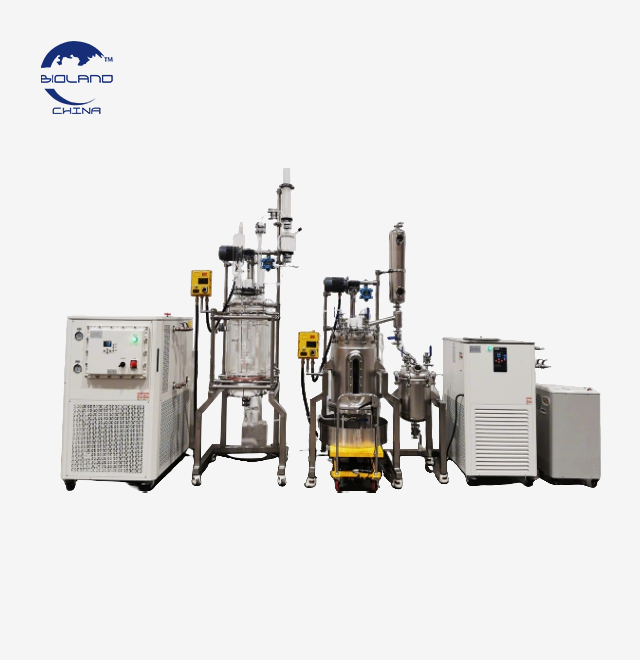
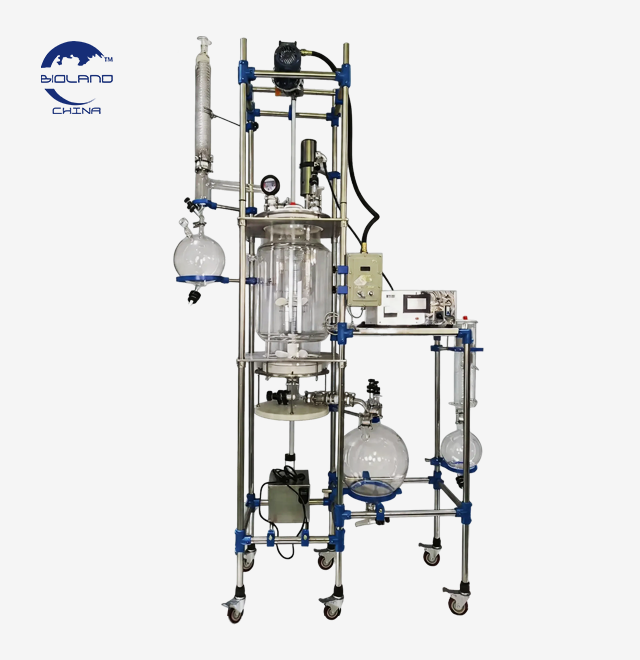
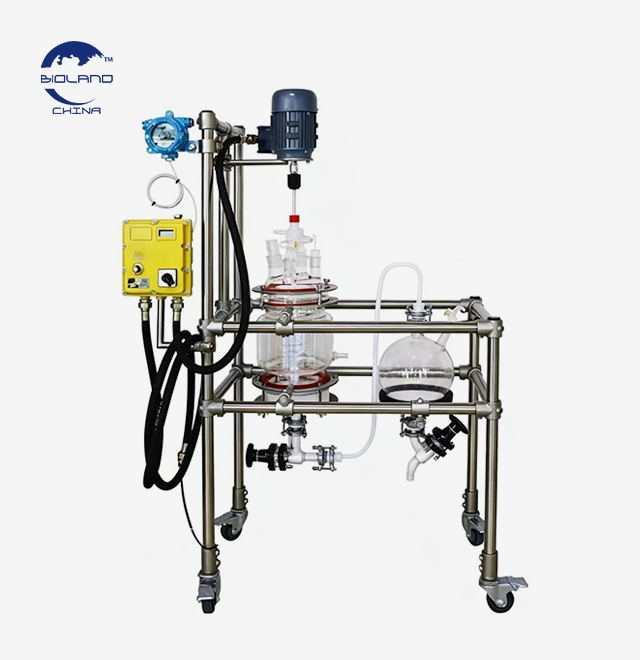
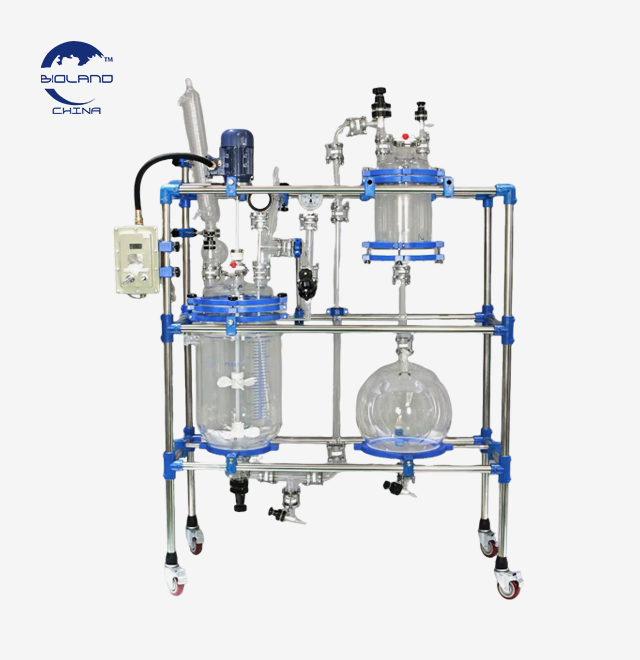
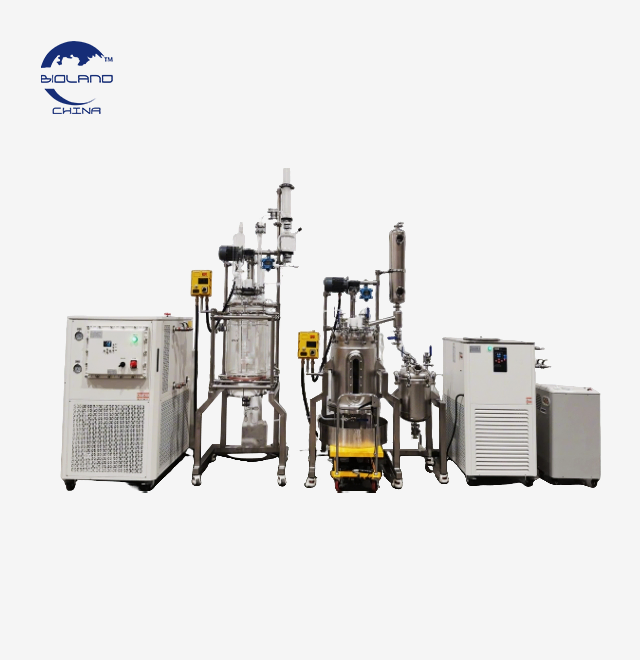
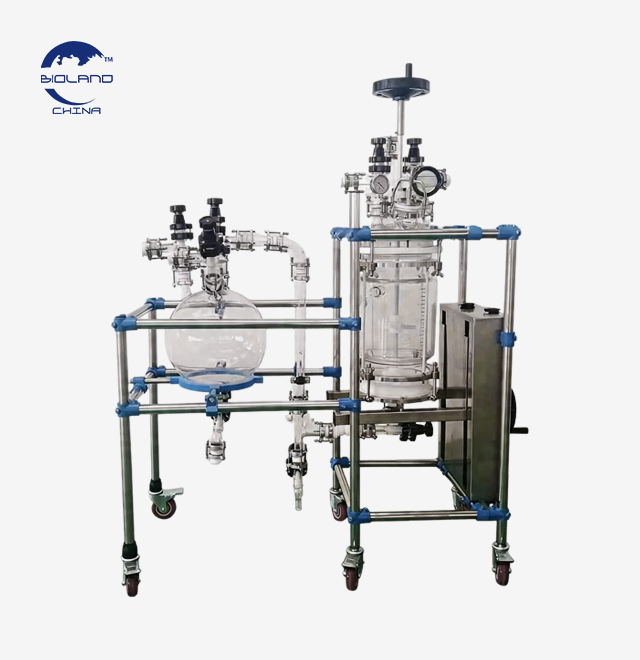
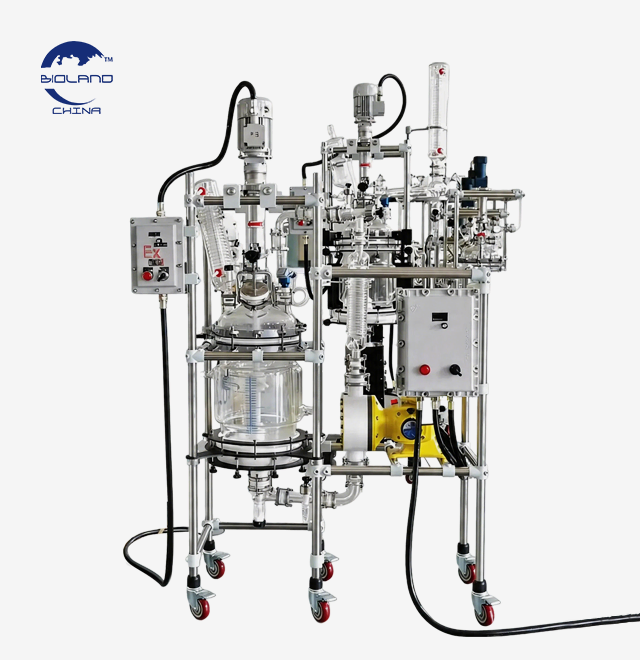
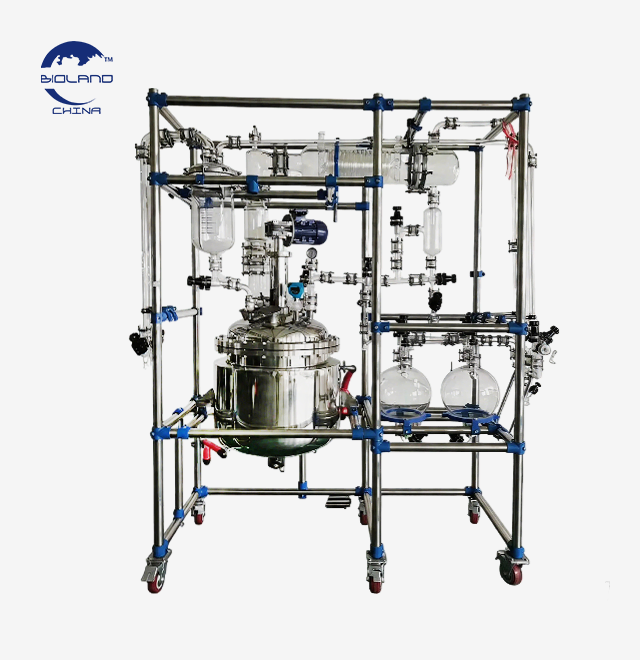
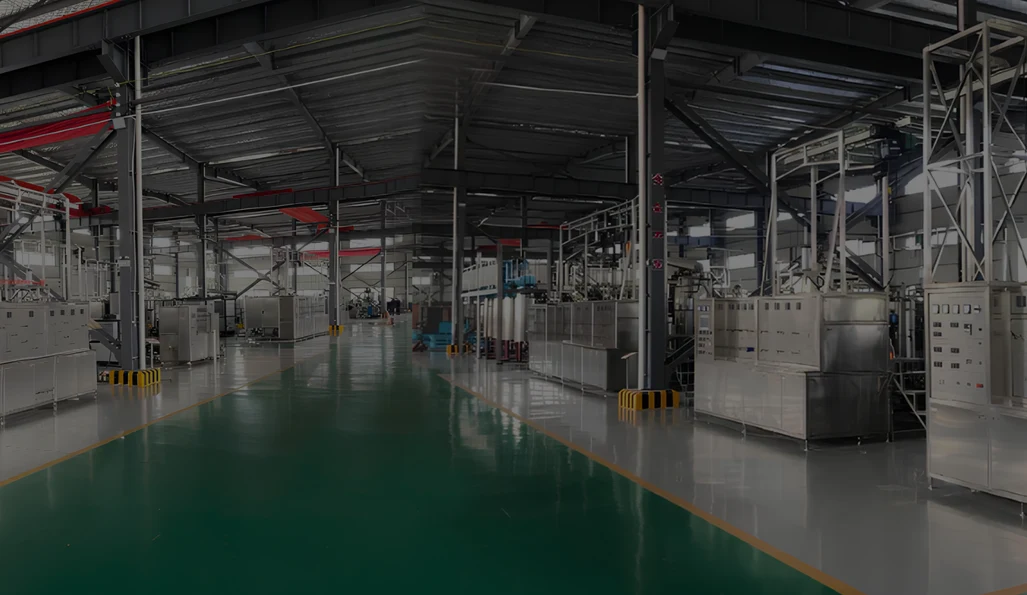
Agitated Glass Nutsche Filter — Pilot-Scale Filtration, Washing & Drying in One Closed System
Xi'an Bioland Instrument Co., Ltd. has specialized in filtration process equipment manufacturing for over 15 years, serving more than 300 pharmaceutical, chemical, and plant extraction companies worldwide. This Agitated Glass Nutsche Filter uses Borosilicate Glass 3.3 as its core vessel and integrates filtration, washing, and vacuum drying into a single closed system. It supports full temperature operation from −80°C to +250°C, with operating pressure covering full vacuum to +1.0 bar(g). Certified to CE, ISO, and SGS standards, it meets GMP compliance requirements and is a reliable choice for high-purity product development during pilot-scale scale-up.
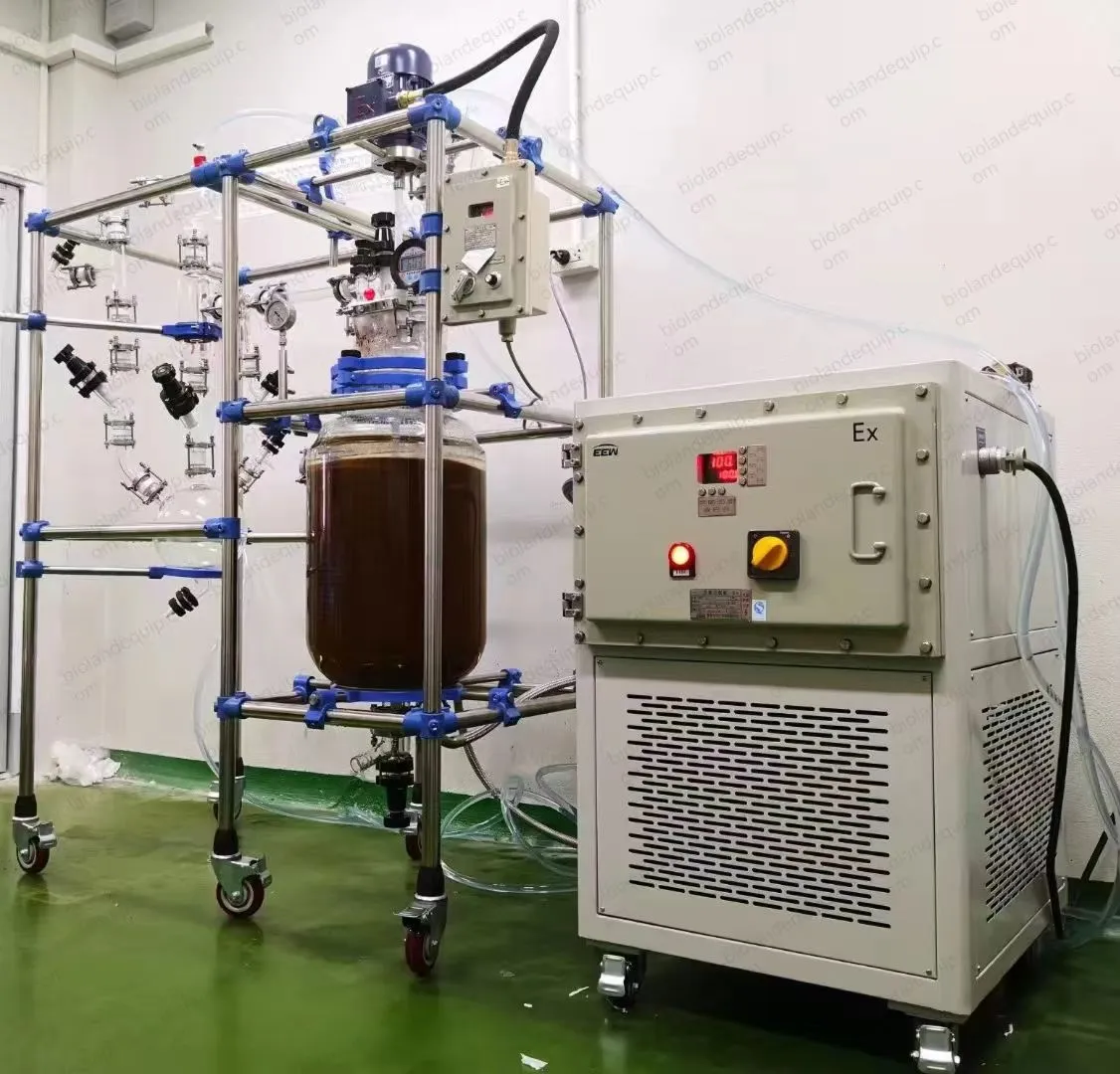
Key Features & Benefits
Real-Time Process Visibility
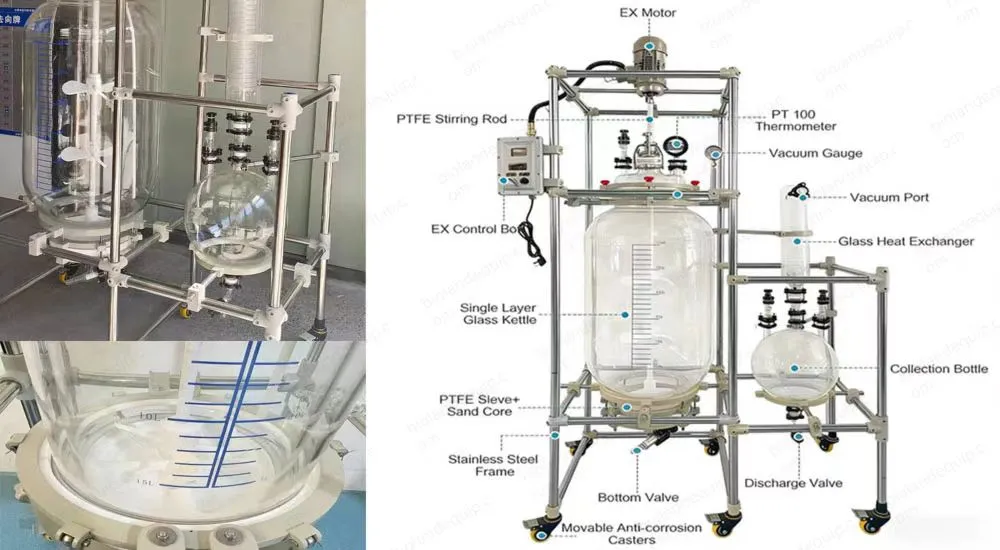
The Borosilicate Glass 3.3 vessel provides a fully transparent view, allowing operators to directly observe filter cake formation, crystal structure, and slurry uniformity without interrupting vacuum or transferring materials. This feature significantly reduces batch failure risk during R&D and pilot-scale stages.
Zero Metal Contamination
All wetted surfaces use PTFE, PFA, or ETFE coating — no metal ion leaching, no pitting risk — suitable for strong acids, strong bases, and organic solvent environments (except hydrofluoric acid). For API synthesis and semiconductor-grade chemical production, this is a core advantage in material selection.
Closed-System Operator Protection
The sealed design meets OEL compliance requirements, preventing leakage of toxic compounds or solvent vapors, supporting EHS obligation fulfillment in regulated environments, and ensuring operator safety.
Minimized Dead Volume
The vessel geometry is optimized to minimize residual volume, achieving higher recovery rates for high-value products per batch, directly improving process yield.
CIP/SIP Ready
Integrated spray ball assembly and removable bottom plate support complete Clean-in-Place (CIP) and Sterilize-in-Place (SIP) cycles, meeting cleaning validation requirements for GMP pharmaceutical facilities.
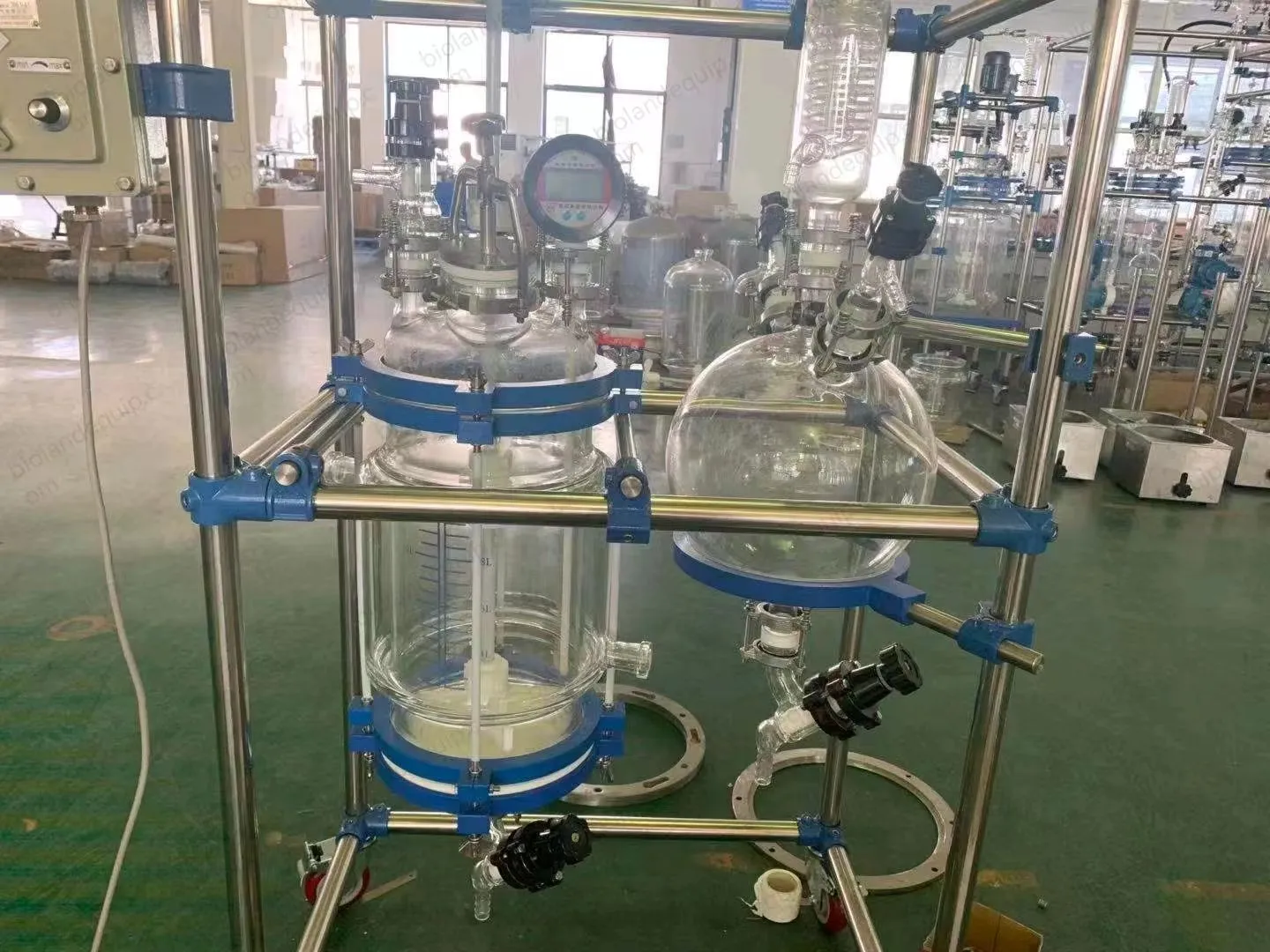
How It Works?
Three process stages are completed sequentially within the same closed vessel — no material transfer required.
Stage 1 — Filtration
Slurry is charged into the jacketed glass vessel. Vacuum is drawn from below the filter plate. Liquid passes downward through the filter media (precision 1–100 microns), and a solid filter cake forms above the filter plate.
Stage 2 — Washing
The agitator (S-shaped or hydrofoil PTFE impeller) descends, re-slurrying the Agitated Glass Nutsche Filter cake in wash solvent, and vacuum is reapplied. This step can be repeated multiple times according to target purity requirements without opening the vessel.
Stage 3 — Drying
Thermal fluid circulates through the double jacket while vacuum is simultaneously maintained. The agitator continuously turns the filter cake to ensure uniform heating. Vacuum contact drying eliminates residual solvent while avoiding crystal damage from localized overheating.
Construction & Materials
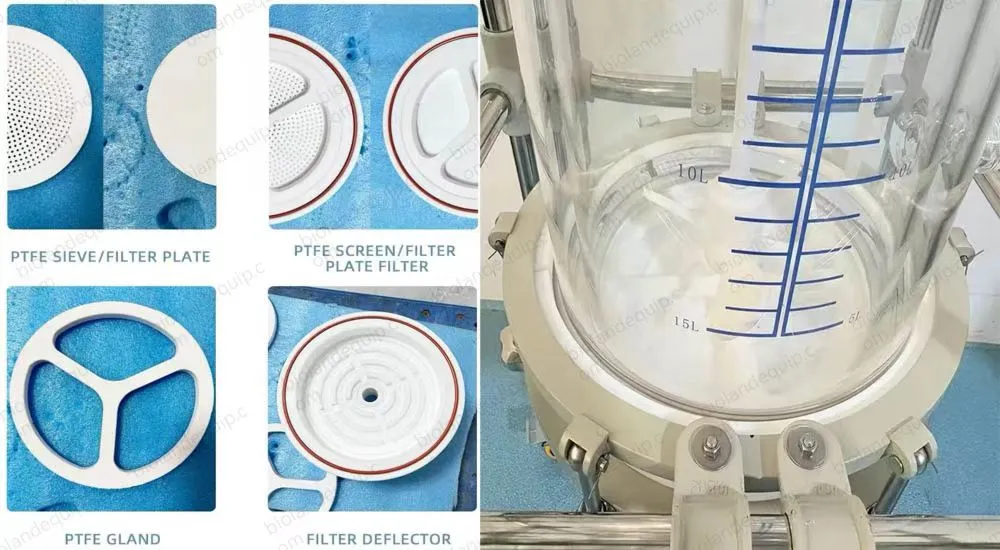
The glass vessel conforms to DIN ISO 3585, featuring a low thermal expansion coefficient and high chemical resistance. The external support structure uses SS304/SS316L, verified by PMI (Positive Material Identification).
Mechanical seals use dry-running PTFE bellows or double mechanical seals with inert barrier fluid, tested for TIR (Total Indicated Runout) to prevent impeller contact with the glass.
The bottom filter plate is secured by a clamping ring mechanism, supporting rapid changeover of filter cloth or PTFE membrane (precision down to 1–5 microns) between batches. A rupture disc is integrated into the system as a mandatory overpressure protection device.
Application Fields
Pharmaceutical Pilot-Scale API Production
Optimizing crystallization and filtration processes in kilogram-scale laboratories. The glass vessel allows real-time detection of crystal breakage during agitation, avoiding costly batch failures before scale-up to stainless steel reactors.
Peptide Synthesis & Fine Chemical Purification
The acid-base washing common in peptide processes does not damage the all-glass/PTFE flow path, eliminating the ion leaching risk of Hastelloy or stainless steel equipment and ensuring chromatographic purity.
Cannabinoids & Plant Extraction (Winterization)
The double jacket design maintains freezing temperatures as low as −60°C, keeping waxes and lipids solid during ethanol-based filtration. The closed loop simultaneously supports solvent recovery, reducing fire risk.
Chemical Intermediates & Precious Metal Recovery
In scenarios where yield, purity, and operational safety are all core metrics, this filtration system delivers repeatable, verifiable batch results.

Services & After-Sales Support
- Dedicated production specialist assigned weekly throughout manufacturing
- Photo or video progress updates provided throughout
- Shipment arranged only after customer confirmation
- On-site Factory Acceptance Testing (FAT) supported
- Sea, rail, and air freight supported
- 1-year warranty, lifetime maintenance support
- Remote technical support provided after installation
Technical Parameters
|
MODEL
|
BL-FR10L
|
BL-FR20L
|
BL-FR30L
|
BL-FR50L
|
BL-FR100L
|
|
Material capacity
|
10L
|
20L
|
30L
|
50L
|
100L
|
|
Jacket capacity
|
≈2L
|
≈5L
|
≈8L
|
≈15L
|
≈20L
|
|
Receiving flask
|
5L
|
10L
|
10L
|
20L
|
20L
|
|
Reactor body and cover
|
Apply vacuum grease to the connection surface between the upper part of the kettle body and the kettle cover.
|
|
Variable-frequency governor
|
Digital temperature and rotate speed
|
|
Rotate speed
|
0-300r/min
|
|
Seal
|
Self-lubricating mechanical seal
|
|
Filter base plate
|
PTFE filter sand core
|
|
Bore diameter of sand core
|
1-200μm (Optional)
|
|
Motor power
|
120W/1:3
|
200W/1:3
|
|
Power of explosion-proof motor
|
180W
|
370W
|
370W/1:3
|
|
Voltage
|
220V/50Hz which can be customized according to customer requirements
|
Why Choose Bioland?
Xi'an Bioland Instrument has been deeply engaged in filtration and process equipment manufacturing for over 15 years, delivering equipment to more than 300 companies worldwide across pharmaceutical, chemical, and plant extraction sectors.
| Advantage |
Specific Commitment |
| Direct Factory Pricing |
No middleman markup; more competitive pricing for equivalent configurations |
| Standard Lead Time |
Ships in 5–7 business days |
| Custom Lead Time |
Completed in 30 business days |
| Quality Assurance |
1-year quality warranty + lifetime maintenance support |
| Pre-Shipment Inspection |
Detailed photo/video remote inspection; on-site FAT supported |
| OEM/ODM |
Full support, including custom branding and documentation |
Quality Certifications & Compliance
Each unit undergoes the following rigorous tests before dispatch:
- Pressure & Vacuum Retention Testing: Inner vessel tested to <5 mbar / 24-hour pressure decay
- Material Traceability: Borosilicate Glass 3.3 Certificate of Conformity (CoC); PTFE wetted parts compliant with FDA 21 CFR 177.1550
- Visual Inspection: Glass bubble, stone, and striae inspection; PTFE coating spark pinhole testing
- Agitator Verification: Impeller shaft TIR testing; dry-running mechanical seal particle generation pressure testing
All products comply with GMP, FDA, CE, ISO, and SGS standards.
FAQ
Q: What is the maximum operating pressure of this filter?
A: The glass vessel supports up to +1.0 bar(g) positive pressure and full vacuum. An integrated rupture disc provides mandatory overpressure protection. Metal Nutsche filters can withstand 3–6 bar, but the glass design prioritizes process visualization capability.
Q: Can it also be used as a dryer?
A: Yes. By applying vacuum and circulating thermal fluid through the jacket while the agitator continuously turns the filter cake for uniform heat conduction, no separate drying equipment is needed — saving process steps and equipment investment.
Q: How is the filter cake discharged?
A: The agitator pushes the wet cake toward a side discharge valve, or the bottom plate is manually removed via clamp/bayonet lock for discharge. High-containment versions support glovebox isolation interfaces for highly active material handling requirements.
Q: How do you prevent seal failure when using corrosive solvents?
A: Dry-running PTFE bellows mechanical seals or double mechanical seals with inert barrier fluid are used. The preventive maintenance plan includes regular bellows integrity checks, with seal condition assessment recommended every 500 operating hours.
Q: Can the filter media be changed between batches?
A: Yes. The bottom plate clamping ring mechanism supports rapid changeover between coarse filter cloth and fine PTFE membrane (down to 1–5 microns), accommodating different filtration precision requirements across batches.
Q: Is the equipment suitable for cryogenic processes?
A: Yes. The double jacket design combined with an external TCU circulator supports operating temperatures as low as −60°C, suitable for winterization processes and low-temperature crystallization.
Contact Us
📧 info@biolandequip.com | Response within 24 hours on business days for Agitated Glass Nutsche Filter, providing custom solutions and quotation support.