Why Chemical Processes Fail Without Proper Glass Reactor
Jul 14, 2026
A lot of the time, equipment that can't see, control, or protect the reaction going on inside it is to blame for chemical processes going wrong. Bioland Instrument's glass reactor systemwas made to fill that exact need. It provides process engineers with a completely clear, precisely controlled temperature-inert platform that can turn unpredictable batches into repeatable, well-documented production runs. Our glass reactor system has been made for more than 15 years, is CE and ISO certified, and can be fully customized for OEM/ODM orders. It helps companies that make medicines, fine chemicals, and new materials figure out where their current setup is failing and replace it with equipment that is designed for the reaction, not the other way around. This article talks about how reactor design affects process stability, the equipment flaws that cause batch failures in a quiet way, how a properly specified glass reactor system can fix those problems, and what you should look for in a system before you buy it.
The Impact of Reactor Design on Process Stability
Why Temperature Uniformity Determines Reaction Outcome
Controlling the temperature is the first step in making a process stable. This is also where the design of the reactor either helps or hurts a reaction. A properly constructed glass reactor system has a two-layer jacket that moves media for heating or cooling around the whole reaction space. This keeps the temperature even, ranging from -80°C to 300°C, depending on the design. Without this level of regularity, hot or cold spots inside the tank lead to different reaction rates, uncertain byproduct formation, and differences between batches that can't be fixed by any amount of cleaning further down the line.
This is very important for exothermic reactions, controlled cooling crystallization, and any other process where a small temperature range separates a batch that works and one that doesn't. A glass reactor system with a well-designed jacket and circulation loop reacts quickly to changes in the setpoint. This means that operators can ramp up or hold the temperature precisely instead of having to deal with thermal lag caused by a heat exchange surface that is too small or not circulated well.
How Vessel Transparency Affects Process Understanding
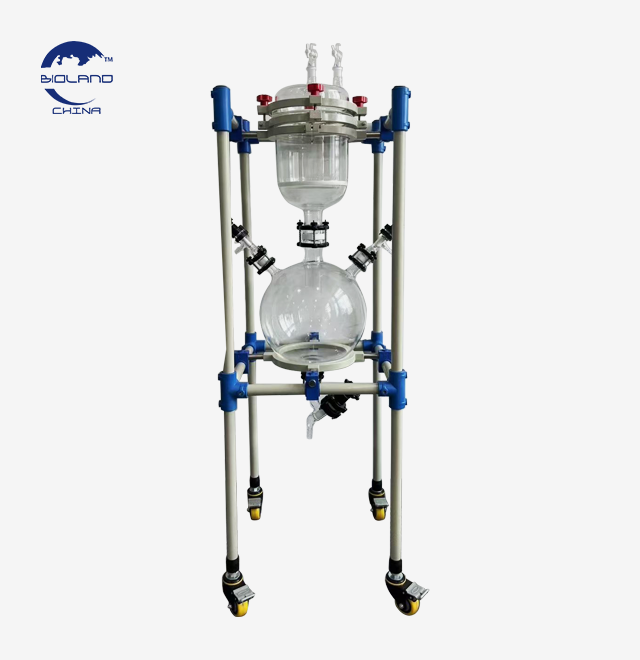
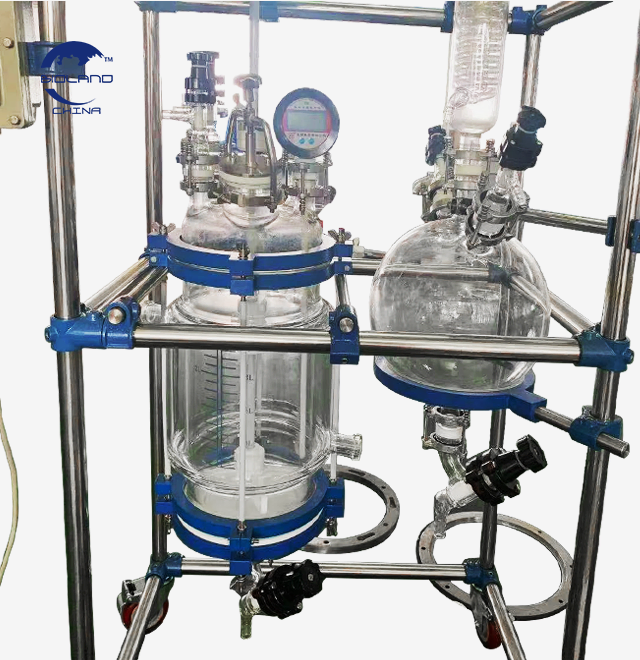
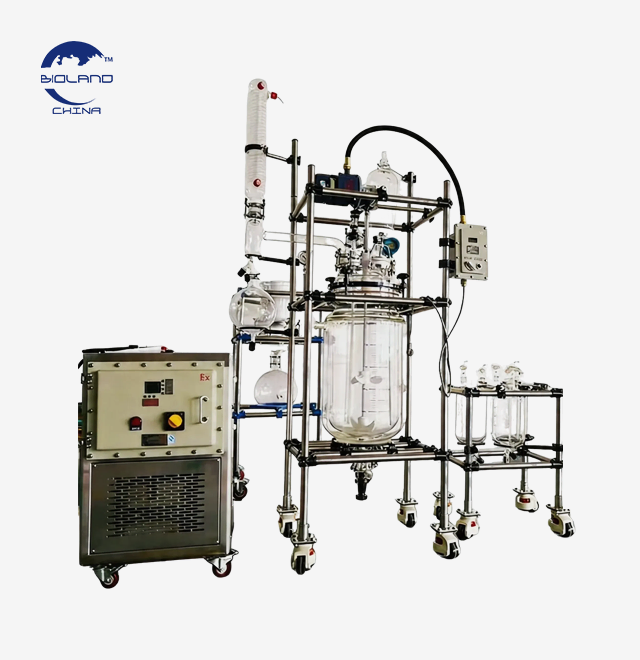
The shape of the reactor also affects how much a user can see the reaction as it happens. Engineers can see color changes, the formation of precipitates, and phase separation in real time with a clear glass reactor system. This makes a process that would normally be a mystery able to be understood and changed in the middle of its cycle. Because stainless steel vessels are opaque, operators have to rely only on sensor data and past experience. This works until there is an unexpected change that sensors alone can't fully explain.
Sealing and Pressure Control as Stability Factors
In addition to temperature and sight, the quality of the seal and the control of the pressure are two quiet factors that decide whether a response goes as planned. A well-designed glass reactor system has PTFE and special rubber compound seals and a vacuum system that can reach high vacuum degrees. This keeps oxygen- or moisture-sensitive reactions from getting contaminated by the air while still allowing distillation and reflux operations to happen. Poor sealing, on the other hand, lets solvents or air slowly escape or enter, which changes the reaction stoichiometry over time without any clear notice.
Modular Configuration and Long-Term Process Flexibility
What kind of reactor it is also impacts how well a single piece of equipment can change as the process does. Standard flange openings on a properly set up glass reactor system let condensers, dropping funnels, temperature probes, and vacuum lines be added or changed without having to replace the vessel itself. This means that the same reactor can be used for work that changes over time in chemistry programs that include distillation, extraction, catalysis, and crystallization.
Common Equipment Limitations That Lead to Process Failure
Insufficient Dissolved Oxygen and Mixing Control in Fermentation
Dissolved oxygen transfer and mixing consistency are very important for fermentation and bioprocess work. Low yield and long cycle times are often caused by stirring systems that are not built well and are not properly evaluated. Even if the recipe and inoculum are correct, germs in the slower-mixed areas don't do as well when the vessel can't consistently move oxygen across the full batch volume. This lowers total output.
This limitation doesn't usually show up as a clear problem with the equipment, so it's often mistakenly thought to be a problem with the strain or the media. This leads teams down the wrong troubleshooting path for months before anyone questions whether the reactor's agitator geometry was ever right for the needed oxygen transfer rate in the first place.
Case Study: Fermentation Efficiency at a South American Biopharmaceutical Company
A biopharmaceutical company in South America that made a drug intermediate through microbial fermentation was having trouble with low dissolved oxygen efficiency, long fermentation cycles, inaccurate process parameter control, and inconsistent product purity. This was especially true for steps in the process that were sensitive to oxidation and needed a tightly controlled, oxygen-free environment.
Bioland Instrument made a 50L double-layer glass reactor system just for the customer. They changed the shape of the agitator to improve the efficiency of the dissolved oxygen by about 30% and shorten the fermentation cycle significantly. The clear container let techs see how the color and residue changed during the process. They could change the conditions at any time to make sure that every batch of the product was pure.
Corrosion and Metal Contamination in Aggressive Chemistries
When strong acids, bases, or harsh organic solvents come in contact with standard carbon steel or untreated stainless vessels, they break down. This breakdown does more than just shorten the life of the equipment; it also adds metal ions directly to the product stream. For pharmaceutical intermediates and other highly pure synthesis routes, this contamination can cause a batch to fail release testing even though the reaction seemed to go well at the time.
Cross-contamination is more likely to happen in facilities that make more than one product because corrosion pitting makes tiny surface flaws that are hard to clean completely between batches. This type of failure can't happen with a properly designed glass reactor system because chemically neutral glass surfaces don't degrade or leave behind waste over time like metal surfaces do.
Undersized or Non-Customized Equipment at Scale-Up
Many process failures only happen when a recipe that worked on a bench scale is moved to a pilot or production-scale vessel that wasn't designed for that chemistry in the first place. When a proven bench-scale process is turned into an unreliable production line, standard catalog reactors that are sized in a way that doesn't take into account batch size, corrosivity, or temperature range needs are often the problem.
Heat transfer surface area, agitator torque, and jacket capacity don't change linearly with vessel volume. This means that a reactor that worked well at 20L may not work well at 100L or 200L with the same recipe. This problem can't happen at all with a glass reactor system that is built around the output size that is wanted, instead of being changed after the fact.
How Proper Glass Reactors Improve Reaction Efficiency and Product Quality
Real-Time Visual Monitoring for Faster Process Correction
Real-time visual monitoring is the best way to see how much an appropriately designed glass reactor system improves efficiency. Instead of finding out about the problem after checking the finished product analytically, operators can catch missing reactions, unexpected precipitation, or foaming as soon as they start. This lets them change course before a departure leads to a failed batch.
Chemical Inertness That Protects Purity at Every Step
High borosilicate GG17 glass can withstand strong acids, bases, and organic solvents without introducing metal ions. This is exactly why a glass reactor system is so often required for making pharmaceutical intermediates, biologically active compounds, and other highly pure substances. This inertness keeps the purity safe not only during the main reaction, but also during any distillation, extraction, or crystallization steps that are done in the same tank afterward.
Precision Temperature Control Across Distillation, Extraction, and Reaction Steps
A properly set up glass reactor system improves evaporation and reflux efficiency for all processes in one tank, including distillation, extraction, catalysis, and crystallization. This is because the double-layer jacket can work in a wide range of temperatures and can be paired with a high-vacuum system. This level of accuracy is what lets a chemistry program move smoothly from one process step to the next without adding the variation that would come from using different, unmatched pieces of equipment.
Case Study: Precious Metal Solvent Extraction Scale-Up in Europe
A European precious metal processor needed to increase the amount of solvent extraction and refining it did, but they couldn't because they had old, low-capacity equipment that didn't separate materials well and couldn't be changed to fit a new, bigger production line that dealt with highly corrosive, high-risk material streams.
Bioland Instrument made four custom 200L double-layer glass reactors and nine 50L explosion-proof rotary evaporators that met ExdIIBT4 explosion-proof standards for the dangerous and corrosive process. The client was able to start production 15 days early thanks to modular manufacturing, which cut delivery times by 40%. Since then, the finished line has run more than 1,000 hours without a problem, increasing annual output capacity by about 30%.
Key Factors for Choosing a Reliable Reactor System
Matching Volume, Material, and Temperature Range to Your Process
To choose a reliable reactor, you should first match the working volume, the choice of glass or metal material, and the temperature range of the jacket to your unique chemistry, not to a normal catalog specification. A glass reactor system that is built around your actual batch size, liquid system, and needed temperature range will keep you from undersizing and customizing in the wrong way, which can lead to problems during scale-up.
Explosion-Proof, Automation, and Safety Certification Requirements
For processes that are dangerous or have a high risk of failure, explosion-proof construction, PLC-controlled automation, and a recognized safety certification are not extras but must-haves. Bioland's glass reactor system can be fully designed to meet the specific needs of each client. It can be made with explosion-proof systems, temperature control that is built in, lifting and spinning designs, tail gas absorption units, distillation columns, and cleaning or concentration modules.
Evaluating Manufacturer Track Record and Customization Capability
Xi'an Bioland Instrument Co., Ltd. is a professional manufacturer and solution provider for R&D, production, and sales of distillation, concentration, reaction, extraction, separation, filtration, purification, crystallization, emulsification, mixing, drying, and ancillary equipment supporting chemical processes like heating, cooling, and vacuum devices, with more than 15 years of experience in the field, ISO safety guarantee, and CE certification. Our glass reactor system has been used in customer nitric acid and glycerol acidification production lines, overseas pharmaceutical manufacturing, and chemical intermediate production facilities.
Verifying Supplier Support, Lead Time, and Documentation Practices
Our company offers customized equipment and production lines tailored to client requirements through OEM/ODM services, with customized products typically ready in 30 business days and non-customized products in 5-7 days, supported by sea, rail, and air freight, a one-year warranty, and lifetime maintenance. Our team assigns a dedicated specialist each week to track production with photos or videos, and clients may schedule a Factory Acceptance Test once the goods are ready, giving buyers documented visibility into their equipment before it ever ships.
Conclusion
Chemical processes fail less often from bad chemistry than from equipment that cannot maintain temperature uniformity, resist corrosion, or let operators see what is actually happening inside the vessel. Bioland Instrument's customizable glass reactor system, proven across fermentation optimization and large-scale precious metal extraction, replaces guesswork with visibility, chemical resistance, and precise process control, turning fragile processes into dependable, scalable production.
FAQ
Q1: What is the biggest cause of chemical process failure?
Poor temperature uniformity, corrosion-driven contamination, and lack of process visibility are the most common underlying causes.
Q2: What temperature range can a glass reactor system handle?
Most configurations operate from -80°C up to 300°C depending on jacket design and customization.
Q3: How does glass construction protect product purity?
High borosilicate GG17 glass resists acids, bases, and solvents without introducing metal ion contamination.
Q4: Can the reactor be customized for explosion-proof or hazardous processes?
Yes, fully explosion-proof systems, PLC automation, and integrated safety features are available as customized options.
Q5: What industries commonly rely on this equipment?
Pharmaceuticals, fine chemicals, precious metals, food processing, and new material development all use glass reactor systems.
Stop Guessing Why Your Process Is Failing
If unpredictable yields, corrosion, or scale-up failures are undermining your production line, Bioland Instrument can engineer a glass reactor system built around your specific chemistry, batch size, and safety requirements. With over 15 years of manufacturing experience, CE and ISO certification, full GMP/FDA compliance, and complete OEM/ODM customization, we help chemical, pharmaceutical, and materials producers replace fragile processes with documented, repeatable production. Contact our engineering team directly at info@biolandequip.com to discuss your requirements and receive a tailored recommendation.
References
1. Perry, R. H., and Green, D. W. Perry's Chemical Engineers' Handbook. McGraw-Hill Professional.
2. Levenspiel, O. Chemical Reaction Engineering. John Wiley & Sons.
3. Fogler, H. S. Elements of Chemical Reaction Engineering. Prentice Hall.
4. American Society of Mechanical Engineers. ASME Boiler and Pressure Vessel Code, Section VIII: Pressure Vessels.
5. National Fire Protection Association. NFPA 497: Recommended Practice for the Classification of Flammable Liquids, Gases, or Vapors.
6. Doran, P. M. Bioprocess Engineering Principles. Academic Press.
The reactor is beautifully mirror-polished and fully complies with GMP requirements for the pharmaceutical industry. The performance is excellent! Overall, we are very satisfied! We also provided with some feedback on our process improvements, which we hope will be helpful.
2024-04-09
Laboratory
Excellent and professional service. Always reply our questions very fast. All reactors and chiller we received are good too.
2024-02-15
Research Institute
Quality is beyond our expectation actually. After we got the extraction equipment and started using it, the performance was beyond our expectation. Very easy to use and very efficient to run. Service always respond us very quickly. Was also very helpful to help us. Thanks Bioland team. Very happy to work with you.
2023-11-20
Biotech Company
We are happy about the new purchase as always. Equipment and services are both good.
2023-08-05
Instrument Lab
This is the second order with Bioland instrument and everything is good as the first dateText.
2023-05-12
Global Trading Partner
Bioland instrument team is very helpful and professional. The sales helped us select the right equipment for our application, and their logistics people handled the transportation and customs declaration for our shipment. All that saved us a lot of work.