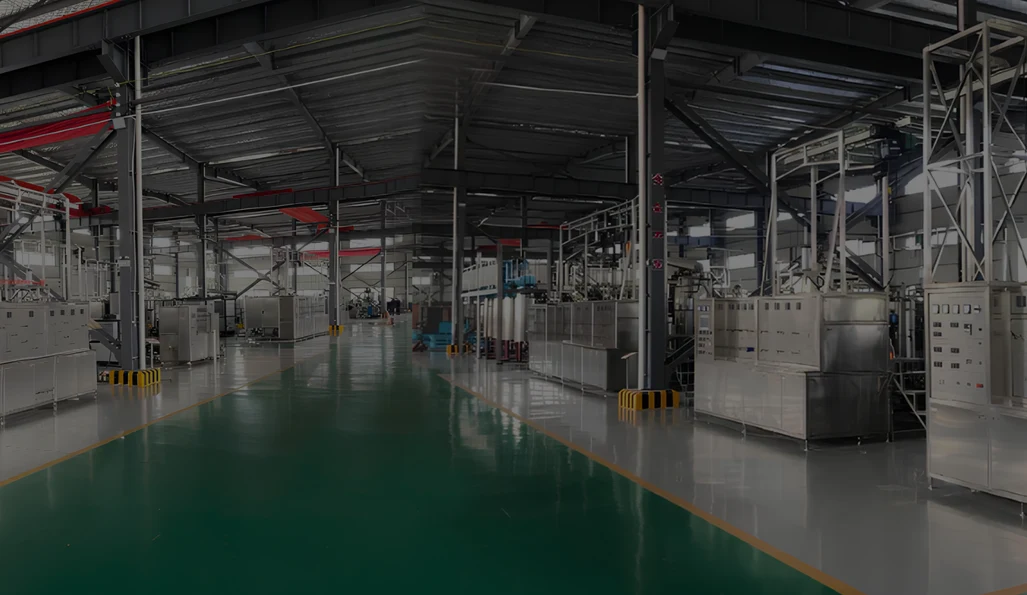
Glass Filter Reactor vs Solid Phase Reactor: Full Performance Review
Jul 9, 2026
One of the most important equipment choices a pharmaceutical, fine chemical, or new material producer will have to make is between a glass filter reactor and a solid phase reactor. If they make the wrong choice, yield, purity, and margin will slowly go down with each batch. The glass filter reactor from Bioland Instrument bridges that gap by mixing reaction, crystallization, and filtration in a single sealed, fully clear GG17 borosilicate tank. This way, users can see phase changes happen right in front of them instead of having to guess. Our glass filter reactor is designed to work at temperatures ranging from -80°C to 200°C and is automated with a PLC. It gives production teams visual control, chemical resistance, and process freedom that stainless steel and normal solid phase systems just can't match. This review breaks down how the two types of reactors work and compares how well they work in the real world. It also shows how top makers are using our machines to solve production problems that used to need three different machines.
Understanding the Operating Principles of Both Reactor Types
How a Glass Filter Reactor Integrates Reaction, Crystallization, and Filtration
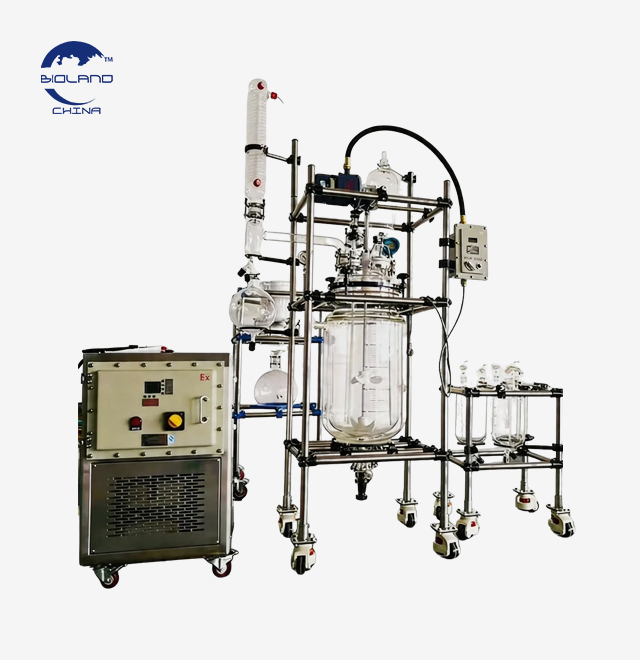
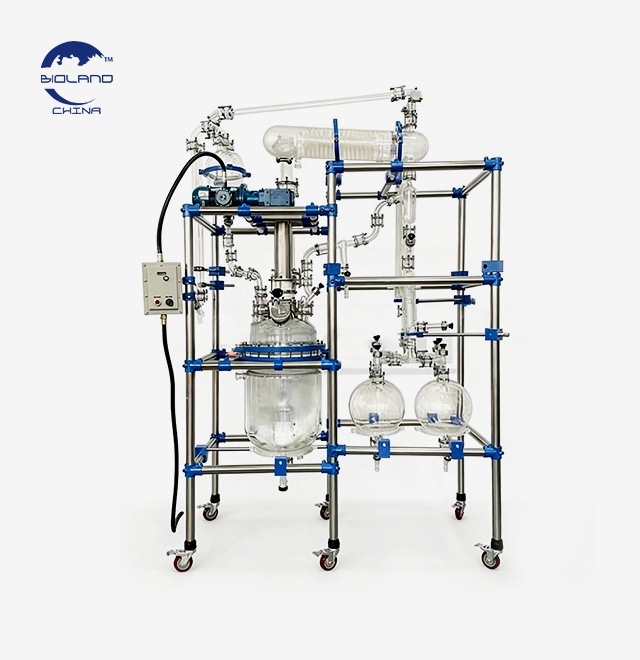
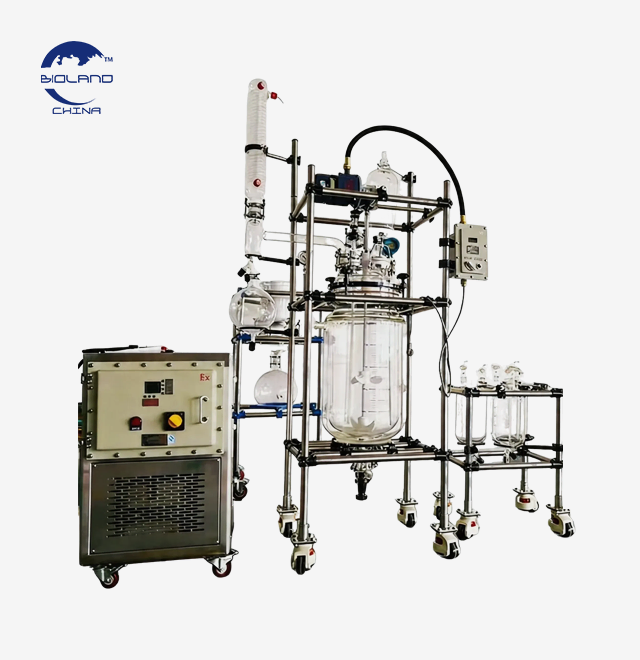
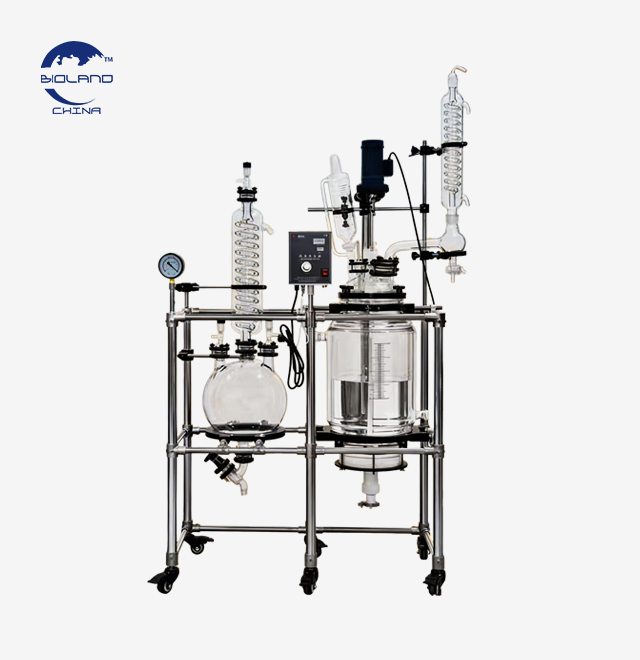
A glass filter reactor is built around a single borosilicate vessel with a jacket. This vessel does the reaction, controlled crystallization, and vacuum filtration without having to move the batch to a different machine. To set exact temperature ranges, the interlayer moves hot or cold media around. At the base, a built-in PTFE filter plate separates the solid product from the mother liquor when crystallization is done. Because every step takes place in a single glass filter reactor, there are no transfer losses, contamination risks, or time delays that come with moving slurry between two separate reactors and a stand-alone filter. This is exactly why more and more pharmaceutical and fine chemical companies are asking for this configuration for both pilot and production-scale batches.
How a Solid Phase Reactor Handles Solid-State Synthesis
A solid phase reactor, on the other hand, is designed for reactions where the target chemistry is mostly solid or almost solid. These include making resin-based peptides, preparing catalysts, or coupling reactions that don't need any solvents. Most of the time, these systems focus on washing cycles, mechanical stirring, and controlled heating of solid beds over liquid-phase crystallization. Solid phase reactors are necessary for some synthesis routes, but they aren't as good for processes that need to keep an eye on dissolving, nucleation, or crystal growth. This is exactly where a glass filter reactor shines, giving you better control and view over the process.
Core Structural Differences: PTFE Filtration Versus Solid-Phase Vessel Design
The defining structural difference is the filtration path. Our glass filter reactor uses a standard PTFE sintered filter core, with optional stainless steel or titanium filter elements and a choice of filter cloths or membranes to match specific particle sizes and chemical compatibility requirements. Solid phase reactors, in comparison, are usually configured around fixed beds or removable cartridges rather than an integrated bottom-discharge filter plate. This means a glass filter reactor can pivot between different filtration media for different products without re-engineering the vessel, giving contract manufacturers far more flexibility across a diverse product portfolio.
Why Transparent, Borosilicate Construction Matters for Process Control
Transparency is not just a nice-to-have trait; it's a safety factor. A GG17 glass filter reactor that can be seen from all sides lets engineers see when the reaction is done by changing color, see when crystal nucleation starts, and find foaming or incomplete filtration before it causes the batch to stop. Because they can't be seen, stainless steel solid phase reactors rely on sensors and operator experience to figure out what's going on inside the vessel. This makes it more likely that a small change in the process won't be noticed until the batch is already ruined.
Comparing Filtration Efficiency, Reaction Performance, and Process Flexibility
Filtration Speed and Purity: PTFE Filter Plate Performance
A properly set up glass filter reactor stands out most when it comes to how well it filters. The big PTFE filter design speeds up the separation of solids and liquids, and the sealed glass shell stops solvents from evaporating and airborne pollution from happening during the filtering step. With programmable stirring that helps crystals stay the same size, this setup lets producers get consistent particle distribution batch after batch. This shortens the drying time and makes the final product purer, especially for fine powders and pharmaceutical intermediates that are affected by particle shape.
Reaction Performance Across a Wide Temperature Range
The glass filter reactor jacket can work at temperatures ranging from -80°C to 200°C, so it can handle both solid-phase reactions at low temperatures and those at high temperatures. This range is very important for controlled cooling crystallization, chiral synthesis, and low-temperature catalytic reactions. A one- or two-degree change per hour can mean the difference between fine crystals that can be filtered and a gummy precipitate that is hard to process. Most solid phase reactors don't have this much temperature control in one unit, so the reaction and consolidation steps have to be done on different machines.
Process Flexibility: One-Pot Reaction, Crystallization, and Filtration
The real advantage of a glass filter reactor is workflow consolidation. Reaction, cooling, crystallization, and filtration all happen in the same sealed vessel, which reduces material transfer, minimizes cross-contamination between production runs, and shortens overall cycle time. For contract manufacturers running multiple products through the same facility, this flexibility also simplifies cleaning validation, since fewer transfer lines and intermediate vessels need to be qualified and cleaned between batches.
Case Study: Chiral Intermediate Purification for a European Pharmaceutical Client
A European biopharmaceutical company developing a chiral API intermediate faced a familiar problem: their existing setup could not reliably confirm reaction completion, and crystallization purity and yield were both underperforming target specifications. Strong acid and base conditions were also corroding their stainless equipment, and repeated transfers between vessels introduced contamination risk. The client adopted a Bioland-customized 100L glass filter reactor to run the entire reaction-crystallization-filtration sequence in one closed system.
Under nitrogen protection at 0–5°C, the transparent vessel let engineers confirm the catalytic reaction was fully complete by observing the color change directly. The jacket was then switched to a -20°C coolant with a controlled cooling rate of 1–2°C per hour, producing uniform crystals that avoided impurity inclusion. Finally, the team switched to the integrated PTFE filter to separate the crystals in place, recycling the mother liquor and reaching crystal purity above 99.5% with a 15% yield improvement over their previous process.
Advantages and Limitations in Different Chemical Applications
Pharmaceutical and Peptide Synthesis Applications
In pharmaceutical development, a glass filter reactor is particularly valuable for peptide active pharmaceutical ingredients, thymus peptide preparation, antimicrobial peptide screening, and peptide carrier material synthesis, all of which depend on clean solid-liquid separation and precise crystallization control. Because the glass surface is chemically inert, it avoids the metal-ion contamination that can occur in stainless equipment, which matters greatly when working with strong acid or strong base synthesis systems common in API intermediate production.
Fine Chemical and Precious Metal Catalyst Recovery
Fine chemical producers, including those recovering precious metal catalysts such as palladium or platinum, face a different set of pressures: highly corrosive reagents, high-temperature solid-phase steps, and low recovery rates from inefficient filtration. A Polish specialty chemical manufacturer developing a palladium and platinum catalyst adopted a Bioland-customized 50L glass filter reactor to run a closed "solid-phase reaction, then filtration recovery" loop.
The solid-phase reaction between the precious metal precursor and organic ligand ran at 150°C, with the borosilicate glass tolerating the short-term high temperature without degrading the catalyst. Once the reaction finished, the integrated PTFE filter directly separated the solid catalyst from the mother liquor, recovering more than 90% of the residual precious metal and materially lowering the client's production costs. The dual-layer glass structure, rated from -80°C to 200°C, made this temperature swing possible inside a single vessel.
Food, New Material, and Broader Industrial Applications
Beyond pharma and fine chemicals, a glass filter reactor also supports sugar refining, dye and fragrance crystallization, and new material development, wherever the goal is a specific crystal shape, size, or purity level. Because the filtration and crystallization parameters are fully adjustable, food processors refining sucrose and materials scientists developing custom crystal morphologies can use the same underlying platform, adapting filter cloth, cooling rate, and stirring speed to their own product specification rather than purchasing separate specialized equipment.
Where Standard Solid Phase Reactors Show Limitations
Standard solid phase reactors remain the right choice for purely solid-state coupling chemistry, but they show clear limitations once a process requires dissolution, recrystallization, or fine control over particle purity. Without an integratedglass filter reactor's visual monitoring and PTFE filtration, these systems typically require a second, standalone filtration step, adding time, transfer losses, and an extra point of potential contamination, particularly costly in GMP-regulated pharmaceutical environments where every additional transfer must be separately validated.
How to Choose the Right Reactor for Your Production Requirements?
Matching Reactor Volume and Explosion-Proof Level to Your Batch Size
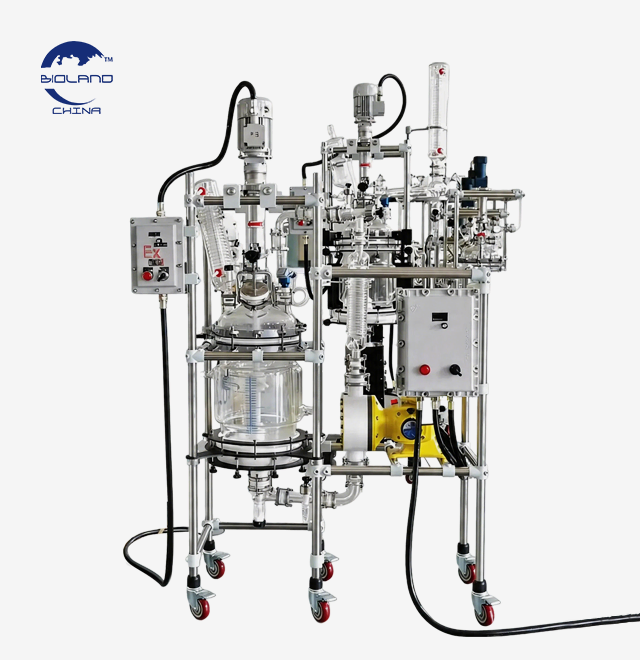
Selecting the right glass filter reactor starts with batch size. Bioland offers explosion-proof solid-phase and filter reactor configurations across 20L, 30L, 50L, and 100L working volumes, each engineered with a high-strength pressure-bearing structure and a precision explosion-proof control system for high-pressure synthesis environments. Laboratory teams generally start with smaller volumes for process development, while pilot-scale and early production runs typically move to 50L or 100L configurations once the reaction and crystallization parameters are confirmed.
Customization Options: OEM/ODM, PLC Automation, and Combination Configurations
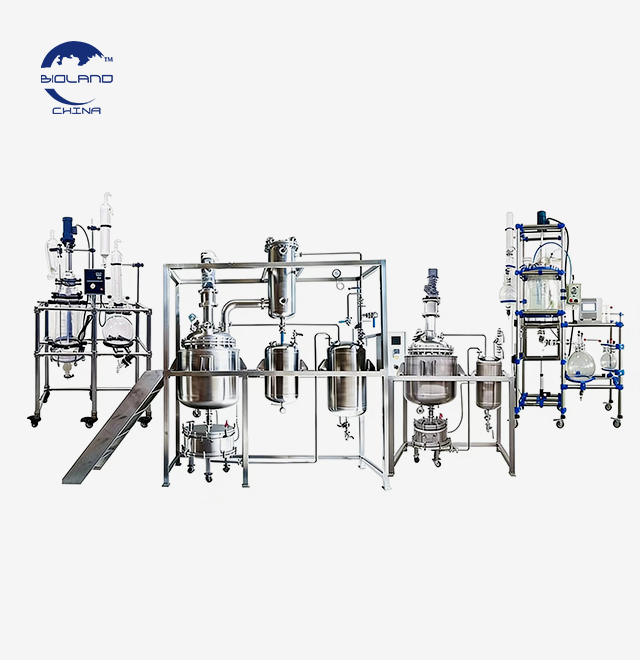
Because no two production processes are identical, our glass filter reactor line is fully customizable to size, shape, material, and internal structure based on each client's experimental or production requirements. Available options include fully explosion-proof systems, electric lifting mechanisms, PLC-controlled full automation, integrated temperature control systems, and combined filtration, crystallization, ultrasonic crystallization, or distillation modules built to order. This OEM/ODM capability means clients are not forced to adapt their process to a standard catalog unit; instead, the equipment is engineered around the chemistry.
Evaluating Supplier Certification, Lead Time, and After-Sales Support
Xi'an Bioland Instrument Co., Ltd. is a professional manufacturer and solution provider for R&D, production, and sales of distillation, concentration, reaction, extraction, separation, filtration, purification, crystallization, emulsification, mixing, drying, and ancillary equipment supporting chemical processes like heating, cooling, and vacuum systems, with more than 15 years of experience in the field.
Our main products include ultrasonic plant extraction machines, ethanol extraction machines, extraction concentration units, CO2 extraction machines, supercritical fluid extraction equipment, essential oil distillation equipment, batch chemical reactors, jacketed glass reactors, chemistry vacuum filtration systems, fractional distillation columns, crystallization chemical reactors, filter reactors, Nutsche filter reactors, high shear homogenizer mixers, mixing tanks, vacuum spray dryers, freeze dryers, and ultrasonic homogenizers, widely used across laboratory R&D, biopharmaceuticals, drug synthesis, pharmaceutical chemicals and intermediates, precious metals, food, new materials, and cosmetics industries, and exported to Europe, Southeast Asia, and beyond, backed by ISO and CE certification.
Our in-house R&D team of senior technicians and engineers maintains strict quality control and responsive customer service, and every glass filter reactor complies with GMP and FDA standards. Customized products typically ship within 30 business days, while non-customized products are generally ready in 5–7 days, with sea, rail, and air freight options, a one-year quality warranty, and lifetime maintenance support.
Questions to Ask Before Ordering Your Glass Filter Reactor
Before finalizing an order, confirm the working volume against your actual batch size, the required temperature range for both reaction and crystallization stages, the filter media compatibility with your solvent system, and whether explosion-proof or PLC automation is necessary for your facility's safety standards. Ask your supplier whether a dedicated specialist will track your build weekly with photos or videos, and whether a Factory Acceptance Test can be scheduled once the goods are ready, since these production transparency practices are strong indicators of a manufacturer that stands behind its equipment.
Conclusion
A glass filter reactorearns its place in pharmaceutical, fine chemical, and new material production by unifying reaction, crystallization, and filtration inside one transparent, temperature-controlled vessel, delivering higher purity, better yield, and less contamination risk than separated solid phase systems. Bioland Instrument's customizable 20L–100L glass filter reactors, backed by CE/ISO certification, GMP/FDA compliance, and full OEM/ODM support, give production teams a genuine process solution rather than just equipment, proven across real chiral API and precious metal catalyst recovery projects worldwide.
FAQ
Q1: What makes a glass filter reactor different from a standard filter?
It combines heating/cooling, stirring, crystallization, and PTFE filtration in one sealed glass vessel, eliminating separate transfer and filtration steps.
Q2: What temperature range can Bioland's glass filter reactor handle?
Most configurations operate from -80°C to 200°C, supporting both cryogenic reactions and elevated-temperature solid-phase steps.
Q3: Can the filter media be changed for different products?
Yes, PTFE sintered cores are standard, with optional stainless steel or titanium elements and various filter cloths or membranes available.
Q4: Is the glass filter reactor suitable for peptide synthesis?
Yes, it is widely used for peptide API development, thymus peptide preparation, and antimicrobial peptide screening.
Q5: What volumes and customization options are available?
Explosion-proof configurations are available in 20L, 30L, 50L, and 100L, with PLC automation, electric lifting, and combination modules built to order.
Ready to Solve Your Next Production Challenge?
If your team is struggling with low crystallization purity, corrosion from strong acid or base systems, or contamination risk from multi-step transfers, Bioland Instrument can engineer a glass filter reactor around your exact process, not the other way around. With more than 15 years of manufacturing experience, CE and ISO certification, full GMP/FDA compliance, and complete OEM/ODM customization, we help pharmaceutical, fine chemical, and materials producers turn a difficult process into a repeatable, documented workflow, complete with weekly production updates and a Factory Acceptance Test option. Talk to our engineering team about your reaction, crystallization, or filtration requirements at info@biolandequip.com, and get a tailored recommendation instead of a generic catalog quote.
References
1. Perry, R. H., and Green, D. W. Perry's Chemical Engineers' Handbook. McGraw-Hill Professional.
2. European Medicines Agency. Guideline on Good Manufacturing Practice for Active Pharmaceutical Ingredients. EMA Publication.
3. Mullin, J. W. Crystallization. Butterworth-Heinemann.
4. U.S. Food and Drug Administration. Guidance for Industry: PAT — A Framework for Innovative Pharmaceutical Development, Manufacturing, and Quality Assurance.
5. American Society of Mechanical Engineers. ASME Boiler and Pressure Vessel Code, Section VIII: Pressure Vessels.
6. Myerson, A. S., editor. Handbook of Industrial Crystallization. Butterworth-Heinemann.
The reactor is beautifully mirror-polished and fully complies with GMP requirements for the pharmaceutical industry. The performance is excellent! Overall, we are very satisfied! We also provided with some feedback on our process improvements, which we hope will be helpful.
2024-04-09
Laboratory
Excellent and professional service. Always reply our questions very fast. All reactors and chiller we received are good too.
2024-02-15
Research Institute
Quality is beyond our expectation actually. After we got the extraction equipment and started using it, the performance was beyond our expectation. Very easy to use and very efficient to run. Service always respond us very quickly. Was also very helpful to help us. Thanks Bioland team. Very happy to work with you.
2023-11-20
Biotech Company
We are happy about the new purchase as always. Equipment and services are both good.
2023-08-05
Instrument Lab
This is the second order with Bioland instrument and everything is good as the first dateText.
2023-05-12
Global Trading Partner
Bioland instrument team is very helpful and professional. The sales helped us select the right equipment for our application, and their logistics people handled the transportation and customs declaration for our shipment. All that saved us a lot of work.