How does ultrasound-assisted extraction differ from traditional extraction methods such as maceration?
Jun 16, 2026
A revolutionary change from traditional maceration methods is ultrasound assisted solvent extraction. Ultrasound assisted solvent extraction uses high-frequency sonic waves (usually 20–50 kHz) to create cavitation bubbles, whereas maceration relies on passive diffusion by soaking raw materials in liquids for long periods of time, sometimes days. When these bubbles pop, they make tiny jets and shear forces that break plant cell walls mechanically. Increasing the speed of liquid penetration and mass transfer cuts down on extraction times from hours to minutes, resulting in much higher amounts of bioactive chemicals. The main difference is how they work: maceration just waits for things to happen naturally, whileultrasound assisted solvent extraction actively changes cellular matrixes.
Understanding Traditional Extraction Methods: Maceration and Its Limitations
Maceration is a simple method that has been used in business for hundreds of years. The raw materials are put into the right liquids, which are usually water, ethanol, or oil, and left to steep at room temperature or slightly higher. Target chemicals can move from the plant material into the solvent through a process called gradual diffusion. Even though maceration is easy to do and doesn't require a lot of tools, it has big operating problems that make it hard to make money and keep going.
Extended Processing Times and Low Throughput
Usually, maceration takes between 24 and 72 hours, but for some complex patterns, it needs even longer. For companies with tight production plans or many product lines, this longer duration lowers throughput capability and raises the cost of keeping inventory. Equipment is used for longer periods of time, which makes it harder to use resources efficiently across production processes.
Excessive Solvent Consumption and Waste
When compared to the amount of raw material used, traditional maceration uses a lot of chemicals. Because diffusion is passive, bigger solvent-to-solid ratios are needed to get good results. This raises the cost of raw materials and creates large amounts of garbage that need to be thrown away or recycled. This makes it harder to follow environmental rules and increases running costs.
Lower Extraction Efficiency and Yield Variability
If the cells aren't broken down mechanically, maceration can leave large amounts of target chemicals stuck inside them. The amount of bioactive material that can be extracted rarely goes above 60–70% of what is theoretically possible. Changes in particle size, material density, and botanical structure make batch-to-batch yields even less constant, which makes quality control and supply chain stability harder to maintain.
When purchasing managers look at extraction capabilities, these limits directly lead to higher costs per kilogram of extracted product, longer lead times, and less competitiveness in markets that need quick innovation cycles and environmentally friendly production methods.
Introducing Ultrasound-Assisted Solvent Extraction: Principles and Mechanism
Acoustic cavitation is the mechanism by which ultrasound-assisted solvent extraction works. Ultrasonic waves with a high frequency move through a liquid that has particles floating in it. The changing pressure causes tiny vapor bubbles to form. When the pressure is low, these holes get bigger. When the pressure is high, they collapse with a lot of energy concentrated in one place.
Cavitation-Driven Cell Disruption
As cavitation bubbles pop, pressures rise above 1,000 atmospheres and temperatures briefly hit 5,000 Kelvin on a tiny level. Extreme conditions happen in nanoseconds and stay in very small areas around each bubble. The shockwaves and micro-jets that are created literally break through cell walls and membranes, letting the extraction fluid directly access the contents inside the cells without having to heat them up first.
Enhanced Mass Transfer Kinetics
In addition to breaking things down mechanically, ultrasonic energy creates fast micro-streaming and turbulence in the solvent. This convective mixing keeps the solvent at the particle surface fresh, which keeps concentration differences high and speeds up the diffusion process. By repeatedly contracting and expanding biological materials that are porous, the "sponge effect" brings new solvents into capillary structures and pushes out concentrated extract solutions.
Temperature Control and Compound Preservation
Ultrasound-assisted solvent extraction works well at temperatures between 40°C and 60°C, while thermal extraction methods can break down heat-sensitive chemicals. Jacketed cooling systems and pulsed sonication modes get rid of localized heat, which protects the structure and bioactivity of phytochemicals that are easily damaged by heat, like phenolic antioxidants, essential oils, and proteins that work with enzymes. This makes the technology very useful for pharmaceutical and nutritional uses where the treatment effectiveness depends on how stable the compounds are.
Technical factors have a direct effect on how well extraction works. Choosing the right frequency matches the depth of penetration with the strength of cavitation. Lower frequencies (20–30 kHz) have stronger mechanical effects on tough matrices, while higher frequencies work better on delicate materials.Ultrasound assisted solvent extraction benefits from these frequency choices. Power density, which is given in watts per liter, tells us how much energy is available for cavitation. Modern industrial systems let you finetune the amplitude, pulse length, and duty cycles to get the best results for each raw material and goal compound.
Key Differences Between Ultrasound-Assisted Extraction and Maceration
When you compare ultrasound-assisted solvent extraction technology to standard maceration, you can see that ultrasound technology is much better in many ways. By knowing these differences, buying teams can make smart choices about what equipment to buy that fits their business goals and budgets.
Time Efficiency and Production Throughput
Maceration usually takes between 24 and 72 hours for each batch. With ultrasound-assisted extraction, the same procedure can be done in 24 to 40 minutes, which is more than two-thirds of the usual time. This huge speedup increases the rate at which equipment is used and the amount that can be made without needing more floor space or money to set up multiple processing lines. Shorter development processes and faster time-to-market help manufacturers who are expanding their business or releasing new versions of their products.
Extraction Yield and Economic Returns
Ultrasonic cavitation can remove 50–100% more than maceration, but it depends on the matrix and the chemicals being extracted. Higher returns directly lead to better use of raw materials, which lowers the cost of buying them and makes the supply line less vulnerable. This is very important when working with expensive plants like saffron, vanilla, or rare medical plants, because getting the most out of the extraction process is what makes the project profitable.
Solvent Reduction and Environmental Impact
Ultrasound-assisted solvent extraction can work with much lower solvent-to-feed ratios because it is more efficient at moving mass. Cutting solvent use by 30 to 50 percent lowers the amount of toxic trash that is made, makes recovery operations easier, and lowers the costs of following the rules. This fits with companies' efforts to be more environmentally friendly and follows the stricter rules for the environment in the food and drug making industries.
Product Quality and Purity Profiles
Longer contact times and the possibility of applying heat during maceration can cause sensitive bioactives to be broken down by oxidation, hydrolysis, or enzymes. Ultrasound's quick, low-temperature processing cuts down on these routes of degradation, resulting in cleaner extracts with higher amounts of target chemicals and fewer unwanted co-extractives. Processing costs go down and quality measures for the finished product get better when downstream purification is made easier.
Ultrasound-assisted solvent extraction technology is also better when it comes to operational integration. Modern ultrasonic extraction systems have small sizes that work with the way factories are already set up. Automated PLC control interfaces make operation easier, which means less training is needed and operators can be more consistent. 316 stainless steel equipment with a sanitary design that meets GMP standards fits right in with approved pharmaceutical production settings, helping with regulatory reports and being ready for audits.
These benefits can be seen in a wide range of real-world businesses. Ultrasound assisted solvent extraction is a better way to get curcumin out of turmeric seeds than soaking, which only gets 55–65% of the curcumin back. Separating artemisinin from sweet wormwood cuts the time it takes to process plants from 48 hours to 30 minutes and increases their yield by 40%. Essential oil makers get high-quality aromatic chemicals out of plants at lower temperatures using ultrasound assisted solvent extraction. This keeps the delicate terpene profiles that make fragrances expensive.
Comparative Analysis: Ultrasound-Assisted Extraction vs Other Advanced Extraction Methods
Aside from comparing ultrasound-assisted solvent extraction to standard maceration, procurement workers should also know how it compares to other new technologies for extracting materials on the market.
Microwave-Assisted Extraction
Electromagnetic energy from microwaves quickly heats liquids by rotating them and moving ions through them. Even though microwave extraction heats up faster than other ways, it spreads the energy evenly throughout the whole solvent mass. This can lead to heat hotspots that break down materials that are easily damaged. Ultrasound-assisted solvent extraction is better at selectively releasing bioactives that are not affected by heat because it can break down cells more locally and mechanically without heating the whole cell. The prices of the equipment stay about the same, but ultrasound systems are more useful for working with a wider range of solvents and materials.
Supercritical Fluid Extraction
At high temperatures and pressures (100–400 bar), supercritical CO2 extraction breaks down target chemicals in supercritical carbon dioxide. This method makes extracts that are very pure and don't contain any solvents. They are perfect for medicinal and high-value nutritional uses. The technology needs a lot of money to be spent on equipment—often three to five times more than sound systems—and specific knowledge on how to use it. Ultrasound-assisted solvent extraction makes it easier for mid-sized producers to get started with extraction, and the performance is good enough for most business uses. For goods with minor solvent residues that meet legal standards, many businesses find that ultrasound-assisted solvent extraction is the most cost-effective way to get them.
Soxhlet Extraction
The Soxhlet device achieves complete extraction by continuously refluxing and percolating the solvent. This lab standard guarantees full recovery, but each run takes 6–24 hours and uses too many chemicals. Ultrasound-assisted solvent extraction gets the same or better recovery in a fraction of the time and with a lot less solvent. This makes it the best choice for going from small-scale lab tests to pilot and production numbers.
Each technology fits into a specific area that is set by the needs of the product, the costs of scale, and the rules and regulations. Ultrasound-assisted solvent extraction strikes a good balance between performance, investment cost, and operational flexibility. It works especially well for pharmaceutical intermediates, botanical extracts, food ingredients, and cosmetic actives that need to be processed quickly, with little investment, and while keeping the compounds safe.
Purchasing and Implementing Ultrasound-Assisted Solvent Extraction Equipment
To choose the right ultrasound-assisted solvent extraction tools, you need to carefully look at the technical specs, the supplier's skills, and the overall cost of ownership. To make sure that new technologies are adopted successfully and that operations run smoothly in the long term, procurement teams should think about a number of important factors.
Equipment Configuration and Scalability
ultrasonic solvent extraction equipment adopts a modular architecture, which can flexibly expand functional modules according to production scale and process complexity, achieving "one machine for multiple uses" Laboratory level → pilot level: By increasing the ultrasonic power (200W → 4kW) and tank capacity (0.5L → 1000L), while retaining core process parameters (such as frequency and temperature), the feasibility of industrialization can be quickly verified; Pilot level → Industrial level: Adopting the "parallel expansion" mode, multiple pilot equipment are connected in parallel to form a production line, or upgraded to a single 100kW+industrial level equipment, supporting ton level raw material processing.
Installing a microwave heating unit to achieve synergistic extraction of "microwave heating+ultrasonic wall breaking", increasing efficiency by more than 50% (such as food antioxidant extraction); Integrating a multi tank circulation system to achieve dynamic countercurrent extraction of solvents, increasing the yield by 20% -30% (such as lavender essential oil circulating 3 times, increasing the yield from 12% to 22%); Install HPLC (high-performance liquid chromatography) and GC (gas chromatography) interfaces to monitor the concentration of components in the extraction solution in real time and achieve automatic optimization of process parameters. Automatically adjust the power curve based on the moisture content of raw materials and seasonal differences (such as high moisture content of mint in summer, requiring a 10% reduction in power); Access to the industrial Internet platform to realize remote monitoring, fault early warning, production data tracing, and adapt to the needs of intelligent manufacturing
Technical Specifications and Process Integration
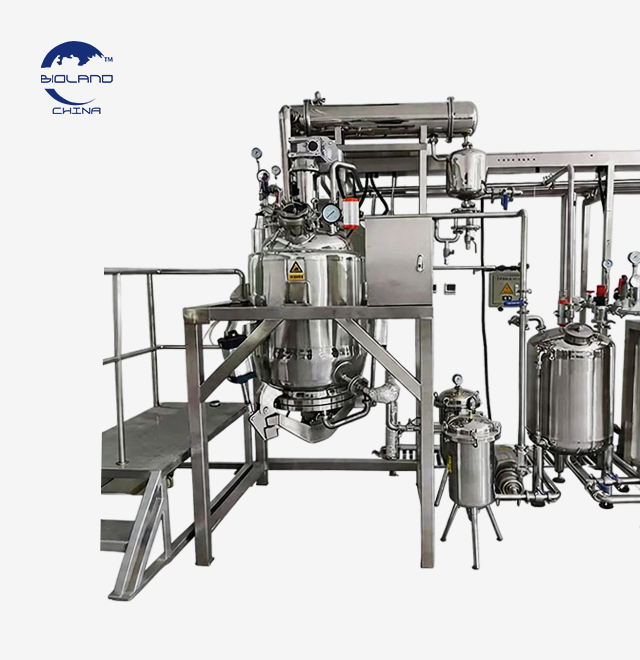
Ultrasonic frequency (usually 20–40 kHz for industrial use), power output (in watts or kilowatts), loudness control, and temperature management systems are some of the most important factors. To work with a range of raw materials and extraction methods, equipment should have fine setting adjustments. How hard and expensive it is to adopt ultrasound assisted solvent extraction depends on how well it fits with the current infrastructure, such as heating and cooling systems, solvent recovery units, filtration equipment, and concentration systems. Turnkey systems that include ultrasound assisted solvent extraction, filter, low-temperature concentration, and solvent recovery in a single processing line make installation easier and speed up confirmation.
Certifications and Regulatory Compliance
To make things in controlled businesses, you need tools that meet strict quality and safety standards. Check that the sellers you're considering have the right licenses. These could include CE marks for European markets, ISO quality management systems, and industry-specific standards like ATEX ratings for safe use of flammable solvents without the risk of explosion. For pharmacy and food uses, it is important to have GMP-compliant design that takes into account things like material choice, surface finish, cleanability, and paperwork needs. 316L stainless steel is used to make equipment with product-contact areas that don't rust and are easy to clean.
Supplier Evaluation and Support Infrastructure
Beyond the specs of the tools, the name and support skills of the provider have a big effect on long-term happiness. Look at how long a company has been in the business. Suppliers who have been in the extraction technology business for 15 years or more are likely to be stable and have a lot of experience. Check to see if their expert team can help with application creation, installation and commissioning, training for operators, and quick care after the sale. OEM and ODM features allow modification to meet specific process needs or space limitations. Check to see if new parts, tools like ultrasonic probes, and field service are available in the area where you do business.
We have done a lot of work with producers who are switching from old-fashioned extraction methods to ultrasound-assisted solvent extraction technology. There are some things that all successful implementations have in common: thorough pilot testing with real raw materials, detailed process documentation to help with scaling up, thorough operator training programs, and structured maintenance schedules that keep equipment running well for years.
When comparing different brands of tools, look at how well they've done in the past with applications like yours. Suppliers who have done similar projects successfully in the past, like extracting stevia, processing propolis, isolating capsaicin, making curcumin, or extracting mushroom polysaccharide, bring useful application knowledge that lowers the risk of implementation. Ask to see example installations in person, talk to present users, and look over case studies that show how performance has improved and how long it took to get a return on investment.
Conclusion
In conclusion, ultrasound assisted solvent extraction is much better than standard maceration because it uses mechanically driven cavitation to speed up mass transfer, protect compound purity, and make the process much more cost-effective. The technology cuts down on extraction times by more than two-thirds, increases yields by 50–100%, uses a lot less liquid, and works at temperatures that protect bioactives that are easily damaged by heat.
These benefits lead to lower prices, better quality products, less damage to the environment, and higher competition in the food, cosmetics, nutraceutical, and pharmaceutical making industries. When choosing the right equipment for ultrasound assisted solvent extraction, you need to pay close attention to the technical specs, supplier knowledge, and the ability to integrate with other systems that meet your output needs and business goals.
FAQ
Can ultrasound extraction handle flammable organic solvents safely?
When set up correctly with ATEX-certified explosion-proof parts, ultrasound-assisted solvent extraction systems can handle liquids that can catch fire. This includes control electronics that are fundamentally safe, sealed sensor housings, and inert gas blanketing systems. Localized heating that is monitored and shut down automatically stops the risk of an explosion. A lot of drug companies use ultrasonic extraction with methanol, ethanol, and other Class I solvents on a regular basis, as long as they follow the right safety rules and meet legal standards.
How does ultrasound technology scale from laboratory to production volumes?
Scaling is based on reliable mechanical rules that keep the energy output (watts per liter) and residence time the same. When used in the lab, probe sonicators give data that can be used in large-scale batch systems or flow-through reactors with many sensors. Scale-up factors are confirmed by testing on a small scale with representative samples of the material before investing in full production. Equipment providers who have experience with scale-up offer modeling help and performance promises, which lowers the technical risk of projects that increase capacity.
What maintenance requirements should we anticipate with ultrasonic extraction equipment?
The most wearable part is the ultrasonic probe, which slowly wears away due to cavitation effects. Titanium alloy probes usually last between 1 and 3 years in harsh industrial settings with rough materials, but this depends on how hard they are used and how many hours they are used. As probe shape changes slightly over time, regular frequency tuning keeps resonance efficiency high. Besides that, maintenance is similar to regular process equipment: gaskets need to be replaced, seals need to be inspected, and temperature and power settings need to be calibrated on a regular basis. Well-designed systems have parts that are easy to get to and service processes that are simple, which cuts down on downtime.
Partner with BIOLAND for Advanced Ultrasound Extraction Solutions
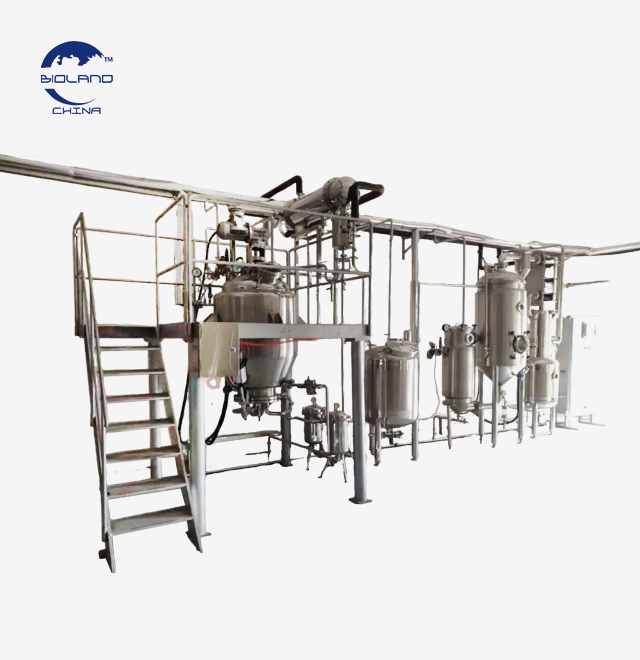
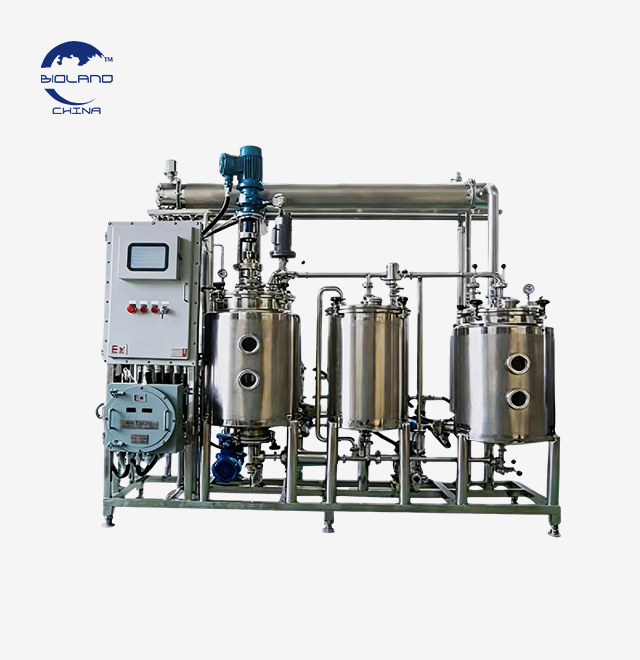
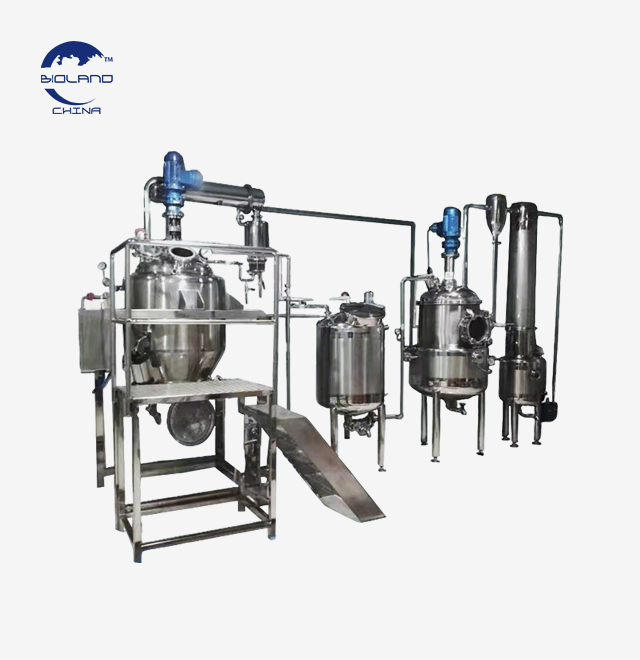
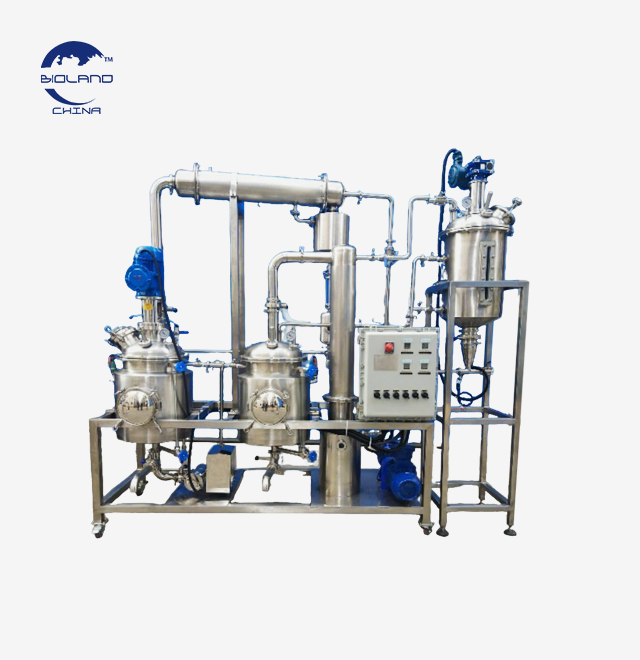
BIOLAND INSTRUMENT designs and makes industrial ultrasound-assisted solvent extraction tools. They have more than 15 years of experience in this field. Our ultrasonic extraction systems are 50–100% more efficient than standard methods. They also allow for multipurpose processing on a single platform, such as hot reflux extraction, aromatic oil recovery, and organic solvent extraction.
All systems come with a full set of certificates, including CE, ISO, UL, SGS, ATEX, and IEC. They are also built in a way that is GMP-compliant, and product-contact parts can be made of 316 stainless steel if desired. Advanced features include two ultrasonic setups, full PLC automation, explosion-proof rates for flammable liquids, built-in CIP cleaning systems, and dual-condenser layouts that can be changed to maximize recovery efficiency. Our engineering team provides full turnkey solutions, from planning the workshop to installation, commissioning, and teaching the operators. They also provide ongoing technical support for the entire duration of the equipment.
Get in touch with our experts at info@biolandequip.com to talk about your extraction needs with a reliable maker of ultrasound-assisted solvent extraction. We'll help you look at ways to improve your processes, figure out your return on investment (ROI), and create special systems that will speed up your move to better extraction technology.
References
1. Chemat, F., Rombaut, N., Sicaire, A., Meullemiestre, A., Fabiano-Tixier, A., & Abert-Vian, M. (2017). Ultrasound assisted extraction of food and natural products: Mechanisms, techniques, combinations, protocols and applications. A review. Ultrasonics Sonochemistry, 34, 540-560.
2. Vilkhu, K., Mawson, R., Simons, L., & Bates, D. (2008). Applications and opportunities for ultrasound assisted extraction in the food industry: A review. Innovative Food Science & Emerging Technologies, 9(2), 161-169.
3. Tiwari, B. K. (2015). Ultrasound: A clean, green extraction technology. TrAC Trends in Analytical Chemistry, 71, 100-109.
4. Azmir, J., Zaidul, I., Rahman, M., Sharif, K., Mohamed, A., Sahena, F., & Omar, A. (2013). Techniques for extraction of bioactive compounds from plant materials: A review. Journal of Food Engineering, 117(4), 426-436.
5. Mason, T. J., Paniwnyk, L., & Lorimer, J. P. (1996). The uses of ultrasound in food technology. Ultrasonics Sonochemistry, 3(3), S253-S260.
6. Esclapez, M. D., García-Pérez, J. V., Mulet, A., & Cárcel, J. A. (2011). Ultrasound-assisted extraction of natural products. Food Engineering Reviews, 3(2), 108-120.
The reactor is beautifully mirror-polished and fully complies with GMP requirements for the pharmaceutical industry. The performance is excellent! Overall, we are very satisfied! We also provided with some feedback on our process improvements, which we hope will be helpful.
2024-04-09
Laboratory
Excellent and professional service. Always reply our questions very fast. All reactors and chiller we received are good too.
2024-02-15
Research Institute
Quality is beyond our expectation actually. After we got the extraction equipment and started using it, the performance was beyond our expectation. Very easy to use and very efficient to run. Service always respond us very quickly. Was also very helpful to help us. Thanks Bioland team. Very happy to work with you.
2023-11-20
Biotech Company
We are happy about the new purchase as always. Equipment and services are both good.
2023-08-05
Instrument Lab
This is the second order with Bioland instrument and everything is good as the first dateText.
2023-05-12
Global Trading Partner
Bioland instrument team is very helpful and professional. The sales helped us select the right equipment for our application, and their logistics people handled the transportation and customs declaration for our shipment. All that saved us a lot of work.