Glass Reactor System Buying Guide: Key Specs You Must Check
Jul 9, 2026
Most people who are looking into buying a glass reactor system look at the price first and then the specifications. This is the wrong way to go about things when the equipment will be used every day for years to make batches of synthesis, distillation, or extraction. Depending on the glass grade, jacket design, sealing method, and control configuration, a glass reactor system that looks the same in a catalog picture may act very differently when it is put in place. The glass reactor system line from Bioland Instrument is made with double-jacketed GG17 borosilicate, has a wide temperature and pressure range, and can be fully customized for OEM/ODM orders. This way, buyers get a base designed for real production instead of a stock tank. This guide breaks down the specs you should look over before you sign a buy order. It also includes real-world examples of how each spec works in the real world.
How to Select the Right Reactor Capacity and Configuration
When people buy something, the first thing they usually think about is capacity. However, this is also where the most expensive mistakes are made, because a glass reactor system that is built for today's batch volume might not be able to handle plans to scale up or switch to continuous operation next year. To get the configuration right the first time, you need to think about more than just liters. You also need to think about the number of flanges, the jacket zones, and how many unit operations the vessel needs to handle at the same time.
Common Capacity Mistakes When Scaling From Lab to Pilot
Teams that go straight from bench-scale beakers to production-size tanks often skip the pilot stage. This means they miss the chance to test how the mixture mixes and how heat moves before investing in expensive stainless steel lines. That hole is filled by a medium-sized glass reactor system, which lets engineers check the speed of reactions at a size close enough to production to find issues quickly.
Matching Configuration to Batch Frequency and Throughput Goals
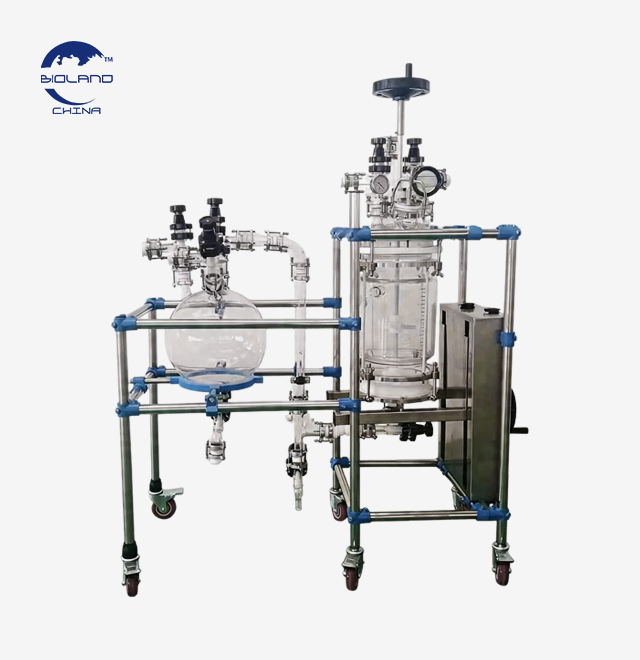
For facilities that do several batches a week, the charge and discharge processes need to be faster. This usually means asking for a reactor core that can be lifted and rotated instead of a set tank. Talk to the seller about your throughput goals before you place your order, because it costs a lot more to make changes to a fixed-body glass reactor system after it has been installed in order to speed up response times than to describe them up front.
Modular Add-Ons That Extend a Single Glass Reactor System
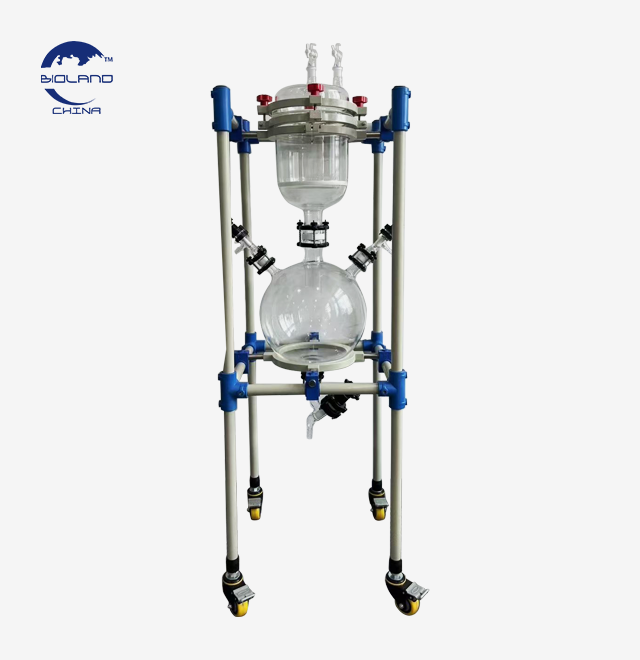
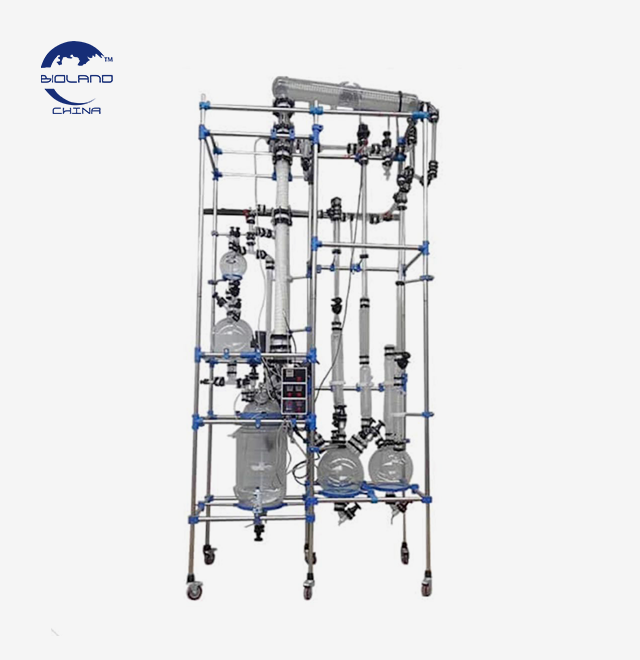
It is possible to connect condensers, dropping funnels, temperature probes, and vacuum lines to a single glass reactor system using standard five-neck flange lids. This means that one vessel can do distillation, extraction, catalytic reaction, and crystallization without having to buy separate tools for each step. A lot of the time, this modularity is more important than the base unit price when it comes to long-term value.
Before investing in full-scale tanks, a Southeast Asian fine-chemical maker needed to test a new intermediate synthesis route. However, their current lab vessels could not handle the batch size needed for useful trial data.
Bioland Instrument gave the client a 100L glass reactor system with a body that can be lifted and rotated and five necks. This allowed the client to make trial batches that were similar to the full-scale conditions. The trial data they gathered cut the time it took to make a decision about scaling up by a few weeks.
Critical Material and Glass Quality Requirements
When choosing a seller, many buyers don't realize how different the materials are, because not all borosilicate glass reacts the same way to repeated changes in temperature or to long-term chemical exposure. If you use irregular or low-quality glass to make a glass reactor system, it might look fine when you first get it, but after months of acid or liquid contact, it could develop stress cracks or surface cracking.
Why GG17 Borosilicate Glass Outperforms Standard Glass
GG17 borosilicate glass has a lower coefficient of thermal expansion than regular lab glass. This means that a glass reactor system made from it can handle being heated and cooled quickly without getting tiny cracks that damage equipment and make it break down faster. This is especially important for processes that go back and forth between condensation and high-temperature reaction steps.
Wall Thickness and Thermal Shock Resistance
When the temperature changes, uneven stress points are lessened when the wall thickness is the same across the vessel body. Buyers should ask suppliers directly about thickness tolerances instead of assuming that all glass reactor system vendors make to the same standard. In high-cycle uses, vessels often fail too soon because the walls are too thin or not level.
Avoiding Metal Ion Contamination in Sensitive Synthesis
A glass reactor system is often better than stainless steel for making pharmaceutical intermediates, biologically active compounds, and other high-purity chemicals when small amounts of contamination could affect their performance or acceptance by regulators. This is because glass doesn't add any metal ions to the reaction mass.
A South American biopharmaceutical company was having trouble with dissolved oxygen levels that weren't staying the same and fermentation cycles that took too long. They were also worried about contamination in oxidation-sensitive intermediate synthesis, which was hard to keep under control with standard vessels.
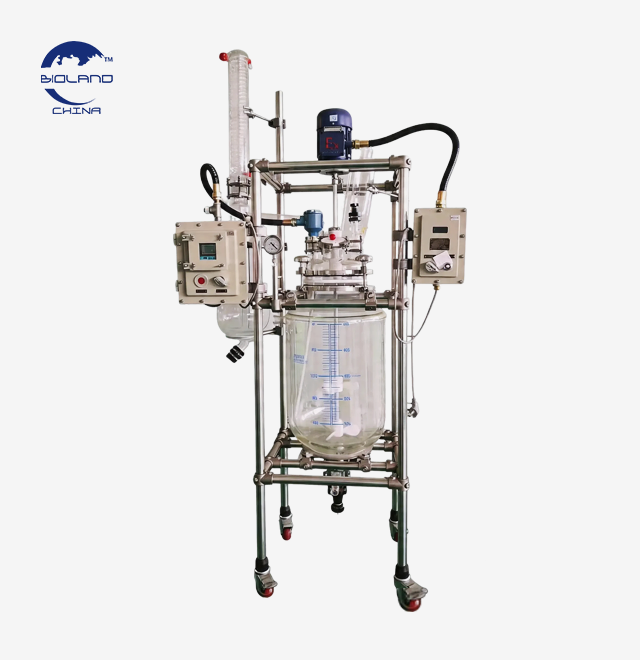
Bioland Instrument developed a 50L double-layer glass reactor system with a new stirrer that increased the efficiency of dissolved oxygen by about 30%, shortened the fermentation cycle, and kept the clean, germ-free environment that their chiral intermediate process needed.
Temperature, Pressure, and Mixing Performance Considerations
In addition to materials, a glass reactor system's actual performance depends on the temperature range of the jacket, the depth of vacuum that can be reached, and the system's ability to stir. These three things together determine whether the vessel can support all of the unit operations that a process needs, not just basic mixing.
Dual-Jacket Temperature Range and Reaction Control
A double-jacketed glass reactor system can handle temperatures ranging from -80°C for low-temperature condensation to 300°C for high-temperature synthesis. This means that one tank can handle the cooling, reflux, and exothermic reaction steps without having to move tools in the middle of the process. Sensitive reactions don't move outside of safe temperature windows because of precise clothing ventilation.
Vacuum Depth and Its Impact on Distillation Yield
A well-built glass reactor system can reach about -0.095 MPa when paired with a compatible vacuum pump. This makes evaporation and reflux much more efficient during distillation or solvent recovery. If buyers are using fractional distillation as part of a combined process, they should make sure that this specification is met instead of assuming that all vacuum-rated vessels work the same.
Stirring Torque and Mixing Uniformity
Spark-free motors with variable frequencies let workers fine-tune the speed of the motion, which directly affects the movement of mass, the spreading of objects, and the treatment of biological materials that are sensitive to shear. A stirrer with the right shape for the job, not just any paddle, can often make the difference between a weak and strong reaction.
A European precious metals company wanted to increase the amount of solvent extraction and processing they did, but their current equipment was too small and didn't allow for many customizations for a new production line they were planning.
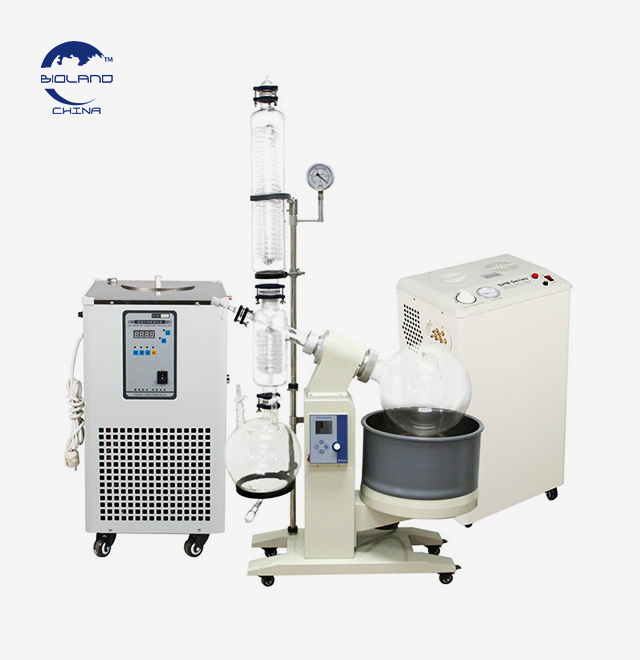
Bioland Instrument sent four custom 200L double-jacketed glass reactor systems that are explosion-proof and nine 50L explosion-proof rotary evaporators that were made for hazardous, highly corrosive processing conditions.
The equipment was explosion-proof to Exd≡BT4 standards, and modular production cut delivery time by about 40%. This let the client start operations 15 days early, and their annual capacity went up by about 30%.
Essential Safety Features and Compliance Standards
Safety features and making sure the supplier is responsible are the last things that are checked before a purchase is made. These are just as important as the main specifications, because aglass reactor system that works with flammable solvents or corrosive reagents poses a real operational risk if the sealing, motor design, or certification isn't up to par.
Explosion-Proof Design for Flammable Solvent Processing
Bioland Instrument has an explosion-proof glass reactor system built to Exd◡BT4 standards for facilities that work with volatile organic solvents. This system comes with PLC-controlled automation so operators can manage reaction parameters from afar instead of having to adjust equipment by hand near dangerous materials.
Dual Sealing and Inert Gas Protection
A second layer of leak protection is provided by a combination of PTFE and mechanical closing, which supports inert gas blanketing for processes that are sensitive to oxidation. This is very important for making chiral intermediates because small amounts of air can hurt both yield and selection during a run.
CE, ISO, GMP, and FDA Certification Requirements
Bioland Instrument follows GMP and FDA standards and is certified by ISO and CE. This gives buyers in the pharmaceutical and food industries the paperwork they need for regulatory checks and easy export approval into European and Southeast Asian markets.
Supplier Track Record and After-Sales Accountability
Reliable providers give you a committed team to keep an eye on weekly production with photos or videos, give you full inspection footage before shipping, and offer Factory Acceptance Testing on-site when the equipment is finished. Custom orders take about 30 business days to ship, while standard units ship within 5 to 7 days and come with a warranty and maintenance support for life.
Conclusion
You can't just look at one thing when choosing a glass reactor system. You have to look at the capacity and design, the quality of the glass, the temperature and mixing performance, and safety compliance all at the same time. Bioland Instrument has more than 15 years of engineering experience, follows CE/ISO/GMP/FDA guidelines, and has a history of successful deployments in pharmaceutical, chemical, and precious metals environments. This shows what a properly specified system can do. If buyers check these specs ahead of time, they can escape expensive upgrades and get a long-term business partner instead of just tools.
FAQ
What range of temperatures can a glass reactor system work with?
Most double-jacketed units can work in temperatures ranging from -80°C to 300°C, which means they can handle cooling, reflux, and high-temperature reaction steps.
Can strong acids and solvents damage the glass?
Yes, GG17 borosilicate glass can stand up to strong acids, bases, and organic fluids without getting harmed by metal ions.
Can the system be changed so that it can handle things without exploding?
Yes, Bioland Instrument offers ExdⅡBT4-rated explosion-proof configurations with PLC automation.
How long does it take to make a new order?
Standard units ship in 5–7 days, while customized systems take about 30 business days.
Are these systems approved for use with drugs?
Yes, along with CE and ISO certification, all units meet GMP and FDA standards.
Request Your Glass Reactor System Quote from Bioland Instrument
Now is the time to work with a provider who knows how machine performance affects long-term production efficiency, if you are still reviewing specs. Bioland Instrument has been making special reaction systems, rotor evaporators, filter equipment, and glass reactor systems for pharmaceutical, chemical, fine chemical, and food-grade producers around the world for more than 15 years. Our engineering team doesn't just offer basic vessels; they look at your reaction conditions, capacity needs, temperature range, mixing needs, safety requirements, and plans for future growth to come up with a design that works best for your process.
Bioland Instrument can help with OEM/ODM projects by giving you a choice of flexible design options. This is true whether you need a standard glass reactor system for lab and pilot-scale development or a fully customized, explosion-proof, PLC-controlled production solution. Before being sent out, each system is thoroughly tested and made with materials that have been inspected by professionals. We also offer weekly photos and videos of production updates, help with Factory Acceptance Testing, and ongoing technical support after installation.
If you pick the right reactor supplier, you can avoid having to make expensive changes, make the process more reliable, and feel confident about moving your facility from development to commercial production. Bioland Instrument can be reached at info@biolandequip.com to talk about your project needs, get a full quote, and find out how our unique glass reactor systems can help you reach your next production goal.
References
1. Perry, R. H., & Green, D. W. (2019). Perry's Chemical Engineers' Handbook (9th ed.). McGraw-Hill Education.
2. Sinnott, R. K., & Towler, G. (2019). Chemical Engineering Design (6th ed.). Butterworth-Heinemann.
3. Levenspiel, O. (1999). Chemical Reaction Engineering (3rd ed.). John Wiley & Sons.
4. Nauman, E. B. (2008). Chemical Reactor Design, Optimization, and Scaleup (2nd ed.). John Wiley & Sons.
5. Paul, E. L., Atiemo-Obeng, V. A., & Kresta, S. M. (2004). Handbook of Industrial Mixing: Science and Practice. Wiley-Interscience.
6. American Institute of Chemical Engineers (AIChE). (2020). Guidelines for Process Safety in Batch Reaction Systems. AIChE.
The reactor is beautifully mirror-polished and fully complies with GMP requirements for the pharmaceutical industry. The performance is excellent! Overall, we are very satisfied! We also provided with some feedback on our process improvements, which we hope will be helpful.
2024-04-09
Laboratory
Excellent and professional service. Always reply our questions very fast. All reactors and chiller we received are good too.
2024-02-15
Research Institute
Quality is beyond our expectation actually. After we got the extraction equipment and started using it, the performance was beyond our expectation. Very easy to use and very efficient to run. Service always respond us very quickly. Was also very helpful to help us. Thanks Bioland team. Very happy to work with you.
2023-11-20
Biotech Company
We are happy about the new purchase as always. Equipment and services are both good.
2023-08-05
Instrument Lab
This is the second order with Bioland instrument and everything is good as the first dateText.
2023-05-12
Global Trading Partner
Bioland instrument team is very helpful and professional. The sales helped us select the right equipment for our application, and their logistics people handled the transportation and customs declaration for our shipment. All that saved us a lot of work.