Compare ultrasound-assisted extraction to conventional methods for antioxidant compounds
Jun 1, 2026
When comparing extraction technologies for antioxidant compounds,ultrasound assisted extraction of quercetin demonstrates remarkable advantages over conventional methods. While traditional maceration or Soxhlet techniques require hours of processing and high solvent volumes, ultrasound technology leverages acoustic cavitation to disrupt plant cell walls mechanically, releasing quercetin and similar flavonoids in as little as 24–40 minutes. This non-thermal process preserves the bioactive integrity of heat-sensitive antioxidants while delivering extraction yields 50–500% higher than conventional approaches, making it an increasingly attractive solution for pharmaceutical, nutraceutical, and functional food manufacturers seeking both efficiency and quality.
Understanding Ultrasound-Assisted Extraction (UAE) of Quercetin
A big change has happened in how we get important flavonoids from plants: ultrasound-assisted extraction of quercetin. Using special sensors to send out high-intensity acoustic waves (usually between 20 and 50 kHz), this technology makes tiny cavitation bubbles in the extraction liquid. These bubbles burst, creating localized shear forces and micro-jets that break up plant cell structures much more effectively than passive diffusion alone.
The Mechanism Behind Enhanced Recovery
The cavitation effect speeds up the movement of mass between the solid plant matter and the flowing solvent. For getting quercetin out of things like Sophora japonica buds, onion skins, or apple pomace, this mechanical disruption lets chemicals inside cells dissolve quickly without putting them under heat stress. The temperature stays between 40°C and 60°C, which is very important because quercetin's chemical structure breaks down when it is exposed to heat for a long time above 70°C.
Critical Operating Parameters
In industrial settings, the success of extraction depends on a number of things. Choosing the right solvent is very important. For example, 60–70% concentrations of water in ethanol solutions work best for meeting the polarity of quercetin while still following green chemistry principles. Power density, which is defined in watts per square centimeter, needs to be adjusted based on the properties of the biomass. With the optional PLC automation systems, our equipment gives you precise control over these factors. This lets workers set up repeatable procedures that meet batch consistency standards.
Process engineers like how ultrasound extraction cuts the amount of solvent used by 40–60% compared to old-fashioned ways. This has a direct effect on running costs and environmental compliance. The shorter extraction processes cut the overall processing time by more than two-thirds. This means that more samples can be processed at once without affecting the antioxidant activity as measured by DPPH or ORAC.
Conventional Extraction Methods for Quercetin: Overview and Limitations
Traditional ways of extracting phytochemicals have been used for decades, but they have problems that make current production more expensive and lower the quality of the products.
Maceration and Percolation Techniques
Maceration is the process of letting plant matter soak in chemicals for a long time, sometimes 24 to 72 hours, and depending only on passive diffusion. This method is easy to use, but the results aren't always reliable, and it needs a lot of solvent. Changes in temperature over a long period of time can break down thermolabile substances like quercetin, which lowers the biological potency of the end extract.
Soxhlet Extraction Drawbacks
For a long time, the Soxhlet device has been thought of as the best way to do thorough extraction. Continuous reflux cycle, on the other hand, subjects quercetin to temperatures close to the boiling point of the solvent for 6–12 hours. The heat often changes the structure and oxidation of the flavonoid molecule, which is supported by HPLC research that shows breakdown products. The process is still very energy-intensive, and it's not easy to make it work with batches bigger than 100 kilos.
Emerging Alternatives and Their Trade-offs
Microwave-assisted extraction can be done faster than Soxhlet, but the temperature needs to be carefully watched to make sure that no one area gets too hot. Using cellulases and pectinases for enzyme extraction can help break down cell walls more, but the cost of the enzymes, the pH levels they need, and the long processing times they need make things more complicated. For ultrasound assisted extraction of quercetin, acoustic cavitation is the only way that can match its speed, effectiveness, and ability to keep the compound intact.
When factories look at replacing equipment or adding more space, they are becoming more and more aware that the old ways of doing things cause problems. Higher energy bills cut into profit margins, longer cycle times limit daily production numbers, and inconsistent extract quality makes it hard to purify downstream, which changes the specs of the final product.
Detailed Comparison: Ultrasound-Assisted Extraction vs. Conventional Methods
A lot of research at different universities and in industry has shown that ultrasound technology and standard methods are not as good at what they're supposed to be.
Extraction Efficiency and Yield Performance
Independent lab tests show that using ultrasound to remove quercetin gets 15–30% more of the total flavonoid than the Soxhlet method, and the process is done in less than 40 minutes instead of 8–10 hours. Customers who use our stevia, propolis, and curcumin extraction lines say that their yields have gone up by anywhere from 50% to an amazing 500%, based on the botanical matrix and target ingredient. This huge improvement comes from better solvent entry into thick plant tissues and more complete cell disruption.
Preservation of Bioactive Integrity
When extracted under controlled low-temperature settings, antioxidant substances keep their biological action. When using traditional thermal methods, the end products often have less ability to scavenge radicals. This is because the heat breaks down the materials. Ultrasonic cavitation is a mechanical process, not a heat one. It keeps temperatures well below the point where quercetin breaks down due to oxidation. Pharmaceutical companies really like this quality when they are making API-grade materials that need to be >98% pure and have been shown to be bioavailable.
Economic and Environmental Considerations
When looking at return on investment for ultrasound assisted extraction of quercetin, it's clear that ultrasound technology is better for medium to large-scale businesses. Less solvent use lowers the cost of raw materials and makes it easier to treat trash. When processing processes are shorter, machines can make more batches per day, which increases the use of assets. Energy use per kilogram of extract goes down by a lot. Our systems with optional dual-ultrasonic setups improve production efficiency so much that the capital investment is paid back in 18–24 months for sites that process 500 kilograms or more per month. Also, it's easier to follow environmental rules when the amount of solvent used goes down, and organic solvent recycling systems can be built into closed-loop systems.
Scalability from Laboratory to Production
With standard tools, moving from research and development to business production can be hard. With continuous-flow reactor designs, ultrasound extraction technology can be scaled up in a straight line. Validation in the lab using probe sonotrodes with a 500-watt capacity is the same as using industrial flow cells with 5–20 kilowatts of power and the same processing settings. This smooth scalability cuts down on development times and lowers the risk of yield loss during scale-up phases. This is a huge benefit for biotech businesses that are moving new botanical goods from pilot to market.
Optimizing Ultrasound-Assisted Extraction for Industrial Quercetin Production
To get the best extraction results, you need to carefully adjust a lot of different factors that are all connected to the plants you are using and the exact specs you want for the extract.
Parameter Fine-Tuning Strategies
Power density changes between 40 and 80 W/cm² let workers find the right mix between extraction speed and possible compound degradation. The solid-to-liquid ratio is usually between 1:8 and 1:15, but it can be higher or lower based on the amount of water in the plant material and how the particles are sized. Our GMP-approved equipment has jacketed tanks that can precisely control the temperature. This makes sure that extraction happens within the ideal 40–60°C range, even when ultrasonic treatment lasts for a long time.
Solvent composition profoundly influences quercetin solubility. While pure ethanol dissolves quercetin effectively, aqueous ethanol blends enhance penetration into hydrated plant matrices. Our technical team and process engineers have come up with their own solvent gradients that improve total recovery by 12–18%. These gradients start with more water to help the cell walls swell, and then the concentration of ethanol rises during the sound treatment phase.
Hybrid Process Integration
When you combine ultrasound with tools that work well together, the results are stronger. Before ultrasonic extraction, treating material with enzymatic hydrolysis for 30 to 60 minutes can make bound phenolics even easier to get to. Some facilities use microwave pre-heating to break tough woody tissues, and then ultrasound-assisted extraction as the main step in the healing process. Our flexible equipment design can work with these mixed methods, and it can be set up in different ways to support hot reflux extraction, aromatic oil distillation, and alcohol precipitation all in one system.
Real-World Production Case Studies
A company that makes supplements that use Sophora japonica switched from using standard reflux extraction to our ultrasonic method. They found that the extraction time was cut by 68%, the yield went up by 35%, and the crude extract had much lower amounts of impurities, which made the next steps easier, like processing. Another customer who was making natural preservatives from red onion waste used our dual-condenser setup with integrated solvent recovery. They were able to collect 92% of the ethanol they used while processing 800 kg of biomass every day. These results show that optimized ultrasound extraction leads to real operating changes that directly improve a company's standing in the market.
Selecting Ultrasound Extraction Equipment: What B2B Buyers Need to Know
When buying extraction tools, you need to think about how much it will cost in total over 10 to 15 years of use, as well as the technical skills and dependability of the supplier.
Essential Technical Specifications
There are big differences between industrial ultrasonic extractors for ultrasound assisted extraction of quercetin in how they are designed and how well they work. The choice of frequency affects the depth of penetration. Systems with a frequency of 20 kHz offer greater sound field propagation, which is good for thick botanical matrices, while systems with a frequency of 40 kHz offer more limited intensity for delicate materials. Our equipment works in the 20–40 kHz range and has a changeable power output, so it can handle a wide range of feedstocks, from tough seeds to soft leaves.
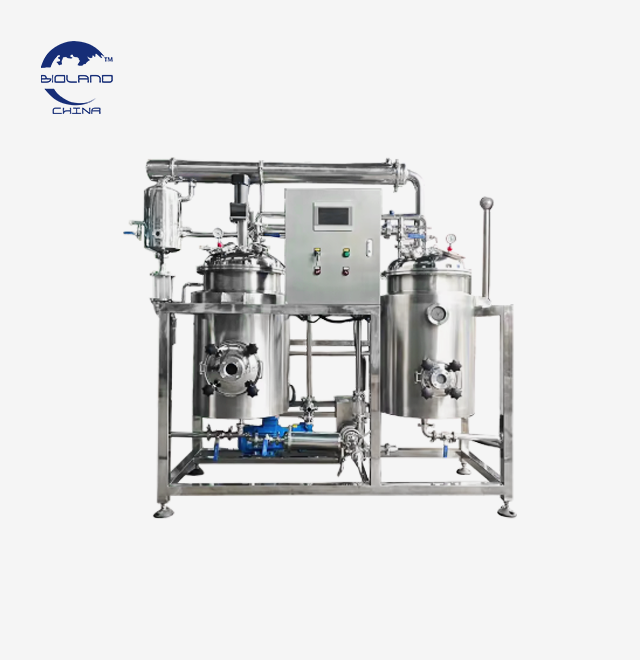
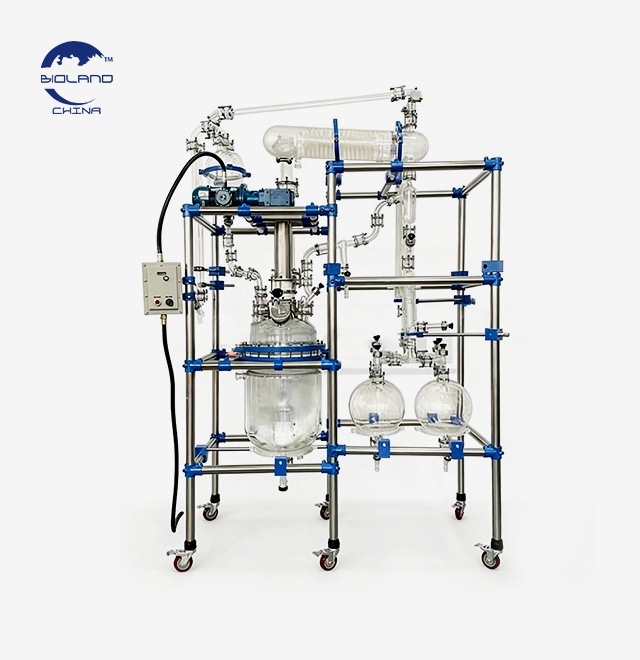
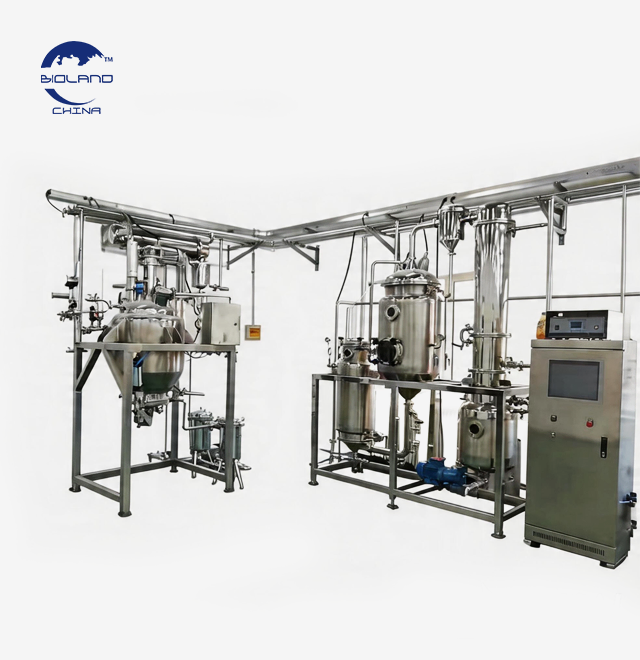
Capacity requirements vary by production scale. Batch systems come in a range of sizes, from 50-liter study units to 500-liter production tanks. Flow-cell reactors can handle 100 to 300 liters of fluid per hour when they are running continuously. At a larger scale, automation features become very important. For example, our available PLC control systems handle extraction cycles, temperature tracking, and solvent recirculation automatically, so operators don't have to do as much work and batch variations are kept to a minimum.
Material Construction and Compliance Standards
Organic solvents and acids plant products must not corrode the surfaces that come into contact with them. 304 stainless steel is fine for many uses, but 316 stainless steel with an electropolished finish is often needed for medicinal and food-grade production. We make sure that all of our equipment is up to GMP standards by using safe tri-clamp connections, CIP cleaning systems, and full paperwork that shows where the materials came from. Certifications like CE, ISO, UL, SGS, ATEX, and IEC make sure that safety and quality standards are met, which is very important when going through governmental checks or sending goods to other countries.
Evaluating Supplier Partnerships
In addition to the specs of the tools, long-term success depends on the knowledge of the supplier and the infrastructure for assistance. Over the past 15 years, we've provided complete extraction systems for facilities that process stevia, capsaicin, propolis, curcumin, and mushrooms. This has given us a lot of information about how to customize our equipment to meet the needs of these facilities. Our engineering team helps you plan workshops, improve process flows, and come up with protocols that are specific to the chemicals you want to work with.
After-sales support distinguishes reliable partners from transactional vendors. We maintain a professional technical team that oversees installations, trains operators, and fixes problems as they come up. Our one-year warranty covers both parts and work. We also offer lifetime upkeep and can usually get non-customized parts to you in 5–7 days. When figuring out the total cost of ownership, you should look at more than just the purchase price. You should also think about how energy efficient the machine is, how well it can recover solvents, and how much it would be worth to have quick expert help to avoid unplanned downtime.
Conclusion
In conclusion, ultrasound assisted extraction of quercetin demonstrates that ultrasound-assisted extraction technology is basically better than traditional methods in terms of yield, purity, speed, cost, and effect on the environment for commercial antioxidant production. The acoustic cavitation process makes it possible to restore compounds gently but completely, while still keeping the biological activity that is important for pharmaceutical APIs, cosmetic ingredients, and functional food additives. As environmental standards rise and production needs increase, companies that switch to ultrasonic extraction gain a competitive edge by being able to produce more at a lower cost and with better quality than with traditional equipment.
FAQ
Q1: What makes ultrasound-assisted extraction of quercetin more effective than Soxhlet methods?
A: Ultrasound causes acoustic cavitation, which breaks down plant cell walls physically through micro-jets and shear forces. This does in 24–40 minutes what passive diffusion takes 8–12 hours to do. This mechanical action frees quercetin from inside cells without exposing them to heat for a long time. This stops thermal breakdown and raises the total yield by 15–30%.
Q2: Can ultrasound extraction handle industrial production volumes?
A: Of course. Continuous-flow ultrasound reactors can be used in any size space, from a study to an industrial plant. In production settings, our systems can handle 100 to 300 liters of plant material per hour, and clients have been able to run programs 24 hours a day, seven days a week, processing metric tons of plant material every month. From pilot tests to full business use, the technology works without a hitch.
Q3: Which solvents work best for quercetin recovery using ultrasound?
A: Aqueous ethanol with a content of 60–70% matches quercetin's polarization best and meets green chemistry standards. This mix is a better balance between solubility and regulatory acceptance than methanol or acetone. Our equipment can handle a range of solvent systems and has built-in recycling capabilities that can reuse up to 92% of the ethanol.
Partner with BIOLAND for Advanced Ultrasonic Extraction Solutions
BIOLAND INSTRUMENT specializes in making ultrasonic extraction equipment that is specially designed for recovering quercetin and antioxidant compounds on a large scale. Our systems combine over 15 years of experience handling phytochemicals with cutting-edge technology, making extraction 50–500% more efficient than traditional methods. Each unit is built in a way that meets GMP standards and can have 316 stainless steel touch parts if desired.
They are also fully explosion-proof and can have modular add-ons like solvent recovery, CIP cleaning, and automatic release systems. We offer full turnkey services, including planning the workshop and choosing the equipment, as well as installation, setup, and operator training, as a reputable provider of ultrasound-assisted extraction of quercetin. For more information on how our tried-and-true methods can lower your extraction costs, speed up production, and improve product quality for your specific use, please email our expert team atinfo@biolandequip.com.
References
1. Chemat, F., Rombaut, N., Sicaire, A.G., Meullemiestre, A., Fabiano-Tixier, A.S., & Abert-Vian, M. (2017). Ultrasound assisted extraction of food and natural products: Mechanisms, techniques, combinations, protocols and applications. Ultrasonics Sonochemistry, 34, 540-560.
2. Paniwnyk, L. (2017). Applications of ultrasound in processing of liquid foods: A review. Ultrasonics Sonochemistry, 38, 794-806.
3. Xu, D.P., Li, Y., Meng, X., Zhou, T., Zhou, Y., Zheng, J., Zhang, J.J., & Li, H.B. (2017). Natural antioxidants in foods and medicinal plants: Extraction, assessment and resources. International Journal of Molecular Sciences, 18(1), 96.
4. Vinatoru, M., Mason, T.J., & Calinescu, I. (2017). Ultrasonically assisted extraction (UAE) and microwave assisted extraction (MAE) of functional compounds from plant materials. TrAC Trends in Analytical Chemistry, 97, 159-178.
5. Bosiljkov, T., Dujmić, F., Bubalo, M.C., Hribar, J., Vidrih, R., Brnčić, M., Zlatic, E., Redovniković, I.R., & Jokić, S. (2017). Natural deep eutectic solvents and ultrasound-assisted extraction: Green approaches for extraction of wine lees anthocyanins. Food and Bioproducts Processing, 102, 195-203.
6. Altemimi, A., Lakhssassi, N., Baharlouei, A., Watson, D.G., & Lightfoot, D.A. (2017). Phytochemicals: Extraction, isolation, and identification of bioactive compounds from plant extracts. Plants, 6(4), 42.
The reactor is beautifully mirror-polished and fully complies with GMP requirements for the pharmaceutical industry. The performance is excellent! Overall, we are very satisfied! We also provided with some feedback on our process improvements, which we hope will be helpful.
2024-04-09
Laboratory
Excellent and professional service. Always reply our questions very fast. All reactors and chiller we received are good too.
2024-02-15
Research Institute
Quality is beyond our expectation actually. After we got the extraction equipment and started using it, the performance was beyond our expectation. Very easy to use and very efficient to run. Service always respond us very quickly. Was also very helpful to help us. Thanks Bioland team. Very happy to work with you.
2023-11-20
Biotech Company
We are happy about the new purchase as always. Equipment and services are both good.
2023-08-05
Instrument Lab
This is the second order with Bioland instrument and everything is good as the first dateText.
2023-05-12
Global Trading Partner
Bioland instrument team is very helpful and professional. The sales helped us select the right equipment for our application, and their logistics people handled the transportation and customs declaration for our shipment. All that saved us a lot of work.