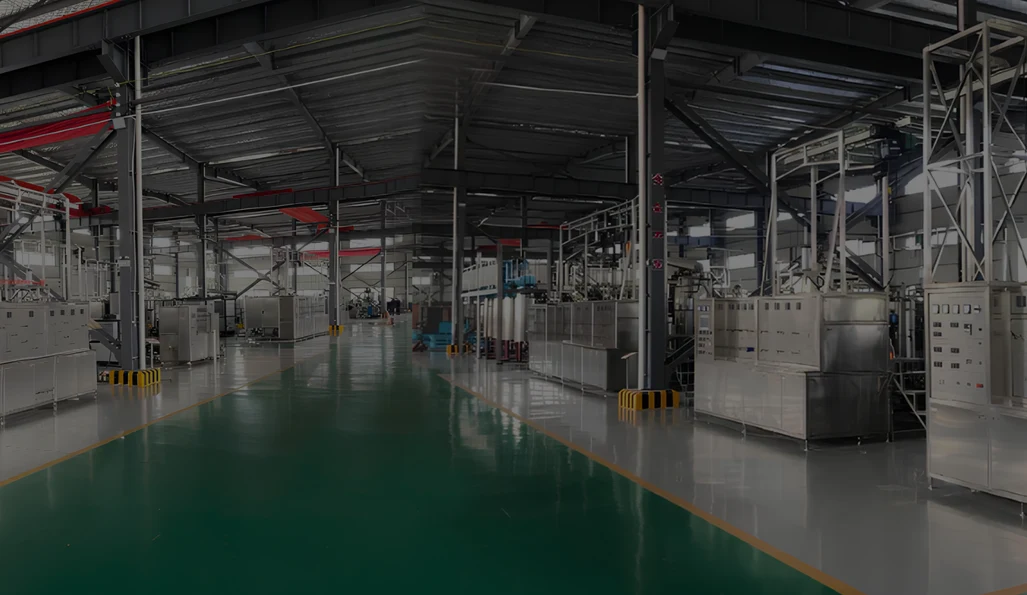
How do ultrasonic extractors improve yield and purity of plant compounds?
Jun 12, 2026
Ultrasonic extractors use high-frequency sound waves to cause acoustic cavitation in extraction solvents, which increases the output and purity of plant chemicals. This cavitation effect creates tiny bubbles that quickly pop, sending out strong shockwaves in a specific area. These shockwaves break down the walls of plant cells physically, which makes it much easier for solvents to get inside and for mass to move around. This makes the target chemicals, such as ultrasonic flavonoid extraction equipment, flavonoids, polyphenols, and essential oils, release faster while the structure stays the same.
Modern ultrasonic flavonoid extraction equipment works at controlled temperatures, usually between 40°C and 60°C. This keeps heat-sensitive bioactive chemicals from breaking down too quickly. This non-thermal method gets 50–500% better extraction rates than standard methods while cutting processing time from hours to minutes. This makes it an essential technology for cosmetic, pharmaceutical, and nutraceutical companies that want to be efficient and make high-quality products.
Understanding Ultrasonic Extraction Technology
The Science Behind Acoustic Cavitation
Acoustic cavitation is a basic physics concept that makes ultrasonic extraction work. Ultrasound waves with a high frequency (usually 20–24 kHz) move through a material and cause cycles of compression and rarefaction. During the rarefaction phase, areas with low pressure create tiny bubbles of gas. As the sound waves go by, these bubbles get bigger and bigger until they hit a critical size. At that point, they violently pop. For microseconds, the compression creates areas with temperatures above 5,000°C and pressures above 1,000 atmospheres, but the solution as a whole stays cool. When this huge amount of energy is released, it creates strong micro-jets and shear forces that hit nearby plant cell structures.
The mechanical impact breaks down tough cell walls that usually make it hard for solvents to get to chemicals inside cells. It is possible to break down the cellulose and lignin that surround important phytochemicals without using harsh chemicals or boiling for a long time. This breaks down cells very quickly, which speeds up the diffusion routes and lets solvents quickly get into plant tissues and dissolve target molecules. Continuous cavitation also produces turbulence that refreshes the solvent surface all the time. This keeps the concentration differences at their best throughout the extraction process and stops gradients of saturation.
To use ultrasonic extraction successfully, you need to have exact control over a number of factors that are all connected. Ultrasonic frequency determines the strength of cavitation. Lower frequencies (20 kHz) make bubbles that are bigger and more energetic, which works well for tough plant materials. Higher frequencies (40 kHz and above) make bubbles that are smaller and less energetic, which works well for delicate compounds. Power density, which is measured in watts per milliliter, is directly related to how well something extracts, but it needs to be balanced against heat production to keep things from breaking down thermally. Adjustable amplitude sets (20–100%) let workers change the level of mechanical disruption based on the properties of the raw material.
Managing temperature is just as important. Ultrasonic extraction can be done at room temperature, but keeping the temperature between 40°C and 60°C improves the viscosity of the liquid and the solubility of the substance without affecting the thermolabile parts. Choosing the right solvent has a big effect on selectivity and output. For polar flavonoids, ethanol-water mixes work best, but hydrophobic compounds may need different solvent systems. The extraction process usually takes between 24 and 40 minutes, which is more than two-thirds shorter than traditional soaking or Soxhlet methods. This huge reduction in time not only increases productivity but also lowers energy use and oxidative stress.
Comparative Advantages Over Traditional Methods
Passive diffusion and heat energy are the main sources of energy used in traditional extraction methods like maceration, percolation, and Soxhlet extraction. Maceration needs to be soaked for days and stirred often, which uses a lot of liquid and doesn't fully remove the material. Even though Soxhlet extraction is very thorough, it subjects materials to long rounds of reflux that last between 6 and 24 hours. This breaks down sensitive chemicals significantly over time. Using either way creates a lot of waste liquid and needs a lot of energy to heat up.
These problems are completely fixed by ultrasonic extraction. Active mechanical cell rupture cuts extraction time by 65–75%, which lowers costs immediately. Because mass transfer is more efficient, 30–50% less solvent is used. This is in line with green chemistry concepts and lowers the cost of waste. The managed low-temperature process keeps the purity of the bioactive compounds, which makes extracts that are better at fighting free radicals and working as medicines.
Ultrasonic methods regularly produce 50–150% more flavonoids than traditional methods, with some optimized processes reaching up to a 500% improvement. This has been shown in studies of a number of different plant types. In addition to output, purity measures get better because unwanted tannins, chlorophylls, and waxes are extracted more slowly during shorter processing times. This makes the next steps of purification easier.
Optimizing Ultrasonic Extraction Parameters for Maximum Yield and Purity
Fine-Tuning Process Variables
Systematic tuning of process factors is needed to get the most out of the extraction process. Power output needs to be adjusted based on the plant material. For example, roots and bark that are woody need higher amplitudes than leaves and flowers that are soft. Equipment that can run continuously at 600–3000 watts gives industrial-scale computing the power it needs. For strong plant extraction, frequency setting is usually set to 20 kHz because that's the frequency that produces the biggest cavitation bubbles and the strongest collapses, which break down cell walls.
Another important optimization goal is the makeup of the solvent. When it comes to extracting flavonoids, water-based ethanol solutions (40–70% ethanol) usually work better than pure solvents because they can balance the polarity needs of different flavonoid glycosides and aglycones. Changing the pH level can make sensitivity even better. Anthocyanins stay stable in slightly acidic (pH 3–5) conditions, while flavones and flavonols do best in neutral pH.
Solid-to-liquid ratios between 1:10 and 1:30 keep the mixture from becoming too concentrated, which could stop cavitation from spreading, and from becoming too watered down. Using ultrasonic flavonoid extraction equipment with jacketed vessels or heat exchanges to control the temperature keeps the best thermal windows open without letting hotspots form that could break down sensitive compounds.
Addressing Common Operational Challenges
Industrial ultrasonic extraction has a number of operating issues that need to be managed proactively. Cavitation inconsistency can happen when equipment gets dirty or when transducers are not tuned correctly. Sonotrode surfaces should be checked for erosion or scale building on a regular basis to keep their effective performance. Titanium alloy probes (Grade 5, Ti6Al4V) are better at resisting cavitation and should be chosen over stainless steel probes, which break down too quickly. Generator frequency tracking methods automatically account for thermal drift, which keeps the amplitude supply steady even when the temperature changes.
Thermal control keeps things from getting too hot during continued use. Adding cooling jackets, circulation chillers, or internal heat exchanges gets rid of the extra heat that is made during cavitation. Using carefully placed thermocouples or RTD sensors to check internal temperatures lets you make changes in real time to stay within goal ranges. By using automatic power modulation, the ultrasonic strength is lowered if temperatures rise above certain levels. This protects the quality of the product while keeping operations running smoothly. Explosion-proof designs that meet ATEX and IECEx standards make sure that facilities that work with flammable solvents like ethanol can safely operate in listed dangerous areas.
Industrial Case Studies and Results
Implementations that worked well with a variety of plant materials show that optimization can work in real life. A pharmaceutical company that processed Ginkgo biloba leaves got 187% more flavone glycosides by pretreating them with ultrasonic waves at 60°C for 30 minutes with 60% ethanol, instead of macerating them for 6 hours. Importantly, HPLC research showed that the ultrasonic extract had 23% fewer chlorophyll impurities, which meant that the costs of further chromatographic purification were much lower. A nutraceutical business that gets hesperidin from used citrus peels added flow-cell ultrasonic reactors to their juice processing line.
This turned the 15 metric tons of trash they got every day into high-value useful ingredients. The liquid recovery closed-loop system cut running costs by 42% per year and created new ways to make money. Similarly, a cosmetics company that wanted to get resveratrol from Polygonum cuspidatum roots used dual-frequency ultrasonic extraction (20 kHz primary, 40 kHz secondary). This increased dissolution rates by 63% and allowed them to get cosmetic-grade purity (≥98%) without any extra purification steps. This cut their production cycle from 72 hours to less than 8 hours, which is a huge improvement.
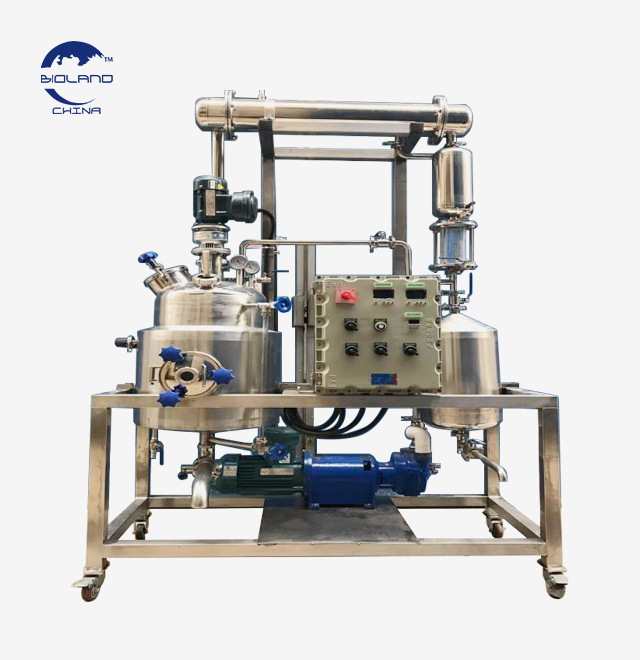
A certain health product enterprise produces Ginkgo biloba leaf total flavonoid extraction (oral capsule raw material production) using our BIOLAND INSTRUMENT company's BL-TN-100L equipment equipped with a 100L ultrasonic extraction and concentration (20-40KHz adjustable frequency) unit (suitable for high viscosity concentrate). The ultrasonic extraction yield of total flavonoids is 75.8%, the extraction time is 50 minutes, the retention rate of ginkgolides is 92.5%, the microbial limit of the finished product meets the GB 16740 standard, and the raw material cost is reduced by 32% (yield improvement+by-product utilization); 60% reduction in production cycle (extraction and concentration time reduced from 3.5 hours to 1.2 hours); The finished product has passed the EU health product registration certification and can be exported to the European market, with a unit price increase of 25%.
Ultrasonic Extraction Equipment: Selection and Comparison
Technology Comparison Matrix
When procurement workers look at extraction technologies, they have to look at more than one performance factor. In terms of speed, cost, and sustainability, ultrasonic extraction clearly works better than traditional methods. Ultrasonic devices use 40–60% less energy than regular hot reflux extraction because they run at lower temperatures and for shorter periods of time. Ultrasonic throughput is much higher than Soxhlet throughput. A normal 5-liter Soxhlet cycle breaks down 100–200 grams of material over 8–12 hours, but a comparable ultrasonic flow-cell reactor breaks down 5–10 kilograms per hour constantly.
Although supercritical CO₂ extraction is very selective, it costs three to five times as much to set up and needs specialized high-pressure tools and a lot of safety infrastructure. Supercritical technology is also not very useful for most uses because it is hard to operate and costs a lot to keep up. Ultrasonic extraction is the best way to get flavonoids, alkaloids, polyphenols, and glycosides because it gives the same amount of polar and semi-polar chemicals for a lot less money. Another option is microwave-assisted extraction, but it has trouble scaling up and distributing energy evenly in large amounts. Ultrasonic technology, on the other hand, can be used from the bench top to full production levels in a straight line.
Laboratory vs. Industrial Scale Systems
Ultrasonic equipment in laboratories usually uses probe-type sonicators that can handle batches of 10 milliliters to 5 liters. These units are very flexible when it comes to parameters, which is great for research and development because it lets you quickly test extraction conditions across a number of factors. Probe systems, on the other hand, can't be used in very large quantities; straight immersion sonotrodes lose a lot of power when used in volumes greater than 20 liters, and probe erosion can cause contamination. They are still very useful for developing new methods, but they don't work well for business production.
Industrial ultrasonic flavonoid extraction equipment is based on the ultrasonic cavitation effect, which generates "cavitation bubbles" in the solvent through high-frequency sound waves (adjustable from 15-80KHz). When the bubbles burst, they release local high temperature and high pressure (up to 5000K, 1000atm), directly acting on plant cell tissues to achieve wall breaking, deformation, solute precipitation, and accelerate the release and dissolution of effective components such as flavonoids. At the same time, it integrates vacuum low-temperature concentration function to quickly remove solvents at low temperatures of 40-65 ℃, avoiding the decomposition of heat sensitive components such as flavonoids, and achieving an integrated operation of "extraction concentration"
The only things that limit their working power are the size of the reactor and the pump's capacity. The closed-loop design works well with both the preparation steps (milling, mixing) that come before and the processes that come after (filtration, concentration), making extraction lines that go from one end to the other without any breaks. When production needs rise, modular building lets you add small amounts of extra space as needed, protecting your initial investments and giving you more working freedom.
Cost Analysis and ROI Considerations
A full cost analysis looks at more than just the initial purchase price of an item; it also considers its ongoing costs and its overall value over its useful life. Ultrasonic processors for laboratories start at about $5,000 to $10,000. Industrial systems range from $10,000 for basic test units to $100,000 or more for fully integrated, complete extraction lines that are explosion-proof and have solvent recovery.
Ultrasonic flavonoid extraction is the optimal solution for reducing costs and increasing efficiency in the flavonoid industry. The short-term benefit lies in recovering equipment investment through "efficiency improvement+cost reduction" within one year, and recovering all costs within three years, with a ROI of over 250%; The long-term value lies in the fact that the finished product meets international high-end standards and can enter high value-added markets such as pharmaceuticals and exports, with a brand premium increase of 20% -30%; The policy dividend lies in the adaptation of green production models to the "dual carbon" and "intelligent manufacturing" policies, and subsidies can be applied to cover 10% -20% of equipment investment.
Even though the initial investment seems big, practical saves quickly cover the costs of capital. Less time spent on extraction directly lowers the cost of work per batch. Using ultrasonic flavonoid extraction equipment consumes less energy and runs for shorter periods, saving 35 to 55% of the cost of electricity compared to heating ways. Less solvent use also means lower costs for buying and getting rid of it, which is especially important as environmental rules and fees for toxic trash rise.
When yields go up by 50–150%, the same amount of raw materials can be used to make more product, which directly raises income per kilogram of plant input. Better clarity means less cleaning is needed later on, which saves money on chromatography resins, filter media, and processing time. It is important to look at how long equipment lasts and how much it costs to maintain.
For example, industrial ultrasonic systems from reputable makers usually work for 5,000 to 10,000 hours without needing major upkeep. The main cost of consumables is replacing the titanium sonotrode, which can range anywhere from $2,000 to $8,000 a year, based on the intensity and job cycle. When full lifetime costs are looked at, most businesses see a return on investment (ROI) within 18 to 36 months. The economics are especially good for high-value botanical compounds that cost more than $500 per kilogram.
Procurement Guide for Ultrasonic Extraction Equipment
Assessing Production Requirements
Setting clear output goals is the first step in choosing the right tools. Set yearly goals for output in terms of kilograms of raw materials handled and liters of extract made. Find the molecules you want to study and the concentration ranges for them. This is important because different plants may need different parameter ranges. Diverse raw materials are important; businesses that work with a lot of different plant types need tools that can be adjusted to a lot of different parameters. Check the current infrastructure, such as the ability to provide electricity (industrial ultrasonic systems may need 208–480V three-phase power), handle solvents, and classify the building for toxic materials. Equipment sizes are limited by floor room and roof height, especially for systems that combine elevated tanks and process columns.
The target purity requirements have a direct effect on how the equipment is set up. For pharmaceutical uses that need to follow GMP guidelines, systems must be built with full paperwork, validation procedures, and materials that meet USP Class VI standards. For cosmetics and nutraceuticals, standards may be a little less strict, but more and more people want tracking and quality certificates. Plan for future growth by choosing systems that have 30–50% more space than they need or flexible designs that make expansion easy. When you don't think about how much your business could grow, you may have to repair things too soon or build expensive parallel systems.
Evaluating Equipment Performance and Supplier Credibility
Technical details need to be looked over very carefully. Check the ultrasonic power output, not just the generator rate, because the efficiency of conversion changes a lot from one manufacturer to the next. Ask for measurements of amplitude and details on frequency consistency. Check how the material is put together; for corrosion protection, contact parts should be made of at least 316L stainless steel, and Hastelloy or titanium should be used for liquids that are harsh. Gaskets and seals need to be able to work with process solvents. Most plant extraction jobs can be done with PTFE or Viton materials. Check out the control systems. Newer machines should have PLC-based automation with touchscreen displays, the ability to store recipes, log data, and allow online tracking.
Supplier evaluation goes beyond just looking at the equipment specs; it also looks at the supplier's knowledge and ability to provide help. Give more weight to makers who have a history of extracting plants, ideally with case studies that match the uses you want to use their products for. At least 10 to 15 years of experience with specialized extraction tools shows that you are skilled and have enough money to support yourself. Check for certifications like CE marking for European markets, UL lists for North America, and ATEX/IECEx rates if you are working with solvents that can catch fire.
Quality management system licenses (ISO 9001) and the ability to make products according to GMP standards show a dedication to quality and following the rules. Ask for examples from past clients and, if possible, set up trips to installations that are already up and running. Check out the after-sales support system, such as the expert hotline, the inventory of spare parts, the reaction time for field service, and the training programs. Downtime for equipment directly affects production income; you must be able to get help quickly.
Negotiation and Purchase Process
There are several clear stages that procurement goes through. When making initial inquiries, it's important to be clear about production needs, target compounds, output goals, and budget limits. Within 5–7 business days, reputable suppliers will reply with basic equipment suggestions and price quotes. Ask for thorough technical proposals with drawings of the equipment, process flow diagrams, material specs, utility needs, and proof of compliance. Check quotes carefully for any hidden fees and make sure that the price includes ultrasonic flavonoid extraction equipment, setup, training, extra parts kits, and paperwork packages.
Talk about good terms for payment and shipping. Standard terms include a 30–50% fee when the order is placed, 50–70% upon finish and pre-shipment review until the job is successfully commissioned. Ask for factory acceptance testing (FAT) rules that let you check the goods before they are shipped. This finds problems when fixing them is easiest and least expensive.
Make sure you understand the wait times. Usually, it takes 30 to 45 business days to make a custom-configured system, but normal models can ship in 7 to 14 days. Clearly state the terms of the guarantee. Full coverage should include 12 to 24 months for tools and 3 to 6 months for consumables like seals and probes. Set up clear hiring processes that spell out acceptance criteria and ways to check the performance. Write down what training all the necessary staff needs in order to operate, do routine maintenance, fix problems, and follow safety measures.
Conclusion
The development of ultrasonic extraction technology has completely changed the way plants are processed, making big changes in yield, purity, processing speed, and the long-term viability of the business. When acoustic cavitation breaks up cells mechanically, it's possible to remove heat-sensitive chemicals with little damage from heat, and the process takes over two-thirds less time than with traditional methods. To make it work, the process factors must be carefully optimized, and using ultrasonic flavonoid extraction equipment ensures that these factors work best with the botanical materials and target chemicals.
The choice of equipment must take into account both the needs for current production and the needs for future scalability. Thorough review of suppliers is necessary to ensure reliable long-term partnerships. Following the right repair procedures and keeping an eye on performance all the time will protect your investments and keep your business running at its best. Modern ultrasonic extraction systems offer measurable ROI through lower costs, higher returns, and faster time-to-market for pharmaceutical, nutraceutical, and cosmetic companies that want to gain a competitive edge through better product quality and operating efficiency.
FAQ
How does ultrasonic extraction improve compound purity?
Instead of long-term heat exposure, ultrasonic extraction improves clarity by selectively breaking down molecules mechanically. Co-extraction of unwanted colors, waxes, and tannins happens less often when working times are shorter (24–40 minutes instead of 6–24 hours). Low temperatures that are carefully controlled keep the structure of compounds and stop the thermal breakdown that causes impurities. The intense localized cavitation targets specific parts of the cell wall that protect target compounds.
What solvents work best for ultrasonic flavonoid extraction?
Aqueous ethanol solutions (40–70% ethanol) work best for most flavonoids because they meet the polarity needs of both glycosylated and aglycone forms. Pure water can get highly polar chemicals out of things, but it may not work as well overall. Higher amounts of ethanol (80–95%) work better with flavonoids that stick to fat. Methanol dissolves some substances a little better than water, but it is more dangerous.
What maintenance do ultrasonic extractors require?
Every day, the sonotrode is checked, the vessels and seals are cleaned once a week, the generator is checked once a month, and the amplitude is calibrated every three months. Titanium sonotrodes usually need to be replaced every 3,000 to 6,000 hours of use, but this depends on how intense the fluid is and how rough it is. Gaskets and seals need to be replaced every year or whenever they start to show signs of wear. To keep scale from building up, cooling systems need to be flushed every so often. Proper upkeep, which is recorded in logs, guarantees steady performance and increases the life of equipment to 15 years or more.
Partner with BIOLAND for Advanced Ultrasonic Extraction Solutions
We, Xi'an Bioland Instrument Co., Ltd., have been experts in plant extraction technology for over 15 years. This makes us the best company in North America to buy ultrasonic flavonoid extraction equipment from. Our systems get 50–500% higher extraction rates than other methods, and they work at carefully controlled temperatures between 40°C and 60°C to protect bioactive chemicals that are sensitive. For safe ethanol production, each system has full ATEX-certified explosion-proof configurations, GMP-compliant construction with 316L stainless steel contact parts, and PLC control with full data logging capabilities.
We offer full OEM/ODM design, which includes CIP systems, automatic discharge integration, and dual-condenser solvent recovery that are all made to fit your process needs. Our total solutions include planning the workshop, installing the equipment, starting up the lines, and providing ongoing technical support. These solutions have been used successfully with stevia, curcumin, and propolis production lines. Get in touch with our engineering team at info@biolandequip.com to talk about how our approved ultrasonic extraction systems can help you make more products and make them better.
References
1. Chen, F., Sun, Y., Zhao, G., Liao, X., Hu, X., Wu, J., & Wang, Z. (2007). Optimization of ultrasound-assisted extraction of anthocyanins in red raspberries and identification of anthocyanins in extract using high-performance liquid chromatography-mass spectrometry. Ultrasonics Sonochemistry, 14(6), 767-778.
2. Chemat, F., Rombaut, N., Sicaire, A. G., Meullemiestre, A., Fabiano-Tixier, A. S., & Abert-Vian, M. (2017). Ultrasound assisted extraction of food and natural products: Mechanisms, techniques, combinations, protocols and applications. Ultrasonics Sonochemistry, 34, 540-560.
3. Rostagno, M. A., Palma, M., & Barroso, C. G. (2003). Ultrasound-assisted extraction of soy isoflavones. Journal of Chromatography A, 1012(2), 119-128.
4. Vilkhu, K., Mawson, R., Simons, L., & Bates, D. (2008). Applications and opportunities for ultrasound assisted extraction in the food industry: A review. Innovative Food Science & Emerging Technologies, 9(2), 161-169.
5. Wang, L., & Weller, C. L. (2006). Recent advances in extraction of nutraceuticals from plants. Trends in Food Science & Technology, 17(6), 300-312.
6. Zhang, H. F., Yang, X. H., & Wang, Y. (2011). Microwave assisted extraction of secondary metabolites from plants: Current status and future directions. Trends in Food Science & Technology, 22(12), 672-688.
The reactor is beautifully mirror-polished and fully complies with GMP requirements for the pharmaceutical industry. The performance is excellent! Overall, we are very satisfied! We also provided with some feedback on our process improvements, which we hope will be helpful.
2024-04-09
Laboratory
Excellent and professional service. Always reply our questions very fast. All reactors and chiller we received are good too.
2024-02-15
Research Institute
Quality is beyond our expectation actually. After we got the extraction equipment and started using it, the performance was beyond our expectation. Very easy to use and very efficient to run. Service always respond us very quickly. Was also very helpful to help us. Thanks Bioland team. Very happy to work with you.
2023-11-20
Biotech Company
We are happy about the new purchase as always. Equipment and services are both good.
2023-08-05
Instrument Lab
This is the second order with Bioland instrument and everything is good as the first dateText.
2023-05-12
Global Trading Partner
Bioland instrument team is very helpful and professional. The sales helped us select the right equipment for our application, and their logistics people handled the transportation and customs declaration for our shipment. All that saved us a lot of work.