Critical Features to Look for in Quercetin Extraction Equipment
Sep 15, 2026
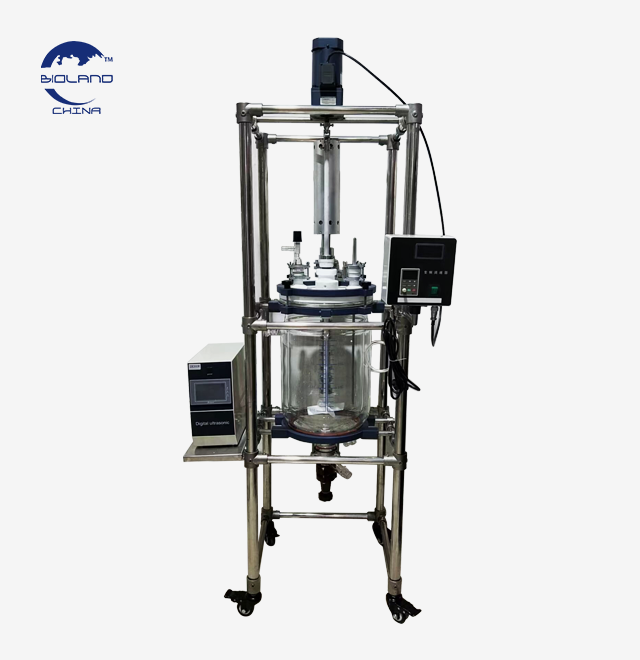
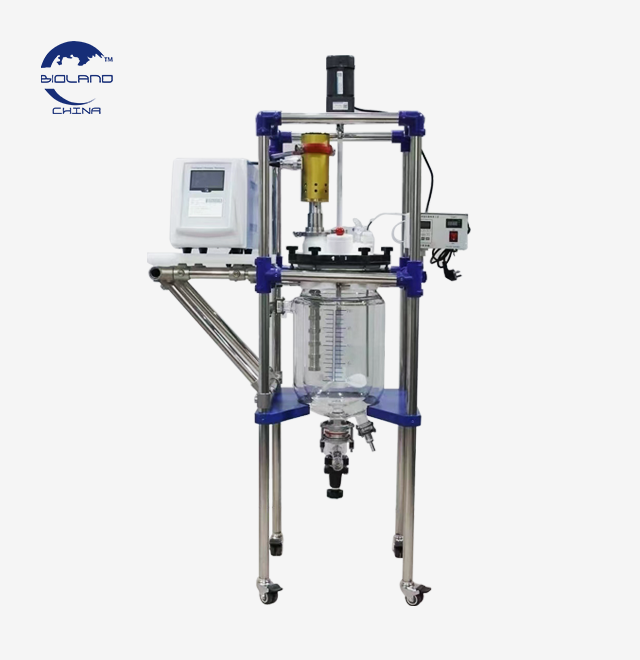
Quercetin producers face a demanding challenge: recover a high-value flavonoid efficiently while maintaining stable quality, manageable operating costs, and a process that can move from pilot trials to industrial production. The right equipment should not only extract compounds from botanical raw materials but also control solvent contact, temperature, filtration, concentration, and cleaning. Bioland Instrument provides integrated solutions for ultrasound assisted extraction of quercetin, combining ultrasonic cavitation, low-temperature solvent extraction, vacuum concentration, filtration, solvent recovery, and PLC-based automation.
For materials such as larch, celery, mulberry leaves, Sophora japonica buds, cypress, Gynostemma, Huangshan herbs, and other plants containing quercetin or precursors such as rutin and quercitrin, a Bioland system can be customized around the material’s properties and the final product standard. Its GMP-oriented ultrasound assisted extraction of quercetin equipment uses SUS304 or SUS316L stainless steel, sanitary process design, optional CIP cleaning, CE and ISO-certified manufacturing, and flexible capacities from 50 L to 500 L. The objective is not simply to sell a machine, but to help manufacturers establish a dependable quercetin extraction and concentration process.
Extraction Technology Requirements for High-Quality Quercetin Production
Match the Extraction Method to Quercetin Sources
Quercetin occurs in many medicinal plants, fruits, vegetables, and botanical by-products, but concentration, cell structure, moisture level, and impurity content differ greatly. A raw material such as onion skin may have high flavonoid concentration but strong pigment interference. Mulberry leaves and Sophora buds may require different ethanol ratios and extraction conditions. Therefore, ultrasound assisted extraction of quercetin should begin with raw-material analysis, including particle size, moisture, target purity, solvent compatibility, and expected extract yield.
Bioland instrument engineers can help determine whether the process should use ethanol, water-ethanol mixtures, circulation extraction, ultrasonic low-temperature extraction, reflux extraction, or staged extraction. This process-first approach prevents a common mistake: buying a standard extraction tank before understanding the full separation and concentration requirements.
Ethanol and Water-Ethanol Systems Improve Selectivity
For quercetin production, ethanol-water systems are widely considered practical because they can dissolve flavonoids while remaining suitable for food, nutraceutical, cosmetic, and pharmaceutical-oriented production. A properly configured ultrasound assisted extraction of quercetin line allows users to control solvent ratio, charging volume, extraction temperature, ultrasonic treatment time, circulation speed, and filtration sequence.
The goal is to achieve effective mass transfer while reducing unnecessary impurities in the extract liquor. A cleaner extract can reduce downstream purification pressure and simplify concentration, precipitation, adsorption, crystallization, or drying steps. Bioland instrument’s integrated systems support not only extraction but also the process connections that turn crude plant material into a more manageable intermediate extract.
Low Temperature Helps Protect Flavonoid Value
Quercetin and its related flavonoid compounds can require careful thermal management during processing. Excessive temperature and prolonged heating may complicate product consistency, especially when a customer is targeting a standardized botanical extract rather than a simple crude concentrate. Ultrasound assisted extraction of quercetin typically operates effectively in a moderate temperature range of approximately 40–60°C, depending on the solvent system and material characteristics.
Ultrasonic cavitation improves solvent penetration and releases active compounds from plant tissues without relying only on high-temperature treatment. This makes ultrasound a useful option for manufacturers seeking a balance between extraction strength, energy management, and active-compound preservation.
A flavonoid producer processing Sophora japonica buds found that long reflux cycles increased labor demand and delayed filtration. The plant material contained valuable rutin and quercetin-related compounds, but the existing process was difficult to standardize across batches.
Bioland instrument proposed ultrasound assisted extraction of quercetin with controlled ethanol charging, moderate-temperature extraction, circulation, filtration, and vacuum concentration. The customer gained a clearer operating sequence and a more consistent basis for later purification and product standardization.
Ultrasonic-Assisted Features That Improve Extraction Efficiency
Cavitation Breaks the Mass-Transfer Barrier
The core advantage of ultrasound assisted extraction of quercetin is cavitation. High-frequency sound waves create microscopic bubbles in the solvent. When the bubbles collapse, they generate localized mechanical force, turbulence, and micro-jets. This action can disrupt or deform plant cell structures and improve the transfer of quercetin, rutin, quercitrin, and other soluble compounds into the solvent.
For industrial users, this means that extraction is not dependent only on soaking time or high heat. Better solvent-material contact can help improve extraction performance and support shorter cycles. Depending on raw material, solvent, and operating conditions, ultrasonic extraction can offer substantially higher extraction efficiency than traditional methods.
Faster Cycles Improve Plant Utilization
Traditional soaking or heating processes may require several hours and repeated extraction steps. In contrast, ultrasonic-enhanced processing can often reach an effective extraction result within approximately 24–40 minutes. For factories processing several batches each day, shortened extraction time can improve equipment utilization, reduce waiting periods, and create more predictable scheduling.
A Bioland instrument ultrasound assisted extraction of quercetin system can be configured with programmable controls so that temperature, ultrasonic time, solvent addition, circulation, and discharge procedures are repeatable. This helps reduce dependence on individual operators and makes process improvement easier to document.
Circulation Extraction Creates More Uniform Contact
Quercetin-rich materials may float, settle, swell, or create uneven concentration zones during extraction. A static vessel may not provide the same solvent contact as a circulation-based system. Bioland instrument can configure ultrasound assisted extraction of quercetin equipment with pumps, piping, and circulation paths that keep the solvent moving through the material bed and extraction tank.
This feature is valuable for plant materials with irregular particle sizes or varied bulk density. Circulation also supports more even temperature distribution and can facilitate transfer to downstream filtration and concentration sections. The result is a more connected production line instead of separate manual operations.
A botanical ingredient company using mulberry leaves wanted to increase quercetin-related flavonoid recovery without expanding its workshop area. Its conventional soaking process occupied tanks for too long and created production delays.
The proposed ultrasound assisted extraction of quercetin solution shortened the active extraction stage and linked the vessel with filtration and concentration equipment. This helped the customer plan more batches using the same available floor space.
Stainless-Steel Material and Hygienic Construction
For pharmaceutical, nutraceutical, food, and cosmetic applications, equipment construction directly affects cleaning, durability, and product-management capability. Bioland instrument’s ultrasound assisted extraction of quercetin systems are generally fabricated from SUS304 or SUS316L stainless steel, selected according to process requirements. The equipment can include insulated extraction vessels, sanitary piping, valves, filters, storage tanks, and process connections designed for efficient operation.
GMP-oriented design is particularly important when customers need to demonstrate controlled manufacturing practices. The system can support water extraction, ethanol extraction, heat reflux, wet soaking, circulation percolation, solvent recovery, vacuum concentration, and other production methods required for botanical processing.
Integrated Extraction and Concentration Equipment
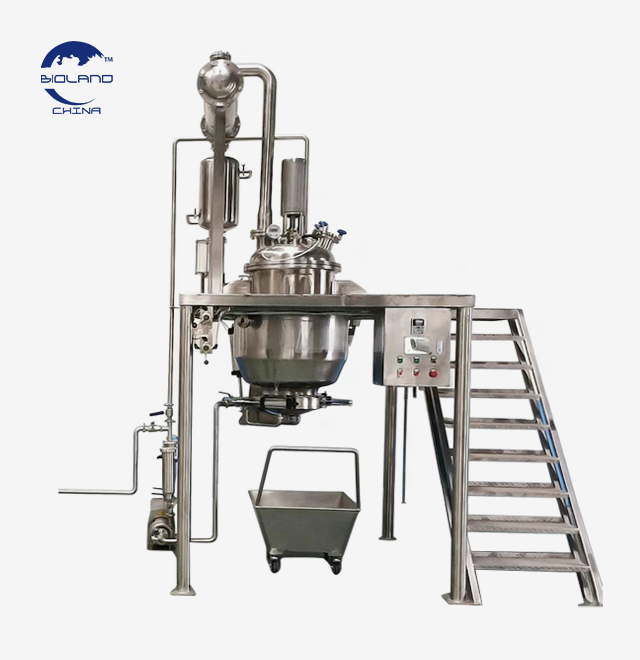
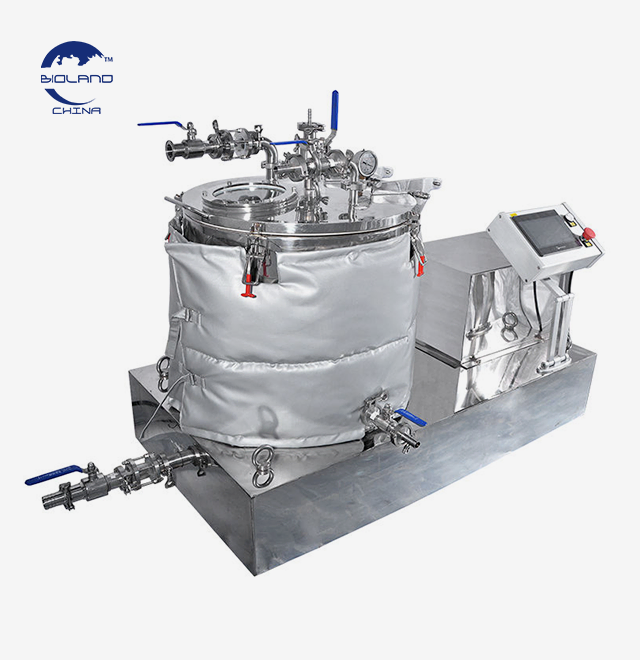
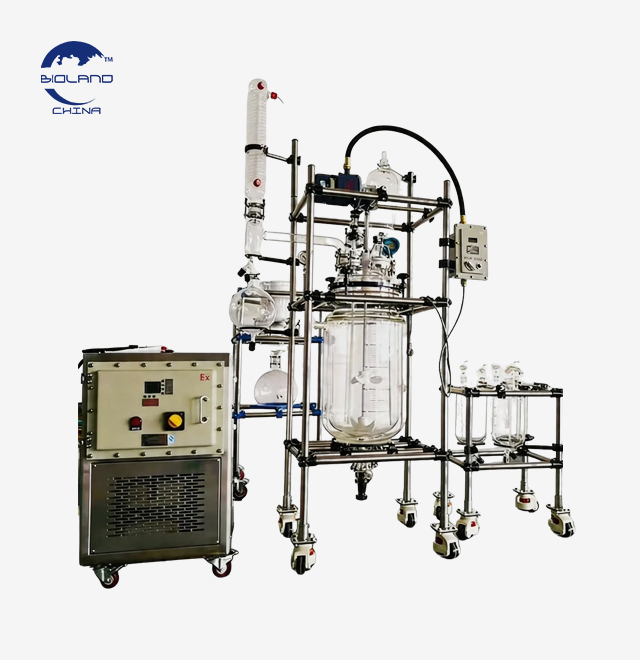
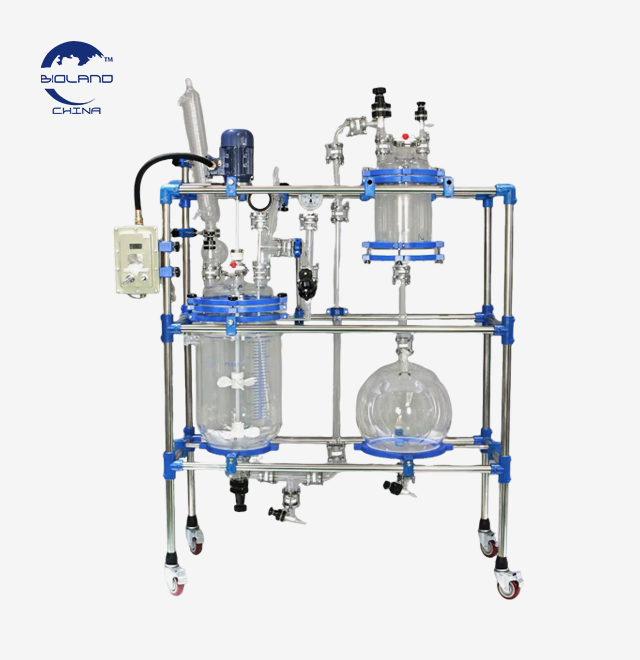
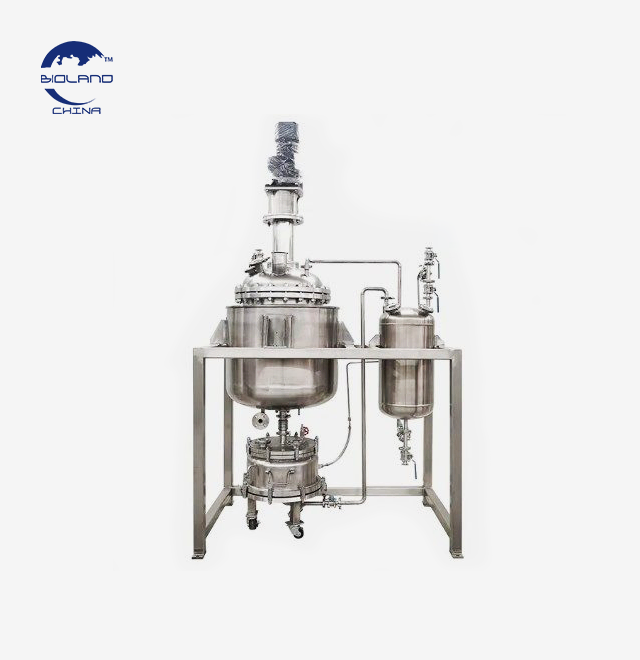
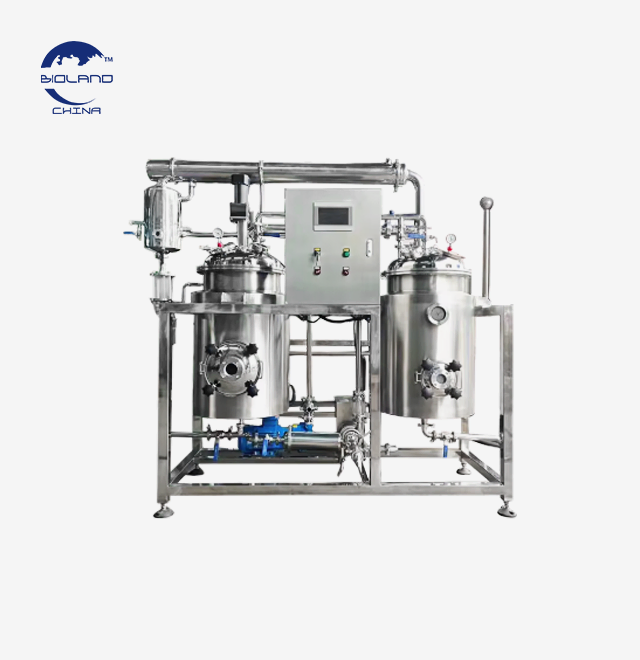
A high-performance extraction project requires more than an ultrasonic generator. Bioland’s ultrasound assisted extraction of quercetin equipment can include an ultrasonic system, extraction tank, tubular heater, evaporator, condenser, oil separator, collection tank, medicine-liquid pump, metering tank, filter, vacuum pump, and electrical control cabinet.
During the extraction stage, prepared plant material is loaded into the tank and solvent is added according to the selected formula. Following ultrasonic extraction, the liquid is transferred through controlled piping for filtration and concentration. This integrated design reduces manual transfers, helps prevent avoidable material loss, and supports a more professional process layout.
Vacuum Concentration and Solvent Recovery
After quercetin extraction, the extract liquid must usually be concentrated to a target density before purification, drying, or formulation. Vacuum concentration helps lower the effective boiling temperature and can support gentler handling of botanical compounds. In a Bioland ultrasound assisted extraction of quercetin system, concentration may operate under a vacuum range of approximately -0.05 to -0.09 MPa.
The secondary vapor generated during concentration passes through condensers and coolers, where it becomes condensed liquid. Recovered solvent can be collected for reuse when permitted by the validated process. This feature helps reduce solvent consumption and contributes to a more economical ethanol-extraction operation.
An ingredient producer extracted flavonoids from onion skins but found that fine solids and pigments created filtration difficulties. The issue was not extraction alone; the downstream process became slow and inconsistent.
Bioland recommended ultrasound assisted extraction of quercetin with staged filtration, controlled circulation, and vacuum concentration. The system was designed around the material’s impurity profile, helping the customer build a smoother route toward purification.
Process Control and Quality Standards for Extraction Systems
PLC Control Supports Repeatable Batch Conditions
Batch consistency is one of the most important requirements in commercial quercetin production. When temperature, solvent volume, extraction time, ultrasonic power, and concentration conditions change from operator to operator, the extract quality can vary. A PLC-controlled ultrasound assisted extraction of quercetin system helps establish repeatable processing recipes.
Bioland systems can include intelligent electrical controls, automatic discharge, online concentration monitoring, and optional automatic cleaning functions. These features help manufacturers create more stable production records and support scale-up from laboratory research to pilot and commercial production. Automation does not replace process expertise, but it helps make that expertise repeatable.
CIP Cleaning Supports Multi-Product Facilities
Many botanical processors manufacture more than one type of extract. A facility may process flavonoids one week, tea polyphenols the next, and mushroom polysaccharides or plant pigments afterward. In such environments, cleaning efficiency and cross-contamination control matter. A ultrasound assisted extraction of quercetin system can be configured with CIP online cleaning capability to support defined cleaning procedures between batches.
Proper cleaning design also supports daily maintenance. Operators can inspect filters, seals, pumps, valves, ultrasonic components, and solvent pathways according to a planned schedule. This helps reduce avoidable downtime and supports long-term equipment reliability.
Safe Solvent Operation Must Be Designed Early
When ethanol or other compatible solvents are used, buyers should evaluate ventilation, equipment sealing, electrical configuration, grounding, solvent storage, condenser performance, and operating procedures. Bioland instruemnt designs ultrasound assisted extraction of quercetin projects based on customer capacity, local utilities, solvent selection, and factory layout.
For sites without steam infrastructure, thermal-oil heating can be added. Typical system parameters include a vacuum level of approximately -0.085 MPa, jacket pressure of approximately 0.09–0.3 MPa, and compressed-air requirements of approximately 0.5–0.6 MPa. Final settings should always follow the validated production process and applicable local safety requirements.
Application Scenario: A Tea Polyphenol Facility Expanded into Flavonoids
A tea-extract producer already operated a tea extraction machine for tea polyphenols, amino acids, aromatic oils, and flavonoids. It wanted to develop a higher-value quercetin-related botanical product without installing a completely unrelated process line.
Bioland instrument assessed the existing utility conditions and proposed ultrasound assisted extraction of quercetin that could align with the factory’s filtration, vacuum, and solvent-management workflow. This reduced the complexity of the expansion plan.
Selecting Reliable Equipment for Industrial Quercetin Applications
Choose Capacity Based on Throughput, Not Tank Volume Alone
Capacity should be calculated from daily feed quantity, material-to-solvent ratio, extraction cycles, concentration speed, labor plan, cleaning time, and expected future demand. Bioland provides ultrasound assisted extraction of quercetin models in 50 L, 100 L, 200 L, 300 L, and 500 L capacities.
Technology parameter
Model
BL-TN-C50L
BL-TN -C100L
BL-TN -C200L
BL-TN -C300L
BL-TN -C500L
Volume (L)
50
100
200
300
500
Evaporation capacity (kg/h)
20
50
70
100
200
Motor power(KW)
2.7
2.7
2.7
3.5
3.5
Steam consumption(kg/h)
25
60
90
120
250
System vacuum (MPa)
-0.085
-0.085
-0.085
-0.085
-0.085
Pressure of jacket(MPa)
0.09~0.3
0.09~0.3
0.09~0.3
0.09~0.3
0.09~0.3
Compressed air (MPa)
0.5~0.6
0.5~0.6
0.5~0.6
0.5~0.6
0.5~0.6
Evaporation temperature(°C)
60~100
60~100
60~100
60~100
60~100
Typical evaporation capacity ranges from about 20 kg/h for a 50 L model to 200 kg/h for a 500 L model. Motor power typically ranges from 2.7 kW to 3.5 kW, depending on model. These options allow customers to begin with pilot validation and later scale the same core extraction principle into a larger production line.
Select a Supplier That Understands Multiple Botanicals
Quercetin extraction often overlaps with broader flavonoid, polyphenol, pigment, and herbal-extract production. A supplier with experience across applications can provide more practical equipment selection. Bioland instrument has supported extraction concepts for stevia extraction machine projects, Chilli Oleoresin Extraction Plant applications, tincture extraction machine systems, propolis extraction machine lines, tea extraction machine projects, and ultrasonic extraction mushrooms processes.
This experience is useful because many technical issues repeat across industries: solvent recovery, filtration, foam control, low-temperature extraction, concentration, cleaning, and automation. A reliable ultrasound assisted extraction of quercetin supplier should understand the entire process, not only the ultrasonic device.
OEM/ODM Engineering Reduces Installation Risk
Every customer has different factory conditions, utility connections, output targets, and product specifications. Bioland offers OEM/ODM services for ultrasound assisted extraction of quercetin equipment and production lines. Customers can discuss vessel size, heating method, automation level, piping layout, filtration requirement, solvent-recovery configuration, and future expansion plans with the engineering team.
Customized equipment generally has a lead time of about 30 business days, while non-customized models are generally available within 5–7 days. Sea, rail, and air freight options are available. This flexibility helps customers balance investment timing with technical requirements.
Application Scenario: A Propolis Processor Added Quercetin-Rich Products
A propolis producer using ethanol extraction wanted to add quercetin-rich botanical extracts to its health-product portfolio. The management team wanted to avoid purchasing equipment that could only process one raw material.
Bioland instrument designed a flexible ultrasound assisted extraction of quercetin platform capable of supporting ethanol-based propolis extraction, flavonoid extraction, and related tincture processes. The client gained equipment versatility while maintaining a controlled solvent-recovery and concentration workflow.
Xi’an Bioland Instrument Co., Ltd. has more than 15 years of experience in R&D, production, and sales of extraction, distillation, concentration, reaction, separation, filtration, purification, crystallization, emulsification, mixing, drying, heating, cooling, and vacuum equipment. The company’s products serve laboratory R&D, biopharmaceuticals, pharmaceutical chemicals, food and beverage, cosmetics, new materials, and natural-product industries across Europe, Southeast Asia, and other regions.
Bioland Instrument provides CE and ISO-certified equipment, GMP/FDA-oriented manufacturing, one-year quality warranty, and lifetime maintenance. During production, dedicated personnel can send weekly photos or videos to update customers on progress. Final photos, videos, and Factory Acceptance Test arrangements are available before shipment, allowing customers to inspect the project with confidence.
Conclusion
The best quercetin extraction equipment combines efficient mass transfer, low-temperature capability, hygienic construction, automation, solvent recovery, and a scalable production design. Bioland’s ultrasound assisted extraction of quercetinsolution supports these requirements by integrating ultrasonic extraction, filtration, vacuum concentration, and intelligent control in one GMP-oriented platform. Whether processing Sophora buds, mulberry leaves, celery, onion skins, larch, or other flavonoid-rich materials, manufacturers can use a customized Bioland system to improve process consistency, control operating costs, and build a dependable route from raw botanical material to standardized extract.
FAQ
What raw materials are suitable for quercetin extraction?
Larch, celery, mulberry leaves, Sophora buds, onion skins, cypress, and other quercetin- or rutin-containing plants are suitable.
Why use ultrasonic extraction for quercetin?
Ultrasonic cavitation improves solvent penetration and mass transfer under moderate temperatures.
Can the equipment use ethanol?
Yes. The system can support ethanol and water-ethanol extraction processes.
Is vacuum concentration available?
Yes. Bioland can integrate evaporators, condensers, vacuum pumps, and solvent-recovery systems.
Can Bioland customize the system?
Yes. OEM/ODM support is available for capacity, layout, automation, heating, and process configuration.
Turn Your Quercetin Extraction Challenge into a Scalable Production Solution
Bioland Instrument does more than supply equipment—we help convert complex botanical extraction requirements into practical, controlled production lines. Our ultrasound assisted extraction of quercetin solutions combine low-temperature ultrasonic extraction, sanitary SUS304/316L construction, PLC automation, filtration, vacuum concentration, and solvent recovery for efficient flavonoid processing. Whether you are developing a pilot-scale formula or expanding to a 500 L production system, our experienced technical team can customize the equipment around your raw material, capacity, facility utilities, and quality goals. With CE and ISO certification, GMP-oriented design, OEM/ODM service, weekly production updates, final inspection support, FAT options, one-year warranty, and lifetime maintenance, Bioland Instrument is ready to support your next project. Contact us at info@biolandequip.com.
References
1. Azmir, J., et al. “Techniques for Extraction of Bioactive Compounds from Plant Materials: A Review.” Journal of Food Engineering, 2013.
2. Chemat, F., Vian, M. A., and Cravotto, G. “Green Extraction of Natural Products: Concept and Principles.” International Journal of Molecular Sciences, 2012.
3. Vinatoru, M. “An Overview of the Ultrasonically Assisted Extraction of Bioactive Principles from Herbs.” Ultrasonics Sonochemistry, 2001.
4. D’Andrea, G. “Quercetin: A Flavonol with Multifaceted Therapeutic Applications?” Fitoterapia, 2015.
5. Khoddami, A., Wilkes, M. A., and Roberts, T. H. “Techniques for Analysis of Plant Phenolic Compounds.” Molecules, 2013.
6. Tzanova, M., Kondeva-Burdina, M., and Iliev, I. “Flavonoids in Plant Extraction and Their Applications in Pharmaceutical Development.” Pharmacognosy Reviews, 2020.
The reactor is beautifully mirror-polished and fully complies with GMP requirements for the pharmaceutical industry. The performance is excellent! Overall, we are very satisfied! We also provided with some feedback on our process improvements, which we hope will be helpful.
2024-04-09
Laboratory
Excellent and professional service. Always reply our questions very fast. All reactors and chiller we received are good too.
2024-02-15
Research Institute
Quality is beyond our expectation actually. After we got the extraction equipment and started using it, the performance was beyond our expectation. Very easy to use and very efficient to run. Service always respond us very quickly. Was also very helpful to help us. Thanks Bioland team. Very happy to work with you.
2023-11-20
Biotech Company
We are happy about the new purchase as always. Equipment and services are both good.
2023-08-05
Instrument Lab
This is the second order with Bioland instrument and everything is good as the first dateText.
2023-05-12
Global Trading Partner
Bioland instrument team is very helpful and professional. The sales helped us select the right equipment for our application, and their logistics people handled the transportation and customs declaration for our shipment. All that saved us a lot of work.