How to Reduce Reaction Time With Ultrasonic Cavitation
Sep 3, 2026
Somewhere in your facility, a reaction is taking longer than the chemistry actually demands. An esterification sits at reflux for six hours. A graphene dispersion still shows agglomerates after a full day of stirring. A flavonoid extraction waits overnight in solvent. In almost every case the bottleneck is not the reaction itself but the movement of molecules across phases, interfaces, and boundary layers — and that is precisely what ultrasonic cavitation demolishes. Xi'an Bioland Instrument Co., Ltd. has spent more than 15 years turning cavitation from a laboratory curiosity into dependable production equipment.
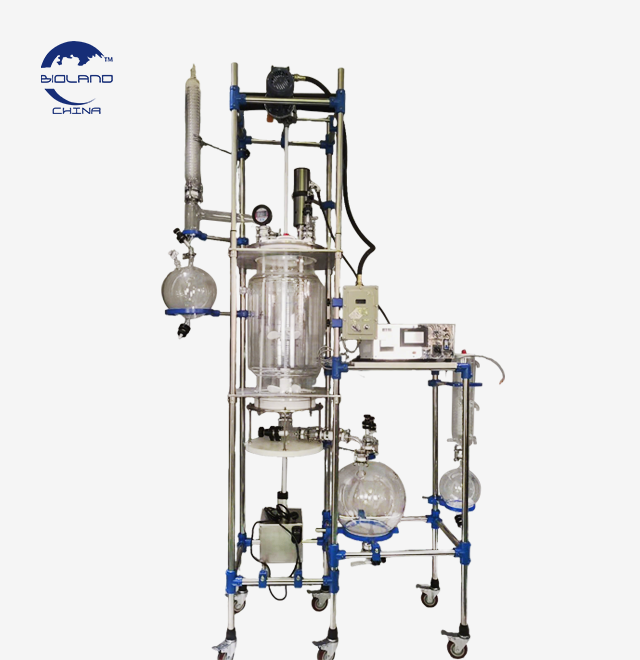
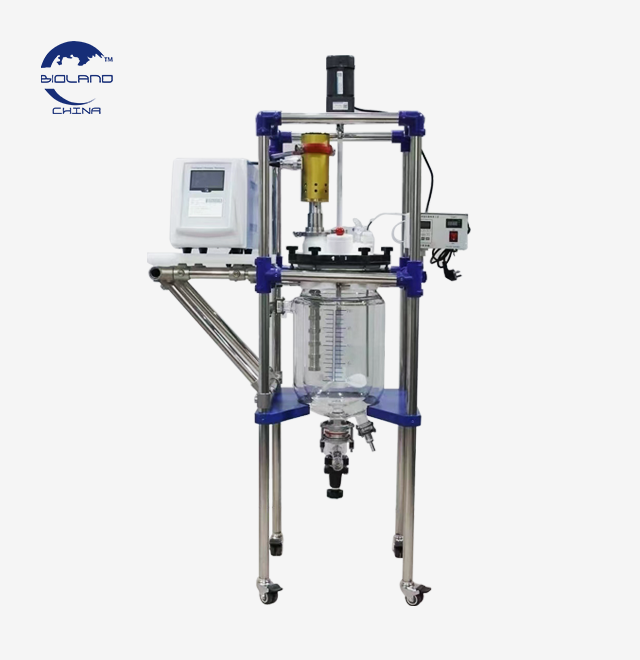
Ourcontinuous flow ultrasonic reactor integrates a double-jacketed borosilicate glass vessel, a powerful ultrasonic homogenizer, and matched heating and cooling circulators into one transparent, corrosion-resistant, precisely temperature-controlled platform — a continuous flow ultrasonic reactor that unites ultrasonic reaction, distillation, extraction, condensation, and vacuum operation in a single intelligent laboratory and pilot system. Across nano-material preparation, bio-pharmaceutical extraction, lithium battery slurry dispersion, and fine chemical synthesis, our customers measure what that means: reaction times cut to a third, yields up 35%, dispersions uniform to the nanometer scale.
Understanding How Ultrasonic Cavitation Accelerates Chemical Reactions
What Happens in the Half-Microsecond a Bubble Collapses
The horn of a continuous flow ultrasonic reactor vibrates tens of thousands of times per second, driving alternating cycles of rarefaction and compression through the liquid. During rarefaction, microscopic bubbles nucleate and swell over successive acoustic cycles until they can no longer sustain themselves — then collapse in less than a microsecond. At each collapse point, local temperatures approach 5,000 K and pressures reach hundreds of atmospheres: conditions impossible to impose on the bulk liquid, yet delivered millions of times per second without cooking the batch. Radiating shockwaves and liquid micro-jets complete the picture.
Three Mechanisms That Compress Reaction Time at Once
Those collapse events accelerate chemistry through three parallel channels. Sonochemical hot spots cleave molecules and generate radicals, opening reaction pathways with lower activation energy than conventional heating can offer. Micro-jets strip away boundary layers and force micro-mixing at scales no impeller ever reaches. And cavitation shatters droplets, particles, and cell walls, multiplying the interfacial area where two-phase chemistry actually happens. This is why a continuous flow ultrasonic reactor routinely delivers faster conversions at temperatures 20–30 °C lower than the same synthesis requires under reflux — speed and gentleness, together.
Why Flow Geometry Delivers Cavitation More Evenly Than a Bath
Ultrasonic baths squander their energy: standing waves create fixed dead zones, glassware sits in weak fields, and results drift with beaker position. Probe-in-beaker setups concentrate everything within centimeters of the tip. Acontinuous flow ultrasonic reactor solves the geometry problem outright — liquid is moved through the active cavitation zone, so every volume element receives equivalent acoustic exposure, the residence time distribution stays narrow, and batch-to-batch deviation collapses. Uniform energy in, uniform product out.
A nano-silver producer in East China watched slow reduction chemistry stretch over hours while colloids grew polydisperse. Moving the in-situ synthesis into a continuous flow ultrasonic reactor cut reaction time by 60% and lifted yield 35%, with constant acoustic dispersion holding particles below the agglomeration threshold.
Improving Mass Transfer Between Reactants With Cavitation
The Interface Is the Real Bottleneck
Most sluggish reactions are not kinetically slow — they are transport-starved. Liquid-liquid esterifications, gas-liquid hydrogenations, and solid-liquid extractions all proceed at the pace molecules can cross an interface, and conventional stirring plateaus quickly: turbulence at the vessel scale simply cannot thin the stagnant films clinging to each droplet. Doubling agitator speed buys a marginal gain while the energy bill doubles again. That plateau is exactly where a continuous flow ultrasonic reactor begins its work.
Acoustic Emulsification: A New Interface Every Few Milliseconds
Cavitation micro-jets shear droplets to sub-micrometer size within seconds, expanding interfacial area by orders of magnitude on the spot. Unlike a stirred vessel, whose droplet size drifts as power input rises, the continuous flow ultrasonic reactor regenerates fresh interface continuously — every element of feed passes the horn and emerges re-dispersed. Effective mass-transfer coefficients jump accordingly, and reactions that waited on diffusion suddenly wait on nothing. Gas sparging combined with sonication shows the same effect in hydrogenation duty.
Retiring the Phase-Transfer Catalyst
Where mixing is the problem, chemists have traditionally bought their way out with phase-transfer catalysts — adding cost, contamination risk, and a purification step. Acoustic emulsification performs the same transfer mechanically, leaving nothing in the product to remove. The borosilicate transparency of the continuous flow ultrasonic reactor even turns this into a visible control method: operators watch droplets shrink in real time, and when droplet size stops falling, the process is at its endpoint — quality control by sight, not by guesswork.
A fine-chemicals producer replaced PTC-mediated ethyl benzoate synthesis with acoustic emulsification in the continuous flow ultrasonic reactor: 92.5% yield at 20–30 °C lower temperature, in one third of the time. The same platform later ran a high-temperature, high-pressure hydrogenation — one intelligent vessel, two chemistries.
Optimizing Ultrasonic Power and Frequency for Faster Reactions
Match the Frequency to the Mechanism You Need
Cavitation is not one phenomenon but a tunable spectrum. At low frequencies around 20–40 kHz, bubbles grow large and collapse violently, so mechanical effects dominate — ideal for de-agglomerating particles, disrupting cells, and dispersing slurries. At higher frequencies, collapse events multiply per second and radical flux rises, favoring genuine sonochemistry such as accelerated synthesis and controlled degradation. Because the outcome depends on this choice, Bioland configures the generator and horn of each continuous flow ultrasonic reactor around your target mechanism, treating frequency as a process variable rather than a fixed catalogue number.
Amplitude, Power Density, and the Case for Pulse Mode
Below the cavitation threshold, nothing happens; far above it, bubble clouds form near the horn and actually shield the liquid from energy. The productive window between the two is where amplitude and power density must sit. Digital frequency-conversion control on our continuous flow ultrasonic reactor makes those settings a recorded recipe parameter — soft-started, overload-protected, and replayed identically every batch. Pulse mode adds a further refinement: alternating on/off duty relieves thermal load and lets the bubble field re-nucleate, often raising cavitation efficiency per joule delivered while protecting what should not be heated.
Titanium Horns for Corrosive and Abrasive Duty
The transducer horn faces the full chemistry of the process, and battery slurries, organic solvents, acids, and alkalis destroy ordinary alloys quickly. Our continuous flow ultrasonic reactor carries a titanium-alloy horn chosen precisely for this abuse — resistant to corrosive NMP and aqueous systems alike, and proven in continuous homogenization runs exceeding four hours, the endurance benchmark for electrode-material duty.
A battery-materials plant fighting conductive-carbon agglomerates in NCM811 slurry moved homogenization into a 100-litre ultrasonic glass reactor: BET surface area rose 18%, electrode coating uniformity reached 99.2%, and the titanium horn held steady through four-hour production runs.
Controlling Temperature and Residence Time During Processing
Cavitation Energy Has to Go Somewhere
Only a fraction of acoustic energy becomes chemistry; the rest becomes heat. Left unmanaged, temperature climbs until thermolabile actives degrade and selectivity drifts — defeating the purpose of a technique meant to be gentler, not harsher. Thermal design is therefore not an accessory on a continuous flow ultrasonic reactor; it is half the engineering, and it is where low-cost imitations quietly fail.
Dual-Circuit Control Around a Glass Vessel
The double-jacketed borosilicate vessel carries a dedicated heating circulator and cooling circulator, working against each other under closed-loop control to hold setpoint while the horn delivers full power. Watching the process through the glass, the operator sees cavitation clouds, phase behavior, and color changes directly — and the continuous flow ultrasonic reactor holds the programmed window regardless of how hard the sonication runs. Precision here is what lets users exploit hot spots without suffering hot batches.
Pulse Mode as Thermal Protection for Sensitive Molecules
For enzymes, proteins, and plant actives, we specify pulsed operation: the jacket removes the duty-cycle heat while cavitation intensity at the interface remains fully effective. In bio-extraction practice this combination holds bulk temperature at or below 40 °C — a limit our pharmaceutical customers treat as non-negotiable — while still delivering extraction rates that overnight reflux cannot match.
Residence Time Becomes a Dosing Knob
Flow architecture introduces a control batch equipment simply does not have. In a continuous flow ultrasonic reactor, exposure equals residence time: slow the pump and conversion deepens, speed it and throughput rises, all at constant acoustic intensity. Because residence time distribution is narrow, outcomes cluster tightly, and because exposure is set by a pump rather than a vessel volume, a recipe proven at 50 mL transfers to pilot scale with its numbers intact.
A pharmaceutical extraction group running 50–5,000 mL herbal batches measured flavonoid yields 22% above traditional reflux — with pulse mode and jacketed cooling holding the process under 40 °C, preserving the thermolabile actives reflux had been quietly destroying.
Scaling Up Ultrasonic Cavitation for Continuous Production
Why Batch Sonication Gets Worse the Bigger the Vessel
Cavitation clings to the energy source. In a large batch vessel, most of the volume sits outside the acoustic field; dead zones form, oversized horns erode, and intensity at any given point becomes a matter of luck. Scaling ultrasound by enlarging a stirred tank is notoriously non-linear. The continuous flow ultrasonic reactor sidesteps the problem entirely — it never asks one big vessel to be sonicated, but instead treats liquid in transit through a defined, energetic zone.
A Modular Platform Built Around the Flow Cell
Configured as an inline cell with feed vessel and recirculation loop, jacketed throughout, thecontinuous flow ultrasonic reactor scales by extension rather than reinvention. Options include PLC full automation, fully explosion-proof systems, electric lid lifting, integrated temperature control, and coupling with filtration, crystallization, ultrasonic crystallization, and rectification modules — all laid out to GMP requirements on a compact footprint. What begins as a sonication step matures, on the same platform, into a complete synthesis line.
Numbering Up Instead of Guesswork
The flow approach changes scale-up mathematics: throughput grows by adding parallel cells or extending residence time, while each cell sees conditions identical to the laboratory run. Chemistry does not notice the difference between one line and five, so predictions hold and surprises vanish. With proven configurations spanning laboratory units through 100-litre-class pilot systems, the scale-up path of a continuous flow ultrasonic reactor is arithmetic, not archaeology.
A Manufacturing Partner for the Whole Road
Xi'an Bioland Instrument Co., Ltd. backs that platform with substance: more than 15 years in distillation, concentration, reaction, extraction, separation, filtration, purification, crystallization, emulsification, mixing, and drying equipment; an in-house R&D team of senior engineers; CE and ISO certification with GMP/FDA-aligned manufacturing; and open OEM/ODM support. Standard configurations ship in 5–7 business days and customized builds in about 30, tracked weekly with photos or video, verifiable by Factory Acceptance Test before shipment, delivered by sea, rail, or air, and covered by a one-year warranty with lifetime maintenance.
A cosmetics emulsion producer moved a two-hour batch emulsification onto continuous flow ultrasonic reactor duty: droplet size halved, batch-to-batch variance disappeared, and throughput tripled on the same footprint — with the recipe transferred from a 5-litre laboratory unit in a single week.
Conclusion
Cavitation shortens reactions through physics rather than patience: radical-rich hot spots open faster pathways, micro-jets erase mass-transfer limits, and acoustic dispersion untangles agglomerates. The engineering decides how much of that potential reaches your product — frequency and amplitude tuned to the mechanism, pulse duty and dual-circuit jackets protecting what matters, and flow geometry delivering uniform exposure that baths never can. A well-specified continuous flow ultrasonic reactor turns these principles into documented production: 60% faster nano-silver synthesis, 92.5% ester yields, 18% BET gains, 22% richer extractions. Bioland has spent fifteen-plus years helping teams specify exactly that. Bring us your slowest step.
Q2: Can heat-sensitive compounds survive sonication?
Yes — pulse mode plus the cooling jacket holds bulk temperature at or below 40 °C.
Q3: What volumes are covered?
Laboratory batches of 50–5,000 mL, flow cells for continuous duty, and 100-litre-class pilot configurations, all customizable.
Q4: What about corrosive media?
A titanium-alloy horn and borosilicate glass resist NMP, acids, and alkalis through multi-hour runs.
Q5: What are lead times and support?
5–7 business days for standard units, about 30 for custom builds; one-year warranty with lifetime maintenance.
What Would You Do With 60% More Reactor Hours? Let's Find Out
That is not a hypothetical number — it is what one customer gained when cavitation replaced waiting. Tell Bioland Instrument which reaction keeps your team watching the clock, and our R&D engineers will map the cavitation route: mechanism, frequency, thermal strategy, and a scale-up plan in one proposal — backed by CE and ISO certification, GMP/FDA-aligned quality, OEM/ODM customization, weekly build tracking, optional Factory Acceptance Testing, and a one-year warranty with lifetime maintenance. Whether you choose a catalog model or a fully engineered line, you get manufacturer-direct pricing and a team that answers. Email info@biolandequip.com today, and let's compress your reaction time.
References
1. Suslick, K. S. "Sonochemistry." Science, vol. 247, no. 4949, pp. 1439–1445, 1990.
2. Thompson, L. H., and Doraiswamy, L. K. "Sonochemistry: Science and Engineering." Industrial & Engineering Chemistry Research, vol. 38, no. 4, pp. 1215–1249, 1999.
3. Mason, T. J., and Lorimer, J. P. Applied Sonochemistry: The Uses of Power Ultrasound in Chemistry and Processing. Wiley-VCH, Weinheim, 2002.
4. Cintas, P., and Luche, J.-L. "Green Chemistry: The Sonochemical Approach." Green Chemistry, vol. 1, no. 3, pp. 115–125, 1999.
5. Cravotto, G., and Cintas, P. "Power Ultrasound in Organic Synthesis: Moving Cavitational Chemistry from the Laboratory to the Production Line." Chemical Society Reviews, vol. 35, no. 2, pp. 180–196, 2006.
6. Leong, T., Ashokkumar, M., and Kentish, S. "The Fundamentals of Power Ultrasound — A Review." Acoustics Australia, vol. 39, no. 2, pp. 54–63, 2011.
The reactor is beautifully mirror-polished and fully complies with GMP requirements for the pharmaceutical industry. The performance is excellent! Overall, we are very satisfied! We also provided with some feedback on our process improvements, which we hope will be helpful.
2024-04-09
Laboratory
Excellent and professional service. Always reply our questions very fast. All reactors and chiller we received are good too.
2024-02-15
Research Institute
Quality is beyond our expectation actually. After we got the extraction equipment and started using it, the performance was beyond our expectation. Very easy to use and very efficient to run. Service always respond us very quickly. Was also very helpful to help us. Thanks Bioland team. Very happy to work with you.
2023-11-20
Biotech Company
We are happy about the new purchase as always. Equipment and services are both good.
2023-08-05
Instrument Lab
This is the second order with Bioland instrument and everything is good as the first dateText.
2023-05-12
Global Trading Partner
Bioland instrument team is very helpful and professional. The sales helped us select the right equipment for our application, and their logistics people handled the transportation and customs declaration for our shipment. All that saved us a lot of work.