Solid Phase Reactor Design Factors for Better Performance
Sep 1, 2026
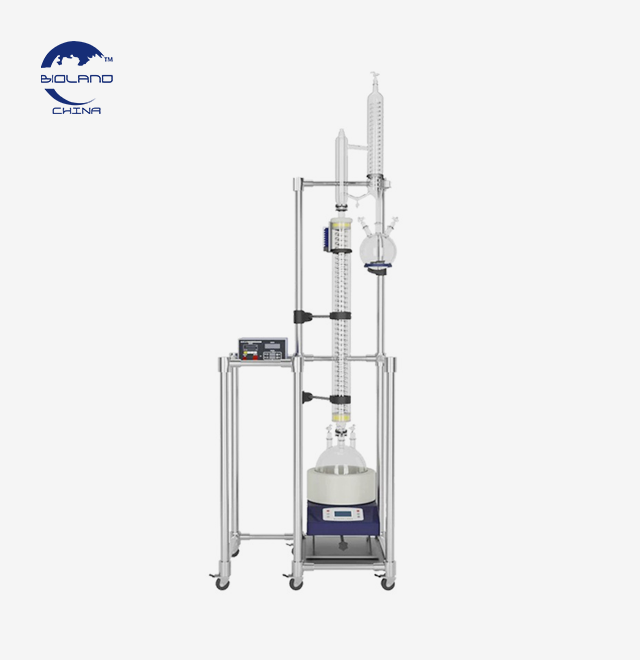
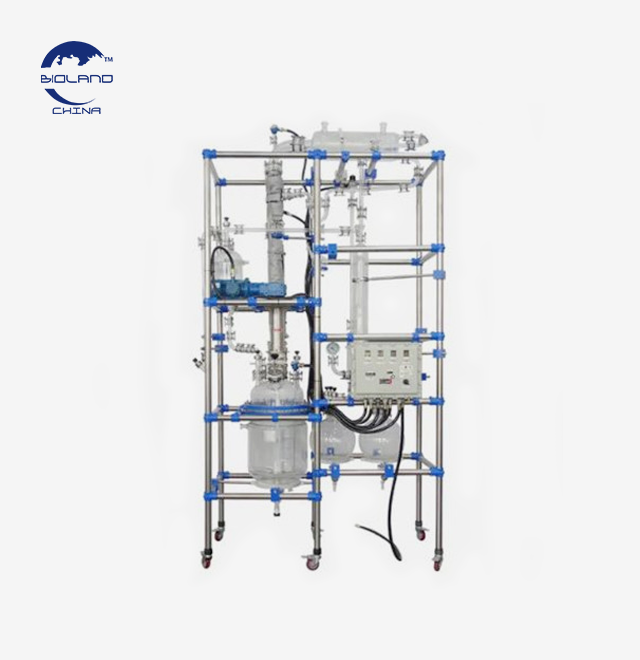
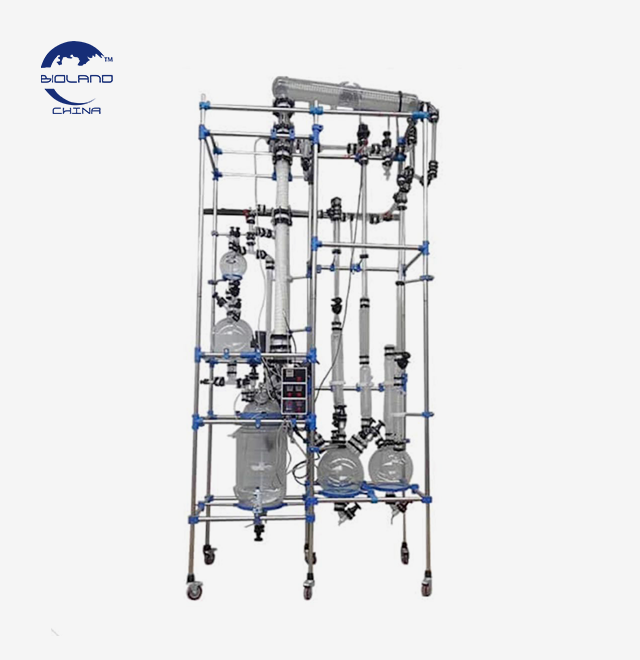
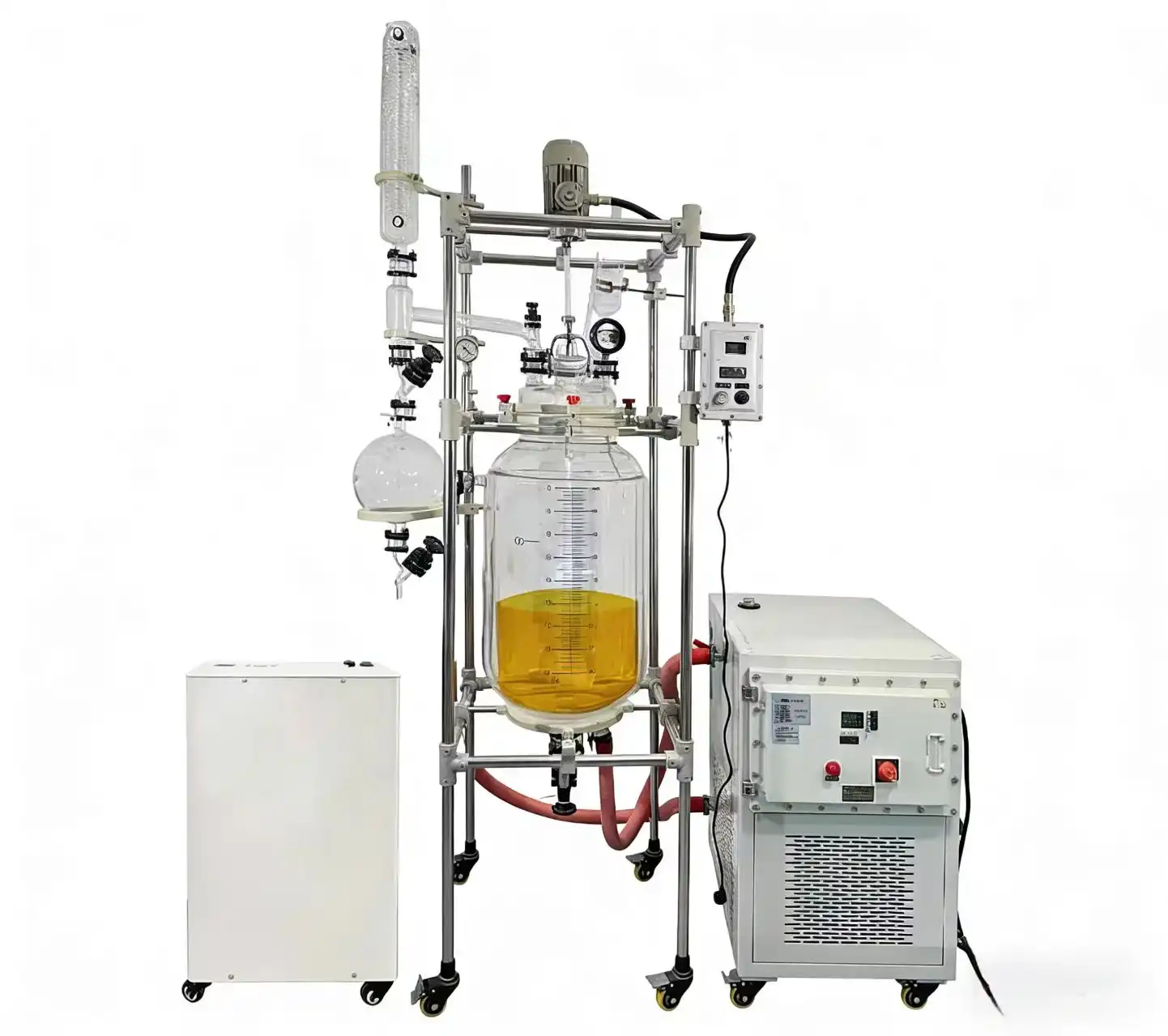
A well-designedsolid phase reactor can significantly improve reaction uniformity, filtration efficiency, product purity, and scale-up reliability in pharmaceutical, chemical, peptide, catalyst, and new-material production. Bioland Instrument’s solid-phase glass reactor systems combine transparent high-borosilicate glass, strong chemical resistance, programmable agitation, accurate heating and cooling, and integrated PTFE filtration. The platform can support solid-phase synthesis, crystallization, washing, evaporation, vacuum operation, and solid-liquid separation in one visible process environment.
Unlike a basic reaction vessel, a modern solid phase reactor is designed around the complete process route. Material charging, reaction, controlled temperature adjustment, crystallization, filtration, and discharge can be coordinated to reduce transfers and improve repeatability. Bioland also supports customized volumes from approximately 20L to 100L, PLC automation, explosion-proof configurations, electric lifting, ultrasonic crystallization, and GMP-oriented pilot solutions.
Key Structural Components That Influence Solid Phase Reactor Efficiency
The Reaction Vessel and Transparent Process Zone
In a solid phase reactor, the reaction vessel is the most important part. The shape of the vessel affects mixing, heat transfer, solids suspension, and release. High-borosilicate glass is very clear, so workers can see how the materials are distributed, colour changes, and crystal growth and separation while they are being processed.
GG17 glass is also very resistant to many chemical solvents, acids, and bases. This chemical stability is important for making pharmaceutical intermediates, synthesising peptides, getting catalysts ready, and doing very pure organic chemistry. Because the process can be seen, workers can spot any unusual foaming, clumping, or incomplete dissolution before the batch moves on to the next step.
Filtration Assembly and Solid-Liquid Separation
The filtration assembly is often the most important functional component of a solid phase reactor. Bioland Instrument systems can use PTFE sintered filters as a standard option, with stainless-steel or titanium alternatives available for specific chemical and mechanical requirements. Filter cloths and membranes can also be selected according to particle size, solvent, temperature, and cake properties.
The solid product stays in the filtration unit, but the mother liquor can pass through. When the filtration is done inside the vessel, the process doesn't have to move a concentrated slurry to another machine. This can cut down on product waste, speed up handling, and lower the risk of cross-contamination when making medicines or fine chemicals.
Agitator, Drive, and Lifting Structure
How well the heat is spread and how evenly the material is mixed are both controlled by the stirrer. Based on the viscosity, solid loading, shear sensitivity, and goal crystal shape, a solid phase reactor can have an anchor, paddle, turbine, or a special propeller.
When dissolving, reacting, crystallising, filtering, the variable-frequency control lets you change the speed. Charging, discharging, cleaning, and inspecting filters can be made easier with electric lifting or lifting-rotating structures. Bioland can change the motor, shaft, propeller, seal, support frame, and lifting setup to fit the process and fitting needs of the user.
Jacket and Utility Connections
The jacket surrounding the vessel allows a solid phase reactor to connect with a heating and cooling circulator. By circulating a controlled medium through the jacket, the operator can heat the material for dissolution, maintain a reaction temperature, or lower the temperature to reduce solubility and promote crystallization.
Bioland instrument’s solid-phase glass reactor systems may be configured for a temperature range of approximately -20°C to 200°C, depending on the final design and technical specification. Vacuum pumps, condensers, gas inlets, dosing funnels, temperature probes, and solvent receivers can be connected through modular ports.
How Reactor Materials and Configuration Affect Synthesis Performance
Chemical Compatibility and Product Purity
The material selected for a solid phase reactor must match the chemical composition, concentration, temperature, pressure, and cleaning procedure of the process. Borosilicate glass is widely used because it resists many corrosive chemicals and reduces the possibility of metal-ion contamination.
This characteristic is particularly useful for high-purity pharmaceutical synthesis, biological materials, peptides, and specialty chemicals. PTFE is also suitable for many aggressive solvents and reagents. However, all wetted materials, including valves, hoses, seals, filter components, and agitator parts, should be reviewed against the actual process chemistry before operation.
Pressure, Sealing, and Explosion-Proof Design
A solid phase reactor used for industrial or pilot processing may need inert-gas protection, vacuum operation, volatile-solvent containment, or explosion-proof electrical components. Seals, clamps, valves, motors, sensors, and control cabinets must be selected as a coordinated system.
Bioland instrument can customize full explosion-proof configurations for suitable applications. The equipment may include high-strength support structures, PTFE and mechanical sealing, grounding, PLC control, tail-gas absorption, alarms, and emergency shutdown functions. The final safety design depends on the chemical hazards, operating temperature, pressure or vacuum, and required electrical classification.
Modular Configuration for Multi-Step Processing
A modular solid phase reactor can combine reaction, filtration, evaporation, crystallization, distillation, extraction, and vacuum operation. A multi-port lid may accommodate a condenser, dosing funnel, temperature sensor, vacuum line, inert-gas inlet, or sampling port.
This configuration is especially valuable when a synthesis involves several linked steps. A typical process may include charging raw materials, adding a solvent, heating for dissolution, reacting under agitation, applying vacuum for concentration, cooling for crystallization, washing the solids, and filtering the mother liquor. The integrated structure reduces transfers and helps maintain a controlled process environment.
Material Strength and Operating Range
Although glass provides chemical compatibility and visibility, the solid phase reactor must be selected according to the actual mechanical and thermal conditions. The vessel should be protected from impact, sudden thermal shock, and operation outside its approved limits.
For applications involving higher mechanical loads or specific filtration requirements, stainless-steel or titanium components can be added to the filtration assembly. Bioland’s engineering team can evaluate vessel volume, filter diameter, jacket design, agitator load, vacuum conditions, and support structure before finalizing the equipment.
The Importance of Mixing, Temperature Control, and Reaction Uniformity
Agitation and Solid Distribution
Uniform mixing is essential when a solid phase reactor contains suspended particles, solid supports, catalysts, or growing crystals. Poor agitation can create concentration gradients, uneven temperature distribution, sedimentation, or localized reaction zones.
The agitator should be selected according to the material’s viscosity and solid content. Programmable speed control allows operators to use gentle mixing during crystal growth and stronger agitation during dissolution or dispersion. In peptide and solid-phase synthesis, consistent liquid-solid contact is especially important for improving reaction completeness and reducing batch variation.
Heating and Cooling Profiles
Temperature affects reaction kinetics, solubility, crystal formation, viscosity, and impurity behavior. A solid phase reactor connected to a high- and low-temperature circulator can provide a controlled thermal profile rather than relying on simple external heating.
A process may begin with heating to dissolve the raw material, followed by a reaction holding stage. The batch can then be cooled gradually to control nucleation and crystal growth. A final holding period may allow the crystals to mature before filtration. The cooling rate should be determined by solubility data and product requirements.
Crystallization and Filtration Coordination
A solid phase reactor can improve the relationship between crystal formation and filtration. Crystal size and morphology directly influence cake permeability, washing efficiency, mother-liquor retention, and drying behavior.
A controlled process generally includes solvent selection, complete dissolution, supersaturation control, optional seeding, gradual cooling, agitation adjustment, crystal maturation, and filtration. Operators should monitor temperature, concentration, agitation speed, filtration pressure, and flow rate to establish a repeatable procedure.
Control System and Data Reproducibility
A PLC-controlled solid phase reactor can automate temperature profiles, agitation speeds, material addition, vacuum operation, and alarms. A touch-screen interface makes the process easier to operate and provides a more consistent record of batch conditions.
Automation is particularly useful for GMP-oriented pilot validation. It reduces differences between operators and allows engineers to compare batches using recorded data. Bioland can integrate PLC control with temperature equipment, vacuum systems, filtration assemblies, electric lifting, and other process modules.
Case: European Chiral Intermediate Synthesis
A European biopharmaceutical company experienced incomplete conversion, low crystallization purity, poor yield, and frequent material transfers during chiral intermediate development. Strong acidic and alkaline reagents also created concerns about corrosion and contamination.
Bioland supplied a customized 100L solid phase reactor with transparent glass, inert-gas protection, controlled cooling, programmable agitation, and PTFE filtration. The reaction was conducted at 0–5°C under nitrogen, followed by cooling at approximately 1–2°C per hour. The customer reported crystal purity above 99.5% and a yield improvement of approximately 15%. The integrated process reduced transfers and helped operators observe the reaction and crystal-growth stages directly.
Design Considerations for Improving Process Stability and Product Quality
Solvent and Concentration Selection
The solvent system strongly affects the performance of a solid phase reactor. Engineers should evaluate solubility at different temperatures, solvent viscosity, boiling point, water content, chemical compatibility, and product stability. The material should dissolve sufficiently during the reaction stage but crystallize predictably during cooling or concentration. Excessive concentration may cause premature precipitation in ports or pipelines, while excessive dilution may reduce yield. Solvent selection should be considered together with heating, cooling, vacuum, filtration, and washing requirements.
Filter Media and Cake Management
The filter medium is a key factor insolid phase reactor performance. PTFE, stainless steel, titanium, filter cloth, and membranes offer different pore structures, chemical resistance, strength, and cleaning characteristics. The filter area should match the expected solids load and batch volume. Operators should monitor cake thickness and filtration pressure because a highly compressed cake may restrict flow. Washing conditions should remove impurities and residual mother liquor without dissolving a significant amount of product.
Pumping, Piping, and Drainage
Pumps and pipelines must be designed to move liquids, slurries, mother liquor, and washing solutions without causing blockages or excessive shear. A well-configured solid phase reactor should have clear flow paths, accessible valves, appropriate pipe diameters, and drainage points that support cleaning and maintenance. For corrosive materials, wetted pipes, hoses, valves, and seals should be selected for compatibility. The layout should minimize dead zones where solids can accumulate. Bioland can customize the pumping and piping network according to the customer’s process sequence and plant installation.
Safety, Cleaning, and Maintenance
Before operating a solid phase reactor, users should check the glass surface, clamps, seals, filter assembly, agitator, hoses, valves, temperature probes, and vacuum connections. The vessel should not be exposed to sudden thermal shock or mechanical impact. After each batch, the filter, agitator, vessel, and piping should be cleaned using compatible procedures. PTFE parts, filter cloths, membranes, mechanical seals, and gaskets should be inspected periodically. Appropriate personal protection, ventilation, inert-gas handling, and documented operating procedures are also essential.
Case: Polish Precious-Metal Catalyst Recovery
A Polish chemical producer was developing palladium and platinum catalysts but faced low recovery, corrosive media, inefficient solid-liquid separation, and high cleaning costs. The process also required a high-temperature solid-phase reaction.
Bioland provided a customized 50L solid phase reactor with controlled heating and a PTFE filtration device. The reaction operated at approximately 150°C before the catalyst solids were separated directly in the vessel.
The customer reported more than 90% recovery of residual precious metals from the mother liquor. The quick-release filter structure simplified cleaning and reduced the risk of residues affecting future batches.
GMP Pilot Validation and Scale-Up
A laboratory reaction may not behave identically when transferred to a larger solid phase reactor. Changes in mixing time, heat-transfer area, solids loading, filtration cake thickness, and discharge height can influence the final result.
Bioland supports customized 20L, 30L, 50L, and 100L systems for laboratory research, pilot experiments, pharmaceutical development, and organic synthesis. The design can include cleanable structures, sampling points, controlled drainage, documented components, PLC operation, and FAT support to improve scale-up confidence.
Optimizing Solid Phase Reactor Design for Advanced Synthesis Applications
Pharmaceutical and Peptide Development
A solid phase reactor is widely used for pharmaceutical intermediates, peptide research, thymic peptide preparation, antibacterial peptide screening, and peptide-carrier material synthesis. These applications often require controlled liquid-solid contact, repeated washing, precise temperature management, and reliable filtration.
The transparent glass body helps researchers observe reaction progress and solid behavior. PTFE filtration supports separation from solvents and mother liquor. Controlled agitation improves contact between the liquid phase and solid support, while vacuum and evaporation functions can assist solvent exchange and concentration.
Fine Chemicals and Organic Synthesis
Fine-chemical products may require precise control over reaction conversion, crystal form, particle size, and purity. A modular solid phase reactor can support organic synthesis, precipitation, crystallization, washing, filtration, solvent recovery, and purification. The system may be connected to a condenser or fractional distillation column when solvent recovery is required. For products such as specialty dyes, fragrances, catalysts, and chemical intermediates, transparent operation helps engineers observe physical changes and adjust process parameters before finalizing a manufacturing procedure.
Food, Natural Products, and New Materials
The same design principles apply to sugar crystallization, natural-product extraction, concentration, solid-liquid separation, coatings, functional materials, and other new-material processes. A solid phase reactor can provide a visible and controlled environment for dissolution, precipitation, crystallization, filtration, and washing.
Bioland Instrument also supplies ultrasonic plant extraction equipment, ethanol extraction machines, CO₂ extraction systems, essential-oil distillation equipment, homogenizers, mixing tanks, vacuum spray dryers, freeze dryers, and related process equipment. These systems can be combined to create a complete laboratory or pilot production line.
Automation and Customized Process Integration
Advanced users may need a solid phase reactor with full PLC automation, electric lifting, integrated temperature control, explosion-proof electrical components, ultrasonic crystallization, filtration, rectification, concentration, purification, or tail-gas absorption. Bioland supports OEM and ODM projects and can customize vessel size, shape, materials, ports, agitators, filtration systems, control logic, and auxiliary equipment. This allows customers to build equipment around their actual process rather than adjusting their process to a standard machine.
Bioland’s Engineering and Service Capability
Xi’an Bioland Instrument Co., Ltd. is a professional manufacturer and solution provider for reaction, filtration, crystallization, distillation, extraction, separation, purification, concentration, mixing, drying, heating, cooling, and vacuum equipment. The company has more than 15 years of experience and serves pharmaceutical, chemical, food, biopharmaceutical, petroleum, metallurgy, precious-metal, cosmetic, and new-material industries.
Bioland offers CE and ISO-certified quality assurance, GMP/FDA-oriented equipment, competitive pricing, OEM/ODM support, and customized production lines. Customized products typically require approximately 30 business days, while standard equipment may be ready within 5–7 days, depending on the order configuration.
During production, a dedicated specialist provides weekly photographs or videos. After completion, customers receive detailed inspection materials and may arrange a Factory Acceptance Test before shipment. A one-year quality warranty and lifetime maintenance support are also available.
Case: Pilot-Scale Pharmaceutical Process Development
A pharmaceutical customer had achieved promising laboratory results but could not reproduce mixing and filtration behavior at pilot scale. The team needed one platform for reaction, controlled cooling, crystallization, washing, and separation.
Bioland designed a customized solid phase reactor with programmable agitation, a high- and low-temperature circulator, PTFE filtration, electric lifting, vacuum connections, and PLC control. The integrated configuration reduced manual transfers and generated more representative pilot data for future GMP validation.
Conclusion
Effective solid phase reactor design depends on the relationship between vessel geometry, material compatibility, agitation, heat transfer, filtration, automation, and maintenance. Bioland’s high-borosilicate glass systems provide visible operation, strong chemical resistance, precise temperature control, modular filtration, and flexible process integration for pharmaceutical, peptide, fine-chemical, catalyst, food, and new-material applications. By combining reaction, crystallization, washing, evaporation, vacuum operation, and solid-liquid separation in one platform, the equipment can reduce transfers and improve process repeatability. OEM/ODM customization, explosion-proof options, PLC automation, GMP-oriented pilot design, CE and ISO quality assurance, FAT, and lifetime service help customers move from laboratory development to reliable production.
FAQ
1. What is a solid phase reactor used for?
It supports solid-phase synthesis, reaction, crystallization, washing, filtration, evaporation, and solid-liquid separation.
2. Why choose borosilicate glass?
It provides high visibility, strong resistance to many chemicals, and reduced risk of metal-ion contamination.
3. What filtration materials are available?
PTFE is commonly used, with stainless steel, titanium, filter cloth, and membrane options available.
4. Can the system be customized?
Yes. Bioland supports custom volumes, structures, agitators, PLC control, electric lifting, explosion-proof systems, and auxiliary equipment.
5. Is it suitable for pilot and GMP development?
Yes. Customized systems can support laboratory research, pilot validation, pharmaceutical development, and organic synthesis.
Discuss Your Solid-Phase Process with Bioland Instrument
If your current synthesis faces incomplete conversion, poor mixing, slow filtration, unstable temperature, corrosive materials, or difficult scale-up, Bioland Instrument can help create a complete process solution. Our solid phase reactor systems combine transparent borosilicate glass, programmable agitation, precise heating and cooling, PTFE filtration, vacuum operation, and modular process connections.
With more than 15 years of engineering experience, Bioland supports reaction, crystallization, filtration, extraction, distillation, concentration, purification, drying, and related chemical processes. We provide OEM/ODM customization, CE and ISO quality assurance, GMP-oriented pilot equipment, explosion-proof designs, production tracking, Factory Acceptance Testing, and lifetime maintenance. Tell us your material, batch volume, temperature range, solids content, filtration requirements, and current process difficulty. Contact Bioland Instrument at info@biolandequip.com to discuss a reliable reactor configuration for your laboratory, pilot plant, or production line.
References
1. Lloyd-Williams, Peter, and Albericio, Fernando. Chemical Approaches to the Synthesis of Peptides and Proteins. CRC Press.
2. Merrifield, Robert B. “Solid Phase Peptide Synthesis.” Journal of the American Chemical Society.
3. Fields, Gregg B., and Noble, Robert L. “Solid Phase Peptide Synthesis Utilizing 9-Fluorenylmethoxycarbonyl Amino Acid Pentafluorophenyl Esters.” International Journal of Peptide and Protein Research.
4. Mullin, John W. Crystallization. Butterworth-Heinemann.
5. Myerson, Allan S. Handbook of Industrial Crystallization. Butterworth-Heinemann.
6. Perry, Robert H., and Green, Don W. Perry’s Chemical Engineers’ Handbook. McGraw-Hill.
The reactor is beautifully mirror-polished and fully complies with GMP requirements for the pharmaceutical industry. The performance is excellent! Overall, we are very satisfied! We also provided with some feedback on our process improvements, which we hope will be helpful.
2024-04-09
Laboratory
Excellent and professional service. Always reply our questions very fast. All reactors and chiller we received are good too.
2024-02-15
Research Institute
Quality is beyond our expectation actually. After we got the extraction equipment and started using it, the performance was beyond our expectation. Very easy to use and very efficient to run. Service always respond us very quickly. Was also very helpful to help us. Thanks Bioland team. Very happy to work with you.
2023-11-20
Biotech Company
We are happy about the new purchase as always. Equipment and services are both good.
2023-08-05
Instrument Lab
This is the second order with Bioland instrument and everything is good as the first dateText.
2023-05-12
Global Trading Partner
Bioland instrument team is very helpful and professional. The sales helped us select the right equipment for our application, and their logistics people handled the transportation and customs declaration for our shipment. All that saved us a lot of work.