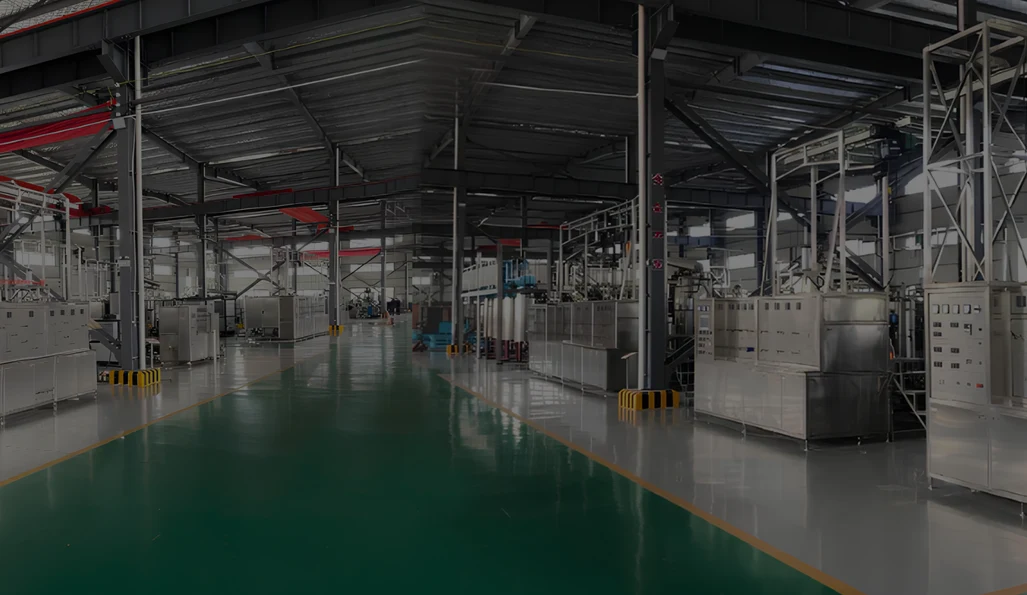
Pilot Plant Glass Reactor Selection Guide for Scale-Up
Aug 6, 2026
Moving a validated bench recipe into commercial production fails more often at the pilot stage than anywhere else, and the equipment you choose decides the outcome. A pilot plant glass reactor from Xi'an Bioland Instrument Co., Ltd. is engineered exactly for that transition: a fully transparent GG17/borosilicate 3.3 vessel, a double-jacketed body that holds a stable window from -80 °C to 300 °C, vacuum capability down to -0.095 MPa, and modular flange ports that let one platform run reaction, distillation, extraction, condensation, crystallization and filtration. Every pilot plant glass reactor we build carries CE and ISO certification, complies with GMP/FDA expectations, and can be non-standard customized in size, port layout, material, drive, and control architecture. With 15+ years of manufacturing, in-house R&D engineers, OEM/ODM support, competitive factory pricing, a one-year warranty and lifetime maintenance, Bioland delivers a pilot plant glass reactor as a complete process solution — not just a piece of glassware.
Role of Pilot Glass Reactors in Process Development
From Bench Flask to Pilot Plant Glass Reactor: Bridging the Data Gap
A 1 L round-bottom flask tells you whether a chemistry works; it tells you almost nothing about heat removal, mixing time, addition rate, or crystal habit at 50 L. The pilot plant glass reactor exists to generate that missing engineering data. Bioland's 10 L, 20 L, 30 L, 50 L, 100 L, 150 L and 200 L units share geometric proportions, so kinetic and thermal data collected in a small pilot plant glass reactor translate predictably upward. Customers typically use the pilot stage to lock exotherm profiles, dosing curves, solvent volumes and cycle times before committing to stainless steel.
Visual Process Control That Eliminates "Black Box" Operation
The single biggest advantage of a glass system is that you can see everything. Colour change, gas evolution, precipitate onset, phase separation, foaming, and emulsion breaking are all observable in real time inside a pilot plant glass reactor, which dramatically improves batch reproducibility and mechanistic understanding. Operators can correlate a visual event with a temperature or torque reading and adjust immediately, instead of discovering a failed batch after analysis. For medicinal chemistry and high-value intermediates, this visibility shortens development cycles and reduces expensive re-runs.
Case Study: Fermentation Optimization for a South American Biopharma
The client's dissolved-oxygen efficiency was poor, fermentation cycles ran long, parameter control drifted, and product purity varied batch to batch. Oxidation-sensitive intermediates degraded during handling.
Bioland delivered a customized 50 L double-layer pilot plant glass reactor with a re-engineered impeller and baffle set, PT100 in-liquid probes, and an inert-gas sparging line for anaerobic protection.
Dissolved-oxygen transfer improved by 30 %, the fermentation cycle shortened, and temperature held within ±0.5 °C. Purity became consistent across batches, and the transparent vessel let the team confirm broth clarity without sampling.
GMP-Ready Design for Validation Work
Regulated customers need more than performance; they need traceability. Every pilot plant glass reactor can be supplied with material certificates, calibration records, and IQ/OQ support documentation so it fits directly into a GMP validation package. PTFE wetted parts and mechanical seals eliminate metal-ion leaching, an essential requirement for API intermediates, chiral compounds and biologically active molecules. Because the borosilicate body resists strong acids, alkalis and aggressive organic solvents, cross-contamination from corroded metal surfaces simply does not occur.
Choosing the Right Reactor Volume for Scale-Up
Matching Working Volume to Real Batch Output
Start from the finished product, not the vessel. Define kilograms per batch, solvent-to-substrate ratio, and required headspace, then size backwards. As a rule, fill a pilot plant glass reactor to 60–75 % of nominal volume so that reflux, foaming and gas evolution have room. A 100 L pilot plant glass reactor therefore delivers roughly 60–75 L of usable charge. Bioland engineers routinely run this calculation for clients during quotation, including solvent recovery volume and downstream filtration capacity, so no one buys twice.
The 10:1 Step Rule and Geometric Similarity
Scale-up specialists generally avoid jumps larger than tenfold in a single step. Going 2 L → 20 L → 200 L keeps mixing Reynolds numbers, tip speed and heat-transfer area per unit volume within predictable ranges. Because Bioland maintains consistent H/D ratios and jacket geometry across the pilot plant glass reactor range, power-per-volume (P/V) constant scale-up works reliably. Clients who plan the intermediate step almost always reach commercial production faster than those who leap from laboratory glassware straight to a multi-thousand-litre steel train.
Case Study: Precious Metal Solvent Extraction, Europe
A European refiner faced small batch throughput, weak phase separation and no supplier willing to build corrosion-proof, explosion-rated glass equipment for a new line. Bioland supplied four 200 L explosion-proof double-layer glass reactors plus nine 50 L explosion-proof rotary evaporators, all rated Ex d ⅡB T4, with PTFE bottom discharge valves.
Modular manufacturing cut delivery time by 40 %, letting the client start production 15 days early. Annual capacity rose 30 %, and the units logged over 1,000 hours of fault-free operation. Transparent vessels let operators watch the organic/aqueous interface directly, so cut points became precise instead of estimated.
Budget, Footprint and Lead Time Realities
Volume selection is also a commercial decision. A largerpilot plant glass reactor costs more, needs taller ceiling clearance, a bigger chiller and a heavier lifting frame. Bioland's price advantage comes from direct factory manufacturing — no trading margin — and standard, non-customized units ship in 5–7 days, while customized configurations typically require 30 business days. Sea, rail and air freight are all supported. Many customers begin with a 50 L pilot plant glass reactor for validation and add a 200 L unit once the process is frozen.
Evaluating Mixing and Heat Transfer Requirements
Impeller Choice, Torque and Speed Control
Mixing is where most scale-ups quietly fail. Viscous polymerizations need anchor or helical ribbon impellers; gas–liquid systems need Rushton turbines; solid suspensions need pitched-blade designs. Each pilot plant glass reactor from Bioland uses a variable-frequency, spark-free motor with smooth speed regulation, typically 0–450 rpm, and PTFE stirrer shafts sized to the duty. Because torque and rpm are displayed and logged, engineers can record power draw as slurry density rises — data that directly informs the motor specification of the future production reactor.
Jacket Performance Across a -80 °C to 300 °C Window
Heat-transfer area per unit volume falls as you scale, so pilot data must quantify the real duty. The double-jacket of a pilot plant glass reactor circulates silicone oil, ethanol or water from a heating-circulator or chiller, holding -80 °C cryogenic lithiations or 300 °C high-temperature reactions with equal stability. An optional third insulation layer reduces condensation and energy loss. Measuring jacket inlet/outlet ΔT during the exotherm gives the kW load your production plant must remove — the number that keeps a scale-up safe.
Vacuum, Condensing and Distillation Integration
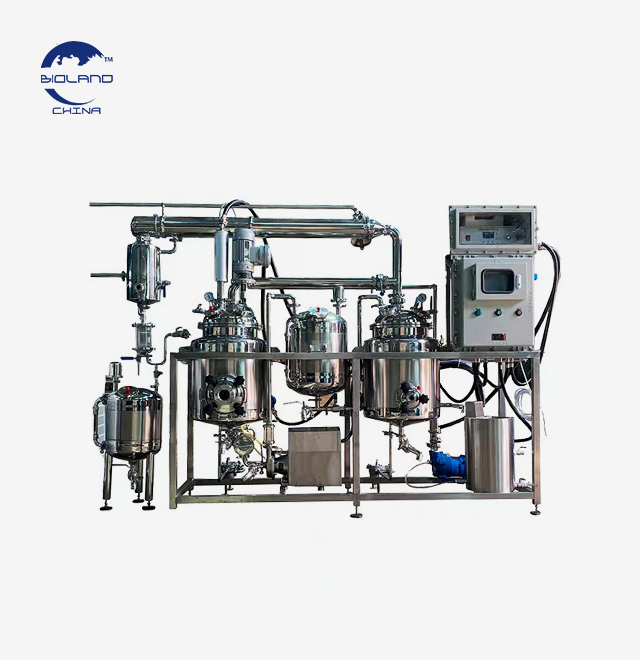
A pilot plant glass reactor is rarely used alone. Standard five- or six-neck lids accept coil condensers, addition funnels, thermowells, reflux dividers, fractional distillation columns, tail-gas absorption bottles and vacuum lines. At -0.095 MPa, low-boiling solvents strip quickly and heat-sensitive products distil below degradation temperature. Bioland also builds ultrasonic crystallization ports, Nutsche filter reactors and bottom-discharge filter plates, so one pilot plant glass reactor covers reaction, solvent swap, crystallization and isolation without transferring material.
Case Study: Nitration and Acidified Glycerin Line
A specialty chemical producer running nitration suffered dangerous local hot spots and corrosion of metal parts, with no way to observe the acid layer. Bioland customized a jacketed pilot plant glass reactor with an enlarged cooling jacket, slow-dosing acid inlet, PT100 dual-point sensing and PLC interlocks that cut dosing if temperature exceeded setpoint.
The exotherm stayed controlled, corrosion disappeared, and the operator could visually confirm complete mixing before the next addition. The line moved into routine production with documented safety margins.
Selecting Reactors for Future Production Expansion
Modular Design and Non-Standard Customization
Buy for the process you will run in three years. Bioland's engineering team designs beyond the catalogue: different vessel shapes, extra ports, larger discharge valves, alternative sealing systems, lifting-and-rotating frames for fast charging, cleaning and discharge, and jacket sizing matched to your chiller. This non-standard capability means a pilot plant glass reactor purchased today can be retrofitted with a rectification column, ultrasonic crystallizer or Nutsche filter bottom tomorrow, protecting the investment as the product portfolio evolves.
Explosion-Proof Construction and PLC Automation
Plants handling flammable solvents require more than glass. A fully explosion-proof pilot plant glass reactor — Ex-rated motor, control cabinet, wiring and earthing — is available across the range. PLC/HMI packages add recipe storage, automatic temperature ramping, dosing control, stirring programs, alarm logging and data export for batch records. This automation converts the pilot plant glass reactor into an audit-ready platform and makes tech transfer to production straightforward, because the recipe file moves with the process.
Case Study: Chemical Intermediate Manufacturer, Southeast Asia
The customer's crystallization step produced inconsistent particle size, causing filtration bottlenecks and downstream drying delays across shifts. Bioland configured a 100 L crystallization pilot plant glass reactor with programmable cooling ramps, an ultrasonic crystallization module and a filter-reactor bottom for in-vessel washing.
Crystal size distribution tightened, filtration time dropped noticeably, and operators could watch nucleation onset through the glass wall to fine-tune the cooling curve. The same skid later handled two additional products, avoiding a second capital purchase — exactly the flexibility that modular selection is meant to deliver.
Service, FAT and Lifetime Support
Expansion planning includes the supplier. During fabrication, a dedicated Bioland specialist sends weekly photo or video updates so you know progress on your pilot plant glass reactor. On completion, detailed inspection media is issued, and shipment follows only after your approval — or you can attend a Factory Acceptance Test at our plant. Every unit carries a one-year warranty with lifetime maintenance, spare glass parts, PTFE seals and remote engineering support, ensuring the pilot plant glass reactor stays productive for years.
Conclusion
Selecting a pilot plant glass reactor is a scale-up strategy, not a purchase. Size the vessel from real batch output, keep scale steps near tenfold, quantify mixing power and jacket duty with actual pilot data, and specify modular ports, explosion-proof options and PLC control so the platform grows with production. Bioland Instrument combines transparent GG17 glass, -80 °C to 300 °C control, -0.095 MPa vacuum, CE/ISO certification and GMP-compatible documentation with genuine non-standard customization, factory pricing and lifetime support. Backed by proven results in pharmaceutical, precious-metal, nitration and crystallization projects, a Bioland pilot plant glass reactor turns process uncertainty into repeatable, scalable manufacturing.
FAQ
1. What volumes are available?
Bioland supplies 10 L to 200 L pilot plant glass reactors, single, double or triple-layer, with larger multi-unit skids on request.
2. What temperature and vacuum can it handle?
-80 °C to 300 °C via jacket circulation, with vacuum down to -0.095 MPa for low-temperature distillation and solvent recovery.
3. Can it be explosion-proof and automated?
Yes. Ex d ⅡB T4 motors, cabinets and wiring, plus PLC/HMI recipe control, data logging and alarm interlocks.
Standard units ship in 5–7 days; customized systems typically require 30 business days, with weekly progress photos or video.
Ready to De-Risk Your Scale-Up? Talk to Bioland Instrument Today
Xi'an Bioland Instrument Co., Ltd. has spent more than 15 years building distillation, concentration, reaction, extraction, separation, filtration, purification, crystallization, emulsification, mixing and drying equipment — plus the heating, cooling and vacuum systems that support them. Our catalogue spans ultrasonic and ethanol extraction machines, CO₂ and supercritical extraction equipment, essential oil distillation lines, batch and jacketed glass reactors, Nutsche filter reactors, fractional distillation columns, high-shear homogenizers, mixing tanks, spray and freeze dryers, and of course the pilot plant glass reactor range described above.
We are CE and ISO certified, GMP/FDA compliant, and export across Europe, Southeast Asia and beyond. Our senior engineers and R&D team welcome OEM and ODM projects, delivering fully customized production lines at factory-direct prices, with weekly production updates, optional Factory Acceptance Testing, sea/rail/air shipping, a one-year warranty and lifetime maintenance. Tell us your chemistry, batch size and temperature profile, and we will propose a complete, validated solution — not just a quotation. Contact Bioland Instrument now at info@biolandequip.com and let our team engineer the pilot plant glass reactor your process deserves.
References
1. Levin, M. Pharmaceutical Process Scale-Up, 3rd Edition. CRC Press.
2. Paul, E. L., Atiemo-Obeng, V. A., Kresta, S. M. Handbook of Industrial Mixing: Science and Practice. Wiley-Interscience.
3. Zlokarnik, M. Scale-Up in Chemical Engineering, 2nd Edition. Wiley-VCH.
4. Am Ende, D. J. Chemical Engineering in the Pharmaceutical Industry: R&D to Manufacturing. Wiley.
5. Perry, R. H., Green, D. W. Perry's Chemical Engineers' Handbook, 8th Edition. McGraw-Hill.
6. Mullin, J. W. Crystallization, 4th Edition. Butterworth-Heinemann.
The reactor is beautifully mirror-polished and fully complies with GMP requirements for the pharmaceutical industry. The performance is excellent! Overall, we are very satisfied! We also provided with some feedback on our process improvements, which we hope will be helpful.
2024-04-09
Laboratory
Excellent and professional service. Always reply our questions very fast. All reactors and chiller we received are good too.
2024-02-15
Research Institute
Quality is beyond our expectation actually. After we got the extraction equipment and started using it, the performance was beyond our expectation. Very easy to use and very efficient to run. Service always respond us very quickly. Was also very helpful to help us. Thanks Bioland team. Very happy to work with you.
2023-11-20
Biotech Company
We are happy about the new purchase as always. Equipment and services are both good.
2023-08-05
Instrument Lab
This is the second order with Bioland instrument and everything is good as the first dateText.
2023-05-12
Global Trading Partner
Bioland instrument team is very helpful and professional. The sales helped us select the right equipment for our application, and their logistics people handled the transportation and customs declaration for our shipment. All that saved us a lot of work.