How Does Ultrasonic Extraction Improve Plant Extraction Yield?
Sep 3, 2026
More and more people in the food, cosmetics, medicinal, and nutritional businesses want real plant products. But standard extraction processes like maceration, Soxhlet, or hot water reflux often take a long time, use a lot of energy, don't pick well, and don't get very much oil out. For many makers, this means higher prices for raw materials, less production, and products that aren't always of good quality. This is exactly where ultrasonic herbal extraction equipment comes in handy and has been shown to work.
This technology uses controlled ultrasonic waves on plant materials to make strong physical effects that break down tough cell walls, speed up liquid entry, and make it easier for beneficial chemicals to move into the solution. This leads to a higher recovery rate, less time spent extracting, a lower operating temperature, and more consistent batches. Businesses don't just get a better machine when they buy the right system; they get a full extraction solution that makes it easier to turn raw herbs into high-value extracts. Xi'an Bioland Instrument Co.,Ltd. has made high-tech ultrasonic herbal extraction equipment that can meet strict production needs and keep long-term operating costs low.
Understanding Cavitation and Plant Cell Disruption
The biggest problem with any plant extraction method is that plant cells are built in a certain way. Lignin, hemicellulose, and cellulose work together to make a strong wall that keeps valuable compounds inside. For output to go up, these walls need to be opened up without hurting heat-sensitive actives. The effectiveness of ultrasonic herbal extraction equipment can be attributed to this.
The Role of Acoustic Cavitation in Extraction
The main thing that makes ultrasonic herbal extraction equipment work is acoustic cavitation. When ultrasonic waves with a high frequency go through a liquid solvent, they quickly compress and expand the liquid. Vapor bubbles that are very small form during rarefaction. In a process called implosion, these bubbles get bigger over a number of cycles and then burst into pieces. Localized hotspots, microjets, and shockwaves with strong shear forces are made by the fall. These physical effects have a direct effect on the plant bits that are mixed in with the solvent. Without using extreme heat or harsh chemical treatments, ultrasonic herbal extraction equipment uses this controlled energy to create the mechanical force required to break down cell walls.
How Cell Disruption Releases Trapped Bioactive Compounds
Most target compounds in herbs, roots, leaves and flowers are stored inside the cytoplasm or vacuoles of plant cells. With traditional methods, solvents can only reach these compounds slowly by diffusion through intact walls. The shear forces from cavitation created by ultrasonic herbal extraction equipment rupture the membranes and crack the outer walls. This allows the solvent to reach the inner contents almost immediately. For example, in the extraction of flavonoids from Ginkgo biloba leaves or in the extraction of flavonoids from bamboo leaves, opening the cells means far more active compounds become available for recovery. This direct cell disruption is a key reason why ultrasonic herbal extraction equipment raises plant extraction yield so significantly.
Why Mechanical Disruption Is Gentler Than Prolonged Heating
Many valuable compounds, such as certain polyphenols, anthocyanins and volatile oils, are sensitive to heat. Traditional reflux extraction often requires hours at high temperatures, which can lead to degradation. With ultrasonic herbal extraction equipment, most of the energy is mechanical rather than thermal. The optimal extraction temperature usually stays between 40 °C and 60 °C, and the processing time is often reduced to 24–40 minutes. This gentler approach helps protect delicate actives while still achieving a much higher yield. It is also one of the reasons this technology is widely chosen for ultrasound assisted extraction of quercetin, pigment extraction from plants, and ultrasonic extraction mushrooms and extraction of polysaccharides.
Practical Impact on Yield Across Plant Materials
The cavitation effect adapts well to different raw materials. Hard woody roots, fibrous stems, dried leaves and even soft flowers all respond to the cell disruption created by ultrasonic herbal extraction equipment. In real production, this translates to yield increases that can range from around 50% up to 500% compared with many conventional methods. This level of improvement is what makes ultrasonic herbal extraction equipment a reliable choice for producers looking to get more extract from every kilogram of plant material without compromising quality.
How Ultrasonic Waves Improve Mass Transfer Efficiency
Rupturing cells is only half of the equation. To raise extraction yield, the released compounds must move from the plant matrix into the bulk solvent quickly and evenly. Mass transfer efficiency is often the bottleneck for large-scale production. Well-engineered ultrasonic herbal extraction equipment directly improves this step.
Reducing the Diffusion Boundary Layer
Around every solid plant particle in a solvent, there is a thin stagnant layer called the diffusion boundary layer. Compounds must cross this layer before mixing into the main solvent. With conventional stirring alone, this layer remains thick and slows extraction. The microjets and turbulence produced by ultrasonic herbal extraction equipment continuously break up these boundary layers. This thinning allows dissolved bioactives to move into the bulk liquid much faster. For continuous or batch systems, this means the extraction reaches equilibrium in a fraction of the usual time.
Enhancing Solvent Penetration Into Plant Tissue
Even after the cell walls are broken, the liquid still needs to get deep into the plant's spongy tissue. Strong convection currents flow through the extraction tank because of ultrasonic agitation. When used with ultrasonic herbal extraction tools, these currents push new liquid into cracks, gaps, and places between cells. This better access is especially helpful for things that are thick, like roots and bark. It also helps with processes like liquid extraction machines, where ethanol or hydroalcoholic fluids need to fully soak the plant charge to get back a wide range of actives.
Accelerating Equilibrium for Faster Processing
Traditional extraction can take several hours to reach its maximum yield. By improving both cell access and mass transfer, ultrasonic herbal extraction equipment shortens this to 24–40 minutes in many standard formulations. This shorter cycle time allows more batches per day without increasing vessel size. For producers of tea extraction machine and Coffee Extraction Machine lines, this means higher throughput for tea polyphenols, aromatic compounds, amino acids, flavonoids and caffeine with more stable output.
Linking Mass Transfer Gains To Real Production Needs
Faster mass transfer directly reduces labor, steam, cooling load and overall energy use. More importantly, it creates room for flexible production. For example, in propolis extraction machine setups, ethanol-based extraction assisted by ultrasound helps recover flavonoids and phenolic acids more efficiently while keeping gentle conditions. Similarly, for pigment extraction from plants such as orange peel carotenoids or flower anthocyanins, faster transfer limits exposure time and helps preserve color strength. These practical gains are why many manufacturers choose ultrasonic herbal extraction equipment as a process upgrade instead of simply scaling up older methods.
Supporting Scalable and Continuous-Oriented Processing
Modern ultrasonic herbal extraction equipment from Xi’an Bioland Instrument Co.,Ltd. is designed with extraction tanks, circulation piping, filtration interfaces and integrated control. This layout supports both batch and semi-continuous flows. Combined with features like automatic feeding considerations, temperature control and vacuum compatibility, the mass transfer advantage can be carried over to pilot and commercial scales. It is this scalability that turns a lab result into a reliable production line for ultrasonic extraction mushrooms, extraction of polysaccharides and many other plant extracts.
Optimizing Ultrasonic Power, Frequency, and Extraction Time
To achieve consistent plant extraction yield, the ultrasonic parameters must be matched to the plant material, solvent system and target compounds. Simply increasing power is not enough. Properly tuned ultrasonic herbal extraction equipment balances energy input with product quality and process stability.
Finding the Right Ultrasonic Power Level
Ultrasonic power determines the intensity of cavitation. Too low, and cell disruption and mass transfer remain weak. Too high, can create excessive foaming or unnecessary energy consumption without further yield gain. Well-designed ultrasonic herbal extraction equipment allows adjustable power control so operators can find the optimal range for each material. For fibrous herbs used in extraction of flavonoids, moderate power is often enough to open tough cells. For softer petals used in pigment extraction from plants, lower controlled power helps protect delicate color compounds.
The Influence of Frequency on Extraction Selectivity
Frequency affects bubble size and cavitation behavior. Lower frequencies generally produce stronger implosions and more intense mechanical effects. Higher frequencies create more bubbles but with milder collapse. Many industrial ultrasonic herbal extraction equipment systems operate in a suitable frequency range to balance wall disruption and energy efficiency. This flexibility is valuable for diverse applications, from ultrasound assisted extraction of quercetin from larch, celery, pagoda tree buds or mulberry leaves, to gentler recovery of water-soluble polysaccharides in ultrasonic extraction mushrooms and extraction of polysaccharides projects.
Extraction Time: Shorter Does Not Mean Rushed
One of the clearest advantages of ultrasonic herbal extraction equipment is time reduction. Traditional methods may need 2–6 hours, while ultrasonic-assisted extraction often reaches peak yield within 24–40 minutes. However, extending slightly beyond the optimum does not always increase yield and, for very sensitive compounds, may not be ideal. By optimizing time together with temperature and solvent ratio, producers can standardize batches. This is especially useful for tincture extraction machine processes, where consistent active content is required batch after batch.
Balancing Energy With Solvent Choice and Solid-to-Liquid Ratio
Solvent polarity must match the target class. Ethanol, hydroalcohol, water or solvent blends all behave differently under ultrasound. The solid-to-liquid ratio also affects cavitation transmission. Advanced ultrasonic herbal extraction equipment is engineered to maintain uniform ultrasonic field distribution in the extraction vessel, so energy reaches all plant particles evenly. This uniformity helps when running larger charges for tea extraction machine or Coffee Extraction Machine production, keeping yield stable as scale increases.
Process Control For Reproducible Results
Modern units offered by Xi’an Bioland Instrument Co.,Ltd. feature intelligent PLC control, parameter logging and adjustable settings for power, time and temperature. This level of control turns the process from experience-based to data-based. For clients building Chilli Oleoresin Extraction Plant lines to extract capsaicin and chilli oleoresin, or stevia extraction machine lines to recover steviol glycosides from stevia leaves, stems and roots, reproducibility is critical for meeting both internal specs and market expectations. With properly optimized parameters, ultrasonic herbal extraction equipment delivers consistent extraction yield with minimal trial-and-error.
Improving the Recovery of Key Plant Bioactive Compounds
Different plant materials contain very different actives. A major strength of ultrasonic herbal extraction equipment is its adaptability across a wide range of compound classes, while still keeping yields high and processing gentle.
Flavonoids and Polyphenols
Flavonoids are widely used in functional foods and herbal formulations. The extraction of flavonoids from sources like ginkgo, bamboo leaf, chrysanthemum, pagoda bud, lotus leaf and onion peel benefits greatly from ultrasonic cell disruption. In particular, ultrasound assisted extraction of quercetin from plants such as larch, celery, mulberry leaf, and oriental arborvitae allows efficient recovery of quercetin and its glycosides like rutin. By using ultrasonic herbal extraction equipment at moderate temperature and controlled time, producers can increase yield while preserving antioxidant activity.
Polysaccharides From Medicinal Mushrooms and Roots
Water-soluble polysaccharides are key bioactives in many traditional botanicals. For ultrasonic extraction mushrooms and extraction of polysaccharides, ultrasound helps break the fungal cell wall or plant matrix to release beta-glucans and heteropolysaccharides. This approach is applied to Ganoderma (Reishi), Lentinula (Shiitake), Pleurotus and also to root-based materials. Many producers running dedicated lines for Ganoderma polysaccharides or Chinese yam polysaccharides have seen higher recovery using ultrasonic herbal extraction equipment compared with hot water extraction alone.
Alkaloids, Caffeine and Tincture Actives
Alkaloids require efficient solvent access to be fully recovered. For Coffee Extraction Machine setups, ultrasound can assist in the targeted release of caffeine and related alkaloids. Similarly, for tea extraction machine systems, ultrasonic herbal extraction equipment helps recover catechins, tea polyphenols, flavonoids, amino acids and volatile aromatics. In tincture extraction machine applications using ethanol or hydroalcohol, the technology speeds up the extraction of a broad spectrum of herbal constituents while keeping the process at lower temperatures.
Capsaicinoids, Oleoresins and Volatile Components
Spice extracts demand both yield and sensory quality. In a Chilli Oleoresin Extraction Plant, capsaicin and chilli oleoresin recovery can be improved by ultrasonic assistance, helping reduce solvent use and processing time. For essential oil-related fractions and aromatic compounds, gentle ultrasonic conditions help limit thermal loss. This flexibility makes ultrasonic herbal extraction equipment suitable for many aromatic botanical processes as well.
Pigments, Propolis and Broader Plant Actives
Colorants are highly heat-sensitive. Pigment extraction from plants covering anthocyanins, betalains, carotenoids and chlorophylls benefits from low-temperature ultrasonic extraction to maintain color intensity and stability. For bee products, propolis extraction machine configurations using ethanol with ultrasound improve the release of flavonoids, phenolic acids and other bioactives from raw propolis. Beyond these, ultrasonic herbal extraction equipment is also applied to plant proteins, wheat germ components, functional food actives, marine-adjacent plant matrices, rose and mint aromatic fractions, and various seed oil-related pre-treatments. This wide coverage shows why the technology is considered a general upgrade for improving recovery across so many plant groups.
Preserving Purity With Less Post-Treatment
Higher recovery does not mean more impurities when parameters are controlled. Because ultrasonic herbal extraction equipment reaches target yield faster at lower temperature, the extracted liquid often contains fewer unwanted hydrolyzed products. This can simplify downstream steps such as filtration, concentration, separation and purification. For producers working to GMP-aligned processes, this cleaner extract profile is a practical advantage.
Controlling Process Conditions for Consistent Extraction Yield
Achieving a high yield once in the lab is different from achieving it every shift in production. Consistency comes from controlling the full process environment. Industrial-grade ultrasonic herbal extraction equipment is built around this need.
Temperature Control For Heat-Sensitive Actives
Temperature strongly affects both solubility and stability. For most botanicals, the sweet spot for ultrasonic-assisted extraction is 40–60 °C. Ultrasonic herbal extraction equipment from Xi’an Bioland Instrument Co.,Ltd. can be integrated with jacketed vessels, heating/cooling systems and precise sensors to hold this range. This is vital for pigment extraction from plants, certain flavonoid groups, and ultrasonic extraction mushrooms and extraction of polysaccharides where overheating can reduce bioactivity.
Solvent System, Loading and Hydration
Choosing the correct solvent and solid-to-liquid ratio affects cavitation efficiency and final yield. Too dense a slurry can dampen ultrasonic transmission. Too dilute can lower productivity. With ultrasonic herbal extraction equipment, the vessel geometry, transducer layout and circulation are designed to keep the suspension mobile. This supports consistent results for large herbal charges in stevia extraction machine, tea extraction machine, Coffee Extraction Machine and Chilli Oleoresin Extraction Plant projects.
Vacuum, Atmospheric or Pressurized Operation Flexibility
Many extraction routes benefit from operating under controlled pressure. The process platform around ultrasonic herbal extraction equipmentcan be configured for atmospheric, slight vacuum or positive pressure depending on solvent type and process needs. Combined with evaporation and condensation options, this allows integration with solvent recovery where required, supporting safer and more economical operation.
Equipment Design That Supports GMP and Hygiene
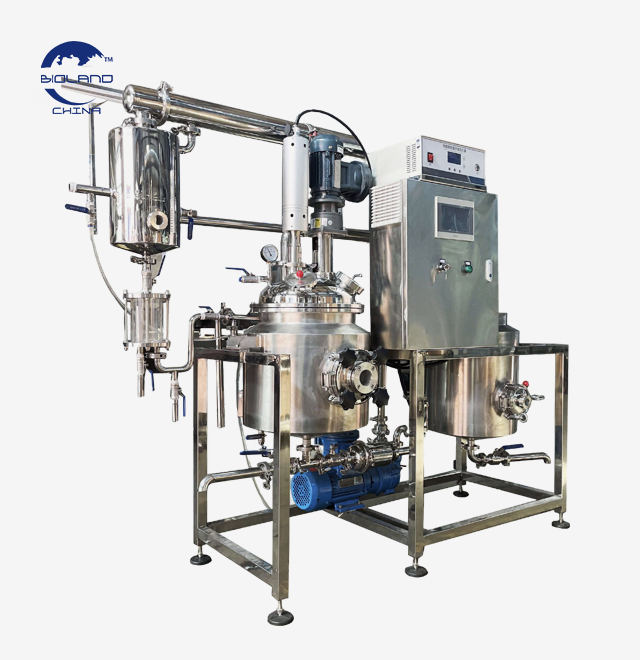
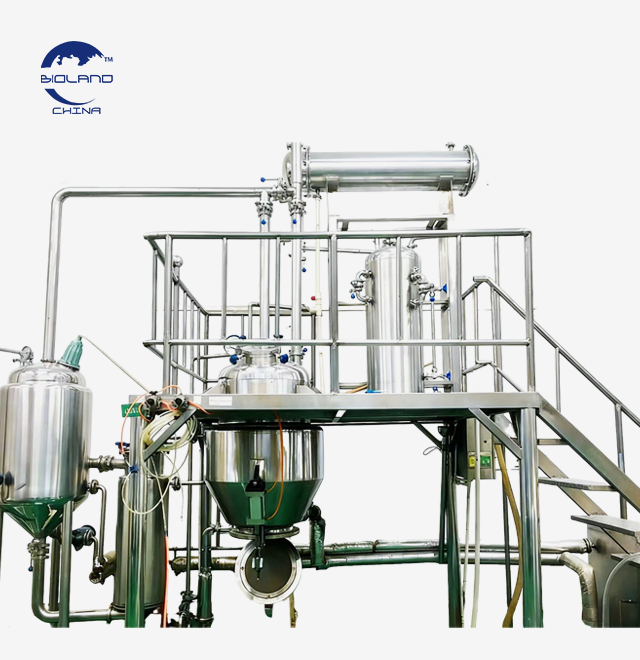
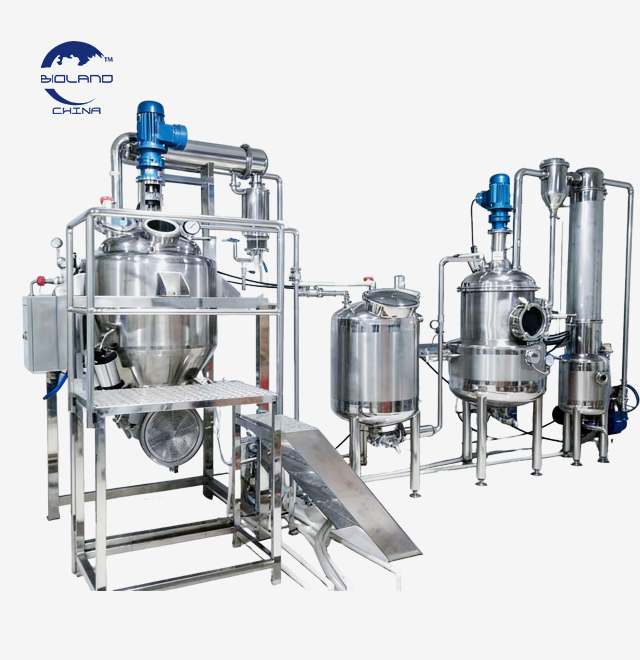
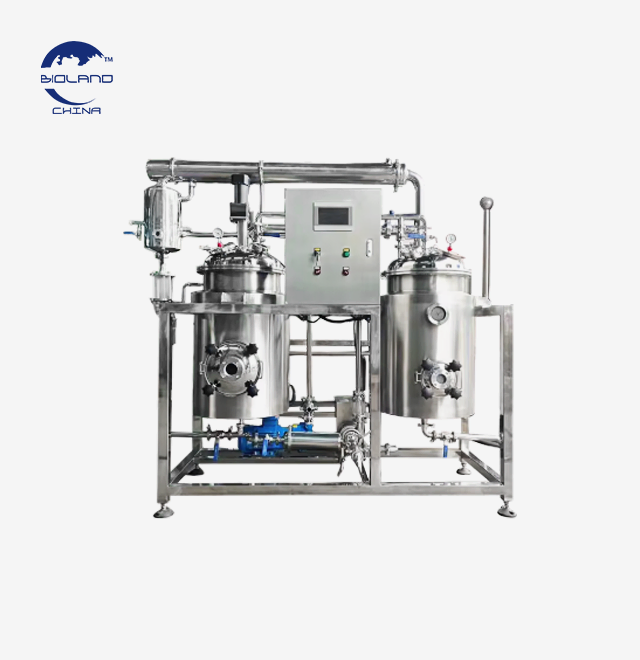
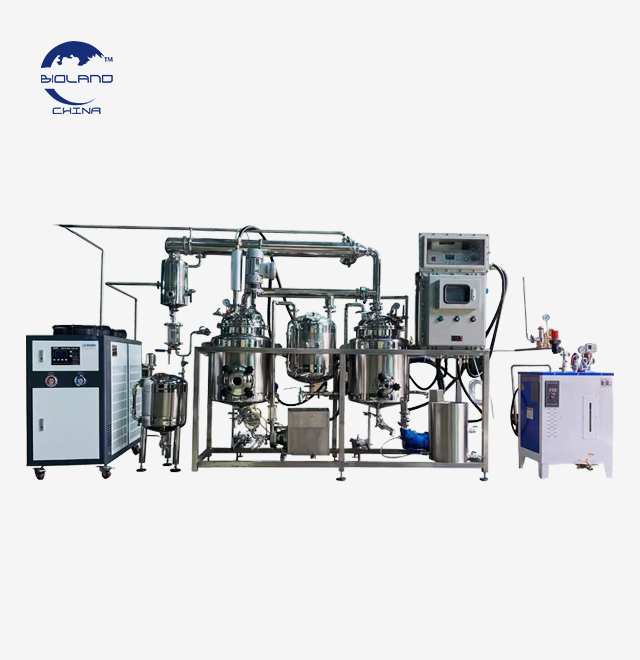
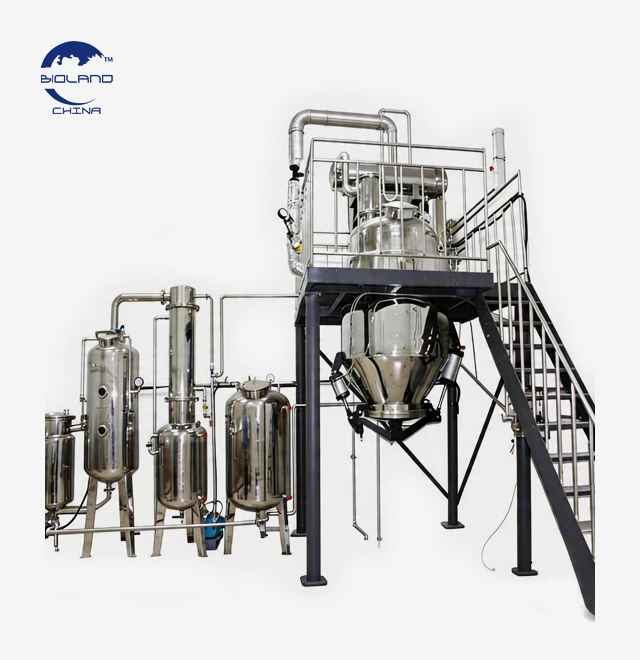
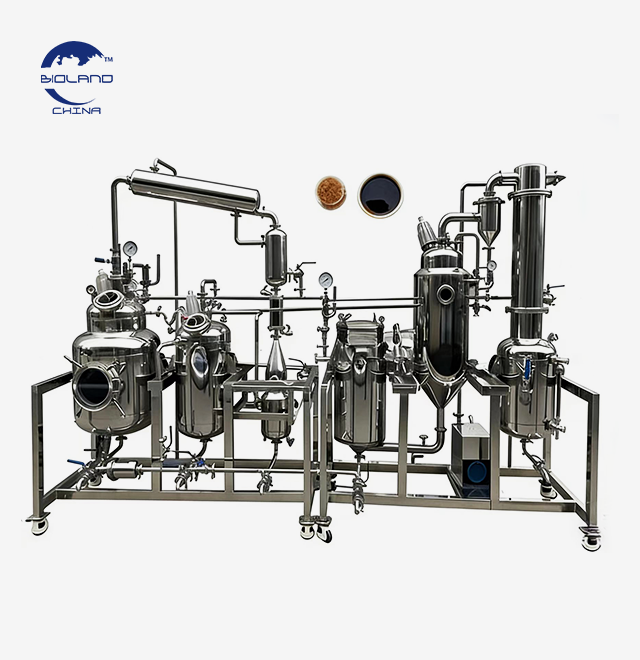
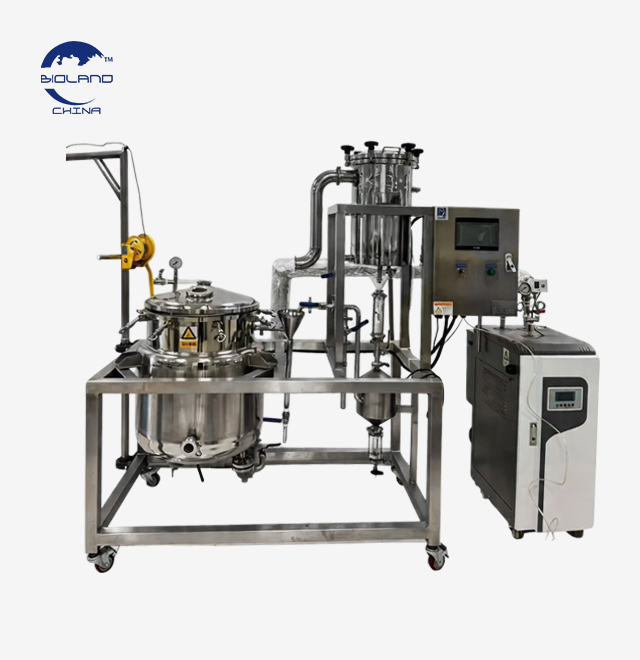
For pharmaceutical, nutraceutical and food applications, cleanability is essential. The systems use SUS304/316L stainless steel, smooth welds, sanitary connections and CIP-friendly layouts where applicable. The structural configuration of industrial ultrasonic herbal extraction equipment typically includes the ultrasonic system, extraction vessel, heater/evaporator interface, condenser, filtration elements, pumps, buffer tanks, vacuum system and control cabinet. Designs follow GMP-aligned principles to help meet quality system expectations.
Automation, Safety and Real-Time Monitoring
Consistency relies on reducing manual variation. Intelligent PLC control, online monitoring where needed, and clear parameter presets help standardize every batch. Safety interlocks, temperature/pressure awareness and logical sequences are built in. For multi-purpose lines running tincture extraction machine, propolis extraction machine, extraction of flavonoids, or ultrasound assisted extraction of quercetin, this automation keeps product quality stable across different recipes.
From Pilot to Commercial: Scalable Engineering
Xi’an Bioland Instrument Co.,Ltd. offers ultrasonic herbal extraction equipment in a range of working volumes to bridge lab, pilot and production. The technical parameter range covers different evaporation capacities and utilities to match project scope. More importantly, the company provides customized solutions and full-process technical support. This includes process review, equipment selection, layout advice and guidance on integration. With CE and ISO certifications, in-house R&D and engineering experience, the approach is to solve actual process challenges, not just supply machinery.
Proven Application Coverage Builds Confidence
Across global projects, ultrasonic herbal extraction equipment has been applied to many lines: stevia extraction machine for steviol glycosides, Chilli Oleoresin Extraction Plant for capsaicin and oleoresin, lines for ultrasonic extraction mushrooms and extraction of polysaccharides (Ganoderma, Shiitake, sweet potato polysaccharides), tincture extraction machine herbal tinctures, tea extraction machine and Coffee Extraction Machine for polyphenols and caffeine, extraction of flavonoids and ultrasound assisted extraction of quercetin from diverse herbs, propolis extraction machine ethanol systems, and pigment extraction from plants for natural colorants. It is also used for plant proteins, tea polyphenols, wheat germ, functional actives, aromatic oils like rose and mint, and various botanical extracts. These real cases show the same core benefit: controlled process conditions lead to higher and more consistent plant extraction yield using ultrasonic herbal extraction equipment.
Service That Keeps Production Running
Reliable equipment needs reliable support. Xi’an Bioland Instrument Co.,Ltd. follows a practical service approach. During manufacturing, a dedicated specialist tracks progress with photos or videos and updates the client weekly. After completion, detailed photos or videos are shared for review, or a Factory Acceptance Test (FAT) can be arranged at the workshop before shipment. Standard lead time for non-customized units is 5–7 business days, and for tailored systems around 30 business days. Shipping options include sea, rail and air. All systems come with a one-year quality warranty and lifetime maintenance. Combined with OEM/ODM capability, this gives buyers confidence from first inquiry through long-term operation of their ultrasonic herbal extraction equipment.
Conclusion
In short,ultrasonic herbal extraction equipment improves plant extraction yield by uniting three effects: cavitation-driven cell disruption, faster mass transfer across boundary layers, and precise control of power, frequency, time and temperature. This allows producers to recover more flavonoids, polysaccharides, alkaloids, capsaicinoids, pigments and other actives in less time and under gentler conditions. When process parameters are optimized and the system is engineered for scale, the result is higher throughput, better consistency, cleaner extracts and more efficient use of raw materials for a wide range of botanical applications.
FAQ
Q1: How much can ultrasonic herbal extraction equipment increase yield?
A: In many cases, yields rise by 50%–500% compared with traditional extraction methods.
Q2: Is ultrasonic herbal extraction equipment suitable for heat-sensitive plants?
A: Yes. Most processes run at 40–60 °C, which helps protect delicate compounds.
Q3: What solvents work with ultrasonic herbal extraction equipment?
A: Water, ethanol, hydroalcohol blends and many food/pharma-compatible solvents are commonly used.
Q4: Can this technology handle both small and large batches?
A: Yes. Systems are scalable from lab/pilot to commercial with consistent field distribution.
Q5: Does ultrasonic herbal extraction equipment fit GMP-oriented production?
A: Yes. With SUS304/316L, sanitary design and controlled automation, it supports GMP-aligned workflows.
Work With A Proven Extraction Solution Partner
If rising raw material costs, long batch times or unstable yields are holding back your plant extraction project, it is time to look beyond conventional methods. Xi’an Bioland Instrument Co.,Ltd. is more than a manufacturer of ultrasonic herbal extraction equipment. With over 15 years of experience, CE and ISO certification, an in-house R&D and engineering team, we act as your process solution partner from feasibility to production. Our systems cover distillation, concentration, reaction, extraction, separation, filtration, purification, crystallization, emulsification, mixing, drying and supporting utilities. We offer OEM/ODM, custom process design, weekly production updates, FAT options, sea/rail/air delivery, one-year warranty and lifetime maintenance.
Whether you need a stevia extraction machine, Chilli Oleoresin Extraction Plant, line for ultrasonic extraction mushrooms and extraction of polysaccharides, tincture extraction machine, tea extraction machine, Coffee Extraction Machine, extraction of flavonoids, ultrasound assisted extraction of quercetin, propolis extraction machine, or pigment extraction from plants, our ultrasonic herbal extraction equipment is built to solve your real process challenges. Reach out toinfo@biolandequip.com today and let Bioland Instrument help you turn higher yield into real business value.
References
1. Mason, T.J. Sonochemistry: The Uses of Ultrasound in Chemistry. Royal Society of Chemistry.
2. Suslick, K.S. Ultrasound: Its Chemical, Physical, and Biological Effects. VCH Publishers.
3. Vinatoru, M. An overview of the ultrasonically assisted extraction of bioactive principles from herbs.
4. Chemat, F., Zill-e-Huma, and Khan, M.K. Applications of ultrasound in food technology: Processing, preservation and extraction.
5. Romdhane, M. and Gourdon, C. Investigation in solid–liquid extraction: Influence of ultrasound.
6. Luque-García, J.L. and Luque de Castro, M.D. Ultrasound-assisted Soxhlet extraction: An expeditive approach for solid sample treatment.
The reactor is beautifully mirror-polished and fully complies with GMP requirements for the pharmaceutical industry. The performance is excellent! Overall, we are very satisfied! We also provided with some feedback on our process improvements, which we hope will be helpful.
2024-04-09
Laboratory
Excellent and professional service. Always reply our questions very fast. All reactors and chiller we received are good too.
2024-02-15
Research Institute
Quality is beyond our expectation actually. After we got the extraction equipment and started using it, the performance was beyond our expectation. Very easy to use and very efficient to run. Service always respond us very quickly. Was also very helpful to help us. Thanks Bioland team. Very happy to work with you.
2023-11-20
Biotech Company
We are happy about the new purchase as always. Equipment and services are both good.
2023-08-05
Instrument Lab
This is the second order with Bioland instrument and everything is good as the first dateText.
2023-05-12
Global Trading Partner
Bioland instrument team is very helpful and professional. The sales helped us select the right equipment for our application, and their logistics people handled the transportation and customs declaration for our shipment. All that saved us a lot of work.