Top 5 Problems Solved by a Jacketed Agitated Reactor
Jul 29, 2026
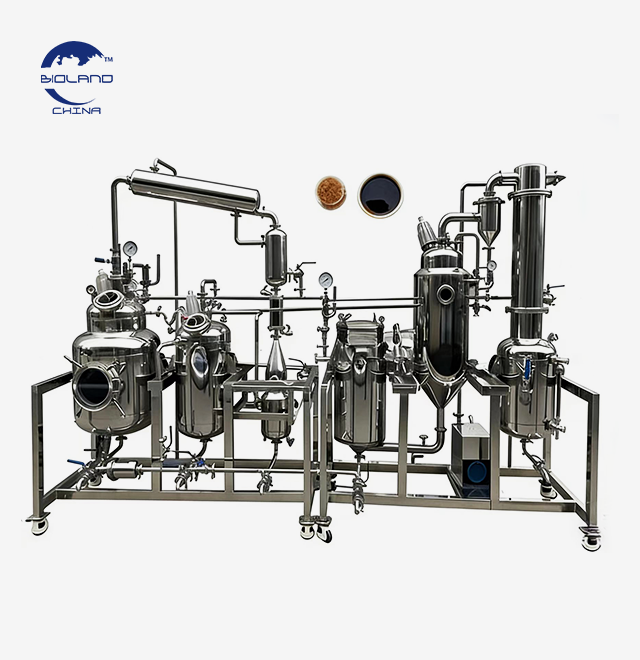
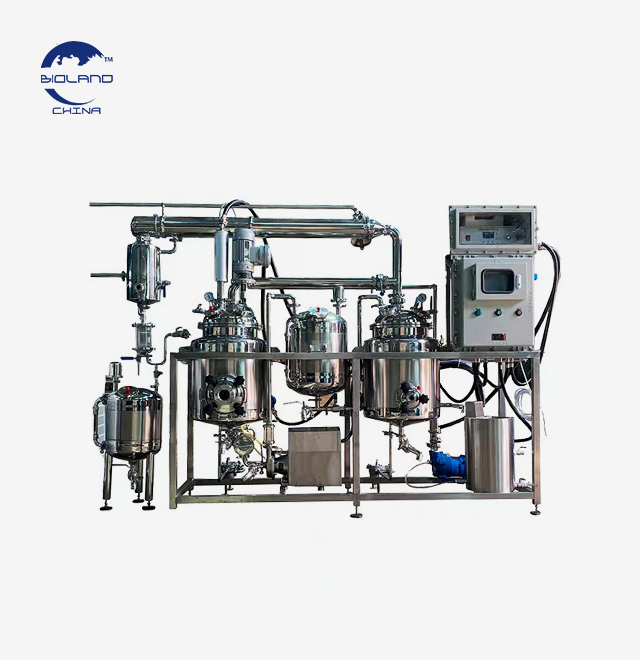
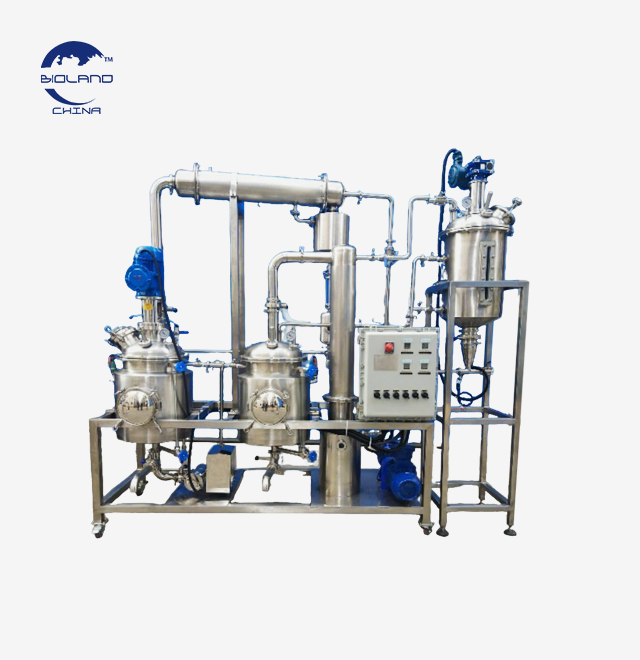
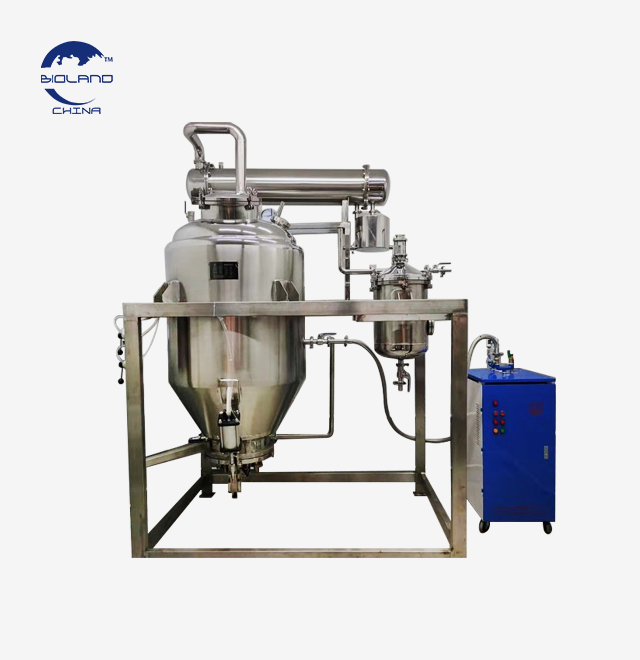
There are a few main reasons why most process failures happen: unstable temperature, poor mixing, equipment corrosion, not being able to see what's going on inside the vessel, and equipment that can't bend when the process changes. Xi'an Bioland Instrument Co., Ltd. makes a jacketed agitated reactor that can fix all five problems at once. It has a double-layer high-borosilicate glass tank, exact temperature control from -80°C to 300°C, customizable agitation, and a flexible design all built into one platform. Our jacketed agitated reactor fixes all of these problems at once, instead of treating them as separate equipment issues that need separate fixes. This is why chemical, pharmaceutical, and biotech customers are replacing more and more separate pieces of equipment with a single, properly specified vessel.
Problem 1: Inconsistent Temperature Control Ruins Reaction Selectivity
Double-Jacket Design for Stable Thermal Regulation
During a reaction, changes in temperature can affect the rate of reaction, make it less selective, and even cause unwanted side effects. This problem can be solved by a jacketed agitated reactor, which has a double-layer jacket that moves heating or cooling media around the tank wall. This keeps the batch at a tightly controlled temperature range, which is usually between -80°C and 300°C. This accuracy is most important in exothermic reactions, where a sudden rise in temperature can ruin a whole batch in minutes instead of hours. When process engineers choose a jacketed agitated reactor for exothermic chemistry, they usually look at the jacket surface area and circulation rate first. This is because these two things determine how quickly the reaction mass's extra heat can be pulled away before it speeds up even more.
Wide Operating Range Supports Multiple Process Stages
Because the jacket can be adjusted across the whole working range, a single jacketed agitated reactor can go from low-temperature crystallization to high-temperature reflux without having to switch out any other equipment. Because of this, there is no need for separate vessels for cooling and heating at different times of a multi-step synthesis. This turns what used to be several process steps into a single, temperature-controlled operation that runs all the time. This kind of jacketed agitated reactor cuts down on batch time because workers don't have to move materials back and forth between hot and cold tanks during the synthesis process.
Case Study: South American Fermentation Temperature Precision
A biotech business in South America needed better temperature control for a drug intermediate fermentation process. During the cycle, oxidation-sensitive materials needed to be kept in a clean, exactly temperature-controlled atmosphere.
Bioland Instrument customized a 50L double-layer jacketed agitated reactor with an improved agitator design. This increased the efficiency of dissolved oxygen by about 30% while maintaining the tight thermal control needed for fermentation. This shortened the overall cycle and kept the purity of the intermediates high throughout the run. The project showed how a jacketed agitated reactor of the right size can solve both a mixing problem and a temperature control problem at the same time. This is because both problems in the fermentation process were caused by the same design flaw in the agitator and jacket.
Problem 2: Poor Mixing Leads to Uneven Reactions and Lower Yield
Programmable Agitation Matched to Batch Viscosity
Some parts of a batch don't react enough while other parts respond too much, which directly lowers yield and regularity. A jacketed agitated reactor with variable-frequency agitation control lets workers adjust the mixing strength to match the viscosity and chemistry of each batch. This keeps concentration differences to a minimum from the first minute of the reaction until the very end. One of the most common specification mistakes is choosing the wrong agitator for a jacketed agitated reactor. This is because a blade profile that works well with low-viscosity solvents doesn't always work well when a batch starts to thicken during a reaction.
Spark-Free Motors for Continuous, Reliable Operation
Beyond mixing quality, motor reliability determines whether a jacketed agitated reactor can run long campaigns without interruption. Spark-free, low-noise variable-frequency motors keep agitation stable and safe across extended operating hours, reducing the mechanical downtime that otherwise interrupts batch consistency partway through a production run. Facilities running a jacketed agitated reactor across multiple shifts particularly value this reliability, since unplanned motor failure mid-batch is one of the costliest interruptions a production schedule can absorb.
Preventing Localized Hot Spots Through Uniform Circulation
When mixing isn't even, hot spots form near the jacket wall. These hot spots change the response, even if the general jacket temperature is right. A jacketed agitated reactor with well-matched agitator shape keeps the material moving smoothly past the heated or cooled surface. This means that the temperature reading from the monitor is a true reflection of what the whole lot is going through. This is especially important in a jacketed agitated reactor that is running thick or slurry-like materials, since flow naturally slows down near the vessel wall unless the geometry of the agitator makes up for it.
Problem 3: High safety risk of exothermic reaction
The 'invisible bomb' with exothermic reaction
In production scenarios such as chemical and pharmaceutical industries, exothermic reactions are one of the most risky types of reactions. When the heat released by the reaction cannot be removed in a timely manner, it may trigger a chain reaction: mild temperature fluctuations, increased by-products, decreased reaction selectivity, and decreased yield Moderate pressure rise, material splashing equipment damage Severe temperature and pressure loss of control, explosion casualties, and significant property damage
Triple safety defense line of jacketed agitated reactor
The jacket system can introduce cooling medium (frozen water, liquid nitrogen, etc.) within a few minutes, quickly taking away the excess heat released by the reaction: the jacket is circulated for 2-5 minutes for conventional exothermic reactions The emergency cooling system generates high-risk exothermic reactions within 1 minute, and the dual cooling circuit switches to ultra-high risk operation in real-time
The jacket design allows the cooling medium to directly contact the heat transfer surface with the reactants, resulting in a 30% -50% higher heat transfer efficiency than the coil.
This corrosion can't happen at all in a jacketed agitated reactor made of GG17 high-borosilicate glass. This keeps metal ions from getting into high-purity pharmaceutical intermediates and other sensitive syntheses. As the glass itself is chemically neutral, a jacketed agitated reactor can also go from one very different chemistry to another without spreading contamination from the last, more active run.
Case Study: European Precious Metal Extraction Under Corrosive Conditions
A valuable metal producer in Europe was building a new production line and needed tools that could handle the highly acidic extraction chemicals without limiting their current setup's output. Bioland Instrument provided four 200L double-layer jacketed agitated reactors and nine 50L explosion-proof rotating evaporators. These were built to ExdIIBT4 explosion-proof standards because the process was dangerous and poisonous.
With modular production, delivery times were cut by about 40%, allowing the customer to start up 15 days early. Annual capacity also went up by about 30%, and the equipment ran for more than 1,000 hours without any problems.
Sealing Systems That Protect Against Long-Term Wear
Corrosion resistance only matters if seals hold up alongside the vessel itself. A jacketed agitated reactor built with a dual PTFE and mechanical seal system prevents leakage and material ingress across repeated batches, protecting both product purity and equipment lifespan even under continuous exposure to aggressive process chemistry. Routine inspection of these seals, alongside scheduled cleaning of the jacket circuit, keeps a jacketed agitated reactor performing at its rated efficiency well beyond the warranty period.
Problem 4: Low heat transfer efficiency
The 'heat transfer bottleneck' of traditional reactor
Traditional container heat exchange has low efficiency and struggles to meet the thermal demands of large-scale reactions, resulting in prolonged reaction times and high energy consumption.In production scenarios such as chemical and pharmaceutical industries, heat transfer efficiency is often a key factor limiting reaction efficiency.
The heat exchange area is limited, the heating/cooling rate is slow, and the reaction period is prolonged. Uneven temperature distribution, localized overheating or undercooling, affects product quality. Large scale production is limited and difficult to meet the continuous production needs of industrialization
Double layered structure → doubling of heat exchange area
The jacket and the reactor body form a closed circulation space, and a heat transfer fluid (water, oil, steam, etc.) is introduced for constant temperature heating or cooling. Compared to traditional single-walled containers, the heat exchange area can be increased by 50% -100%, significantly reducing the heating and cooling time. More uniform heat transfer, avoiding local hot or cold spots, and higher reaction selectivity.
Compared to traditional reactors, the improvement in heat transfer efficiency of jacketed agitated reactordirectly leads to a 25% reduction in energy consumption: reduced steam consumption: more precise heating, avoiding overheating, reduced power consumption: improved cooling system efficiency, shortened refrigeration time, shortened production cycle: reduced reaction time, increased production capacity
Problem 5: Rigid Equipment Can't Adapt as Processes Change
Modular Flange Configuration for Multi-Purpose Use
As the needs of the process change, equipment that can't adapt becomes a hindrance. A jacketed agitated reactor with standard flange connections, like a five-neck lid configuration, can take condensers, dropping funnels, temperature probes, and vacuum lines as needed. This means that one vessel can be used for distillation, extraction, catalytic reaction, and crystallization without having to buy separate tools for each job. Because it is modular, a jacketed agitated reactor bought for one project can be changed to use a completely different synthesis route later on, protecting the initial investment as the needs of the process change.
Full Customization for Non-Standard Requirements
A Bioland Instrument jacketed agitated reactor can be changed in size, form, material, and interior structure to fit the needs of an experiment or production. It can also be used with flexible tools. Fully explosion-proof systems, PLC-controlled automation, integrated temperature-control units, lifting and rotating designs, filtration and crystallization modules, tail-gas absorption devices, and fractionating columns are just some of the configurations that are available. This means that customers rarely have to choose between standard availability and process-specific performance. Our engineering team builds the jacketed agitated reactor around the goal chemistry, so the process doesn't have to change to set equipment. This is true whether the customer wants a single reactor for study purposes or a whole production line.
Cross-Industry Flexibility Protects Long-Term Equipment Value
Because a jacketed agitated reactor can be used for chemical synthesis, making pharmaceutical intermediates, food processing, oil and metalworking, and research into valuable metals and new materials, a company can keep the same equipment as its product lines grow. Because it can be used in different industries, a jacketed agitated reactor is seen as a long-term investment rather than a one-time purchase.
Conclusion
Most chemical processes fail because of five issues: unstable temperatures, poor mixing, corrosion, limited visibility, and rigid design. All five of these issues can be easily fixed with a properly specifiedjacketed agitated reactor. The fermentation and precious metal case studies show that using the right jacketed agitated reactor configuration can improve purity, uptime, and efficiency. For every jacketed agitated reactor Bioland Instrument sells, they back it up with certification, OEM/ODM customization, and dedicated support.
FAQ
1. What temperature range does a jacketed agitated reactor support?
Most configurations operate from -80°C to 300°C, depending on jacket design and paired temperature-control equipment.
2. Can the reactor handle corrosive chemicals?
Yes, GG17 high-borosilicate glass construction resists strong acids, alkalis, and organic solvents without introducing metal-ion contamination.
3. What sizes are available for a jacketed agitated reactor?
Standard and custom volumes are available, including explosion-proof configurations up to 200L for hazardous or corrosive production lines.
4. Can the equipment be customized for explosion-proof operation?
Yes, Bioland Instrument builds jacketed agitated reactor systems to standards such as ExdIIBT4 for demanding industrial environments.
5. How long does a customized order take to deliver?
Customized orders typically require about 30 business days, while non-customized units are generally ready within 5-7 days.
Solve Your Process Problems with Bioland Instrument
If temperature instability, poor mixing, corrosion, or inflexible equipment are limiting your production, a properly configured jacketed agitated reactor can resolve all four at once. Xi'an Bioland Instrument Co., Ltd. brings more than 15 years of engineering experience, CE and ISO certification, and an in-house R&D team to every reactor we build, with full OEM/ODM customization covering explosion-proof systems, PLC automation, integrated temperature control, and modular process configurations tailored to your chemistry.
Our track record includes customized reactor systems supporting nitric acid production, glycerin acidification lines, overseas pharmaceutical manufacturing, and chemical intermediate production. Every order is backed by weekly production tracking with photos or video, pre-shipment inspection, an optional Factory Acceptance Test, sea, rail, and air freight support, and a one-year warranty with lifetime maintenance. If persistent process problems are costing you yield, purity, or uptime, our technical team is ready to review your requirements. Contact us atinfo@biolandequip.com to discuss your jacketed agitated reactor project today.
References
1. Chemical Engineering Research and Design, "Temperature Control Strategies in Jacketed Batch Reactor Systems."
2. Industrial & Engineering Chemistry Research, "Agitator Design and Mixing Performance in Stirred Tank Reactors."
3. Organic Process Research & Development, "Material Selection and Corrosion Resistance in Chemical Process Equipment."
4. Chemical Engineering Science, "Heat Transfer and Reaction Selectivity in Jacketed Vessel Design."
5. Journal of Chemical Technology and Biotechnology, "Process Visibility and Reproducibility in Glass Reactor Systems."
6. AIChE Journal, "Scale-Up Considerations for Agitated Reactor Systems in Industrial Applications."
The reactor is beautifully mirror-polished and fully complies with GMP requirements for the pharmaceutical industry. The performance is excellent! Overall, we are very satisfied! We also provided with some feedback on our process improvements, which we hope will be helpful.
2024-04-09
Laboratory
Excellent and professional service. Always reply our questions very fast. All reactors and chiller we received are good too.
2024-02-15
Research Institute
Quality is beyond our expectation actually. After we got the extraction equipment and started using it, the performance was beyond our expectation. Very easy to use and very efficient to run. Service always respond us very quickly. Was also very helpful to help us. Thanks Bioland team. Very happy to work with you.
2023-11-20
Biotech Company
We are happy about the new purchase as always. Equipment and services are both good.
2023-08-05
Instrument Lab
This is the second order with Bioland instrument and everything is good as the first dateText.
2023-05-12
Global Trading Partner
Bioland instrument team is very helpful and professional. The sales helped us select the right equipment for our application, and their logistics people handled the transportation and customs declaration for our shipment. All that saved us a lot of work.