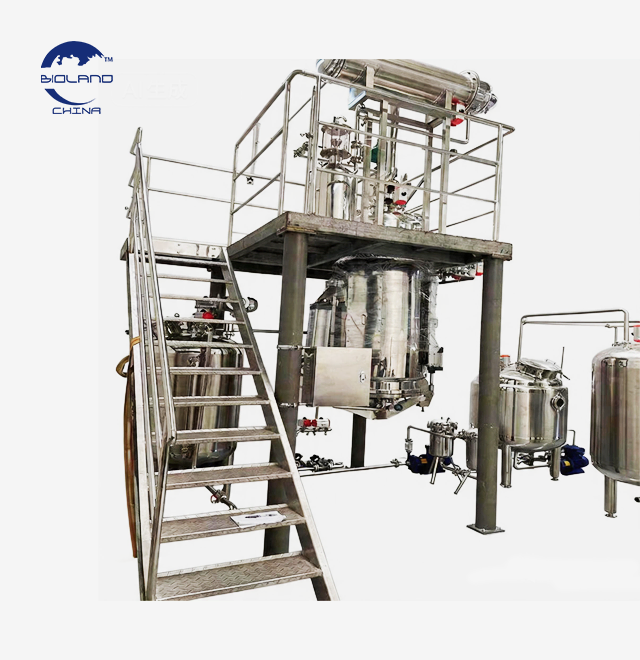
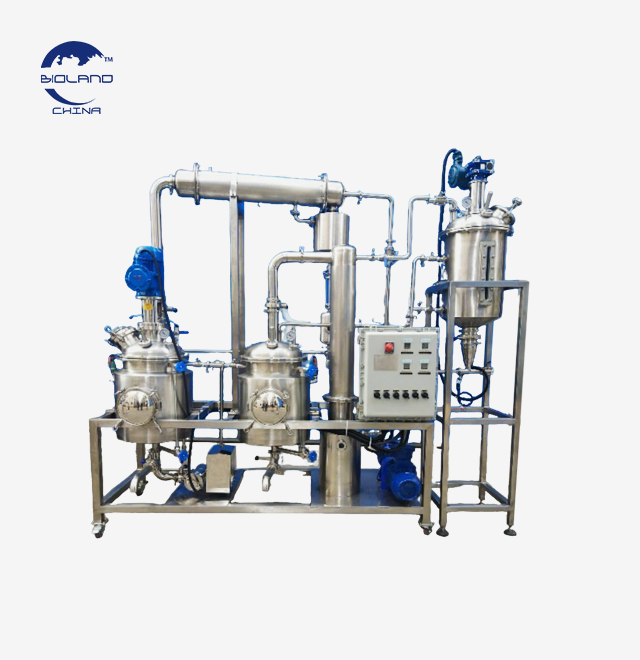
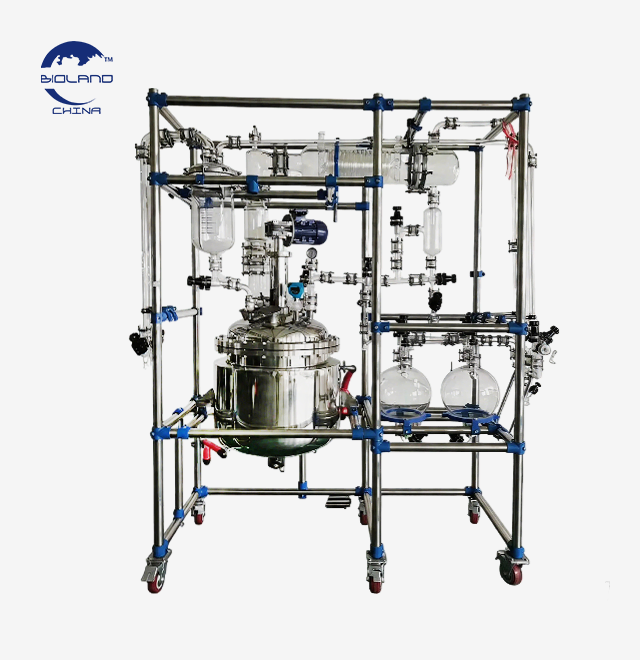
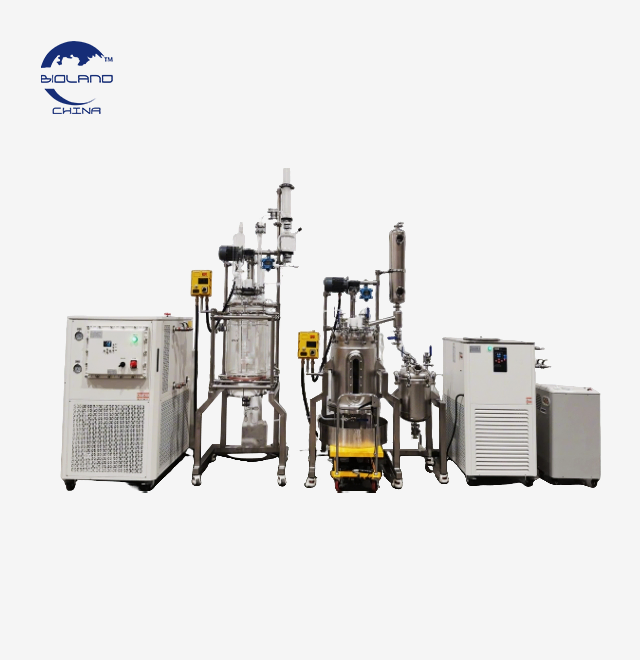
Glass Filter Reactor System Applications in Crystallization
Jul 22, 2026
Crystallization is the most delicate steps in making fine chemicals and medicines. Running them across different pieces of equipment almost always leads to material loss, uneven moisture levels, and the risk of cross-contamination. A glass nutsche filter solves this problem by putting reaction, mixing ,crystallization, filtration all in one clear, sealed vessel. This way, workers can see every step of the process without ever having to expose the product to air. The glass nutsche filter from Bioland Instrument combines a high-performance PTFE filtration plate with jacket-controlled temperature and built-in vacuum drying. This creates a single system for pharmaceutical, chemical, and fine chemical manufacturers that consistently delivers cleaner crystals, tighter moisture specifications, and fewer processing steps than traditional multi-equipment workflows.
Understanding Crystallization Process Control and Filtration Performance
The quality of the crystals is chosen long before the filtering starts. This is why a glass nutsche filter is so well-known among process scientists who need to have precise control over crystal growth and nucleation. The fully clear vessel lets operators see how the solubility changes as the jacket temperature drops. This lets them change the cooling rate before impurities get stuck in a growing crystal lattice. Standard opaque filtration equipment doesn't give the same kind of feedback, which is why more and more companies that make high-purity active pharmaceutical ingredients ask for a glass nutsche filter for batches that need to crystallize.
How a Glass Nutsche Filter Controls Crystal Formation and Purity
In a glass nutsche filter, crystallization happens when the jacketed tank is cooled to lower the solubility of the target chemical until it precipitates out of solution. The crystal habit is directly related to the rate of cooling, the speed of motion, and the end temperature. When these factors are controlled inside a single sealed tank, the crystal slurry doesn't pick up impurities like it does when it is moved to a different filter unit. Pharmaceutical companies that need to meet strict purity standards have found that controlling crystallization inside the jar makes the crystal size distribution more uniform from batch to batch.
PTFE Filtration Media and Large-Diameter Filter Plate Design
As standard, every Bioland glass nutsche filter comes with a large-diameter PTFE filtering plate. Stainless steel or titanium filter elements are also available, along with different types of filter cloth and membranes that can be chosen based on particle size and cake permeability. This large filtration surface area separates solids and liquids much faster than smaller traditional filter units. This cuts down on the time crystals are exposed to residual mother liquor. It is directly protected by faster and better separation the gains in purity made during the crystallization step.
Jacket-Controlled Cooling Rates for Uniform Crystal Growth
Carefully controlling cooling is better than sudden, uncontrolled temperature drops for even crystal growth. The double-jacketed design of a glass nutsche filter lets operators set precise cooling rates, usually as little as one to two degrees Celsius per hour, to help crystals form evenly and keep impurities from getting mixed in. With this adjustable temperature control, crystallization goes from being a step that depends on the operator to being a step that can be repeated and is written down. This way of making sure consistency from batch to batch is very important in regulated pharmaceutical manufacturing.
Real-Time Visual Monitoring Through Transparent Glass
A glass nutsche filter's transparency isn't just for looks; it's also very useful because it lets users see directly how the reaction ends, crystals form, cakes get thicker, and filtrate stays clear throughout the whole process. This real-time visibility finds process deviations early, before they affect the whole batch. It also gives quality teams documented visual evidence to help characterize the process during scale-up and regulatory review. This level of process insight can't be achieved with opaque metal filtration equipment.
Optimizing Solid-Liquid Separation in Chemical Processing Applications
To separate solids and liquids efficiently, you need to get rid of any steps that aren't needed. A glass nutsche filter does this by doing reaction, crystallization, and filtration all in one sealed vessel, instead of moving the material between different machines. Compared to traditional multi-equipment separation processes, this combination directly cuts down on processing time, yield loss, and cross-contamination. This combined method leads to measured improvements in production, as shown by real client projects.
By doing reaction, crystallization, and filtration all in the same glass nutsche filter, the same batch stays in a sealed, neutral atmosphere from beginning to end. This is especially helpful for intermediates that are sensitive to oxidation and chiral chemicals that can become racemized when handled. To move from one stage of the process to the next, only the temperature of the jacket or the valves needs to be changed. No material needs to be physically moved. For manufacturers who do the same thing over and over, this stability in process is just as useful as any single-step speed gain.
Case Study: European Chiral API Intermediate Crystallization and Purification
A European biopharmaceutical company working on a chiral API intermediate had a lot of problems, including reaction conversion that wasn't complete, low crystallization purity and yield, acidic and basic conditions that damaged standard equipment, and the risk of contamination from moving between different process units all the time.
Bioland Instrument made a special 100Lglass nutsche filterthat could do reaction, crystallization, and filtration all at the same time. The clear container kept the reaction safe with nitrogen at 0 to 5 degrees Celsius, and workers could see the color change happen in real time to make sure the conversion was complete.
During crystallization, the jacket was cooled to -20 degrees Celsius at a steady rate of 1-2 degrees per hour. This made uniform crystals that didn't have any impurities stuck in them. After switching directly to the PTFE filtration plate, the solids and liquids were separated without any material being moved.
The result was crystal purity above 99.5% and a 15% increase in yield. The mother liquor was recycled directly through the same glass nutsche filter, which cut down on waste and the chance of cross-contamination throughout the whole process.
Case Study: Polish Precious Metals Catalyst Solid-Phase Synthesis and Recovery
A Polish chemistry company that was working on palladium and platinum catalysts had problems with low precious metal recovery, solvents that damaged normal filtration equipment, high-temperature solid-phase reactions that turned off the catalyst, and cleaning the equipment between production runs, which cost a lot of money and took a lot of time.
Bioland Instrument sent a custom 50L glass nutsche filter that was made for a solid-phase reaction and recovery loop that was closed. At 150 degrees Celsius, the glass tank could handle short periods of high heat without deactivating the catalyst, which is not the case with many metal options.
Once the solid-phase reaction was over, the built-in PTFE filtration plate separated the solid catalyst directly. More than 90% of the precious metal was recovered from the mother liquor, which significantly reduced the client's cost per production batch.
A quick-release filter design also cut down on the time needed for cleaning and changing over between runs. This kept leftovers from spreading to the next batch that was processed in the same vessel, which would have made the first batch less pure.
Explosion-Proof Configurations for High-Pressure Separation Work
Solid-phase synthesis under pressure demands genuine industrial safety validation, and Bioland's explosion-proof glass nutsche filter uses a high-strength pressure-bearing structure with a precision explosion-proof control system validated across 20L, 30L, 50L, and 100L configurations. This safety architecture lets manufacturers run high-pressure separation work with confidence rather than working around limitations that many standard filtration units impose in demanding industrial environments.
Improving Efficiency Through Integrated Reactor Systems
Drying is often the slowest and most poorly controlled step in solid production, yet aglass nutsche filter turns it into a natural extension of filtration rather than a separate bottleneck. Applying vacuum and jacket heat directly to the filter cake inside the same vessel removes the need to transfer damp product to an external dryer, cutting both processing time and product exposure to open air. Manufacturers targeting tight residual moisture specifications increasingly design drying directly around a glass nutsche filter rather than treating it as an afterthought.
Vacuum Drying Directly Inside the Glass Nutsche Filter
Once filtration completes, applying vacuum through the same filter plate on a glass nutsche filter draws residual solvent out of the filter cake while jacket heating gently raises temperature to accelerate evaporation, all without moving the product to a separate drying unit. This in-vessel drying approach protects moisture-sensitive or oxidation-sensitive powders from the atmospheric exposure that occurs during a manual transfer step. Pharmaceutical manufacturers handling potent or hygroscopic compounds particularly value this closed, contained drying process.
Reducing Moisture Content Without a Separate Dryer
Combining filtration and drying inside one glass nutsche filter eliminates the intermediate handling that typically occurs between a filter press and a standalone tray or vacuum dryer, directly reducing the labor, time, and contamination risk associated with that transfer. Batches move from wet cake to dry, free-flowing powder without ever leaving the sealed vessel, which shortens overall cycle time considerably for facilities running frequent production batches. This efficiency gain compounds meaningfully across a full year of production scheduling.
Wide Temperature Range for Combined Filtration and Drying Cycles
A double-jacketed glass nutsche filter typically operates across a wide range, commonly minus twenty to two hundred degrees Celsius, giving one vessel the thermal flexibility to handle low-temperature crystallization and higher-temperature drying within the same production cycle. This broad operating window means manufacturers rarely need a separate piece of equipment purely for thermal drying, since the same jacket that controlled crystallization also drives moisture removal. Facilities consolidating equipment footprint find this dual-purpose thermal design particularly valuable.
Maintenance and Cleaning Between Drying Cycles
A quick-release PTFE filtration plate on a glass nutsche filtersimplifies cake discharge and cleaning between drying cycles, reducing changeover time and preventing residue carryover that could otherwise compromise the next batch. Routine inspection of gaskets, filter media, and seals keeps the vessel operating reliably across repeated crystallization-filtration-drying cycles without unplanned downtime. Facilities running high batch turnover consistently report that this straightforward maintenance routine keeps operating costs predictable over the equipment's service life.
Exploring Industrial Uses in Pharmaceutical and Fine Chemical Production
Industrial applications for a glass nutsche filter span far beyond simple laboratory crystallization, reaching into peptide synthesis, antibiotic purification, and precious metals recovery wherever solid-liquid separation and drying both matter to final product quality. Bioland Instrument works directly with process engineering teams across these sectors to specify the right configuration rather than offering a generic catalog unit. Fifteen years of manufacturing experience across pharmaceutical, chemical, and precious metals production inform every recommendation the technical team provides.
Peptide Synthesis, Antibiotic Purification, and API Manufacturing
Solid-phase peptide synthesis, thymosin peptide preparation, antimicrobial peptide screening, and antibiotic purification all depend on repeatable, high-purity crystallization and filtration, and a glass nutsche filter is purpose-built for exactly this demanding work. In antibiotic production specifically, this equipment removes impurities and isolates target compounds during the crystallization step, a role that directly determines whether a batch meets pharmacopeial purity standards. Fine chemical producers making dyes, fragrances, and specialty compounds with strict crystal-shape requirements rely on the same precise process control.
OEM/ODM Customization for Specialized Filtration-Drying Needs
Because crystallization and drying requirements vary enormously across industries, Bioland offers extensive OEM and ODM customization for its glass nutsche filter line, adjusting vessel size, shape, and internal structure to match unusual experimental or production needs. Clients can specify a fully explosion-proof system with electric lifting, PLC-controlled automation, integrated temperature control, ultrasonic-assisted crystallization, or a combined distillation-filtration configuration, all engineered to order rather than adapted from a generic template.
Certification, Lead Time, and Cost Considerations
Budget and timeline planning benefit from clear expectations up front, and Bioland keeps its glass nutsche filter pricing competitive while maintaining CE and ISO certification across every unit for straightforward regulatory acceptance. Customized orders typically ship within thirty business days, while standard configurations are generally ready in five to seven days, with sea, rail, and air freight options available. All units comply with GMP and FDA standards, removing uncertainty from the procurement process for pharmaceutical buyers.
Conclusion
A glass nutsche filter unites crystallization, filtration, and drying inside one transparent, sealed vessel, removing the transfer steps and contamination exposure that conventional multi-equipment workflows cannot avoid. Bioland Instrument's real client results, including a fifteen percent yield gain in chiral API purification and over ninety percent precious metal recovery in catalyst synthesis, show how integrated crystallization and drying deliver measurable value across pharmaceutical and fine chemical production.
FAQ
Q1: What makes a glass nutsche filter useful for both crystallization and drying?
It combines a jacketed vessel for temperature-controlled crystallization with an integrated PTFE filtration plate and vacuum drying, so product never leaves the sealed unit between stages.
Q2: Can a glass nutsche filter replace a separate drying unit?
Yes. Vacuum applied through the filter plate along with jacket heating removes residual solvent directly inside the vessel, eliminating the need for a standalone dryer in most applications.
Q3: What temperature range does Bioland's glass nutsche filter support?
Typical units operate from minus twenty to two hundred degrees Celsius, covering low-temperature crystallization through higher-temperature drying within one system.
Q4: Is a glass nutsche filter suitable for pharmaceutical-grade crystallization?
Yes. Its transparent design, precise jacket cooling, and PTFE filtration make it well suited for chiral intermediates, antibiotics, and other high-purity API crystallization work.
Q5: Can Bioland customize a glass nutsche filter for specific industrial processes?
Yes. Bioland offers OEM/ODM customization covering vessel size, explosion-proof configuration, automation level, and combined filtration-drying setups built to order.
Talk to Bioland Instrument About Your Crystallization and Drying Process
If moisture inconsistency, transfer losses, or contamination risk are limiting your crystallization and drying results, a glass nutsche filter from Bioland Instrument can consolidate your entire workflow into one dependable system. With more than fifteen years of manufacturing experience, CE and ISO certification, and proven results across European pharmaceutical and chemical clients, our engineers will guide you from initial consultation through Factory Acceptance Test, keeping you informed with weekly photo and video progress updates and backing every unit with a one-year warranty and lifetime maintenance support. Whether you need a standard laboratory configuration or a fully customized, explosion-proof production system built to your drawings, Bioland Instrument is ready to help. Contact our technical team today at info@biolandequip.com to discuss your process requirements and request a customized quotation.
References
1. Mullin, J. W. Crystallization. Butterworth-Heinemann.
2. Perry, R. H., and Green, D. W. Perry's Chemical Engineers' Handbook. McGraw-Hill Professional.
3. International Council for Harmonisation. ICH Q7: Good Manufacturing Practice Guide for Active Pharmaceutical Ingredients.
4. Mersmann, A. Crystallization Technology Handbook. CRC Press.
5. Chan, W. C., and White, P. D. Fmoc Solid Phase Peptide Synthesis: A Practical Approach. Oxford University Press.
6. Tsotsas, E., and Mujumdar, A. S. Modern Drying Technology. Wiley-VCH.
The reactor is beautifully mirror-polished and fully complies with GMP requirements for the pharmaceutical industry. The performance is excellent! Overall, we are very satisfied! We also provided with some feedback on our process improvements, which we hope will be helpful.
2024-04-09
Laboratory
Excellent and professional service. Always reply our questions very fast. All reactors and chiller we received are good too.
2024-02-15
Research Institute
Quality is beyond our expectation actually. After we got the extraction equipment and started using it, the performance was beyond our expectation. Very easy to use and very efficient to run. Service always respond us very quickly. Was also very helpful to help us. Thanks Bioland team. Very happy to work with you.
2023-11-20
Biotech Company
We are happy about the new purchase as always. Equipment and services are both good.
2023-08-05
Instrument Lab
This is the second order with Bioland instrument and everything is good as the first dateText.
2023-05-12
Global Trading Partner
Bioland instrument team is very helpful and professional. The sales helped us select the right equipment for our application, and their logistics people handled the transportation and customs declaration for our shipment. All that saved us a lot of work.