Glass Filter Reactor vs Standard Reactor: Which One Is Better Option?
Jul 21, 2026
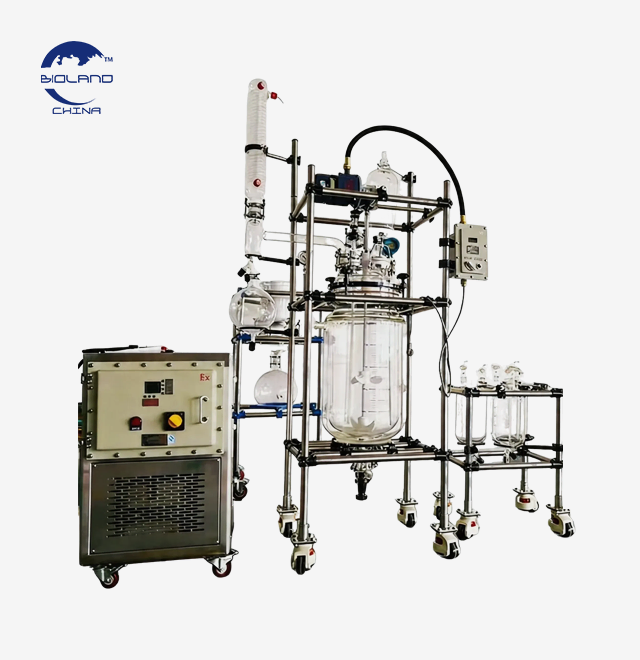
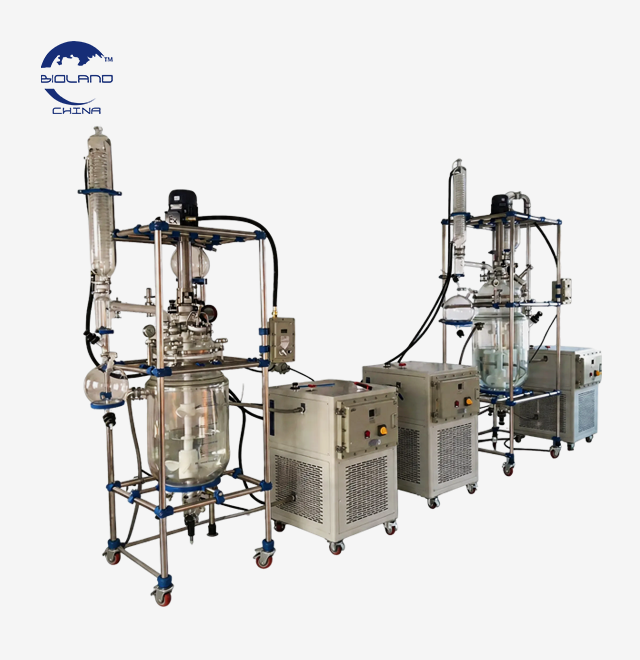
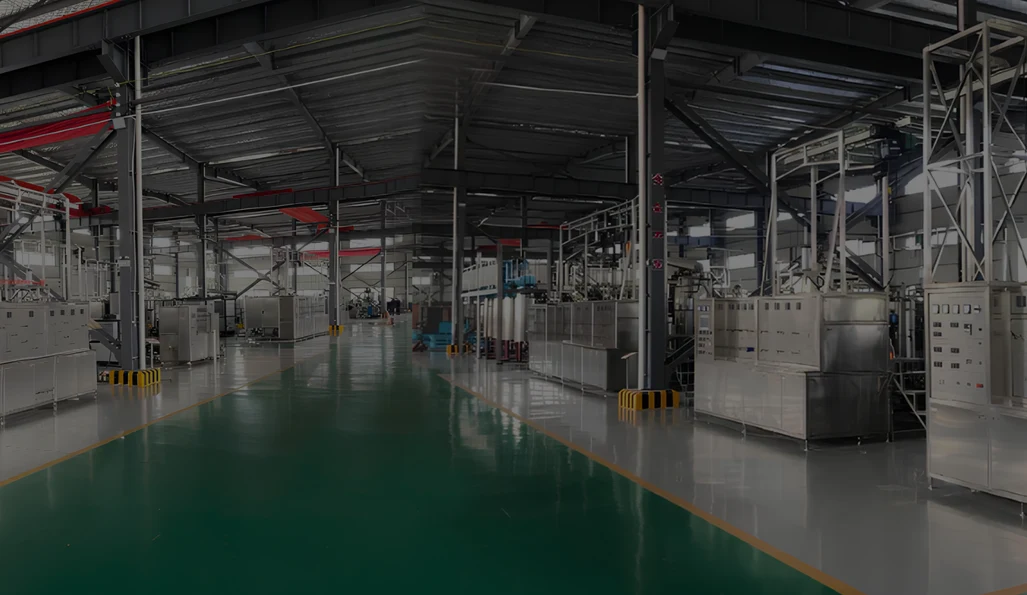
A common problem that process engineers face when they are working on solid-phase synthesis, crystallization, or peptide purification is that a normal reactor can only respond, not filter. Also, each move to a different filtration step increases the risk of contamination, wastes time, and results in lost products. This problem can be solved by a glass filter reactor, which combines reaction, crystallization, and filtration in a single clear, chemically inert vessel. Bioland Instrument's glass filter reactor combines a high-performance PTFE filtration assembly with explosion-proof pressure ratings for 20L to 100L capacities. This provides manufacturers of drugs, chemicals, and precious metals with a single platform that replaces multiple standard pieces of equipment and lowers the risk of cross-contamination at all transfer points.
Key Differences in Design Structure and Filtration Performance
A glass filter reactor is very different from a regular reactor in how it is built. A regular reactor is only made for reactions, while a filter reactor has a solid filtration core built right into the body of the tank. Because of this one design difference, there is no longer a need for a whole downstream filter step and the material loss and pollution risk that step usually brings. Moving solid-phase synthesis, catalyst recovery, or crystallization work into a glass filter reactor always leads to fewer processing steps and smoother changes between reaction and separation stages, according to the manufacturers.
PTFE Filtration Assembly and Sintered Core Configuration
Every Bioland glass filter reactor comes with a basic PTFE sintered filtration core. For more complex chemicals, stainless steel or titanium cores are also available. You can also choose from different filter cloth and membrane choices based on particle size and cake structure. This built-in filtering hardware is what makes a filter reactor different from a regular jacketed tank, which needs to have all of its filtration hardware added from outside. When engineers design equipment for multiple solid-liquid separation cycles, they find that this combined core gets rid of a whole group of product losses that are caused by transfer.
Integrated Reaction-Filtration-Crystallization Structure vs Standard Reactors
A normal reactor only does the reaction step. To move the material to a crystallizer and then to a filter press or centrifuge, workers have to make extra trips, which adds time, exposure, and yield loss. In aglass filter reactor, all three stages are squished into one sealed vessel: reaction in a controlled atmosphere, temperature-driven crystallization through the jacket, and direct filtration inside the vessel once crystals form. This structural consolidation is the main reason why pharmaceutical and specialty chemical companies are choosing filter reactors over standard equipment for high-value synthesis more and more.
Large-Diameter Filtration Design and High-Speed Solid-Liquid Separation
The size of the filter media greatly affects how fast it filters, and Bioland's glass filter reactor has a large-diameter filtration design that greatly boosts throughput compared to smaller filter units attached to a standard reactor. Overall batch cycle time is cut down when solids and liquids are separated faster. This is especially helpful for multi-step peptide synthesis or catalyst recovery work, where filtration delays can stop the whole production schedule. When this throughput advantage is applied to dozens of production batches every year, it turns into a real cost savings.
Explosion-Proof Pressure Rating for High-Pressure Solid-Phase Synthesis
For solid-phase synthesis under pressure, you need equipment that meets real industrial safety standards. Bioland's explosion-proof glass filter reactor has a high-strength structure that can handle pressure and a precise explosion-proof control system that has been tested in 20L, 30L, 50L, and 100L sizes. Instead of working around the pressure limits that many standard reactors put in place, this safety design lets makers run high-pressure synthesis with trust. Facilities that do lab work, pilot tests, and pharmaceutical organic synthesis can all use this verified pressure rating.
Comparing Process Efficiency and Application Flexibility
When you combine reaction, crystallization, and filtration into one vessel, you don't have to deal with the extra work, loss of yield, and risk of cross-contamination that come with using multiple pieces of equipment. This makes the practical benefit of a glass filter reactor clear. For solid-phase uses, this level of efficiency can't be matched by a normal reactor with different filtering equipment. Real projects for clients show how this level of speed leads to measurable results in production.
One-Vessel Reaction, Crystallization, and Filtration Workflow
Cooling the jacketed vessel in a glass filter reactor lowers the solubility of the dissolved product until it crystallizes directly in the reaction medium. Filtration then continues in the same vessel without any material transfer. This closed process keeps oxidation-sensitive stages from coming into contact with air and gets rid of the physical steps that can cause contamination and product loss in a normal reactor setup. Manufacturers who make batches over and over again value this stability just as much as the changes made at each step.
Case Study: European Chiral API Intermediate Crystallization and Purification
A European biopharmaceutical company was working on a chiral API intermediate. They had to deal with problems like reaction conversion that wasn't complete, crystallization purity and yield that weren't always consistent, standard equipment being damaged by acid and base synthesis conditions, and the risk of contamination from moving materials around a lot during the process.
Bioland Instrument made a special 100L glass filter reactor that could do reaction, crystallization, and filtering all at the same time. The clear container let workers check for full conversion by seeing the reaction color change in real time while it was protected by nitrogen at 0 to 5 degrees Celsius.
During crystallization, the jacket was cooled to -20 degrees Celsius at a steady rate of 1-2 degrees per hour. This made uniform crystals that didn't have any impurities stuck in them. By going straight to the PTFE filtration assembly, the product was separated without being moved.
The result was crystal clarity above 99.5% and a 15% increase in output. The mother liquor was returned straight from the same glass filter reactor, which cut down on waste and the risk of cross-contamination throughout the whole process.
Case Study: Polish Precious Metals Catalyst Solid-Phase Synthesis and Recovery
A Polish chemistry company that was working on palladium and platinum catalysts had a hard time because they couldn't get enough of the valuable metals back, the solvents they used were too harsh and broke down standard equipment, high-temperature solid-phase reactions would make the catalysts inactive, and cleaning the filters between batches took too long and cost too much.
Bioland Instrument sent a handmade 50L glass filter reactor that was made for a solid-phase reaction and recovery loop that was closed. At 150 degrees Celsius, the glass tank could handle short periods of high heat without deactivating the catalyst, which is not the case with many metal options.
Once the solid-phase reaction was over, the built-in PTFE filtration assembly separated the solid catalyst directly. More than 90% of the valuable metal was recovered from the mother liquor, which significantly reduced the client's production cost per batch.
A quick-release filtration design also cut down on the time needed for cleaning and changing over between production runs. This kept leftovers from carrying over to the next batch made in the same glass filter reactor, which would have harmed its purity.
Peptide Synthesis and Solid-Phase Applications
Solid-phase peptide synthesis, thymosin peptide preparation, antimicrobial peptide screening, and peptide carrier material synthesis all need high-purity solid-liquid separation that can be done over and over again. A glass filter reactor is designed to do just this. Glass filter crystallization vessels are the best choice for large-scale peptide production because they are chemically stable, have high mechanical strength, and react quickly. This is because standard reactors would need awkward and risky external filtration steps.
Evaluating Material Compatibility and Reactor Durability
Long-term durability under aggressive chemistry is where material choice matters most, and a glass filter reactor built from high borosilicate glass consistently outperforms standard equipment exposed to the same corrosive conditions over repeated production cycles. Chemical stability and mechanical strength allow the vessel to handle demanding reaction chemistry without the gradual degradation that stainless steel filtration equipment experiences. Facilities running acid- or solvent-intensive processes gain a measurable service-life advantage from this material selection.
High Borosilicate Glass Chemical Stability and Wide Temperature Range
Bioland's glass filter reactor is built from high borosilicate glass rated across a wide operating range from minus twenty to two hundred degrees Celsius, resisting high temperatures and chemical corrosion without degrading over time. This wide thermal window covers most solid-phase reaction, crystallization, and filtration chemistry a manufacturer will encounter, avoiding the need for multiple specialized vessels. Standard metal reactors can match this range in some configurations, but rarely offer the same chemical inertness across acidic and caustic conditions simultaneously.
PTFE, Stainless Steel, and Titanium Filter Media Options
Because filtration requirements vary enormously by application, a glass filter reactor from Bioland accepts standard PTFE sintered cores as well as optional stainless steel or titanium filter elements, paired with a range of filter cloth and membrane choices suited to specific particle sizes. This flexibility lets one vessel adapt across pharmaceutical intermediates, precious metals recovery, and fine chemical crystallization without requiring a completely different piece of equipment for each application. Standard reactors offer no comparable built-in flexibility for filtration media selection.
Programmable Stirring and Temperature Control for Repeatable Results
Consistent crystal morphology depends on precisely controlled cooling rates and uniform mixing, and a properly engineered glass filter reactor pairs programmable stirring with jacket temperature control to reproduce identical crystallization conditions batch after batch. This repeatability matters enormously for regulated pharmaceutical production, where batch-to-batch consistency is a core quality requirement rather than a nice-to-have feature. Standard reactors without integrated filtration cannot maintain the same tight process control once material moves to external separation equipment.
Maintenance, Cleaning, and Long-Term Operating Costs
A quick-release filtration assembly on a glass filter reactor simplifies cleaning and media replacement between batches, directly reducing changeover time and preventing residue carryover between different products. This modular design lowers long-term maintenance costs compared to standard filtration setups that require disassembling separate equipment for cleaning and inspection. Facilities running high batch turnover consistently find this maintenance advantage compounds into significant annual savings.
Choosing the Right Reactor Solution for Laboratory and Industrial Needs
Selecting between a glass filter reactorand a standard reactor ultimately comes down to whether solid-liquid separation is part of the core process, and Bioland Instrument guides clients through this decision using real process data rather than a generic product catalog. A glass filter reactor makes sense wherever crystallization, catalyst recovery, or solid-phase synthesis requires integrated filtration, while simpler liquid-phase reactions may still suit a standard vessel. Fifteen years of manufacturing experience across pharmaceutical, chemical, and precious metals sectors inform every recommendation the technical team provides.
Matching Reactor Configuration to Process Scale and Chemistry
Facilities scaling from bench trials toward pilot or full production need a glass filter reactor sized correctly for batch volume, whether that means a compact 20L laboratory unit or a 100L production-scale vessel. Bioland's engineering team reviews reaction chemistry, target crystal characteristics, and filtration requirements before recommending a specific configuration, preventing the costly mistake of under-specifying filtration capacity early in a project timeline.
OEM/ODM Customization for Non-Standard Filtration Requirements
Because filtration and crystallization needs rarely fit one standard template, Bioland offers extensive OEM and ODM customization for its glass filter reactor line, adjusting vessel size, shape, material, and internal structure to match unusual experimental or production requirements. Clients can specify a fully explosion-proof system with electric lifting, PLC-controlled automation, integrated temperature control, crystallization, ultrasonic-assisted crystallization, or a combined distillation-filtration configuration, all engineered to order.
Certification, Lead Time, and Cost Considerations
Budget and timeline planning benefit from clear expectations up front, and Bioland keeps its glass filter reactor pricing competitive while maintaining CE and ISO certification across every unit for straightforward regulatory acceptance. Customized orders typically ship within thirty business days, while standard configurations are generally ready in five to seven days, with sea, rail, and air freight options available. All units comply with GMP and FDA standards, removing uncertainty from the procurement process for pharmaceutical buyers.
Conclusion
A glass filter reactorconsolidates reaction, crystallization, and filtration into one transparent, chemically inert vessel, cutting the transfer steps, contamination risk, and yield loss that standard equipment cannot avoid. Bioland Instrument's real client results, including a fifteen percent yield gain in chiral API purification and over ninety percent precious metal recovery in catalyst synthesis, show how integrated filtration delivers measurable production value across pharmaceutical and specialty chemical manufacturing.
FAQ
Q1: What makes a glass filter reactor different from a standard reactor?
A glass filter reactor integrates a PTFE filtration core directly into the vessel, allowing reaction, crystallization, and filtration in one sealed unit, while a standard reactor requires separate downstream filtration equipment.
Q2: What filter media options are available for Bioland's glass filter reactor?
Standard units include a PTFE sintered core, with optional stainless steel or titanium elements and a range of filter cloth or membrane choices matched to particle size.
Q3: What temperature range does the glass filter reactor support?
Bioland's glass filter reactor operates from minus twenty to two hundred degrees Celsius, covering most solid-phase reaction, crystallization, and filtration processes.
Q4: Is a glass filter reactor suitable for peptide synthesis?
Yes. Its chemical stability, mechanical strength, and integrated filtration make it well suited for solid-phase peptide synthesis, thymosin peptide preparation, and antimicrobial peptide screening.
Q5: Can Bioland customize a glass filter reactor for specific industrial processes?
Yes. Bioland offers OEM/ODM customization covering vessel size, explosion-proof configuration, automation level, and combined filtration-distillation setups built to order.
Ready to Upgrade Your Filtration and Crystallization Process?
If cross-contamination, material transfer losses, or filtration bottlenecks are slowing down your solid-phase synthesis, a glass filter reactor from Bioland Instrument can consolidate your entire reaction-to-filtration workflow into one dependable vessel. With more than fifteen years of manufacturing experience, CE and ISO certification, and a technical team that has already solved chiral API purification and precious metals recovery challenges for clients across Europe, Bioland Instrument stands ready to engineer the exact glass filter reactor your process demands.
Whether you need a standard 20L laboratory configuration or a fully customized, explosion-proof 100L production system built to your drawings, our engineers will guide you from initial consultation through Factory Acceptance Test. Every order includes weekly photo and video progress updates, a one-year warranty, and lifetime maintenance support, so you always know exactly where your equipment stands. Contact our technical team today at info@biolandequip.com to discuss your filtration and crystallization requirements, request a customized quotation, or schedule a consultation with our engineering team.
References
1. International Council for Harmonisation. ICH Q7: Good Manufacturing Practice Guide for Active Pharmaceutical Ingredients.
2. Mullin, J. W. Crystallization. Butterworth-Heinemann.
3. Perry, R. H., and Green, D. W. Perry's Chemical Engineers' Handbook. McGraw-Hill Professional.
4. Rydberg, J., Cox, M., Musikas, C., and Choppin, G. R. Solvent Extraction Principles and Practice. CRC Press.
5. Chan, W. C., and White, P. D. Fmoc Solid Phase Peptide Synthesis: A Practical Approach. Oxford University Press.
6. Schott AG. Borosilicate Glass 3.3: Properties and Applications in Process Engineering. Technical Reference Series.
The reactor is beautifully mirror-polished and fully complies with GMP requirements for the pharmaceutical industry. The performance is excellent! Overall, we are very satisfied! We also provided with some feedback on our process improvements, which we hope will be helpful.
2024-04-09
Laboratory
Excellent and professional service. Always reply our questions very fast. All reactors and chiller we received are good too.
2024-02-15
Research Institute
Quality is beyond our expectation actually. After we got the extraction equipment and started using it, the performance was beyond our expectation. Very easy to use and very efficient to run. Service always respond us very quickly. Was also very helpful to help us. Thanks Bioland team. Very happy to work with you.
2023-11-20
Biotech Company
We are happy about the new purchase as always. Equipment and services are both good.
2023-08-05
Instrument Lab
This is the second order with Bioland instrument and everything is good as the first dateText.
2023-05-12
Global Trading Partner
Bioland instrument team is very helpful and professional. The sales helped us select the right equipment for our application, and their logistics people handled the transportation and customs declaration for our shipment. All that saved us a lot of work.