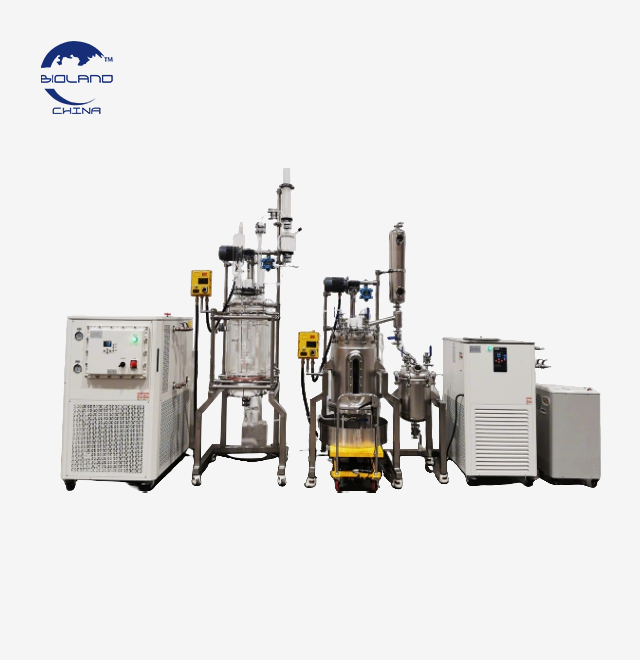
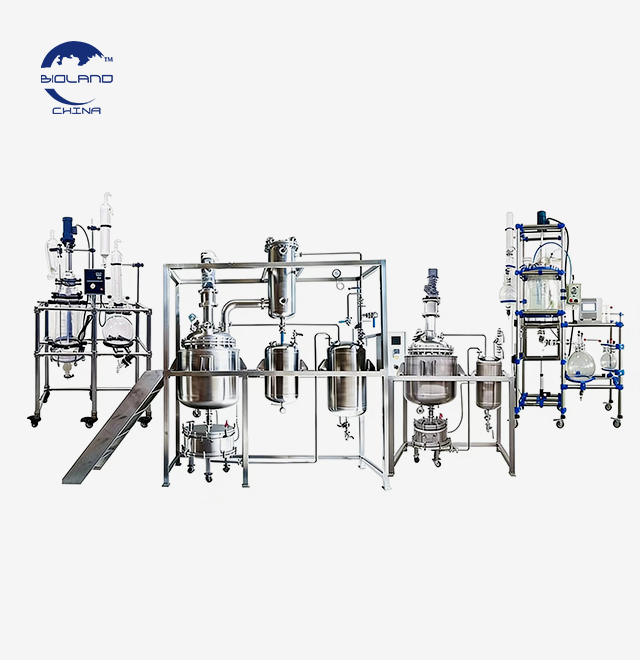
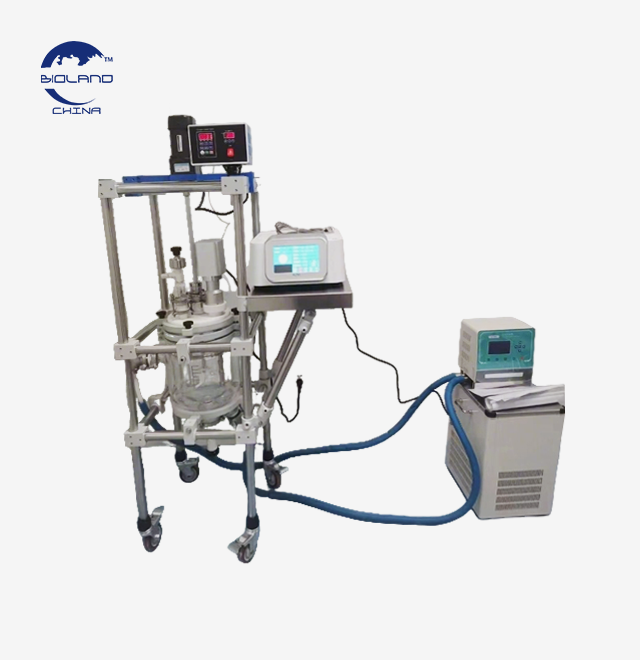
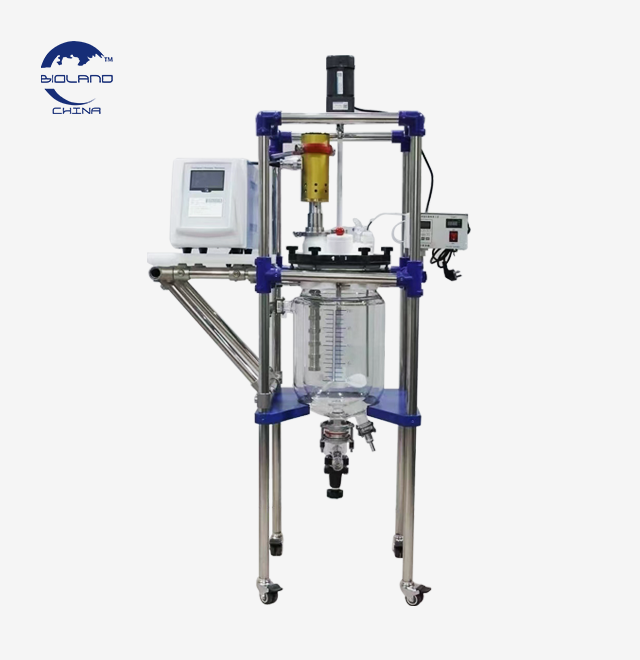
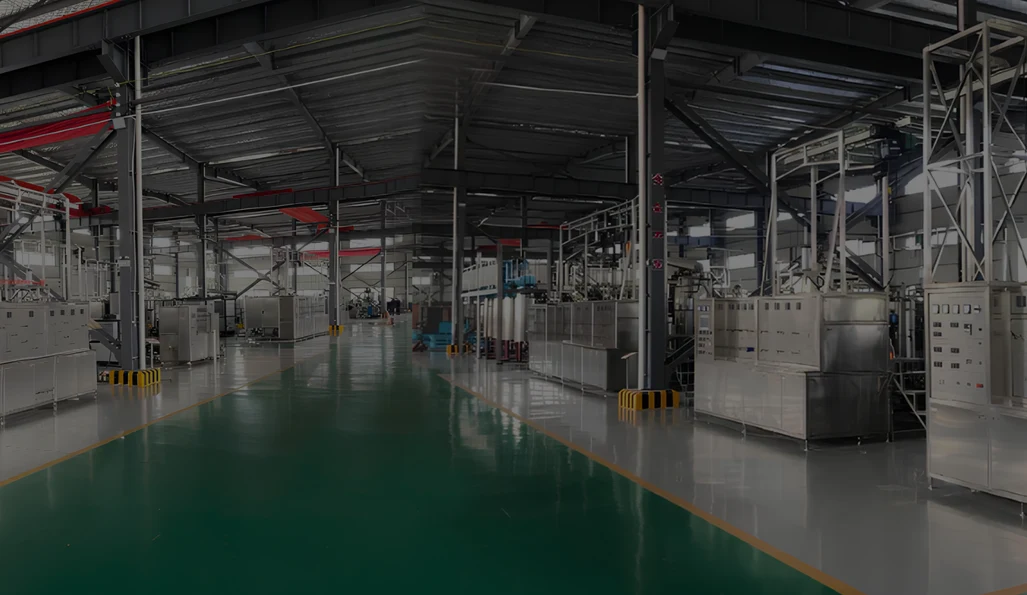
Active pharmaceutical ingredient (API) makers can't have holes in their process tools, which is why a GMP glass reactor system is now an important part of all modern API synthesis lines. This equipment was made for pharmaceutical use. It has full visual transparency, corrosion-proof borosilicate construction, and precise thermal control all in one integrated platform. This means that engineers can see every color change, precipitation event, and phase separation as it happens instead of guessing what is going on inside a steel vessel that is sealed off. Bioland Instrument's glass reactor system is designed to meet this exact need. It is a clever unit that can be used in the lab or on a small scale. It combines reaction, distillation, extraction, condensation, and vacuum operation into a single GMP-ready platform. When manufacturers buy this equipment for biologically active compounds, chiral synthesis, or API intermediates, they get an environment that is clear, chemically inert, and easy to control. This cuts down on validation cycles and ensures batch purity from the very first trial run.
GMP Requirements for Glass Reactor Systems in API Production
Any glass reactor system that goes into a verified line has to meet strict requirements for regulated API production. This is because regulators want equipment that can produce consistent results batch after batch without adding a risk of contamination. Before a quality team will even think about putting a compliant unit through pilot tests, it has to show that it is chemically neutral, that the process parameters can be controlled, and that the materials and construction are well documented. Bioland Instrument builds each reactor to meet these standards from the ground up. They use pharmaceutical-grade glass and controls that are ready for automation so that makers can go from bench tests to scale-up without having to rethink their validation package.
Why API Manufacturers Demand Full-Process Visualization
One of the biggest risks in making APIs is that the reaction dynamics might not be visible at first. That's why full-process visualization is so important for a glass reactor system. Instead of relying only on sensor data, operators using a clear vessel can see color changes, crystal formation, and emulsion behavior right through the glass wall. This lets them spot problems early on. This real-time information makes it less likely that a whole batch will be run based on false assumptions. It also gives quality engineers documented visual evidence that backs up process characterization reports that are needed during regulatory audits.
Material Purity and GG17 Borosilicate Glass Compliance
In high-purity synthesis, metal ions are not allowed to get into the mix. That's why all Bioland glass reactor systems use GG17 borosilicate glass, which can handle strong acids, strong bases, and strong organic solvents without letting particles get into the mix. When it comes to pharmaceutical intermediates and biologically active substances, this material choice is very important. Even a small amount of contamination can ruin a whole production run. Quality teams can sign off on GMP methods that cover material compatibility and extractable-leachable testing with trust when the equipment is made of chemically stable glass.
Temperature and Pressure Control Standards for GMP Validation
For consistent API chemistry, precise thermal control is a must, and a well-designed glass reactor system must be able to maintain setpoints across a wide range. Bioland's double-jacketed design can work at temperatures ranging from -80 degrees Celsius for low-temperature condensation to 300 degrees Celsius for high-temperature reactions. It also has an integrated vacuum system that can reach -95 megapascals to make evaporation and reflux more efficient. This large working window lets one vessel handle many unit operations that would normally need several separate machines. This makes approval processes easier and reduces the amount of equipment that needs to be stored in a certified cleanroom.
Documentation and Traceability in Regulated Production
When auditors look at an API manufacturing line, they want to be able to fully track every glass reactor system on the floor, from material certificates to records of installation qualification and operating qualification. Each unit comes with detailed technical drawings and CE and ISO documentation from Bioland Instrument. This gives quality assurance teams the paper trail they need to satisfy FDA and GMP inspectors. During production, clients are sent photo and video updates that show how things are going. This creates a record of events that starts long before the equipment even gets to the production floor.
Key Design Features That Support Regulatory Compliance
What makes a glass reactor system really work as a validated pharmaceutical process or just look like one depends on the engineering details that went into making it. Bioland's equipment has flexible socket connections, automation that can't explode, a wide temperature range, and double closing, which gives makers one platform that can handle reaction, distillation, extraction, and crystallization without breaking GMP rules. These design decisions were not made by accident; they are based on direct feedback from clients in the pharmaceutical, chemical, and valuable metals industries who needed a system that could work in tough, high-value production settings.
Modular Flange Configuration for Multi-Process Flexibility
A Bioland glass reactor system has standard five-neck flange lids that can fit condensers, dropping funnels, temperature probes, and vacuum connections in a variety of ways. This means that one vessel can be used for different types of work, such as crystallization, distillation, extraction, or catalytic reactions, as the needs of the project change. Because it is flexible, a pharmaceutical maker doesn't need a separate machine for each unit operation. Instead, they can use a single tank that can be quickly rearranged between steps of the process. A smaller safe area and fewer parts that need separate GMP certification are directly related to fewer pieces of equipment.
Explosion-Proof and PLC-Automated Control Systems
Bioland has a fully explosion-proof glass reactor system that can be used for solvent-heavy API synthesis. The temperature, stirring speed, and process sequencing are all controlled by a PLC. Critical process parameters are less likely to change depending on the operator when automated control is used. This strengthens the reproducibility case that regulators look for during process validation. For clients using oxidation-sensitive or inert-gas-protected synthesis, they can choose a shielded setup that keeps the atmosphere intact from charging to discharging.
Wide Temperature Range and Vacuum Distillation Capability
Beyond basic reaction control, a Bioland glass reactor system integrates a lifting and rotating structure that simplifies charging, discharging, and cleaning between batches while maintaining the wide thermal range needed for reflux and vacuum distillation in the same vessel. High vacuum performance intensifies solvent recovery and concentration steps, which matters directly to API manufacturers managing tight cost and time budgets on pilot runs. This combination of flexibility and thermal reach is precisely why many clients select a single unit instead of assembling separate distillation and reaction equipment.
Safety Sealing and Low-Maintenance Operation
A variable-frequency drive motor keeps a Bioland glass reactor system spark-free and low-noise, while dual PTFE and mechanical sealing protects against leaks during extended production campaigns. These safety features lower the maintenance burden that quality teams must track under GMP change-control procedures, since fewer seal failures mean fewer deviation reports. Engineers evaluating equipment for a long production lifecycle consistently cite this low-maintenance sealing design as a deciding factor in vendor selection.
Cleaning, Validation, and Contamination Control Strategies
Contamination control separates a genuinely GMP-ready glass reactor system from ordinary laboratory glassware, and Bioland engineers every unit with cleaning and validation in mind from the earliest design stage. Any vessel intended for pharmaceutical intermediates must be easy to disassemble, resistant to cleaning agents, and free of dead legs where residue could accumulate between batches. Real client projects illustrate how these design principles translate into measurable production gains once a properly specified glass reactor system replaces outdated or undersized equipment.
CIP-Ready Design and Cross-Contamination Prevention
Smooth glass surfaces and a lifting, rotating vessel structure on a Bioland glass reactor system dramatically simplify clean-in-place procedures between different API batches, reducing the risk of cross-contamination that regulators scrutinize closely during facility audits. Because the glass itself resists chemical attack, cleaning solvents and validated wash cycles do not degrade the vessel surface over repeated cycles. Manufacturers switching between multiple product lines on the same platform benefit from faster changeover times and simpler cleaning validation documentation.
Case Study: South American Biopharmaceutical Fermentation Challenge
A biopharmaceutical company in South America came to Bioland struggling with insufficient dissolved oxygen efficiency, extended fermentation cycles, and imprecise process control that was compromising product purity in oxidation-sensitive intermediate synthesis. Their existing setup could not maintain the sterile, tightly controlled environment that chiral intermediate production demanded, leaving batches inconsistent and timelines unpredictable.
Bioland Instrument custom-built a fifty-liter double-layer glass reactor system with an optimized impeller design specifically tuned to the client's fermentation broth characteristics. The redesigned glass reactor systemraised dissolved oxygen efficiency by thirty percent and shortened the overall fermentation cycle while meeting strict sterility and precise temperature control requirements.
The transparent vessel let operators watch color and precipitation changes throughout synthesis, improving product purity through faster in-process adjustments. Sealed construction also supported inert-gas protection for oxygen-sensitive chiral intermediates, giving the client a repeatable, GMP-aligned process they could confidently scale toward commercial production.
Case Study: European Precious Metals Solvent Extraction Line
A precious metals processor in Europe needed to replace undersized, low-efficiency separation equipment that could not support a new production line, and their limited customization options were blocking a planned capacity expansion entirely. Handling highly corrosive extraction chemistry at scale required equipment far beyond what generic reactors could safely deliver.
Bioland Instrument supplied four two-hundred-liter explosion-proof double-layer glass reactor systems alongside nine fifty-liter explosion-proof rotary evaporators, engineered specifically for corrosive, high-hazard production conditions and certified to ExdIIBT4 explosion-proof standards. Modular manufacturing compressed the delivery timeline by forty percent against the client's original schedule.
The client began production fifteen days ahead of plan, lifted annual output capacity by thirty percent, and logged over one thousand fault-free operating hours. Precise double-jacketed temperature control from minus eighty to two hundred degrees Celsius, combined with a transparent glass reactor system body, let operators monitor corrosive material mixing in real time and avoid the metal contamination risks tied to conventional stainless equipment.
Routine Maintenance and After-Sales Monitoring Services
Bioland Instrument assigns a dedicated specialist to track production progress every week once a client's glass reactor system enters manufacturing, sharing photos and videos so buyers stay informed without needing to visit the factory in person. Once fabrication finishes, the team supplies detailed inspection footage for approval before arranging shipment, and clients may also schedule a Factory Acceptance Test on-site once their glass reactor system is ready. A one-year quality warranty with lifetime maintenance support backs every unit shipped, giving pharmaceutical buyers long-term confidence in equipment that must keep performing reliably across years of validated production.
Selecting the Right GMP Glass Reactor for Pharmaceutical Manufacturing
Choosing the correct glass reactor system configuration determines whether a pilot process scales smoothly or stalls under avoidable equipment limitations. Bioland Instrument works directly with pharmaceutical, chemical, and biotech engineering teams to match capacity, materials, and automation level to the specific synthesis pathway, ensuring that every unit delivered fits the real production target rather than a generic catalog specification. Fifteen years of manufacturing experience across export markets in Europe, Southeast Asia, and beyond inform every recommendation the technical team makes.
Matching Capacity and Configuration to Your Process Scale
API developers moving from bench chemistry toward pilot production need a glass reactor system sized correctly for their batch volume, whether that means a compact laboratory unit or a multi-hundred-liter production vessel. Bioland's engineering team reviews reaction chemistry, target throughput, and existing plant infrastructure before recommending a specific configuration, preventing the common mistake of under-sizing equipment early and having to re-qualify a larger system later. Right-sized equipment from the start saves both capital cost and revalidation time.
OEM/ODM Customization Options for Non-Standard Requirements
Because pharmaceutical processes rarely fit a single standard design, Bioland offers extensive OEM and ODM customization for its glass reactor system line, adjusting vessel size, shape, material, and internal structure to match unusual experimental or production requirements. Clients can specify a fully explosion-proof unit with PLC automation, integrated temperature control, lifting and rotating mechanisms, filtration, crystallization, ultrasonic-assisted crystallization, tail gas absorption, or an attached fractional distillation column, all built to order. This depth of customization lets manufacturers order exactly the equipment their process demands instead of adapting their process around generic machinery.
Cost, Certification, and Lead-Time Considerations
Budget and timeline planning both benefit from clear expectations up front, and Bioland keeps its glass reactor system pricing competitive while maintaining CE and ISO certification across every unit for straightforward regulatory acceptance. Customized orders typically ship within thirty business days, while standard configurations are generally ready in five to seven days, and the company supports sea, rail, and air freight to accommodate different project timelines. All units comply with GMP and FDA standards, removing a major uncertainty from the qualification process for pharmaceutical buyers.
Why Global API Manufacturers Choose Bioland Instrument
Xi'an Bioland Instrument Co., Ltd. is a professional manufacturer and solution provider for the research, production, and sale of distillation, concentration, reaction, extraction, separation, filtration, purification, crystallization, emulsification, mixing, and drying equipment, along with supporting heating, cooling, and vacuum devices, backed by more than fifteen years of experience in the field. The product range spans ultrasonic plant extraction machines, ethanol extraction equipment, a glass reactor system product line, filter reactors, Nutsche filter reactors, high-shear homogenizers, vacuum spray dryers, and freeze dryers, serving laboratory research, biopharmaceuticals, drug synthesis, precious metals, food, and cosmetics industries worldwide. A senior technical team backed by ISO safety guarantees and CE certification stands behind every unit the company exports to Europe, Southeast Asia, and beyond, welcoming OEM and ODM orders from clients who need engineering support tailored to a specific application.
Conclusion
A GMP glass reactor system is far more than a transparent vessel; it is the engineering foundation that keeps API synthesis visible, contamination-free, and reproducible from bench to pilot scale. Bioland Instrument's equipment combines chemically resistant GG17 glass, wide-range temperature control, modular flange configurations, and explosion-proof automation with real production track records across pharmaceutical and chemical clients worldwide. Backed by CE and ISO certification, OEM/ODM flexibility, and dedicated after-sales monitoring, it gives manufacturers a dependable path from validation trial to full-scale commercial output.
FAQ
Q1: What makes a glass reactor system suitable for GMP-regulated API production?
A GMP-ready unit uses chemically inert GG17 borosilicate glass, precise temperature control, and documented CE/ISO certification, giving quality teams the traceability and reproducibility that regulated API synthesis requires.
Q2: Can Bioland customize a glass reactor system for non-standard processes?
Yes. Bioland offers full OEM/ODM customization, adjusting vessel size, materials, automation level, and accessories like distillation columns or crystallization units to match each client's specific synthesis requirements.
Q3: What temperature and vacuum range does the glass reactor system support?
The double-jacketed design operates from minus eighty to three hundred degrees Celsius, with an integrated vacuum system reaching minus zero point zero nine five megapascals for efficient distillation and reflux.
Q4: How long does it take to receive a customized glass reactor system?
Customized units typically ship within thirty business days, while standard configurations are generally ready in five to seven days, with sea, rail, and air freight options available.
Q5: Does Bioland provide after-sales support for its glass reactor system line?
Every unit includes a one-year warranty with lifetime maintenance support, weekly production progress updates, and the option to schedule a Factory Acceptance Test before shipment.
Ready to Upgrade Your API Production Line?
Pharmaceutical and chemical manufacturers worldwide trust Bioland Instrument to deliver a glass reactor system engineered for real GMP performance, not just laboratory appearances. With more than fifteen years of manufacturing experience, CE and ISO certification, and a technical team that has solved fermentation, extraction, and scale-up challenges for clients across South America, Europe, and beyond, Bioland Instrument stands ready to build the exact glass reactor system your process demands. Whether you need a standard configuration ready in days or a fully customized, explosion-proof, PLC-automated unit built to your drawings, our engineers will guide you from initial consultation through Factory Acceptance Test.
Every order includes weekly photo and video progress updates, a one-year warranty, and lifetime maintenance support, so you always know exactly where your equipment stands. Do not let outdated or undersized equipment slow down your next batch. Contact our technical team today at info@biolandequip.com to discuss your requirements, request a customized quotation, or schedule a consultation with our engineering team. Let Bioland Instrument become the solution partner behind your next successful scale-up.
References
1. World Health Organization. Good Manufacturing Practices for Pharmaceutical Products: Main Principles. WHO Technical Report Series.
2. U.S. Food and Drug Administration. Guidance for Industry: Q7A Good Manufacturing Practice Guidance for Active Pharmaceutical Ingredients.
3. International Council for Harmonisation. ICH Q7: Good Manufacturing Practice Guide for Active Pharmaceutical Ingredients.
4. European Medicines Agency. EudraLex Volume 4: Good Manufacturing Practice Guidelines for Medicinal Products.
5. Perry, R. H., and Green, D. W. Perry's Chemical Engineers' Handbook. McGraw-Hill Professional.
6. Levenspiel, O. Chemical Reaction Engineering. John Wiley & Sons.
The reactor is beautifully mirror-polished and fully complies with GMP requirements for the pharmaceutical industry. The performance is excellent! Overall, we are very satisfied! We also provided with some feedback on our process improvements, which we hope will be helpful.
2024-04-09
Laboratory
Excellent and professional service. Always reply our questions very fast. All reactors and chiller we received are good too.
2024-02-15
Research Institute
Quality is beyond our expectation actually. After we got the extraction equipment and started using it, the performance was beyond our expectation. Very easy to use and very efficient to run. Service always respond us very quickly. Was also very helpful to help us. Thanks Bioland team. Very happy to work with you.
2023-11-20
Biotech Company
We are happy about the new purchase as always. Equipment and services are both good.
2023-08-05
Instrument Lab
This is the second order with Bioland instrument and everything is good as the first dateText.
2023-05-12
Global Trading Partner
Bioland instrument team is very helpful and professional. The sales helped us select the right equipment for our application, and their logistics people handled the transportation and customs declaration for our shipment. All that saved us a lot of work.