Best Reactor Setup for Lithium Battery Material Synthesis
Sep 4, 2026
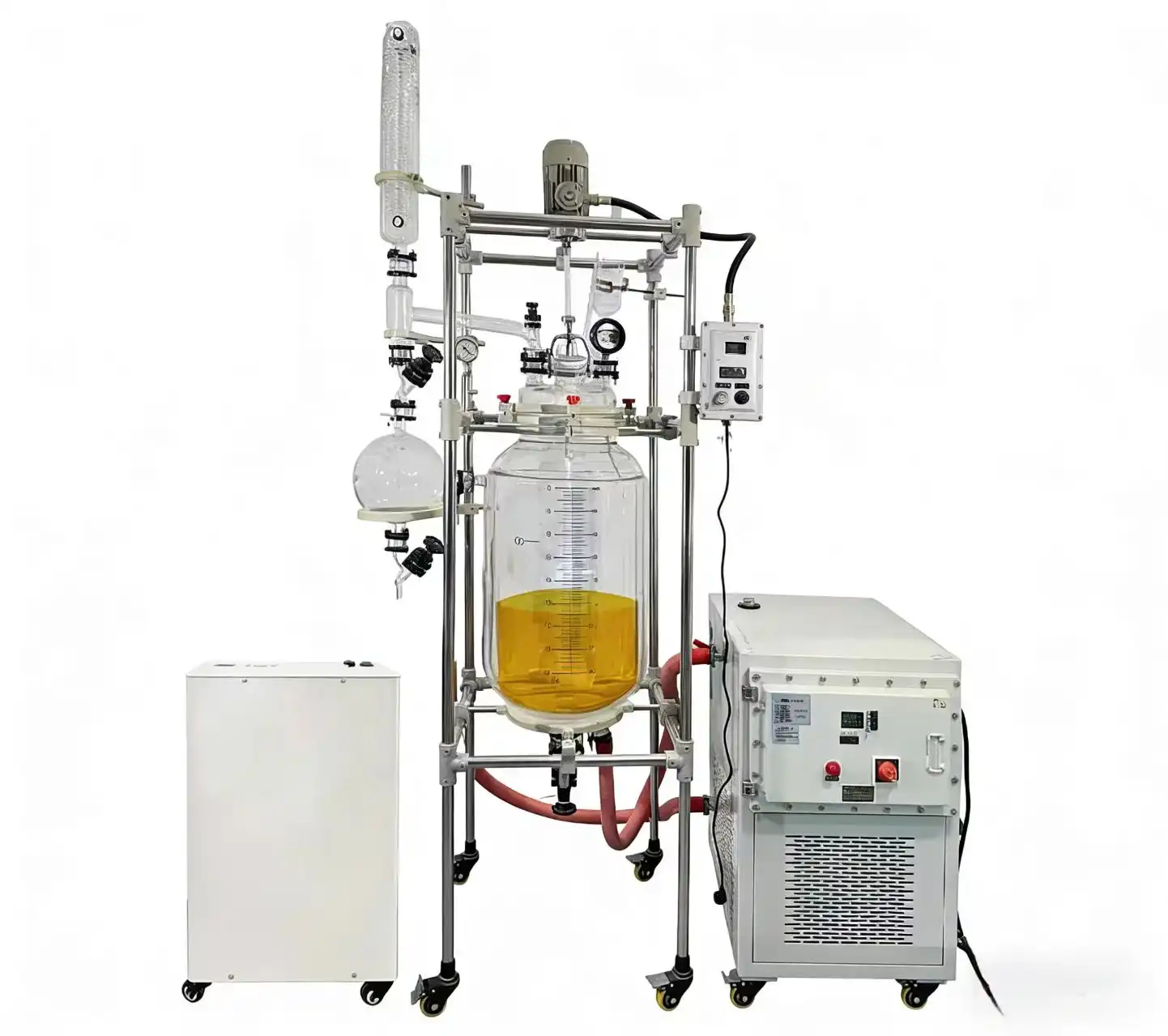
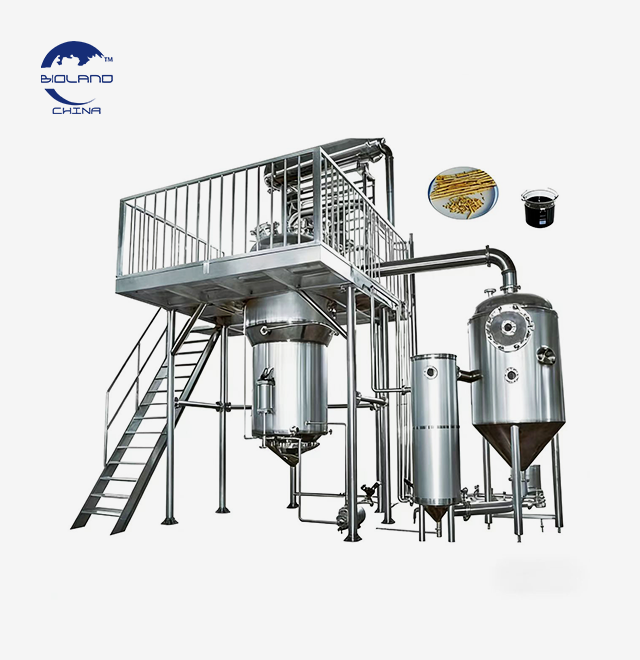
Cell performance is not decided on the assembly line — it is decided in the reactor where cathode precursors, lithium salts, and electrolyte additives are first synthesized. If mixing is uneven, temperature drifts, or trace metals leach into the batch at that stage, no downstream process can repair the damage. That is why choosing the right stainless steel batch reactor is arguably the most important engineering decision a battery-materials producer makes. Xi'an Bioland Instrument Co., Ltd. has spent more than 15 years building reaction, crystallization, filtration, and drying equipment for customers across Europe and Southeast Asia, and our stainless steel batch reactor platform — spanning 50 to 10,000 litres in SUS304, SUS316L, or Hastelloy, operating from -0.1 to 0.5 MPa with 0–600 rpm frequency-converted agitation — is already synthesizing cathode precursors, lithium compounds, and electrode slurries worldwide. Backed by an in-house R&D team of senior engineers, CE and ISO certification, GMP/FDA-aligned quality systems, and open OEM/ODM support, we approach every inquiry as a process problem first and an equipment list second. Here is how our engineers structure that conversation.
Key Reactor Requirements for Battery Material Processing
Before comparing impellers or alloys, it helps to be explicit about what battery chemistry actually demands from a vessel — because the requirements are stricter than most general chemical duty.
Contamination Control at Parts-Per-Million Purity
Cell makers now write metal-impurity limits directly into supply contracts — often tens of parts per million for iron, and far tighter for copper and zinc, since stray metal particles seed self-discharge and internal shorts. Meeting those numbers starts with the vessel itself. Every Bioland stainless steel batch reactor is fabricated from certified SUS316L or SUS304 plate with smooth, passivated internal welds and crevice-free geometry, so the equipment contributes contamination measured at trace level, not at rejection level. Full material certificates accompany each unit, giving your QA team complete documentation before the first charge is ever loaded.
Sealed, Inert, and Explosion-Protected by Design
Battery chemistry dislikes air and punishes leaks. Precursor co-precipitation typically runs under nitrogen; solvent-based work involves flammable media such as NMP. Our stainless steel batch reactor is therefore engineered as a sealed system from the outset: mechanical or magnetic-drive seals rated for vacuum to -0.1 MPa and pressure to 0.5 MPa, gas ports for inert blanketing, and optional fully explosion-proof builds for hazardous-area operation. The same sealing integrity that protects operators also protects product, keeping oxygen and moisture exactly where they belong — outside the process.
A Scalable Family from 50 to 1,000 Litres
A recipe proven in a small jacketed beaker must survive translation into production, and geometry-driven surprises are the classic scale-up killer. Because the Biolandstainless steel batch reactor family spans 50 to 1,000 litres with consistent impeller-to-vessel proportions, jacket patterns, and control logic, customers scale in steps rather than leaps — lab, pilot, then production — while keeping mixing time, heat-removal rate, and shear history comparable across every vessel size. Several customers now run matched small and large units side by side, using the smaller vessel as a live process simulator for the bigger one.
When Rust Cost a Producer Its Automotive Audit
A European precursor producer kept losing lots to metallic contamination traced to rough welds in an aging vessel. We supplied a 500-litre 316L stainless steel batch reactor with passivated welds, a magnetic seal, and full material certificates. Twelve months on, iron traces held below 30 ppm, customer rejections fell from 8% to under 1%, and the line sailed through its automotive audit.
Selecting the Right Mixing System for Uniform Material Synthesis
Mixing is where battery-material synthesis is won or lost: particle size distribution, morphology, and tap density all trace back to the shear field inside the vessel.
Agitation Geometry Is the Process
In precursor co-precipitation, agitation is not a supporting act — it is the process itself. Stirring energy decides whether nucleation or crystal growth dominates, and with them the particle size distribution and tap density that determine how a cathode compacts and how a cell cycles. The standard paddle agitator on our stainless steel batch reactor suits most syntheses, while baffle placement, impeller type, and vessel proportions can all be customized so the shear field matches the crystal habit your chemistry is trying to build. We treat mixer specification as crystallization engineering, not accessory selection.
Frequency-Converted Control Across 0–600 rpm
Between 0 and 600 rpm, a lot of chemistry lives. Low speeds keep fragile precursors gently suspended; high speeds disperse reagent feeds quickly enough to prevent local concentration spikes that distort morphology. Digital frequency conversion on the stainless steel batch reactor delivers soft starts, overload protection and — critically — repeatability: the same ramp and the same hold, batch after batch. Because the drive communicates with the PLC, agitation speed becomes a recorded recipe parameter rather than an operator's judgment call, which is precisely what qualification audits want to see documented.
Matching the Mixer to Slurry Rheology
Battery-material duties thicken fast. High-solids slurries settle without vigilance, and viscosity climbs mid-batch as reactions proceed. Impeller and baffle selections on our stainless steel batch reactor are made against your measured rheology, with anchor, turbine, and pitched-blade options, optional high-shear homogenizer integration, and jacket assistance to keep the product pumpable. The goal is simple: every region of the vessel sees the same process history, whether your batch is a free-flowing lithium salt solution or a dense electrode slurry at the top of its solids range.
Tightening D50 Spread from ±18% to ±4%
A Southeast Asian cathode start-up watched D50 drift up to ±18% between batches, stalling cell-maker qualification. Our engineers re-specified impeller geometry, added baffles, and applied closed-loop 0–600 rpm control on their stainless steel batch reactor. Particle spread tightened to ±4%, tap density rose 12%, and the material passed qualification on the next submission.
Controlling Temperature and Reaction Conditions Precisely
Many battery-material syntheses are quietly exothermic, and a two-degree overshoot can shift hydrate phases or scrap a batch outright — temperature discipline is therefore non-negotiable.
Jacketed Precision for Exothermic Synthesis
The jacketed stainless steel batch reactor answers with PID-controlled circulation that holds setpoints within ±0.5 °C across the working window, pairing steady heating for endothermic dissolution stages with rapid heat removal when a reaction surges. Automated reagent dosing synchronized to temperature closes the loop further — feed rate eases back as temperature climbs — converting the classic runaway risk into a tightly choreographed step. Customers running multi-hour precursor precipitations report that the tight band alone reduced out-of-spec batches, because crystal growth simply behaves differently inside it.
One Vessel, the Full Pressure Envelope
Process flexibility lives in the pressure envelope. The working range of our stainless steel batch reactor — vacuum at -0.1 MPa through positive pressure at 0.5 MPa — covers vacuum degassing of sensitive intermediates, low-temperature solvent removal, pressure-assisted reactions, and inert-gas transfers, all in a single vessel sealed by mechanical or magnetic-drive systems rated for the full duty. Rather than patching a basic kettle with external hardware, customers receive a pressure-capable platform whose every wetted component was selected for the envelope it will actually operate in.
Recipes the Equipment Never Forgets
Consistency compounds when the equipment remembers. PLC control on thestainless steel batch reactor stores recipes — temperature ramps, agitator programs, dosing sequences, vacuum stages — and replays them identically every batch, logging each value for review. Options extend to integrated temperature-control systems, electric-lid lifting for safe charging, and explosion-proof variants where solvents demand them. Production teams report less operator-to-operator variation, faster batch investigations, and product changeovers measured in minutes rather than shifts, which quietly raises overall equipment effectiveness week after week.
Saving One Batch in Eight at an LFP Plant
An LFP producer lost roughly one batch in eight when a mild exotherm spiked beyond manual control. A jacketed 2,000-litre stainless steel batch reactor with PID loops and automated dosing now holds temperature within ±0.5 °C. First-pass yield climbed from 87% to 96%, repaying the investment in nine months.
Choosing Materials and Components for Chemical Compatibility
Alloy selection for battery duty follows the chemistry — chloride-bearing lithium brines and fluoride electrolyte work sit at opposite ends of the corrosion spectrum, and the vessel must match its real service.
Mapping 304, 316L, and Hastelloy to Your Chemistry
Chemistry decides metal. SUS304 handles mildly corrosive, water-based work economically. SUS316L, with molybdenum working against pitting, takes over where chlorides appear — brine-derived lithium feeds are a common trigger. For hot fluoride-bearing electrolyte chemistry, Hastelloy wetted parts on the stainless steel batch reactor platform resist attack that would pit lesser alloys within months. Because Bioland manufactures all three options under one quality system, alloy choice becomes an engineering decision driven by corrosion data and cost — not by what a single supplier happens to stock.
Seals, Gaskets, and the Weakest-Component Rule
A reactor is only as compatible as its weakest wetted component. Seals, gaskets, sight glasses, and diaphragms on our stainless steel batch reactor are specified against the complete process and cleaning chemistry — PTFE and EPDM options, magnetic drives that remove the shaft seal from the product zone entirely, and drain-friendly geometry with no hidden volumes where residue can hide. It is unglamorous engineering, but it is exactly the engineering that decides whether a vessel survives year three of aggressive service or fails in month six.
One Reactor That Follows Your Roadmap
A reactor bought for battery work rarely stays idle at it. The same stainless steel batch reactor platform serves lithium-metal refining, molten-salt media for thermal storage, pharmaceutical GMP synthesis, and food-grade emulsification — versatility that protects capital when product lines evolve. Customers frequently begin with precursor duty, then redeploy pilot vessels for electrolyte additives, crystallization studies, or new-materials programs without buying again. In an industry where roadmaps shift quarterly, equipment that follows the chemistry is not a luxury; it is risk management.
Twelve Months of Fluoride Service, Zero Pitting
A pilot line making fluoride-based electrolyte additives pitted a standard alloy vessel within months. We rebuilt their stainless steel batch reactor with Hastelloy wetted parts and PTFE-lined interfaces. After a year of continuous fluoride service: no pitting, 99% uptime, and a confident step toward full production scale.
Integrating Process Control for Consistent Production Quality
The final layer is integration: connecting mixing, temperature, sequencing, and documentation so that quality is produced automatically rather than inspected in afterward.
Reaction, Crystallization, and Filtration in One Platform
Modern battery-material plants prize compact, multifunctional equipment. A single stainless steel batch reactor can be configured to combine reaction, distillation, extraction, condensation, and vacuum operation — and to carry crystallization, filtration, or ultrasonic-crystallization modules when the flowsheet calls for them. Rather than moving intermediates between five single-purpose vessels, with every transfer a contamination and scheduling risk, the process stays inside one sealed, controlled environment. Fewer transfers, less exposure, tighter batches: the arithmetic of integrated design consistently favors quality.
Data Trails That Pass Automotive Audits
Automotive and cell-maker audits have converged on one expectation: show me the data. Batch records exported from the reactor's PLC — temperatures, speeds, pressures, dosing histories — answer that question directly, and the GMP/FDA-aligned documentation culture behind every Bioland stainless steel batch reactor extends from material certificates to FAT reports. Customers preparing for supplier qualification repeatedly tell us the paperwork was easier than expected, because the equipment had been quietly generating the evidence for months before the auditors ever arrived.
Delivery, FAT, and Lifetime Support You Can Verify
Execution after the purchase order matters as much as the specification. Standard stainless steel batch reactor configurations ship in 5–7 business days and customized builds in roughly 30, with a dedicated specialist sending weekly photos or videos so progress is never a mystery. Clients may inspect via detailed imagery or attend a Factory Acceptance Test at our facility before shipment. Sea, rail, and air freight are all supported, every unit carries a one-year quality warranty with lifetime maintenance, and our experienced engineers remain available for commissioning and process questions long after installation.
From First Enquiry to Qualified Supplier in Six Months
A new-materials company needed NMP-based processing under strict safety rules. Their 50-litre explosion-proof stainless steel batch reactor passed a Factory Acceptance Test at our facility, shipped with weekly photo documentation, and reached qualified-supplier status within six months — followed by an order for a second, larger unit.
Conclusion
Every battery-material process succeeds or fails on the same fundamentals: purity, mixing uniformity, temperature discipline, chemical compatibility, and reproducibility. The rightstainless steel batch reactor delivers all five — 304, 316L, or Hastelloy mapped to your chemistry, 0–600 rpm frequency-converted agitation, a -0.1 to 0.5 MPa envelope, PLC recipe control, and scalable volumes from 50 to 10,000 litres. Bioland's 15 years of process experience, CE/ISO certification, and OEM/ODM flexibility turn that hardware into a working solution. Choose the alloy carefully — and choose the partner behind it just as carefully.
FAQ
Q1: Which alloy suits lithium battery work best?
316L is the default; 304 suits mild aqueous chemistry; Hastelloy covers hot fluoride electrolyte service.
Q2: What capacities are available?
50 to 10,000 litres as standard, with custom volumes on request.
Q3: How long is delivery?
Standard units in 5–7 business days; customized builds around 30, shipped by sea, rail, or air.
Q4: Can the reactor be automated and explosion-proof?
Yes — PLC control, integrated temperature systems, and full explosion-proof builds are all available.
Q5: What after-sales support is included?
A one-year warranty, lifetime maintenance, and optional Factory Acceptance Testing before shipment.
Your Reactor Blueprint Starts with One Email — Talk to Bioland Instrument
What is the one process step in your battery-material line that keeps causing deviations? Send it to us. Bioland Instrument will review your chemistry, rheology, and scale-up roadmap, then propose a stainless steel batch reactor configuration engineered around the answer — backed by 15+ years of process expertise, CE and ISO certification, GMP/FDA-compliant quality, OEM/ODM customization, weekly build updates, FAT verification, and a one-year warranty with lifetime maintenance at manufacturer-direct pricing. Whether you select a catalog model or need full engineering support, our R&D team responds fast. Email info@biolandequip.com today and turn your reactor setup into a competitive advantage.
References
1. Yoshio, M., Brodd, R. J., and Kozawa, A. (eds.). Lithium-Ion Batteries: Science and Technologies. Springer, New York, 2009.
2. Paul, E. L., Atiemo-Obeng, V. A., and Kresta, S. M. Handbook of Industrial Mixing: Science and Practice. Wiley-Interscience, Hoboken, NJ, 2004.
3. Myerson, A. S. (ed.). Handbook of Industrial Crystallization, 2nd ed. Butterworth-Heinemann, Woburn, MA, 2002.
4. Green, D. W., and Southard, M. Z. (eds.). Perry's Chemical Engineers' Handbook, 9th ed. McGraw-Hill, New York, 2019.
5. Revie, R. W. (ed.). Uhlig's Corrosion Handbook, 3rd ed. John Wiley & Sons, Hoboken, NJ, 2011.
6. Blomgren, G. E. "The Development and Future of Lithium Ion Batteries." Journal of the Electrochemical Society, vol. 164, no. 1, pp. A5019–A5025, 2017.
The reactor is beautifully mirror-polished and fully complies with GMP requirements for the pharmaceutical industry. The performance is excellent! Overall, we are very satisfied! We also provided with some feedback on our process improvements, which we hope will be helpful.
2024-04-09
Laboratory
Excellent and professional service. Always reply our questions very fast. All reactors and chiller we received are good too.
2024-02-15
Research Institute
Quality is beyond our expectation actually. After we got the extraction equipment and started using it, the performance was beyond our expectation. Very easy to use and very efficient to run. Service always respond us very quickly. Was also very helpful to help us. Thanks Bioland team. Very happy to work with you.
2023-11-20
Biotech Company
We are happy about the new purchase as always. Equipment and services are both good.
2023-08-05
Instrument Lab
This is the second order with Bioland instrument and everything is good as the first dateText.
2023-05-12
Global Trading Partner
Bioland instrument team is very helpful and professional. The sales helped us select the right equipment for our application, and their logistics people handled the transportation and customs declaration for our shipment. All that saved us a lot of work.