Ultrasonic Crystallization Reactor: Enhancing Yield & Purity in Pharma Production
Oct 29, 2026
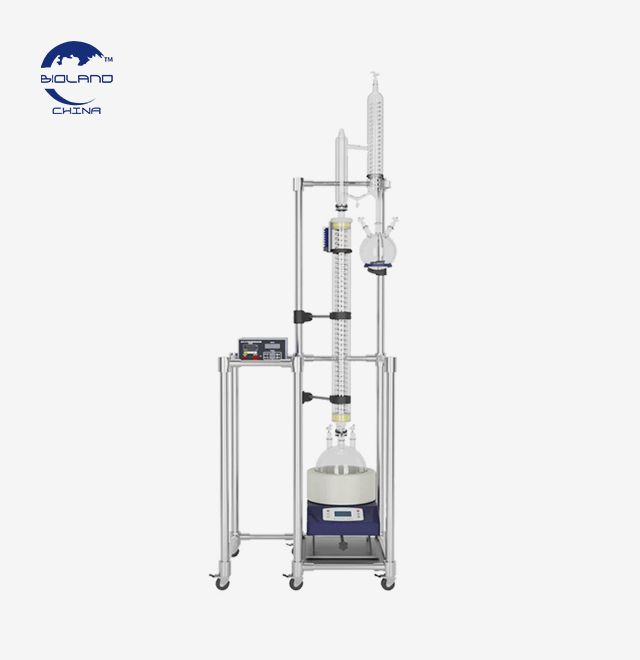
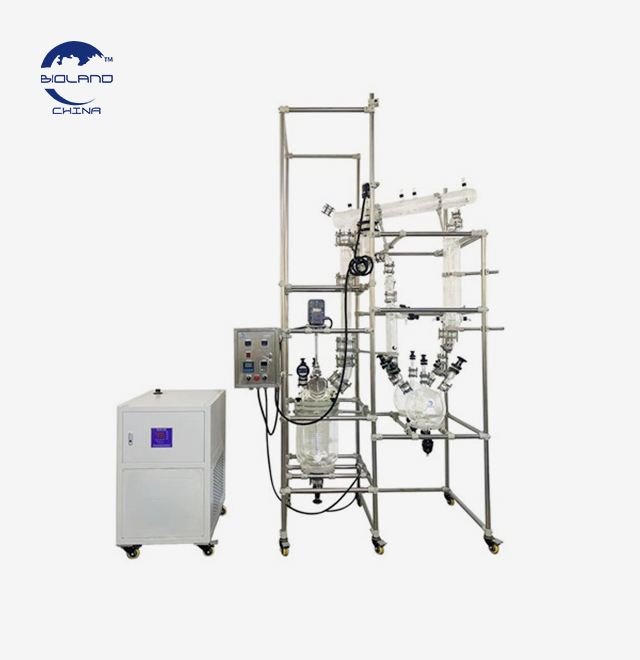
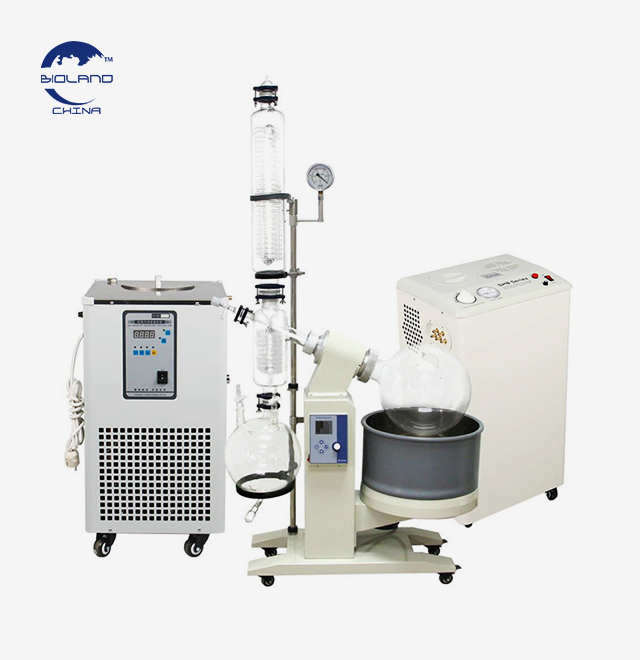
Anyone who has tried to speed up the crystallization step knows how frustrating it can be. The lab batch makes crystals that are clean and regular, but the test batch makes lumps, fines, or even a different polymorph. This piece talks about how sonication can be used to control crystal size, clarity, and nucleation. The Xi'an Bioland Instrument Co.,Ltd. ultrasonic crystallization reactor also shows why it is useful. suitable for pharmaceutical R&D and pilot production of drugs. A two-layer glass vessel, an ultrasonic homogenizer, a chiller circulator, and a heating circulator make up our ultrasonic crystallization reactor. The end result is high clarity, resistance to corrosion, accurate temperature control, and a safe, open work space. This ultrasonic crystallization reactor has CE and ISO certification, is ready for GMP pilot validation, can be customized for OEM/ODM, and is priced directly from the factory. It turns a step that is hard to predict into one that can be repeated.
How Ultrasonic Cavitation Promotes Crystal Nucleation
Why Spontaneous Nucleation Makes Pharma Batches Unpredictable
In normal cooling or anti-solvent crystallization, nucleation doesn't happen until the solution drifts far enough into supersaturation. The exact moment at which this happens is surprisingly random. One batch starts to form crystals early and makes them rough. The next one waits longer, then quickly nucleates and makes fines, agglomerates, or a different polymorph. This randomness changes the filtration time, residual solvent, dissolution behavior, and purity of active ingredients and intermediates. A well-made ultrasonic crystallization reactor has a trigger that the operators can control. This way, nucleation happens when the process says it should, not when it happens by chance.
How Cavitation Triggers Nucleation Inside an Ultrasonic Crystallization Reactor
Ultrasonic waves are sent through the fluid by the ultrasonic probe. Within microseconds, tiny bubbles form and pop. Each collapse causes sharp changes in temperature and pressure in the area, as well as strong micro-mixing and shock waves. These help the molecules group together into stable nuclei at a lower level of supersaturation than would be needed for silent cooling. The ultrasonic homogenizer in our ultrasonic crystallization reactor works with a jacketed double-layer glass tank and two circulators. This creates a temperature window that can be tightly managed for cavitation. This leads to a smaller nucleation window, a more consistent start, and fewer batches that don't work.
Case: Nano Silver Sol Nucleation That Finally Repeats
A nanomaterials client trying to make silver sol by chemical reduction had trouble with nucleation that was slow and uneven. It took hours of shaking to get the reaction going, the particle size changed from batch to batch, and the output was low. The group wanted a platform that would speed up the reaction and stop agglomeration without giving up on the glass-reactor format that they were used to.
We gave them an ultrasonic glass reactor with a jacket that keeps the temperature constant and a vacuum system to control the atmosphere. Making nano-silver in situ took about 60% less time and the yield went up by 35%. The same reasoning applies to pharmaceutical crystallization since the same ultrasonic crystallization reactorplatform is used for nucleation-driven processes.
Seeing the Cloud Point Through Transparent Glass
High transparency isn't just a nice-to-have. The people who work behind the glass wall can see the cloud point form, track the growth of the crystals, and decide when to turn off the ultrasound or change the temperature. Construction that doesn't rust can handle acids, bases, and organic solvents. An ultrasonic crystallization reactor is useful for R&D teams because it is safe and easy to see. This way, every choice can be compared to what was seen, and the results can be easily applied to a pilot scale.
Key Factors Affecting Pharmaceutical Crystal Size
Supersaturation, Cooling Rate and Solvent System
Supersaturation is a big part of how big a crystal is. When you quickly cool something or add an antisolvent, you get high supersaturation. This makes a lot of nuclei, which leads to small crystals. It helps growth and bigger particles when there is gentle supersaturation. The choice of solvent can change the shape of the solubility curve, the way crystals form, and whether a chemical crystallizes or oils out. Teams can use an ultrasonic crystallization reactor to combine a planned cooling profile with a controlled burst of cavitation. This way, supersaturation is released at the right time and doesn't build up out of control.
Mixing, Seeding and Impurities: The Hidden Size Drivers
Quality of the mixing is just as important as chemistry. When you don't mix it well, you get areas of high supersaturation, which leads to fines, wall scaling, and impurities getting stuck inside growing crystals. It's helpful to plant seeds, but it's hard to get the right seeds at the right time each time. Sonication is an alternative because it allows for micro-mixing and makes nuclei on the spot, which means that seed crystals are not as important. Our ultrasonic crystallization reactor can work with filter reactors and Nutche filtration devices, so teams can get everything they need from a single source to make a full crystallization train.
Case: Fourteen-Hour Cooling and Still Lumpy
A company that makes pharmaceutical intermediates cooled down its crystallizer slowly over 14 hours to get rid of fines. However, batches still made lumps and a wide range of particles. Filtration took a long time, drying wasn't even, and every other batch had to be milled to meet standards, which caused shipments to be late.
We set up a lab-to-pilot ultrasonic crystallization reactor with short ultrasonic bursts at the cloud point and a cooling profile managed by a PLC. The cycle time dropped to about six hours, milling stopped, and the time it took to filter dropped by about 40%. The customer also said there was less repair, which meant the workshop could take on more jobs.
Temperature Hardware That Keeps Crystal Size Repeatable
Accurate temperature hardware is needed because crystal size changes with cooling rate. The double-layer glass structure moves thermal fluid around the tank. The chiller circulator quickly takes heat for controlled cooling ramps, and the heated circulator helps with dissolution and changing temperatures. As an option, PLC control can be added to the ultrasonic crystallization reactor so that it can use stored ramps from one run to the next. That is what makes uniform particle size and GMP-style writing possible.
How Sonication Improves Crystal Size Distribution
From Wide Distribution to Narrow Span
It's better to have a narrow range of crystal sizes than one big average. It is easier to make sure that the final dosage form has the same amount of content because uniform crystals filter faster, wash more cleanly, dry evenly, and dissolve predictably. In two ways, sonication narrows the range. Every crystal has the same place to start because of simultaneous nucleation. Agglomerates and large, fragile crystals are broken up by cavitation to keep the population even. Because of this, an ultrasonic crystallization reactorlets development teams handle both fines and oversize without having to take different steps to fix them.
What Cavitation Does to Particles: Evidence From Nanomaterials
Nanomaterials customers see the same result in a different way. Using ultrasonic cavitation shear to break up carbon nanotubes, graphene, and silica precursors works well, resulting in narrow particle distributions with a D50 value below 100 nm and no secondary clumping. For this reason, one ultrasonic crystallization reactor can be used in both the pharmaceutical and crystallization fields. Titanium alloy horns that don't rust can run nonstop for four hours or more, so dispersion stays the same over long batches.
Case: NCM811 Slurry at 100 L Reaches 99.2% Coating Uniformity
A client that works with lithium-battery materials mixed a thick NCM811 slurry with NMP, but the conductive carbon black and CNT kept sticking together. Different parts of the electrode had different coating thicknesses, and the team needed to test the dispersion in a pilot volume before committing to a production line.
We gave you a 100-liter ultrasonic glass reactor setup. It increased the BET specific surface area by 18% and made the layer 99.2% uniform after it was homogenized. The titanium-alloy horn kept working for more than four hours straight, which proves that the ultrasonic crystallization reactor platform is stable at the pilot scale level.
Narrow Distribution Means Faster Filtration and Drying
The benefit further down the line is useful. When crystals are spread out tightly, they make a cake that is easier to filter and wash. This means that mother liquor is removed more completely. That cuts down on remaining particles and liquid. An ultrasonic crystallization reactor can be put together with filter reactors, Nutche filters, vacuum spray dryers, or freeze dryers by Bioland Instrument. Then, the whole path from the solution to the dry powder is planned ahead of time instead of being added on later.
Optimizing Process Parameters for Higher Crystal Purity
Ultrasonic Power, Pulse Mode and Temperature Protection
When you tune parameters, you win the purity race. Too much power can break up crystals or heat the liquid, and not enough power lets nucleation happen without being controlled. In pulse mode, cavitation happens in short bursts, and temperature protection keeps materials that can't handle high temperatures at or below 40 °C so they can keep working. The ultrasonic crystallization reactor can handle sample volumes ranging from 50 to 5,000 mL. This means that teams can test different settings for amplitude, pulse ratio, and sonication timing on a small scale first, and then settle on the best window as a recipe for pilot batches.
Controlled Growth After Nucleation: Solvent, Anti-Solvent and Impurity Rejection
It gets pure when there is slow, selective growth after a clean nucleation event. Many teams sonicate for a short time at the cloud point to set the number of crystals. The growth is then driven by controlled cooling or the addition of antisolvents in a measured way, with no more ultrasound. When growth is slower, the crystal structure can reject impurities instead of holding them, and a cake that is all the same can be washed cleanly. This way, the ultrasonic crystallization reactor often cuts down on cycles while making them more pure, since each stage has a specific job to do.
Case: Cleaner Flavonoid Liquor Before Purification
A company that makes traditional medicines got flavonoids out of plants by refluxing them. Heat hurt delicate parts, long processes used a lot of energy, and the dark crude liquor made it harder to crystallize and clean later on. The team needed a more gentle way to start the chain of purification.
When 50–5,000 mL samples were put through an ultrasonic glass reactor in pulse mode below 40 °C, extraction was 22% better than with regular reflux. Next steps were easier because of the cleaner liquor, and the same ultrasonic crystallization reactor platform can handle the trials that come next.
Case: Ethyl Benzoate at Higher Yield and Lower Temperature
A fine-chemical customer made ethyl benzoate using the old method of esterification, which needed a lot of heat and time for the reaction to last a long time. Before crystallization or distillation, by-products made the mixture less pure, and the workshop didn't have enough money for a separate hydrogenation reactor.
Our reactor got a 92.5% yield from ultrasonic catalysis, which dropped the reaction temperature by 20–30 °C and cut the reaction time in half. High-temperature, high-pressure hydrogenation could also be done on the same ultrasonic crystallization reactor platform. This meant that one machine could do two jobs, which saved money on capital costs.
Scaling Up Ultrasonic Crystallization for Pharma Production
From Glass Reactor to GMP Pilot Validation
When the test vessel acts differently than the lab flask, scale-up fails. In real life, the best answer is to test on equipment that works the same way at all sizes. Our ultrasonic crystallization reactor is built to meet the needs of GMP pilot validation and can do ultrasonic reaction, distillation, extraction, condensation, and vacuum operation all on the same platform. It works with lab samples up to 100 L-class systems and has PLC control to keep track of time, temperature, and power. It is possible for R&D centers, universities, and pharmaceutical teams to move parameters from the bench to the test and give quality teams recorded data.
Non-Standard Customization: Explosion-Proof, Electric Lift and PLC
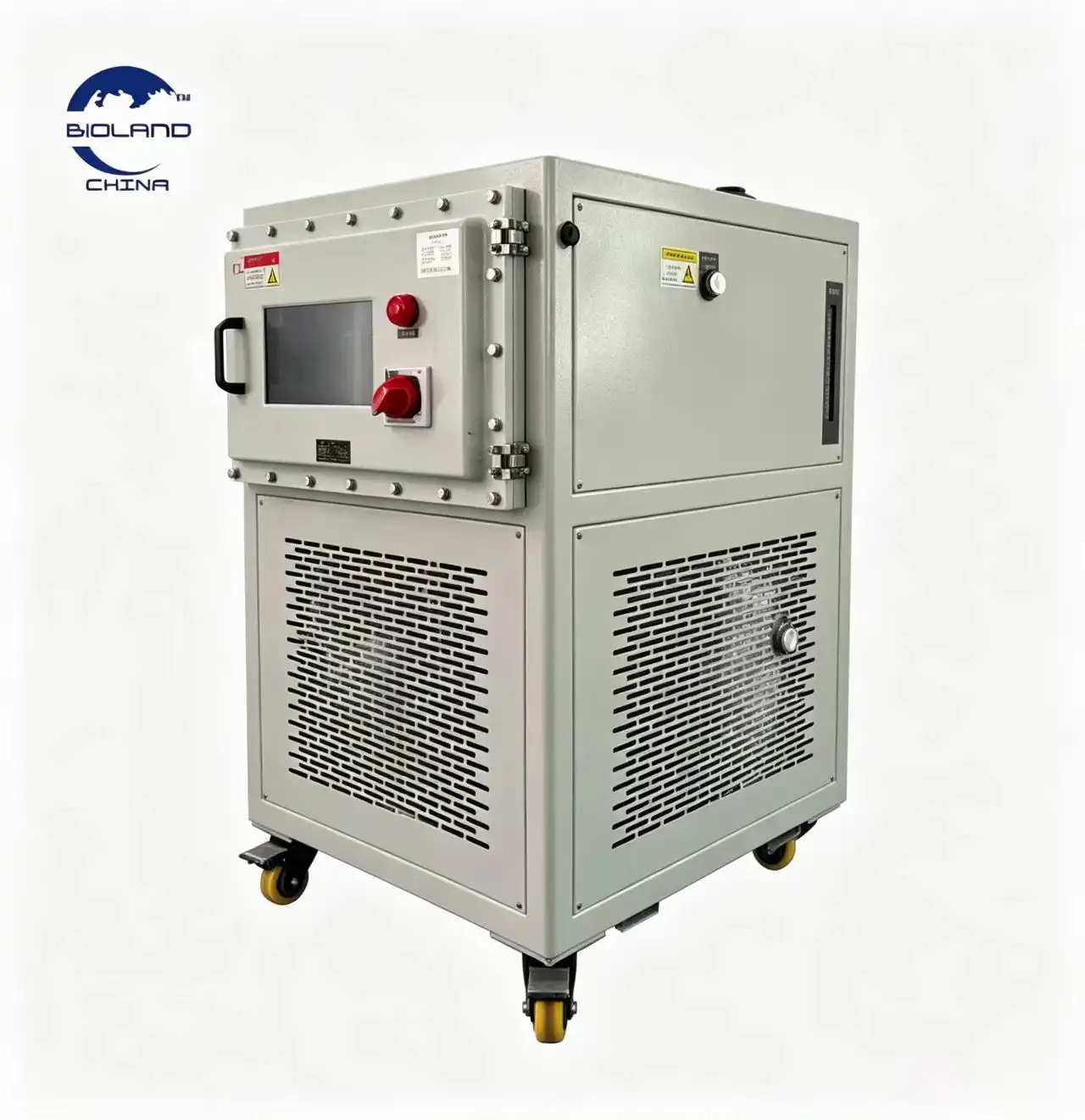
When making pharmaceutical crystals, ethanol, ethyl acetate, or other flammable solvents are often used. This means that customization is both a safety issue and a convenience issue. Bioland Instrument can make custom systems if you need them. These can include fully explosion-proof designs, electric lifts, fully automatic PLC control, temperature-control systems built in, filter devices, ultrasonic crystallization modules, and fractionation mixed kettles. The ultrasonic crystallization reactor can be changed in size, shape, material, and structure, so it can fit your process instead of making your process fit a standard catalog item.
Case: An Explosion-Proof Pilot Line for Ethyl Acetate Crystallization
It was crystallized in ethyl acetate, and the pharmaceutical intermediate company wanted to switch from 5 L glassware to a pilot line. The safety department needed electrics that wouldn't blow up, and the process team needed temperature steps that would work on their own for audit records. Both needs could not be met by any normal reactor in the list.
We made an ultrasonic crystallization reactor just for you that had an explosion-proof design, electric lifting, PLC recipes, and a chiller and heating circulators built right in. We also sent you weekly videos of the production process. The customer picked a Factory Acceptance Test before shipping, and during pilot validation, they noted that the difference in particle size from batch to batch was less than 5%.
Safe Operation, Service and One Process Partner
Routines that are safe keep results reliable. Before each run, check the glasses for chips, make sure the probe is fully immersed and properly set, and check the links between the circulator and vacuum. Also, keep sources of ignition away from solvents that can catch fire. Only use ultrasound when the probe is covered in liquid, and clean the vessel right away after each batch. Our engineers train people to use the ultrasonic crystallization reactors, and each one comes with a one-year protection and upkeep for life.
Bioland Instrument Co., Ltd. is a skilled company that has been making and selling equipment for more than 15 years that is used for distillation, concentration, reaction, extraction, separation, filtration, purification, crystallization, emulsification, mixing, and drying. In addition to the ultrasonic crystallization reactor, we also sell jacketed glass reactors, crystallization chemical reactors, filter reactors, Nutche filter reactors, high shear homogenizer mixers, vacuum spray dryers, freeze dryers, and ultrasonic homogenizers. These machines are sent to Southeast Asia and Europe. We are certified by CE and ISO and follow GMP and FDA rules. Customized units ship in about 30 business days, while regular units ship in 5–7 days. A committed expert sends photos or movies of progress every week before shipping.
Conclusion
To get better crystallization, you need to be able to control the first moment of nucleation and then keep the size, distribution, and purity of the crystals safe at all times. That control comes from sonication: cavitation sets off nucleation at a known point, narrows the range of crystal sizes, and helps cleaner growth. Bioland Instrument's ultrasonic crystallization reactor puts this on a clear, rust-proof glass platform and lets you control the temperature precisely. It also has pulse-mode protection below 40 °C and PLC options. In customer cases, reactions are 60% faster, yields are 35% higher, extraction is 22% better, and coatings are 99.2% uniform. Our ultrasonic crystallization reactor is a reliable way to go from lab results to pharmaceutical production. It has CE and ISO certification, is ready for GMP pilots, can be customized without the risk of explosion, supports OEM/ODM, and comes with lifetime maintenance.
FAQ
Q1: What does an ultrasonic crystallization reactor do?
A: It uses cavitation to trigger nucleation, narrow crystal size distribution and improve repeatability.
Q2: How is temperature protected?
A: Pulse mode and temperature protection keep heat-sensitive materials at or below 40 °C.
Q3: What sample volumes are supported?
A: Laboratory samples of 50–5,000 mL, with 100 L pilot systems available.
Q4: Can the ultrasonic crystallization reactor be customized?
A: Yes. Options include explosion-proof design, electric lifting, PLC control, filtration and fractionation modules, with OEM/ODM support.
Q5: What certifications and support are included?
A: CE and ISO certification, GMP/FDA-compliant design, a one-year warranty and lifetime maintenance.
Ready to Stabilize Your Crystallization Step? Talk to Bioland Instrument
Inconsistent crystal size, slow filtration and failed scale-up are process problems, and process problems have solutions. At Bioland Instrument, we do more than supply an ultrasonic crystallization reactor; we help you choose the temperature profile, ultrasonic settings, safety configuration and layout that fit your compound and your budget. With more than 15 years of experience, CE and ISO certification, GMP/FDA-compliant construction, factory-direct pricing, OEM/ODM customization, weekly progress photos or videos, optional FAT and a one-year warranty with lifetime maintenance, you can invest with confidence. Tell us your solvent system, target particle size and batch volume, and our engineers will recommend a tailored ultrasonic crystallization reactor solution. Email info@biolandequip.com today for a quotation or trial plan.
References
1. Ruecroft, G., Hipkiss, D., Ly, T., Maxted, N., & Cains, P. W. (2005). Sonocrystallization: The use of ultrasound for improved industrial crystallization. Organic Process Research & Development, 9(6), 923–932.
2. Luque de Castro, M. D., & Priego-Capote, F. (2007). Ultrasound-assisted crystallization (sonocrystallization). Ultrasonics Sonochemistry, 14(6), 717–724.
3. Nalajala, V. S., & Moholkar, V. S. (2011). Investigations in the physical mechanism of sonocrystallization. Ultrasonics Sonochemistry, 18(1), 345–355.
4. Bund, R. K., & Pandit, A. B. (2007). Sonocrystallization: Effect on lactose recovery and crystal habit. Ultrasonics Sonochemistry, 14(2), 143–152.
5. Kim, H.-N., & Suslick, K. S. (2018). The effects of ultrasound on crystals: Sonocrystallization and sonofragmentation. Crystals, 8(7), 280.
6. Mason, T. J., & Lorimer, J. P. (2002). Applied Sonochemistry: The Uses of Power Ultrasound in Chemistry and Processing. Wiley-VCH.
The reactor is beautifully mirror-polished and fully complies with GMP requirements for the pharmaceutical industry. The performance is excellent! Overall, we are very satisfied! We also provided with some feedback on our process improvements, which we hope will be helpful.
2024-04-09
Laboratory
Excellent and professional service. Always reply our questions very fast. All reactors and chiller we received are good too.
2024-02-15
Research Institute
Quality is beyond our expectation actually. After we got the extraction equipment and started using it, the performance was beyond our expectation. Very easy to use and very efficient to run. Service always respond us very quickly. Was also very helpful to help us. Thanks Bioland team. Very happy to work with you.
2023-11-20
Biotech Company
We are happy about the new purchase as always. Equipment and services are both good.
2023-08-05
Instrument Lab
This is the second order with Bioland instrument and everything is good as the first dateText.
2023-05-12
Global Trading Partner
Bioland instrument team is very helpful and professional. The sales helped us select the right equipment for our application, and their logistics people handled the transportation and customs declaration for our shipment. All that saved us a lot of work.