How to choose for your plants: Nutsche Filter Reactor vs Filter Dryer
Oct 29, 2026
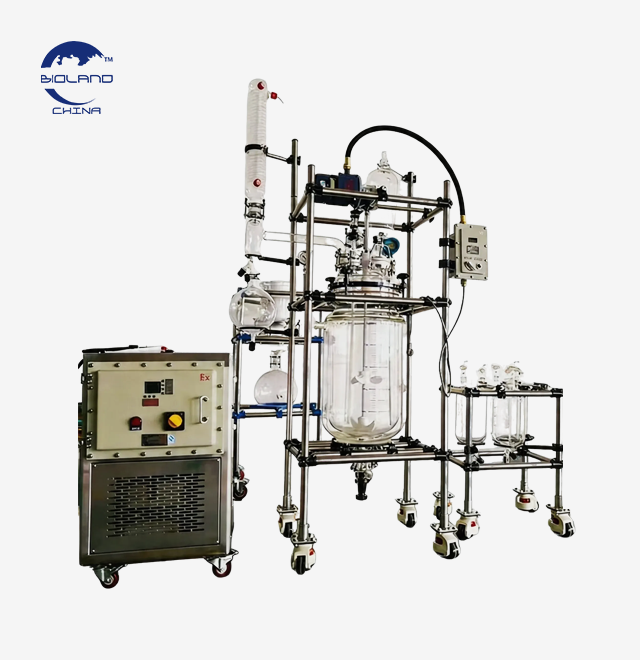
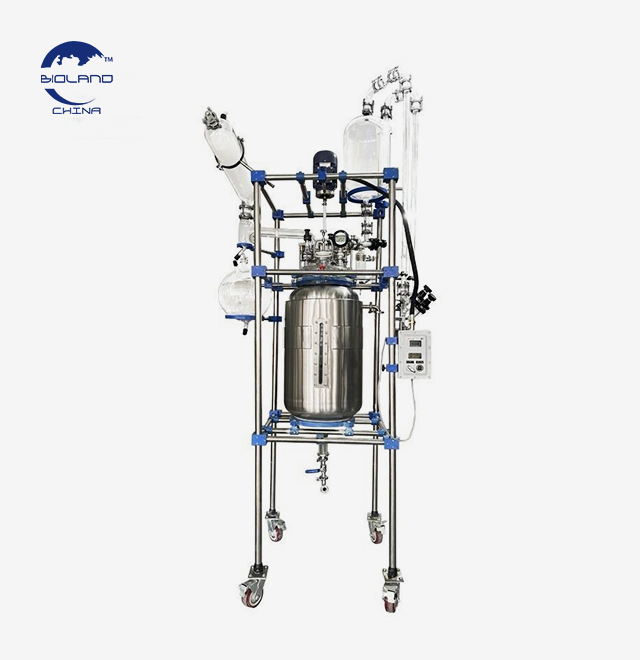
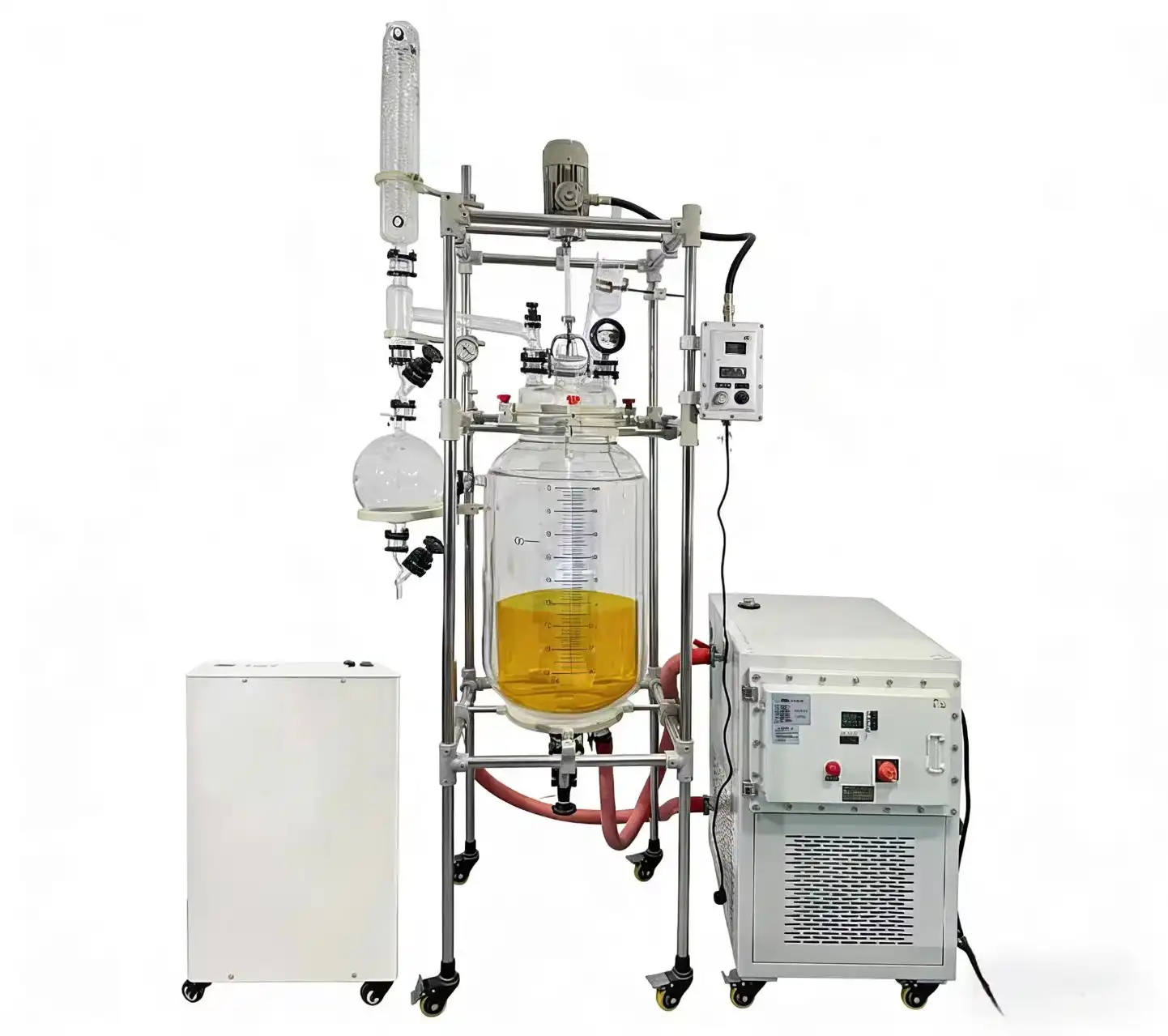
What a plant manager really wants to know when they ask if they should buy a nutsche filter reactoror a filter dryer is not about the equipment itself. It has to do with the process: how acidic the media is, how fragile the crystals are, how much liquid needs to be recovered, and how many times the result will be moved from one tank to another before it dries. This is a question that Xi'an Bioland Instrument Co., Ltd. has been answering for more than 15 years for customers in Europe and Southeast Asia who work in food, fine chemicals, precious metals, and pharmaceuticals. Our nutsche filter reactor combines reaction, crystallization, filtration, washing, distillation, and vacuum operation all in one clear borosilicate platform. It comes with a PTFE sintered filter plate as standard and comes in sizes from 20L to 100L.
It can also be fully customized into GMP-compliant, explosion-proof, and PLC-controlled configurations. The Bioland instrument nutsche filter reactor is not meant to be used by itself, but as the heart of a full solid-liquid separation system. It comes with CE and ISO certification, OEM/ODM support, and a price structure that is based on direct from the factory. This guide explains the practical differences between the two technologies so that you can pick the one that helps your workflow and doesn't just take up space.
Key Differences in Filtration and Drying Capabilities
What a Nutsche Filter Reactor Actually Does Inside One Vessel
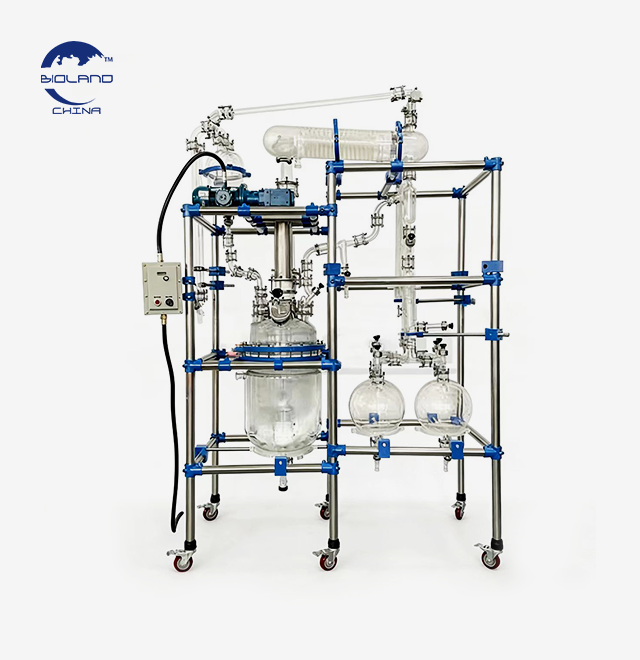
A nutsche filter reactor is a closed, jacketed vessel that has a filter plate built into the bottom head. A simple idea behind how it works: something reacts or crystallizes above the filter medium, and once solids have formed, pressure or vacuum moves the mother liquor through the PTFE sintered plate while the cake stays behind. High borosilicate glass makes up the body of the Bioland instrument design vessel. The jacket can hold heat-transfer fluids from -20°C to 200°C (and even lower temperatures up to -80°C upon request). The stirrer can be programd to do both reaction mixing and cake smoothing. As usual, the filtering element has a PTFE sand core. Stainless steel or titanium plates, as well as a full range of filter cloths and membranes, can be used instead. This means that one nutsche filter reactor can do all of the steps needed: synthesis, cooling crystallization, filtration, cake washing, and solvent-assisted reslurry. There is no need for a transfer step.
Where a Filter Dryer Takes Over: Heated Agitation and Vacuum Drying
The same filtration concept is used in an agitated filter dryer, but it has a hot stirrer shaft, a heated filter plate, and a vacuum system designed to get rid of solvents down to parts-per-million levels. Filter dryers are usually made of Hastelloy or stainless steel, come in sizes ranging from a few hundred liters to several thousand liters, and are designed for ongoing industrial production where the dried product is sent straight into drums. On the other hand, a filter dryer is a machine that dries things first. It's not made to handle a 10-hour catalytic reaction, you can't see what's going on in the bed, and versions with glass lining that are better for strong acids cost a lot more. A nutsche filter reactor is usually put upstream to do the reaction and crystallization, and a filter dryer is only put downstream when the drying throughput calls for it.
Case Study: A German API Developer Facing Wet-Cake Transfer Losses
Each batch, a contract developer in Frankfurt lost 8–12% of an expensive intermediate because they had to scoop wet cake from a Büchner funnel into a tray dryer. Oxygen exposure during the transfer changed the color of the product too.
Bioland instrument provided a 50L Nussche filter reactor with a nitrogen purge valve, a bottom outlet valve, and a jacket that was attached to a stainless steel agitator for heating and cooling. Crystallization, filtering, and vacuum deiquing can now all take place in the same container.
As a result, transfer losses dropped below 2%, the cake's liquid content dropped from 18% to 6% before it was dried completely, and one full operator shift per batch was cut. After that, the customer bought a second 100L unit for a GMP pilot line.
Side-by-Side Snapshot for Decision Makers
To put it simply, the Nusche filter reactor is superior to the Filsche dryer in terms of final moisture content and unattended commercial drying, while the Nusche filter reactor is superior in terms of multifunctionality, chemical compatibility, visibility, and capital cost at the laboratory to pilot scale. A glass nutsche filter reactor is better if your product starts to melt at high temperatures, if your chemistry has strong acids or bases that attack metal, or if you need to watch crystals form in real time to make sure the process parameters are right. A filter dryer is worth the money if you dry several tons of a strong product every week.
How Process Requirements Influence Equipment Selection
Corrosive Media, Low Temperatures and Visibility Needs
The science is where choosing the right equipment starts. A lot of chiral resolution agents, hydrochloric acid, bromine compounds, and sodium hydroxide solutions can eat away at stainless steel and add iron, nickel, or chromium ions to the product. A nutsche filter reactor's high borosilicate body and PTFE filter plate don't mix with most of these media. This is why pharmaceutical scientists like it for early-stage API work. Visibility is also very important. Through the glass wall, operators can see changes in color, nucleation, foaming, and cake cracking, which cuts process development by weeks. In order to control the wide temperature window to within 0.5°C rather than an approximation, Bioland pairs each Nussche filter reactor with a stainless steel high-low temperature integrated circulator.
Crystallization Control as a Deciding Factor
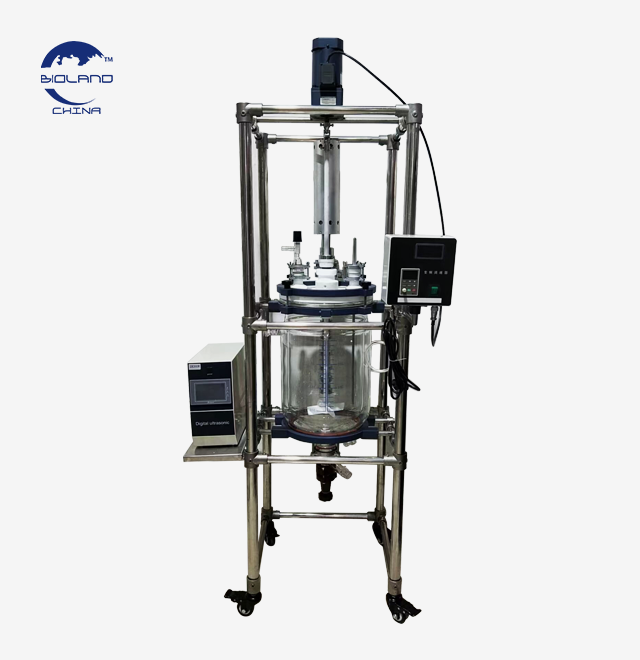
A lot of problems with filtering are really problems with crystallization. If the rate of cooling is too fast, impurities get stuck inside the crystal. If the shaking is too strong, the crystals break into tiny pieces that block the filter. Both are taken care of by a nutsche filter reactor. The jacket lets the solubility curve move down at a set rate, like 1-2°C per hour, while the programmable agitator keeps the suspension gentle. The crystals never have to deal with the shear of pumping or the thermal shock of transfer because the filtration happens in the same vessel. To improve filterability and narrow the distribution of particle sizes in challenging systems, Bioland can add an ultrasonic crystallization module to the Nussche filter reactor.
Case Study: Polish Precious Metal Catalyst Recovery
A chemical company near Kraków that made palladium and platinum catalysts had a hard time with 70% metal recovery, a stainless steel filter rusting quickly, and catalysts losing their ability to work during solid-phase processes at 150°C.
Bioland instrument designed a 50L nutsche filter reactor with a quick-release PTFE filter assembly that can handle short-term high temperatures, a jacket that can withstand temperatures from -80°C to 200°C, and a bottom valve that can handle thick slurries.
The solid-phase reaction, the filtration, and the collection of the mother liquor all happen now in a closed loop. Over 90% of precious metals were recovered, cleaning the filters took only forty minutes instead of four hours, and the customer says there has been no batch-to-batch carry-over since the system was installed.
Solid-Phase Peptide Synthesis and Other Niche Applications
The nutsche filter reactor is now a normal tool for making solid-phase peptides, thymic peptides, antimicrobial peptide screening, and peptide carrier materials. It can also be used for classical crystallization. The resin is put on the filter plate, and chemicals are added, mixed, and drained over and over again through the same PTFE medium. During the coupling, washing, and deprotection cycle, no resin is lost. A nutsche filter reactor can be used instead of three or four pieces of regular glassware when solids need to be formed, washed, and separated at a controlled temperature. This is true for precious metals, new materials, dye intermediates, and food ingredient purification.
Comparing Solvent Recovery and Product Purity
Mother Liquor Handling and Closed-Loop Recycling
Solvent makes up a big part of the surprising costs of running pharmaceutical and fine chemical plants. It also makes it harder to follow the rules. A nutsche filter reactor works with a controlled vacuum or low nitrogen pressure to separate the mother liquor. This keeps the mother liquor clean in a receiving flask or tank instead of letting it evaporate in an open funnel. Bioland instrument sets up the receiving line with a condenser and a vacuum buffer so that filtrate can be used again in the same system or added to the next batch. When customers switch from open filtration to a closed nutsche filter reactor, they usually see solvent recycling rates of 60 to 80%.
Avoiding Metal Ion Contamination and Cross-Contamination
Metal leaching and cross-contamination between steps are two things that can affect the quality of a product and can be directly controlled by the tools used. A nutsche filter reactor doesn't have the first risk at all because its touch sides are made of glass and PTFE. The second problem is solved by combining the reactions, crystallization, and filtration into one sealed vessel. This way, there are no extra containers, scoops, or funnels that could bring in foreign particles or leftovers from previous campaigns. This is a huge benefit for GMP pilot work during validation because it cuts down on the number of items that come into contact with the product that need to be cleaned and recorded.
Case Study: Italian Chiral Intermediate Crystallization
A biotech company in Lombardy was working on a chiral API intermediate but was having three problems at the same time: they couldn't find any incomplete conversion, the purity was stuck at about 97%, and the reaction medium was very acidic, which was rusting their stainless steel crystallizer.
Bioland instrument constructed a 100L Nussche filter reactor with a three-stage protocol. The catalytic process takes place in nitrogen at 0–5°C, and the color finish can be seen through the clear body.
After crystallization, a coolant at -20°C and a controlled cooling ramp of 1–2°C per hour are used. Filtration through the PTFE plate is the last step in the batch. The purity is now higher than 99.5%, the yield went up by 15%, and the mother liquor is used in the next run.
Washing Protocols That Push Purity Above 99.5%
Getting cleaner doesn't stop at filtration. It's easy to do both the displacement wash and the reslurry wash in anutsche filter reactor. Just add more solvent above the cake, lower the agitator to resuspend the solids if needed, and drain the wash liquor through the same plate. Over-washing, which lowers yield, is avoided because the operator can see the cake and check the clarity of the filtrate. These washes can also be done by filter dryers, but you can't see what they're doing. For heat-sensitive or hygroscopic crystals, being able to stop at the right time is what makes the difference between 99.5% and 98%.
Which System Fits Your Production Scale and Workflow?
Laboratory and GMP Pilot Scale: 20L to 100L
It comes in sizes of 20L, 30L, 50L, and 100L nutsche filter reactors, so Bioland can meet almost any need for research, process development, and GMP pilot validation. Each unit can come with an electric lifting mechanism that makes it easy to get to the filter plate, an explosion-proof motor and control cabinet for places with a lot of solvents, and paperwork that meets GMP and FDA requirements. On the same equipment that will later be used to define the commercial process, a pilot team can do studies on reaction, crystallization, and filtration. This avoids the surprises that usually happen when a process developed in flasks is put into a 500L steel vessel.
Scaling to Commercial Production
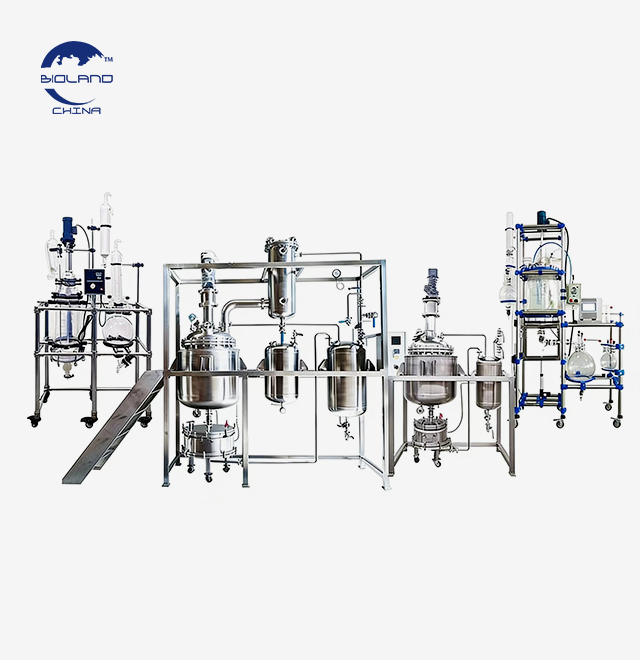
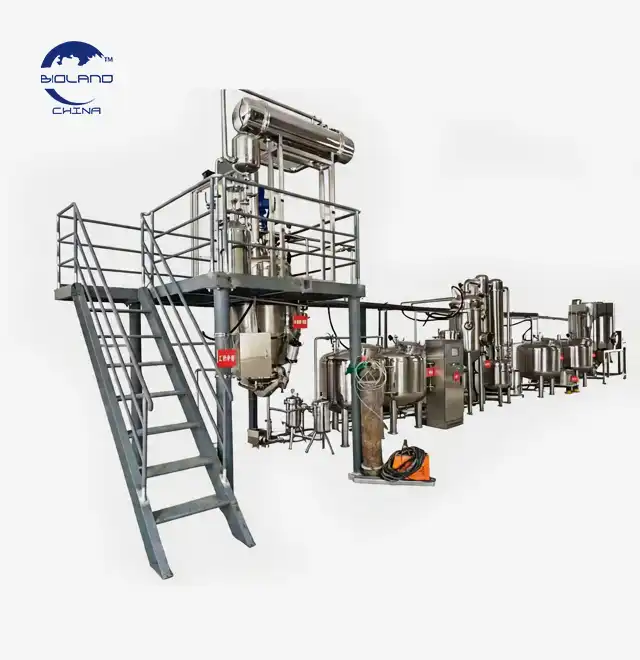
Nutsch filters and agitated filter dryers made of stainless steel or glass become standard for volumes over a few hundred liters. Bioland instrument offers these as part of full production lines, along with batch chemical reactors, crystallization reactors, fractional distillation columns, and vacuum spray or freeze dryers. The smart thing to do is to use the nutsche filter reactor at the small scale as a guide for the process and use the data it produces to design the bigger equipment. A lot of our customers keep a glass nutsche filter reactor next to the production filter dryer so they can fix problems and test out new products.
Case Study: Southeast Asian Food Ingredient Producer
A Thai company that refines sugar and natural sweeteners needed to clean up a valuable crystalline extract, but they didn't think it was worth the cost of a steel filter dryer for a product that was only made in 40kg batches. Their open filtration was slow, dirty, and caused fines to be lost.
Bioland instrument suggested a 100L nutsche filter reactor with food-grade seals, a 10-micron PTFE membrane, and a PLC touch screen that keeps track of each batch's temperature and pressure.
The time it took to filter each batch dropped from six hours to ninety minutes, the whiteness of the products got better to meet export standards, and the equipment paid for itself in seven months, compared to the quoted filter dryer.
Automation Options: PLC, Electric Lifting, Explosion-Proof Packages
How well the work flows depends on how much the operator has to touch. The Nusche filter reactor is available from Bioland instrument in three different configurations: fully automatic, semi-automatic, and manual. The whole package comes with ATEX-style blast protection, PLC control with recipe storage, automatic valve ordering between reaction, filter, and wash steps, integrated temperature control, electric lifting of the head assembly, and PLC control with recipe storage. You can add ultrasonic crystallization probes, combined extraction modules, and distillation and rectification heads to the vessel to make it a small, multipurpose plant that still takes up less than two square meters of space.
Cost and Maintenance Factors for Industrial Equipment
Capital Cost Comparison and Bioland's Price Advantage
At the small scale, a glass-lined or Hastelloy agitated filter dryer usually costs five to ten times more than a nutsche filter reactor of the same size, and it usually takes six months to get one. Standard Nusche filter reactor units ship in 5–7 days, and custom systems in about 30 business days, all at factory-direct prices, thanks to Bioland instrument's in-house manufacturing with its own R&D and engineering team. CE and ISO certification are built in, not extras. The warranty lasts for one year, and maintenance support is provided for life. When a plant needs to test a process this year instead of next, the difference in cost and time is often what makes the difference.
Daily Maintenance: Filter Media, Seals and Cleaning
It is on purpose that a nutsche filter reactor's upkeep schedule is very easy. For cleaning, the PTFE sintered plate can be backwashed in place or lifted out through the quick-release assembly. In minutes, filter cloths and membranes with different pore sizes can be switched out. The solvent doesn't swell up the PTFE-lined seals and valves, and the glass body is looked over visually for any residue before the next batch. The filter medium should be the right size for the crystals, the filtration rate and pressure should be watched so the cake doesn't get too compressed, and the jacket circuit should be rinsed every so often to keep heat transfer working well.
Safe Operating Practices for Glass Vessels
Glass is strong in compression but must be respected. Bioland instrument's nutsche filter reactor is rated for vacuum and low positive pressure, and the explosion-proof variants have been certified for the solvent atmospheres typical of 20L–100L synthesis. Good practice includes ramping temperature rather than shocking the jacket, keeping the differential between jacket fluid and contents within the specified limit, never exceeding the stated vacuum or nitrogen pressure, checking the bottom valve seat before each run and using the electric lift rather than manual force when opening the head. Each shipment includes an operating manual and, on request, remote or on-site commissioning.
Lead Time, Warranty and Lifetime Support
Service is where equipment suppliers are really judged. During manufacture of every nutsche filter reactor Bioland instrument assigns a dedicated specialist who sends weekly photo or video updates, and detailed inspection media are provided before shipment; customers may also schedule a Factory Acceptance Test in Xi'an. Sea, rail and air freight are all supported. After delivery, the technical team remains available for process questions, spare parts and upgrades such as adding a distillation head or PLC package to an existing nutsche filter reactor, so the equipment grows with your product pipeline.
Conclusion
Choosing between a nutsche filter reactor and a filter dryer comes down to what your process needs most. If you require corrosion resistance, real-time visibility, precise crystallization control and a single vessel that handles reaction, filtration and washing at 20L to 100L scale, the glass nutsche filter reactor from Bioland Instrument delivers higher purity, better solvent recovery and faster validation at a fraction of the cost. If unattended drying of multi-ton batches is the bottleneck, a filter dryer belongs downstream. The customers described above, from Frankfurt to Kraków to Thailand, did not simply buy equipment; they solved yield, purity and safety problems with a customized solution. Bioland's CE and ISO certified, OEM/ODM-ready nutsche filter reactor is built to do the same for your plant.
FAQ
What sizes of nutsche filter reactor does Bioland offer?
Standard sizes are 20L, 30L, 50L and 100L, with larger steel systems available for production lines.
Can the nutsche filter reactor be made explosion-proof?
Yes, fully explosion-proof motors, cabinets and PLC controls are available as a customization.
What filter media are supplied?
A PTFE sintered plate is standard; stainless steel, titanium plates and various filter cloths and membranes are optional.
What temperature range is supported?
-20°C to 200°C as standard, extendable to -80°C with the matching circulator.
How long is delivery?
Standard units ship in 5–7 days; customized nutsche filter reactor systems in about 30 business days.
Ready to Turn Your Filtration Problem into a Validated Process? Talk to Bioland Instrument Today
If low yield, stubborn impurities, corroded steel filters or risky manual transfers are slowing your pilot or production line, the engineers at Xi'an Bioland Instrument Co., Ltd. want to hear the details. For over 15 years we have designed nutsche filter reactor systems, batch reactors, crystallizers, extraction and drying equipment for customers across Europe and Southeast Asia, every unit CE and ISO certified and built to GMP/FDA expectations. Tell us your chemistry, your scale and your target purity, and our in-house R&D team will propose a customized nutsche filter reactor configuration, from PTFE filter options to explosion-proof PLC automation, at factory-direct pricing with OEM/ODM support, 30-day customized delivery, weekly production updates, a one-year warranty and lifetime maintenance. Send your process requirements to info@biolandequip.com and receive a tailored solution proposal within 24 hours.
References
1. Perry, R. H., & Green, D. W. Perry's Chemical Engineers' Handbook, 9th Edition, Section 18: Liquid-Solid Operations and Equipment. McGraw-Hill, 2019.
2. Sparks, T., & Chase, G. Filters and Filtration Handbook, 6th Edition. Butterworth-Heinemann, 2016.
3. Tarleton, E. S., & Wakeman, R. J. Solid/Liquid Separation: Equipment Selection and Process Design. Butterworth-Heinemann, 2007.
4. Mullin, J. W. Crystallization, 4th Edition. Butterworth-Heinemann, 2001.
5. Mujumdar, A. S. (Ed.). Handbook of Industrial Drying, 4th Edition. CRC Press, 2014.
6. Am Ende, D. J., & Am Ende, M. T. (Eds.). Chemical Engineering in the Pharmaceutical Industry: Active Pharmaceutical Ingredients, 2nd Edition. Wiley, 2019.
The reactor is beautifully mirror-polished and fully complies with GMP requirements for the pharmaceutical industry. The performance is excellent! Overall, we are very satisfied! We also provided with some feedback on our process improvements, which we hope will be helpful.
2024-04-09
Laboratory
Excellent and professional service. Always reply our questions very fast. All reactors and chiller we received are good too.
2024-02-15
Research Institute
Quality is beyond our expectation actually. After we got the extraction equipment and started using it, the performance was beyond our expectation. Very easy to use and very efficient to run. Service always respond us very quickly. Was also very helpful to help us. Thanks Bioland team. Very happy to work with you.
2023-11-20
Biotech Company
We are happy about the new purchase as always. Equipment and services are both good.
2023-08-05
Instrument Lab
This is the second order with Bioland instrument and everything is good as the first dateText.
2023-05-12
Global Trading Partner
Bioland instrument team is very helpful and professional. The sales helped us select the right equipment for our application, and their logistics people handled the transportation and customs declaration for our shipment. All that saved us a lot of work.