From Lab to Production: Glass vs. Stainless Steel Reactors—When to Use Each
Jul 27, 2026
What kind of material is used for the vessel affects every step further down the bioprocess, from how quickly you can spot a contamination event to how long the equipment can be used without pitting or leaching. Aglass biological reactor made of GG17 borosilicate glass lets biopharmaceutical, food, and fine chemical teams see fermentation, cell culture, and reaction dynamics in a way that stainless steel vessels can't. It also meets the standards set by CE, ISO, UL, SGS, and GMP/FDA for production. Xi'an Bioland Instrument Co., Ltd. makes a line of glass biological reactors that can work in temperatures ranging from -80°C to 250°C. These reactors come with PLC control, explosion-proof choices, and OEM/ODM customization right from the start. This piece explains when glass is better than stainless steel and when stainless steel is still better. It also talks about how real users have used a glass biological reactor to fix problems with rust, transparency, and heat transfer that were slowing down their production.
Comparing Glass and Stainless Steel Reactor Materials
It's not always a matter of personal preference when it comes to choosing materials. It determines whether your team can see the reaction happening or must rely on sensor readings alone, as well as whether metal ions can ever get into a sensitive batch. Each comparison in this part comes back to a question that process engineers ask themselves before choosing a glass biological reactor: does the material help the process happen, or does it just hold it?
Borosilicate Glass Construction and GG17 Properties
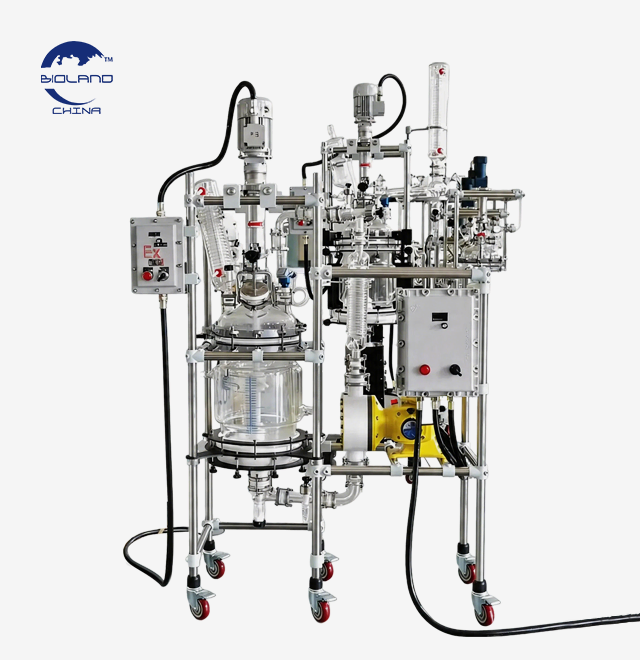
The glass biological reactor at Bioland is made of GG17 high borosilicate glass, which is valued for being chemically stable, resistant to temperature shock, and having a wall that is totally clear so that users can see color change, foam behavior, and phase separation as they happen. This clearness isn't just for looks; it gives useful information that a stainless steel container can't give you without extra sensors and tools. This is especially helpful during fermentation, crystallization, and multi-step synthesis, when problems can be seen before they show up in the lab results.
Stainless Steel Grades Used in Bioprocess Vessels
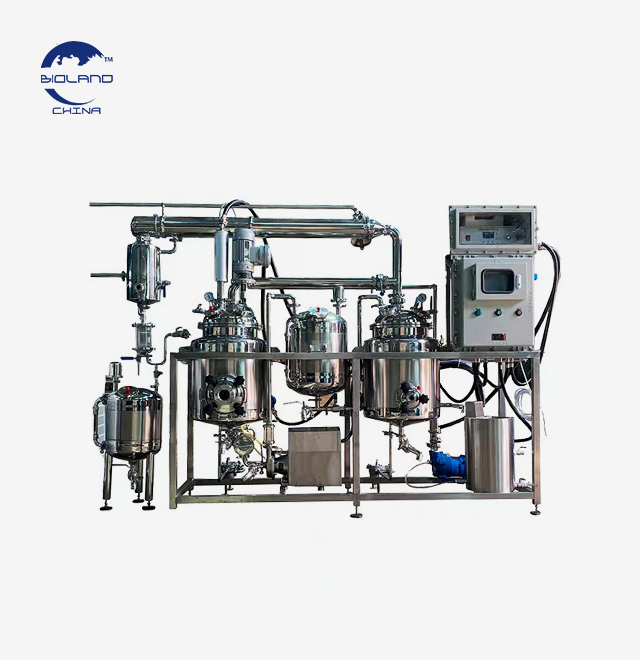
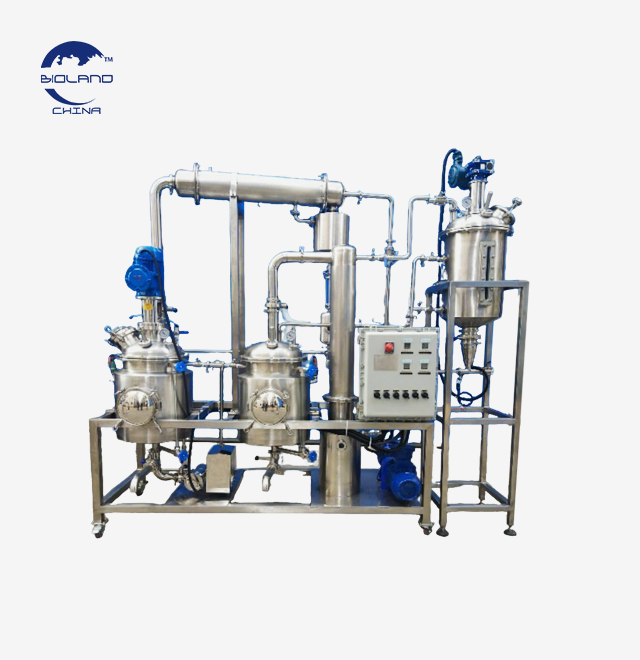
304 or 316L grade stainless steel vessels are strong and better at transferring heat than glass. This is why they are often used in large production fermenters that hold more than a few thousand liters of liquid, where a glass biological reactor would not work as well. Stainless steel, on the other hand, is not clear and needs more tools to check on its internal conditions. It can also be damaged by pitting corrosion if it is exposed to chlorides, strong acids, or high-salinity media over and over again for years.
Visual Process Monitoring vs Opaque Metal Vessels
Every batch in a glass biological reactoris no longer a mystery; operators can see for themselves that the mixture is homogeneous, that foaming stops before it gets to the exhaust filters, and that a reaction has reached its expected endpoint. The Bioland modular glass biological reactor has standard flange ports that can accept pH probes, dissolved-oxygen sensors, and temperature monitors. This means that digital data collection and visual proof can work together instead of one replacing the other.
Case Study: Scaling Down Fermentation for Process Validation
A company that makes unique ingredients had to confirm the fed-batch fermentation conditions for E. to test for E. coli and P. pastoris strains before spending money on a 10,000L industrial fermenter. The team used a 50L Bioland glass biological reactor to test oxygen enrichment strategies and feed-rate algorithms. They watched in real time to confirm how foam behaved and how the color of the biomass changed. The factors that had been tested went straight to the production scale. This cut down on the chance of redesigning before the bigger investment was made.
Differences in Corrosion Resistance and Durability
Corrosion resistance determines how long a reactor works reliably, and it is one of the main reasons why a properly designed glass biological reactor is better than metal ones in harsh chemical environments. When process engineers move from a stainless steel tank that was rusting to a glass biological reactor, they usually talk about it in the same way: fewer unexpected shutdowns, better batch records, and not having to guess if a change in purity is caused by the equipment itself.
Chemical Inertness of GG17 Borosilicate Glass
Strong acids, alkalis, halogens, and most organic solvents can't damage GG17 borosilicate glass. It also doesn't pit, etch, or release metal ions into the batch. This inertness directly protects the purity of the product over thousands of reaction and cleaning cycles in a glass biological reactor that is making pharmaceutical intermediates or biologically active compounds. Stainless steel, on the other hand, can't do this because its passive oxide layer can't handle being challenged over and over again.
Corrosion Risks in Stainless Steel Under Acidic or Saline Media
When chloride-containing media, strong acids, or high-salinity buffers are used over and over at high temperatures, even high-grade 316L stainless steel can develop pitting or crevice corrosion. When cracking starts, it makes it harder to clean and can cause contamination from one batch to the next. This is exactly the kind of failure that makes many bioprocess and fine chemistry teams choose a glass biological reactor for their most sensitive product lines.
Case Study: Custom Corrosion-Resistant Vessel for Precious Metals Catalyst Production
A Polish company that makes precious metals catalysts needed to be able to control the temperature ramp consistently across all batches while working with acidic intermediates that had broken down old equipment. Bioland designed and built a PLC-controlled glass biological reactor with motors that won't explode and accurate ramp setting. The glass surface got rid of the metal-ion contamination that the client had been able to trace back to worn stainless steel parts. This made the quality of the output consistent across all batches.
Long-Term Durability and Maintenance Considerations
Regular checks of the ground joints, replacement of the PTFE seals on a set schedule, and regular cleaning between batches are all that's needed to keep a glass biological reactor in good shape. Stainless steel vessels, on the other hand, need special re-passivation treatments after being exposed to corrosion. Bioland backs up every unit with a one-year guarantee and lifetime upkeep support. This way, the total cost of purchase stays the same for at least ten years of continued use.
How Materials Affect Reactor Heat Transfer Performance
How well heat moves through a material affects cycle time, energy cost, and how tightly a process can hold its goal temperature. When comparing glass and stainless steel, there are real choices instead of a clear winner. A well-designed jacket on a glass biological reactor closes most of the theoretical thermal-conductivity gap. This is why the difference in daily operation is often smaller than what the standards for the raw materials say it is.
Thermal Conductivity: Glass vs Stainless Steel
Stainless steel naturally moves heat faster than borosilicate glass, but a well-designed glass biological reactor makes up for this with its jacket surface area, circulating fluid velocity, and double-wall design. This means that the temperature can be controlled very precisely from -80°C to 250°C. For most fermentation and condensation tasks, a well-designed glass jacket keeps the temperature stable at least as well as or better than stainless steel dishes that aren't optimized for daily use.
Jacket and Cooling System Design for Each Material
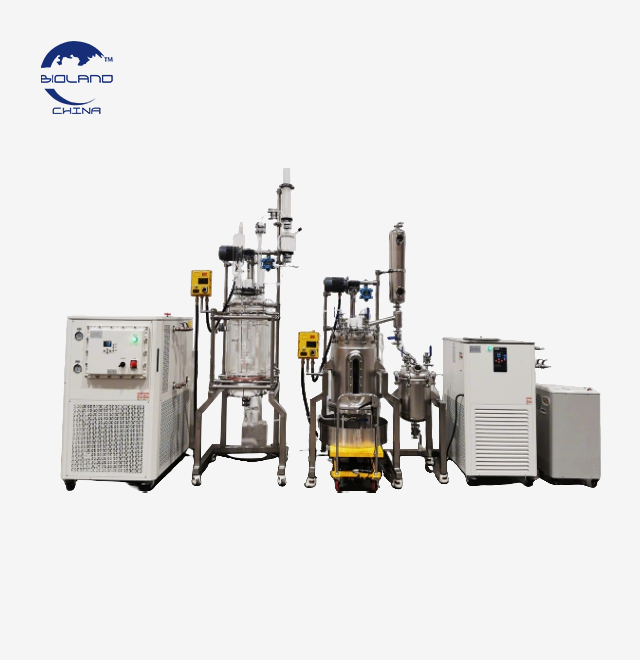
Bioland'sglass biological reactor has a double-jacket design that evenly moves fluids around the vessel wall to heat or cool them. This allows for everything from high-temperature reflux to holding crystallization at low temperatures without having to switch equipment. Similar uniformity can be achieved with stainless steel jackets, but the operator has to completely trust the temperature probes because there is no way to see if the heat distribution is acting the way the control system says it is.
Case Study: South American Biopharmaceutical Fermentation Optimization
A biotech company in South America had problems with dissolved oxygen not working well, fermentation cycles taking too long, and quality issues in a step that was sensitive to oxidation. Bioland made a custom 50L double-jacketed glass biological reactor with the best design for stirring paddles. The dissolved oxygen transfer was 30% better, the fermentation cycle time was cut down, and the construction was sealed and compatible with inert gases, which created the clean, precisely controlled environment needed for the synthesis.
Temperature Uniformity and Process Consistency
Temperature changes and localized hot spots are found earlier in a glass biological reactor than in an opaque steel tank. This is because operators can see the mixing and thermal behavior along with the digital sensor data. This double proof is most important in reactions that release heat or are sensitive to oxidation, because even a short rise in temperature can change output, purity, or cell survival in biological processes.
Choosing the Best Reactor Material for Your Process
It doesn't matter which vessel is "better" in general; what matters most is which qualities are most important for your chemistry, biology, and governing context. When choosing between a stainless steel or glass biological reactor, buyers will get the most accurate answer if they compare their process needs to the four factors listed below, instead of just going with the material their facility has always used.
Matching Material to Regulatory and Purity Requirements
For CHO cell culture, making monoclonal antibodies, making Vero cell vaccines, or any other GMP-regulated synthesis, a glass biological reactor's neutral surface and full compliance with CE, ISO, UL, SGS, and GMP/FDA lower the infection risk that regulators look at the most carefully. Teams working on pharmaceutical intermediates or biologically active chemicals always find that building with glass is easier when it comes to validation paperwork compared to stainless steel, which has a small metal-ion transfer risk every once in a while.
Cost, Customization, and OEM/ODM Considerations
Bioland's glass biological reactor line is more customizable than similar stainless steel systems and has more options for pricing. For example, you can choose from explosion-proof systems, PLC full automation, integrated temperature control, lift-and-rotate designs, filtration, crystallization, ultrasonic crystallization, tail-gas absorption, and distillation columns, all of which can be set up exactly the way you want them. OEM and ODM orders are welcome, which means that buyers and integrators of equipment can get it under their own brand names without giving up engineering support.
Case Study: Academic Tissue Engineering Scale-Up Support
For tissue engineering work, a university research group needed to grow stem cells on microcarriers but had trouble seeing the quality of the carrier suspension in the opaque vessel they were using. When researchers switched to a Bioland glass biological reactor, they could directly see the state of the solution and change the stirring before sedimentation broke down cell attachment. This made the experiments more repeatable across the lab's ongoing protocol development.
Company Support: From Prototype to Production Scale-Up
For more than 15 years, Xi'an Bioland Instrument Co., Ltd. has been making reaction, extraction, distillation, filtration, and drying equipment for customers in the food, pharmaceutical, and fine chemical industries. This equipment is sent to Europe, Southeast Asia, and other places. Standard glass biological reactor units ship in 5–7 days, while personalized setups take about 30 business days. During this time, a committed expert provides weekly picture or video reports on the progress of the project, and before the goods leave the facility, an extra Factory Acceptance Test is available.
Conclusion
The choice between aglass biological reactor and a stainless steel vessel depends on what is most important to your process. Glass is better for clear visibility, chemical inertness, and contamination control, but stainless steel is better for raw thermal conductivity and very large production volumes. The GG17 design, wide temperature range, full approval, and recorded fermentation and corrosion-resistance results from Bioland give process teams a way to make that call without having to guess. Matching the right material to your specific process and legal needs saves both the quality of the product and the long-term cost of the equipment.
FAQ
Q1: In the long run, will a glass biological reactor last as long as a stainless steel one?
Yes, as long as it's kept up properly. In acidic or salty environments, GG17 borosilicate glass avoids chemical weathering better than stainless steel. However, it needs to be handled more carefully to avoid damage from impacts.
Q2: Can a glass biological reactor handle the same temperature range as stainless steel systems?
Like most stainless steel jacketed systems, Bioland's units can work from -80°C to 250°C and handle cryogenic crystallization through high-temperature reflux.
Q3: When compared to metal, does glass pose a greater risk of contamination?
Not at all. Because GG17 glass is chemically neutral and doesn't release metal ions, it is often chosen over stainless steel in processes that deal with drugs or living things.
Q4: What batch sizes does the glass biological reactor line come in?
Sizes range from 5L bench units to 150L and larger, and they can be used for a wide range of tasks, from academic research to pilot-scale GMP validation.
Q5: Can the reactor be changed so that it doesn't explode or so that it runs itself?
Yes. For processes that need to be safe or accurate, you can choose from PLC automation, explosion-proof motors, and integrated temperature control systems.
Talk to Bioland Instrument About Your Reactor Material Decision
Your current reactor setup might be limited by rust, contamination risk, or limited process view. Bioland Instrument has already fixed this issue for clients in the biotech, rare metals, and research fields on several countries. Xi'an Bioland Instrument Co., Ltd. has been making reaction, extraction, distillation, filtration, and drying equipment that meets CE, ISO, and GMP standards for more than 15 years. They can help you choose between a glass biological reactor and a stainless steel alternative based on your specific chemistry, not a generic sales pitch. Our team can handle OEM/ODM orders and ship standard units within 5–7 days.
For every tailored build, we provide weekly picture and video reports as well as an extra Factory Acceptance Test before shipment. All of this is backed by a one-year guarantee and lifetime maintenance support. Our engineers can explain the pros and cons in simple terms, whether you need to scale up a fermentation process, protect a synthesis that is sensitive to rust, or just get a better look at your reaction. Send an email to info@biolandequip.com with the details of your process, and we'll help you find the reactor material that best meets your needs.
References
1. Nagata, S. Mixing: Principles and Applications. Kodansha/Wiley, 1975.
2. Perry, R. H., & Green, D. W. Perry's Chemical Engineers' Handbook. McGraw-Hill Professional, 2007.
3. Doran, P. M. Bioprocess Engineering Principles. Academic Press, 2013.
4. Paul, E. L., Atiemo-Obeng, V. A., & Kresta, S. M. Handbook of Industrial Mixing: Science and Practice. Wiley-Interscience, 2004.
5. Davies, J. Materials for Containment and Corrosion Control in the Chemical Process Industries. Institution of Chemical Engineers, 1999.
6. Sinnott, R. K. Chemical Engineering Design. Butterworth-Heinemann, 2005.
The reactor is beautifully mirror-polished and fully complies with GMP requirements for the pharmaceutical industry. The performance is excellent! Overall, we are very satisfied! We also provided with some feedback on our process improvements, which we hope will be helpful.
2024-04-09
Laboratory
Excellent and professional service. Always reply our questions very fast. All reactors and chiller we received are good too.
2024-02-15
Research Institute
Quality is beyond our expectation actually. After we got the extraction equipment and started using it, the performance was beyond our expectation. Very easy to use and very efficient to run. Service always respond us very quickly. Was also very helpful to help us. Thanks Bioland team. Very happy to work with you.
2023-11-20
Biotech Company
We are happy about the new purchase as always. Equipment and services are both good.
2023-08-05
Instrument Lab
This is the second order with Bioland instrument and everything is good as the first dateText.
2023-05-12
Global Trading Partner
Bioland instrument team is very helpful and professional. The sales helped us select the right equipment for our application, and their logistics people handled the transportation and customs declaration for our shipment. All that saved us a lot of work.