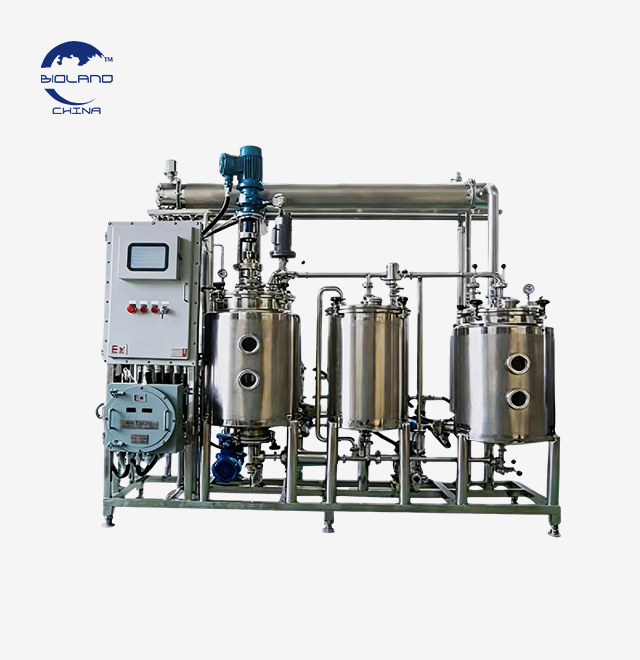
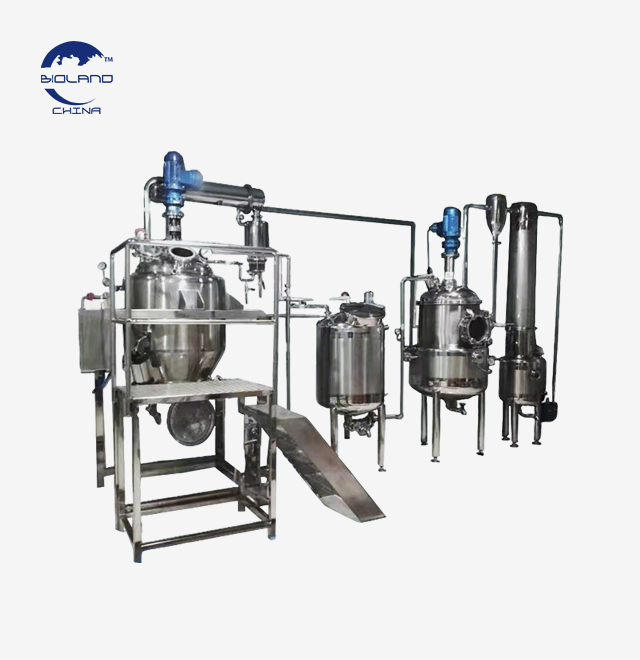
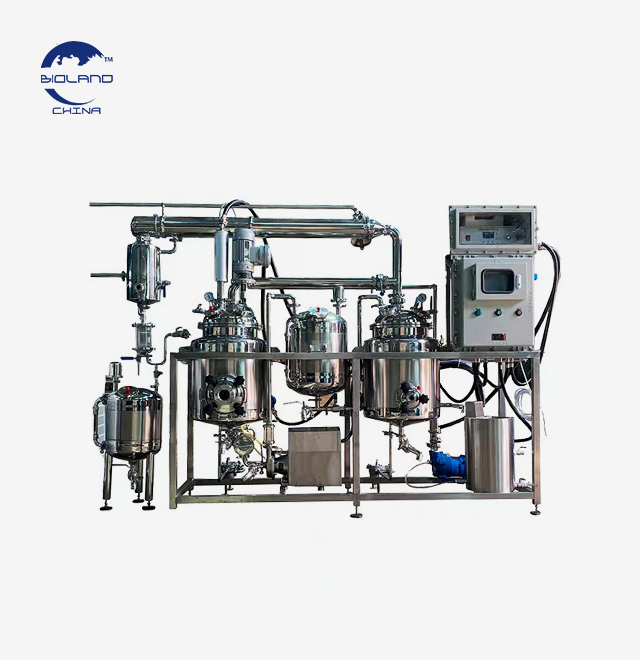
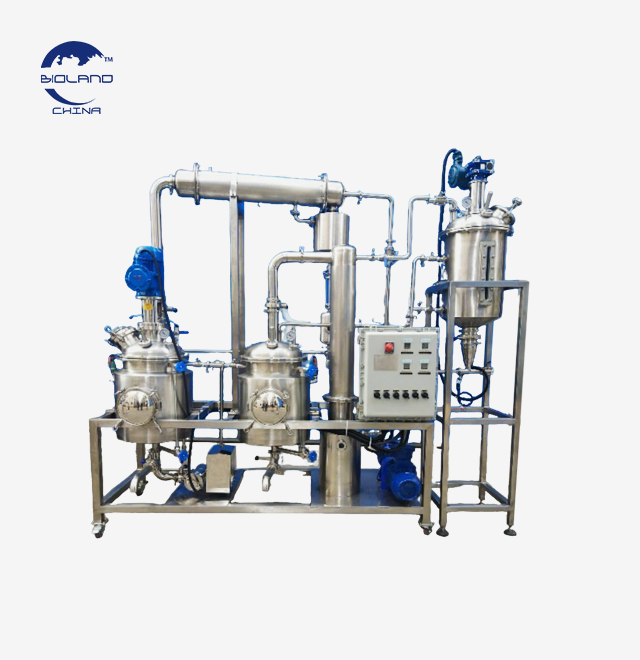
One of the first engineering decisions that a process team has to make when moving a recipe from bench notes to production output is whether to use a jacketed reactor or a standard glass reactor. A jacketed agitated reactorsolves this problem by combining the borosilicate glass's good looks and resistance to corrosion with a controlled heating and cooling jacket and a variable-speed agitator. This gives process engineers a single vessel that can do synthesis, crystallization, distillation, and extraction all under very strict conditions. Bioland Instrument Co., Ltd. makes its jacketed agitated reactor line out of GG17 borosilicate glass, which can withstand temperatures from -80°C to 250°C. The company is certified by CE, ISO, UL, and SGS, and it follows all good manufacturing practices (GMPs). This way, pharmaceutical, biotech, and fine chemical companies can confidently scale up a process instead of guessing. This piece gives a straight comparison of jacketed and glass reactor designs, talks about how real customers have used them, and explains where a jacketed agitated reactor can be useful on your production floor.
Key Configuration Jacketed agitated Reactor
Before choosing a reactor, it's important to know what "jacketed" means in terms of how the vessel behaves and how that compares to basic mixing or storage glass vessels that don't have jackets. The jacketed agitated reactor is designed to give the process team direct control over the reaction temperature. A automatic mixer keeps the batch homogeneous from the first minute to the last. A reaction can happen in plain glass vessels that don't have a jacket or an agitator, but they can't actively control an exotherm, keep a cryogenic hold point, or guarantee consistent mixing intensity. This is exactly why manufacturers moving toward regulated production standardize on jacketed, agitated designs instead.
Vessel Construction and Material Composition
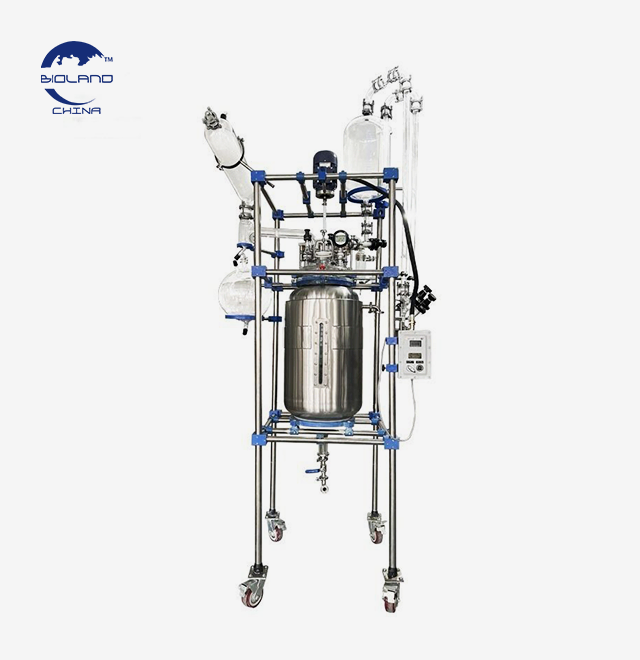
A basic glass reactor is usually a one-wall vessel used for simple mixing. A jacketed agitated reactor, on the other hand, has an extra glass or steel shell around the reaction chamber to carry media for heating or cooling. Bioland makes the inner tank out of GG17 borosilicate glass, which is resistant to thermal shock, acids, and organic liquids. This way, workers can see the process clearly without worrying about the structure breaking down after thousands of thermal cycles.
Jacket Configuration and Coolant/Heating Circuits
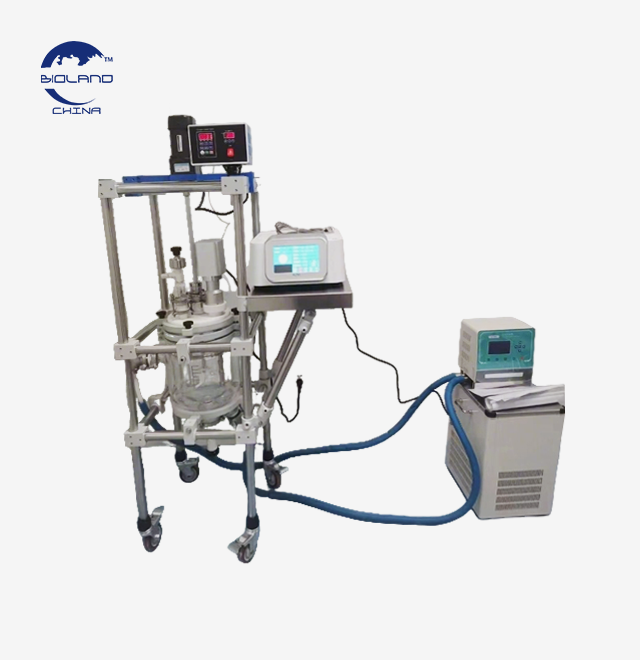
The main difference between ajacketed agitated reactor and a flask or tank that doesn't have a jacket is that a jacketed agitated reactor circulates thermal fluid evenly around the vessel wall. Bioland provides standard full conventional jackets and can also design half-pipe or dimple setups for bigger vessels. This lets engineers fit the jacket surface area and flow rate to their exact exotherm or endotherm profile instead of having to settle for a standard setup.
Agitation Systems and Mixing Performance
A jacketed agitated reactor is different from static glass vessels in terms of mixing quality. If the fluid is thick or thin, you can choose between an anchor, a ribbon, or a turbine impeller. The Bioland BL-series has stirring torques that range from 9,000 g.cm on the 5L model to 28,000 g.cm on the 150L unit, so the shear is the same for both small lab batches and larger pilot runs without having to change the process.
Standard Capacity Range and Configuration Options
The jacketed agitated reactor line from Bioland includes everything from 5L bench units to 10,000L production-scale systems. All of them are built to the same GMP and CE standards. This continuity is important because a process that has been tested on a 20L jacketed agitated reactor in the lab can be easily applied to a 200L or larger unit later on. This eliminates the need for revalidation, which often slows down projects that need to be scaled up.
Materials, Heat Transfer, and Process Performance
The type of material used and how well it transfers heat determine whether a reactor just holds your reaction in place or actively improves its outcome. This is where customer results are more important than spec sheets. On paper, a jacketed agitated reactor made of GG17 borosilicate glass has to show that it can transfer heat better than stainless steel alternatives. But the real test comes from the production floors, where hard numbers are used to track things like dissolved oxygen rates, batch cycle times, and equipment uptime. The following customer cases show what happens when the jacket design, propeller choice, and glass chemistry are all designed together instead of being given as separate requirements.
Borosilicate Glass vs Stainless Steel Heat Transfer Efficiency
GG17 borosilicate glass moves heat more slowly than stainless steel, but the jacket in ajacketed agitated reactor makes up for this by increasing the contact surface area and fluid velocity, which means that the process temperature stays precisely controlled. For sensitive chemicals, the trade-off is worth it because glass doesn't add any metal ions to the batch, while stainless steel can do this after being exposed to acid for a long time.
Case Study: European Precious Metals Solvent Extraction
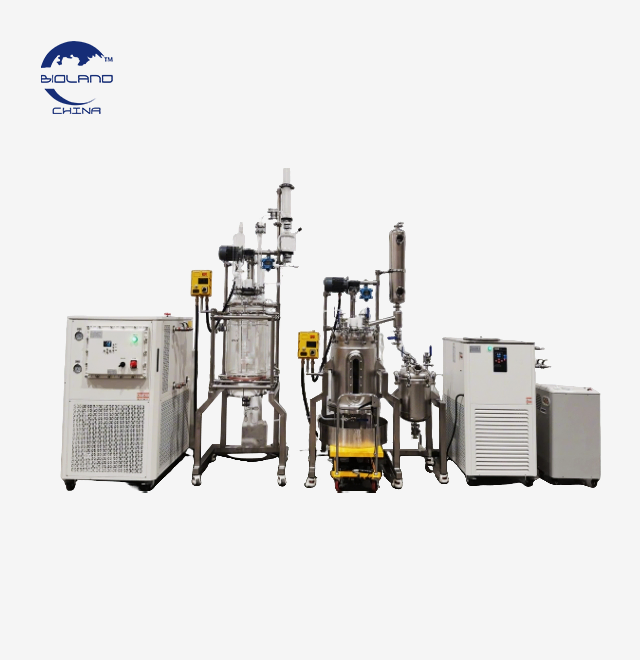
It was hard for a European company that deals in valuable metals to scale up solvent extraction and processing because they only had small-batch equipment and couldn't make it fit their needs. Four 200L explosion-proof jacketed agitated reactor units built to Exd≡BT4 standards were sent by Bioland, along with nine 50L rotating evaporators for the same line. Cutting down on delivery time by 40% meant that the client could start production 15 days early, increase yearly capacity by 30%, and run the machine for over 1,000 hours without a single problem.
Mixing Torque and Impeller Selection for Viscous Media
For processes with thick resins or polymers, you need more than just motor power. You also need the right shape of propeller. A jacketed agitated reactor with helical ribbon impellers and wall scrapers keeps the product from baking onto the heated glass surface during viscosity buildup. This protects both the yield and the clarity that operators use to see how the reaction is going.
Case Study: South American Biopharmaceutical Fermentation Optimization
A biopharmaceutical company in South America had trouble with dissolved oxygen not working well, fermentation cycles that took too long, and inconsistent product purity in oxidation-sensitive syntheses. Bioland designed and built a 50L double-jacketed agitated reactor with a specifically designed stirring paddle. Dissolved oxygen transfer got 30% better, fermentation cycle time went down, and the design that was sealed and compatible with inert gases created the clean, tightly controlled environment needed for making pharmaceutical intermediates.
Temperature Control and Chemical Compatibility
Most of the time, tight control over temperature and high chemical resistance are the two qualities that determine if an investment in a reactor pays off over years of ongoing production. This benefit comes from a jacketed agitated reactor having an unusually wide operating window while being resistant to the corrosive media that would slowly break down a stainless steel vessel. Also, process engineers who look at the long-term total cost of ownership always find that glass construction is better than metal when it comes to chemical inertness, even when metal is better at raw thermal conductivity. The similarities and client cases that follow show exactly how that edge is used in real life.
Wide Temperature Range Operation
Bioland's jacketed agitated reactor can work at temperatures ranging from -80°C to 250°C. On one end, it can do cold crystallization, and on the other, it can do high-temperature reflux or distillation. Because of this, a single jacketed agitated reactor can often replace two or three separate vessels. This saves money on capital and makes it easier to train operators in a plant that uses a lot of different chemicals.
Chemical Resistance for Acids, Bases, and Organic Solvents
The jacketed agitated reactor is made of GG17 glass, which makes it very resistant to strong acids, alkalis, halogens, and most organic solvents. It doesn't pit or corrode. For controlled industries, this is very important: making pharmaceutical intermediates, chiral separation, and biologically active compounds all need tools that won't add contaminants to the mix over and over again.
Case Study: European Chiral API Synthesis
A European company that makes specialty drugs needed a place with no oxygen to make a chiral intermediate without the risk of racemization or metal contamination. The client was able to run the synthesis under nitrogen while keeping the temperature under tight control with Bioland's jacketed agitated reactor, which had a double mechanical seal for inert-gas blanketing. The cleanliness of each batch became more uniform, and the clear jar let workers see real-time changes in color and residue.
Safety Systems for Hazardous and Exothermic Reactions
For chemical reactions that give off heat, like hydrogenation, oxidation, or others, a jacketed agitated reactor can be made with motors that won't explode, PLC automation, and separate monitoring of pressure and temperature. Spark-free variable-frequency drives and dual sealing systems greatly lower operational risk. This is why Bioland's Polish precious metals catalyst client chose a PLC-automated jacketed agitated reactor to make sure that the rate of temperature ramping was the same for every production batch.
Selecting the Right Reactor for Different Process Stages
The best generator for a project depends on whether it is still in the early stages of research, going through trial proof, or is ready to start making money right away. When you correctly size a jacketed agitated reactor for each stage, you avoid two common mistakes: investing too much in automation for production before a process is proven, or not investing enough in a lab unit that can't produce data that shows how the chemistry will behave when it is scaled up. A scale-up program stays on track and on budget by matching the reactor's power to the stage of the project instead of getting the biggest or cheapest one that's available.
Lab-Scale R&D and Process Development
Early-stage teams usually need a 5L to 20L jacketed agitated reactor to try catalysts, find the best reaction conditions, and set the standard rates. Researchers can directly see color change, precipitate formation, and phase separation in the clear tank, instead of having to guess what's going on inside dark stainless steel equipment, which slows down mechanism studies.
Pilot-Scale Trial Production and GMP Validation
As the volume goes from 20L to 50L or 100L, a jacketed agitated reactor is the main tool for GMP test runs and validating the transfer of technology. Bioland's glass reactors have already been used to support customizable pilot lines for making nitric acid, acidifying glycerin, and making pharmaceutical intermediates. This gives process engineers a tried-and-true way to go from lab data to pilot output that is ready for regulatory approval.
Full Production-Scale Custom Engineering
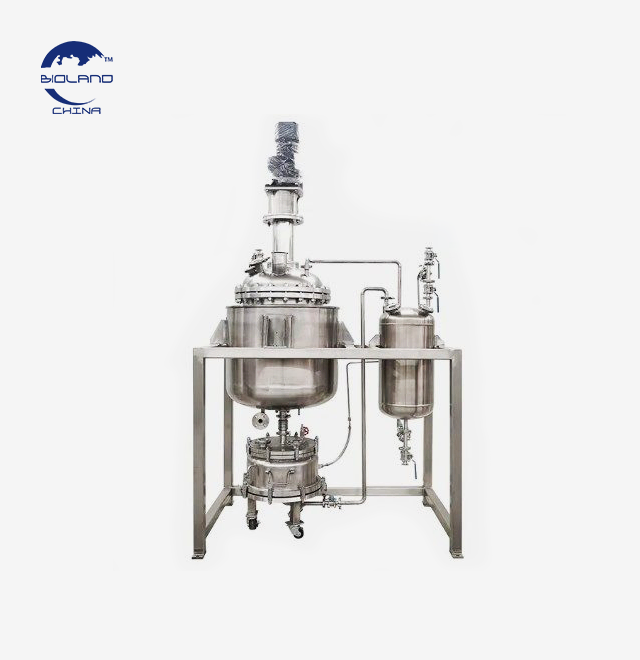
When the volume is 150L or more, a jacketed agitated reactor is custom made to meet the exact throughput, viscosity, and safety needs of the client, rather than being sold from a catalog. Bioland's own research and development team sets up the stirrer type, jacket surface area, lock systems, and amount of automation all at the same time. This way, the production unit can perform the same chemistry that was tested on a small scale without any unexpected issues.
OEM/ODM Customization and Company Support
Xi'an Bioland Instrument Co., Ltd. has been making reaction, extraction, distillation, filtration, and drying equipment for biotech, food, and fine chemistry users around the world for more than 15 years. They are happy to take OEM and ODM orders for any jacketed agitated reactor design. Standard units ship in 5–7 days, while personalized systems take about 30 business days. During this time, a committed expert sends weekly picture or video reports on the progress of the project and performs a Factory Acceptance Test on the goods before they leave the facility. The goods come with a one-year guarantee and lifetime maintenance support.
Conclusion
Ajacketed agitated reactor is better than a simple glass reactor when the process needs to be able to control the temperature or cooling, mix the ingredients consistently, and make batches with the same quality every time, no matter what size. The GG17 borosilicate build, wide temperature range (-80°C to 250°C), CE/ISO/GMP certification, and proven results for clients in the pharmaceutical, precious metals, and biotech industries show what a well-designed jacketed agitated reactor can do. Matching the type of reactor vessel to the needs of the process, not just the budget, is what keeps yields high and scale-up timelines on track for teams that are looking at their choices.
FAQ
Q1: What makes a jacketed agitated reactor different from a standard glass reactor?
A jacketed agitated reactor adds a circulating heating/cooling jacket and a variable-speed stirrer around the glass vessel, giving precise temperature control and consistent mixing that a basic single-wall glass reactor cannot provide.
Q2: What temperature range can Bioland's jacketed agitated reactor handle?
Bioland's units operate from −80°C to 250°C, covering cryogenic crystallization, ambient synthesis, and high-temperature reflux or distillation within one vessel.
Q3: Can the reactor be customized for hazardous or exothermic chemistry?
Yes. Explosion-proof motors, PLC automation, double mechanical seals, and independent pressure/temperature monitoring are all available as configurable options.
Q4: What sizes are available for pilot versus production scale?
Sizes range from 5L bench units for R&D through 150L and larger, with the same GG17 glass, jacket design, and certification carried consistently across every scale.
Q5: How long does a custom jacketed agitated reactor take to build?
Standard configurations ship in 5–7 days; customized systems with special jacket, seal, or automation requirements typically take about 30 business days, tracked weekly with progress photos or video.
Ready to Solve Your Reaction, Crystallization, or Scale-Up Challenge?
If dissolved-oxygen efficiency, temperature drift, product purity, or scale-up timing is holding your process back, Bioland Instrument has already solved that exact problem for biopharmaceutical, precious metals, and fine chemical manufacturers on three continents. With more than 15 years building reaction, extraction, distillation, filtration, and drying equipment, plus CE, ISO, and GMP-compliant manufacturing, Xi'an Bioland Instrument Co., Ltd. can engineer a jacketed agitated reactor around your exact viscosity, temperature, and safety requirements — not a generic catalog spec.
Our team supports OEM/ODM orders, ships standard units in 5–7 days, and tracks every customized build with weekly photo and video updates plus an optional Factory Acceptance Test before shipment. Backed by a one-year warranty and lifetime maintenance, we help you move from lab-scale trial to full production without losing process fidelity along the way. Email our technical team at info@biolandequip.com today with your process parameters, and let's talk about the jacketed agitated reactor configuration that fits your next production milestone.
References
1. Hall, S., & Stoker, A. "API Chemical Synthesis: Trends in Reactor Heat Transfer Design." Pharmaceutical Engineering, 2004.
2. Garvin, J. "Estimate Heat Transfer and Friction in Dimple Jackets." Chemical Engineering Progress, 2001.
3. Dream, R. "Heat Transfer in Agitated Jacketed Vessels." Chemical Engineering, 1999.
4. Paul, E. L., Atiemo-Obeng, V. A., & Kresta, S. M. Handbook of Industrial Mixing: Science and Practice. Wiley-Interscience, 2004.
5. Perry, R. H., & Green, D. W. Perry's Chemical Engineers' Handbook. McGraw-Hill Professional, 2007.
6. Nagata, S. Mixing: Principles and Applications. Kodansha/Wiley, 1975.
The reactor is beautifully mirror-polished and fully complies with GMP requirements for the pharmaceutical industry. The performance is excellent! Overall, we are very satisfied! We also provided with some feedback on our process improvements, which we hope will be helpful.
2024-04-09
Laboratory
Excellent and professional service. Always reply our questions very fast. All reactors and chiller we received are good too.
2024-02-15
Research Institute
Quality is beyond our expectation actually. After we got the extraction equipment and started using it, the performance was beyond our expectation. Very easy to use and very efficient to run. Service always respond us very quickly. Was also very helpful to help us. Thanks Bioland team. Very happy to work with you.
2023-11-20
Biotech Company
We are happy about the new purchase as always. Equipment and services are both good.
2023-08-05
Instrument Lab
This is the second order with Bioland instrument and everything is good as the first dateText.
2023-05-12
Global Trading Partner
Bioland instrument team is very helpful and professional. The sales helped us select the right equipment for our application, and their logistics people handled the transportation and customs declaration for our shipment. All that saved us a lot of work.