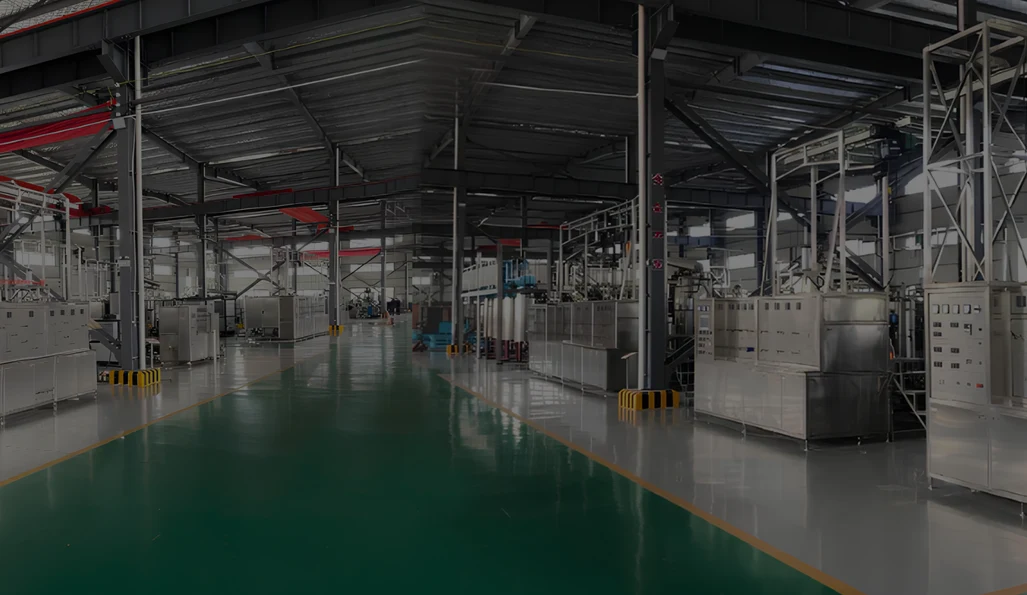
Pilot Plant Glass Reactors for Chemical Scale-Up Research
Jul 30, 2026
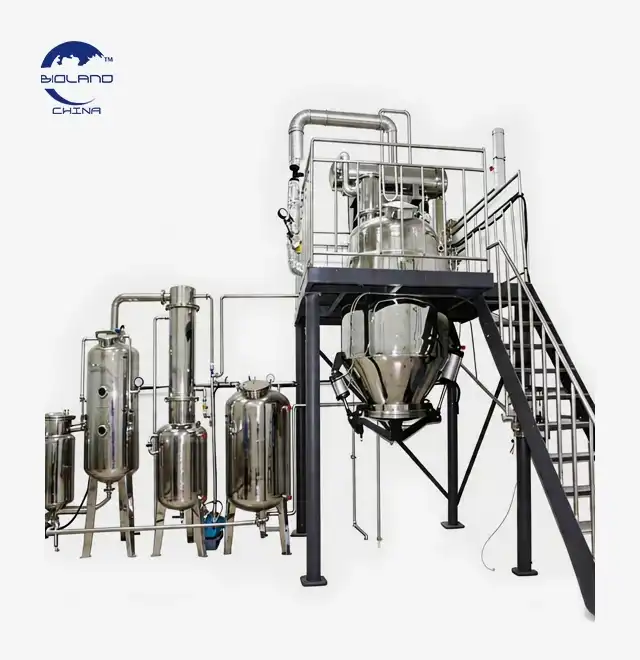
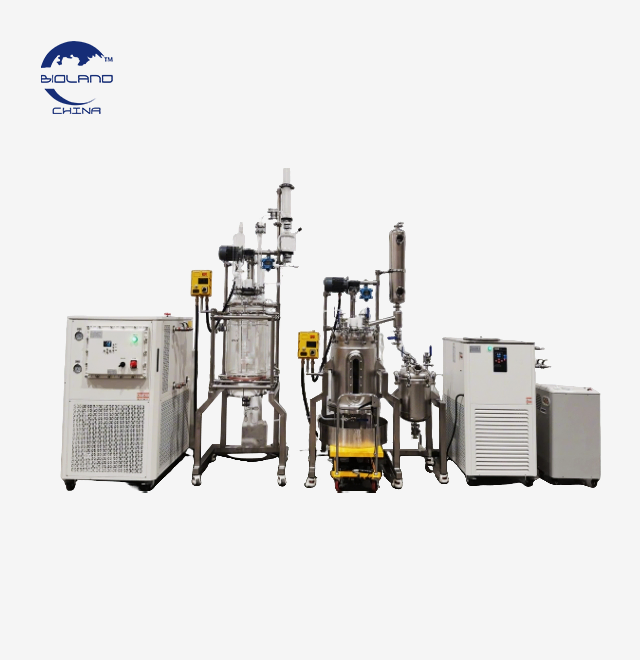
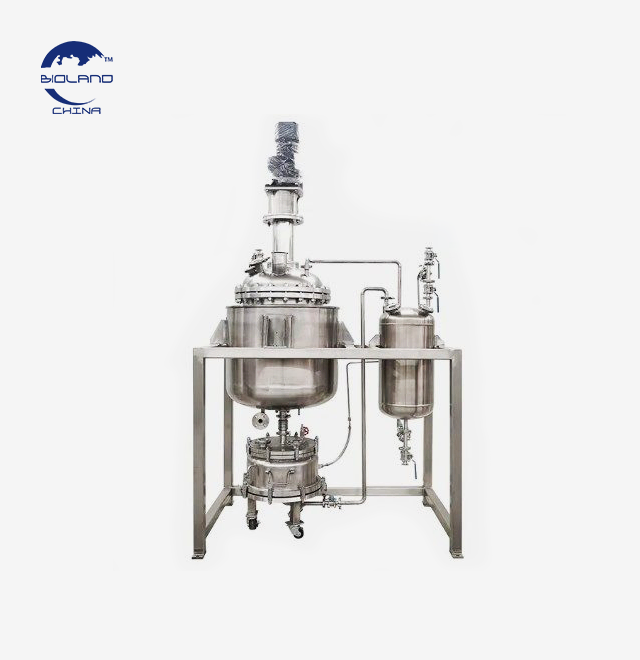
Most projects that try to make something bigger lose time, money, or both when they try to move a chemical process from a bench flask to an industrial reactor. To fill that gap, Xi'an Bioland Instrument Co., Ltd. has made apilot plant glass reactor. It is a fully clear, high-borosilicate vessel that does reaction, distillation, extraction, condensation, and vacuum operation all in one integrated platform. It can work at temperatures from -80°C to 300°C and can be set up to 200L. Our pilot plant glass reactor lets engineers directly observe mixing, heat transfer, and phase behavior, so R&D teams don't have to guess how a lab-scale reaction will behave at full production volume. They can then use these validated parameters without having to learn the process all over again at each step of scale-up.
Role of Pilot Glass Reactors in Chemical Development
Bridging Bench Chemistry and Process Design
A pilot plant glass reactor is in the middle of a small lab flask and a full production tank. It has enough room for process scientists to collect useful data while still letting them see the reaction clearly. In a bench-developed route, flaws usually show up first at this middle size. This could be a problem with mixing, an exotherm that wasn't predicted, or phase separation that wasn't clear in a 250mL flask. Instead of going straight to production, doing that step of proof in a pilot plant glass reactor saves a lot of money in the long run.
Visual Monitoring Reduces Blind-Spot Risk
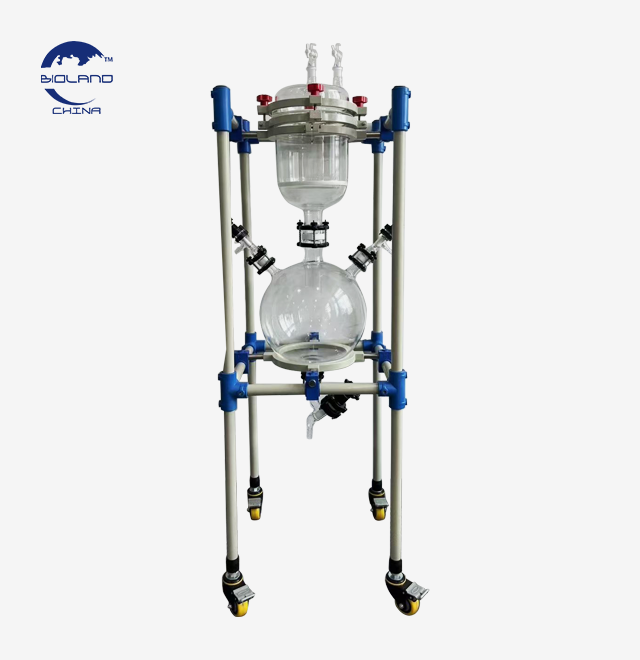
Experts in chemistry can see color changes, precipitate formation, and phase separation happen in real time with a pilot plant glass reactor because it is made of fully clear high-borosilicate glass. This exposure takes the place of guessing with direct observation, which lets a study team see right away when a response is going in the wrong direction and step in. A pilot plant glass reactor gives information that clear stainless steel equipment just can't, especially for studying mechanisms and making sure that the results are the same every time.
Chemical Compatibility for Sensitive Synthesis Routes
Strong acids, strong alkalis, and organic solvents can't break down GG17 borosilicate glass, and it doesn't add metal ions to the batch either. This makes a pilot plant glass reactor perfect for making pharmaceutical intermediates, medically active chemicals, and other highly pure substances, since even small amounts of metal can ruin the end product. This is the main reason why chemical developers who work with corrosive or highly reactive intermediates always choose a pilot plant glass reactor over metal ones.
Supporting Multi-Step Process Development
Development chemistry doesn't usually stop at a single reaction step. A pilot plant glass reactor supports this by having modular flange connections that can hold condensers, dropping funnels, temperature probes, and vacuum lines, among other things. One pilot plant glass reactor can switch between distillation, extraction, catalytic reaction, and crystallization with a standard five-neck lid arrangement. This cuts down on the number of different systems that a study group needs to keep up to date.
Case Study: South American Biopharmaceutical Fermentation Optimization
A biopharmaceutical company in South America was trying to make a drug intermediate through fermentation. They ran into problems like low dissolved oxygen efficiency, long fermentation cycles, and inaccurate parameter control that made it hard to make sure the product was pure. This was made worse by the fact that the product didn't work well with materials that are sensitive to oxidation.
Bioland Instrument made a 50L double-layer pilot plant glass reactor just for the project. They changed the shape of the stirrer to make it better at moving oxygen around the batch.
The improved design increased the efficiency of dissolved oxygen by about 30%, sped up the fermentation process, and created the perfect temperature-controlled environment for intermediate synthesis.
Because the tank was completely clear, techs could see how the color and precipitate changed during fermentation and make changes to the conditions in real time to protect the quality of the product. The sealed design also provided inert gas protection for the chemistry that was sensitive to oxidation.
Case Study: European Precious Metal Solvent Extraction Line
For a new production line, a European precious metal maker needed to replace separation equipment that was too small and didn't work well. However, standard stock units couldn't meet the flow or rust resistance needs.
Bioland Instrument sent a fully designed package that included four 200L double-layer pilot plant glass reactors and nine 50L explosion-proof rotating evaporators. These were built to ExdIIBT4 explosion-proof standards for the acidic, high-risk process that was being used.
Because of modular production, delivery times were cut by about 40%, which allowed the customer to start working 15 days early. About 30% more work was done each year, and the equipment has now been used for more than 1,000 hours without any problems.
Configuring the Right Path from Pilot to Production
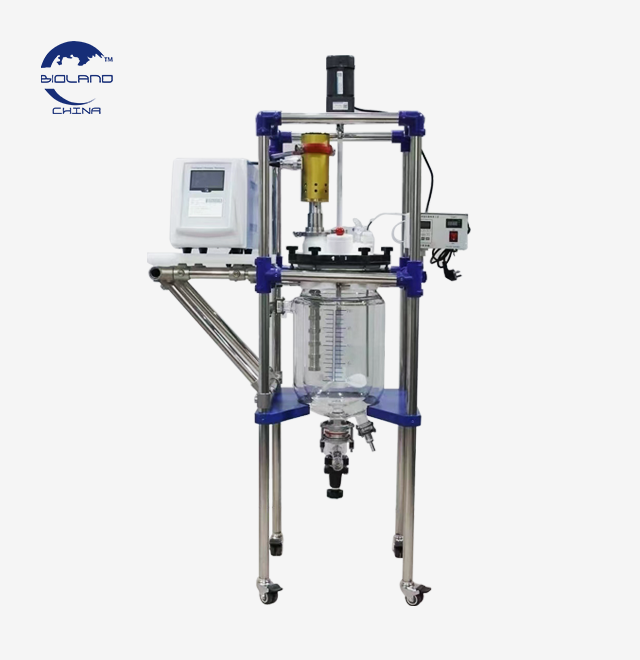
Every scale-up project follows a different path, so a pilot plant glass reactor from Bioland Instrument can be customized in size, shape, material, and internal structure to match it. Configuration options include a fully explosion-proof system, PLC-controlled automation, an integrated temperature-control unit, a lifting and rotating design, filtration and crystallization modules, ultrasonic crystallization, tail-gas absorption, and a fractionating column, so the same pilot plant glass reactor platform can be tuned toward the specific unit operations a project needs.
Documentation and Verification Support for Regulated Transitions
Scaling into regulated production requires more than equipment performance; it requires documentation. Bioland Instrument assigns a dedicated specialist to track a pilot plant glass reactor build weekly with photos or video, provides detailed inspection media before shipment, and offers an optional Factory Acceptance Test at our facility, giving quality teams the evidence trail needed to support internal qualification before a pilot plant glass reactor moves into GMP-aligned production work.
Evaluating Mixing and Heat Transfer Performance
Agitator Design and Its Impact on Mixing Uniformity
Mixing performance inside a pilot plant glass reactor depends heavily on agitator geometry, blade type, and stirring speed relative to batch viscosity. Variable-frequency drive motors allow fine control over agitation intensity, letting a pilot plant glass reactor handle everything from low-viscosity solvent reactions to thicker suspensions without shearing sensitive particles or under-mixing dense slurries. Selecting the correct impeller configuration for a given process is one of the most consequential decisions in reactor setup.
Double-Jacket Structure for Precise Temperature Control
A double-layer jacket design lets a pilot plant glass reactor maintain tight temperature control across a wide operating window, typically from -80°C to 300°C depending on configuration. This range supports everything from low-temperature crystallization to high-temperature reflux within the same vessel, and precise jacket-side temperature regulation keeps reaction kinetics predictable as a process scales from smaller development batches toward larger pilot volumes.
Vacuum System Integration for Evaporation and Reflux
Many chemical development routes depend on controlled evaporation, distillation, or reflux, and a pilot plant glass reactor paired with a vacuum system capable of reaching around -0.095 MPa strengthens both. Deeper vacuum lowers the boiling point of process solvents, reducing thermal stress on sensitive intermediates while speeding up evaporation and reflux cycles, which matters directly when scale-up timelines are tight.
Heat Transfer Consistency from Bench to Pilot Scale
One of the most valuable properties of a well-designed pilot plant glass reactor is that heat transfer behavior observed at pilot scale tends to translate predictably toward larger production vessels, provided jacket geometry and agitation are consistent across the scale-up path. This consistency shortens the re-optimization work typically required when a process moves from a small reactor to a much larger one, since engineers already understand how the reaction responds to controlled heating and cooling.
Improving Accuracy in Chemical Process Scale-Up
Sealing and Mechanical Reliability Over Extended Campaigns
Long pilot campaigns demand mechanical reliability, and a pilot plant glass reactor built with a dual PTFE and mechanical seal system keeps process integrity intact across repeated runs. Spark-free variable-frequency motors reduce noise and ignition risk, while a lifting and rotating structure simplifies charging, discharging, and cleaning between batches, extending the operational life of the pilot plant glass reactor and reducing unplanned downtime.
Reducing Variability Through Standardized Configuration
Scale-up accuracy depends on minimizing unexplained variability between runs, and a pilot plant glass reactor with programmable temperature and agitation control helps standardize conditions from one batch to the next. Storing validated process parameters and repeating them precisely reduces the parameter drift that otherwise makes it difficult to compare results across a multi-batch scale-up campaign.
Application Range Across Regulated and Industrial Sectors
A pilot plant glass reactor supports far more than pharmaceutical development. The same platform is widely used across chemical synthesis, food processing, petroleum and metallurgy, biological and fuel applications, agrochemicals, precious metals, and new-material research, giving organizations a single equipment investment that can support process development across several product lines rather than one narrow application.
Confirming Certification Before Regulated Deployment
Before committing a pilot plant glass reactor to GMP-aligned pilot verification work, quality teams should confirm CE and ISO certification and manufacturing practices aligned with GMP and FDA expectations. Bioland Instrument's pilot plant glass reactor line is engineered to these standards and backed by a one-year warranty with lifetime maintenance access, giving scale-up teams a documented, supported foundation for regulated production planning.
Conclusion
A pilot plant glass reactorbridges bench chemistry and commercial production by combining full transparency, wide-range temperature control, deep vacuum capability, and modular configuration in one platform. As the fermentation and precious-metal case studies show, the right pilot plant glass reactor setup measurably improves efficiency, shortens delivery timelines, and supports reliable long-term operation. Bioland Instrument pairs this engineering with certification, OEM/ODM customization, and dedicated documentation support for every scale-up project.
FAQ
1. What volumes are available for a pilot plant glass reactor?
Standard configurations range from smaller laboratory volumes up to 200L, with custom sizing available for specific scale-up requirements.
2. What temperature range can the reactor support?
A pilot plant glass reactor typically operates from -80°C to 300°C depending on jacket configuration and paired temperature-control equipment.
3. Can the reactor be customized for explosion-proof operation?
Yes, Bioland Instrument builds pilot plant glass reactor systems to explosion-proof standards such as ExdIIBT4 for hazardous or corrosive processes.
4. How does a glass reactor help with scale-up accuracy?
Visual monitoring and consistent heat transfer let a pilot plant glass reactor produce data that transfers predictably to larger production vessels.
5. What lead time should I expect for a customized order?
Customized pilot plant glass reactor orders typically require about 30 business days; non-customized units ship within 5-7 days.
Ready to De-Risk Your Next Scale-Up? Talk to Bioland Instrument
Chemical scale-up shouldn't rely on guesswork between lab and production. Xi'an Bioland Instrument Co., Ltd. brings more than 15 years of engineering experience, CE and ISO certification, and an in-house R&D team to every pilot plant glass reactor we build, with full OEM/ODM customization covering explosion-proof systems, PLC automation, integrated temperature control, and modular process configurations tailored to your chemistry. Our proven track record includes customized reactor systems supporting nitric acid production, glycerin acidification lines, overseas pharmaceutical manufacturing, and chemical intermediate production.
Every order is backed by weekly production tracking with photos or video, pre-shipment inspection, an optional Factory Acceptance Test at our facility, sea, rail, and air freight support, and a one-year warranty with lifetime maintenance. If you're planning a pilot campaign or preparing to transition a validated process into commercial-scale production, our technical team is ready to review your requirements and recommend the right configuration. Contact us at info@biolandequip.com to discuss your pilot plant glass reactor project today.
References
1. Chemical Engineering Research and Design, "Scale-Up Methodology from Laboratory to Pilot Plant in Batch Reactor Systems."
2. Organic Process Research & Development, "Heat Transfer and Mixing Considerations in Glass Reactor Scale-Up."
3. Industrial & Engineering Chemistry Research, "Material Selection and Corrosion Resistance in Pilot-Scale Chemical Reactors."
4. Journal of Chemical Technology and Biotechnology, "Fermentation Process Optimization Using Jacketed Glass Bioreactor Systems."
5. Chemical Engineering Science, "Vacuum-Assisted Distillation and Reflux in Pilot-Scale Process Development."
6. AIChE Journal, "Impeller Design and Agitation Scale-Up Principles for Stirred Tank Reactors."
The reactor is beautifully mirror-polished and fully complies with GMP requirements for the pharmaceutical industry. The performance is excellent! Overall, we are very satisfied! We also provided with some feedback on our process improvements, which we hope will be helpful.
2024-04-09
Laboratory
Excellent and professional service. Always reply our questions very fast. All reactors and chiller we received are good too.
2024-02-15
Research Institute
Quality is beyond our expectation actually. After we got the extraction equipment and started using it, the performance was beyond our expectation. Very easy to use and very efficient to run. Service always respond us very quickly. Was also very helpful to help us. Thanks Bioland team. Very happy to work with you.
2023-11-20
Biotech Company
We are happy about the new purchase as always. Equipment and services are both good.
2023-08-05
Instrument Lab
This is the second order with Bioland instrument and everything is good as the first dateText.
2023-05-12
Global Trading Partner
Bioland instrument team is very helpful and professional. The sales helped us select the right equipment for our application, and their logistics people handled the transportation and customs declaration for our shipment. All that saved us a lot of work.