Crystallization Filter Reactor vs Conventional Filters: A Comparison
Jul 30, 2026
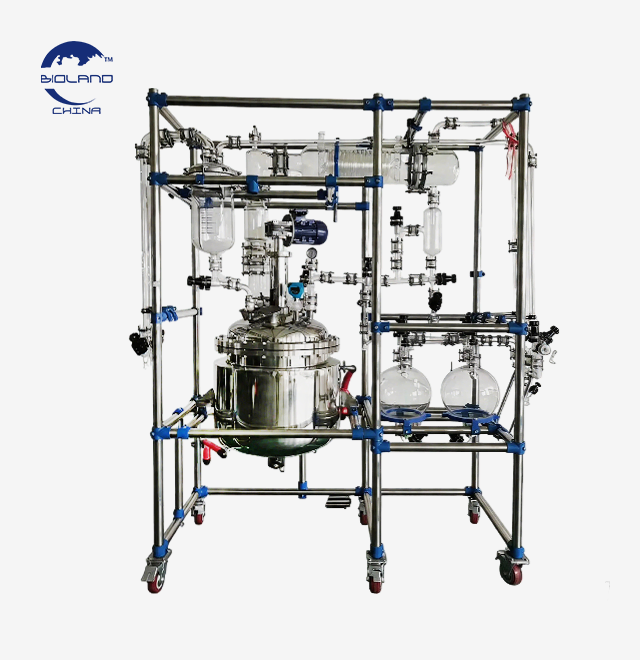
When purchasing equipment for separating solids and liquids, teams often choose conventional filters because that's what the last plant used. However, a crystallization filter reactor from Xi'an Bioland Instrument Co., Ltd. changes the economics of that choice completely. A normal filter only filters, but a crystallization filter reactor combines reaction, controlled crystallization, and filtration all in one sealed borosilicate glass vessel. This allows operators to see every step of the process and cuts down on material transfer losses. Each Bioland crystallization filter reactor is made with a GG17 glass frame, a PTFE filtration assembly, and explosion-proof options up to 100L. These reactors are designed for customers in the pharmaceutical, fine chemical, and precious metals industries who need higher purity and faster turnaround than a standalone filter can provide. It talks about how well filtration works, how to control the process, how to design the reactor, and how to choose a system. It uses real project results from Bioland clients who switched from traditional filtration lines to an integrated crystallization filter reactor and measured the difference in purity, yield, and cycle time.
Comparing Filtration Efficiency and Crystallization Performance
PTFE Filtration Assembly Against Conventional Cloth and Cartridge Filters
Most filters use cloth media, cartridges, or mesh screens to catch particles. These methods don't change how the crystals formed in the first place, though. In a crystallization filter reactor, there is a PTFE filtration plate right below the reaction zone. This plate can be made of powdered PTFE, stainless steel, or titanium, and its pores range in size from 0.1 to 200 micrometers. This lets crystals grow in a controlled environment before the filtering process even starts. This upstream control is what makes a crystallization filter reactor always make a better filter cake with fewer impurities caught than any other filtering equipment could.
Closed-System Processing Versus Open-Vessel Crystallization
Standard crystallization boxes with different screens let air into the slurry while it is being moved, which can cause pollution, liquid loss, and crystals that don't form in the right way. The reaction, crystallization, and filtration steps happen all in one closed borosilicate vessel in a crystallization filter reactor. This keeps oxygen- and moisture-sensitive compounds safe and lowers the amount of solvent that evaporates. The Bioland design lets the filter plate be swapped out at the bottom of the same vessel that is used for cooling and reacting. This way, the batch doesn't have to be moved from one machine to another.
European Chiral API Client: Solving a Purity and Yield Bottleneck
A biopharmaceutical company in Europe developing a chiral API intermediate faced a familiar problem: reactions were hard to confirm as complete, crystallization runs delivered inconsistent purity and yield, and the strongly acidic synthesis chemistry was corroding standard equipment. Frequent material transfers between separate reaction and filtration steps were also raising cross-contamination risk.
Bioland supplied a customized 100L crystallization filter reactor to run the entire sequence in one vessel. Under nitrogen protection at 0 to 5°C, the catalytic reaction proceeded while the transparent glass let technicians confirm completion by color change alone, with no blind sampling required.
For crystallization, jacket coolant at -20°C brought the batch down at a controlled rate of 1 to 2°C per hour, producing uniform crystals that did not trap mother liquor impurities. The reactor then switched directly to PTFE filtration, recovering reusable mother liquor and delivering crystal purity above 99.5 percent with a 15 percent yield improvement over the client's previous process.
Filtration Speed and Cake Washing Compared to Standalone Units
Throughput is more important than purity. A crystallization filter reactor filters through a large-diameter PTFE plate at the bottom of the same tank that was used for the reaction. This way, there is no need for pumping or line losses, which slow down regular filtration systems. When wash solvent is added directly to the vessel, cake is washed while it is still in place. This cuts down on cycle time and the amount of solvent needed compared to moving wet cake to a different washing station. Operators also don't have to change out the equipment as often as they would have to with a regular filtration line between reaction, crystallization, and separation, which cuts the overall batch time from start to finish even more.
Differences in Process Control and Product Quality
Real-Time Visual Monitoring Versus Blind Filtration Operation
Conventional filters usually have metal housings that are closed off so that operators can't see what's going on inside. The Bioland crystallization filter reactors are made of clear GG17 borosilicate glass, which lets technicians see the nucleation, crystal growth, and filtration process happen right in front of them instead of waiting for lab samples that have been delayed. The European chiral API client was able to check that the reaction was finished and find crystallization problems before they affected the batch because they could see them.
Controlled Cooling Rates and Crystal Habit Management
In crystallization, the rate of cooling has a big effect on the quality of the product. To directly control this variable, a crystallization filter reactor gives users accurate jacket temperature control across a range of -80°C to 200°C. Usually, conventional filter lines get crystals from an outside crystallizer that isn't very good at controlling temperature. This leads to an uneven distribution of particle sizes and traps more mother liquor inside the crystal structure, which lowers purity in the end.
Nitrogen-Protected Synthesis Versus Open-Air Conventional Processing
A regular open filter can't handle the conditions that many pharmaceutical intermediates and precious metals catalysts are sensitive to, like oxygen or moisture. A closed crystallization filter reactor keeps a blanket of nitrogen or a neutral gas over the reaction stage, all the way through crystallization and filtration, to keep the result stable. This protected method gets rid of the contact gaps that regular multi-vessel filter methods create with each material shift.
Polish Precious Metals Client: Recovering Value Through Better Process Control
A Polish chemical company that used palladium and platinum catalysts had problems with slow recovery rates, corrosive process media that broke normal equipment, and catalysts becoming inactive because of uncontrolled solid-phase reactions at high temperatures. The filter equipment they already had needed to be cleaned for a long time between runs.
To close the loop between the solid-phase reaction and filtration recovery, Bioland sent a custom 50L crystallization filter reactor. By running the reaction at 150°C for a short time, the glass tank was able to handle the high temperature without the catalyst breaking down that the client had seen happen before.
As soon as the reaction was over, the same vessel went straight to PTFE filtration to separate the solid catalyst. This helped get back more than 90% of the valuable metal that was still in the mother liquor. The quick-release filter plate also cut down on the time needed to clean between batches, which helped the client save money on production costs.
How Reactor Design Improves Solid-Liquid Separation
Integrated Reaction, Crystallization, and Filtration Workflow
Reaction, controlled cooling, crystallization, and filtration all happen inside a single glass shell instead of three or four different machines linked by transfer lines. This is the main technical benefit of a crystallization filter reactor. Getting rid of those transfer steps cuts down on material loss, work time, and the risk of contamination that comes with each handling step in multi-stage traditional filter setups.
PTFE Filter Plate Options and Pore Size Selection
Selecting the right filter media inside a crystallization filter reactor depends on particle size and chemical compatibility. Bioland offers standard sintered PTFE plates alongside stainless steel and titanium alternatives, with filter cloths and membranes available across a wide range of pore ratings. Matching filter media to the target crystal size keeps filtration fast without sacrificing product retention, something fixed conventional filter cartridges cannot adjust for on demand.
Bottom Discharge and Quick-Release Filter Design
A no-dead-angle PTFE bottom valve lets a crystallization filter reactor discharge filtrate completely and quickly, without the residual pooling that leaves conventional filter housings prone to cross-batch contamination. The filter plate itself is removable for fast cleaning and cake washing, a design detail that shortened turnaround time significantly for the Polish precious metals client described above.
Explosion-Proof Housings and PLC Automation for High-Hazard Synthesis
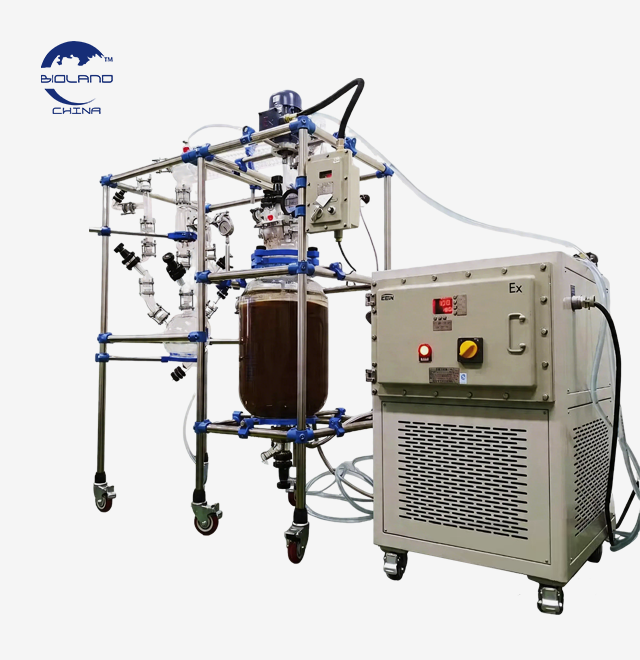
For solid-phase peptide synthesis, thymus polypeptide preparation, and other high-hazard chemistry, Bioland builds explosion-proof crystallization filter reactor systems with electric lift mechanisms, PLC-controlled full automation, and integrated temperature control loops. These options let manufacturers scale sensitive solid-phase synthesis and antimicrobial peptide screening work into pilot production without introducing new safety risk.
Selecting the Right Filtration System for Better Results
Matching Reactor Volume to Your Batch and Process Requirements
Choosing between acrystallization filter reactor and a conventional filtration line starts with batch volume and process complexity. Bioland manufactures units from small laboratory scale up to 100L pilot systems, each configurable with the jacket, agitator, and filter combination suited to the target chemistry. Undersizing the vessel wastes throughput, while oversizing adds unnecessary cost, so matching volume to actual production targets is the first practical step toward better filtration results.
Customization Across Materials, Filter Media, and Automation Level
No standard catalog filter can match the flexibility of a customized crystallization filter reactor. Clients can specify PTFE, stainless steel, or titanium filter components, select filter cloth or membrane pore ratings, and add sand-core filters, pH meters, explosion-proof motors, and explosion-proof control boxes as needed. This tailored approach lets a crystallization filter reactor adapt to nearly any solid-liquid separation challenge across pharmaceuticals, fine chemicals, and precious metals recovery, and it means the vessel can grow alongside a client's process as formulations, batch sizes, or regulatory requirements change over time.
When a Crystallization Filter Reactor Clearly Outperforms Standalone Filters
Processes involving oxygen-sensitive intermediates, corrosive acids or alkalis, high-value precious metal recovery, or strict purity targets consistently benefit most from switching to a crystallization filter reactor. Conventional filters remain adequate for simple, non-sensitive solid-liquid separation, but as the two case studies above show, the combined design earns back its cost quickly through higher yield, higher purity, and shorter cycle times.
After-Sales Support and Factory Acceptance Testing
Every customized crystallization filter reactor from Bioland ships with weekly production tracking, complete with photos or video updates so clients can follow build progress. Detailed inspection footage is shared before shipment, and clients may schedule a Factory Acceptance Test at Bioland's facility once equipment is ready, backed by a one-year warranty and lifetime maintenance support.
Conclusion
A crystallization filter reactorconsistently outperforms conventional standalone filters wherever purity, yield, and contamination control matter most. By combining reaction, crystallization, and PTFE filtration in one transparent, chemically resistant vessel, Bioland Instrument helps pharmaceutical, fine chemical, and precious metals clients solve real production bottlenecks, as demonstrated by the European chiral API and Polish precious metals projects above. Choosing the right reactor volume, filter media, and automation level turns solid-liquid separation from a routine step into a genuine competitive advantage.
FAQ
Q1: How is a crystallization filter reactor different from a conventional filter?
A crystallization filter reactor combines reaction, crystallization, and filtration inside one sealed vessel, while a conventional filter only performs the final separation step after crystallization elsewhere.
Q2: What filter media options are available on a Bioland crystallization filter reactor?
Standard units use sintered PTFE plates, with stainless steel and titanium alternatives available, plus filter cloths and membranes across a range of pore sizes.
Q3: Can a crystallization filter reactor handle oxygen-sensitive or corrosive chemistry?
Yes, the sealed glass design supports nitrogen blanketing for oxygen-sensitive compounds and resists strong acids, alkalis, and organic solvents without metal-ion contamination.
Q4: What size crystallization filter reactor does Bioland offer?
Units range from small laboratory scale up to 100L pilot systems, with explosion-proof and PLC-automated configurations available for high-hazard processes.
Q5: What kind of purity and yield improvements have real clients seen?
A European pharmaceutical client reached crystal purity above 99.5 percent with a 15 percent yield increase, while a Polish precious metals client recovered over 90 percent of residual catalyst value.
Ready to Upgrade Your Filtration Process?
If purity, yield, or cross-contamination issues are limiting your current filtration line, Bioland Instrument can help. With more than 15 years of engineering experience, CE and ISO certification, GMP/FDA-compliant design, and full OEM/ODM customization, our crystallization filter reactor systems have already solved real production bottlenecks for pharmaceutical and precious metals clients worldwide. Contact our technical team at info@biolandequip.com to discuss your process, request a quotation, or schedule a Factory Acceptance Test, and let Bioland Instrument help you turn filtration into a competitive advantage.
The reactor is beautifully mirror-polished and fully complies with GMP requirements for the pharmaceutical industry. The performance is excellent! Overall, we are very satisfied! We also provided with some feedback on our process improvements, which we hope will be helpful.
2024-04-09
Laboratory
Excellent and professional service. Always reply our questions very fast. All reactors and chiller we received are good too.
2024-02-15
Research Institute
Quality is beyond our expectation actually. After we got the extraction equipment and started using it, the performance was beyond our expectation. Very easy to use and very efficient to run. Service always respond us very quickly. Was also very helpful to help us. Thanks Bioland team. Very happy to work with you.
2023-11-20
Biotech Company
We are happy about the new purchase as always. Equipment and services are both good.
2023-08-05
Instrument Lab
This is the second order with Bioland instrument and everything is good as the first dateText.
2023-05-12
Global Trading Partner
Bioland instrument team is very helpful and professional. The sales helped us select the right equipment for our application, and their logistics people handled the transportation and customs declaration for our shipment. All that saved us a lot of work.