How to Achieve Better Flavonoid Extraction Results
Oct 13, 2026
Flavonoid producers often have to deal with low extraction yields, long heating times, using too many solvents, and results that aren't consistent between batches of plants. By blending cavitation, controlled temperature, liquid movement, filter, and pressure concentration, ultrasonic flavonoid extraction equipment gives a more effective substitute. Flavonoids can be extracted from ginkgo leaves, bamboo leaves, ginger, chrysanthemum, sophora flower buds, lotus leaves, onion skins, and other plant parts by Xi'an Bioland Instrument Co., Ltd. This ultrasonic flavonoid extraction equipment is built with GMP in mind and has features like PLC control, CIP cleaning, flexible capacities, and OEM/ODM support. It is made to solve process problems from getting the raw materials ready to making concentrated extracts.
There are big differences in the amount of flavonoids found in different plant types, parts of plants, harvest times, drying conditions, and storing places. Different steps need to be taken when processing ginkgo leaves, bamboo leaves, ginger, chrysanthemum, sophora flower buds, lotus leaves, and onion skins. Producers should check the moisture level, particle size, target flavonoid, freshness of the raw materials, and acceptable impurity level before choosing ultrasonic flavonoid extraction equipment. Bioland engineers use these factors to suggest the best solvent system, temperature for extraction, ultrasonic intensity, and arrangement for filtration.
Matching Solvent Polarity to the Target Compound
Flavonoids come in a variety of polar forms, such as aglycones, glycosides, and other related compounds. So, depending on the end result and the way of cleaning that comes after, water, ethanol, mixes of water and ethanol, and other acceptable liquids can be used. Ultrasonic flavonoid extraction equipment can be used for alcohol extraction, water extraction, reflux, percolation, and processes that use solvents. The right liquid amount helps wetting and diffusion while keeping the finished extract from being diluted too much or evaporated too quickly.
Controlling Particle Size and Solid-Liquid Ratio
The contact area, solvent penetration, filtration speed, and final yield are all directly affected by the particle size. It may be hard for mass to move when the particles are too big, and it can be hard to separate thick suspensions when the powder is too small. Bioland instrument looks at the connection between particle size and solid-to-liquid ratio in a real-world ultrasonic flavonoid extraction equipment project. The goal is to show more plant tissue while keeping enough flexibility for pumping, circulating, filtering, and then concentrating.
Managing a Complete Extraction Route
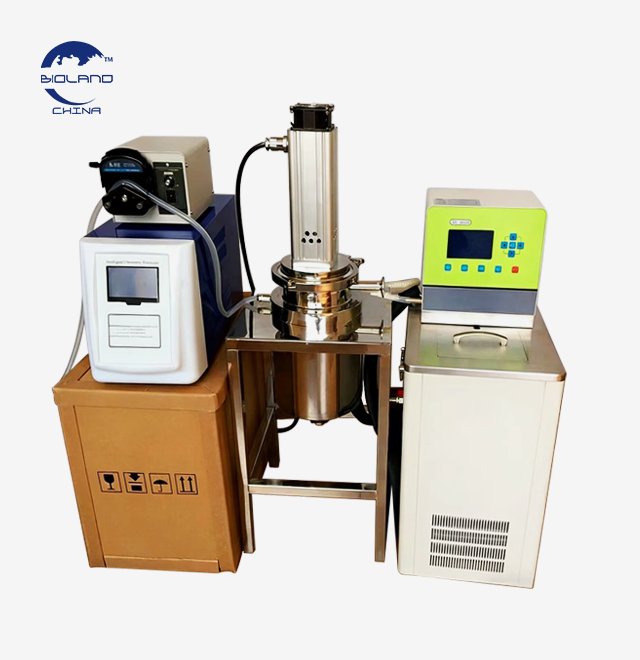
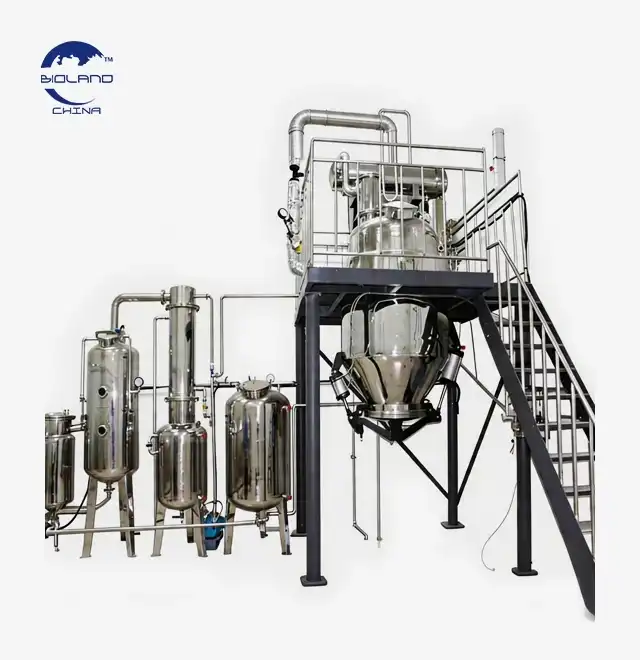
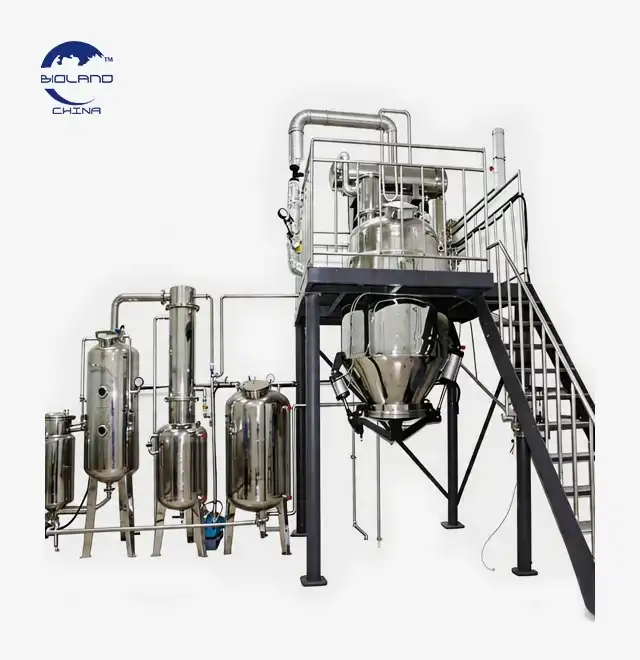
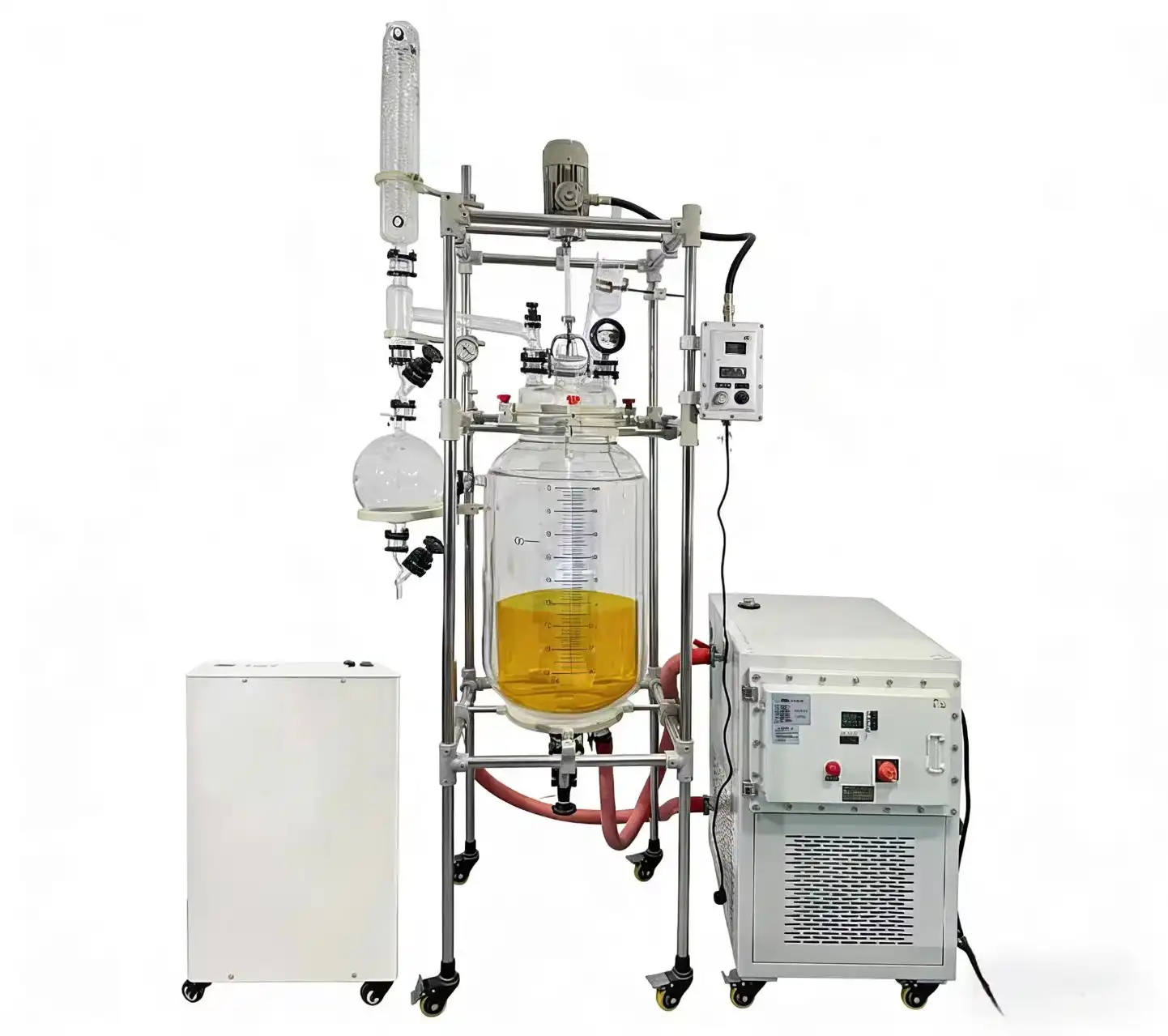
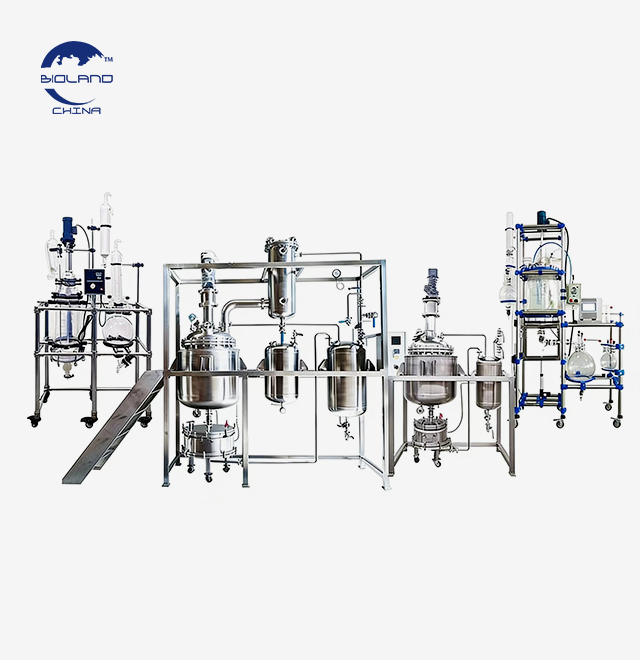
Flavonoid recovery should not be judged only by the extraction tank. Heating, circulation, filtration, concentration, solvent recovery, and cleaning all influence the usable output. Ultrasonic flavonoid extraction equipment can include an ultrasonic system, extraction vessel, tubular heater, liquid pump, filter, evaporator, condenser, storage tank, vacuum pump, demister, and control cabinet. This integrated configuration helps avoid bottlenecks between extraction and concentration, giving manufacturers a more stable production route.
Optimizing Ultrasonic Parameters for Higher Yield
Establishing the Correct Treatment Time
Longer ultrasonic treatment does not always result in a higher flavonoid yield. Once the target compounds have been sufficiently released, additional treatment may increase energy use or encourage the extraction of unwanted components. Many optimized ultrasonic botanical processes reach an effective extraction point within approximately 24–40 minutes, although actual time depends on the raw material and solvent. Ultrasonic flavonoid extraction equipment allows users to set repeatable treatment times through PLC control and validated operating recipes.
Balancing Ultrasonic Power and Temperature
Ultrasonic power should be strong enough to improve cell disruption and solvent movement but controlled enough to prevent unnecessary heating. Many heat-sensitive botanical materials are processed at approximately 40–60°C. Ultrasonic flavonoid extraction equipment combines adjustable ultrasonic output with jacket heating and temperature monitoring. This allows operators to manage both variables together instead of increasing power or temperature without understanding their combined effect on the extract.
Using Circulation to Improve Uniformity
Uneven liquid movement can leave some plant particles under-treated. Pump-assisted circulation helps maintain contact between fresh solvent and botanical solids, while ultrasonic energy improves micro-mixing around the particles. Bioland instrument’s ultrasonic flavonoid extraction equipment can be designed with suitable tank geometry, inlet and outlet positions, pumping capacity, and ultrasonic-system placement. The resulting process is more uniform than a static soaking operation and can reduce variation between different areas of the tank.
Optimizing Vacuum Concentration
After extraction, the liquid is transferred into a concentration vessel. Vacuum evaporation can reduce the effective boiling temperature, helping limit excessive thermal exposure while removing water or recovered solvent. The ultrasonic flavonoid extraction equipment system can operate at a vacuum level of approximately -0.05 to -0.09 MPa, depending on the configuration. Condensed vapor may be collected and reused as process solvent when appropriate, reducing solvent loss and supporting a more economical production cycle.
A Ginkgo Leaf Processing Example
A botanical ingredient manufacturer processing ginkgo leaves experienced inconsistent flavonoid concentration because the raw material had different moisture levels and the conventional process relied on fixed heating. Bioland instrument adjusted the material-preparation requirements, solvent ratio, extraction temperature, and ultrasonic time. The customer adopted ultrasonic flavonoid extraction equipment with programmable control and vacuum concentration, improving batch repeatability and reducing the need for repeated extraction cycles.
How Cavitation Improves Flavonoid Recovery Rates
Breaking Down Cell-Barriers
Cavitation is the formation and collapse of microscopic bubbles caused by ultrasonic waves moving through a liquid. In ultrasonic flavonoid extraction equipment, bubble collapse produces local turbulence, microjets, and mechanical stress near plant particles. These physical effects can deform or rupture cell structures, allowing the solvent to reach flavonoids located inside plant tissues. This improves mass transfer without depending only on prolonged soaking or high-temperature treatment.
Reducing the Boundary Layer
A stagnant liquid layer may form around plant particles during conventional extraction. This layer creates resistance between the solvent and the compounds inside the botanical cells. Cavitation and liquid circulation reduce this resistance by creating microstreaming around the particles. Ultrasonic flavonoid extraction equipment therefore helps improve solvent contact at the solid-liquid interface. Better contact can support faster diffusion and may increase recovery from difficult raw materials such as fibrous leaves, bark, roots, and dried flower buds.
Supporting Flavonoid Glycoside Extraction
Flavonoids may be present as glycosides or other compounds with different solubility characteristics. A suitable ultrasonic process can improve the release of target compounds while allowing engineers to select water, ethanol, or mixed-solvent conditions. Ultrasonic flavonoid extraction equipment is suitable for extraction of flavonoids from ginkgo leaves, bamboo leaves, ginger, chrysanthemum, sophora flower buds, lotus leaves, gynostemma, onion skins, and other medicinal plants, fruits, and vegetables.
Ultrasound-Assisted Quercetin Extraction
Quercetin and related precursors such as rutin and quercitrin can be extracted from larch, celery, mulberry leaves, sophora flower buds, and other plant materials. Customers using ultrasonic flavonoid extraction equipment for ultrasound assisted extraction of quercetin can adjust the solvent ratio, ultrasonic duration, temperature, and filtration conditions according to the botanical source. A controlled process helps improve the release of quercetin-related compounds before purification, concentration, crystallization, or drying.
A Sophora Flower Bud Application
A customer extracting flavonoids from sophora flower buds found that repeated hot extraction increased production time but did not provide stable recovery. Bioland instrument reviewed the material’s particle size and solvent penetration behavior. The new ultrasonic flavonoid extraction equipment used controlled cavitation, liquid circulation, moderate temperature, and vacuum concentration. The customer reduced repeated heating steps and obtained a more consistent intermediate for purification.
Reducing Extraction Losses During Processing
Preventing Loss During Raw-Material Handling
Flavonoid loss can occur before extraction begins. Poor drying, long storage, exposure to moisture, and unsuitable grinding may reduce the quality of the botanical feedstock. A complete ultrasonic flavonoid extraction equipmentsolution begins with raw-material evaluation. Bioland instrument can advise customers on particle preparation, loading sequence, solvent addition, and storage conditions so the equipment receives a consistent feed and the extraction process is easier to control.
Reducing Incomplete Solvent Contact
Inadequate wetting is a common cause of low flavonoid recovery. Dry or compact plant material may float, form agglomerates, or remain poorly contacted by the solvent. The ultrasonic flavonoid extraction equipment can use controlled filling, circulation, and ultrasonic treatment to improve wetting. For higher-viscosity systems, the pump and pipe diameter can be selected according to the expected flow behavior. These details help prevent under-extracted material from leaving the vessel with the solid residue.
Improving Filtration and Separation
Extraction yield is not only determined by how much compound enters the liquid. If the extract is difficult to filter, valuable liquid may remain trapped in the plant residue. Bioland instrument integrates ultrasonic flavonoid extraction equipment with appropriate filters, pumps, storage tanks, and discharge arrangements. The equipment can be configured for automatic discharge and hygienic cleaning, helping reduce manual transfer losses and improve the recovery of concentrated extract during solid-liquid separation.
Protecting Compounds During Concentration
Flavonoids may be sensitive to excessive heat, oxygen, or extended residence time. Vacuum concentration lowers the effective evaporation temperature and helps remove solvent under more controlled conditions. Ultrasonic flavonoid extraction equipment can include condensers, cooling systems, demisters, and vacuum pumps to support stable operation. Three-layer insulation also reduces heat loss and helps maintain a more consistent temperature around the concentration vessel.
A Natural Pigment Application
A plant-based ingredient producer needed to extract orange-peel pigments and evaluate anthocyanins, betalains, carotenoids, and chlorophyll from different botanical sources. The main concern was color loss during prolonged heating. Bioland instrument configured ultrasonic flavonoid extraction equipment with low-temperature extraction, controlled circulation, filtration, and vacuum concentration. The customer gained a flexible platform for screening multiple pigment sources while reducing unnecessary thermal exposure.
An Ethanol-Assisted Propolis Application
A propolis producer wanted to separate flavonoids and phenolic acids more efficiently from raw propolis. The traditional ethanol process required long contact times and considerable manual handling. Bioland instrument designed a propolis extraction machine using ultrasonic assistance, ethanol extraction, filtration, and solvent recovery. The ultrasonic flavonoid extraction equipment improved contact between the solvent and propolis particles and supported a more organized route from raw material to clarified concentrated extract.
Equipment Features That Enhance Extraction Performance
Stainless-Steel and GMP-Oriented Construction
For food, nutraceutical, pharmaceutical, and cosmetic production, equipment materials and cleanability are essential. Bioland instrument commonly uses SUS304 or SUS316L stainless steel for product-contact components. Ultrasonic flavonoid extraction equipment can include sanitary piping, three-layer insulation, CIP cleaning, demisters, and GMP-oriented construction. The system can be designed for atmospheric extraction, water decoction, wet immersion, heat reflux, circulation percolation, aromatic-oil extraction, and organic-solvent recovery.
Intelligent PLC Automation
Manual control can create variation in temperature, extraction time, valve sequencing, and concentration. The ultrasonic flavonoid extraction equipment can be equipped with PLC electrical control, online concentration monitoring, automatic discharge, and programmable process steps. Automation supports repeatable recipes and makes it easier to document production conditions. For continuous or semi-continuous projects, it can also support controlled feeding, transfer, concentration, and cleaning operations.
Flexible Capacity Selection
Bioland instrument offers representative extraction and concentration models from 50 to 500 liters. Typical evaporation capacities range from approximately 20 kg/h for a 50-liter model to 200 kg/h for a 500-liter model. System vacuum may reach about -0.085 MPa, with evaporation temperatures commonly adjustable from 60–100°C according to process requirements. Customers selecting ultrasonic flavonoid extraction equipment should base capacity on raw-material throughput, solvent ratio, batch schedule, evaporation load, and future expansion plans.
Technology parameter
Model
BL-TN-C50L
BL-TN -C100L
BL-TN -C200L
BL-TN -C300L
BL-TN -C500L
Volume (L)
50
100
200
300
500
Evaporation capacity (kg/h)
20
50
70
100
200
Motor power(KW)
2.7
2.7
2.7
3.5
3.5
Steam consumption(kg/h)
25
60
90
120
250
System vacuum (MPa)
-0.085
-0.085
-0.085
-0.085
-0.085
Pressure of jacket(MPa)
0.09~0.3
0.09~0.3
0.09~0.3
0.09~0.3
0.09~0.3
Compressed air (MPa)
0.5~0.6
0.5~0.6
0.5~0.6
0.5~0.6
0.5~0.6
Evaporation temperature(°C)
60~100
60~100
60~100
60~100
60~100
Multi-Process Compatibility
Some botanical products require more than one extraction method. The equipment can support ultrasonic low-temperature extraction, ultrasonic room-temperature extraction, solvent extraction, Soxhlet-type dynamic extraction, heat reflux, water precipitation, alcohol precipitation, and percolation. Ultrasonic flavonoid extraction equipment can therefore be used as a flexible platform rather than a single-purpose machine. It can also support tea extraction machine projects, coffee caffeine extraction, stevia glycoside extraction, mushroom polysaccharides, chili oleoresin, and herbal tinctures.
Supporting Complete Production Lines
Xi’an Bioland Instrument Co., Ltd. is a professional manufacturer and solution provider for R&D production and sales of distillation, concentration, reaction, extraction, separation, filtration, purification, crystallization, emulsification, mixing, drying, and ancillary heating, cooling, and vacuum devices. It has more than 15 years of industry experience. Its products serve research laboratories, biopharmaceutical companies, food producers, cosmetics manufacturers, chemical enterprises, and other industries.
Engineering, Certification, and Customer Service
Bioland instrument has an in-house R&D team, senior technicians, and highly trained engineers who support process design and strict quality control. The company provides OEM/ODM services and customized ultrasonic flavonoid extraction equipment. Standard products may be available in 5–7 days, while customized projects generally require approximately 30 business days. CE and ISO certification support, GMP/FDA-oriented compliance, a one-year warranty, lifetime maintenance, and sea, rail, or air shipping are available.
Transparent Project Management
During production, Bioland instrument assigns a specialist to follow the project and provide weekly photographs or videos. After completion, detailed images or videos are supplied for customer inspection. Shipment is arranged after approval, or the customer may schedule a Factory Acceptance Test at the factory. This service allows buyers to monitor the manufacturing process before receiving their ultrasonic flavonoid extraction equipment and helps ensure that the final configuration matches the agreed process requirements.
Conclusion
Achieving better flavonoid extraction results requires coordinated control of raw-material quality, particle size, solvent polarity, solid-to-liquid ratio, ultrasonic power, temperature, circulation, filtration, and concentration. Ultrasonic flavonoid extraction equipmentimproves this process through controlled cavitation, which helps disrupt plant cells, reduce boundary-layer resistance, and enhance solvent penetration. Bioland instrument provides complete, customizable solutions for flavonoids, quercetin, pigments, propolis, stevia, mushrooms, tea, coffee, chili, and other natural products. With stainless-steel GMP-oriented construction, PLC automation, CIP cleaning, vacuum concentration, flexible capacities, OEM/ODM support, and professional after-sales service, Bioland helps customers convert extraction challenges into stable and scalable production results.
FAQ
1. Which plants can be used for flavonoid extraction?
Ginkgo leaves, bamboo leaves, ginger, chrysanthemum, sophora flower buds, lotus leaves, onion skins, and many other botanicals can be processed.
2. Can the equipment extract quercetin?
Yes. It can support ultrasound assisted extraction of quercetin, rutin, quercitrin, and related compounds.
3. Which solvents are suitable?
Water, ethanol, water-ethanol mixtures, and other validated solvents may be used according to the target compound and process.
4. What temperature is commonly used?
Many botanical processes operate at approximately 40–60°C during extraction, subject to raw-material testing.
5. Can Bioland provide a complete production line?
Yes. Bioland offers process design, extraction, filtration, vacuum concentration, automation, CIP, solvent recovery, FAT, and after-sales support.
Improve Your Flavonoid Process With Bioland Instrument
Are low flavonoid yields, long extraction cycles, difficult filtration, or unstable batch quality affecting your business? Bioland Instrument can help you build a complete process solution around your raw materials and target compounds. Our ultrasonic flavonoid extraction equipment combines cavitation, controlled heating, solvent circulation, filtration, vacuum concentration, PLC automation, CIP cleaning, and solvent recovery. We support flavonoids, quercetin, propolis, plant pigments, stevia glycosides, mushroom polysaccharides, tea polyphenols, chili oleoresin, and other botanical ingredients. With CE and ISO quality assurance, GMP-oriented manufacturing, competitive pricing, OEM/ODM capability, weekly project updates, FAT support, a one-year warranty, and lifetime maintenance, Bioland Instrument is ready to discuss your process. Contact us at info@biolandequip.com.
References
1. Vinatoru, M. “An Overview of the Ultrasonically Assisted Extraction of Bioactive Principles from Herbs.” Ultrasonics Sonochemistry.
2. Chemat, F., Zill-e-Huma, and Khan, M. “Applications of Ultrasound in Food Technology: Processing, Preservation and Extraction.” Ultrasonics Sonochemistry.
3. Mason, T. J. and Lorimer, J. P. Applied Sonochemistry: Uses of Power Ultrasound in Chemistry and Processing. Wiley-VCH.
4. Dai, J. and Mumper, R. J. “Plant Phenolics: Extraction, Analysis and Their Antioxidant and Anticancer Properties.” Molecules.
5. Ignat, I., Volf, I., and Popa, V. I. “A Critical Review of Methods for Characterisation of Polyphenolic Compounds in Fruits and Vegetables.” Food Chemistry.
6. Rostagno, M. A. and Prado, J. M. Natural Product Extraction: Principles and Applications. Royal Society of Chemistry.
The reactor is beautifully mirror-polished and fully complies with GMP requirements for the pharmaceutical industry. The performance is excellent! Overall, we are very satisfied! We also provided with some feedback on our process improvements, which we hope will be helpful.
2024-04-09
Laboratory
Excellent and professional service. Always reply our questions very fast. All reactors and chiller we received are good too.
2024-02-15
Research Institute
Quality is beyond our expectation actually. After we got the extraction equipment and started using it, the performance was beyond our expectation. Very easy to use and very efficient to run. Service always respond us very quickly. Was also very helpful to help us. Thanks Bioland team. Very happy to work with you.
2023-11-20
Biotech Company
We are happy about the new purchase as always. Equipment and services are both good.
2023-08-05
Instrument Lab
This is the second order with Bioland instrument and everything is good as the first dateText.
2023-05-12
Global Trading Partner
Bioland instrument team is very helpful and professional. The sales helped us select the right equipment for our application, and their logistics people handled the transportation and customs declaration for our shipment. All that saved us a lot of work.